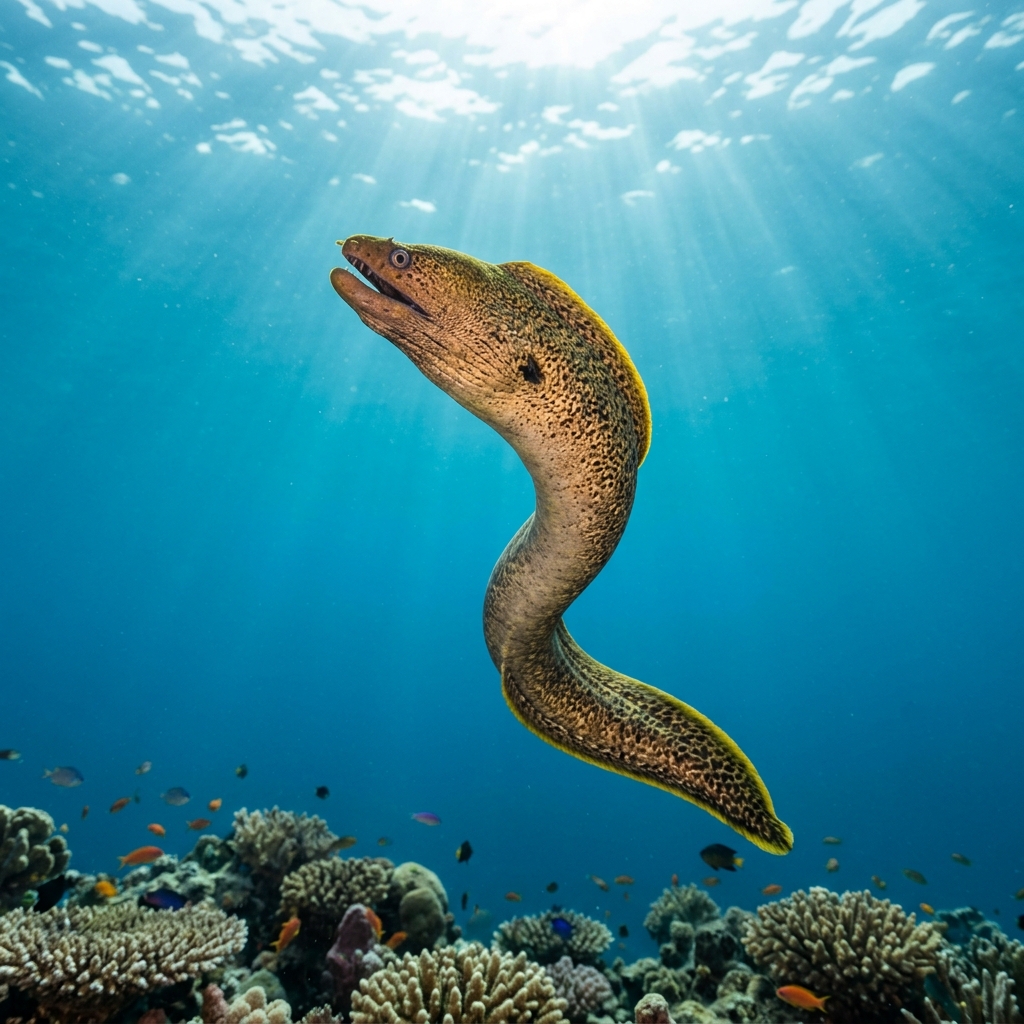
Gymnothorax flavimarginatus
Spot yellow-edged moray in the Maldives, Hawaii, or Sipadan in 24-29 °C Indo-Pacific reef waters. ID tips, best seasons, and top dive sites inside.
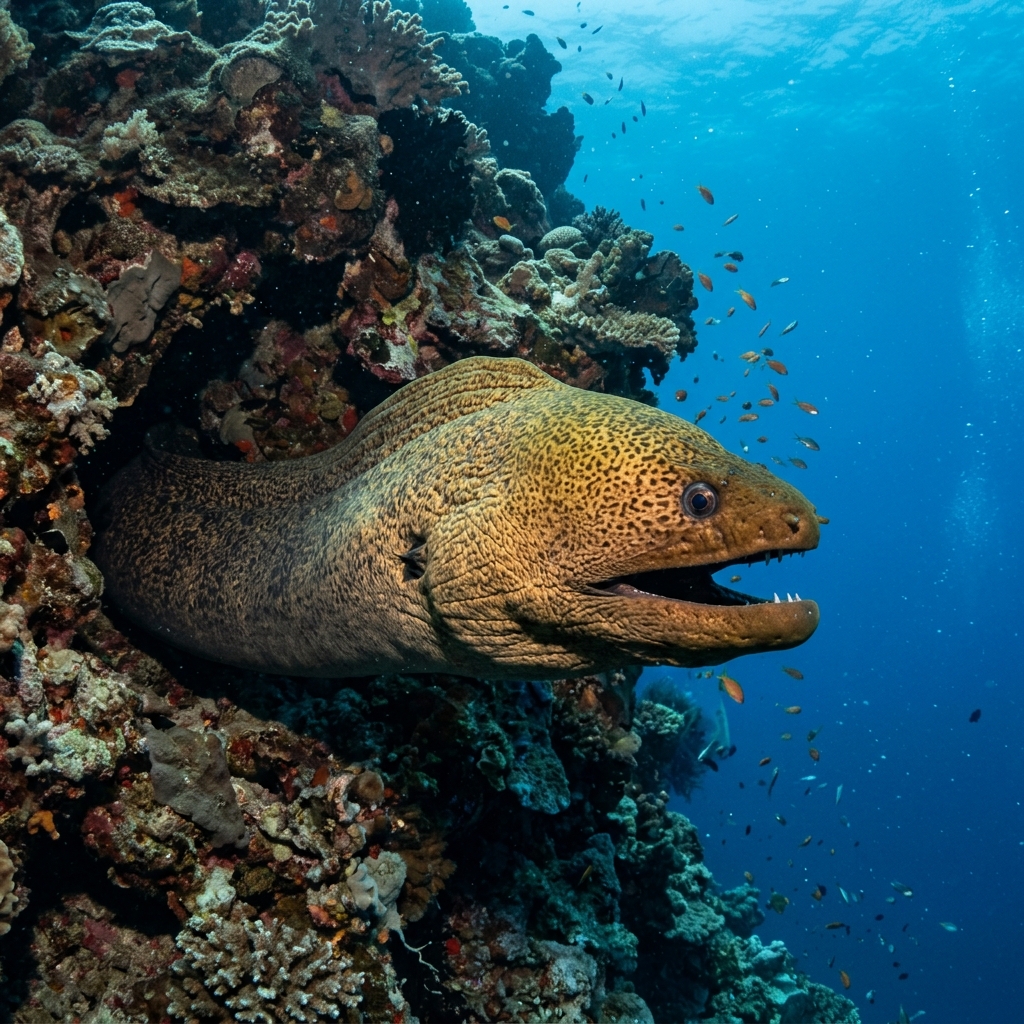
Look for a large, muscular moray with a dark brown body covered in a fine pale speckle pattern that gives it a mottled, almost leopard-like texture. The key field mark is the bright yellow to yellow-green margin running along the dorsal (back) fin from head to tail, visible even in deeper, dimmer water. The inside of the mouth is white to pale yellow, often seen as the eel breathes with its jaws gently opening and closing at the entrance to its hole. Juveniles tend to show a more contrasted, darker base colour with the yellow fin edge already present.
You will almost always find yellow-edged morays wedged into reef crevices, coral heads, or rubble, with the head protruding and the rest of the body hidden, that slow rhythmic jaw gape is simply how they breathe, not a threat display. Most are indifferent to calm, non-threatening divers and will hold their position as long as you don't crowd them; approach slowly and at eye level for the best look. Occasionally one is seen out in the open during dusk or night dives, hunting octopus and small fish along the reef edge.
Yellow-edged morays sometimes hunt cooperatively with roving coral grouper, which actively recruit the moray by shaking its head near the eel's den, the grouper flushes prey into the open while the moray pursues it into crevices, a partnership documented in the Indo-Pacific.
In the Northern Hemisphere, sightings concentrate from April through January, with a quieter period around February and March. In the Southern Hemisphere, expect the best encounters between November and March, which aligns with warmer regional water temperatures in the 24-29 °C band this species favours.
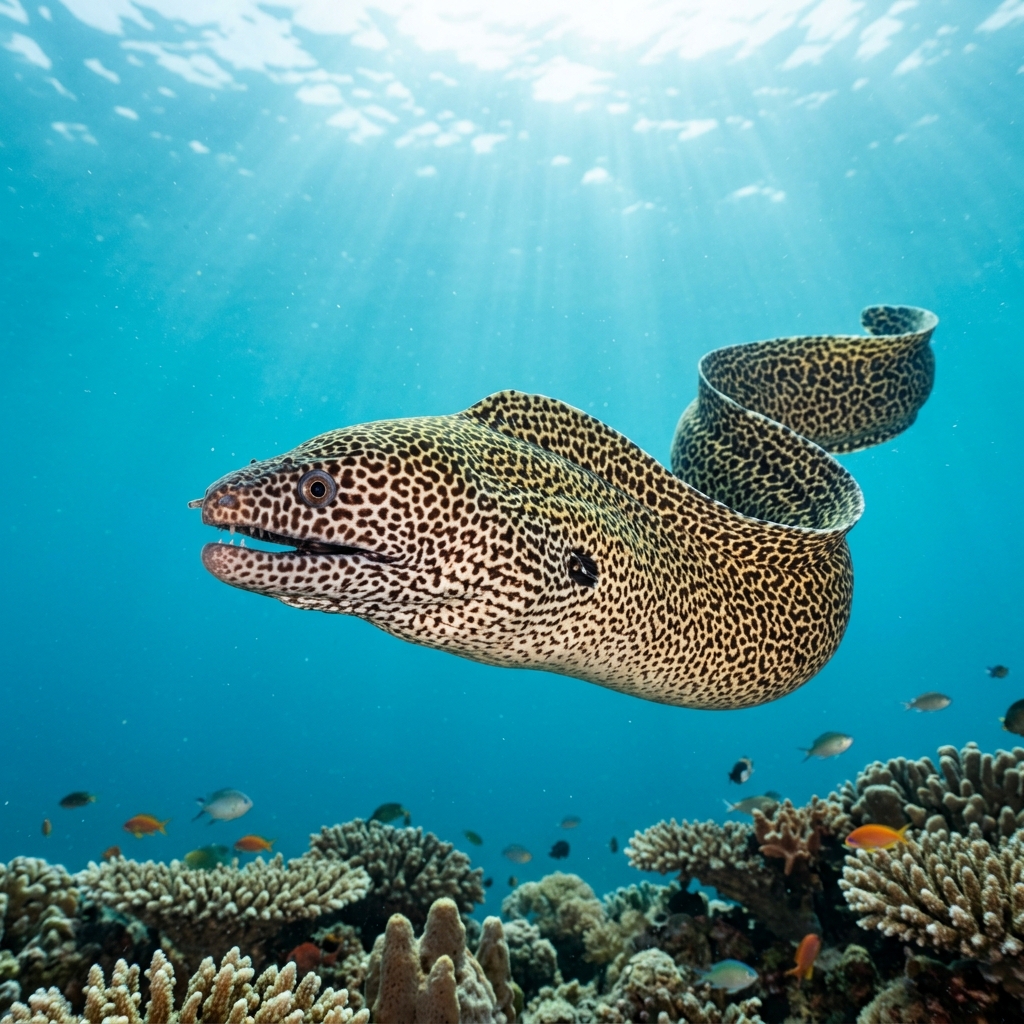
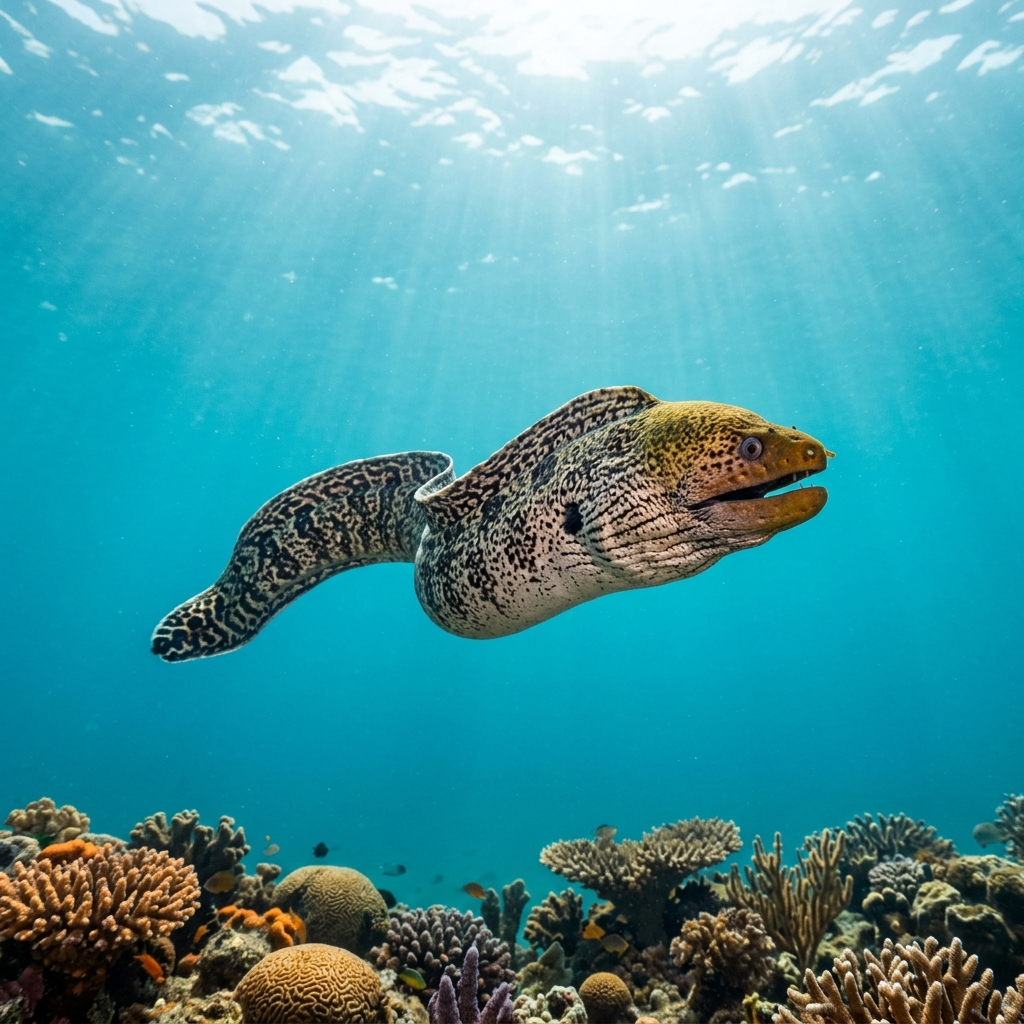
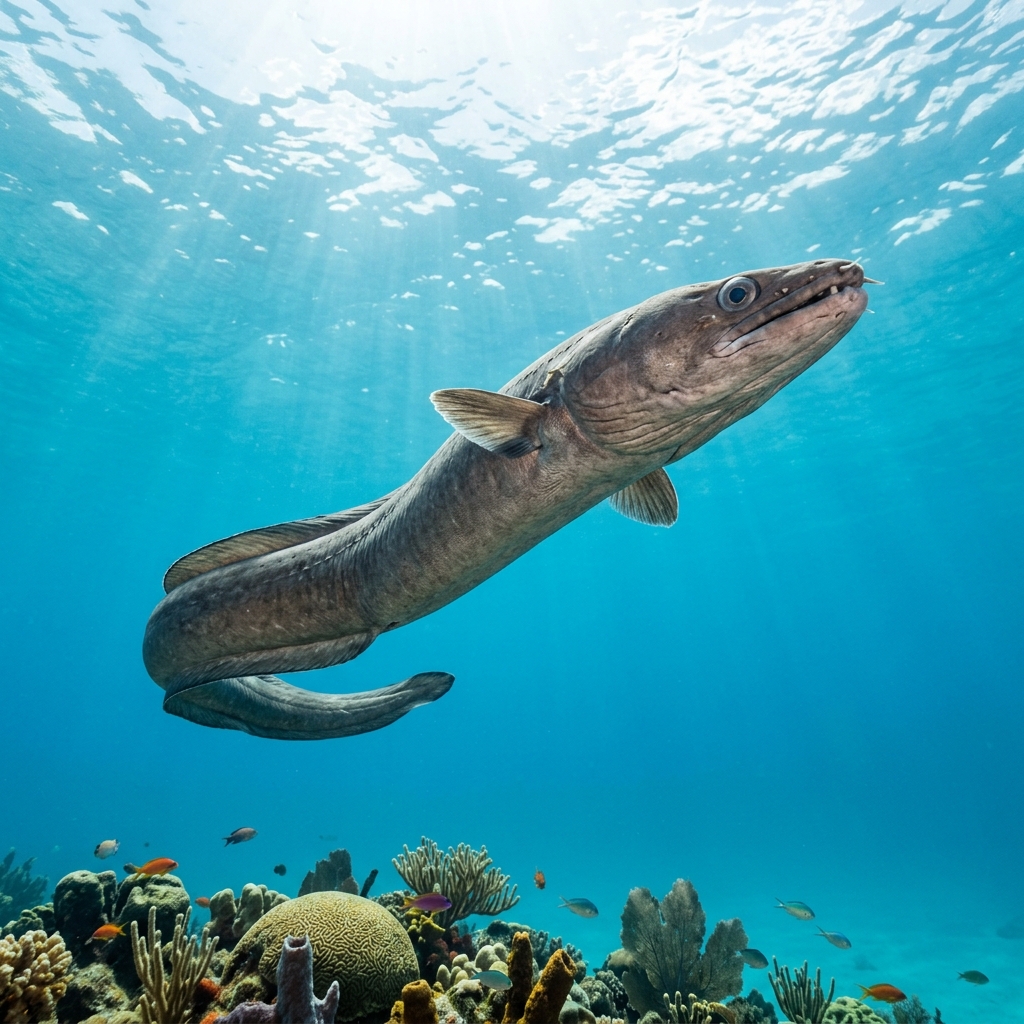
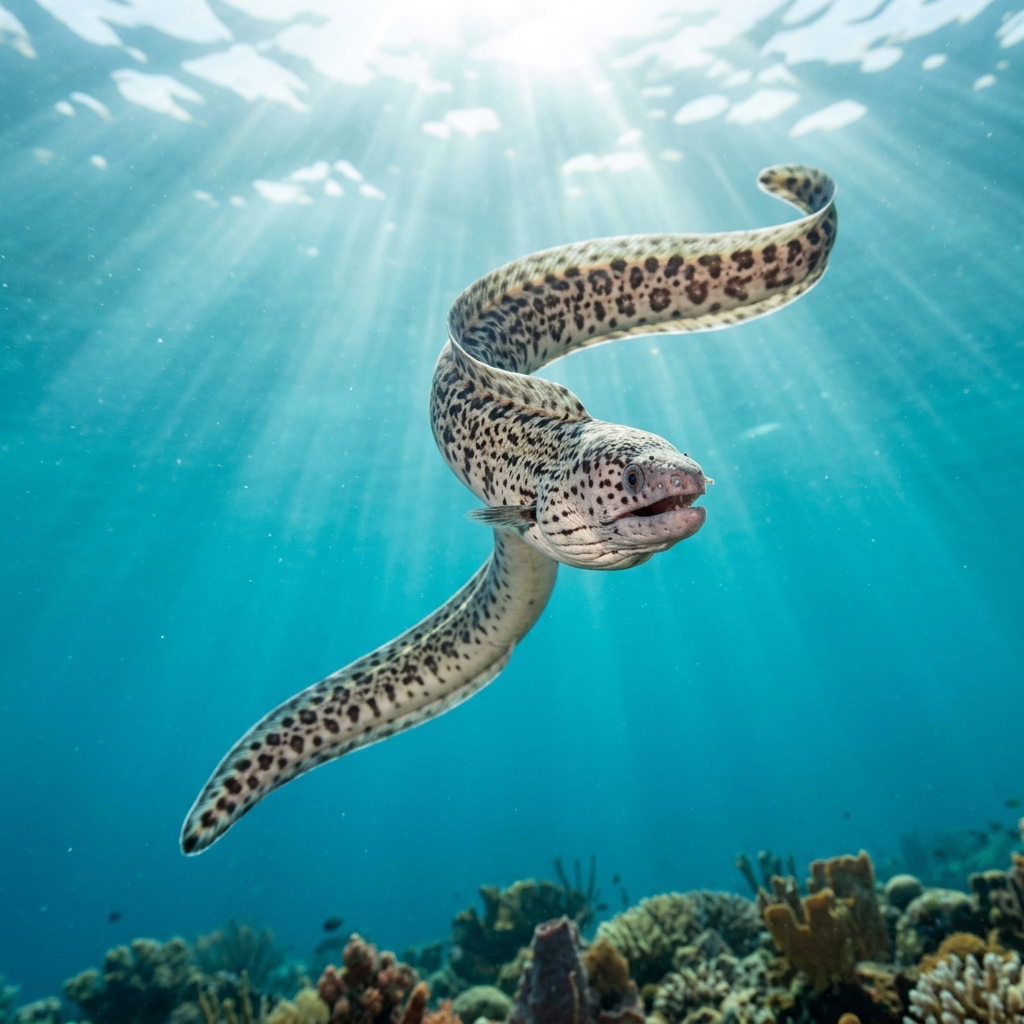
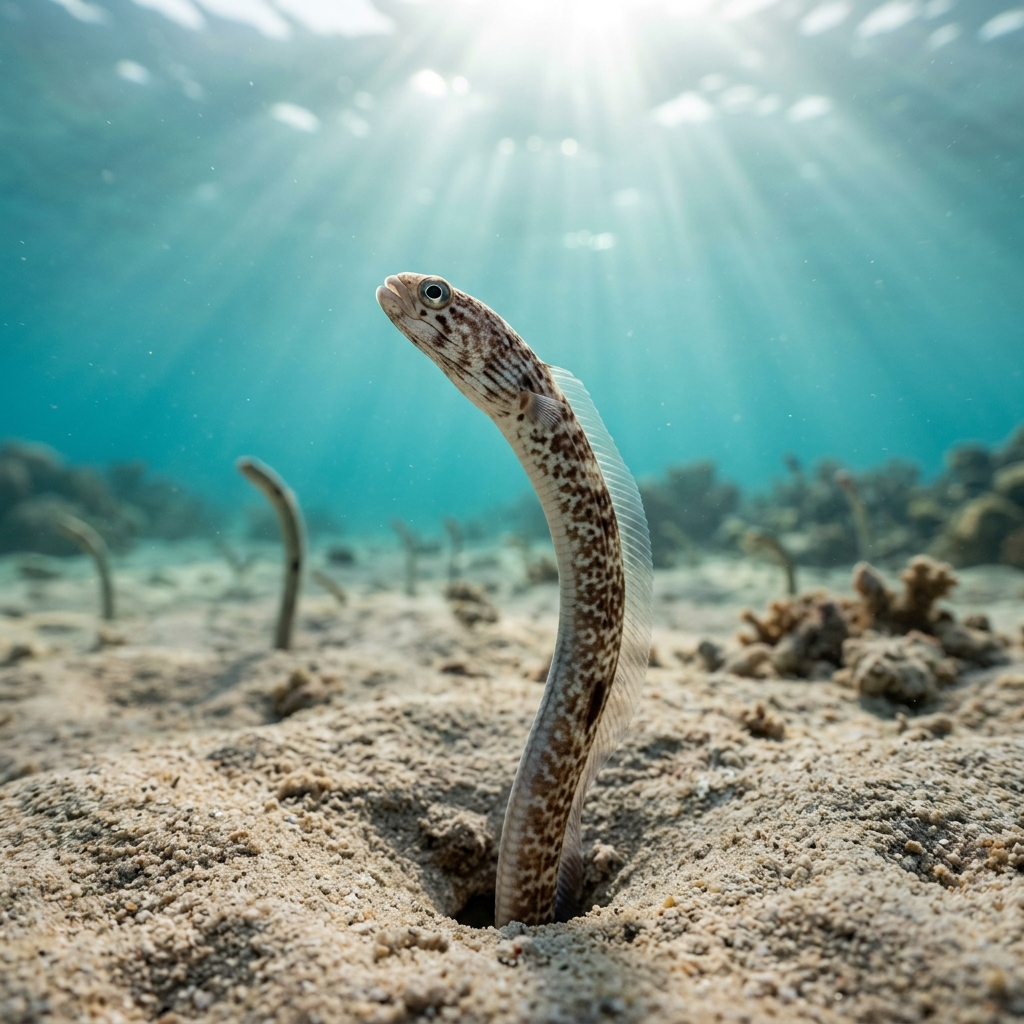
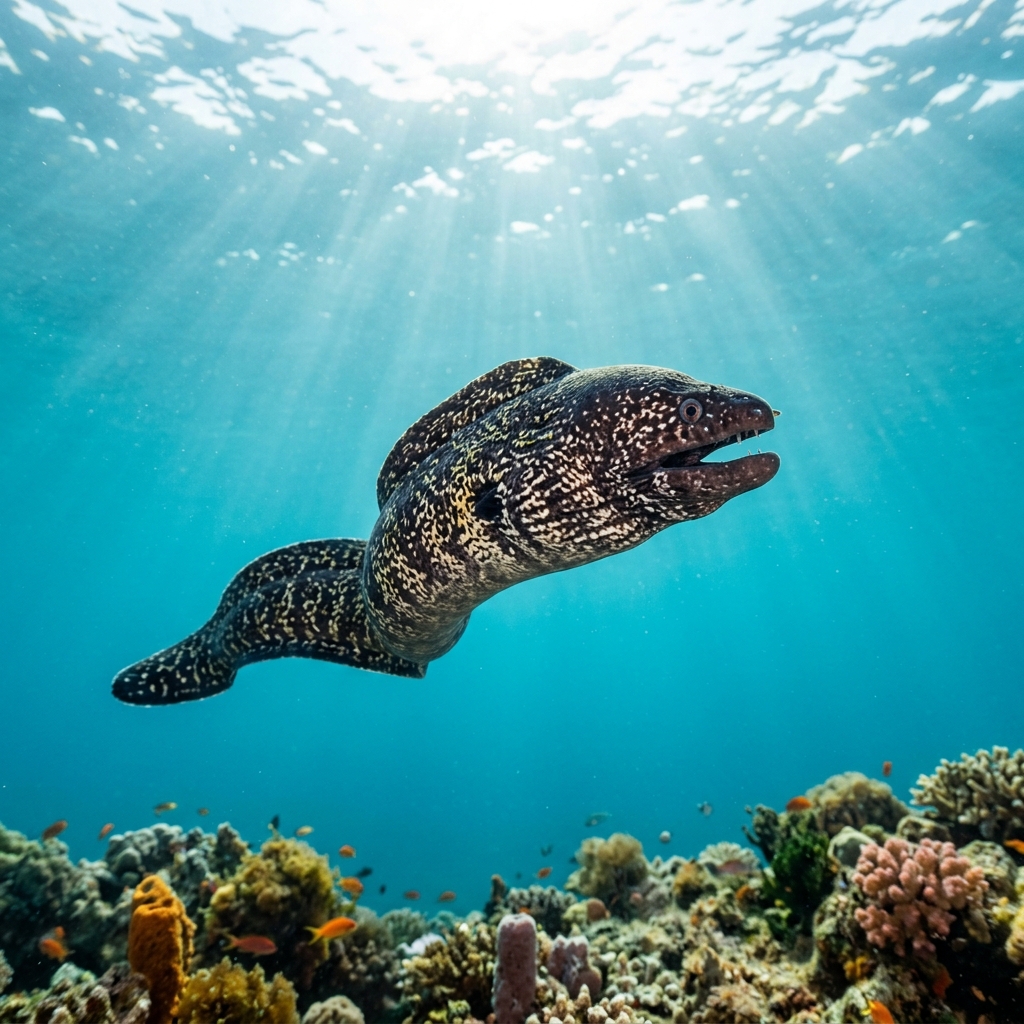
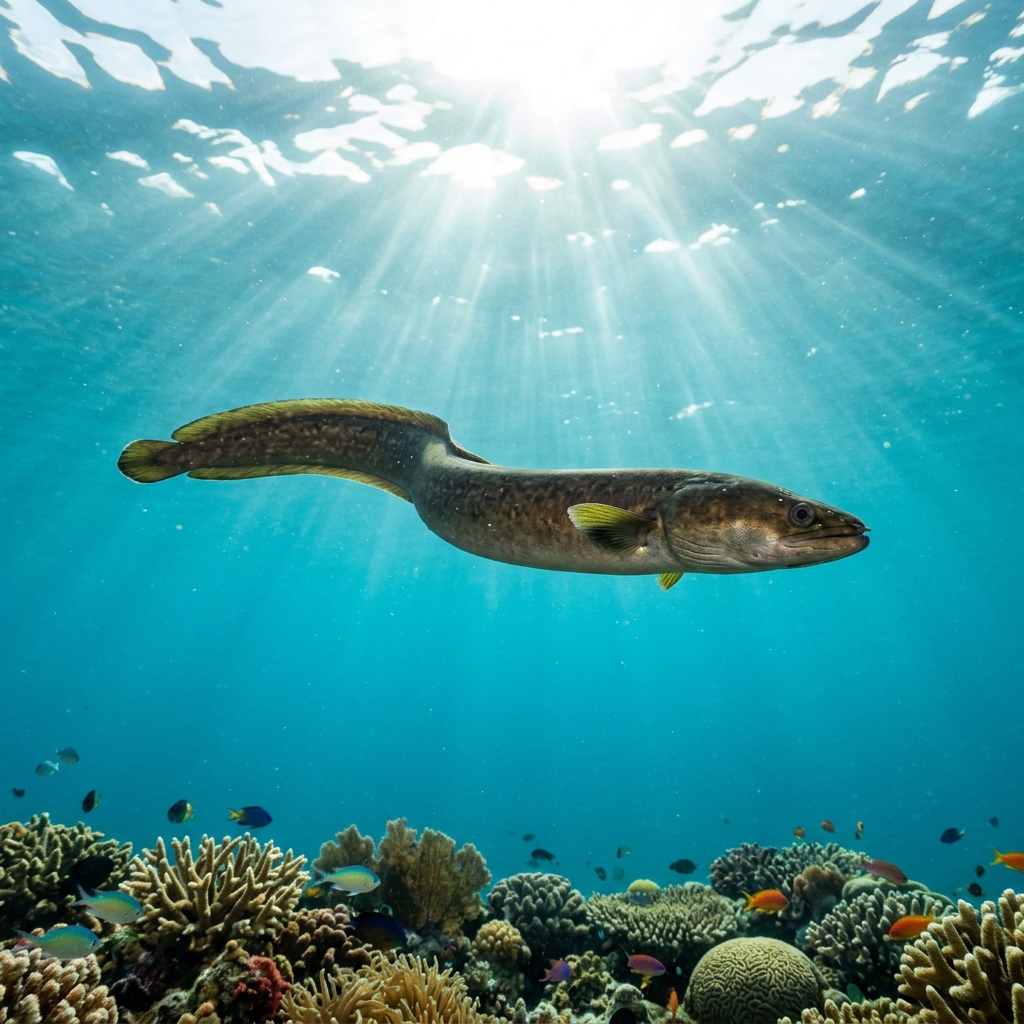
Reef neighbours a diver could mistake it for. Use the identification notes above to tell them apart.
Most consistently logged across the Indo-Pacific, with particularly strong records in Indonesia, the Maldives, and Malaysia, Sipadan and East Sabah, Bali, and the Male and Ari Atolls stand out as reliable spots. Hawaii leads sightings in the Pacific United States, while the Egyptian Red Sea around Sharm el-Sheikh adds a western outpost with solid records. The Philippines' Visayas and Pulau Tioman in Malaysia round out the core range for divers planning a targeted trip.
Mapping where Yellow-edged Moray is logged…
The best-documented sites are in Indonesia (especially Bali and Sulawesi), the Maldives' Male and Ari Atolls, Malaysia's Sipadan and Pulau Tioman, Hawaii, and the Egyptian Red Sea at Sharm el-Sheikh. The species spans much of the Indo-Pacific and is recorded across more than two dozen countries.
In Northern Hemisphere destinations like Hawaii, the Maldives, and Egypt, sightings are strongest from April through January. For Southern Hemisphere sites, aim for November to March. The species prefers water temperatures between 24 and 29 °C, which corresponds with these windows on tropical reefs.
Focus on the fin margin: a clear yellow to yellow-green edge runs the full length of the dorsal fin and is visible even in low light. The body is dark brown with a fine pale speckle rather than bold spots or bands. Combined, these two features separate it from most other large morays on the same reef.
They are not considered dangerous under normal diving conditions. Like all morays they have strong jaws and sharp teeth, and a bite can occur if a diver reaches into a crevice or corners the animal. Observe from a respectful distance, avoid putting hands near holes, and they will usually ignore you entirely.
At most sites where it has been recorded, the yellow-edged moray is classed as uncommon, meaning a sighting is possible but far from guaranteed on any single dive. A small number of sites, particularly well-dived reef systems in the Maldives and Malaysia, report it as common, so choosing the right location improves your odds considerably.
Site and sighting data is aggregated from diver logs, iNaturalist and GBIF. For taxonomy and conservation status:
Garden Eel
2,448 sites