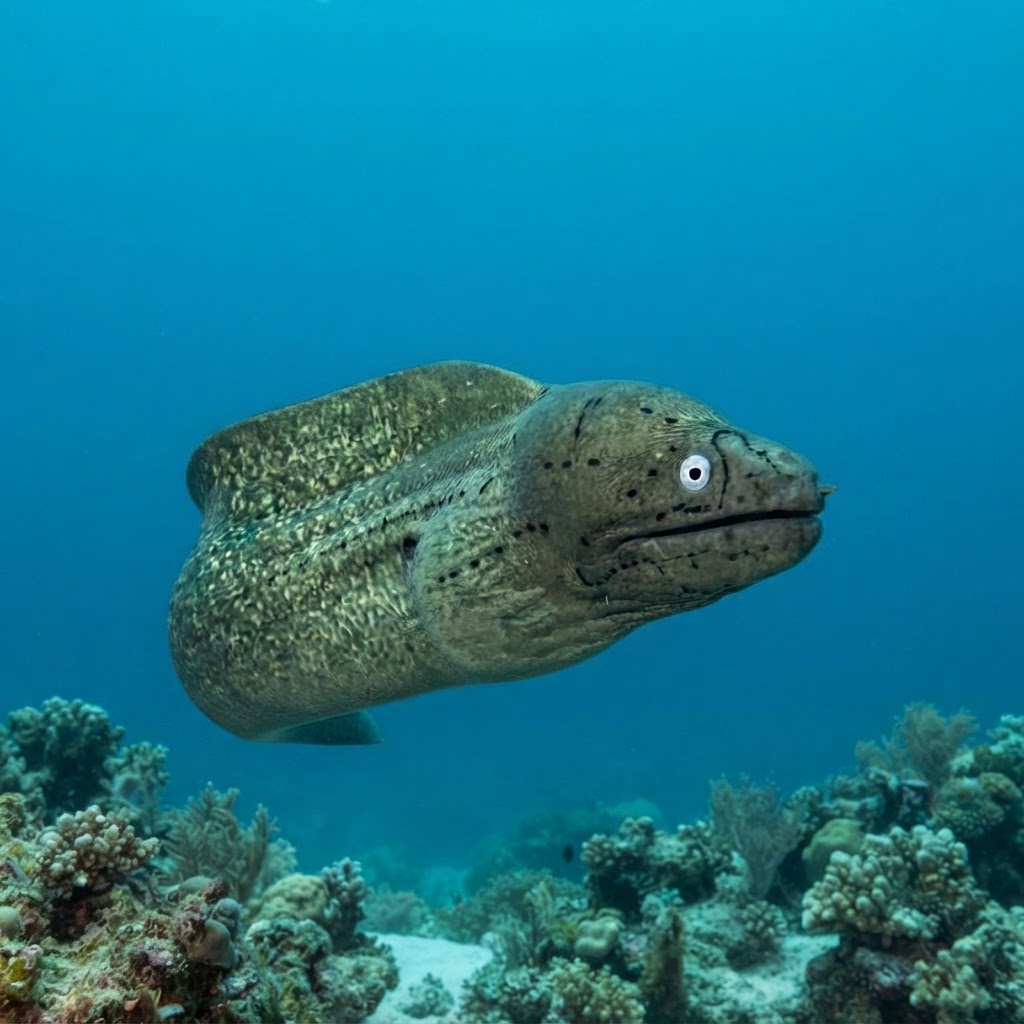
Gymnothorax griseus
Grey, speckled and easy to miss: find geometric morays across South Sinai, the Seychelles Inner Islands and Oman's Daymaniyat Islands year-round.
Safety warning
It can bite if provoked, cornered, or if a diver puts a hand into a crevice without checking first. The bite risk comes from poor vision and mistaken identity at close range, not aggression, so keep hands away from holes and don't try to touch or feed it.
If you're bitten
BiteGeneral first-aid guidance, not a substitute for professional medical care. In an emergency, call your local emergency number.
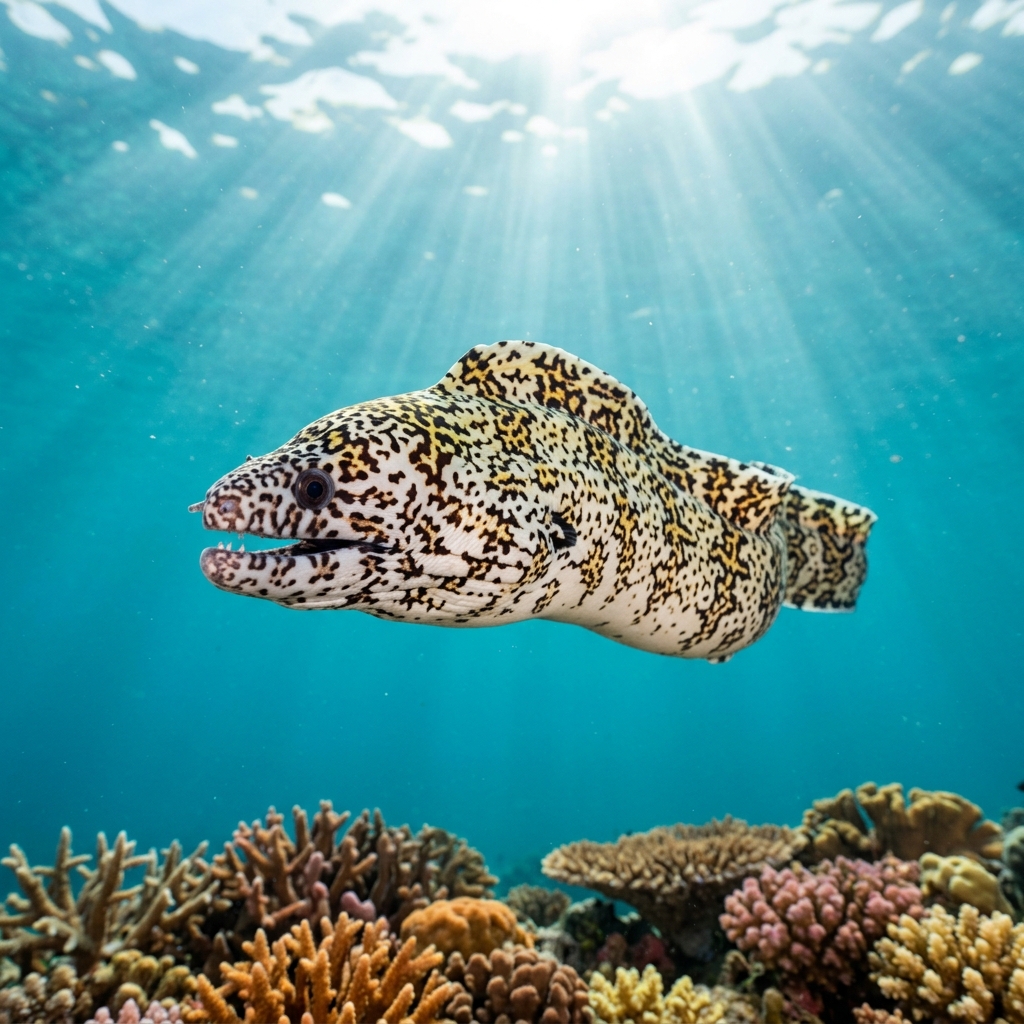
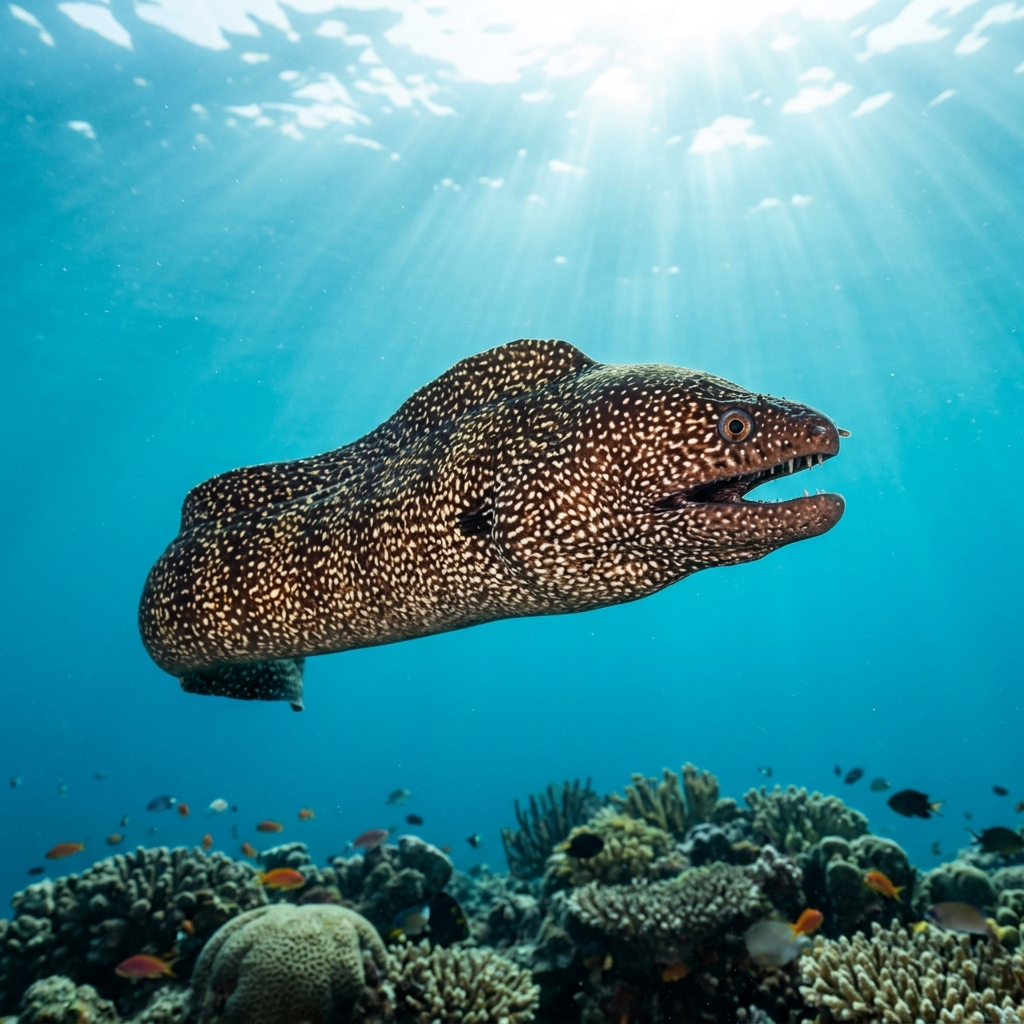
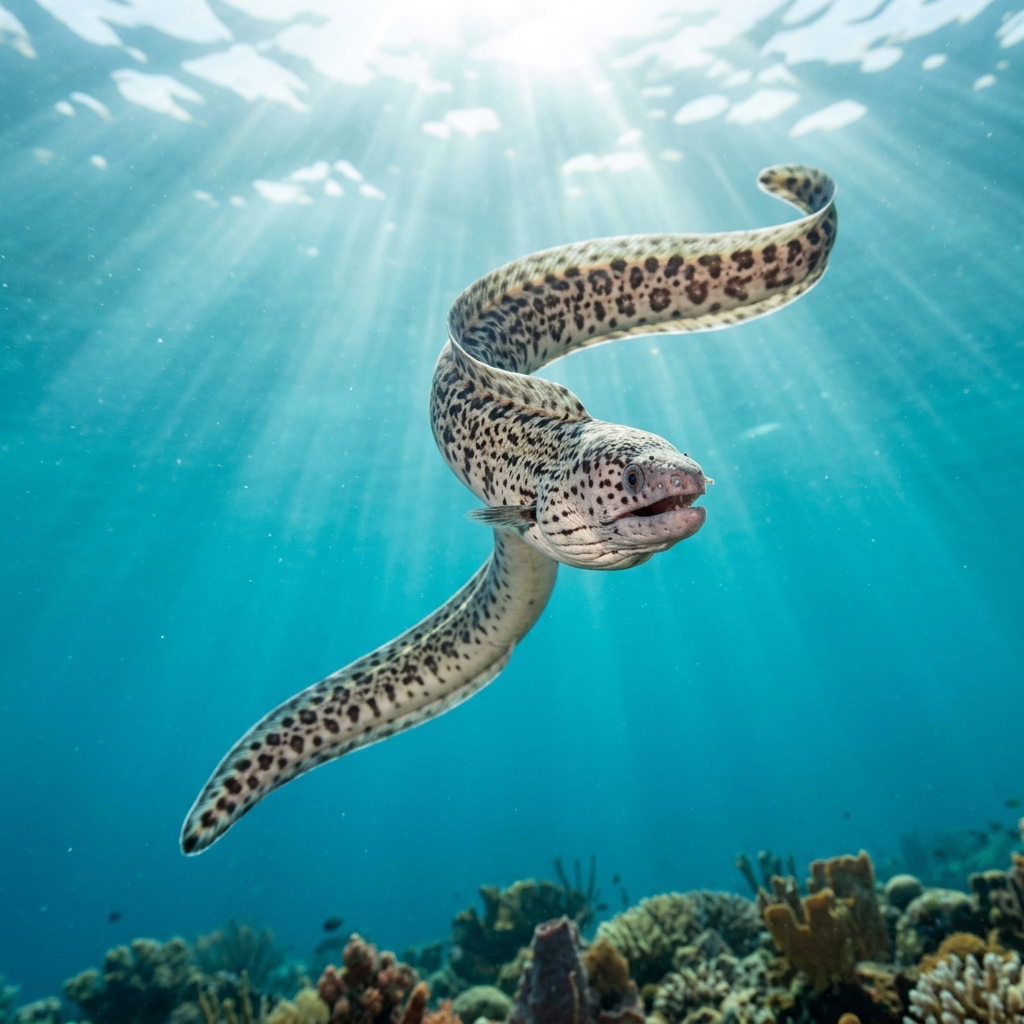
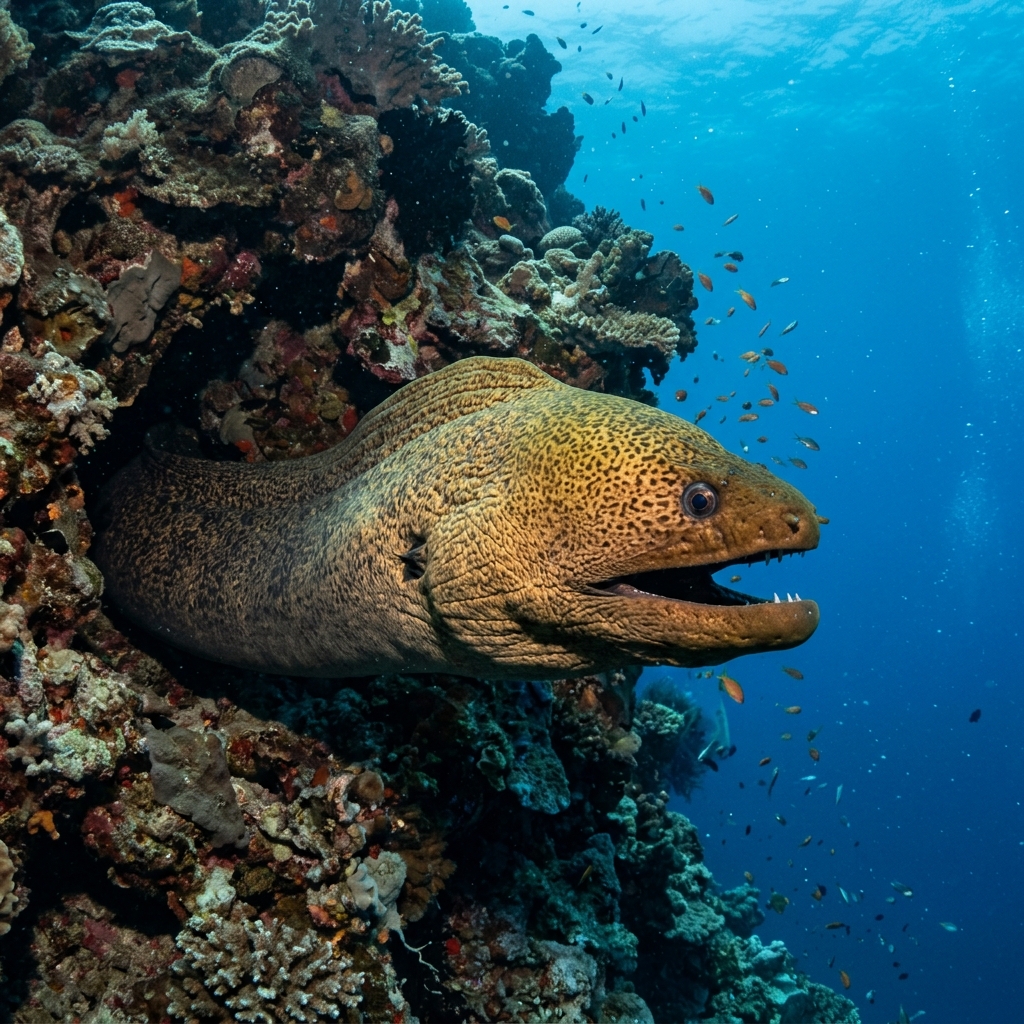
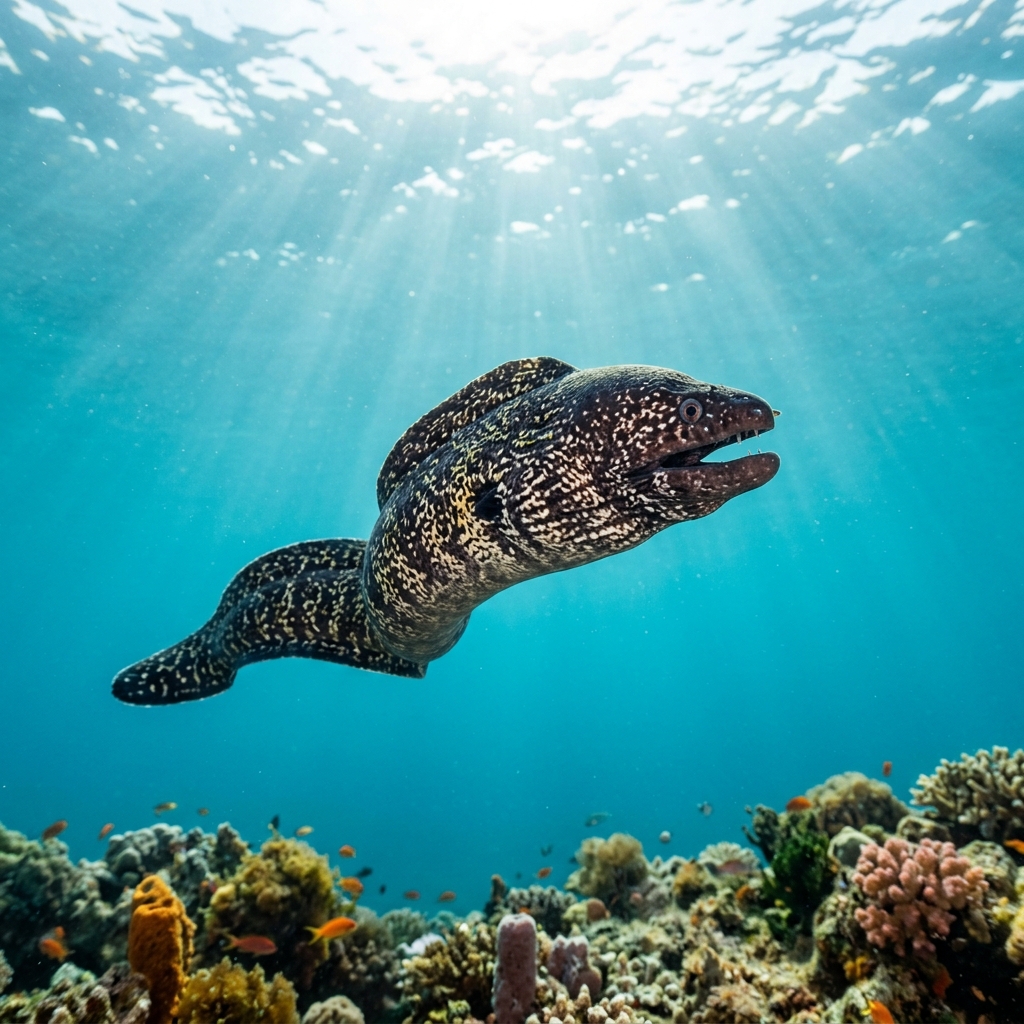
Grows to around 45cm, giving it a slighter, more compact build than the large morays it shares reefs with. Body is a pale grey to sandy background covered in a fine, dense speckling of small dark spots, which is where the geometric name comes from. Look for it with just the head poking from a crevice or hole low on the reef, rather than swimming freely in the open.
Usually spotted tucked into a crevice, ledge or hole with only its head and part of its body visible, rather than out cruising the reef. Divers most often log it as an uncommon to common find, meaning a bit of scanning low on the reef structure pays off. It tends to hold its position and let divers pass rather than bolting, though like other morays it will retreat deeper into its hole if crowded.
Like other morays, it relies on a second set of jaws in its throat (pharyngeal jaws) to drag prey down, a feeding trick almost unique among fish.
No clear seasonal pattern shows up in the data, so treat it as a year-round sighting. It sits comfortably in water from about 24.6 to 29.3C, which covers these reefs for most of the year.
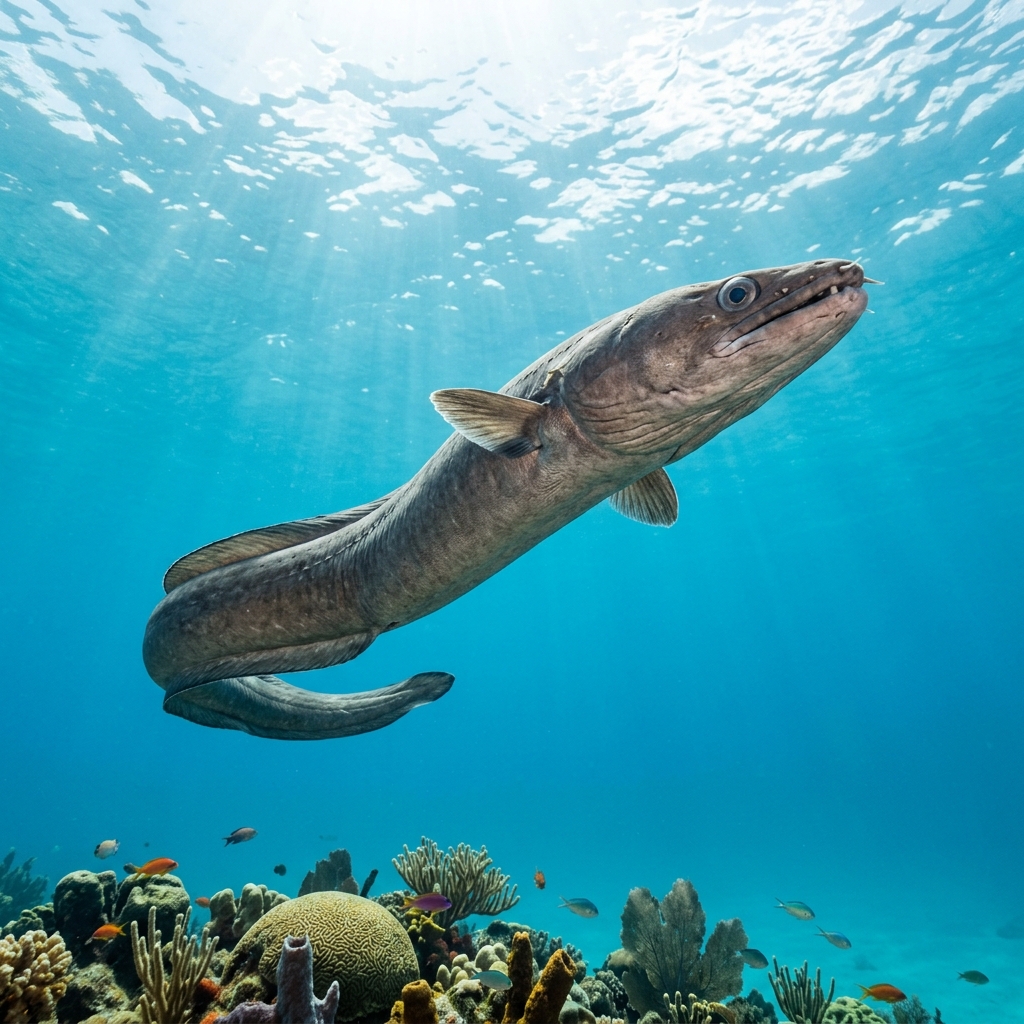
Reef neighbours a diver could mistake it for. Use the identification notes above to tell them apart.
Most reliably logged in Egypt, especially around South Sinai and the Red Sea Riviera, with strong numbers also in the Seychelles Inner Islands, Oman's Daymaniyat Islands and Muscat, and Tanzania's Zanzibar coast. Further sightings come from Mauritius, Jordan's Aqaba coast, Mozambique and Kenya, making it a widespread find across Red Sea and western Indian Ocean reefs.
Mapping where Geometric Moray is logged…
Egypt is the standout, particularly South Sinai and the Red Sea Riviera, with good numbers also in the Seychelles' Inner Islands, Oman's Daymaniyat Islands and Muscat, and Tanzania's Zanzibar coast.
There's no strong season in the sighting data, so it's a year-round find on Red Sea and western Indian Ocean reefs where water stays between about 24.6 and 29.3C.
They can bite if a hand is put into their crevice or they feel cornered, but they aren't aggressive toward divers who keep their distance. Avoid reaching into holes and ledges and you're unlikely to have any issue.
Look for a smaller moray, around 45cm, with a pale grey body covered in fine dark speckling, usually with just its head showing from a reef hole. The dense speckled pattern rather than bold blotches or bands is the key giveaway.
They typically reach around 45cm in length, making them noticeably smaller and slimmer than giant or green morays sharing the same reefs.
Like all morays, they have a second set of jaws in their throat that shoots forward to grab and drag prey into the gut, a feeding mechanism found in almost no other fish group.
Site and sighting data is aggregated from diver logs, iNaturalist and GBIF. For taxonomy and conservation status:
Garden Eel
2,448 sites