Balistoides viridescens
Spot the Indo-Pacific's largest triggerfish in the Maldives, Red Sea, and beyond. Year-round sightings in 25-29 °C waters. Know the nesting risk before you dive.
Safety warning
This is one of the few reef fish that will actively chase and bite a diver. The risk is highest when a female is guarding a nest, typically a shallow sandy or rubble patch, during breeding periods. If the fish faces you directly, raises its dorsal spine, or begins a slow deliberate approach, back away horizontally, not upward as that keeps you inside the defended territory. A bite from those coral-crushing jaws can cause a serious wound; do not attempt to touch or corner the fish, and give any fish you see sitting tight over a cleared patch of seabed a wide berth.
If you're bitten
Territorial biteGeneral first-aid guidance, not a substitute for professional medical care. In an emergency, call your local emergency number.
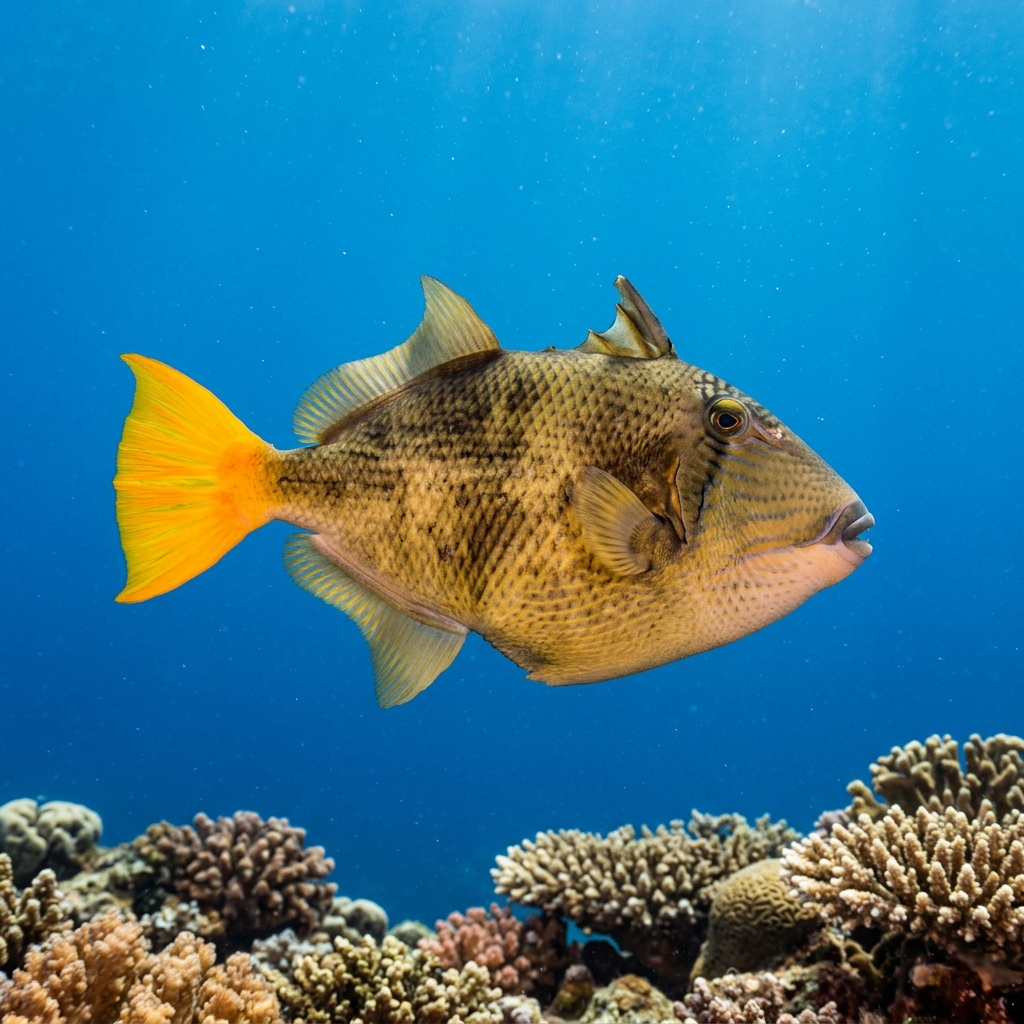
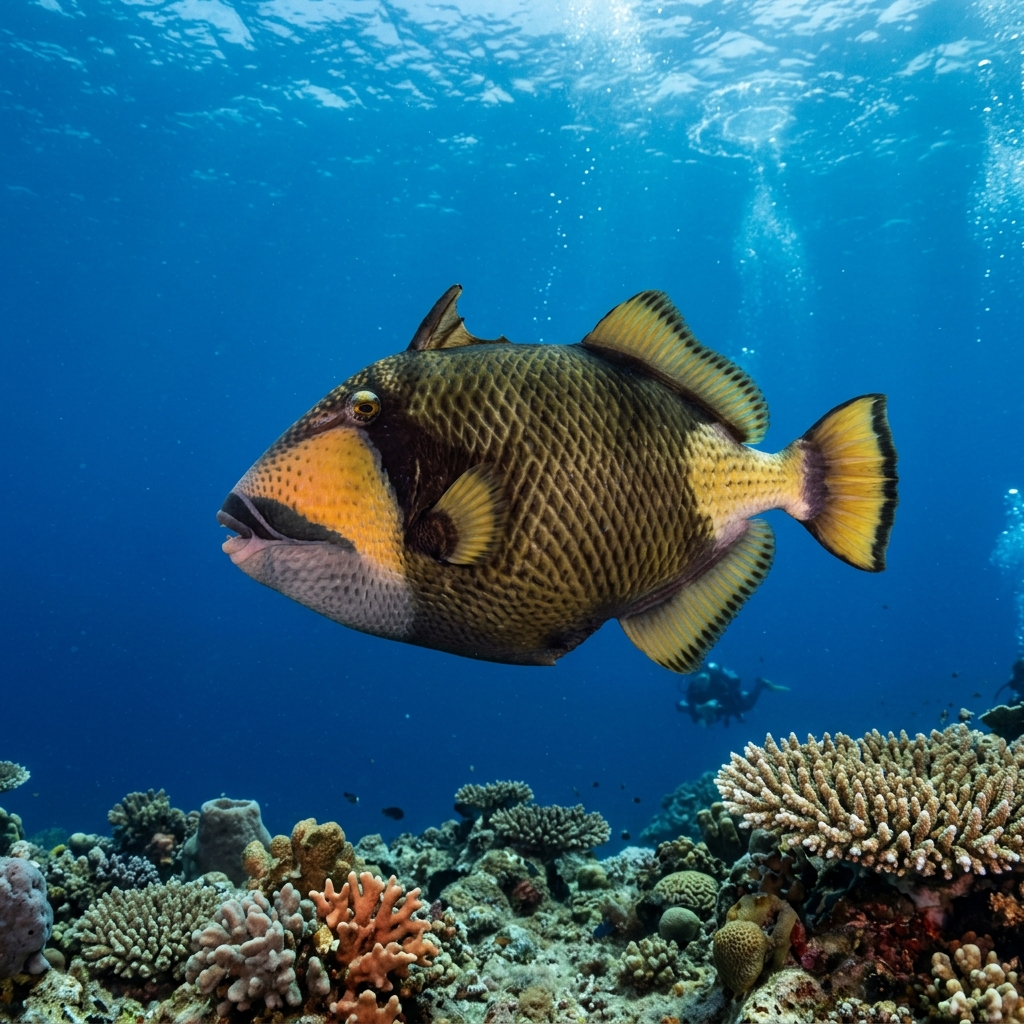
At up to around 75 cm in the wild (typically closer to 52 cm underwater), this is the largest triggerfish on the reef and its bulk alone is a strong clue. Look for an olive-green to yellowish body covered in dark-edged scales, a strikingly pale or white lower jaw that contrasts sharply with the dark face, and bright yellow outlining around the mouth. The body is deep and laterally compressed (flattened side-to-side) in the classic triggerfish shape, with a pattern that becomes more muted and brownish in adults at depth.
During the day you will typically find them working the reef methodically, biting chunks off coral heads and flipping rubble with their powerful jaws to expose urchins, crustaceans, and molluscs underneath. They are mostly indifferent to divers outside the breeding season, but a nesting female will defend a cone-shaped territory that extends upward from the nest on the seabed, so swimming higher does not mean you are safer. An agitated titan raises its first dorsal spine (the "trigger" that gives the family its name) and may swim directly at you before biting.
When a titan triggerfish excavates a nest, it flips coral rubble and sand clear of the site with such force that smaller fish and invertebrates move in immediately to grab the exposed prey, making an active feeding titan a useful focal point for watching wider reef life.
Present year-round in both hemispheres with no concentrated season, which aligns with its preference for warm tropical reef water in the 25-29 °C range. There is no single best month; plan around your chosen destination's diving conditions rather than any migration or seasonal peak.
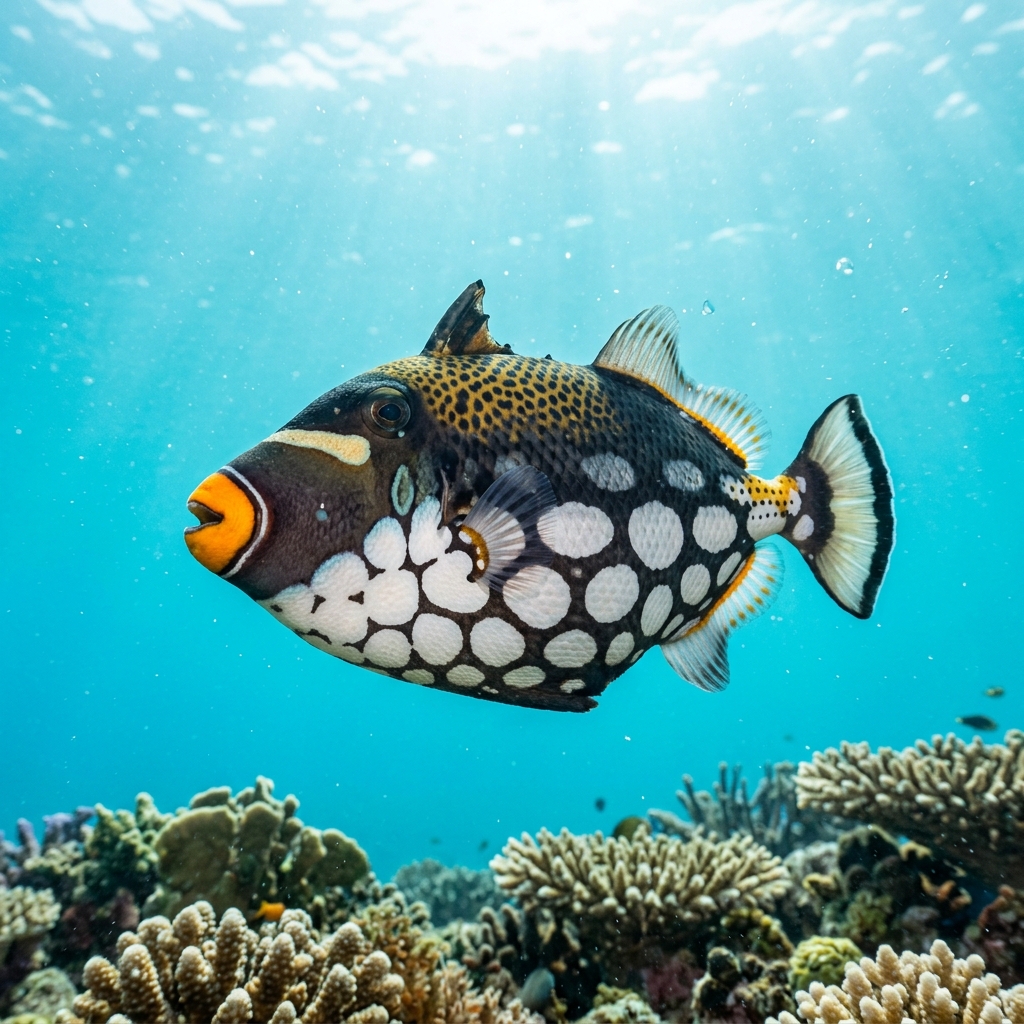
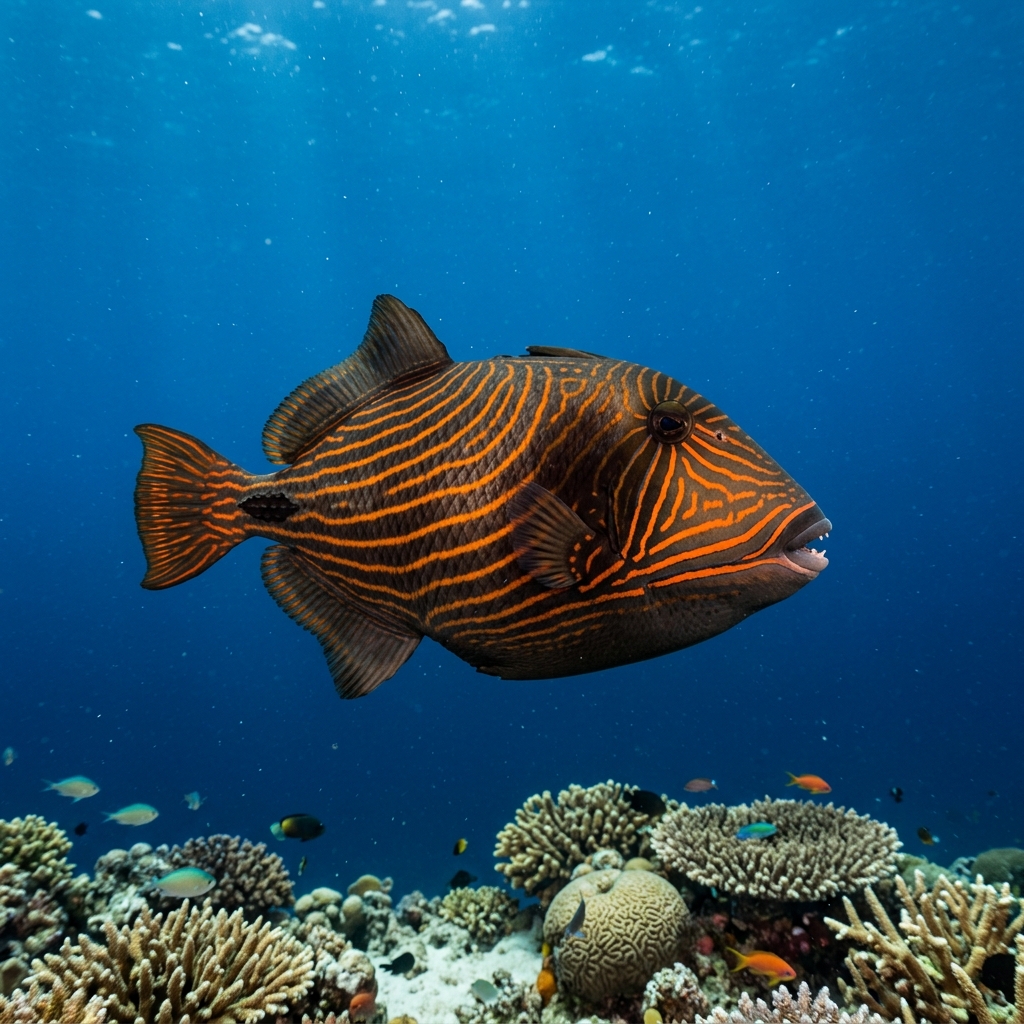
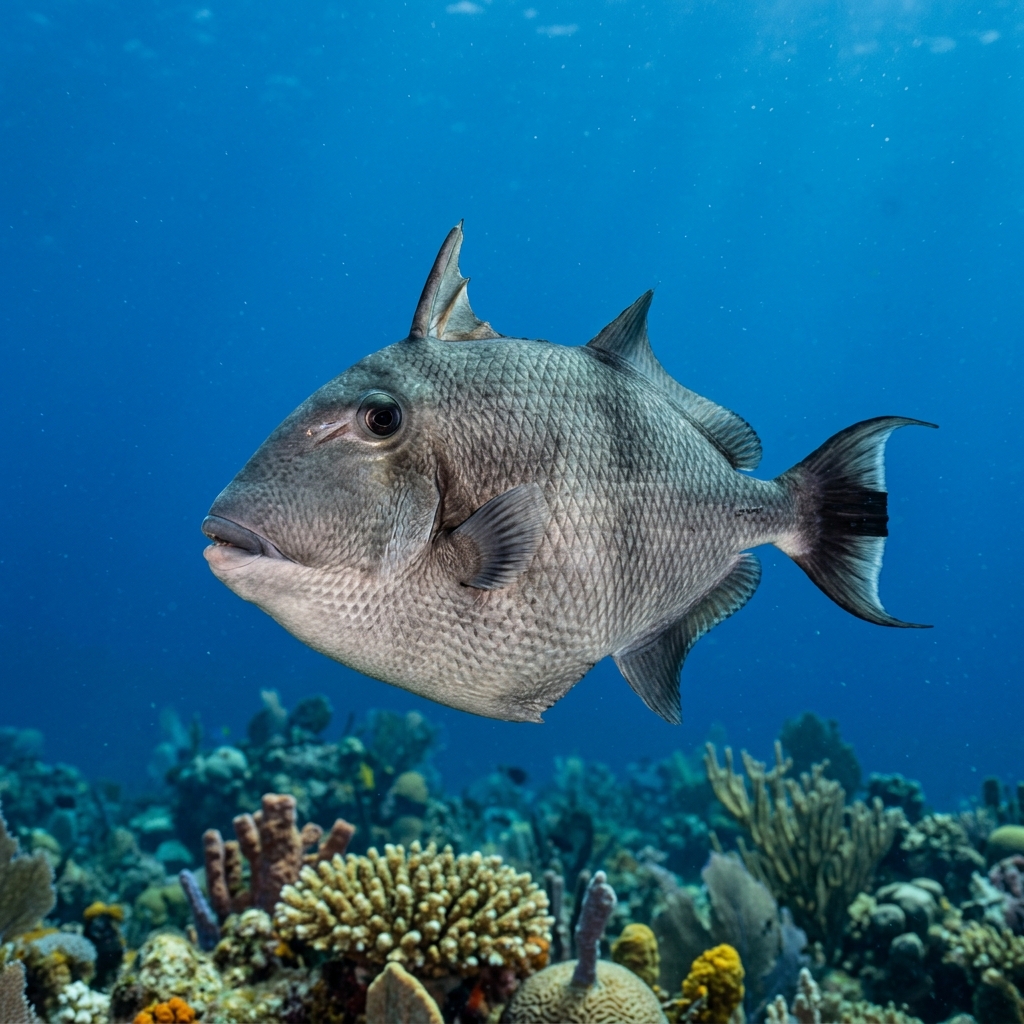
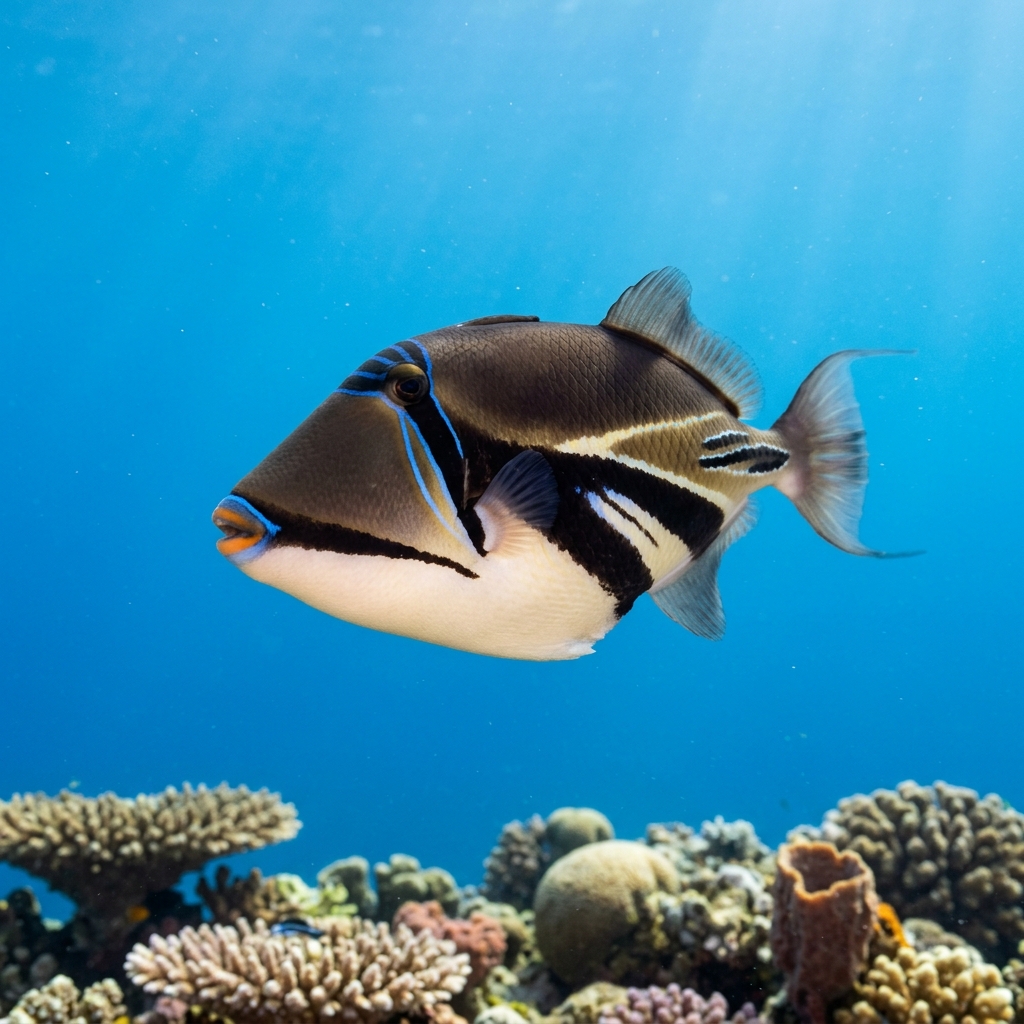
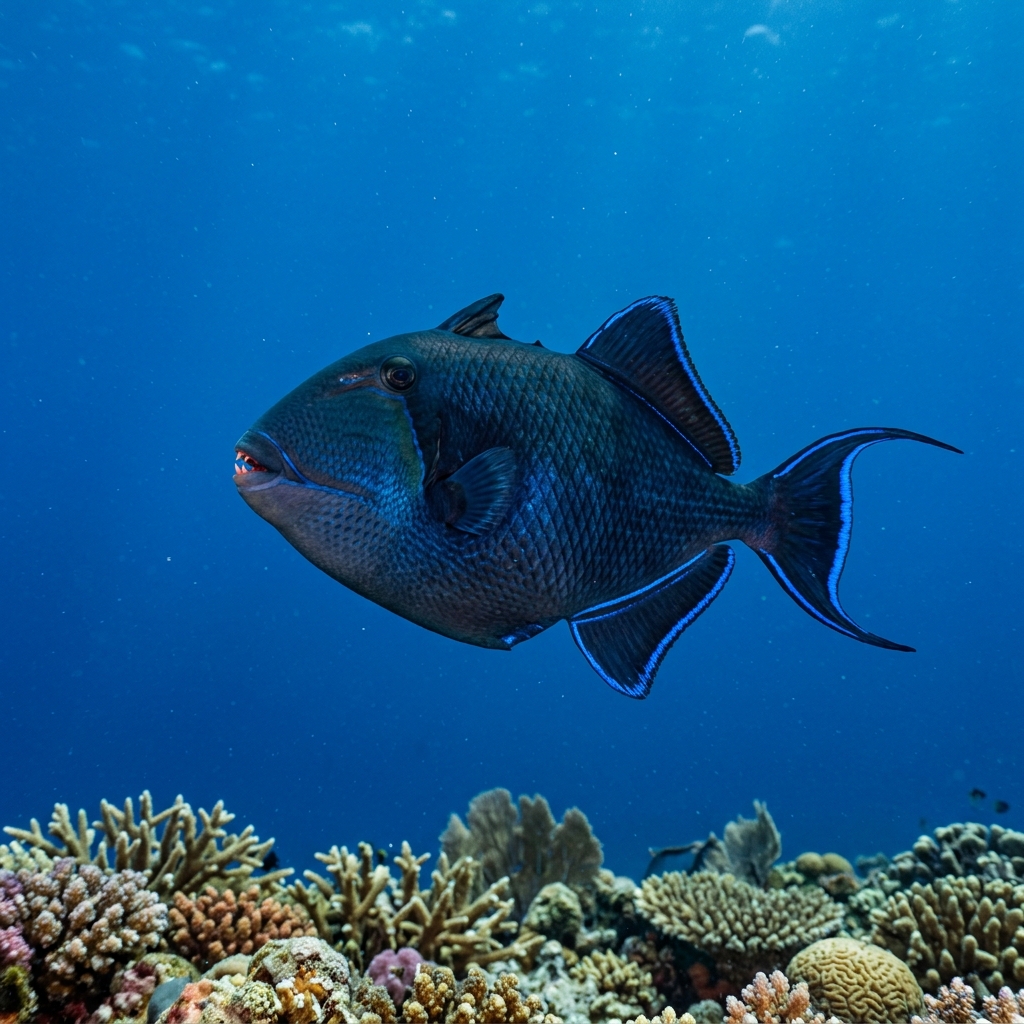
Reef neighbours a diver could mistake it for. Use the identification notes above to tell them apart.
Most commonly logged across the tropical Indo-Pacific, with the strongest sighting records in the Maldives, particularly the Male and Ari Atolls and the North and Central Atolls. Indonesia, the Philippines, Thailand, and Malaysia are all reliable destinations, and the Egyptian Red Sea, especially around Marsa Alam, holds strong populations too. Australia's Queensland sites and Palawan in the Philippines round out the top regions.
Mapping where Titan Triggerfish is logged…
The titan triggerfish is widely distributed across the tropical Indo-Pacific. The Maldives leads for logged sightings, particularly the Male, Ari, and North Atolls. Indonesia, the Philippines, Thailand, Malaysia, the Egyptian Red Sea around Marsa Alam, and Queensland in Australia are all strong destinations.
Sighting data from both hemispheres shows no concentrated season; they are present year-round on tropical reefs. Choose your destination based on local diving conditions, weather, and visibility rather than any seasonal window for this species specifically.
Yes, and they are taken seriously by experienced reef guides. A nesting female will charge and bite without much warning. The territory extends in a cone upward from the nest, so swimming higher will not get you out of it. Back away horizontally and calmly if one faces you and raises its dorsal spine. Bites from their robust jaws can break skin and cause significant injury.
Size is the first clue; it is the largest triggerfish on most Indo-Pacific reefs. Key marks are the pale or white lower jaw contrasting with a dark face, an olive-yellow body with dark-edged scales, and bright yellow outlining the mouth. The deep, laterally compressed body shape is typical of all triggerfish but this species dwarfs most relatives.
They typically reach around 52 cm on the reef, though individuals can grow to about 75 cm. That makes them noticeably larger than any other triggerfish you are likely to encounter in the Indo-Pacific, which is itself a useful field mark.
They are active carnivores that target hard-shelled prey including sea urchins, crustaceans, molluscs, and coral. They use their strong, fused-tooth jaws to bite through coral heads and flip rubble, exposing prey buried underneath. This feeding activity plays a small but real role in reef erosion and sediment turnover.
Site and sighting data is aggregated from diver logs, iNaturalist and GBIF. For taxonomy and conservation status:
Flagtail Triggerfish
2,287 sites