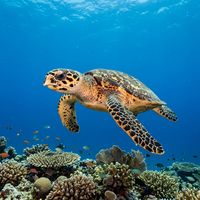
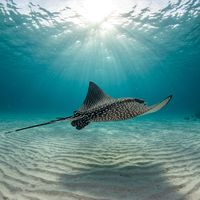
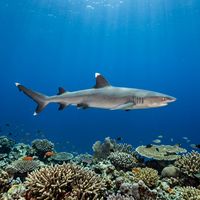
La Digue offers a varied mix of reef, drift, pinnacle and canyon sites spread across the island and its neighbouring outcrops. Hawksbill Sea Turtle and Spotted Eagle Ray are observed across virtually every site, while Whitetip Reef Shark and Great Barracuda add interest at depth. Shore entries at spots like Anse Sévère suit beginners, while boat-access sites such as South Mariane Island challenge advanced divers with complex topography. Conditions peak in spring and again in October and November.
Monthly water temperature across La Digue's sites, from satellite sea-surface data corrected for depth. The band shows the site-to-site spread.
Water is warmest from March to May and cools noticeably through the mid-year months, with August being the coolest point in the cycle. The best-rated diving months cluster in spring and again in October and November, suggesting that calmer, clearer conditions bookend the cooler mid-year period. Drift sites like Sister Bank and Channel Rock are more current-dependent, so timing dives with slack water matters on those exposed passages.
3 operators
9 more sites to explore
Water temperature around La Digue ranges from about 26°C in August to 30°C in March, based on satellite sea-temperature data for its dive sites.
In the warm season (about 30°C) a rash guard or 3mm shorty is comfortable in La Digue; in the coldest months (about 26°C) step up to a 3mm full suit.
Fin maps 19 sites in La Digue (17 scuba diving sites and 8 snorkelling spots, with some suited to both).
Across La Digue's dive sites, March, April, October and November are most often reported as the best months to visit.
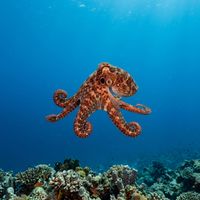
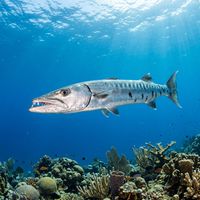
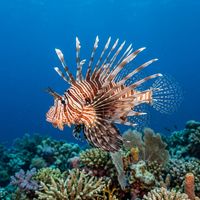
Hawksbill Sea Turtle and Spotted Eagle Ray are observed across almost every site in La Digue, making encounters highly likely on any dive. Whitetip Reef Shark and Great Barracuda are regularly seen at deeper reef and drift sites. Day Octopus and Indian Lionfish round out the larger and more characterful species on offer.
Several sites are rated beginner-friendly, including the shallow reef at Grande Soeur and the shore-entry site at Anse Sévère. Félicité Island is another accessible option, with calm, shallow water reachable by a short boat trip. Intermediate and advanced sites such as Channel Rock and South Mariane Island are also available for those wanting more challenge.
The site types in La Digue range from gentle shore-entry reefs to exposed drift passages and complex canyon and pinnacle formations. Sites like Anse Sévère allow easy entry directly from the beach, while offshore locations such as Sister Bank and South Mariane Island require a boat and suit more experienced divers. The Sister Islands group, including Grande Soeur and Félicité Island, adds a distinct cluster of shallower reef environments to explore.
Hawksbill Dive Centre is the listed operator for La Digue and can organise access to both shore and boat-entry sites across the area. Using a local operator is particularly useful for drift sites like Channel Rock and Sister Bank, where local knowledge of currents and timing makes a meaningful difference.