Chlorurus spp.
A reef staple across the Maldives' Central Atolls and Egypt's South Sinai, grazing coral in water from 23 to 29C year-round.
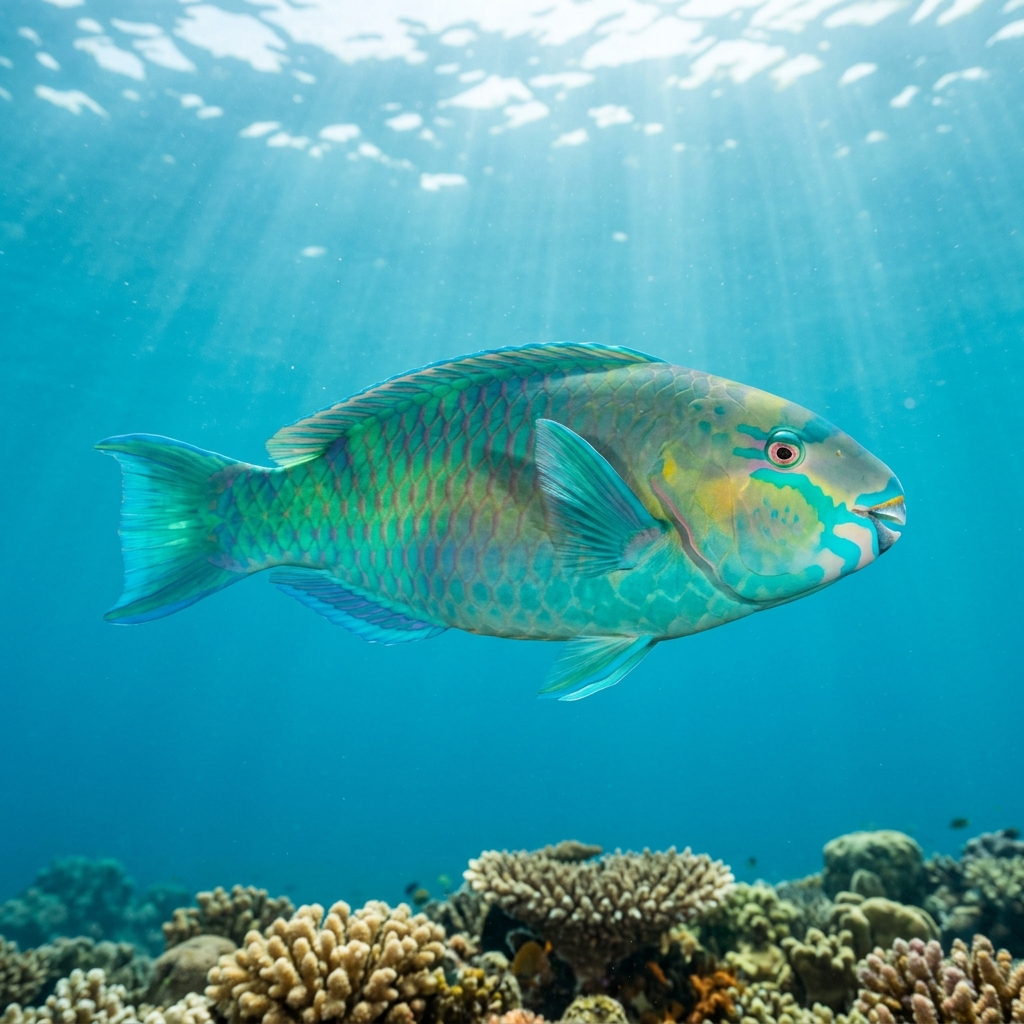
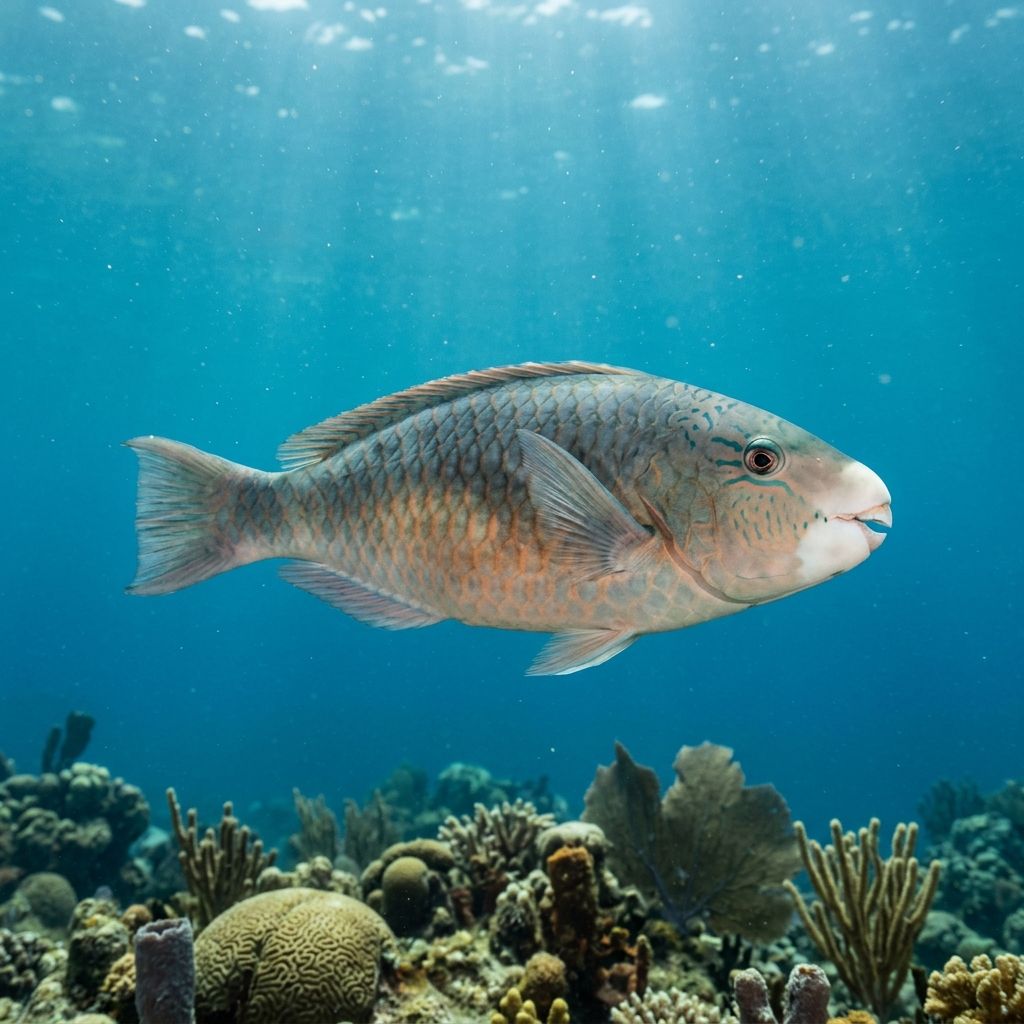
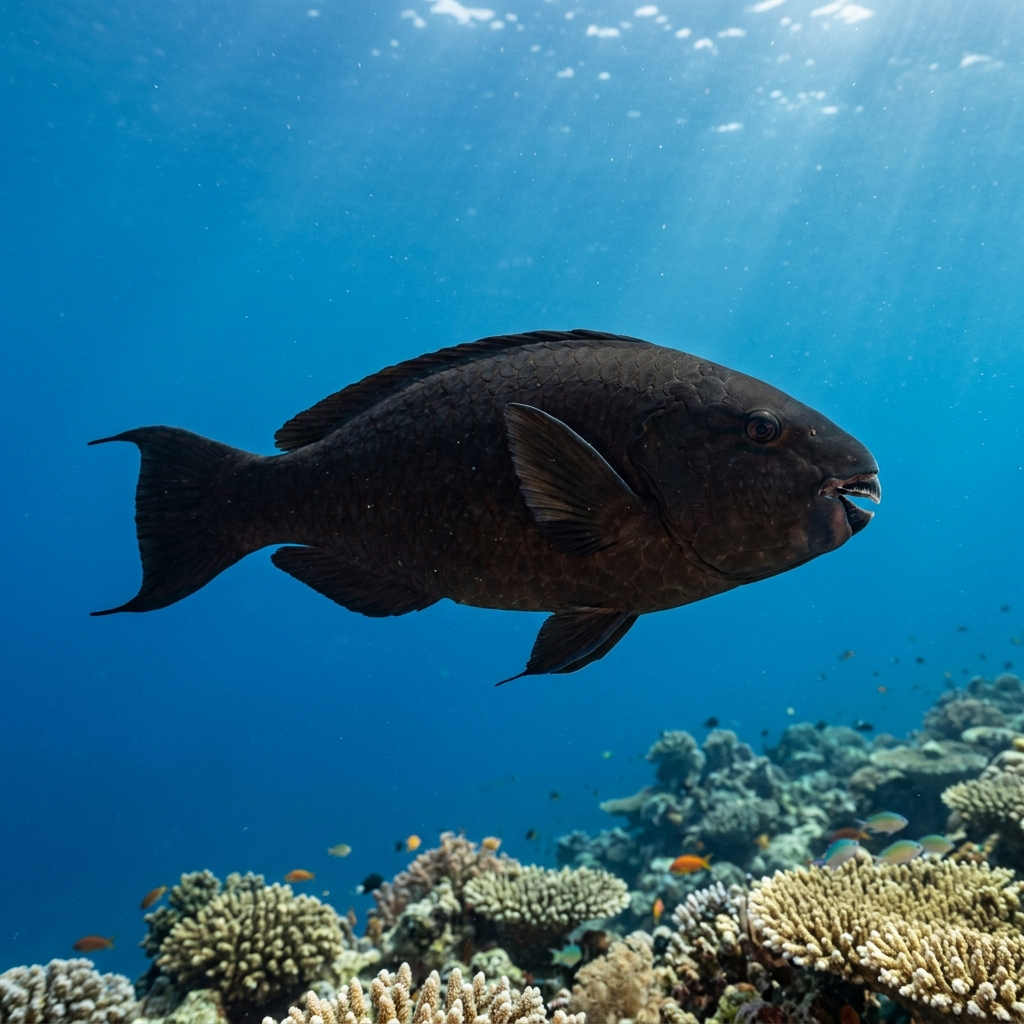
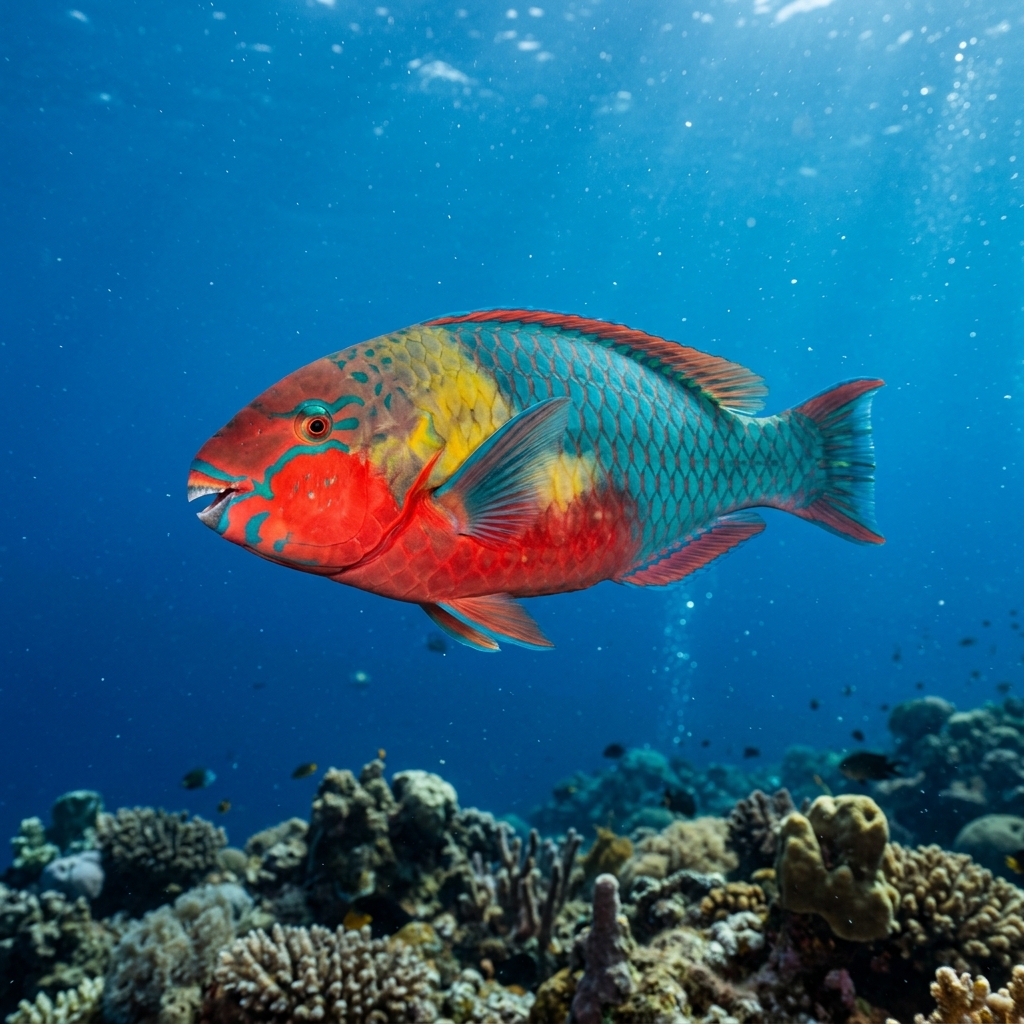
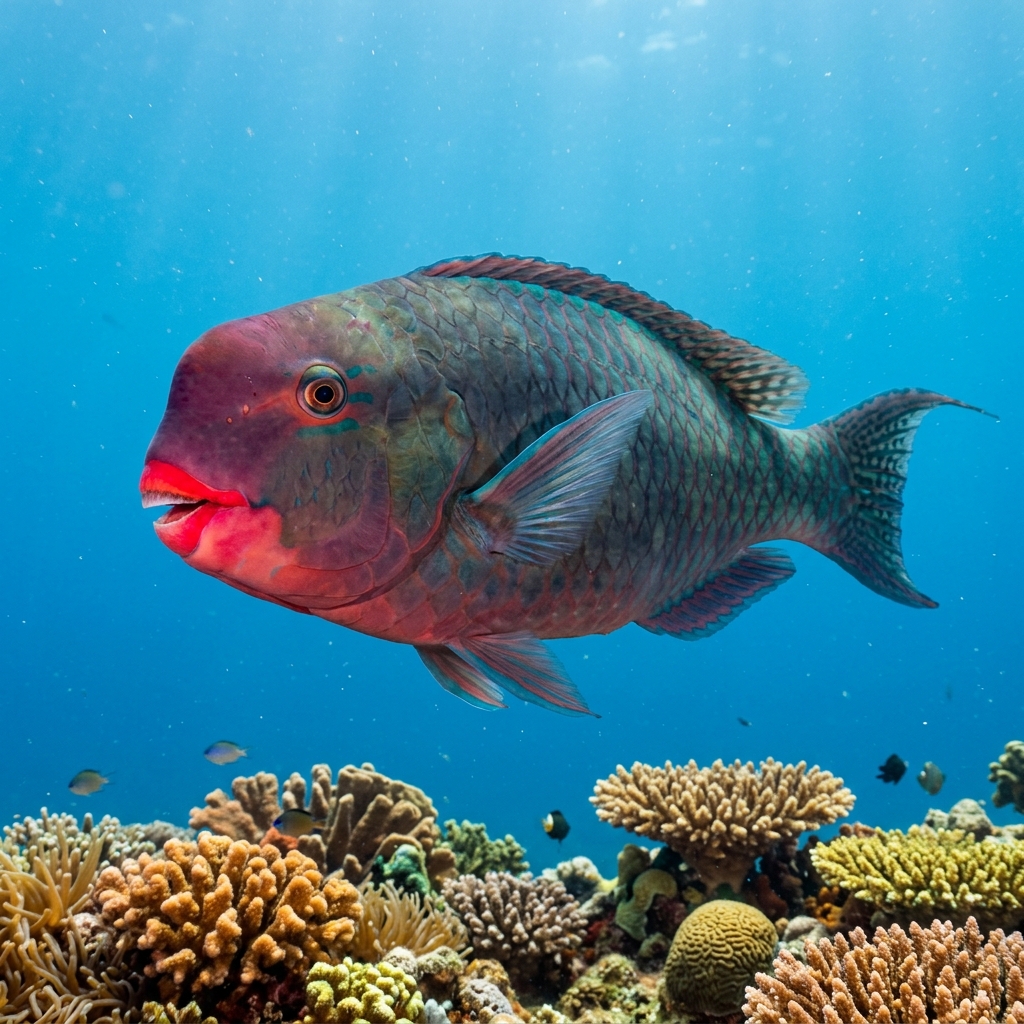
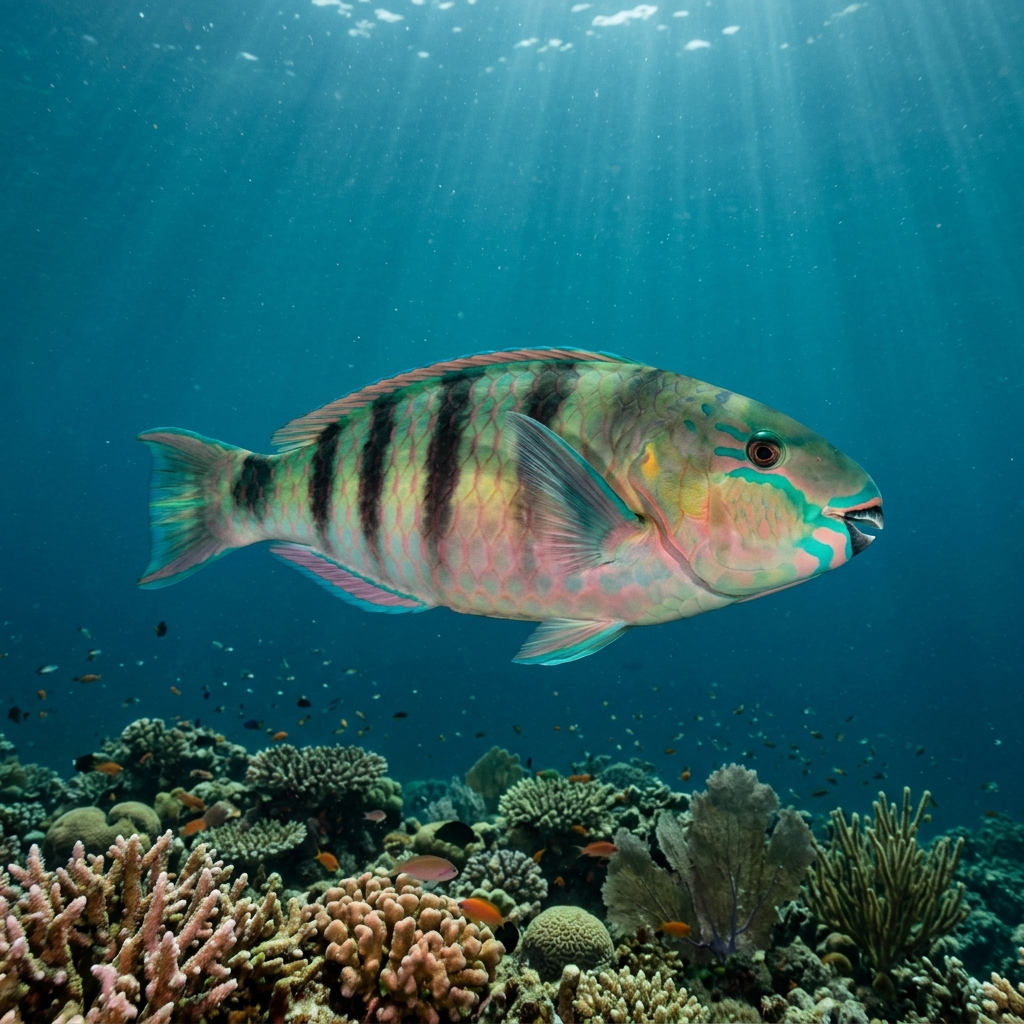
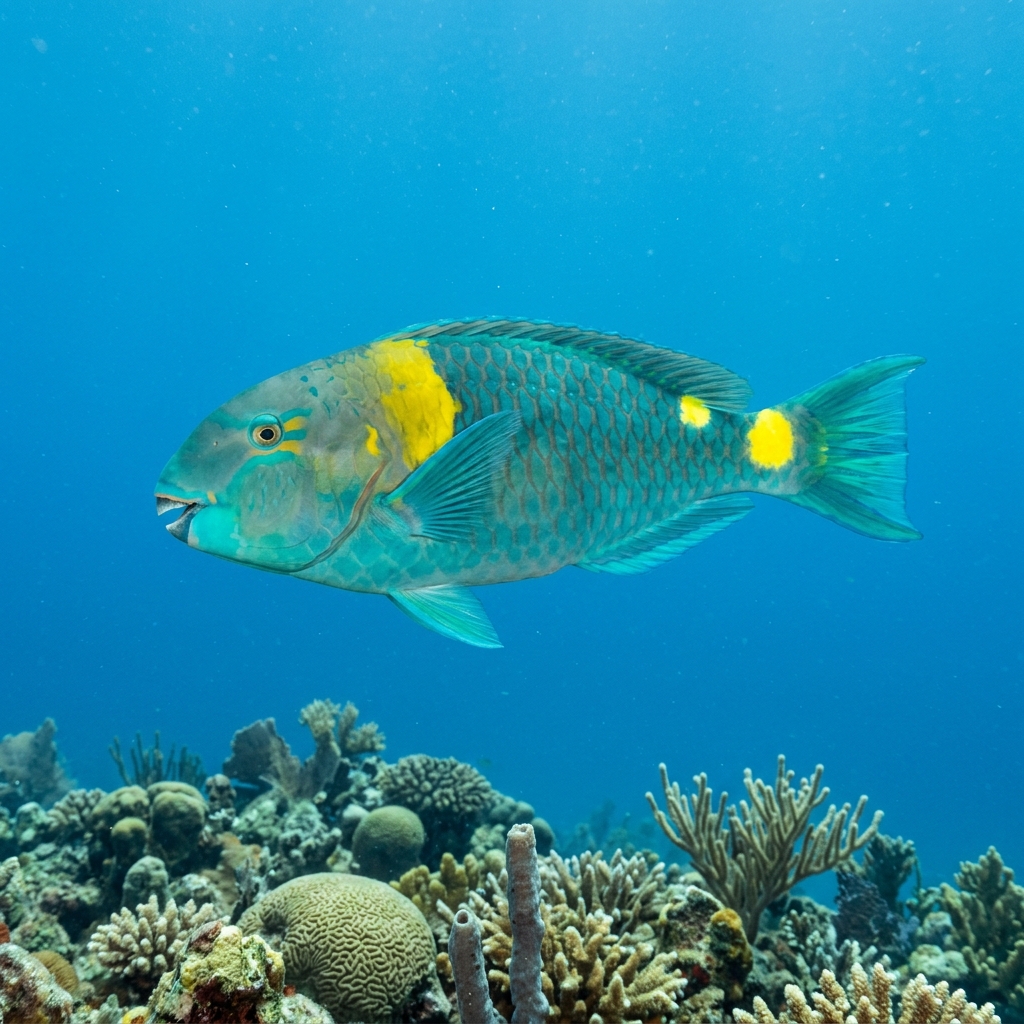
Look for a chunky, torpedo-shaped body and a steep, blunt forehead that gives the group its name, sitting just above a fused, beak-like mouth used to scrape algae off coral rock. Colouring runs from muted greens and browns to more vivid blue-green depending on the species and life stage, often with patchy or mottled scale patterns rather than crisp stripes. Because this listing covers a genus rather than one species, exact size and markings vary, but the steep-nosed profile and constant rasping motion at the reef surface are the giveaway across the group.
Divers most often find it working over hard coral and reef rock, rasping at the surface with its fused beak in short, repeated bites rather than swimming freely. It tends to hold its ground or drift off unhurried rather than bolt, and sightings lean toward uncommon to common at most sites, occasionally building into loose groups on healthier reef flats. Most activity happens in daylight hours when the grazing is easiest to spot.
That constant grazing matters: by scraping algae and dead coral surface off the reef, this genus helps keep coral rock clean enough for new coral larvae to settle, and its digested output is a real source of the fine white sand on tropical reef flats.
Comfortable across a 23 to 29C range, so it turns up on tropical reefs year-round with no strong seasonal pattern in the data. Any month works for a dive trip built around seeing one.
Reef neighbours a diver could mistake it for. Use the identification notes above to tell them apart.
Most commonly logged in the Maldives, especially the Central and Northern Atolls, and across Egypt's Red Sea coast from South Sinai down to Marsa Alam. Also a reliable sighting in Thailand, Indonesia, the Philippines, and on Australia's Queensland reefs, with smaller but consistent populations in the Seychelles' Inner Islands and Oman.
Mapping where Bullethead Parrotfish is logged…
Strongest populations are in the Maldives (Central and Northern Atolls) and Egypt's Red Sea, particularly South Sinai and Marsa Alam. Thailand, Indonesia, the Philippines, and Queensland in Australia also log frequent sightings.
There's no strong season in the sighting data, and the water temperatures they're found in (23 to 29C) span most tropical dive calendars, so they're a year-round find on the reefs listed above.
Look for a stocky body, a steep blunt forehead, and a fused beak-like mouth held close to coral rock while feeding. Colour varies by species within the group, from olive and brown to blue-green, so the head shape and grazing behaviour are the more reliable cues.
No. They're grazers focused on coral rock and algae, not divers, and pose no known threat in the water.
Their fused, beak-like teeth let them scrape algae straight off dead coral surfaces, and the leftover coral material they swallow gets ground down and expelled as fine sand, one of the real contributors to white sand reef flats.
Site and sighting data is aggregated from diver logs, iNaturalist and GBIF. For taxonomy and conservation status:
Sixband Parrotfish
2,380 sites