Paracanthurus hepatus
Spot blue tangs year-round in the Yucatán Peninsula and Maldives in 24-29 °C water. Learn the bold blue-and-black palette that makes ID easy.
Safety warning
The retractable caudal spine at the base of the tail can inflict a clean, painful laceration if the fish is cornered, grabbed, or handled. Do not attempt to touch or chase them; give them space and the spine stays folded. Accidental contact usually happens to divers or snorkellers who reach toward a fish in a confined reef crevice.
If you're cut
Tail scalpelGeneral first-aid guidance, not a substitute for professional medical care. In an emergency, call your local emergency number.
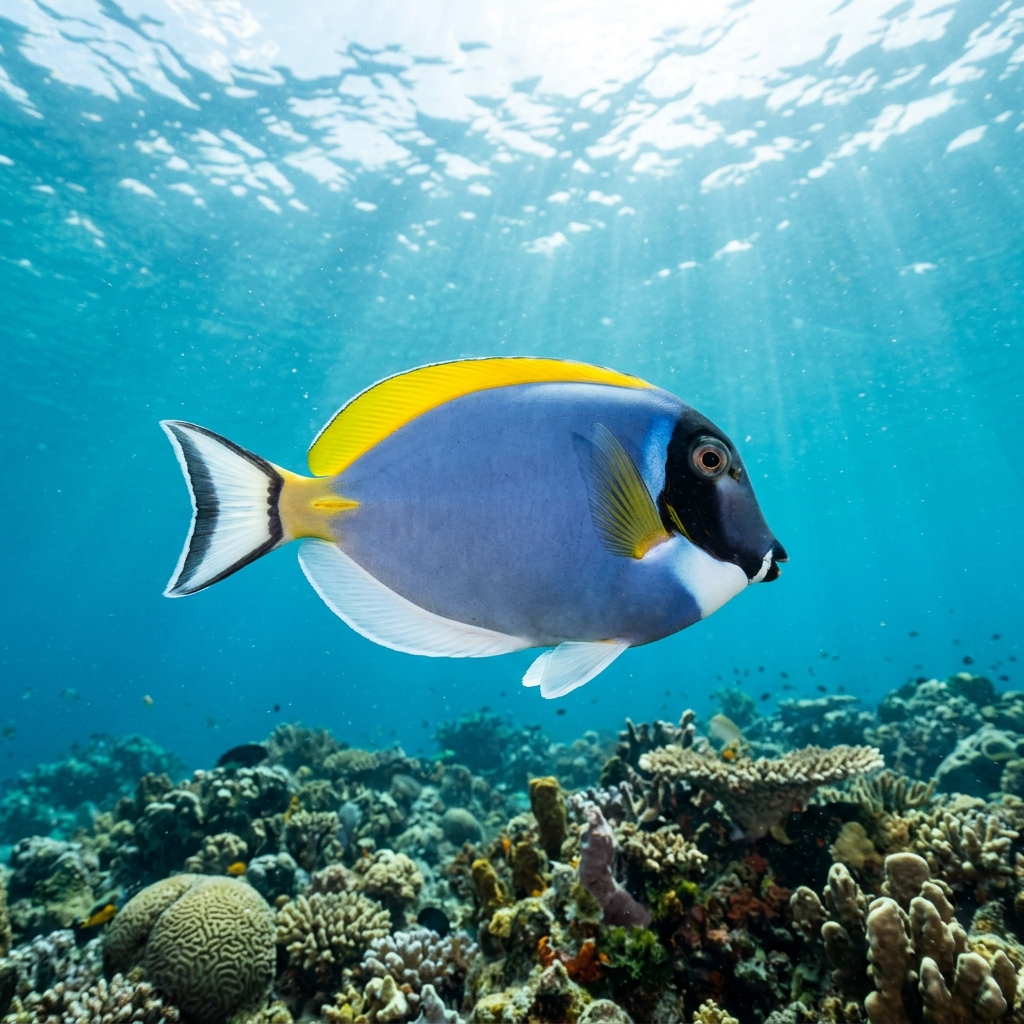
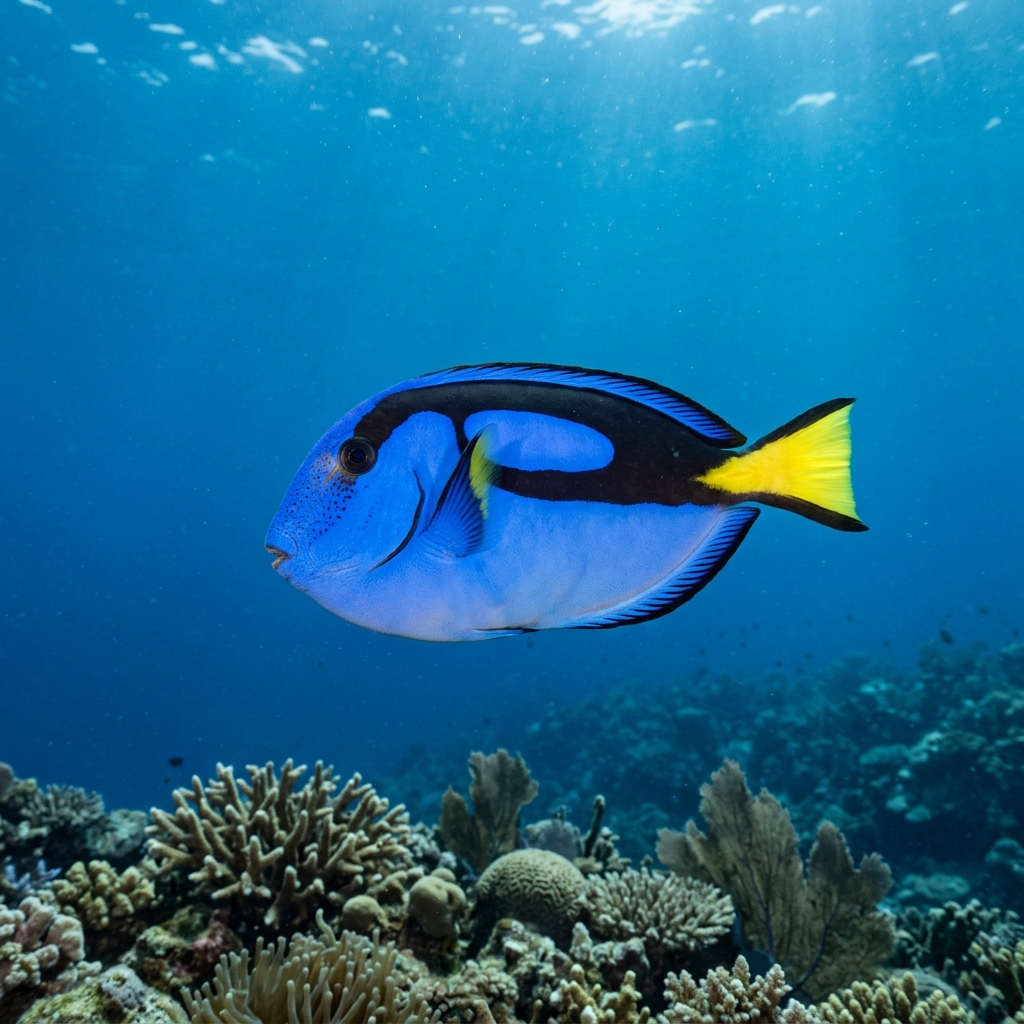
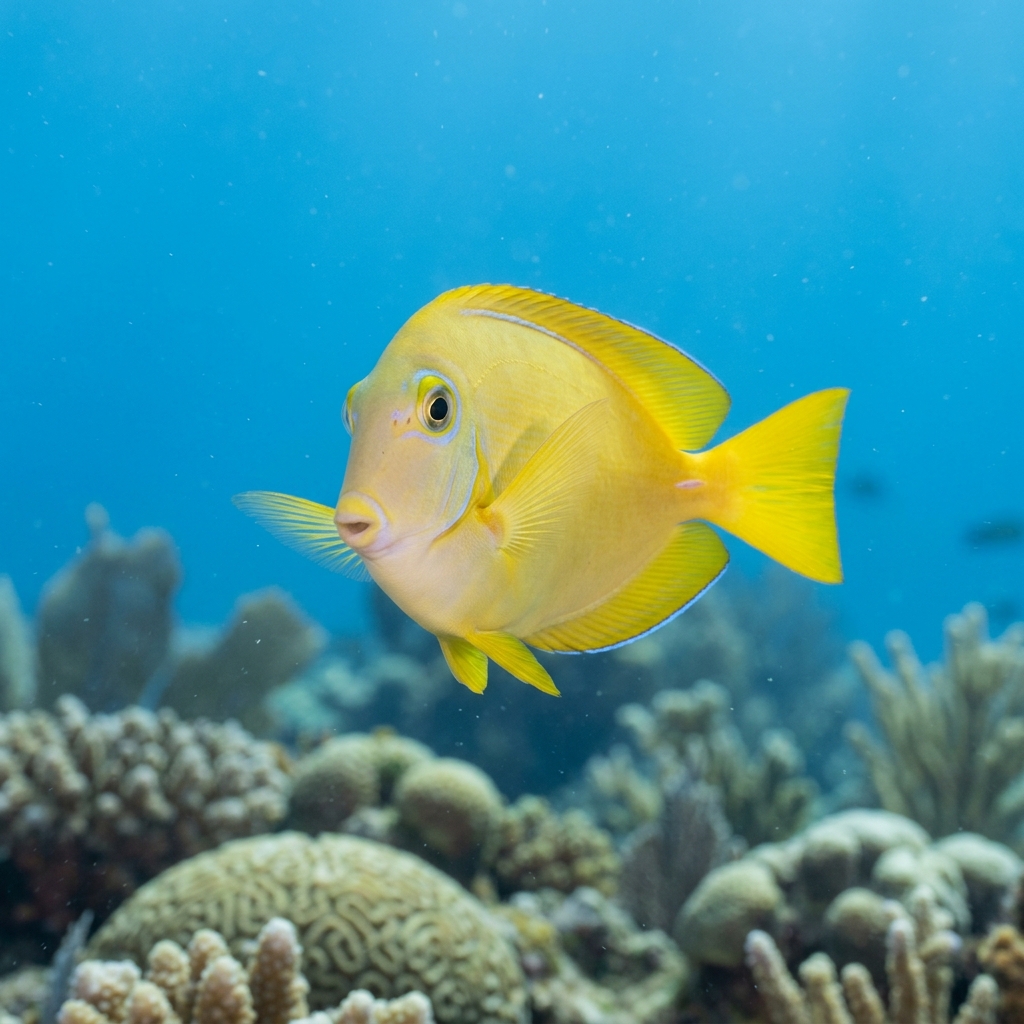
A bold royal-blue body with a distinctive black palette-shaped (teardrop) marking sweeping from behind the eye down and around the pectoral fin makes this one of the easier reef fish to name at a glance. The tail has a bright yellow tip, giving a sharp blue-and-black-and-yellow colour contrast that stands out even in mixed-species schools. At roughly 20 cm it sits mid-sized on the reef, with the oval, laterally compressed body typical of surgeonfish. Juveniles are a completely different colour, bright yellow with pale blue highlights near the eyes, so do not expect them to match the adult.
Most encounters find blue tangs cruising mid-water or grazing algae off the reef surface, often in loose groups or mixed schools with other surgeonfish. They are largely unbothered by divers and carry on feeding or socialising as you approach. Early morning and late afternoon are the most active feeding windows, and that is when you are most likely to see larger groups working over a coral head.
All surgeonfish, blue tangs included, carry a sharp, scalpel-like spine at the base of the tail (the caudal spine, which gives the family its name). It folds flat during normal swimming but can be flicked outward if the fish is threatened or handled.
In the Northern Hemisphere it is present year-round with no concentrated peak, which makes sense given its preference for warm tropical reef water in the 24-29 °C range. In the Southern Hemisphere, sightings concentrate between July and October.
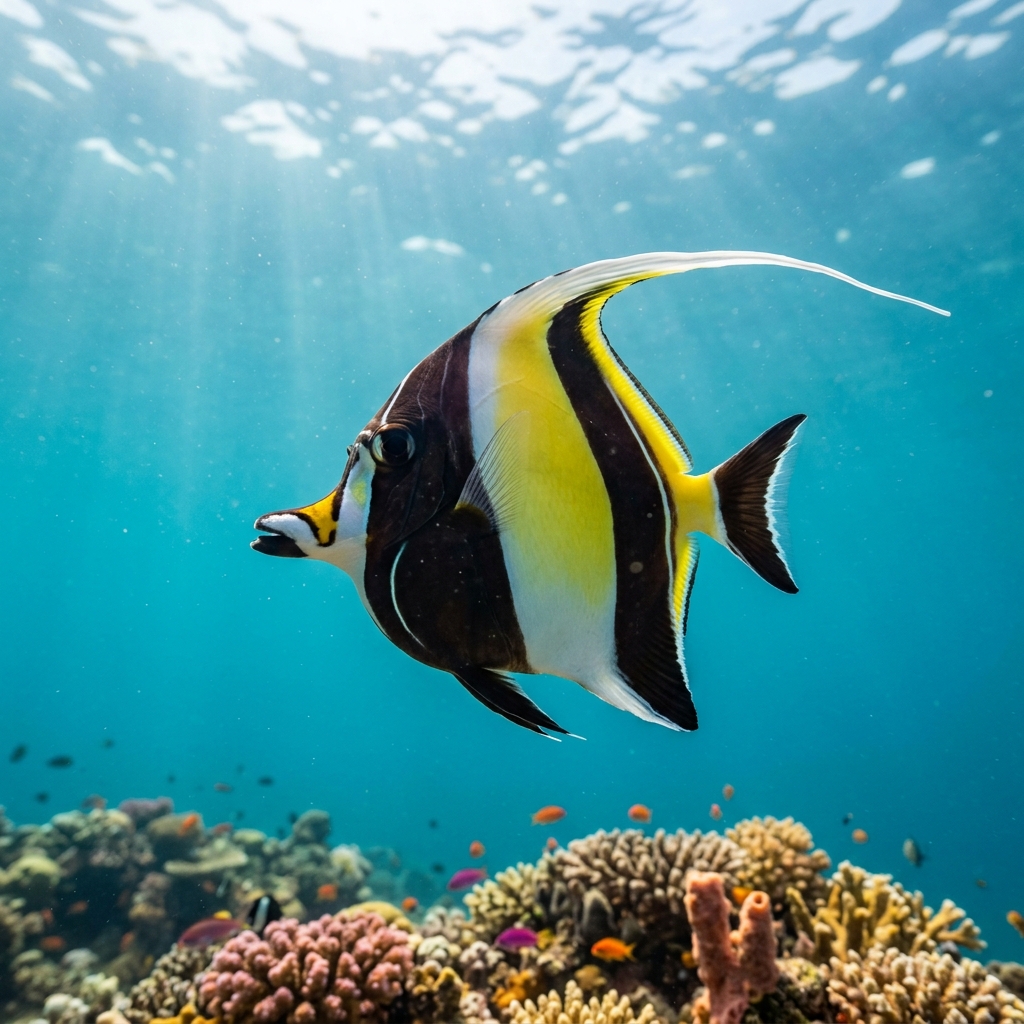
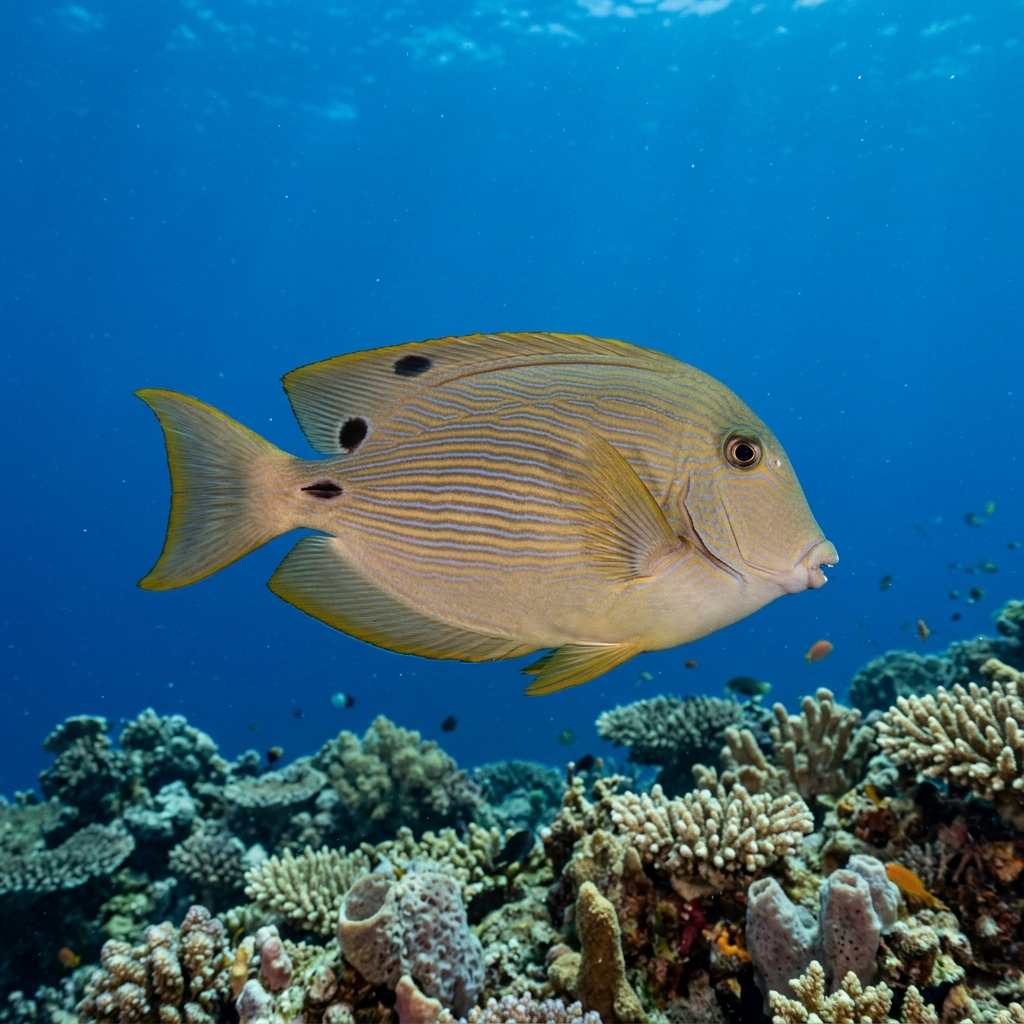
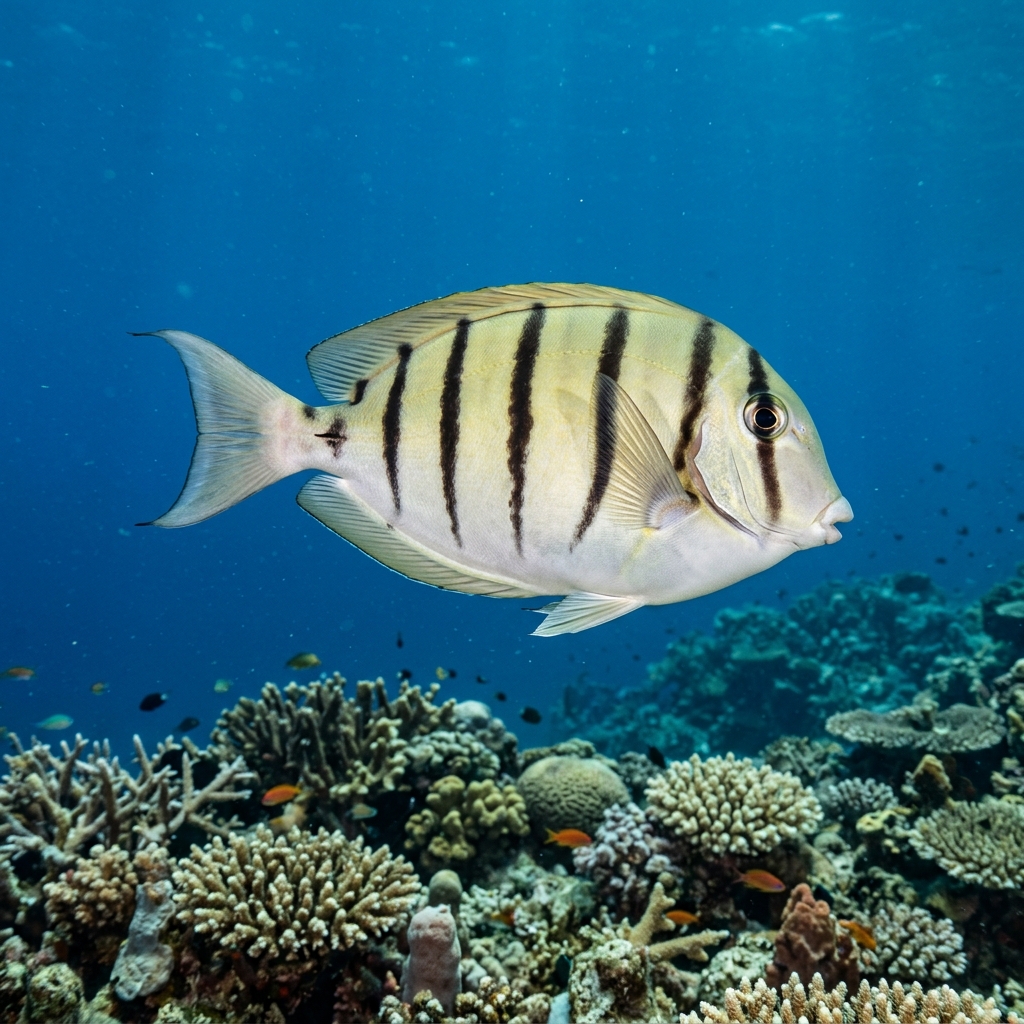
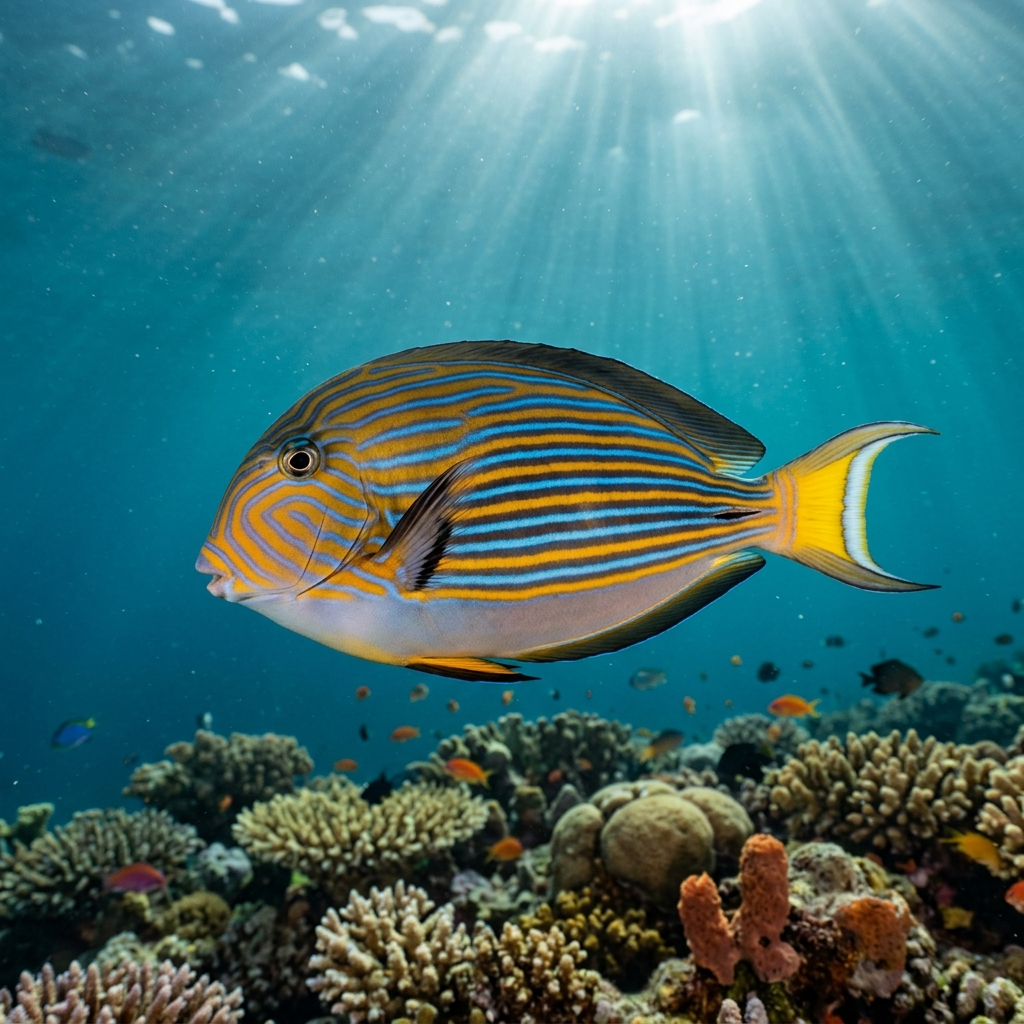
Reef neighbours a diver could mistake it for. Use the identification notes above to tell them apart.
Most commonly logged in Mexico (particularly the Yucatán Peninsula) and the United States (Florida and the Southeast), with strong populations across the Maldives, Philippines, Indonesia, and throughout the Caribbean, including the Cayman Islands, Bahamas, and Colombia's Caribbean coast. It also turns up regularly in Queensland, Australia. The Indo-Pacific and Caribbean are both reliable regions, making it one of the most widely encountered surgeonfish in tropical diving.
Mapping where Blue Tang (Dory) is logged…
Blue tangs are logged at reef sites across much of the tropical world. The strongest concentrations of sightings come from the Yucatán Peninsula in Mexico, Florida and the wider Caribbean (including the Cayman Islands, Bahamas, and Colombia), the Maldives, and the Philippines and Indonesia in the Indo-Pacific. Queensland, Australia is also a reliable spot.
In the Northern Hemisphere they are present year-round on tropical reefs, with no single best season. In the Southern Hemisphere, sightings tend to peak between July and October. For the best activity on any reef, aim for early morning or late afternoon when they feed most actively.
Look for a vivid royal-blue oval body with a black palette-shaped marking that sweeps from behind the eye down around the pectoral fin, and a bright yellow tail tip. That blue-black-yellow combination is unique among common reef surgeonfish. Note that juveniles are entirely yellow and look nothing like the adult.
They are not aggressive, but like all surgeonfish they have a sharp retractable spine at the base of the tail that can cause a painful cut. The risk is low as long as you do not try to handle or corner them. Keep your hands clear and most encounters are completely hassle-free.
Adults typically reach around 21 cm in length. On the reef they appear mid-sized, larger than most reef damselfishes but noticeably smaller than a full-grown parrotfish.
Juvenile blue tangs are bright yellow, with just faint pale-blue highlights near the eyes and fin edges, bearing almost no resemblance to the deep-blue adult. This dramatic colour shift happens gradually as they mature. It is a good reminder to check size and fin shape, not just colour, when identifying surgeonfish on the reef.
Site and sighting data is aggregated from diver logs, iNaturalist and GBIF. For taxonomy and conservation status:
Striped Surgeonfish
3,289 sites