Naso elegans
Bright orange dorsal and tail stripe over a grey-brown body, most reliably spotted around Egypt's Red Sea and the Maldives' Central Atolls, year-round.
Safety warning
The tail spines can cause a deep, painful cut if you grab or corner the fish, so admire it at a distance and never chase it into a crevice. Injuries are almost always the result of a diver's hand getting too close, not the fish initiating contact.
If you're cut
Tail scalpelGeneral first-aid guidance, not a substitute for professional medical care. In an emergency, call your local emergency number.
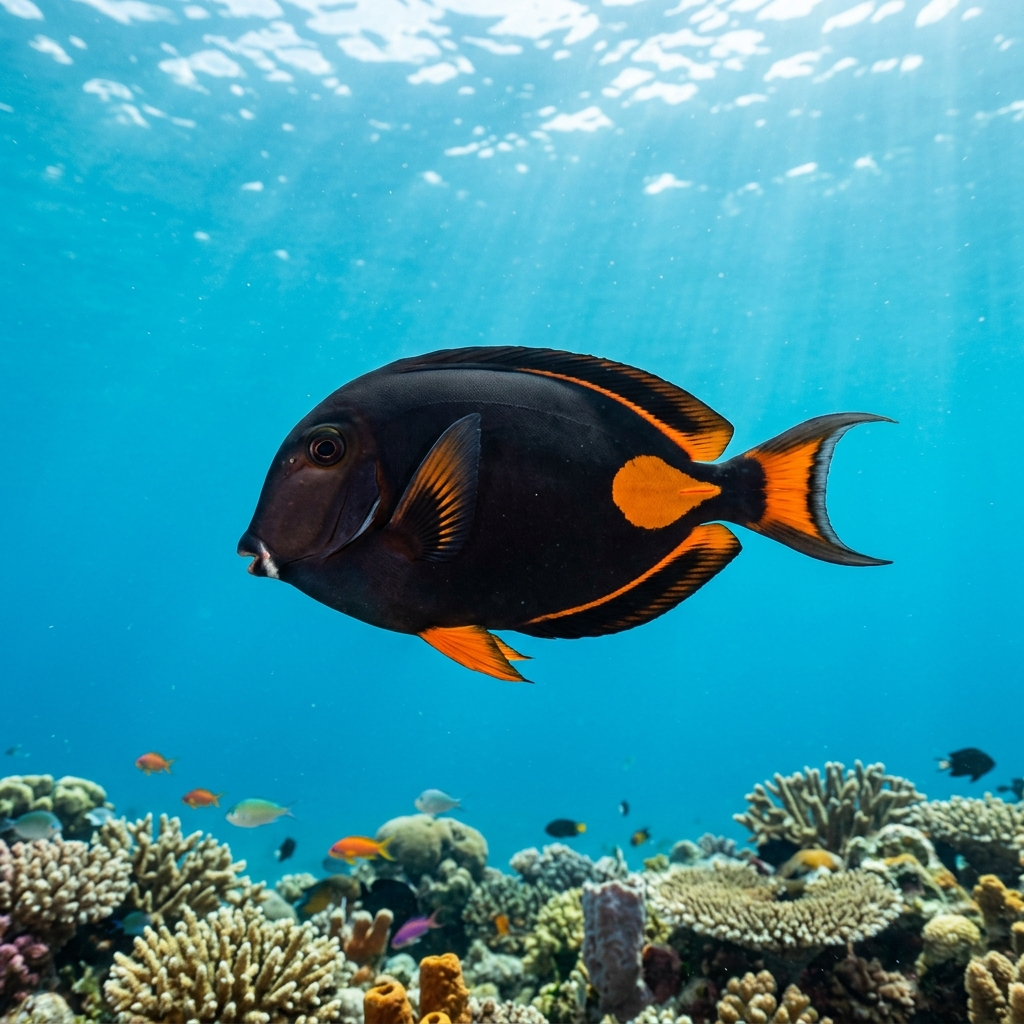
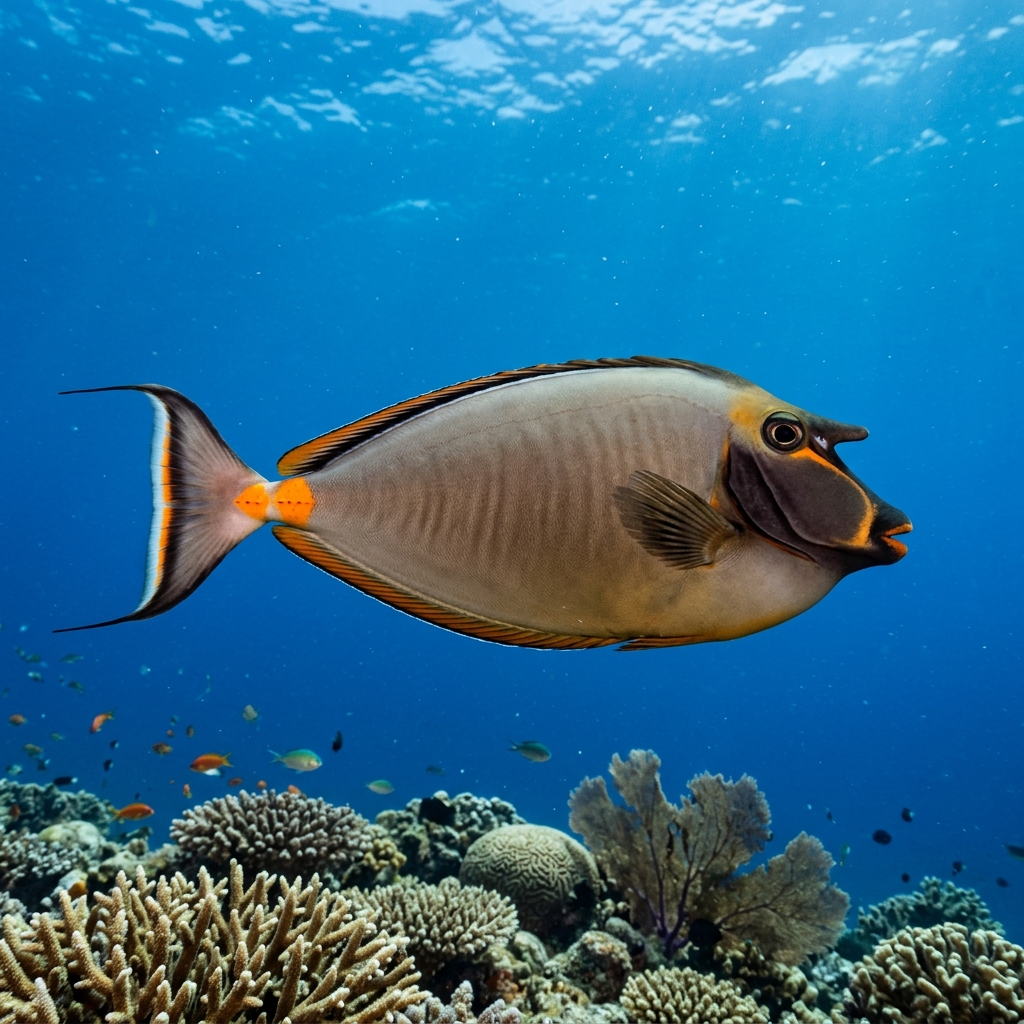
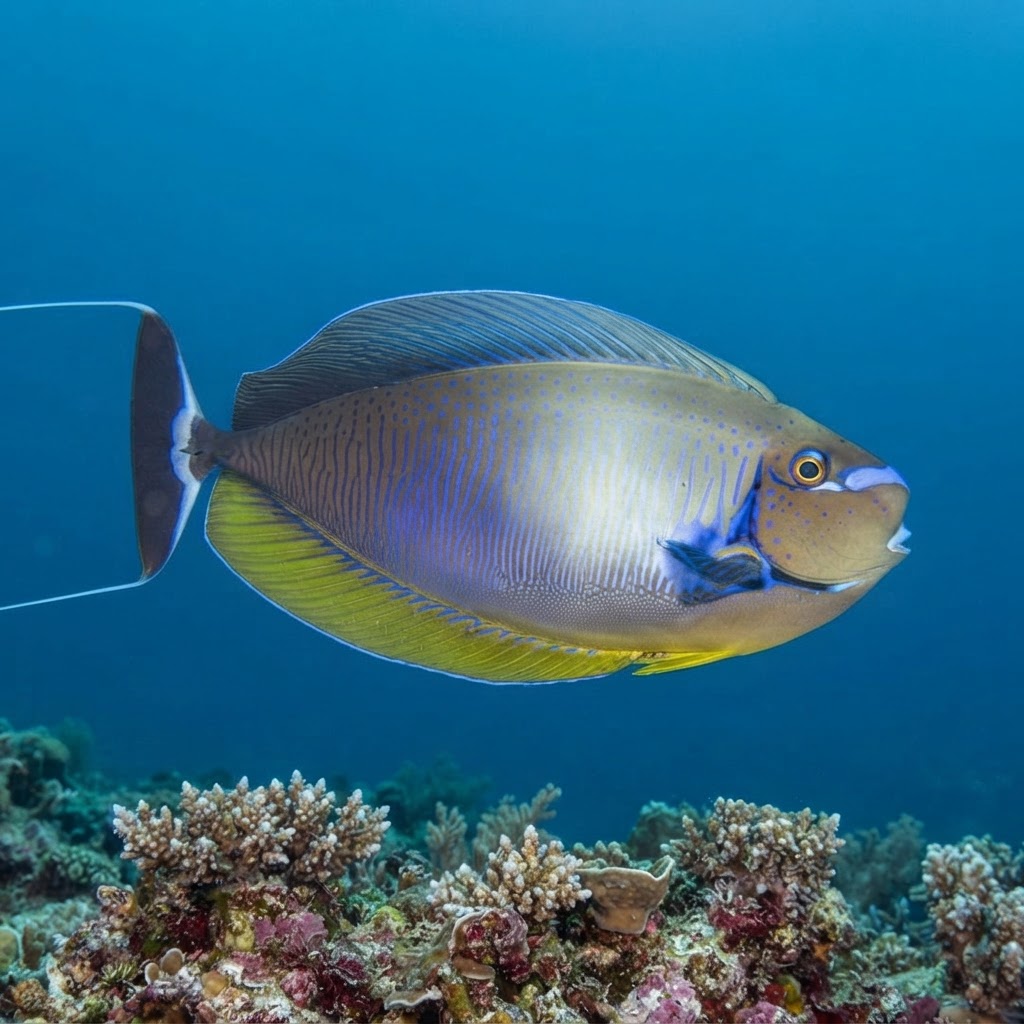
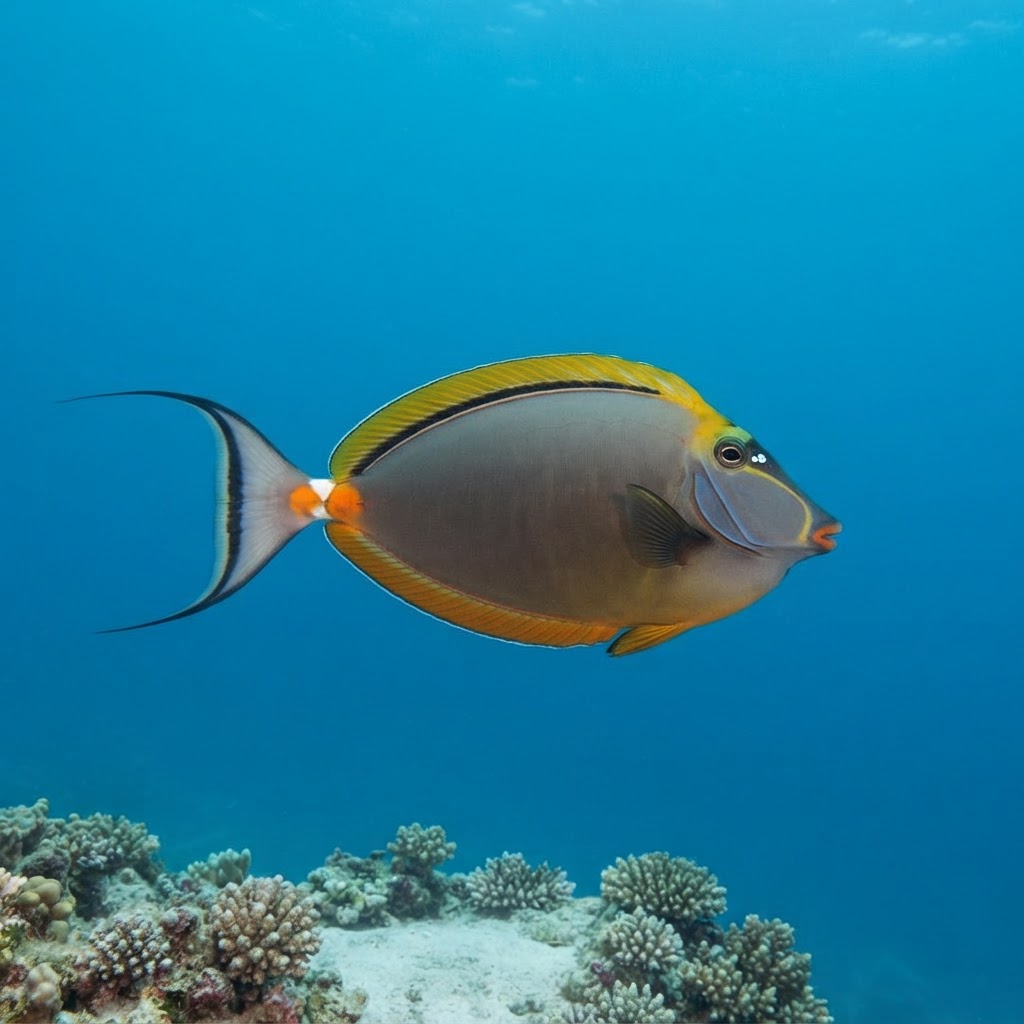
Look for a deep, oval-bodied fish around 30 cm with a grey to olive-brown body that darkens toward a black rear section, split by a bright orange-yellow stripe running along the base of the dorsal fin and a matching orange band near the tail. The tail itself carries two forward-curving black spines near the base, the surgeonfish family's signature weapon, which show as small dark hooks if you look closely. There's no true horn on the forehead as in some relatives, but the sharp orange-and-black tail markings are the giveaway at a glance.
Usually seen picking over reef flats and slopes solo or in loose small groups, grazing algae off rock and dead coral rather than schooling in open water. It tends to keep a working distance from divers rather than fleeing outright, so slow, level approaches along the reef edge get the best looks. Most sightings come from typical daytime reef dives rather than any particular hour.
Like other surgeonfish, it carries a pair of razor-sharp, scalpel-like spines folded at the base of the tail that flick out only when the fish feels threatened, not during normal grazing.
No clear seasonal pattern shows up in the sighting data, and with a comfortable temperature niche of roughly 25 to 29 C, it's present on these reefs all year round.
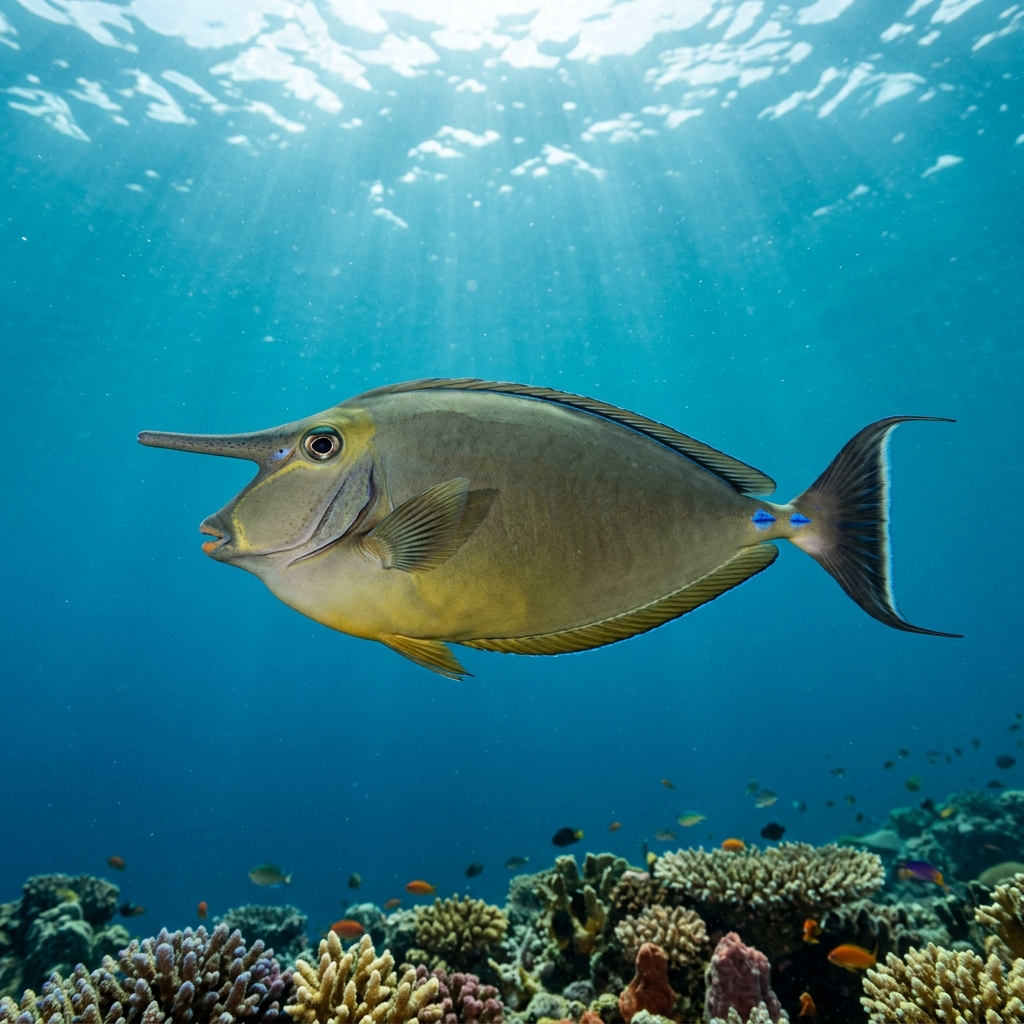
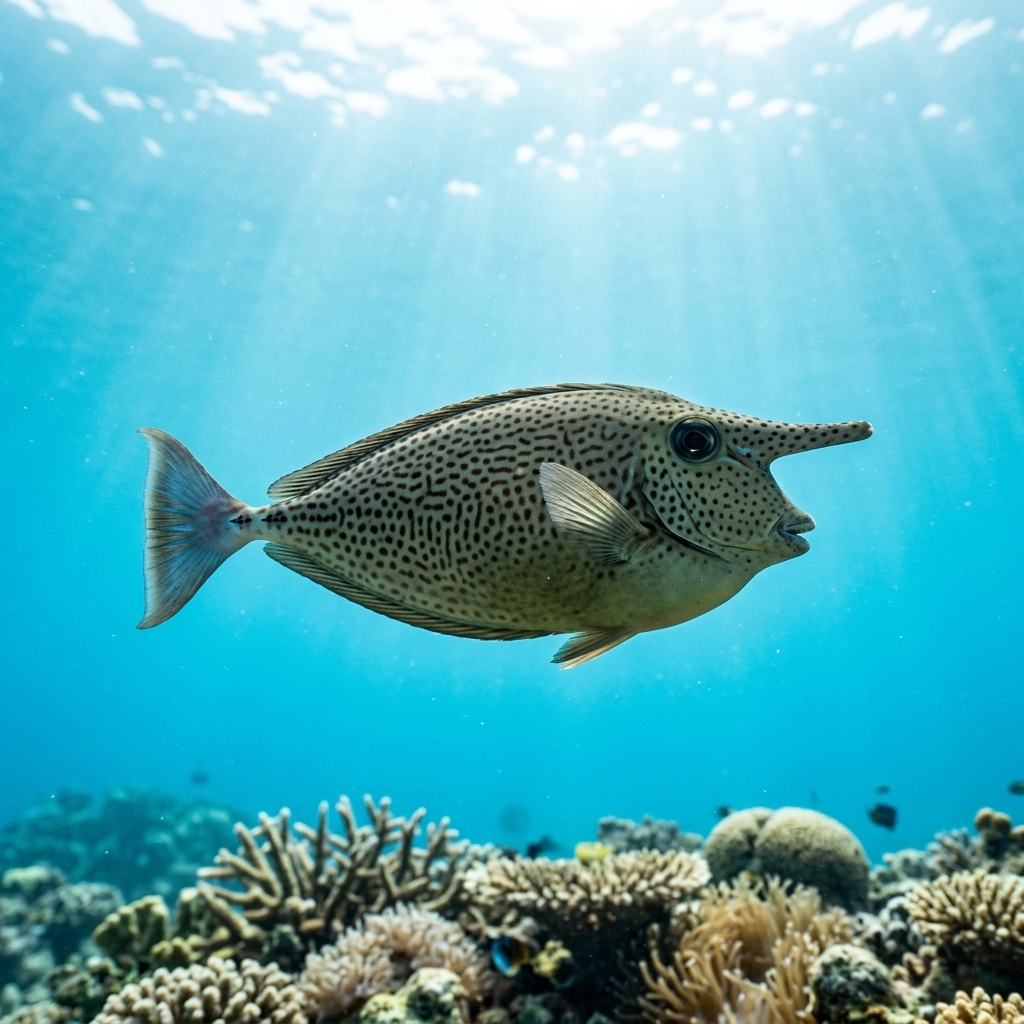
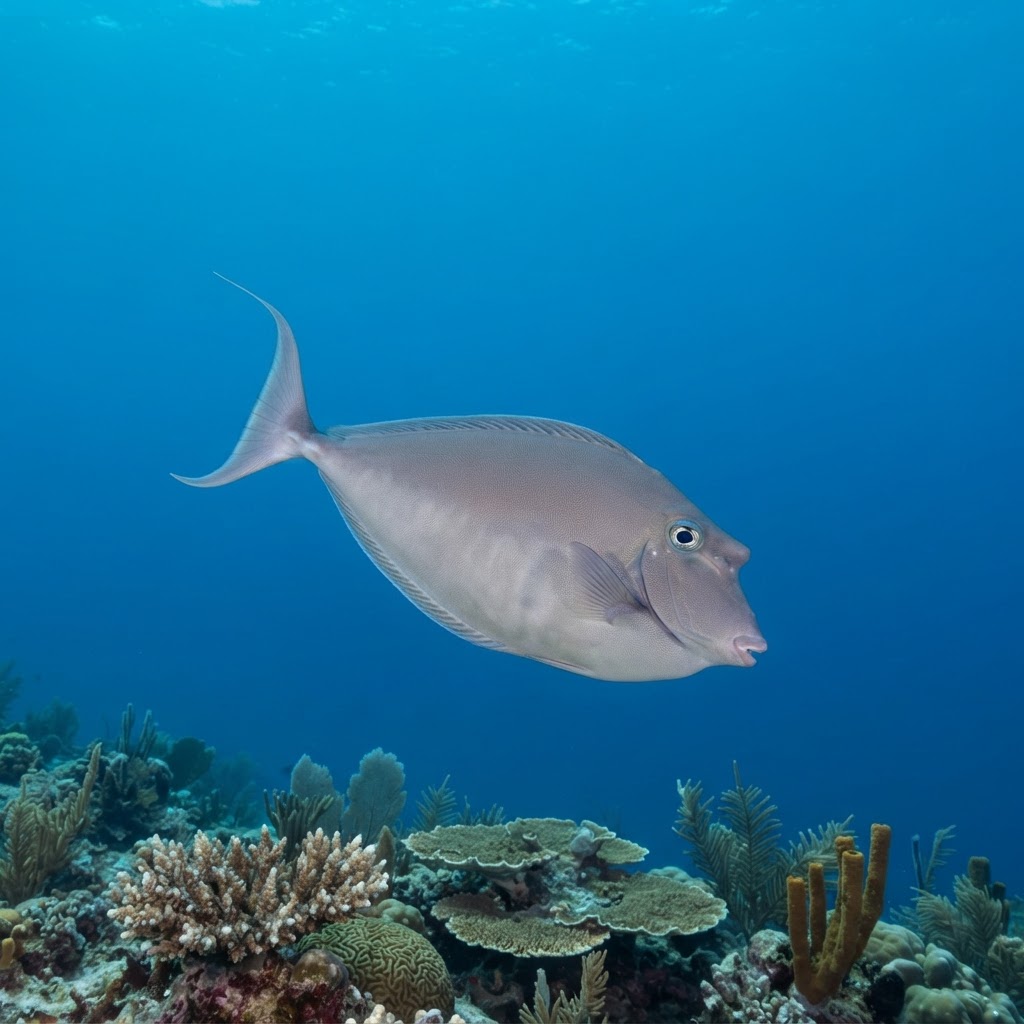
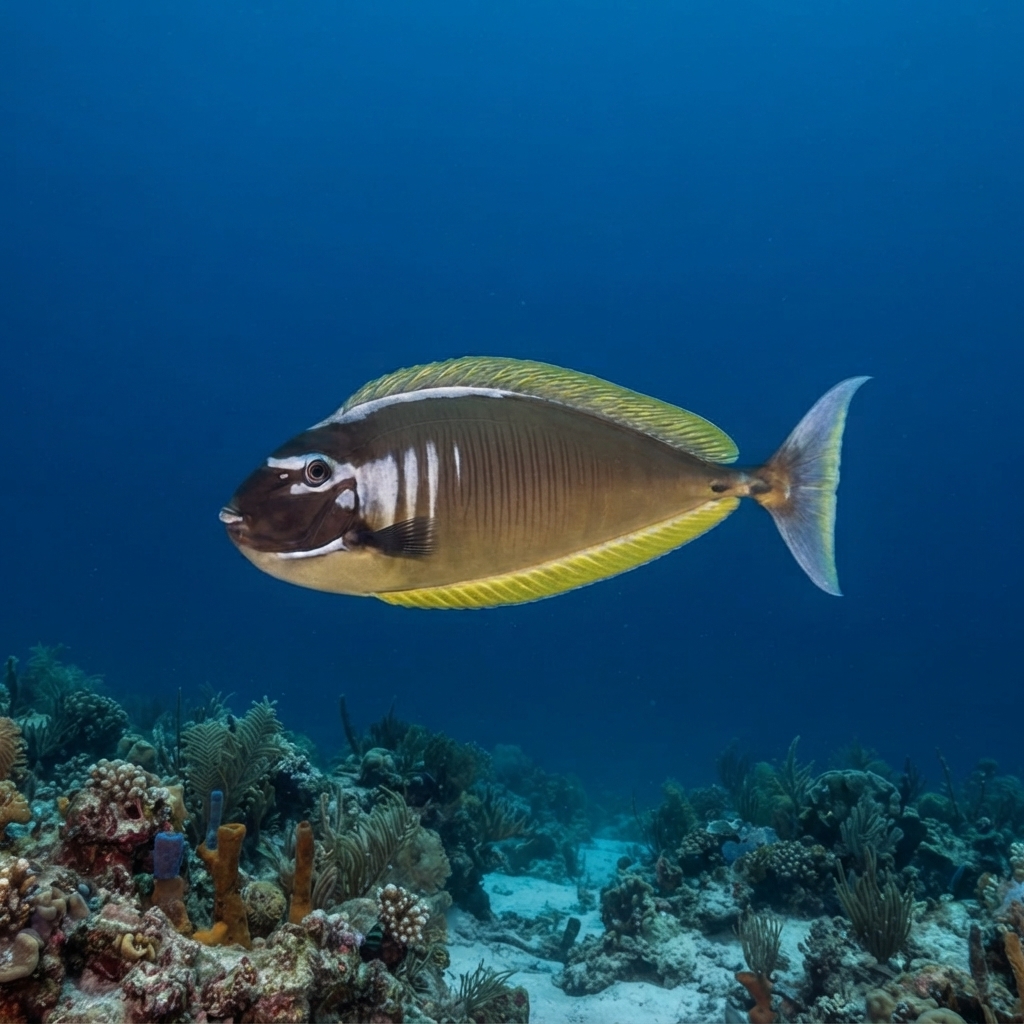
Reef neighbours a diver could mistake it for. Use the identification notes above to tell them apart.
This is one of the most consistently logged surgeonfish in the Red Sea and the Maldives, with strong numbers around Marsa Alam and the Deep South, South Sinai and the Red Sea Riviera in Egypt, and across the Central Atolls of the Maldives. Smaller but reliable populations turn up in Thailand's Khao Lak, the Inner Islands of Seychelles, Saint-Paul in Reunion, and KwaZulu-Natal in South Africa.
Mapping where Orangespine Unicornfish is logged…
Best odds are in the Egyptian Red Sea, especially Marsa Alam, South Sinai and the Red Sea Riviera, and across the Maldives' Central Atolls. It's also a regular sighting in Khao Lak (Thailand), Seychelles' Inner Islands and Reunion's Saint-Paul area.
There's no strong season in the sighting data, and it tolerates a wide warm-water range, so it's a year-round find on Red Sea and Indian Ocean reefs.
They're not aggressive, but they carry sharp tail spines that can cut deeply if the fish is grabbed or cornered. Keep hands away and give it room and there's no issue.
Look for a grey-brown body around 30 cm long with a bold orange stripe along the dorsal fin base and another orange patch near the tail, set against a darker rear body. Two small black spines sit at the base of the tail fin.
They typically reach around 31 cm in length, a fairly standard size for reef-associated surgeonfish, and are usually seen at that size on dives rather than as small juveniles.
Despite the 'unicornfish' name, this species has no forehead horn; instead it relies on a pair of scalpel-sharp spines at the base of the tail that flick out for defence, a trait shared with other surgeonfish.
Site and sighting data is aggregated from diver logs, iNaturalist and GBIF. For taxonomy and conservation status:
Bignose Unicornfish
727 sites