Gomphosus spp.
Look for a long beak-like snout on the reef flats of South Sinai, Queensland or the Maldives, year-round in water from 24 to 29 C.
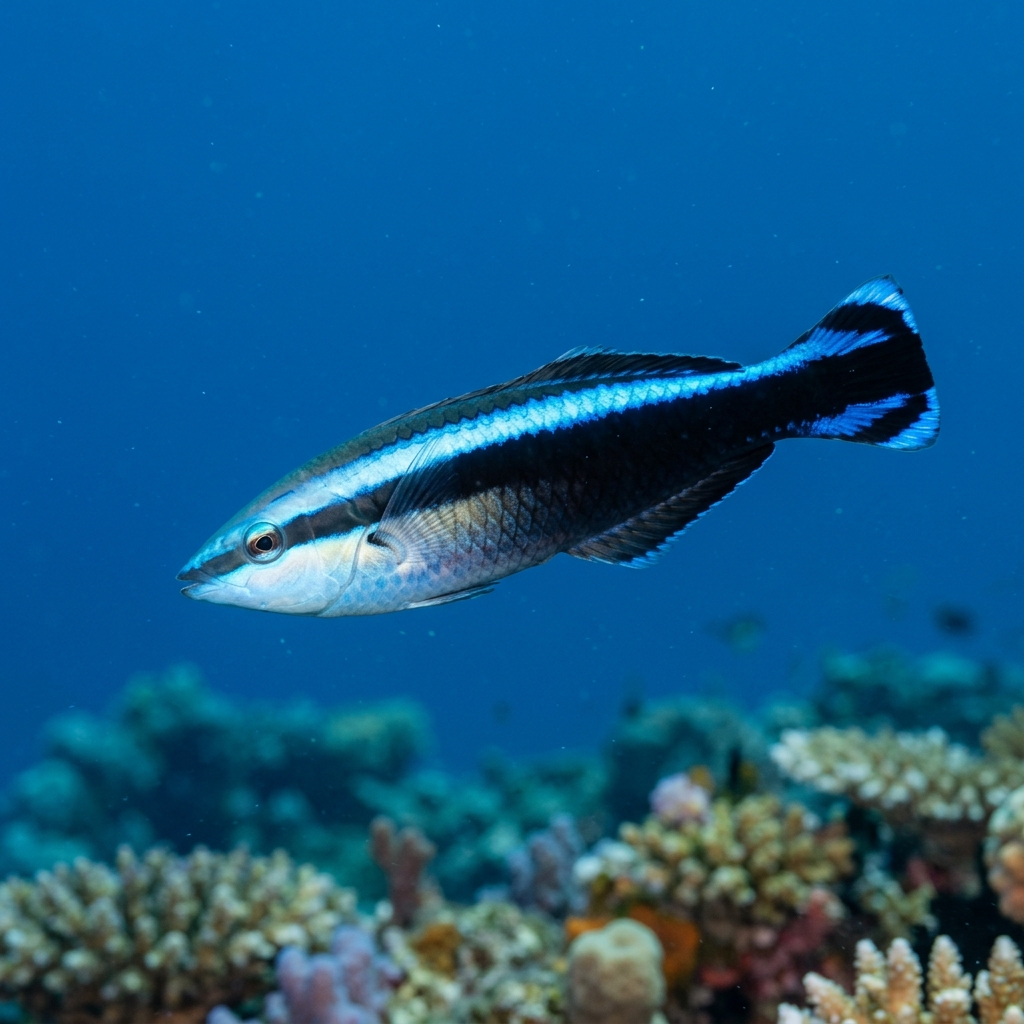
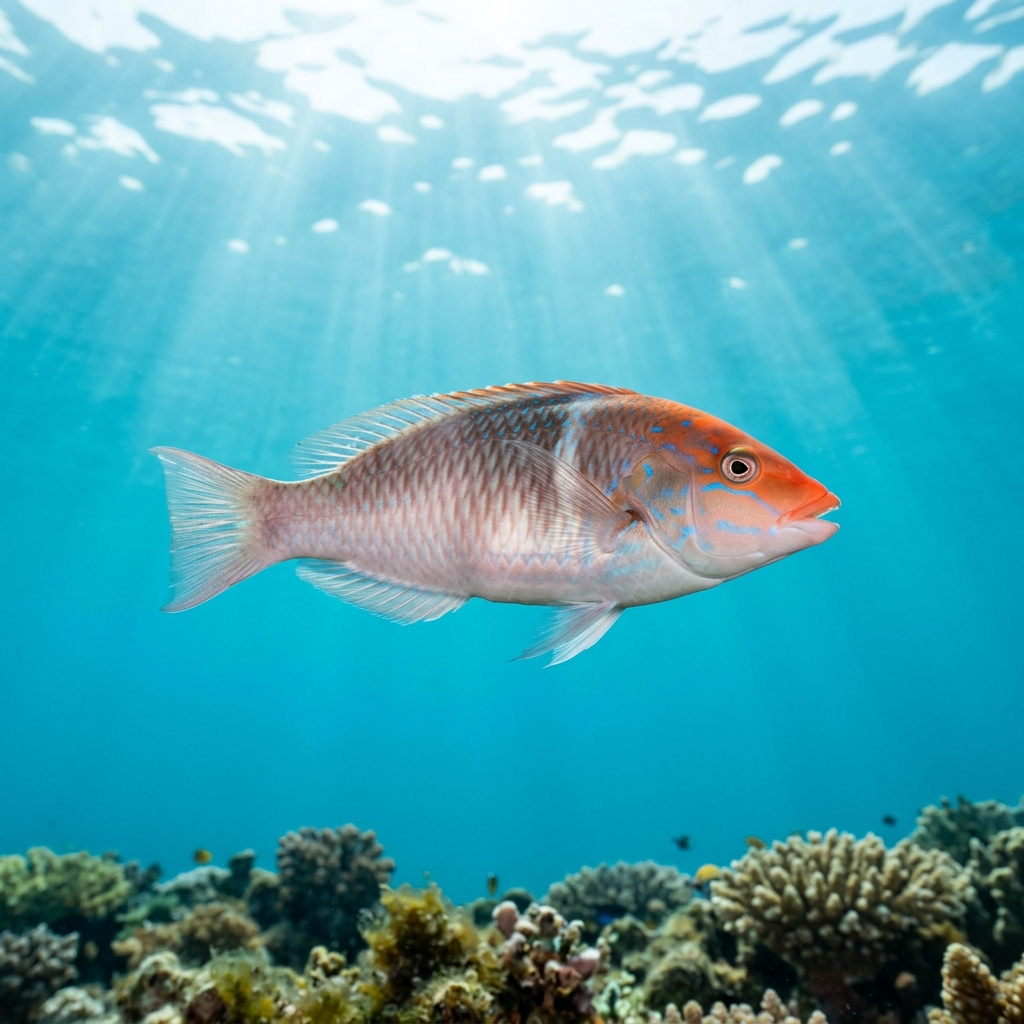
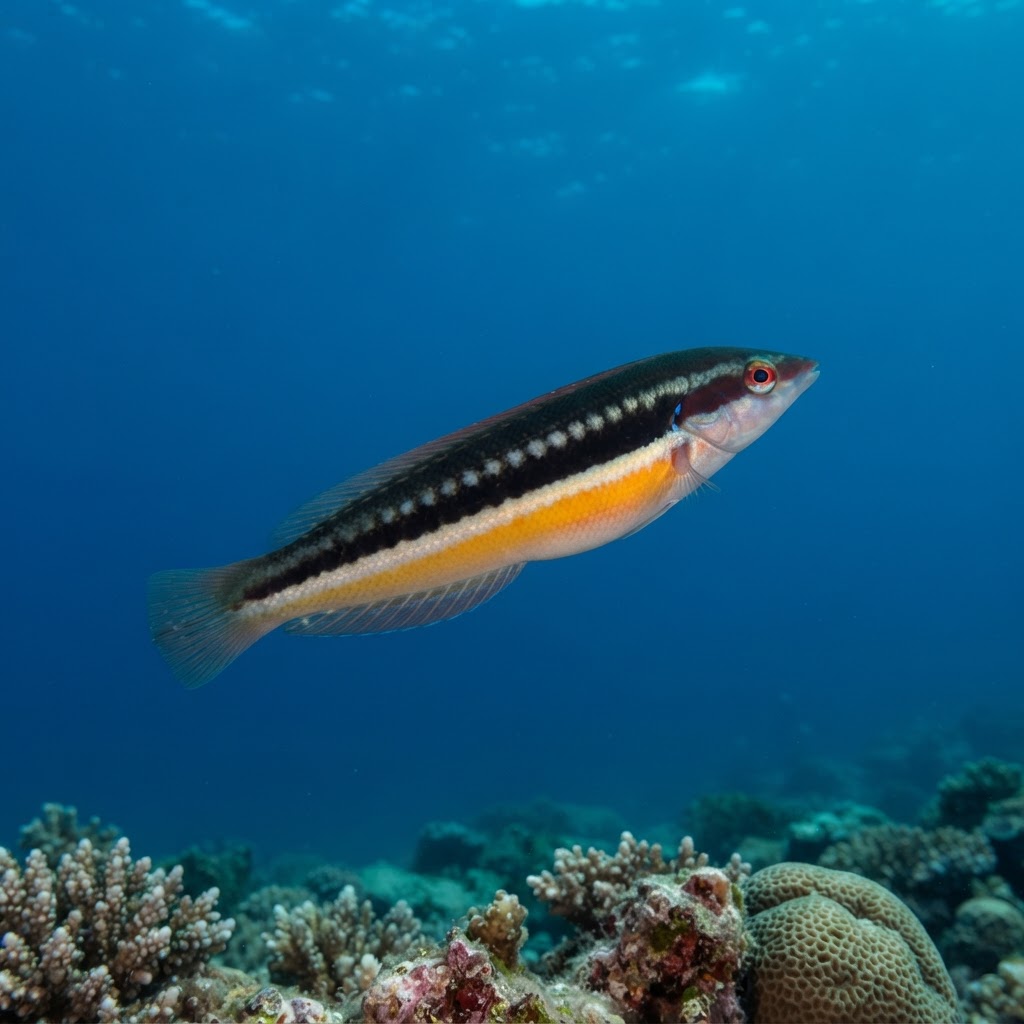
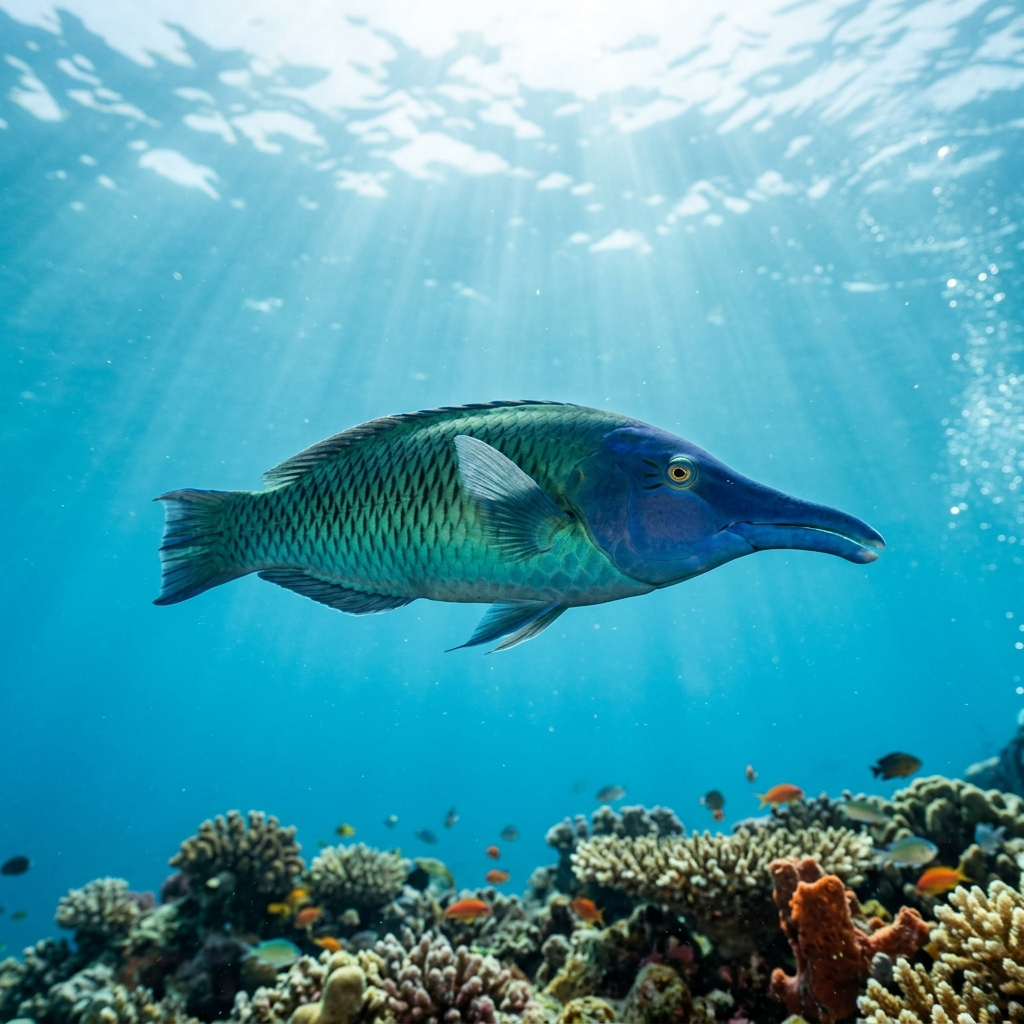
Look for a slender, torpedo-shaped wrasse with an unmistakable elongated, beak-like snout used to poke into crevices. Males are a rich teal-green over the whole body, while females are sharply two-toned, pale in front and dark brown to black behind, so a mated pair can look like two different species. Juveniles are paler still, whitish with a dark saddle across the rear half of the body. Watch for its quick, darting swimming style low over the reef rather than a slow cruise.
Expect quick, purposeful bursts low over the reef as it probes rubble and crevices snout-first for small invertebrates and fish, rather than a leisurely cruise. It is wary rather than bold, so a slow, low approach at depth gives you the best window before it darts off. Most sightings are of a single fish going about its business, not a group, and it turns up at all hours the reef is active.
The dramatic colour split between sexes, pale-fronted females and solid teal males, reflects the wrasse habit of changing sex and colour pattern as individuals mature into the dominant male role.
Sightings show no real seasonal pattern, and its comfort range of roughly 24 to 29 C spans tropical reefs year-round, so any month on a trip to these regions gives a fair shot at spotting one.
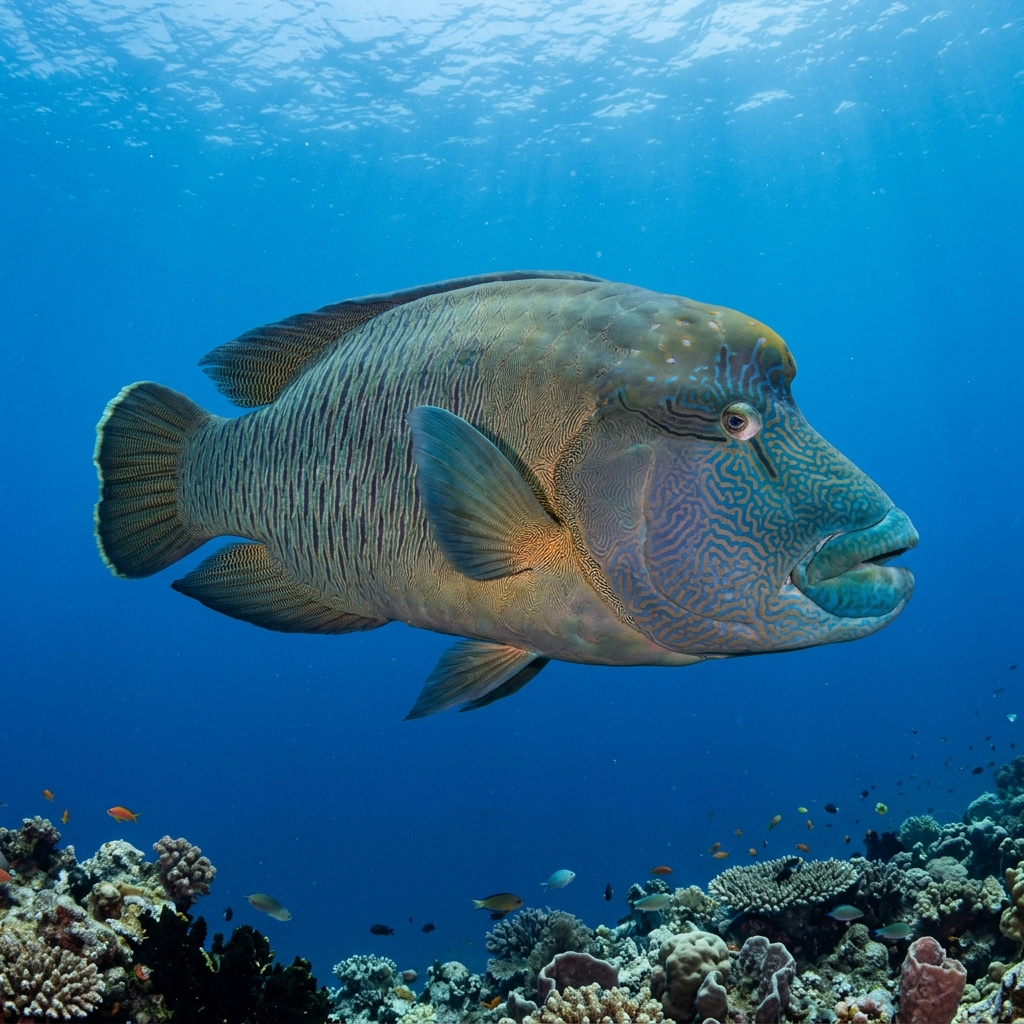
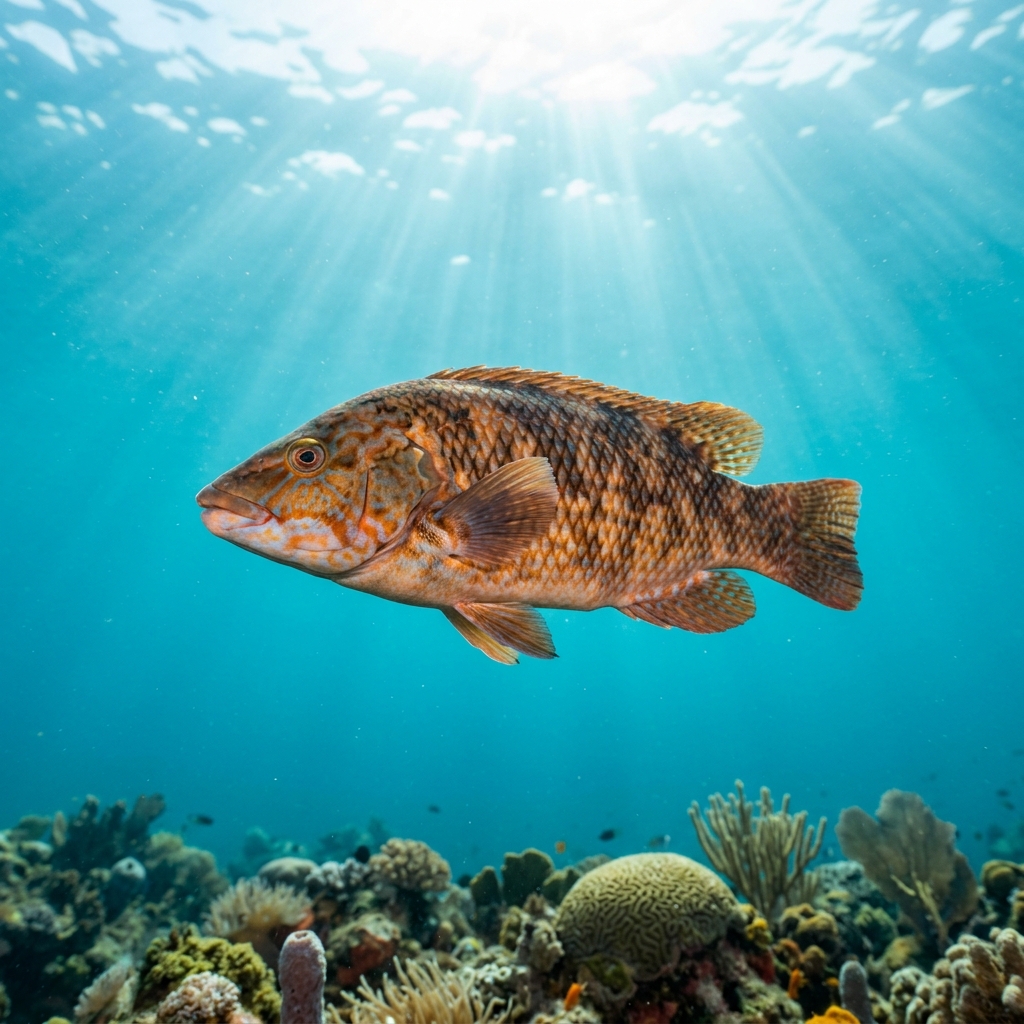
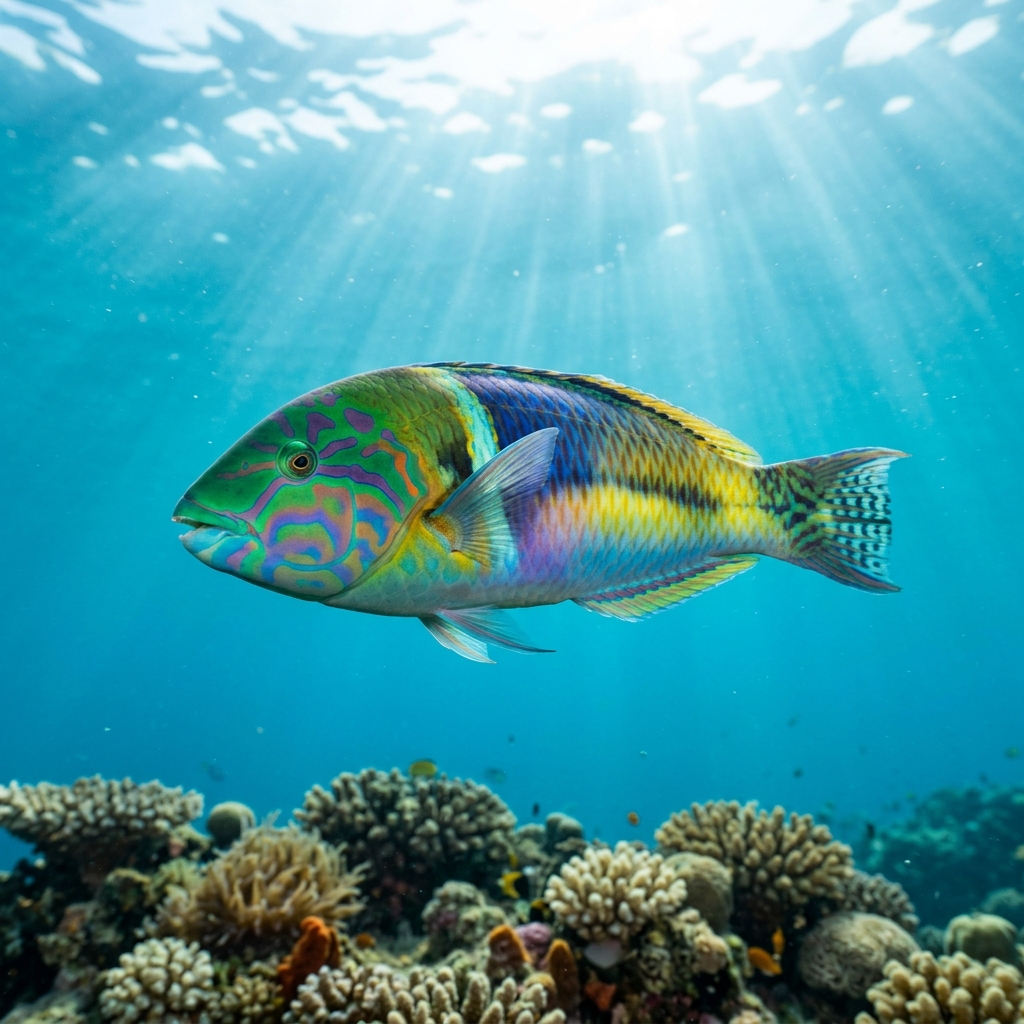
Reef neighbours a diver could mistake it for. Use the identification notes above to tell them apart.
Most commonly logged in the Egyptian Red Sea, especially South Sinai and Marsa Alam, and a reliable sighting across the Maldives' Central and Northern Atolls. Strong populations also turn up in Queensland, Australia, throughout Indonesia and the Philippines, in Hawaii, and along Peninsular Malaysia's east coast and Japan's Ryukyu Islands.
Mapping where Bird Wrasse is logged…
South Sinai and Marsa Alam in Egypt's Red Sea and the Central and Northern Atolls of the Maldives are among the most reliable spots. It is also frequently logged in Queensland, Indonesia, the Philippines, Hawaii and Japan's Ryukyu Islands.
There is no strong season in the sightings data. It stays in water between roughly 24 and 29 C year-round, so tropical reef trips at any time of year offer a decent chance.
Its long, beak-like snout is the giveaway, used to probe rubble and crevices for food. Males are solid teal-green, females are pale in front and dark behind, and it moves in quick darting bursts low over the reef rather than a smooth glide.
No. It is a shy, non-aggressive fish that tends to move off if you approach too quickly, posing no threat to divers.
Females are pale-fronted with a dark rear half, while males are uniformly teal-green, a difference striking enough that pairs can look like separate species. This split relates to the wrasse pattern of individuals changing sex and colouring as they mature.
Site and sighting data is aggregated from diver logs, iNaturalist and GBIF. For taxonomy and conservation status:
Cleaver Wrasse
2,700 sites