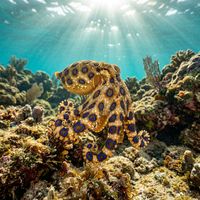
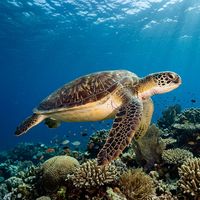
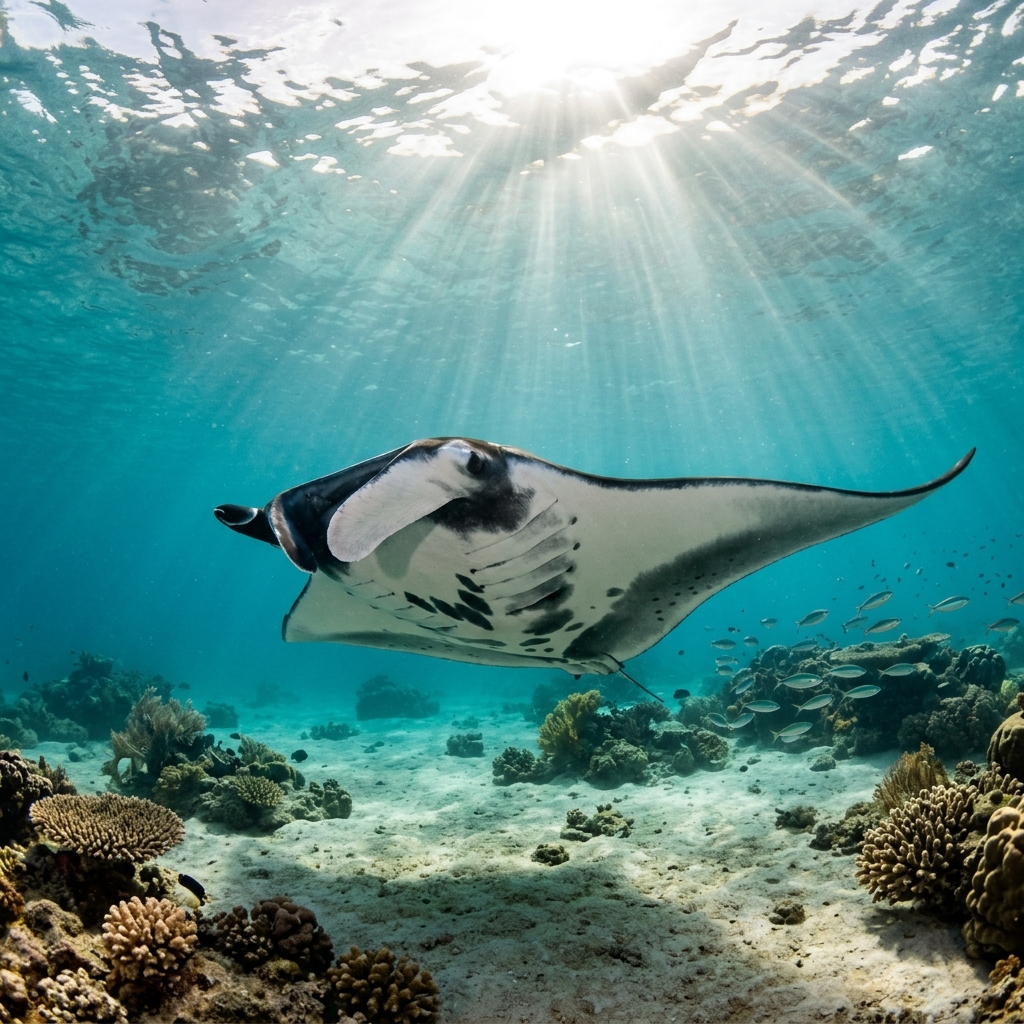
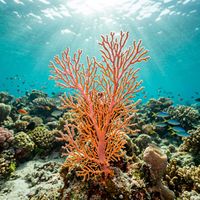
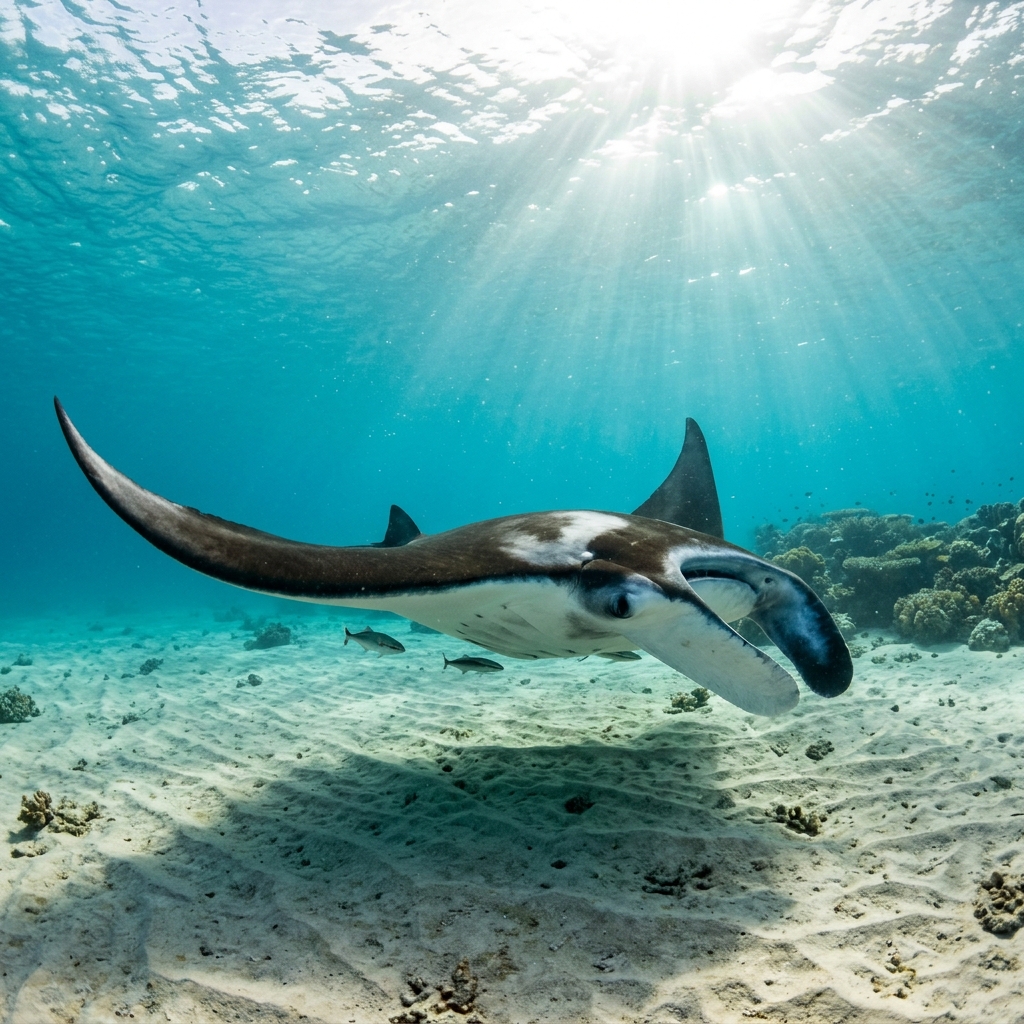
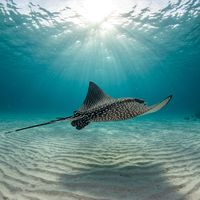
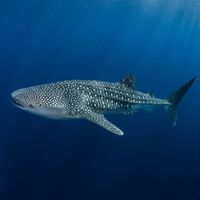
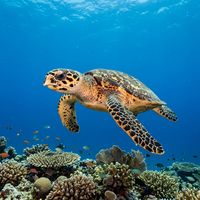
Ticao Island rewards divers and snorkellers with a striking mix of shallow reefs and open-water encounters. The signature draw is rays: both Reef Manta Ray and Oceanic Manta Ray have been observed here, alongside Whale Shark and Spotted Eagle Ray. Green Sea Turtle is very common across sites, and the Blue-ringed Octopus turns up with remarkable regularity. Gorgonian growth defines the reef structure. Conditions are warmest from May through October, while the clearest, calmest windows tend to fall between February and May.

Monthly water temperature across Ticao Island's sites, from satellite sea-surface data corrected for depth. The band shows the site-to-site spread.
Water stays warm year-round, with temperatures climbing to their peak from May through September and dipping only slightly in the cooler months. The histogram favours February through May as the most popular period, likely reflecting calmer seas and better visibility. June through October can bring more unsettled conditions, so divers should plan accordingly.
3 operators
Dangcalan, Philippines
Dangcalan, Philippines
Philippines
11 more sites to explore
Water temperature around Ticao Island ranges from about 27°C in January to 30°C in May, based on satellite sea-temperature data for its dive sites.
With water around 27–30°C, a rash guard or 3mm shorty works in Ticao Island year-round.
Fin maps 12 sites in Ticao Island (8 scuba diving sites and 6 snorkelling spots, with some suited to both).
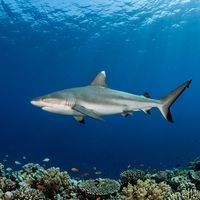
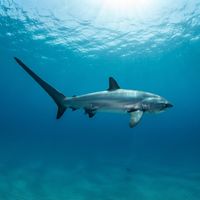
Ticao Island is particularly noted for ray encounters. Reef Manta Ray has been observed very commonly across sites, and Oceanic Manta Ray, Spotted Eagle Ray and Whale Shark have all been recorded as occasional sightings. Grey Reef Shark and both Green Sea Turtle and Hawksbill Sea Turtle have also been observed here.
At least some sites, including Toms Reef, are rated for beginners and feature shallow reef diving accessible directly from shore. The site mix overall spans a range of skill levels, so newer divers have real options while more experienced divers can explore deeper or more exposed sites. Operators such as Whaleshark Adventure & Tours and Bicol Dive Center are based in the area and can guide site selection.
The peak months for diving, based on operator and visitor data, run from February through May, when conditions tend to be calmer and visibility more reliable. The mid-year period from June through September sees warmer water but conditions that may be less settled. October records the fewest visits, suggesting it is the least favourable month.
Shore entry is available at certain sites, with Toms Reef being a confirmed shore-access reef suitable for beginners. The mix of entry types across the island means that both shore and boat diving are part of the experience here. Local operators can advise on which sites require a boat and help arrange access.