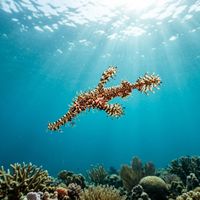
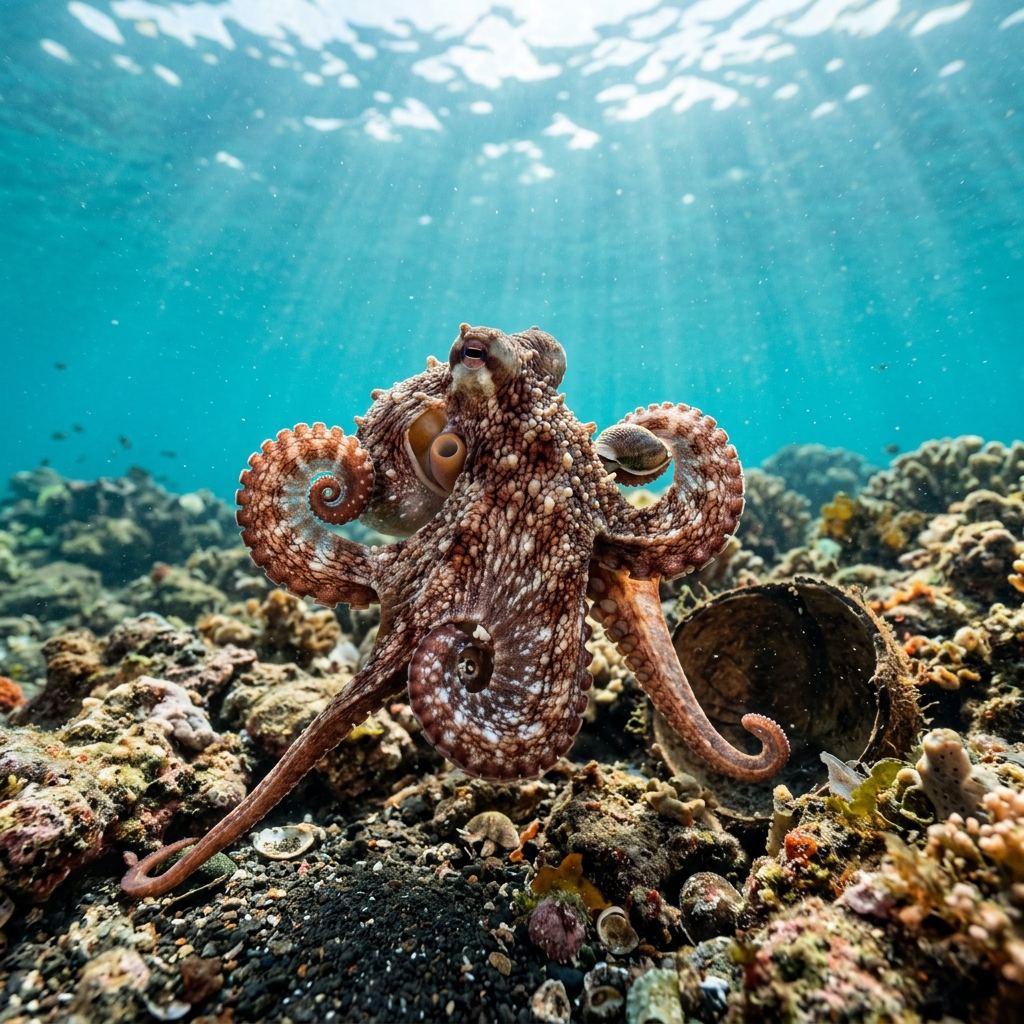
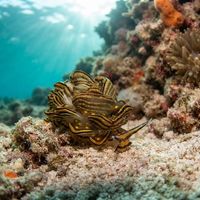
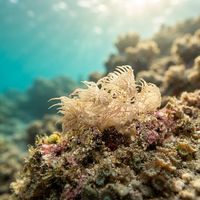
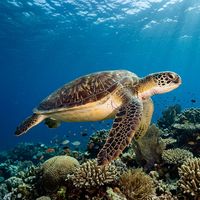
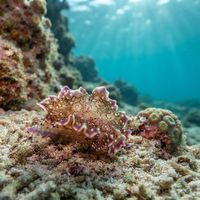
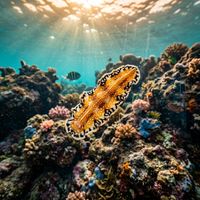
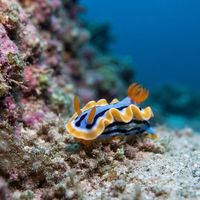
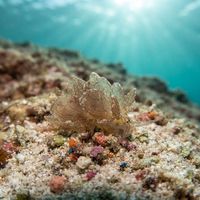
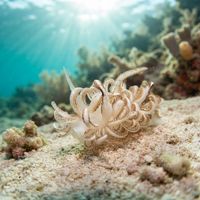
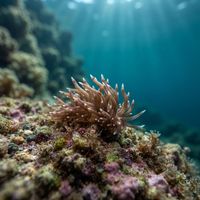
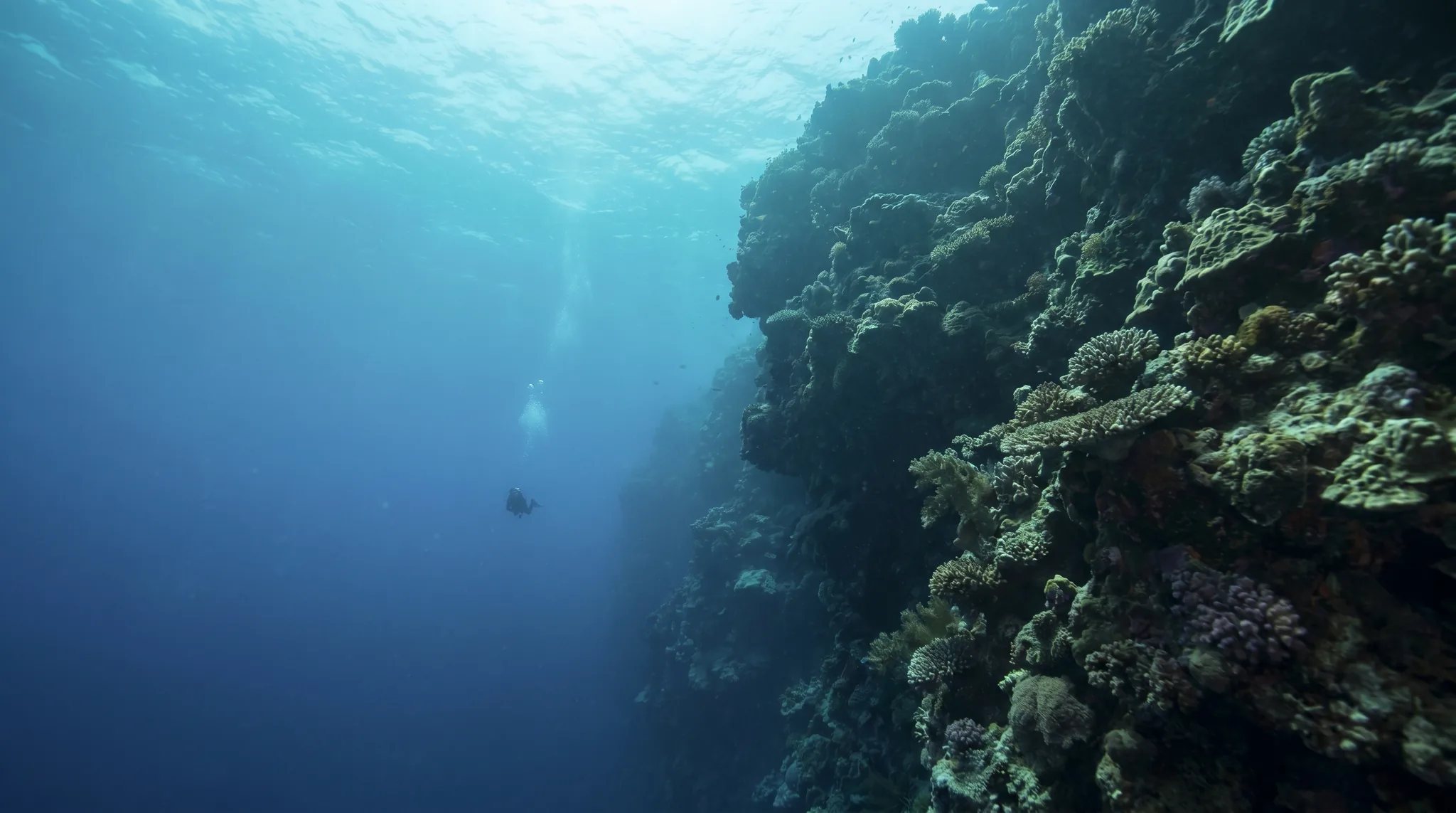
Romblon divides across three islands: Romblon Island holds the largest concentration of sites, Tablas Island adds variety with blue holes and deep cave systems, and Sibuyan Island offers exposed drop-offs for advanced divers. Reef diving dominates, but the site list also spans walls, caves, canyons, and seagrass beds. The region is particularly noted for its density of macro life, with the Ornate Ghostpipefish, Chromodoris Nudibranch, and Coconut Octopus observed consistently across sites.
3 areas
Monthly water temperature across Romblon's sites, from satellite sea-surface data corrected for depth. The band shows the site-to-site spread.
Water stays warm throughout the year, with the coolest conditions in February and the warmest from May through October. The best-months histogram points clearly to March through May and November through December as peak periods, when conditions are calmer and visibility is at its most reliable. July through October sees a marked dip in diver activity, consistent with rougher seasonal weather across the region.
16 operators
37 more sites to explore
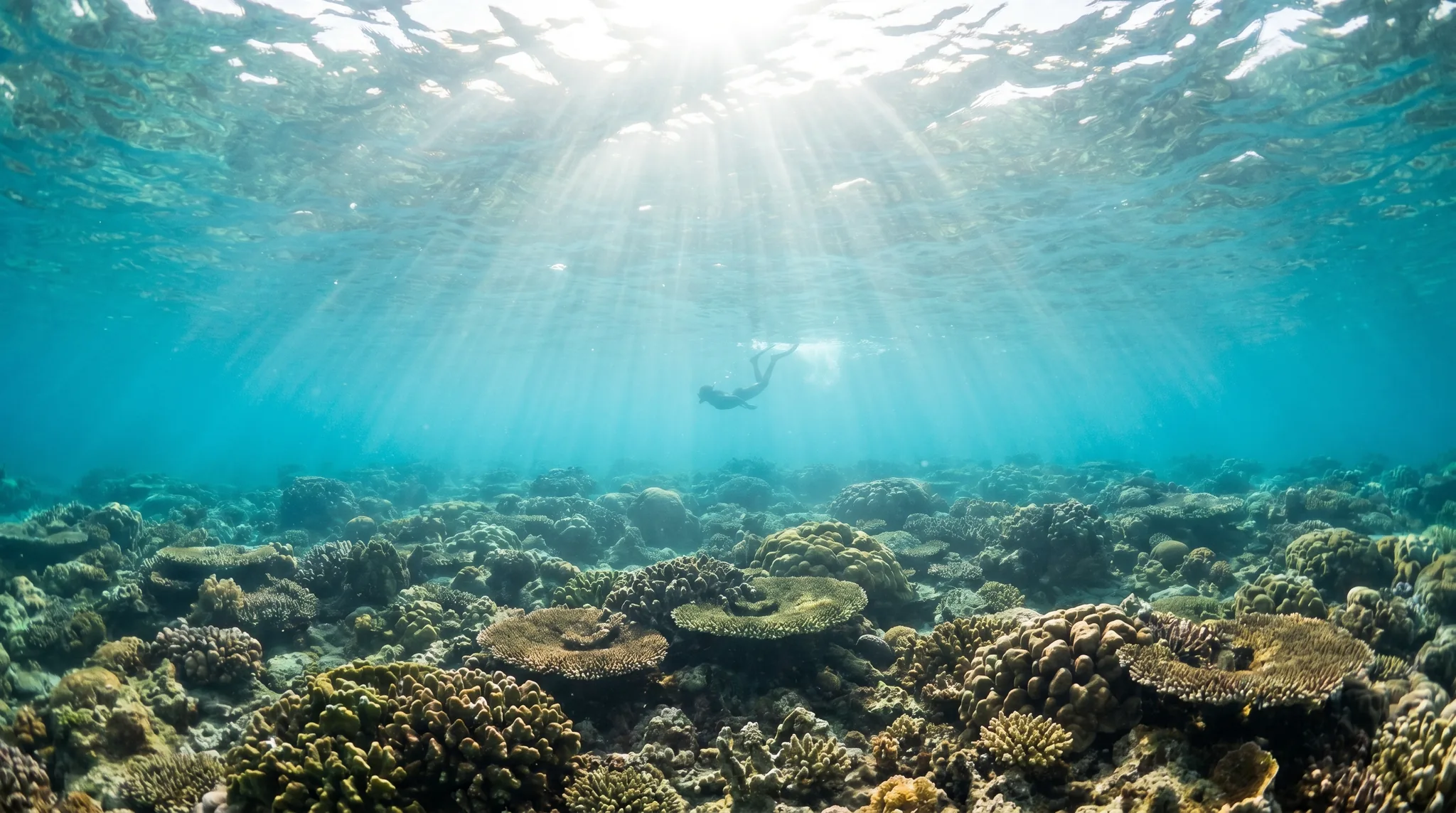
Water temperature around Romblon ranges from about 26°C in February to 30°C in May, based on satellite sea-temperature data for its dive sites.
In the warm season (about 30°C) a rash guard or 3mm shorty is comfortable in Romblon; in the coldest months (about 26°C) step up to a 3mm full suit.
Fin maps 49 sites in Romblon (39 scuba diving sites and 15 snorkelling spots, with some suited to both), organised into 3 areas.
Romblon has a strong reputation for macro life backed by observations across its sites. The Ornate Ghostpipefish and Robust Ghost Pipefish are both recorded as common to very common, while the Chromodoris Nudibranch, Nembrotha Nudibranch, and Varicose Wart Slug are among the most frequently encountered invertebrates. The Coconut Octopus, Blue-ringed Octopus, Pygmy Seahorse, and Candy Crab round out a compelling list for photographers and macro enthusiasts.
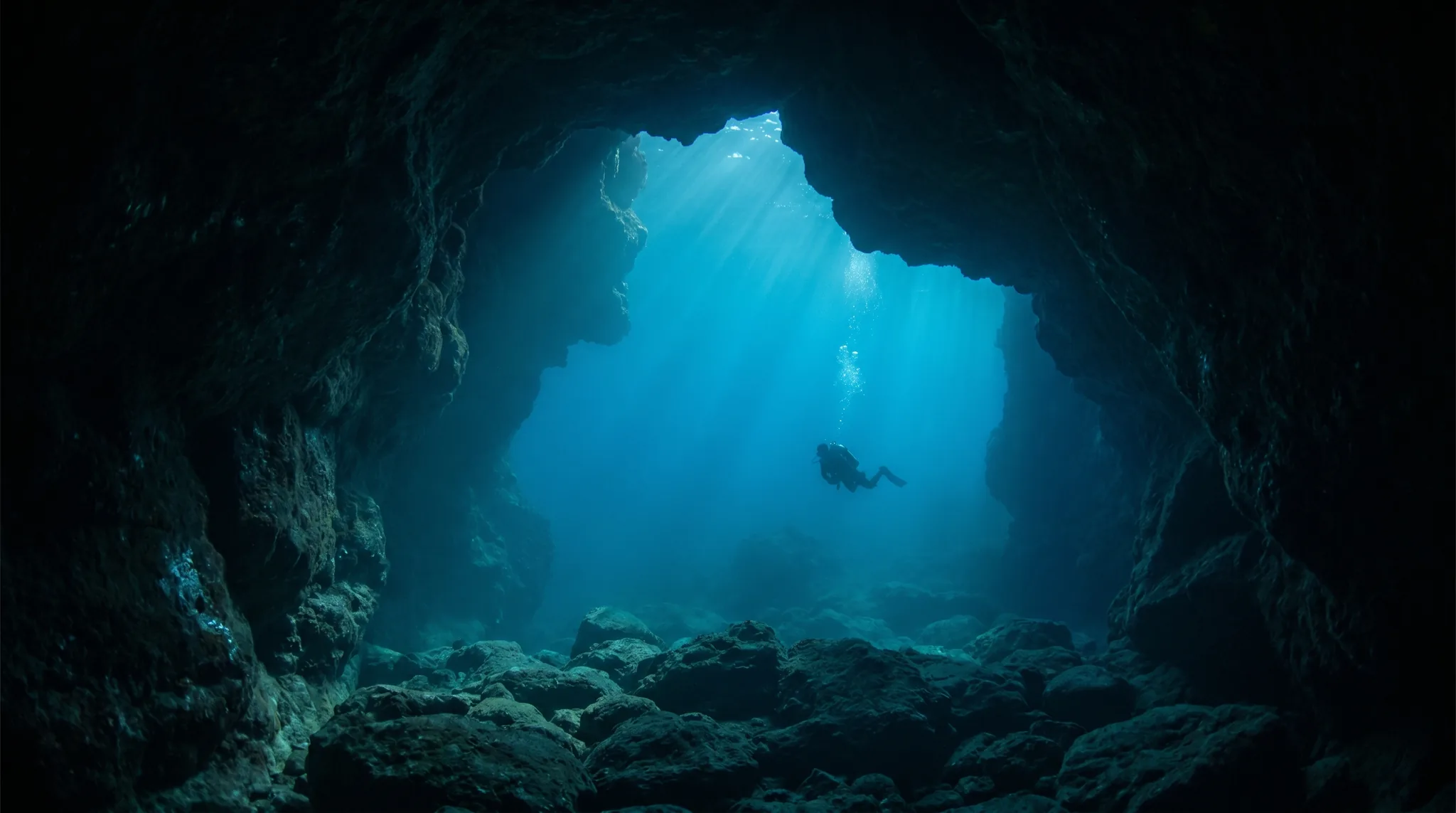
A good proportion of Romblon's sites are rated for beginner skill levels, including Agnay Sanctuary, Alad Sanctuary I, and Salvo Beach. These sites offer accessible depths and calmer reef topography. Intermediate and advanced sites such as Cobrador Sunken Island, Heinz Cave, and Kanto Pating are also available for more experienced divers looking for deeper drop-offs and cave systems.
Romblon Island hosts the most sites and offers a broad mix of reef, wall, and sanctuary diving suitable for most skill levels. Tablas Island adds more specialist terrain, including the deep Blue Hole Tablas and the challenging cave system at Heinz Cave. Sibuyan Island has fewer sites but includes Kanto Pating, a deep drop-off reserved for advanced divers.
The majority of sites in Romblon are reached by boat, which is typical for an island group of this spread. Shore entry is available at select sites such as Salvo Beach, making it convenient for snorkellers and beginner divers who prefer not to organise a boat trip. Local operators including Ducks Diving Romblon and Sunset Cove Beach and Dive Resort run boat-based trips to the wider site network.