Gorgonacea spp.
Gorgonian sea fans grow from Florida to Japan in waters 9-28 °C. Find top dive sites and learn to spot them underwater.
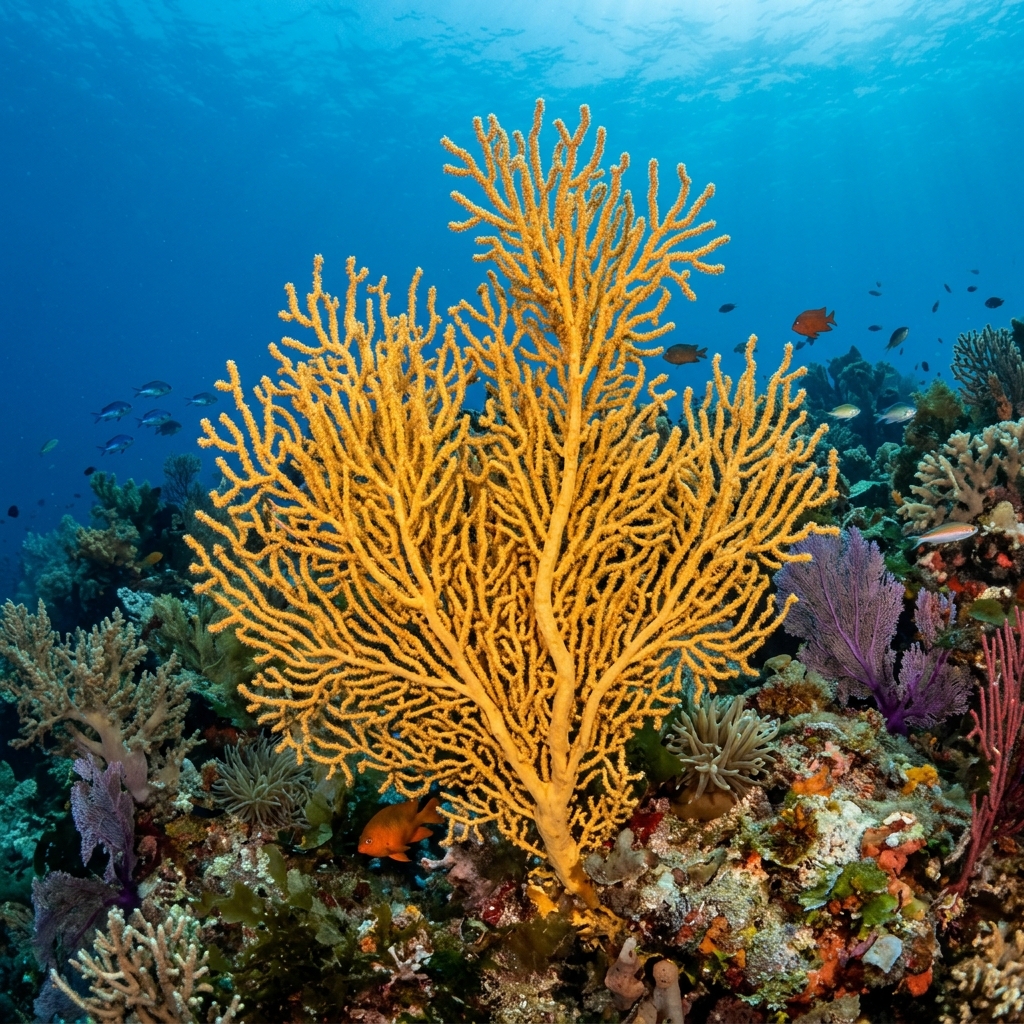
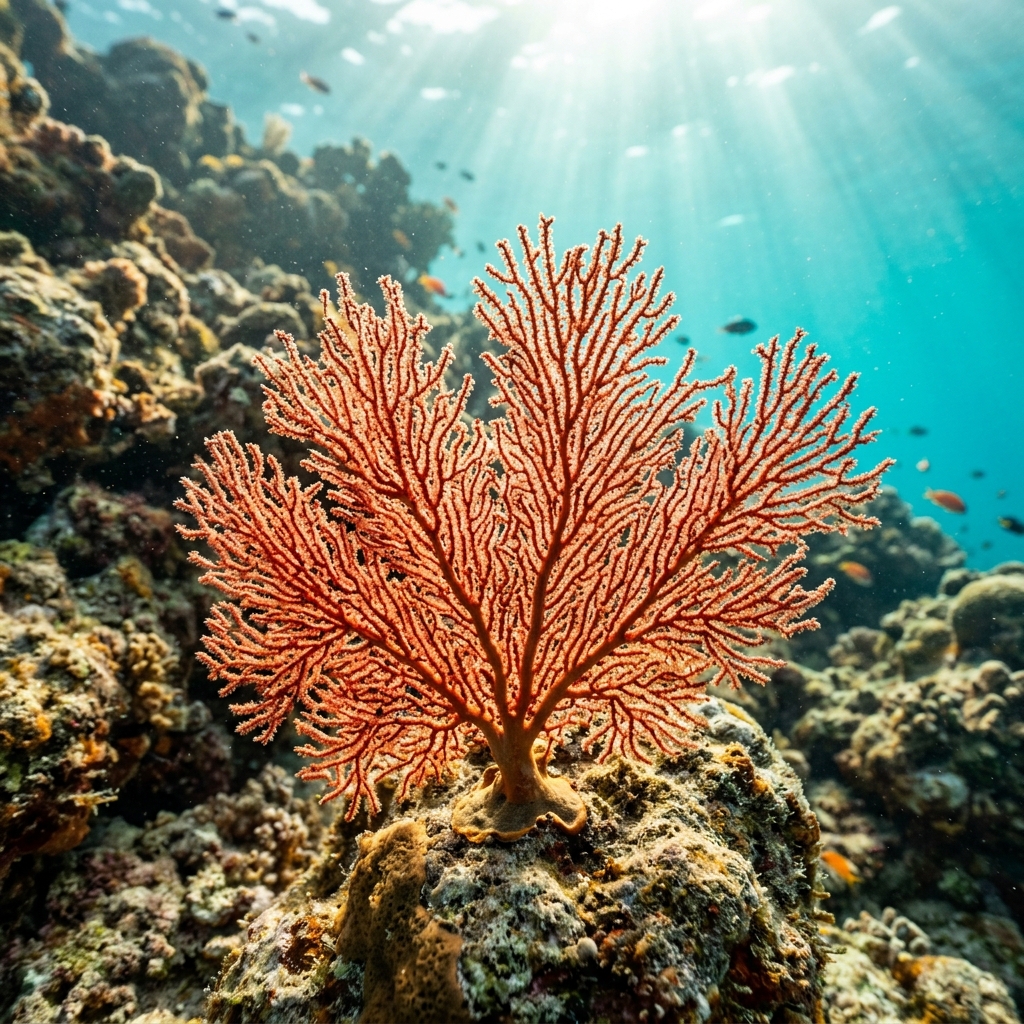
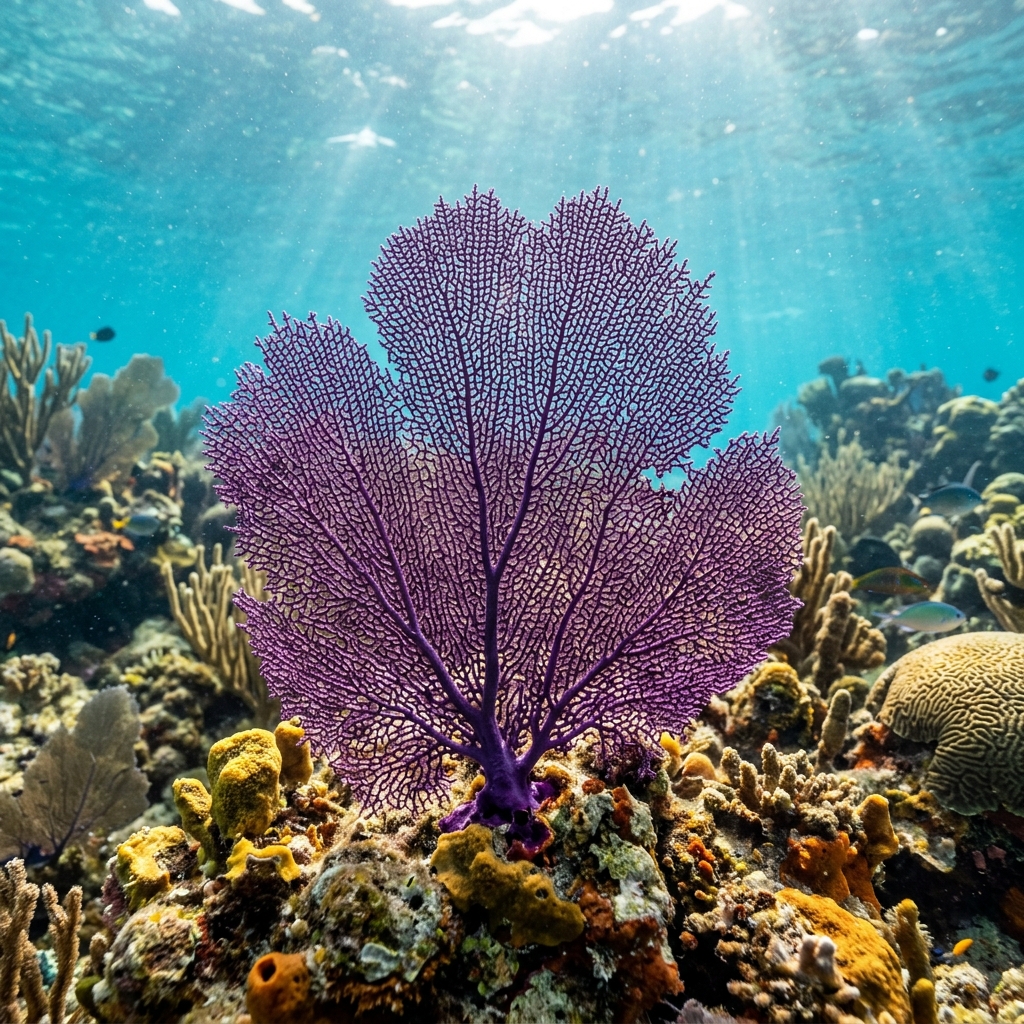
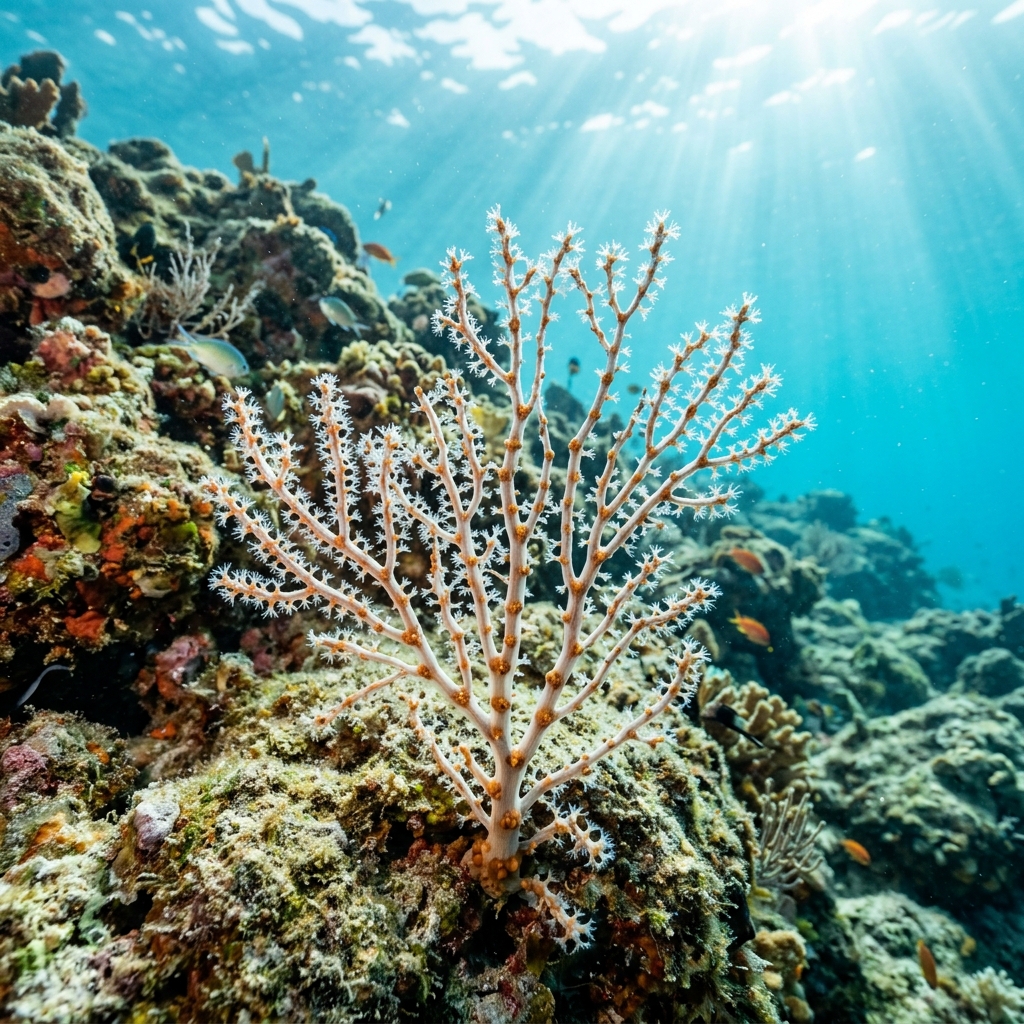
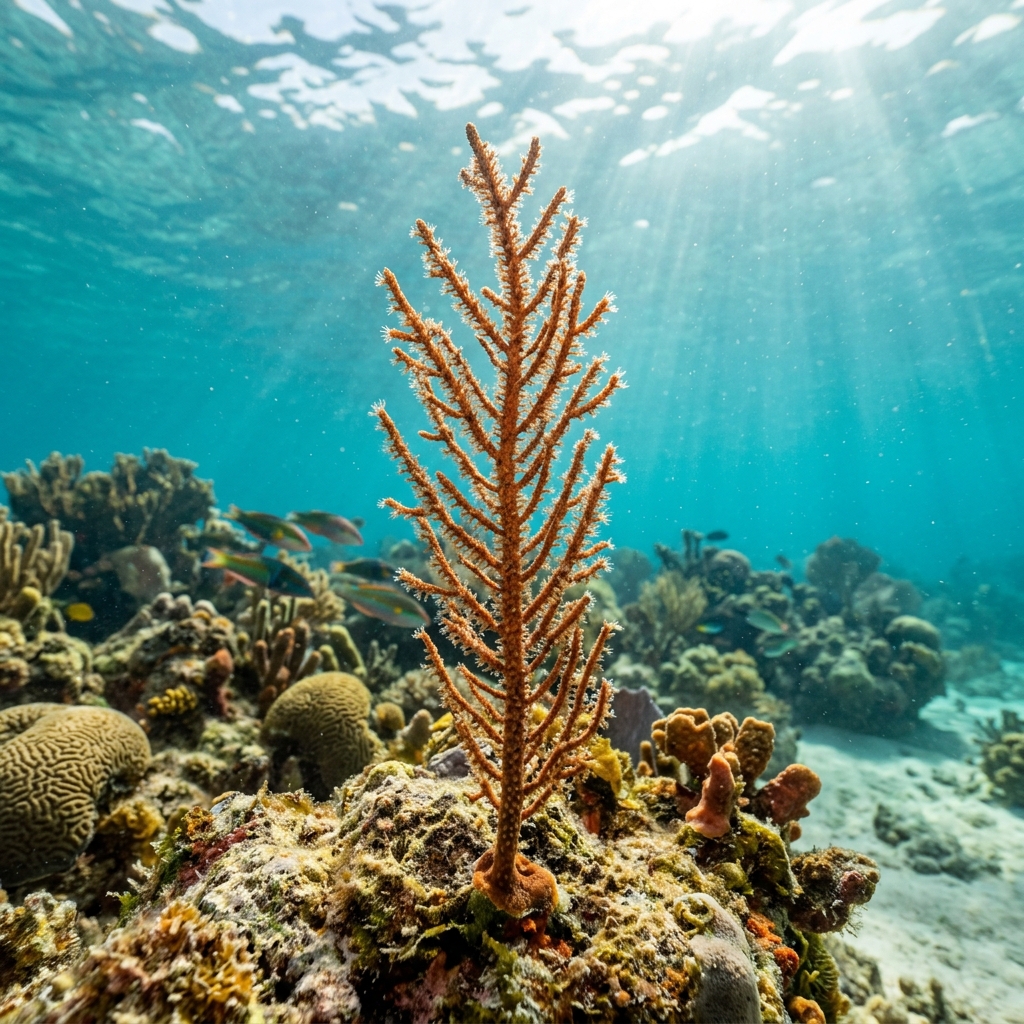
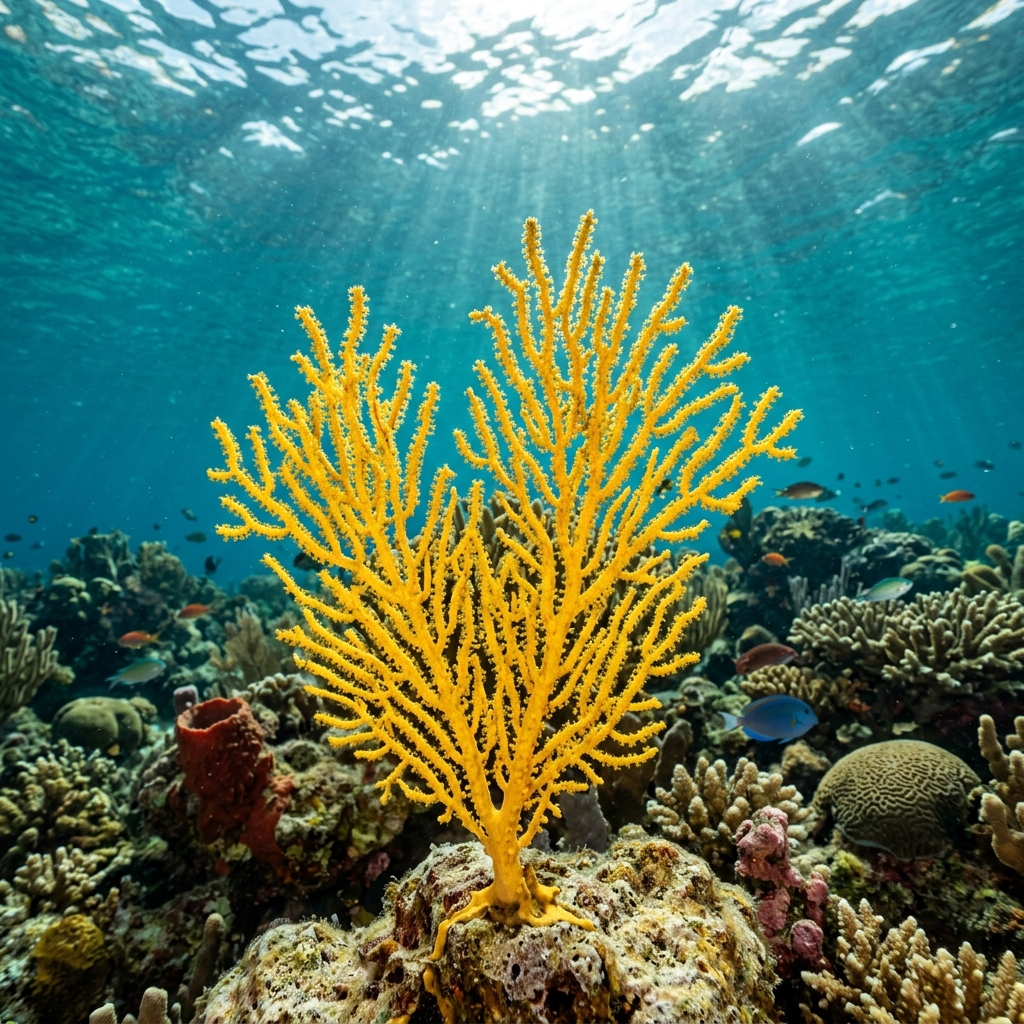
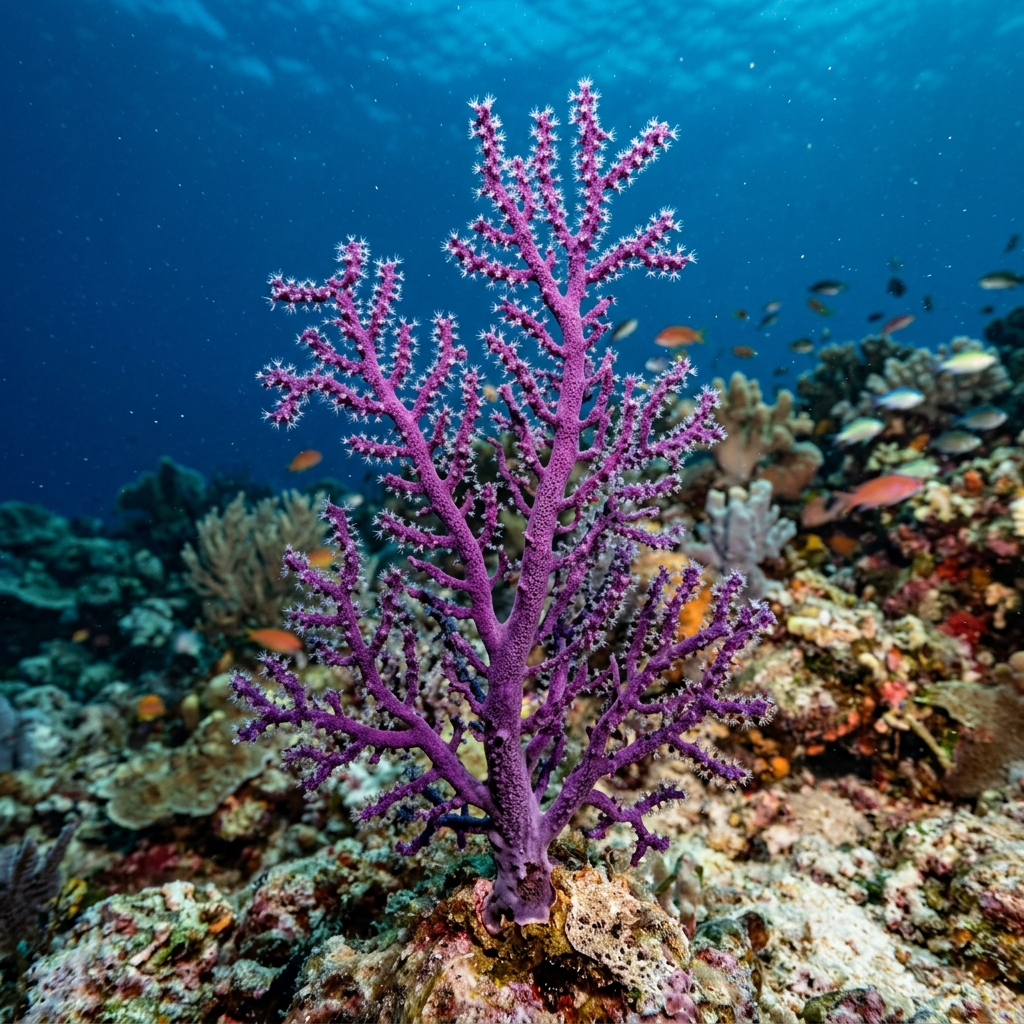
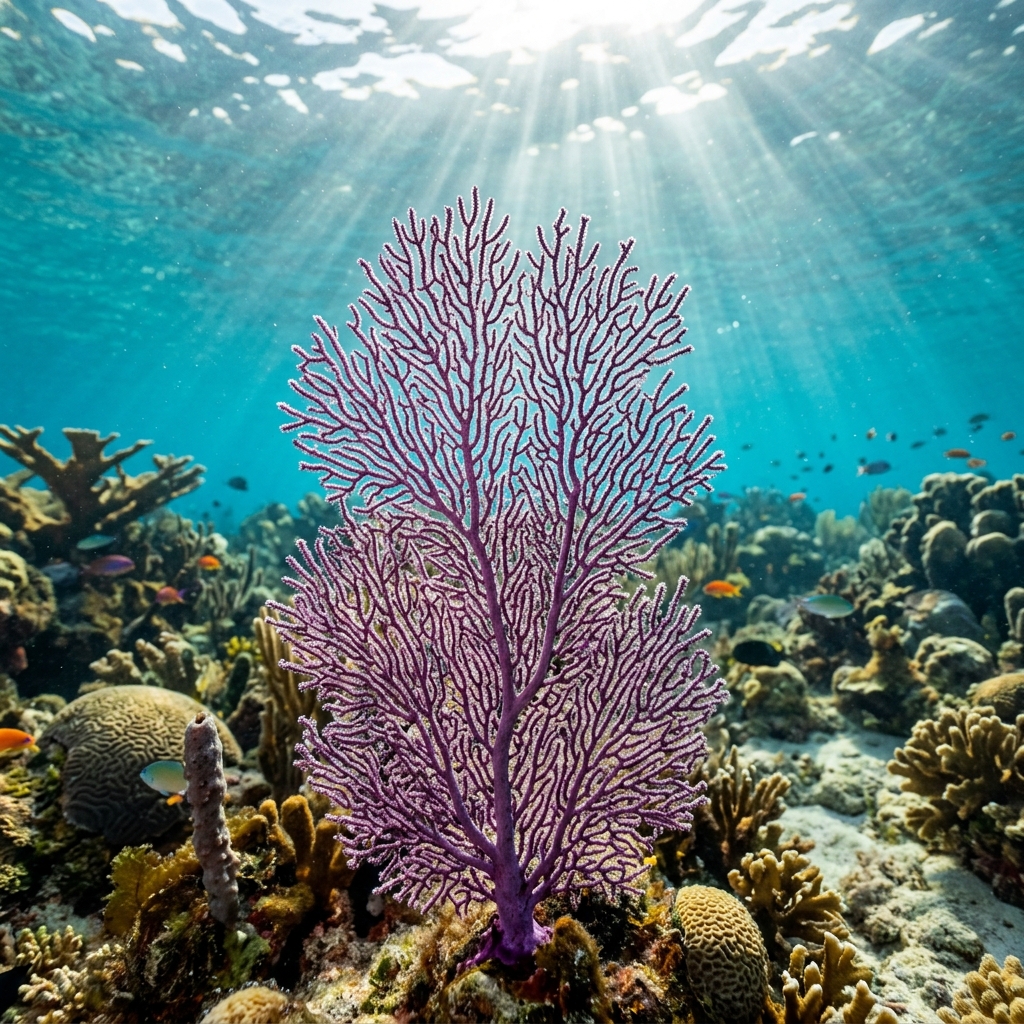
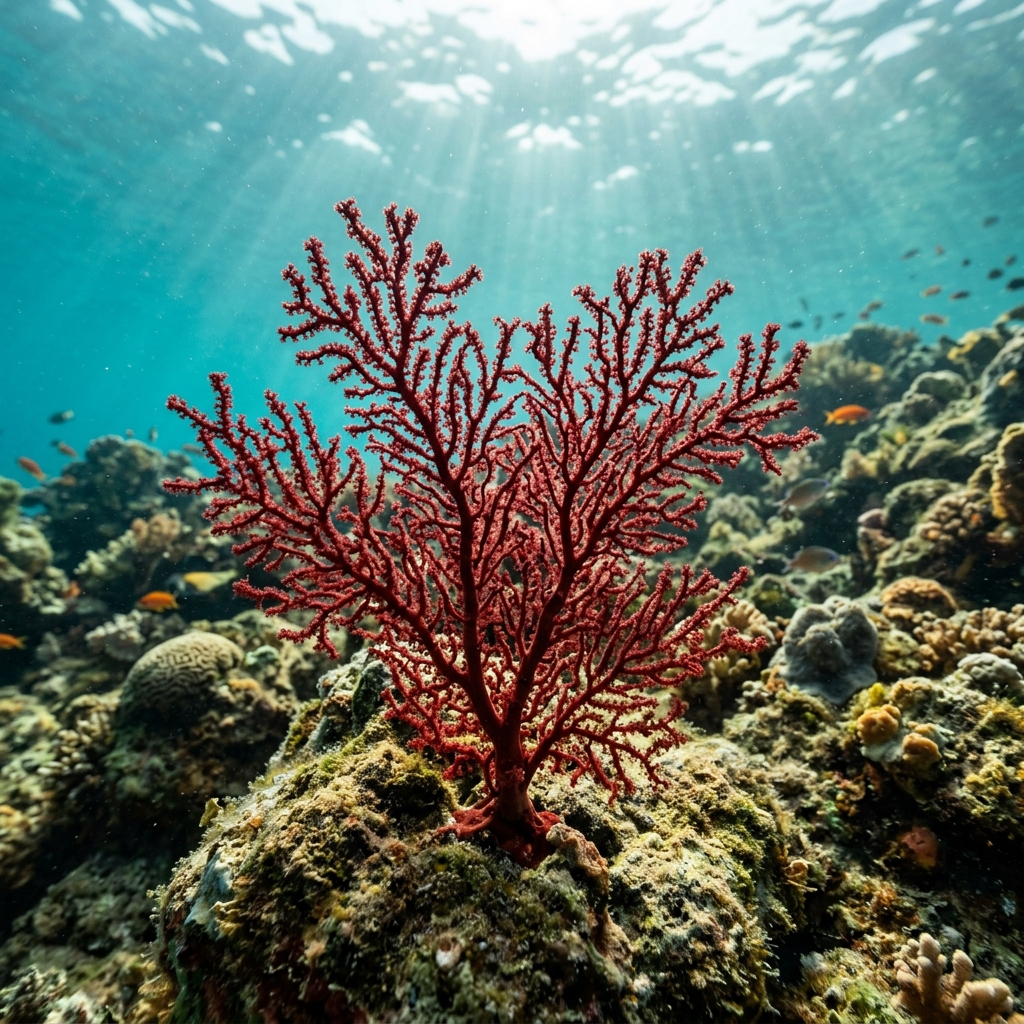
Gorgonians are fan-shaped or branching colonies of flexible, tree-like coral that anchor to hard substrate, often spreading flat and perpendicular to the current to maximise filter-feeding. Colonies range from vivid red, orange, yellow, and purple to pale cream or brown depending on species and depth. The branching skeleton is covered in tiny polyps (individual coral animals) that extend feathery tentacles when feeding. Size varies enormously across the group, from compact fans a few tens of centimetres across to towering colonies exceeding a metre in height.
Gorgonians are sessile (fixed in place) filter feeders, so what you are watching is the colony passively catching plankton and organic particles from the passing current. Polyps are most visibly extended during active water movement, giving the colony a fuzzy, alive texture compared to the bare skeleton. They do not react to divers, but the colonies are fragile and easily broken by accidental contact or surge.
Many gorgonian species are extremely slow-growing, adding only a centimetre or two per year, which means a large colony you see on a wall dive may be decades or even centuries old.
Because gorgonians tolerate water temperatures from 9 °C to 28 °C, they are a year-round encounter across tropical, subtropical, and temperate dive destinations alike. There is no data pointing to a concentrated season, so plan your dive around local conditions rather than time of year.
Reef neighbours a diver could mistake it for. Use the identification notes above to tell them apart.
Gorgonians are found across an exceptionally wide global range, with strong representation in the United States (especially Florida and the Southeast), Australia (Queensland and Western Australia), and across the Mediterranean in Italy, Greece, France, and Spain. Temperate hotspots include Brittany and Normandy in France and the Izu Peninsula in Japan, while the UK also has reliable gorgonian populations, particularly deeper rocky reefs.
Mapping where Gorgonian is logged…
Gorgonians are logged at dive sites across more than 130 countries. Top destinations include Florida, the Mediterranean (Italy, Greece, France, Spain), Australia's Queensland and Western Australia coasts, Japan's Izu Peninsula, and the UK's rocky reefs. They appear on tropical walls, temperate seamounts, and cold-water reefs alike.
Gorgonians are a year-round encounter. They thrive in water temperatures ranging from 9 °C to 28 °C, covering everything from tropical reef walls to cold Atlantic and Pacific dive sites. No single season produces notably better sightings, so any well-planned dive to suitable rocky or reef habitat should turn up colonies.
Look for branching or fan-shaped flexible colonies anchored firmly to rock or reef, typically oriented broadside to the current. Colours range from red and orange to yellow, purple, and cream. Up close, the surface appears textured or fuzzy when polyps are extended. Confusable relatives like sea whips and the California golden gorgonian share the same basic structure but tend to have fewer branches or distinct colour tones.
Size varies widely across the group. Small colonies may span only 20 to 30 centimetres, while large, established colonies of some species can exceed 2 metres in height and spread. Because growth rates are very slow, the biggest fans on a reef wall are often among the oldest living animals you will encounter on a dive.
Gorgonians are colonial animals, not plants. Each tiny polyp is an individual animal related to sea anemones and hard corals. The flexible internal skeleton that gives them their tree-like shape is made of a protein called gorgonin, which allows colonies to bend in surge and current without snapping. Their longevity and slow growth make large colonies extraordinary records of reef history.
Gorgonians are not dangerous to divers. The risk runs entirely the other way: their delicate skeletons are easily snapped by accidental fin kicks, hand contact, or anchor damage. Good buoyancy control and awareness of surge are the key precautions when diving around them.
Site and sighting data is aggregated from diver logs, iNaturalist and GBIF. For taxonomy and conservation status:
Gorgoniidae spp.
Sea Whip
3,016 sites