Pseudanthias squamipinnis
Shoals of flame-orange Sea Goldie swarm reefs from Sharm el Sheikh to the Maldives. Find where and when to see them, and how to tell males from females.
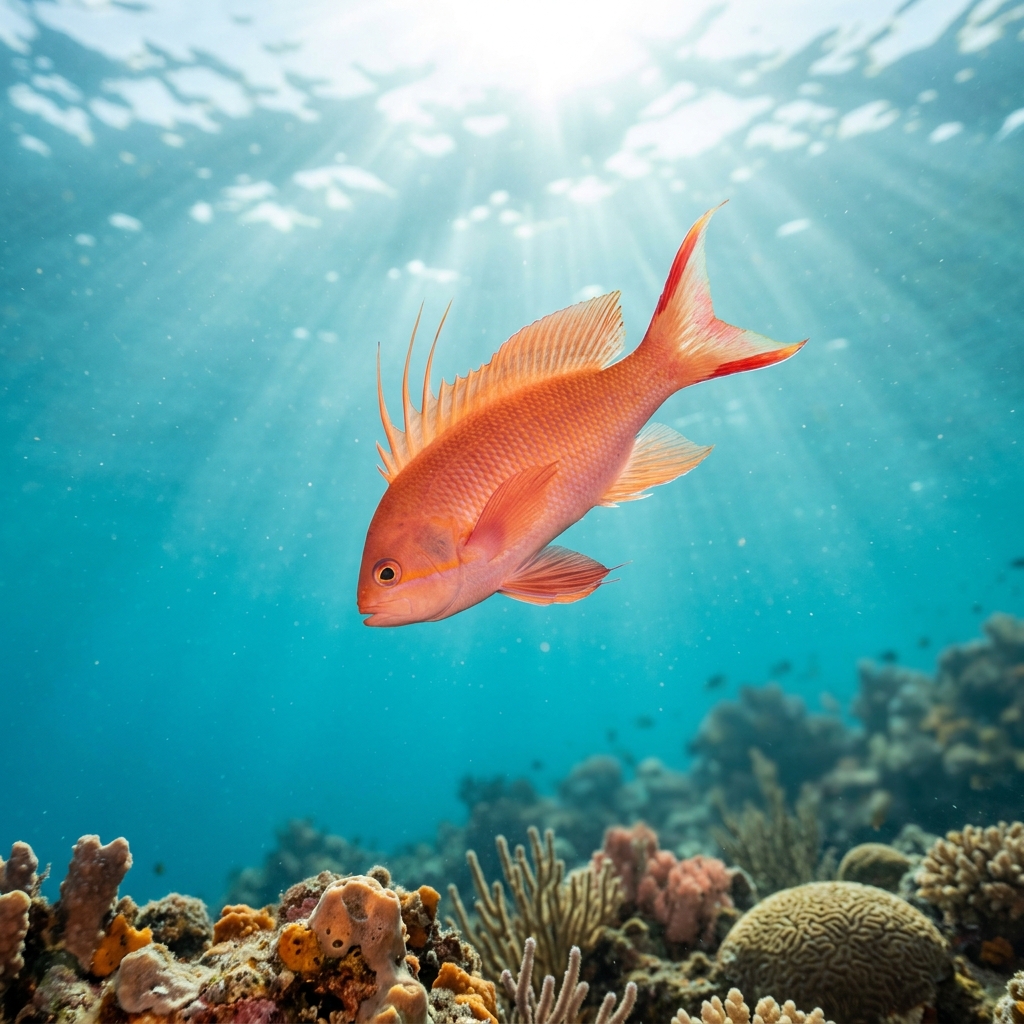
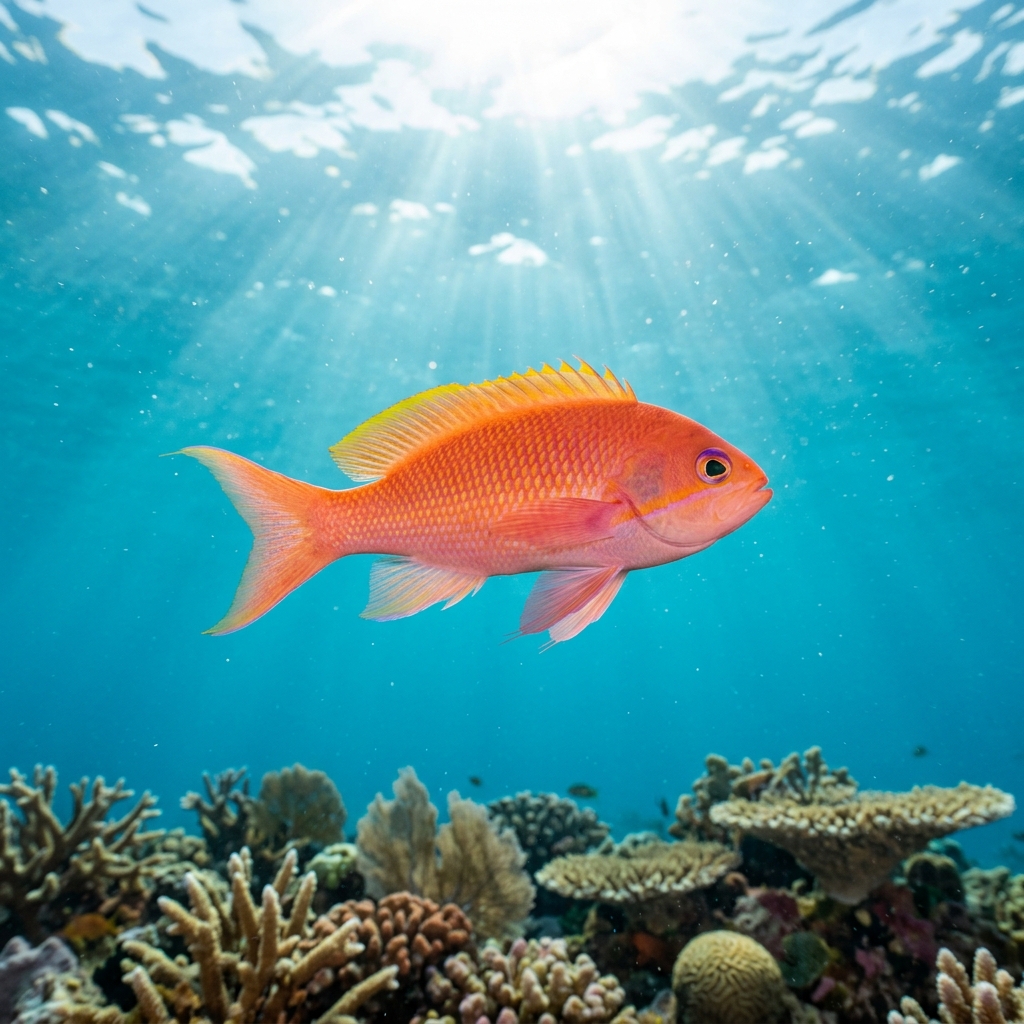
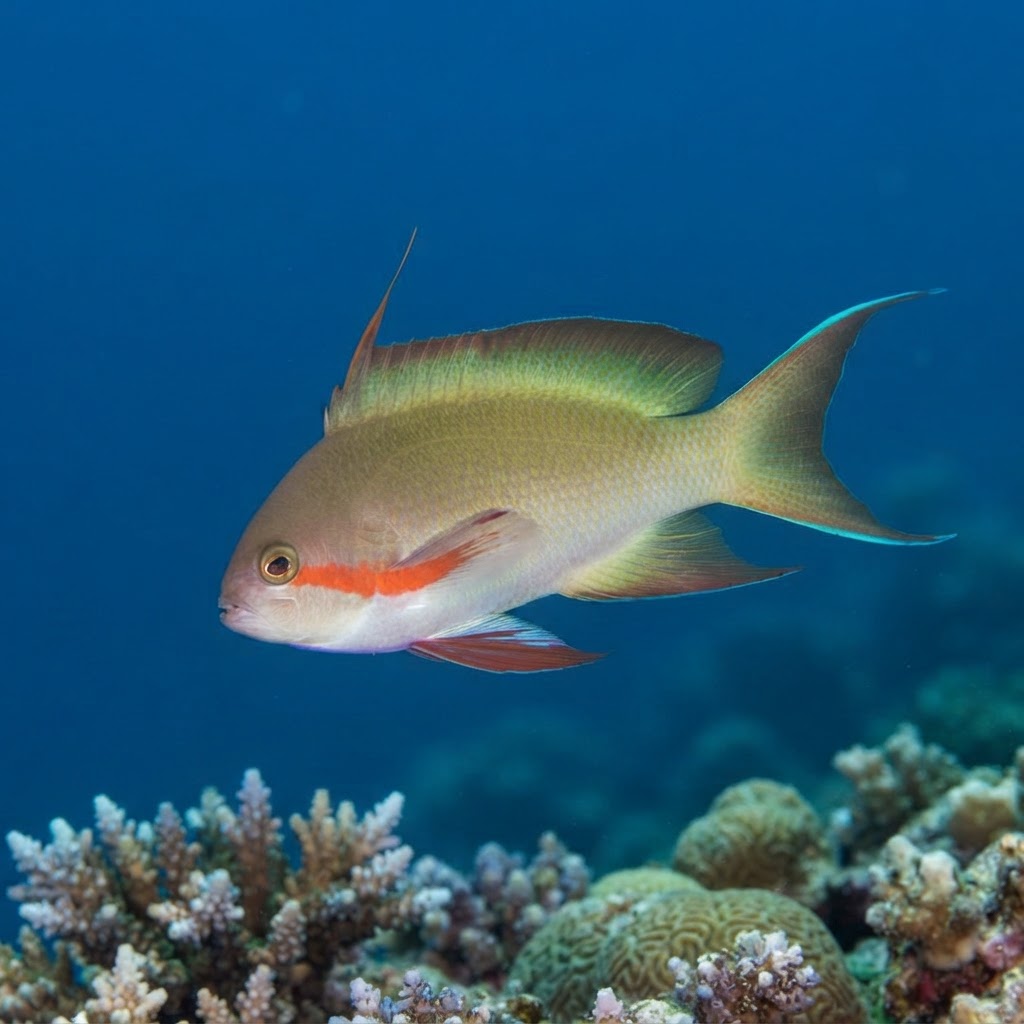
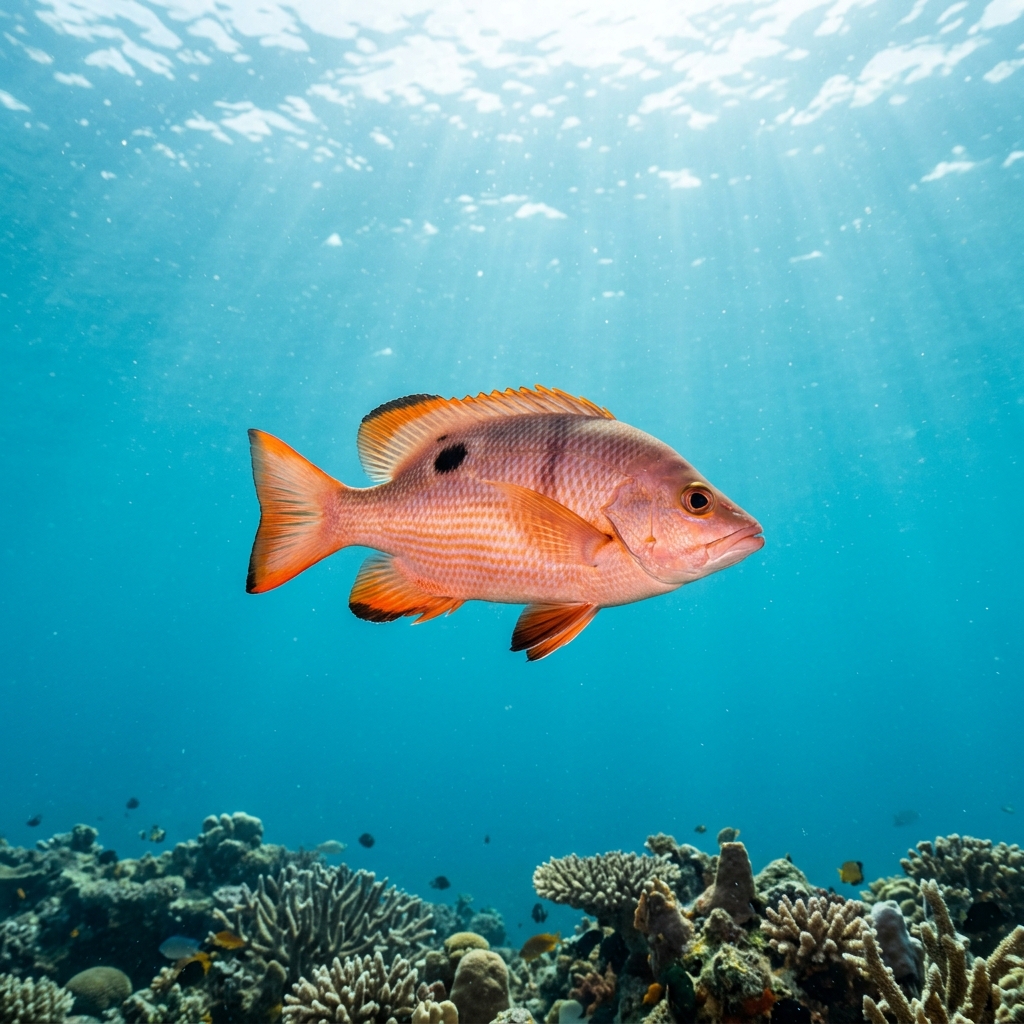
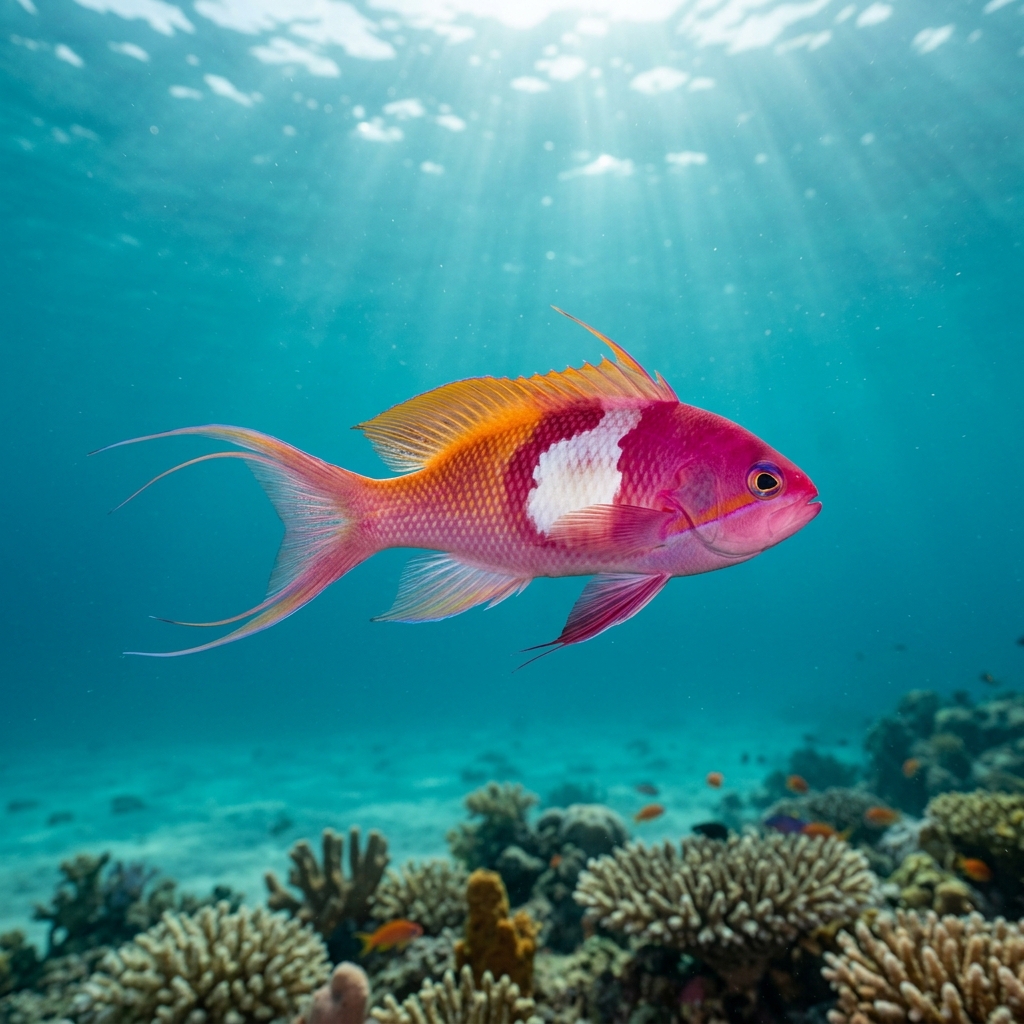
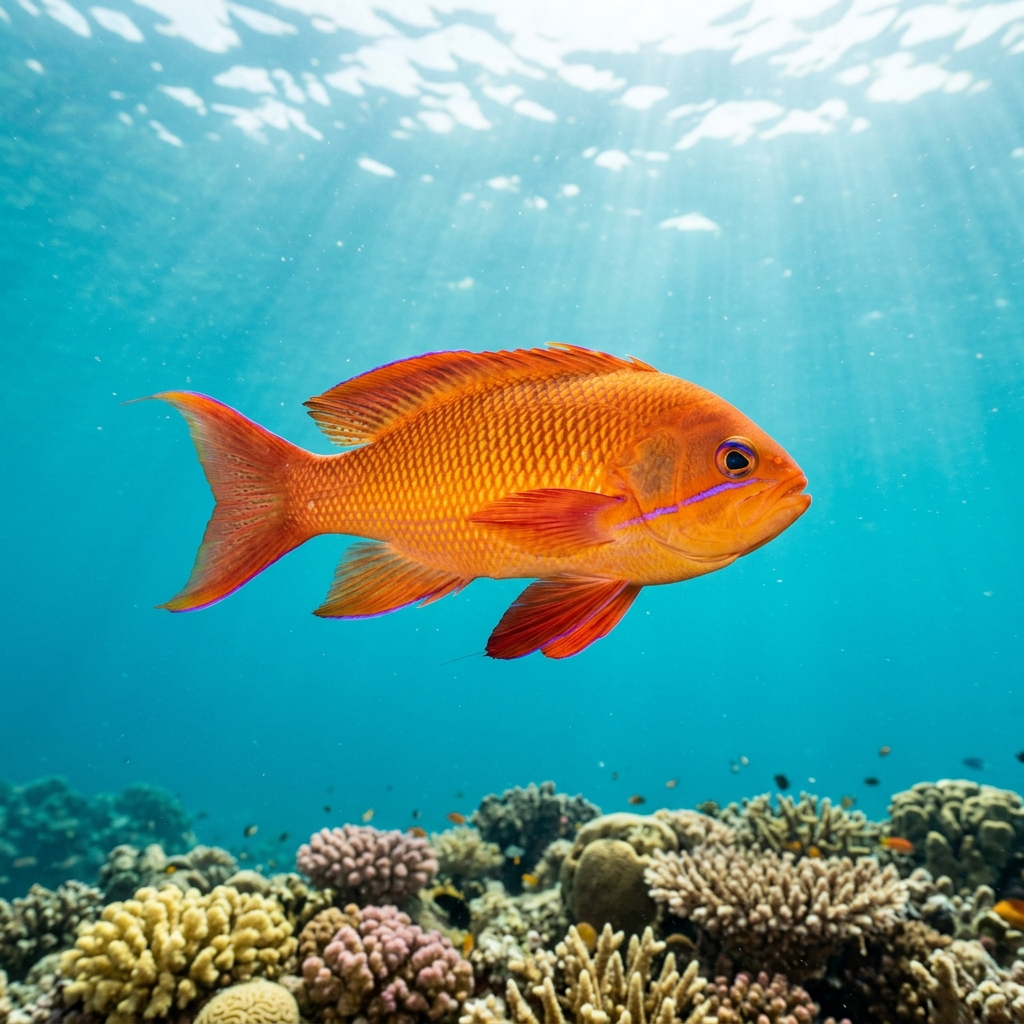
Compact and oval-bodied, sea goldies are immediately recognisable by their intense orange-to-pink colouring and the way they hover in mid-water swarms just above the reef. Females are predominantly orange with a yellow-tipped tail, while males are deeper, richer orange-red with a distinctive elongated third dorsal-fin spine and vivid violet or pink streaks on the face. In a crowd of anthias, the male's facial markings and fin extension are the fastest ID cues.
Sea goldies are schooling fish and almost always encountered in large, swirling groups hovering just above branching or table corals, facing into the current to intercept zooplankton. They are not bothered by divers and will continue feeding normally as long as you move slowly; approach from below or at their level rather than swooping down from above. Towards dusk the school compresses and drops closer to the reef as fish begin settling for the night.
Sea goldie schools are protogynous harems: all fish are born female, and when a dominant male disappears, the largest female in the group changes sex to become a fully functional male within a matter of weeks.
In the northern hemisphere, sightings concentrate from May through March, which effectively covers most of the year across the Red Sea and Maldives. In the southern hemisphere, October and November appear to be the peak window for locations such as South Africa and Mozambique.
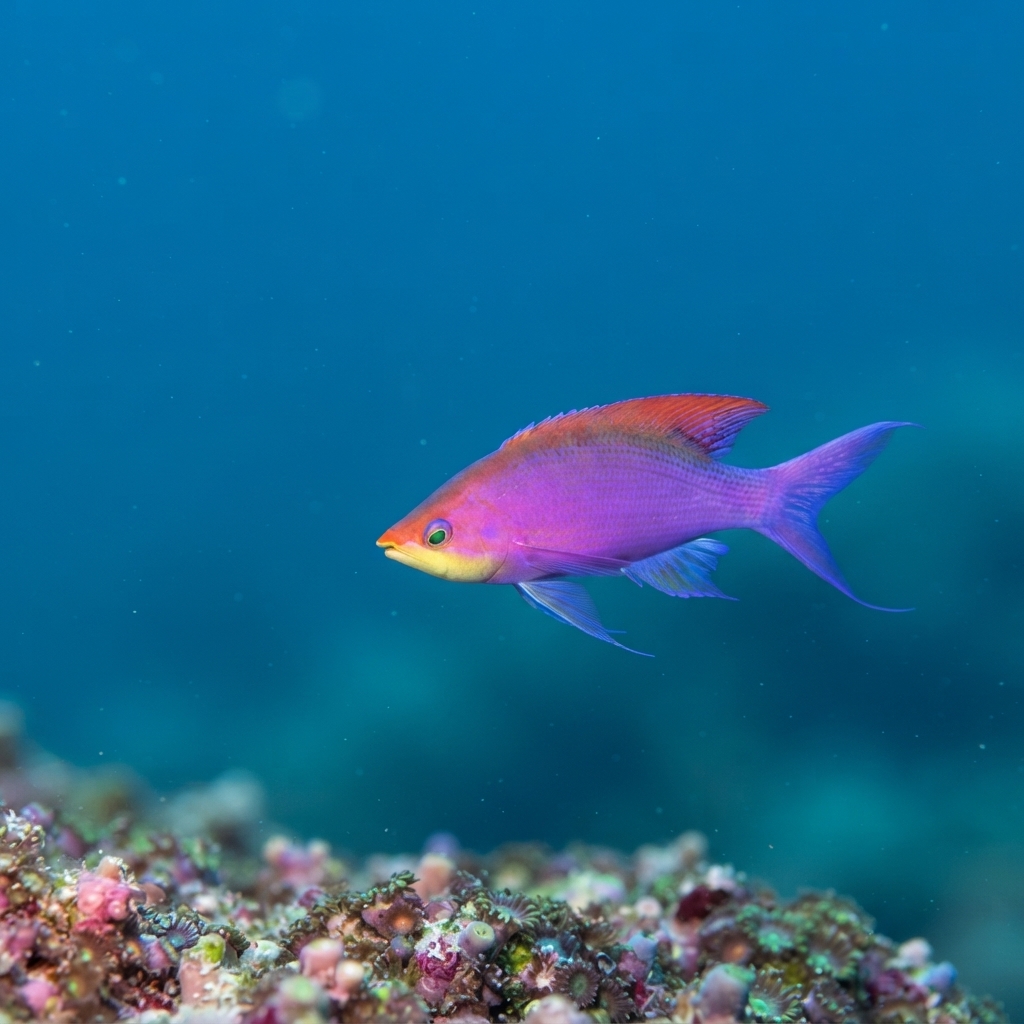
Reef neighbours a diver could mistake it for. Use the identification notes above to tell them apart.
Most commonly logged across the Egyptian Red Sea, with Sharm el Sheikh and Marsa Alam standing out as particularly reliable sites, and the reefs around Safaga and Hurghada adding further coverage. The Maldives, especially the Male and Ari Atolls, rival Egypt in terms of site spread, while Tanzania's Zanzibar coast, South Africa's Durban and North Coast, Mozambique, and Jordan's Aqaba round out a broad Indo-Pacific range.
Mapping where Sea Goldie is logged…
Sea goldies are most reliably found across the Egyptian Red Sea, particularly around Sharm el Sheikh and Marsa Alam, and throughout the Maldives' Male and Ari Atolls. They are also well established in Tanzania, South Africa, Mozambique, Jordan, Kenya, and Israel.
In Red Sea and Maldives destinations, sightings are recorded across much of the year, with a broad peak running from May through to March. For southern hemisphere sites like South Africa and Mozambique, October and November see the strongest concentration of sightings.
Look for a dense, orange hovering school just above the reef. Males have deep orange-red bodies, violet facial streaks, and an elongated third dorsal-fin spine. Females are brighter orange with a yellow-tipped tail and no facial markings. The sheer size of the schools makes them hard to miss.
Yes. Sea goldies are protogynous hermaphrodites, meaning all fish start life as females. When a dominant male is lost, the largest female in the group changes sex and becomes a functional male, usually within a few weeks. This is one of the most well-documented examples of this trait among reef fish.
No. Sea goldies are listed as Least Concern on the IUCN Red List. They are abundant across a wide range of Indo-Pacific reefs and face no major conservation threats at present.
Site and sighting data is aggregated from diver logs, iNaturalist and GBIF. For taxonomy and conservation status:
Purple Queen
254 sites