Alopias vulpinus
Recognisable by a tail as long as its body, thresher sharks turn up in waters from 12 to 28 C year-round. Here's how to spot one.
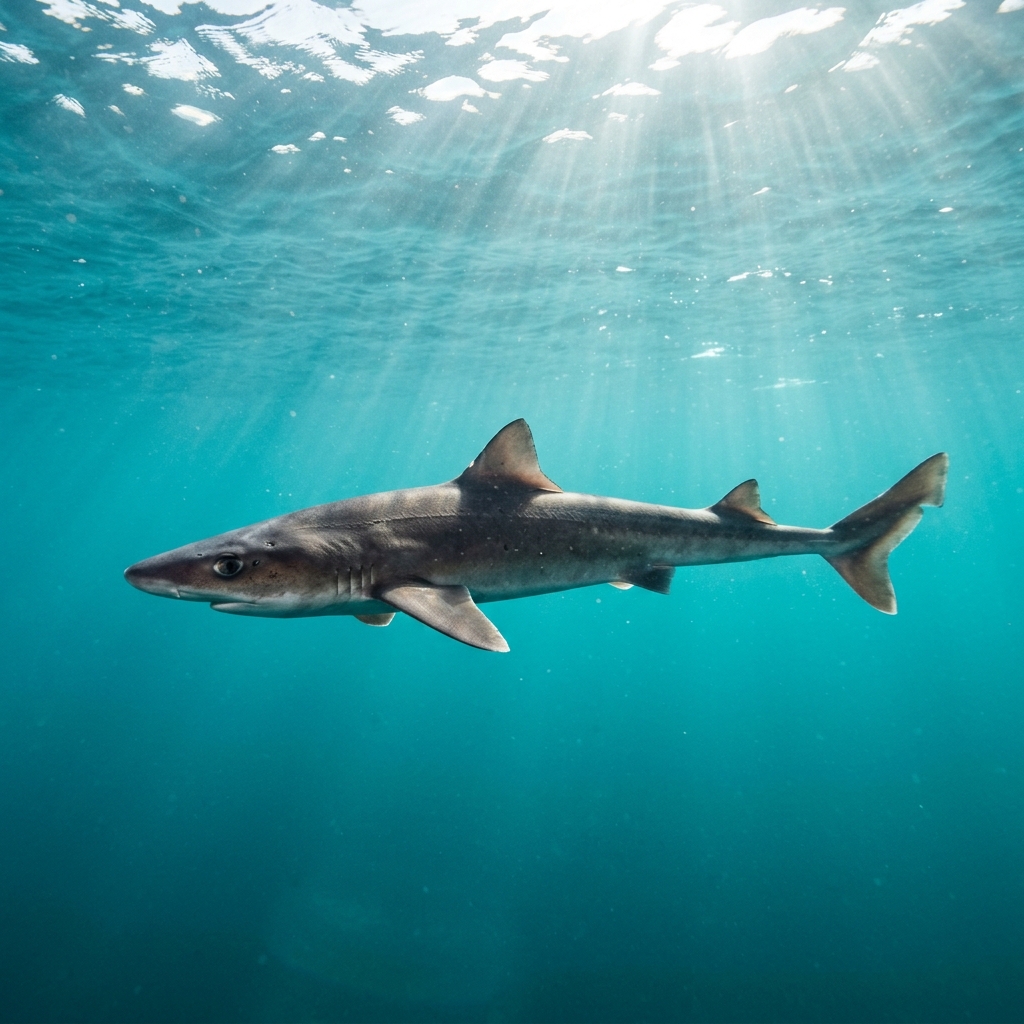
Look for the tail first: the upper lobe is nearly as long as the rest of the body and swings like a whip, making this shark hard to mistake for anything else once you clock it. The body itself is slim, greyish-brown to purplish-grey above with a sharp break to white underneath, and the eyes are notably large for a shark this size. Full-grown animals stretch to around 4 metres including that tail, so a good half of what you're looking at is fin.
Divers most often encounter thresher sharks cruising alone in open water off steep walls or seamounts, sometimes rising from depth in the early morning before dropping back down as light increases. That huge tail isn't just for show underwater, it's used to stun small fish with a rapid overhead slap before the shark circles back to feed. They tend to be wary and keep their distance, drifting past rather than approaching, so sightings are often brief.
That elongated tail lobe is a hunting tool: thresher sharks whip it forward over their head at speed to strike and stun schooling fish, then pick off the stunned prey, a technique that's been captured on camera at a few offshore sites.
There isn't enough logged data yet to call a season for this species. Its observed temperature range of roughly 12 to 28 C suggests it tolerates both cool and warm water, which points toward a broad, possibly year-round presence rather than a tight seasonal window.
Reef neighbours a diver could mistake it for. Use the identification notes above to tell them apart.
Diver sighting data for this species is too sparse right now to name reliable regions with confidence. Thresher sharks are known from scattered oceanic and offshore sites worldwide, often near seamounts and drop-offs where they come up from deeper water, but Fin doesn't yet have enough logged dives to point to specific countries. Check back as more sightings are recorded.
Mapping where Common Thresher Shark is logged…
The giveaway is the tail: the upper lobe is almost as long as the rest of its body and moves like a separate limb. Combine that with a slim grey-brown body, pale underside, and large eyes, and there's little else in the water it could be confused with.
They reach around 4 metres in total length, but roughly half of that is the elongated tail fin rather than body length.
No, they're not considered dangerous to divers. They're naturally wary around people and tend to keep distance rather than approach, so encounters are typically brief, quiet passes rather than close interactions.
They use that oversized tail as a weapon, whipping it overhead to slap and stun small schooling fish before circling back to eat them. It's one of the more unusual hunting techniques among sharks and has occasionally been filmed by divers at offshore sites.
There isn't enough recorded sighting data yet to pin down a reliable season. Given they're logged in water from about 12 to 28 C, they likely turn up across a wide range of conditions rather than during one narrow window.
Site and sighting data is aggregated from diver logs, iNaturalist and GBIF. For taxonomy and conservation status:
Tiger Shark
1,616 sites