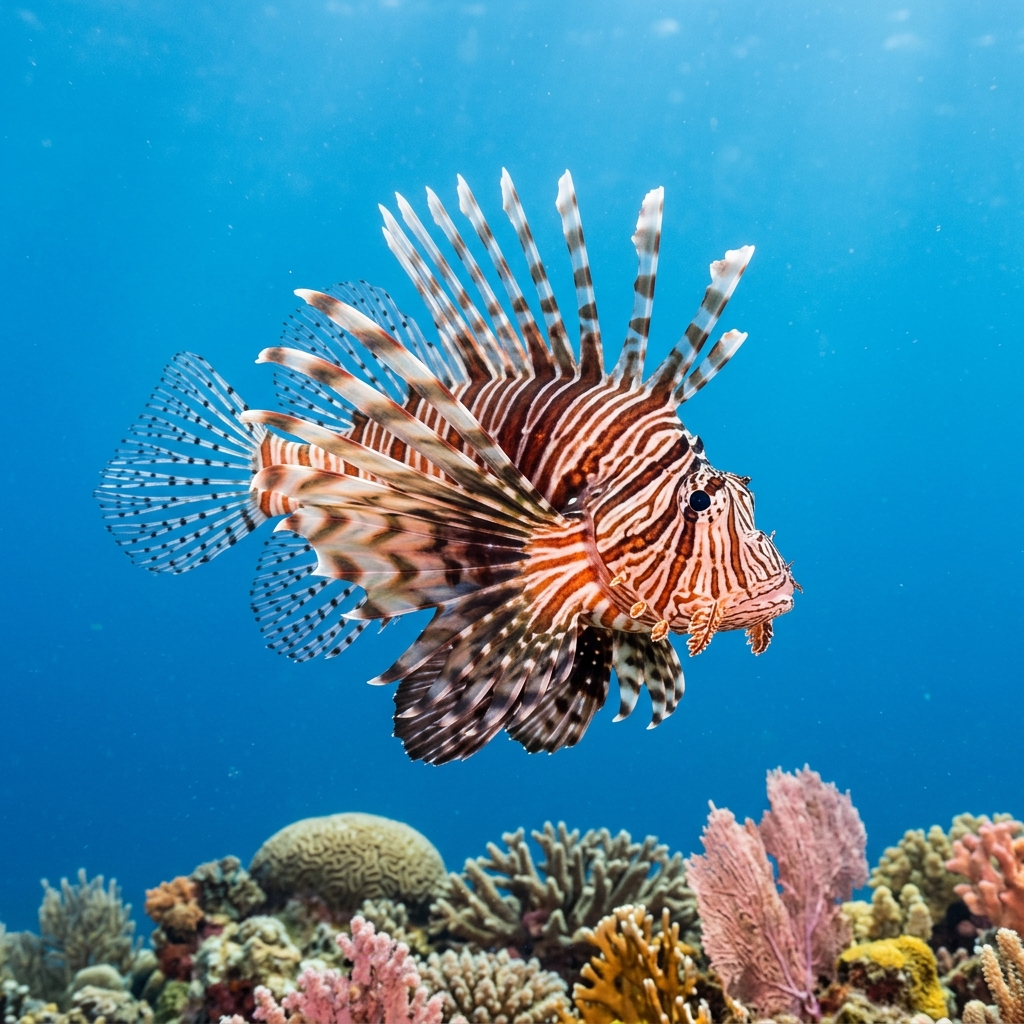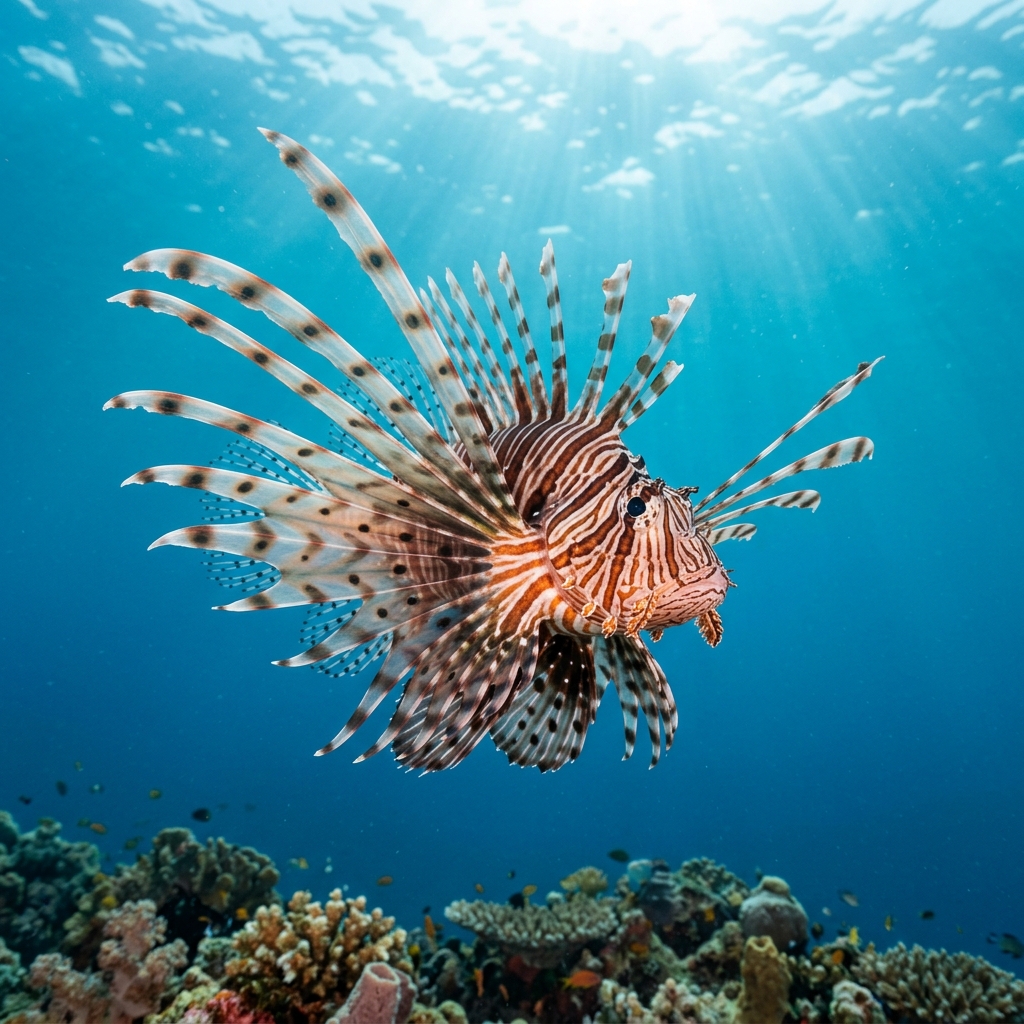
Pterois antennata
Spot the elusive Spotfin Lionfish hiding in reefs across the Philippines, Indonesia and Maldives. Warm water year-round in the north, Nov, Feb peak in the south.
Safety warning
The spines carry venom and snap off easily in the skin. Do not touch it, and never rest a hand or knee on the reef near one; the spines drive in on the lightest contact.
If you're stung
Venomous spinesGeneral first-aid guidance, not a substitute for professional medical care. In an emergency, call your local emergency number.
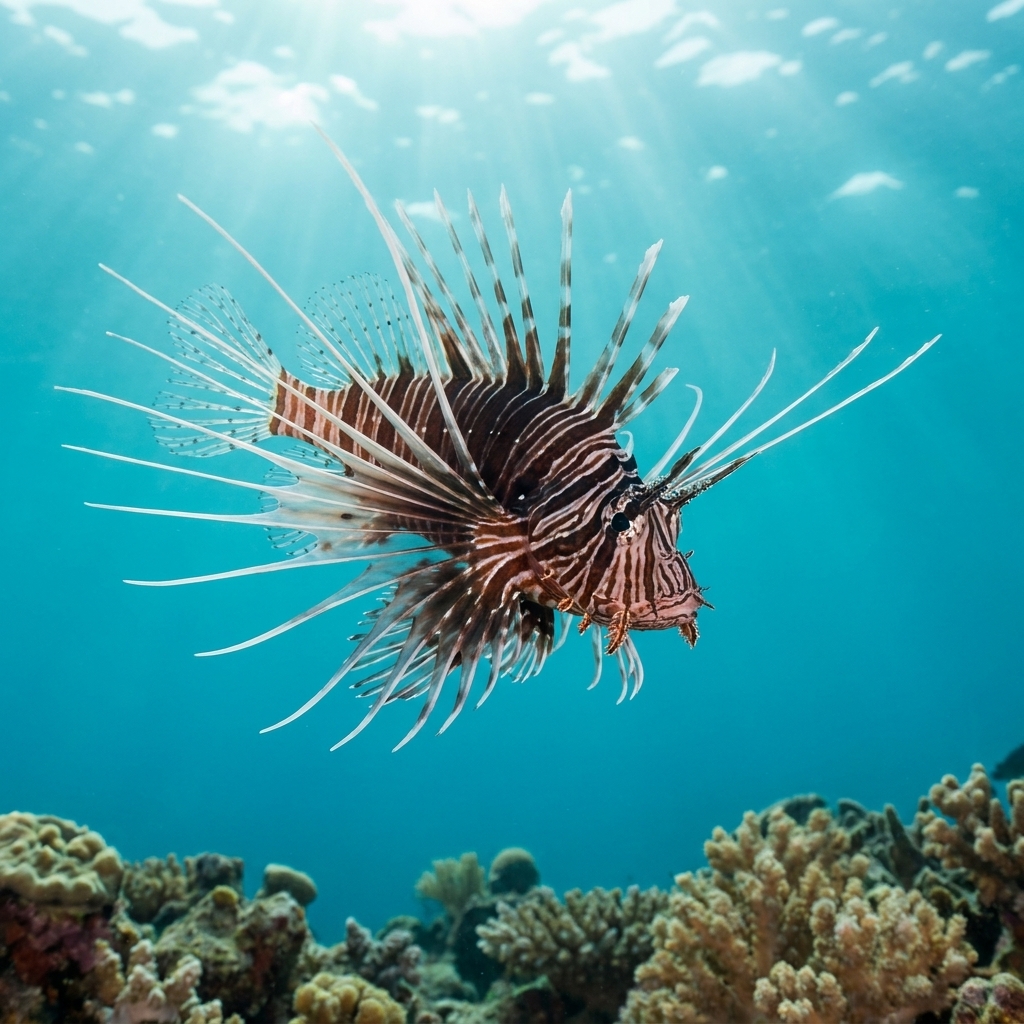
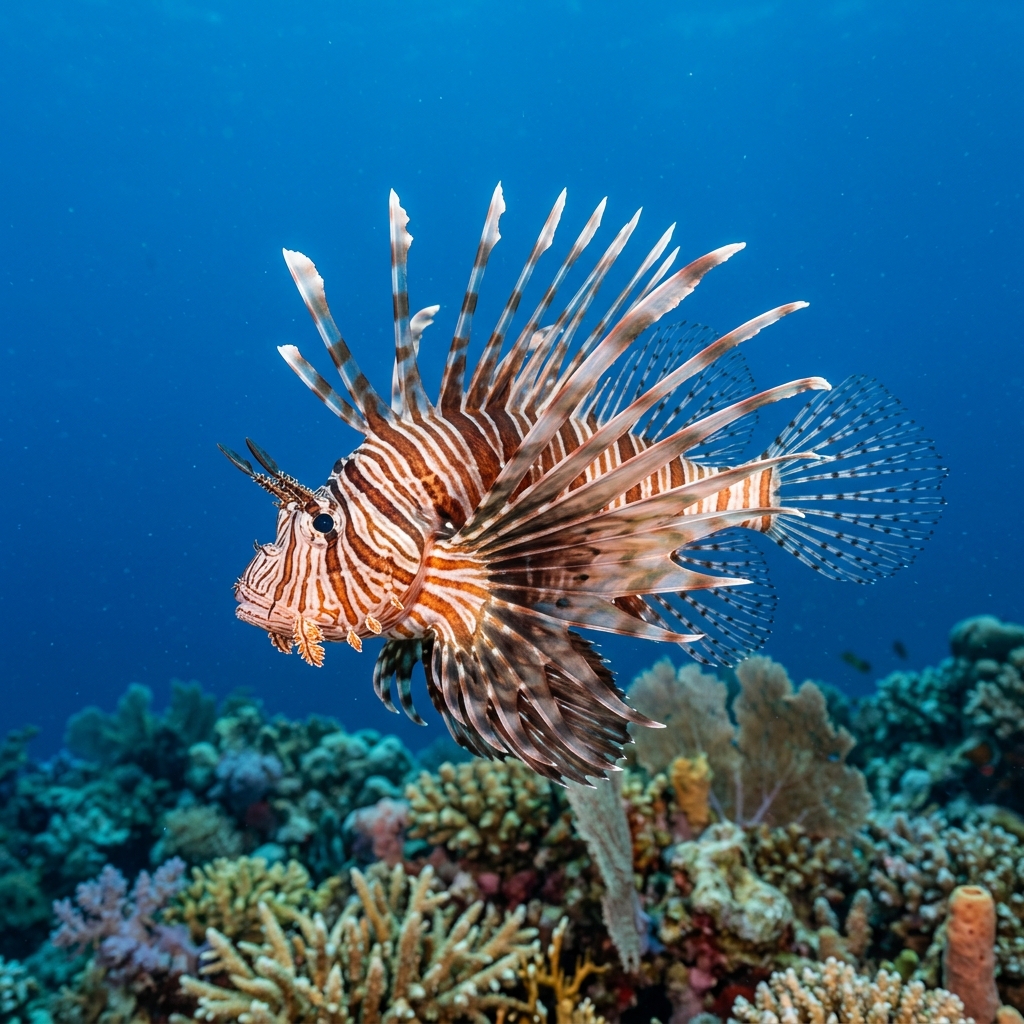
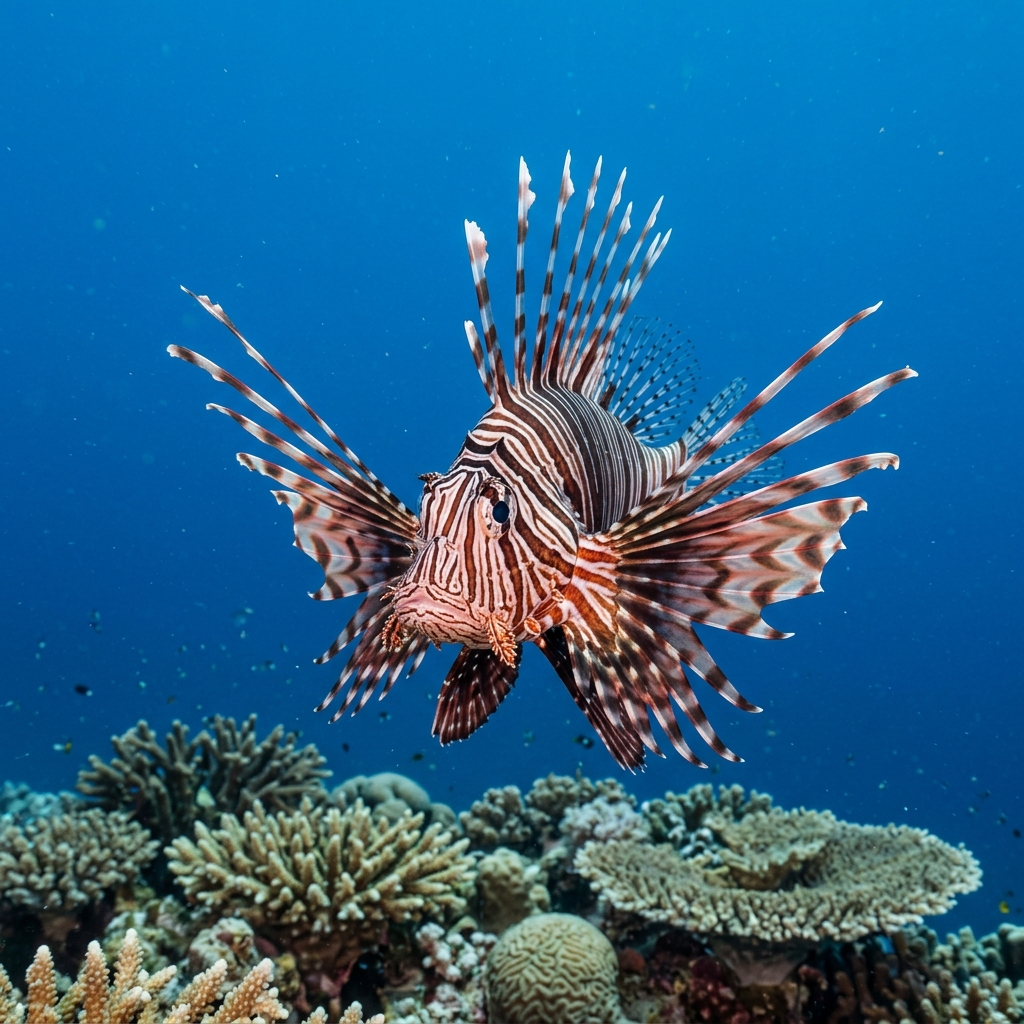
Bold white and dark-brown banding runs across oversized, fan-like pectoral fins that splay wide like a cape, the clearest field mark underwater. Look for the long, spotted tentacles (antennae) projecting above each eye, which give the species its name and set it apart from most other lionfish. The body is stocky and heavily patterned with pale and dark stripes, and the fish typically holds itself motionless against the substrate, making that fin pattern the thing your eye catches first.
When you find one, it is almost always wedged into a rock crevice, tucked under a coral ledge, or pressed against rubble, relying entirely on its disruptive patterning rather than flight. It tends to sit perfectly still and watch you back; slow, deliberate approaches from the side give the best view without triggering the fish to shuffle deeper into cover. It is predominantly nocturnal, so night dives raise your odds noticeably.
Those elaborate spotted antennae above the eyes are not purely ornamental, the Spotfin Lionfish wiggles its pectoral fins to herd small fish and crustaceans into a corner before striking with a rapid lunge, a hunting technique shared across the lionfish group.
In northern-hemisphere destinations like the Philippines, Maldives, and Indonesia it appears year-round, consistent with its preference for warm water in the 22-29 °C range. Southern-hemisphere sightings concentrate in the austral summer months of November through February.
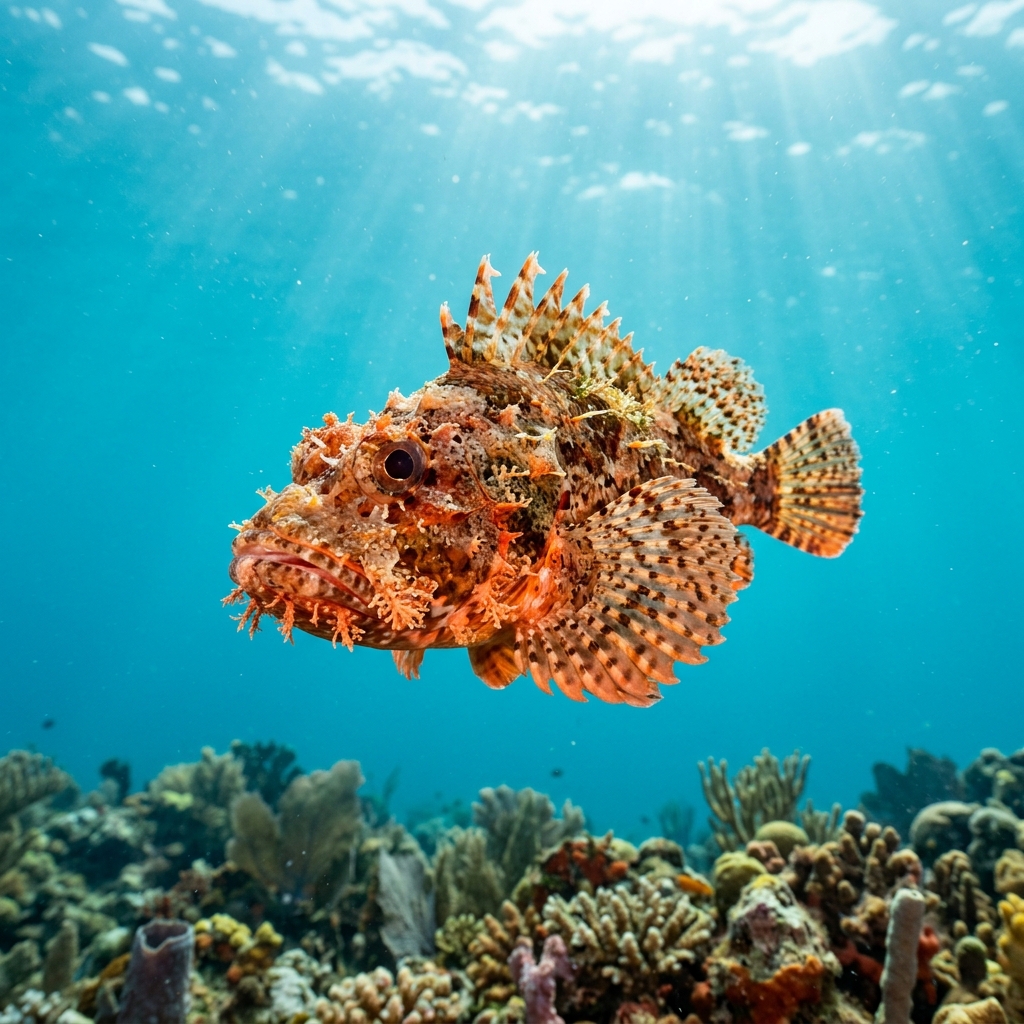
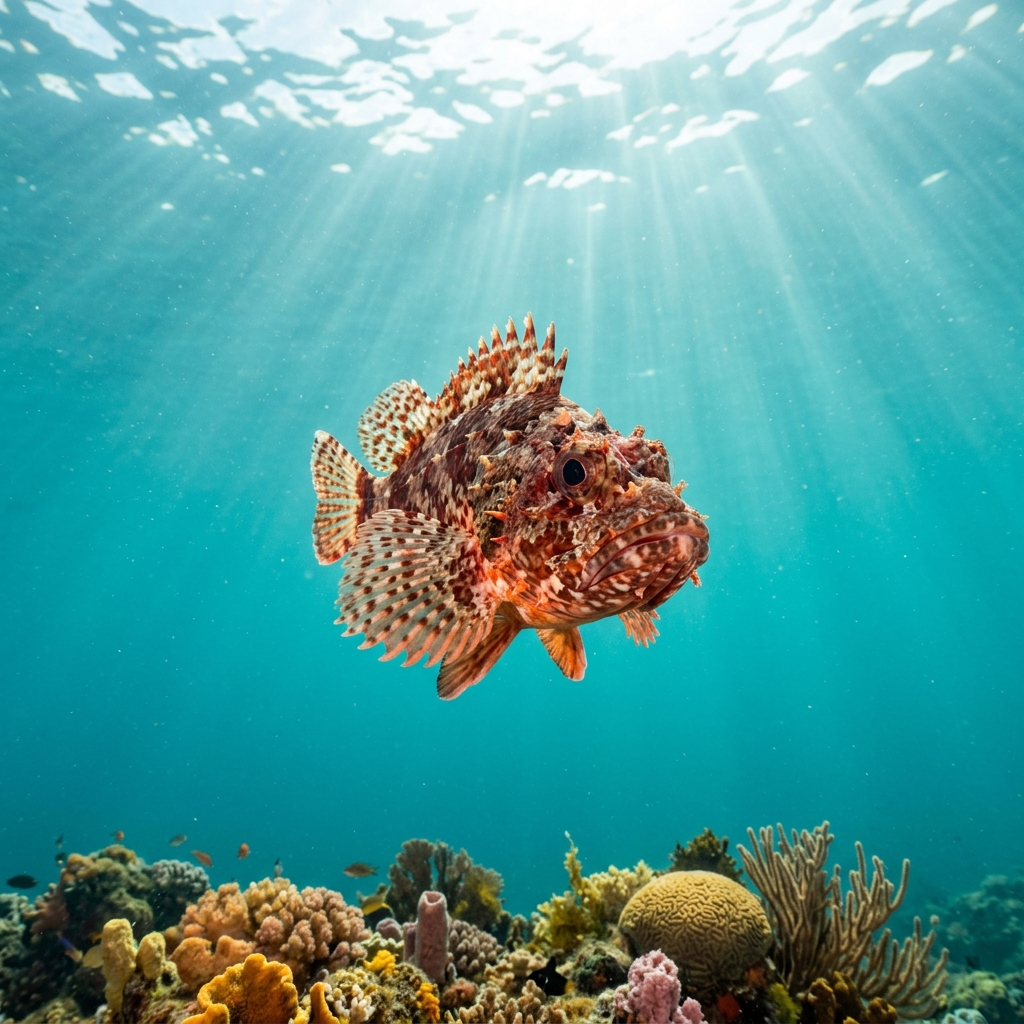
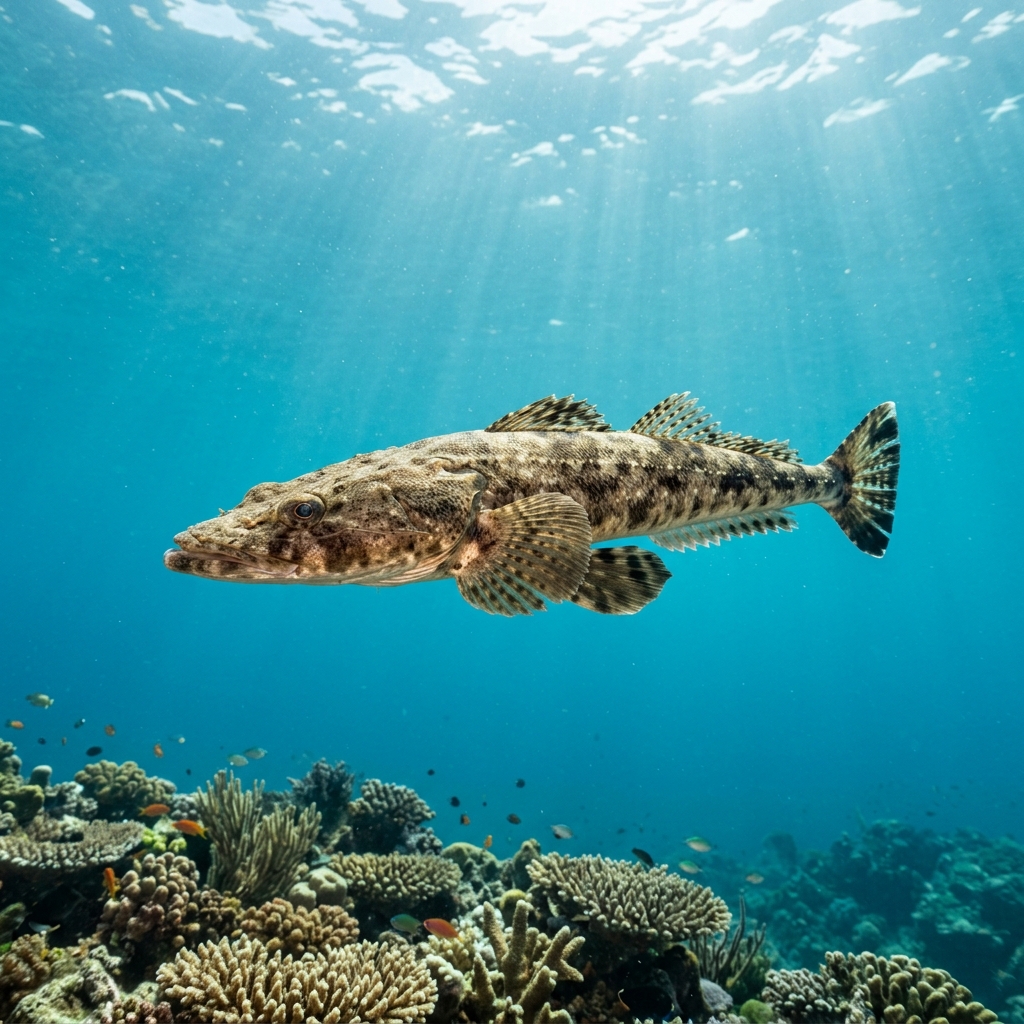
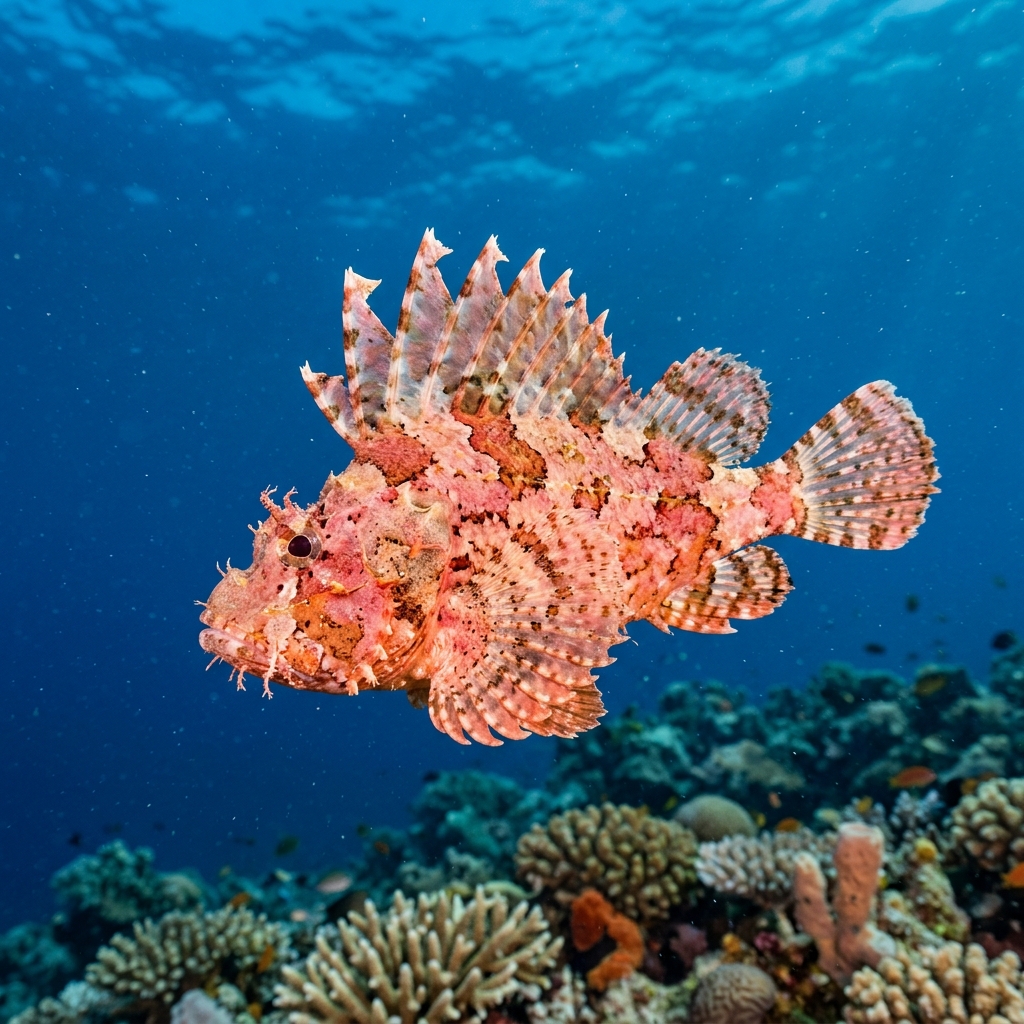
Reef neighbours a diver could mistake it for. Use the identification notes above to tell them apart.
Most commonly logged across the Philippines and Indonesia, with the Visayas and Bali standing out as particularly strong areas. The Maldives, especially the Male and Ari Atolls, also return a high number of sightings, and Australian reefs round out the Indo-Pacific core range. Outside that heartland, divers report it through Malaysia, Thailand, and Oman.
Mapping where Spotfin Lionfish is logged…
The Philippines and Indonesia account for the largest share of logged sightings, with the Visayas region and Bali being particularly reliable areas. The Maldives, Malaysia, Thailand, and Australia also produce regular records, all within the warm Indo-Pacific reef zone.
In northern-hemisphere destinations such as the Philippines and Maldives, sightings occur throughout the year with no strong seasonal peak. If you are diving in the southern hemisphere, November to February is the period when encounters cluster most densely.
Focus on two things: the huge, broadly fanned pectoral fins patterned with bold white and dark-brown bands, and the long spotted tentacles projecting above each eye. The fish will almost always be stationary against rock or coral, so that dramatic fin pattern is usually what catches your eye first.
Like all lionfish, Spotfins carry venomous dorsal spines and should never be touched or cornered. In normal circumstances, however, the fish is calm and shows no aggression; it relies on stillness rather than threat displays. Maintain a comfortable distance and keep hands clear of crevices when searching for one.
Most divers who log it report it as uncommon rather than rare or common, which matches its cryptic, nocturnal lifestyle. Your best tactic is a slow night dive over mixed rubble and coral habitat in the Indo-Pacific, scanning ledges and crevices carefully.
Site and sighting data is aggregated from diver logs, iNaturalist and GBIF. For taxonomy and conservation status:
Indian Lionfish
2,604 sites