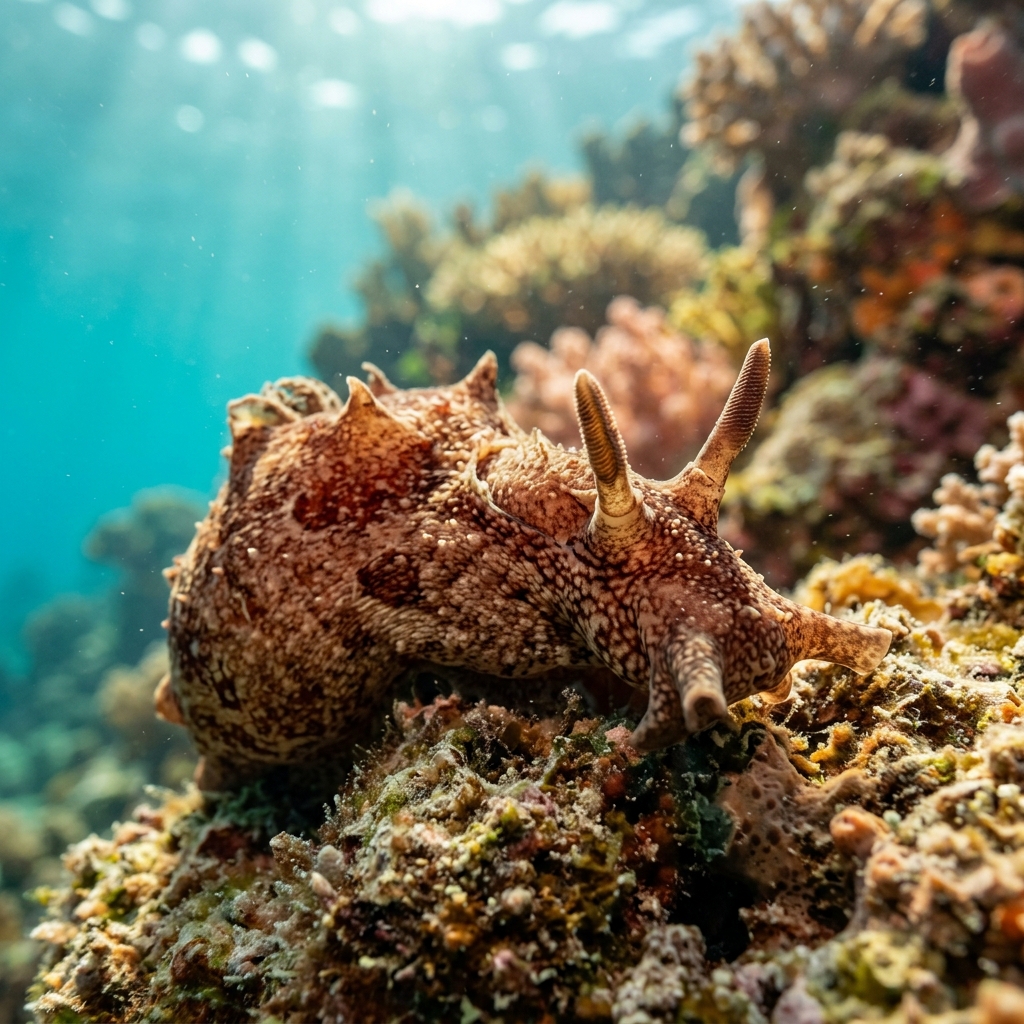
Phyllodesmium jakobsenae
A soft-coral-grazing sea slug logged mostly around Luzon, Philippines, in warm reef water between 25 and 31 C.
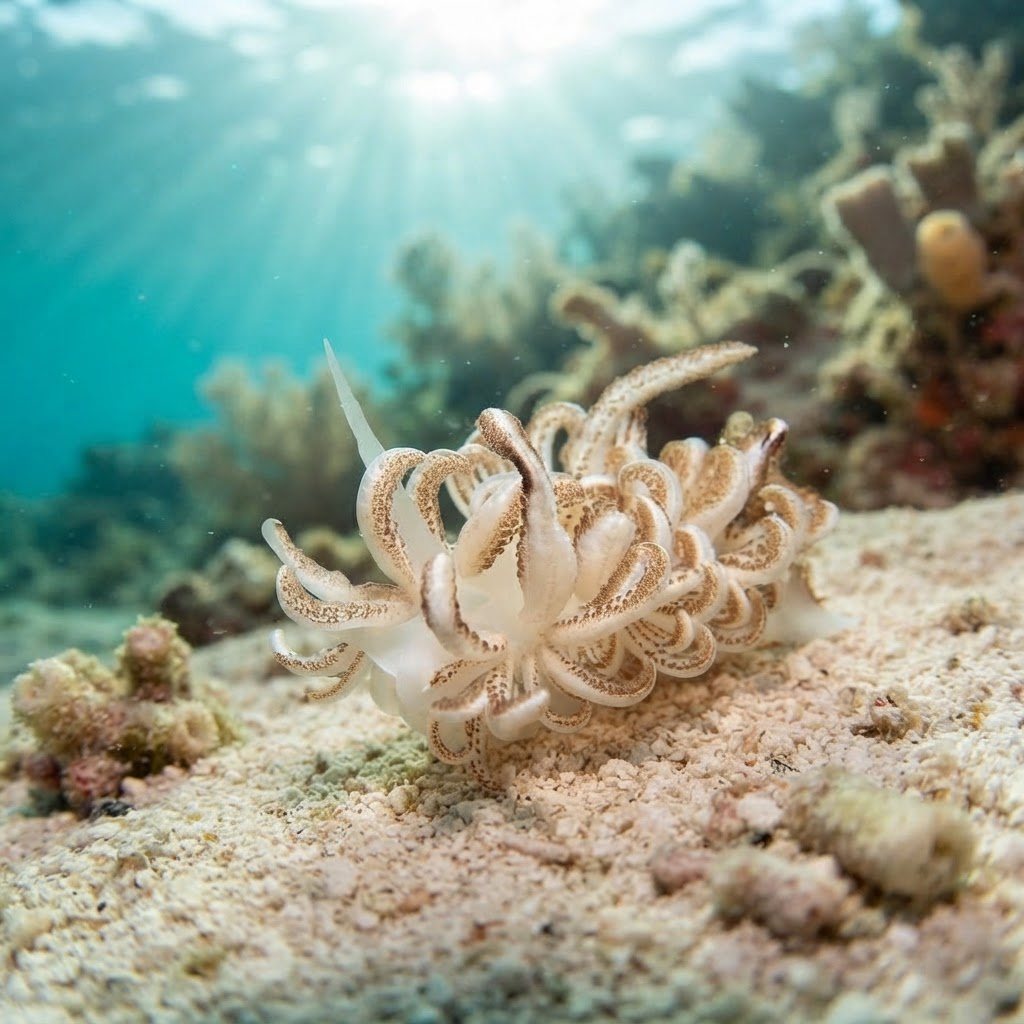
Look for a small, slender sea slug with a translucent to pale body covered in branching, leaf-like projections called cerata running along its back. These cerata often carry a mottled brown or greenish tint from the soft coral tissue and algae it has absorbed, helping it blend into its host rather than stand out. There is no strong colour contrast or bold pattern here, so divers usually spot it by scanning soft coral colonies closely rather than by any flash of colour.
Divers find it parked on or near soft coral colonies, which it grazes on slowly while blending into the host's texture and colour. It shows no reaction to divers beyond staying still, so a careful, close look with a torch or magnifier is usually needed to pick it out at all. Most sightings come from slow, methodical macro dives rather than quick reef swims.
Phyllodesmium nudibranchs are known for stealing stinging or photosynthetic cells from the soft corals they eat and repurposing them in their own cerata, effectively running the coral's chemistry for their own defence or camouflage.
Sightings show no detected seasonal pattern, so treat it as a year-round find. Water temperatures logged with it range from 25.3 to 31.3 C, comfortably within tropical reef norms all year, which fits with there being no strong seasonal signal.
This one is essentially a Philippines specialty in the logged data, with Luzon standing out as the strongest region and a smaller but real presence around Mindanao. If you are hunting for it, macro-focused dive sites in these two regions of the Philippines are where divers are actually finding it.
Mapping where Jakobsen's Phyllodesmium is logged…
It is most reliably logged in the Philippines, with Luzon the strongest region and Mindanao a secondary spot. Look for it on macro-focused dive sites with healthy soft coral growth.
There is no clear season in the sighting data, so it is considered a year-round find. Water temperatures where it has been logged run from 25.3 to 31.3 C, typical of tropical reefs throughout the year.
Look for a small, translucent to pale sea slug with branching, leaf-like cerata along its back that often take on the colour of the soft coral it is feeding on. It has no bold pattern, so it is easy to miss unless you check soft coral colonies closely.
Exact size data is not confirmed for this species, but like most Phyllodesmium nudibranchs it stays small, typically only a few centimetres long, and relies on camouflage rather than size to stay hidden.
Like other members of its genus, it likely feeds on soft corals and can incorporate compounds from its prey into its own cerata for camouflage or defence, essentially borrowing the coral's own chemistry.
Site and sighting data is aggregated from diver logs, iNaturalist and GBIF. For taxonomy and conservation status:
Light-spotted Aegires
3,168 sites