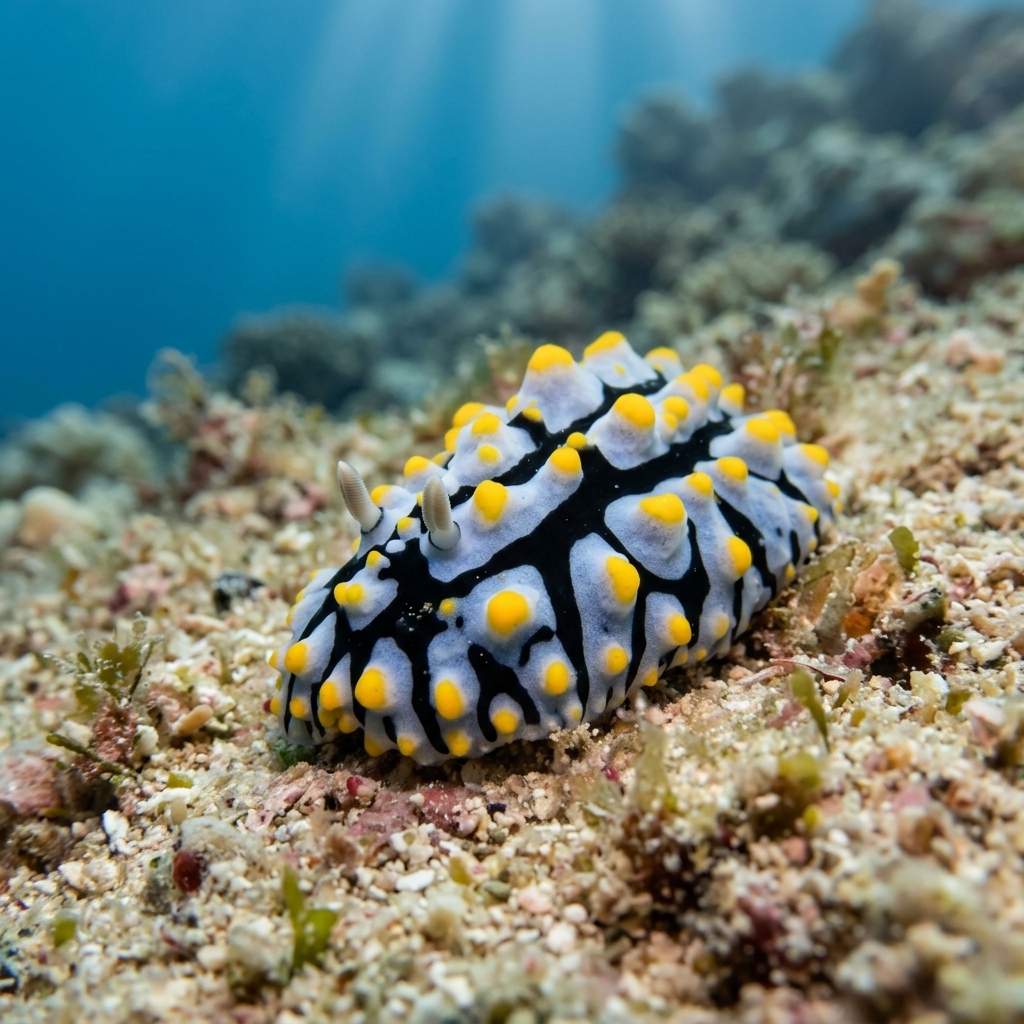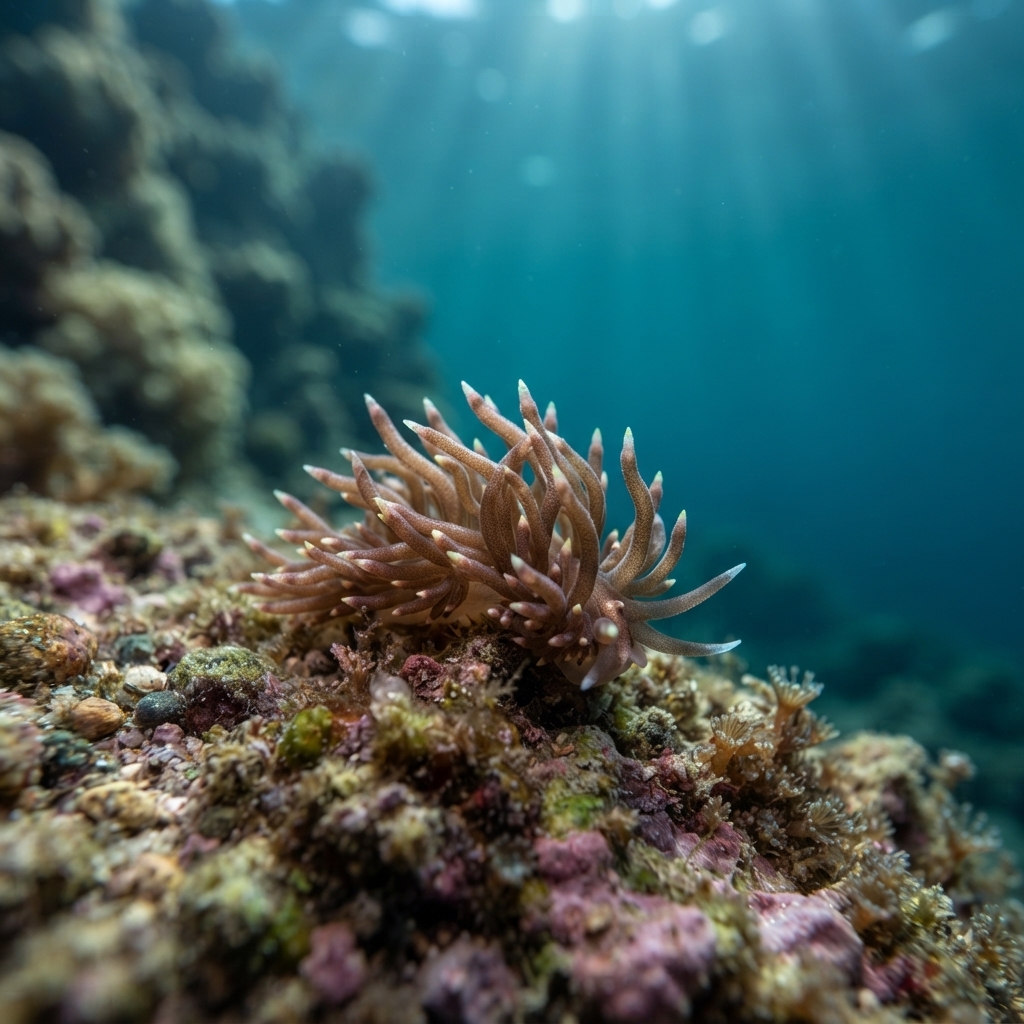
Phyllodesmium briareum
A 1cm branching nudibranch found on soft coral in the Visayas and Luzon, active year-round in warm Philippine waters.
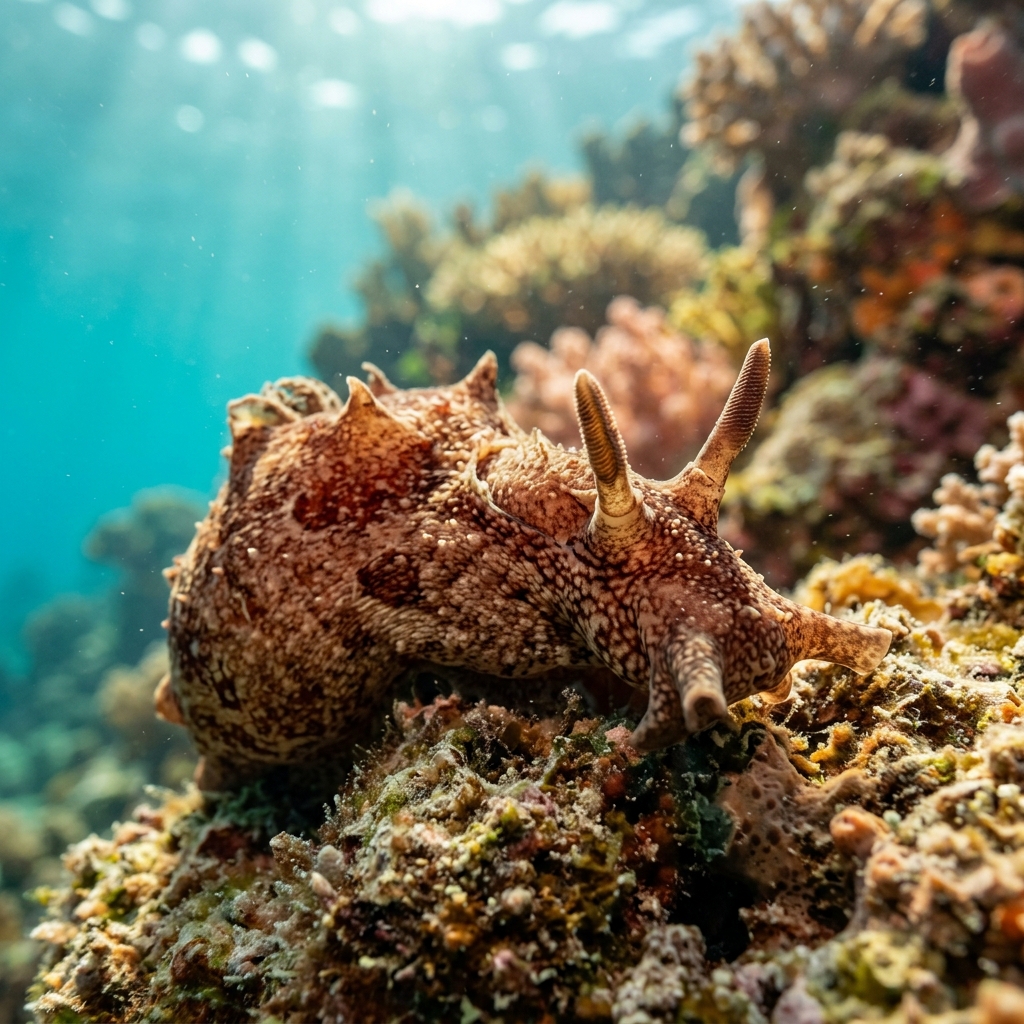
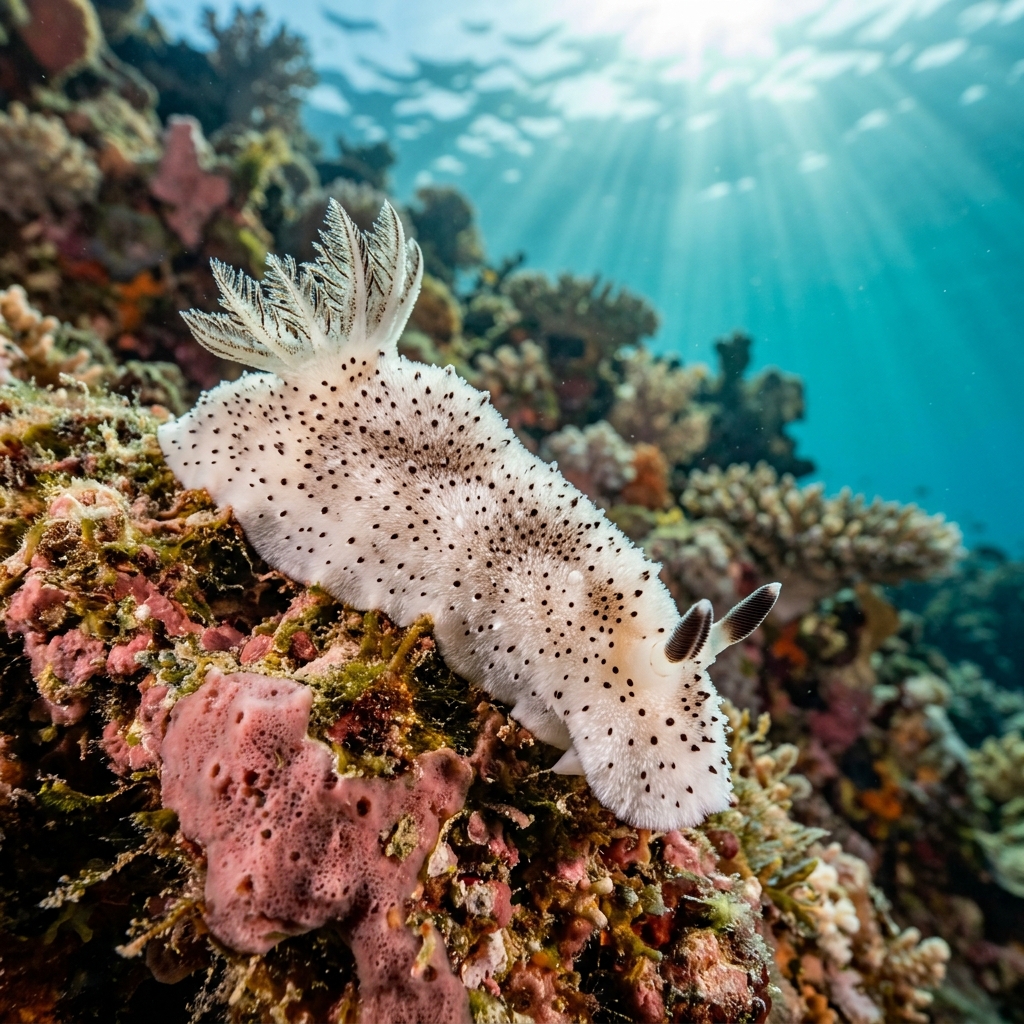
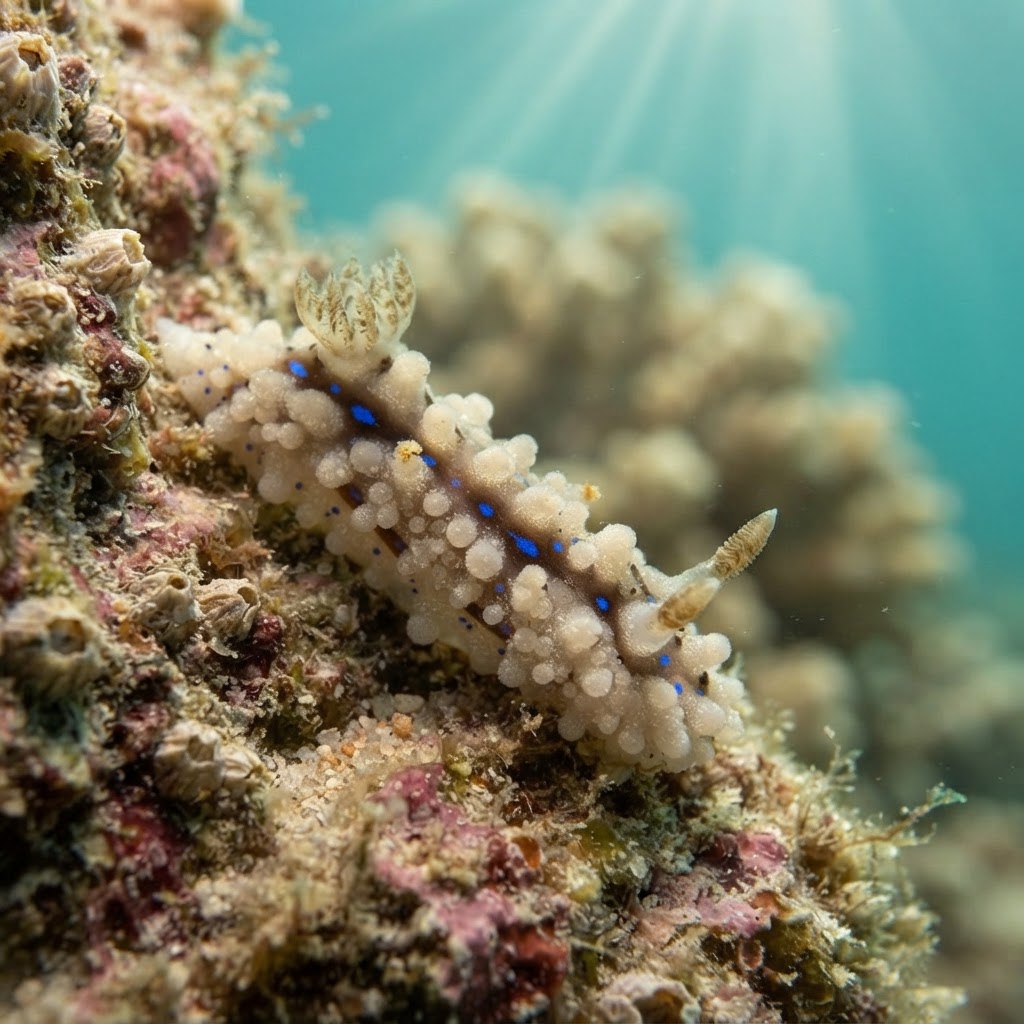
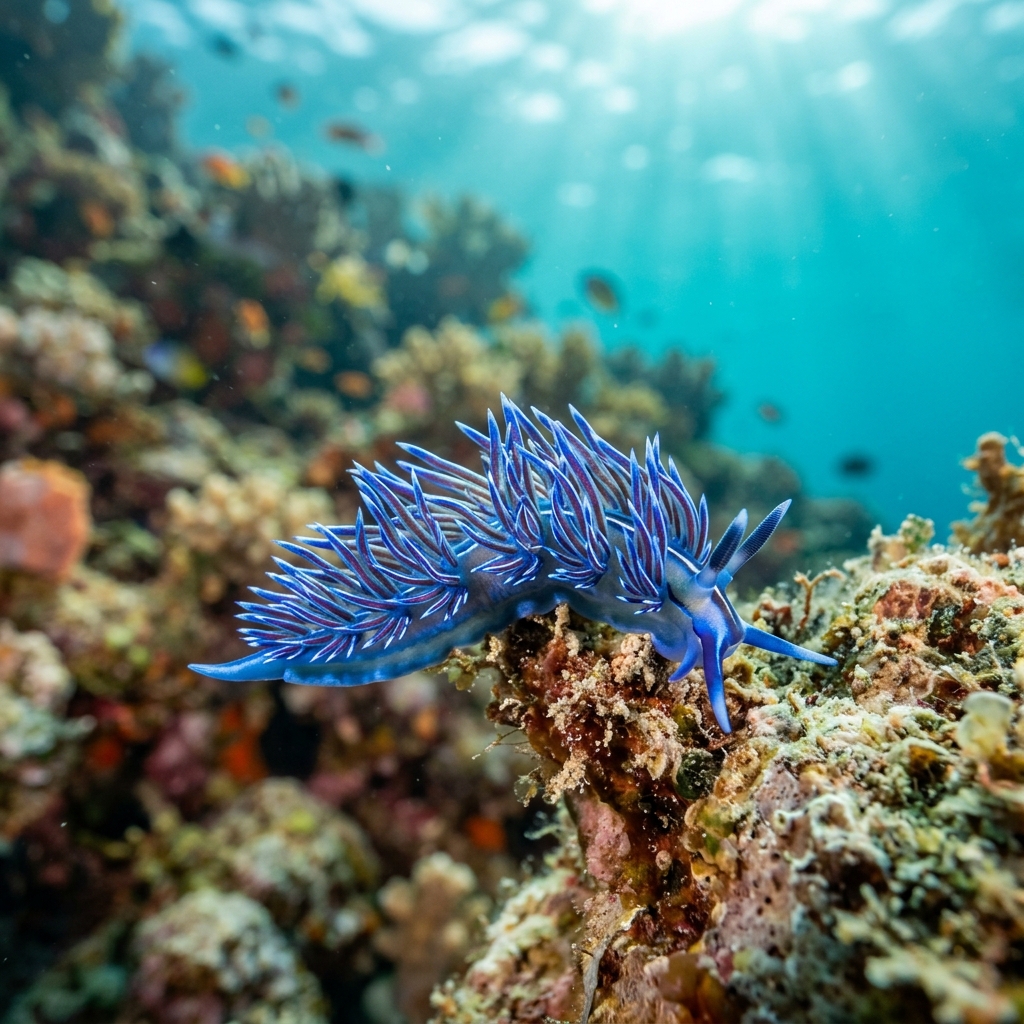
Barely a centimetre long, this nudibranch is built around a dense cluster of branching, leaf-like appendages (cerata) that cover its back and make it look more like a tuft of soft coral than a slug. Colour runs from translucent brown to olive-green, often matching the host coral it feeds on, which is the main reason it disappears in plain sight. There's no bold stripe or spot to key on here; look instead for the irregular, bushy outline breaking up the smooth surface of a soft coral colony.
Divers find this one parked motionless on soft coral colonies, usually between 8 and 20 metres, where it grazes slowly and relies almost entirely on blending in rather than fleeing. It shows no reaction to divers beyond the occasional slow retraction of its cerata if disturbed, and it is most often spotted by macro photographers scanning coral heads rather than swimming reef life. Because it holds so still and matches its host so closely, most sightings happen when someone is specifically hunting for it with a torch or a keen eye.
Like other members of its family, this species feeds on soft coral polyps and can retain some of the coral's symbiotic algae in its tissue, giving it a faint solar-powered boost alongside its regular diet.
Sightings show no clear seasonal pattern, and with water temperatures logged between 25.4 and 31.4°C, the reefs it lives on stay warm enough year-round for it to turn up on any given dive. Treat it as a species to look for on any trip rather than one tied to a particular month.
This is very much a Philippine species on the logs, with the Visayas and Luzon standing out as the strongest regions by a wide margin. Sabah in Malaysia is the next most reliable area, followed by scattered sightings across Peninsular Malaysia's east coast, Queensland, Sulawesi, Dili in Timor-Leste, and Mindanao.
Mapping where Bushy Phyllodesmium is logged…
The strongest sightings come from the Visayas and Luzon in the Philippines, with Sabah in Malaysia also a reliable spot. Smaller numbers turn up in Peninsular Malaysia, Queensland, Sulawesi, and Timor-Leste.
There's no strong season in the sighting data, and warm tropical water in the 25 to 31°C range means it can be found year-round wherever its host soft corals grow.
Look for a tiny, 1cm animal covered in branching, leaf-like cerata that make it resemble a scrap of soft coral rather than a slug. Colour usually matches its host coral, so patience and a sharp eye help more than any single marking.
They stay small, typically around 1cm long, which is one reason they're logged as uncommon rather than common at most sites even where they're present.
It feeds on soft coral polyps and can hold onto some of the coral's algae afterwards, letting it draw a bit of extra energy from sunlight much like the coral itself does.
No, this is a harmless, stationary grazer with no sting or defence relevant to divers. You can observe it closely without any risk.
Site and sighting data is aggregated from diver logs, iNaturalist and GBIF. For taxonomy and conservation status:
Light-spotted Aegires
3,168 sites