Cyerce katiae
An uncommon leaf slug found almost exclusively around Luzon, Philippines, in warm 25-31C reef water. Here's how to spot one.
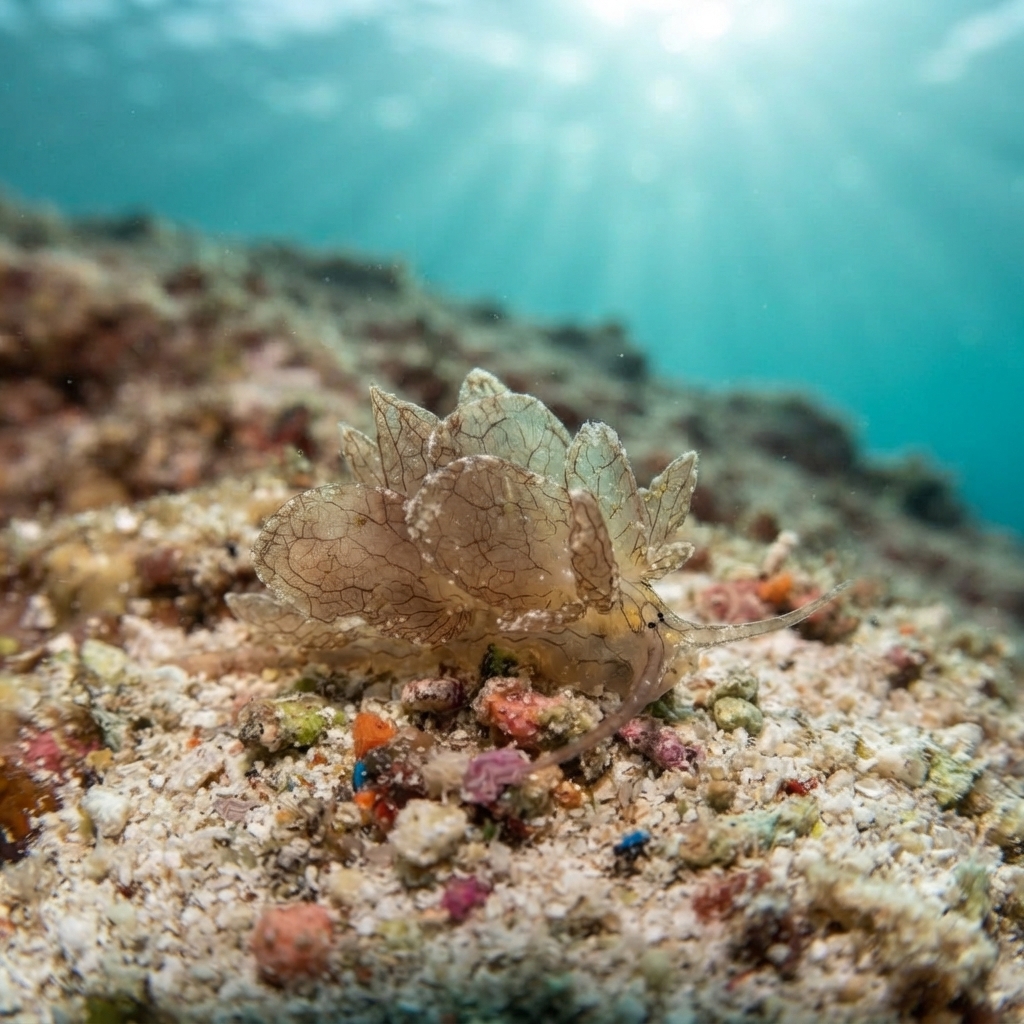
A small sea slug with rows of flattened, leaf-shaped appendages (cerata) covering its back, giving it a frilly, almost plant-like silhouette rather than a typical slug body. The cerata are translucent to pale with fine markings, which combined with the size and reef-rubble setting is what separates it from plainer headshield slugs. Look closely along sandy patches and rubble near reef structure rather than open sand.
Divers log this one tucked into rubble and reef crevices rather than out in the open, moving slowly as it grazes. It's the kind of find that rewards a slow, methodical macro hunt rather than casual reef cruising, and it shows no particular reaction to divers since it simply keeps browsing. Most sightings come from the same handful of muck and rubble sites in Luzon, so local dive guides who know the ground tend to be the fastest way to one.
Like other Cyerce species, it likely feeds on algae and can shed individual cerata as a defence if grabbed, a trick called autotomy that lets it escape while the discarded piece distracts a predator.
No clear seasonal pattern shows up in the sightings, and with a comfortable temperature range of 25.4 to 31.4C it's likely present on Luzon's reefs year-round. Plan around dive conditions rather than a specific month.
Reef neighbours a diver could mistake it for. Use the identification notes above to tell them apart.
This one is very much a Philippines specialty, with Luzon standing out as by far the most reliable region for logged sightings. A single site in Xiaoliuqiu, Taiwan, has also produced a sighting, so it's worth a look on Taiwanese reefs too, but Luzon is where divers actually go looking for it.
Mapping where Katia's Cyerce is logged…
Almost all logged sightings come from Luzon in the Philippines, making it the region to target. A single sighting has also come from Xiaoliuqiu in Taiwan, but Luzon is the reliable spot.
There's no detected season in the sighting data, and its 25.4 to 31.4C temperature niche matches warm tropical reef water all year, so it can turn up on any dive trip to Luzon.
Look for a small slug covered in flattened, leaf-like cerata that give it a frilly, translucent appearance rather than a smooth or bumpy body. It's usually found tucked into rubble or crevices rather than out in the open.
No, it poses no danger to divers. It's a small, harmless grazing slug best appreciated with a macro lens and a careful eye.
It's logged as uncommon even at the sites where it does turn up, so finding one usually takes a dedicated muck or rubble dive with a guide who knows where to look.
Site and sighting data is aggregated from diver logs, iNaturalist and GBIF. For taxonomy and conservation status:
Light-spotted Aegires
3,168 sites