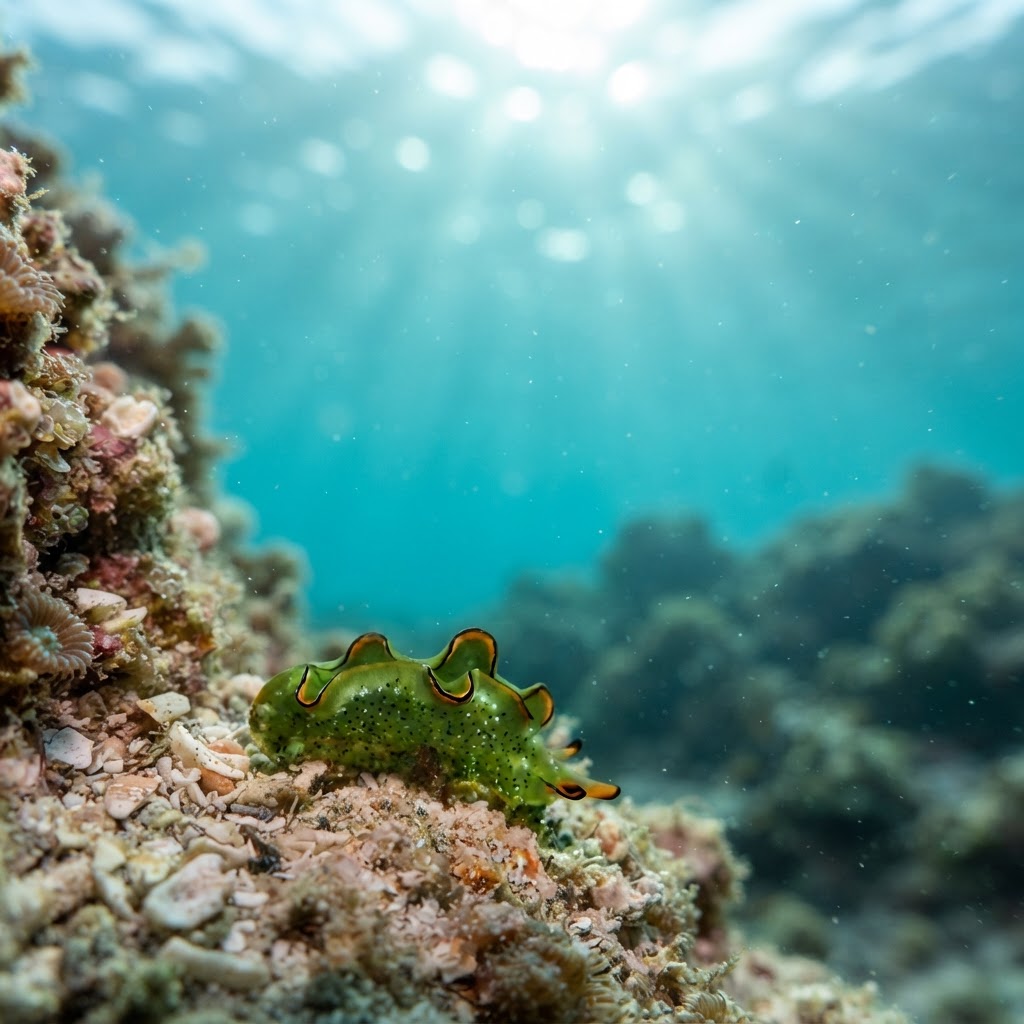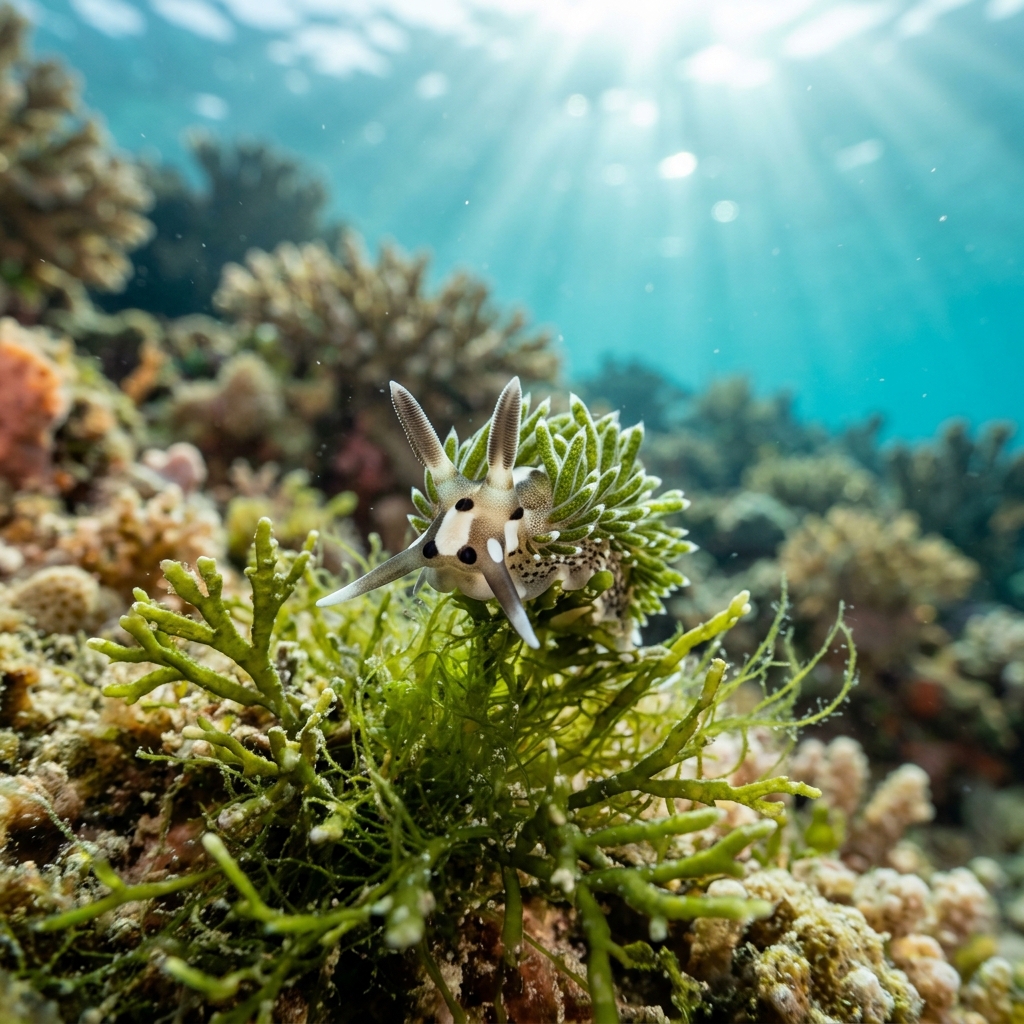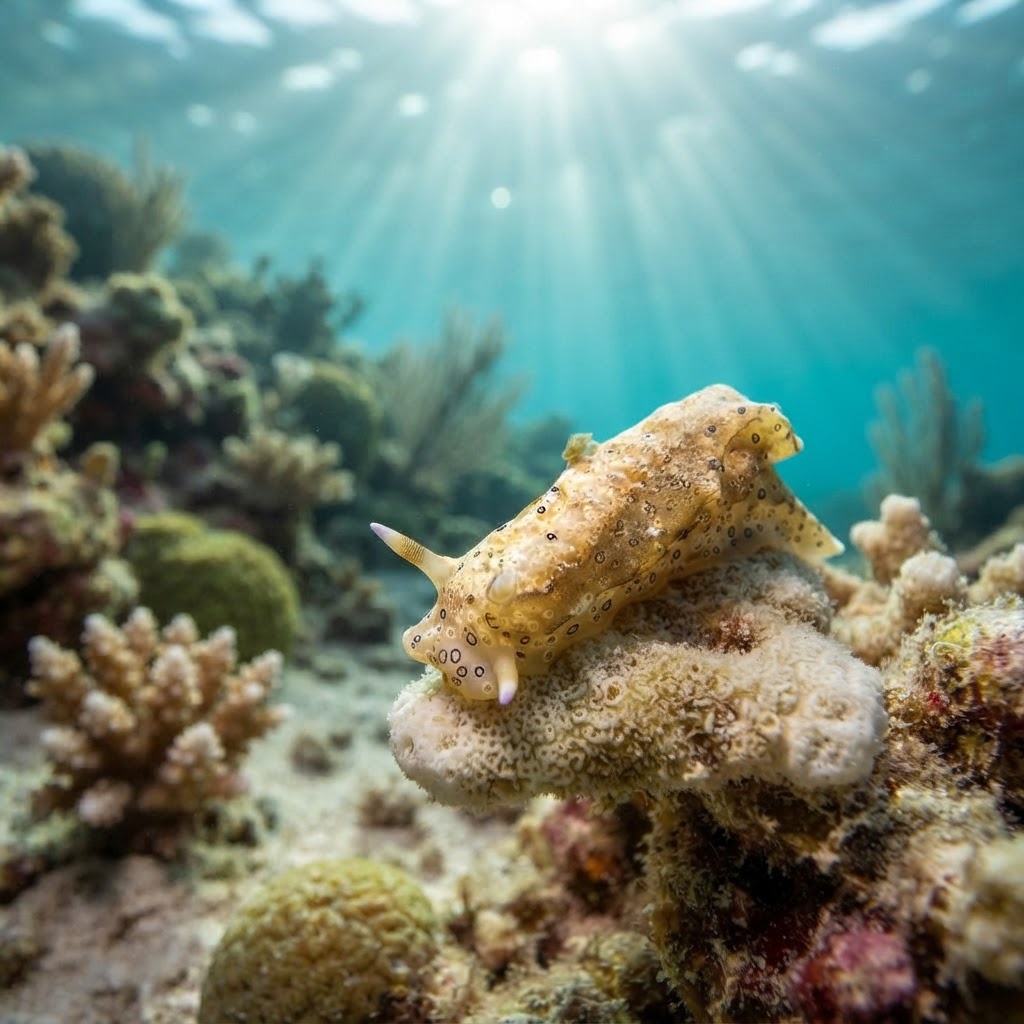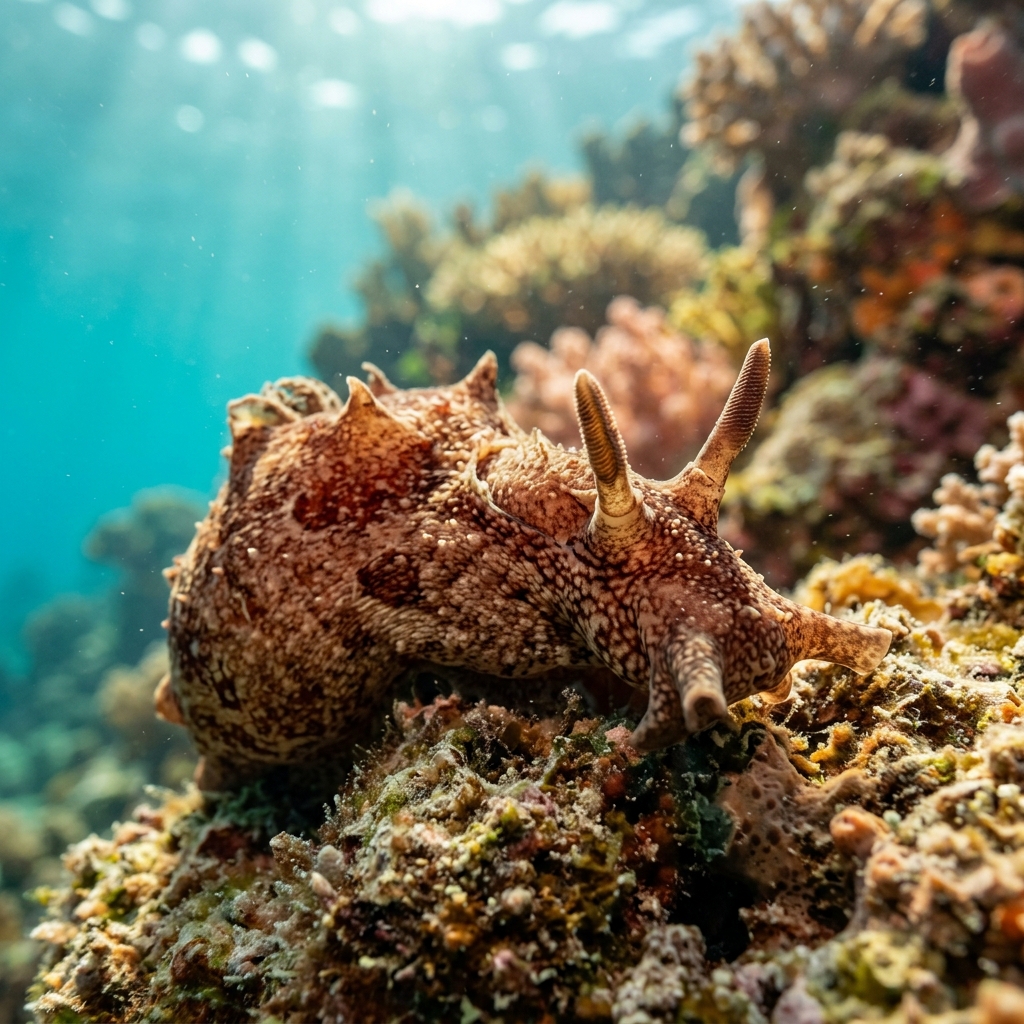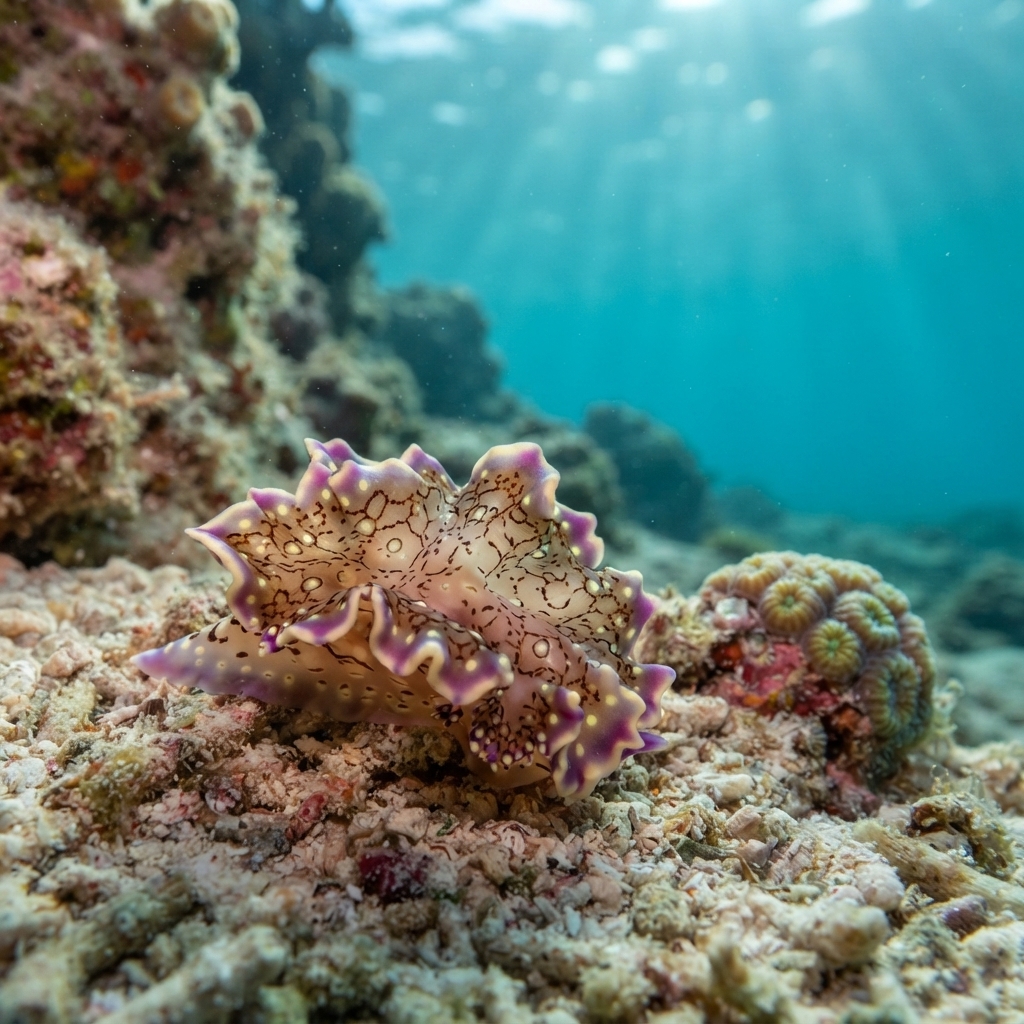
Cyerce blackburnae
An uncommon frilly sea slug logged almost exclusively around Luzon, Philippines, in warm 25 to 31 C reef water.
Look for a small, soft-bodied sea slug covered in flattened, leaf-like appendages (cerata) along its back, giving it a ruffled, frilly outline rather than a smooth slug shape. The cerata typically carry mottled colouring that helps it blend into algae and reef debris, so divers usually spot it by its texture and shape before its colour. It moves slowly across the substrate and stays small enough that most sightings come from divers actively scanning for it rather than noticing it in open view.
Divers typically find it grazing slowly over reef rubble or algae-covered surfaces, moving at the unhurried pace typical of sap-sucking slugs. It's not shy in the sense of fleeing, since it simply has nowhere fast to go, but its small size and camouflage mean it's easy to swim past without noticing. Most sightings happen during a slow, close-focus search rather than mid-water cruising.
Like other members of the Caliphyllidae family, it likely feeds by piercing algal cells and can shed its cerata as a defence if disturbed, a trick called autotomy that lets it escape a predator's grip.
Sightings don't show a clear seasonal pattern, and the observed water temperature range of 25.2 to 31.2 C is typical of tropical reefs year-round, so there's no strong reason to plan around a particular month.
Reef neighbours a diver could mistake it for. Use the identification notes above to tell them apart.
Almost every logged sighting comes from Luzon in the Philippines, making it the region to target if you want a real shot at this species. A handful of records also come from Queensland and New South Wales in Australia, but the Philippines is by far the stronger bet.
Mapping where Blackburn's Cyerce is logged…
Your best chance is around Luzon in the Philippines, where the large majority of logged sightings come from. A few records also exist from Queensland and New South Wales in Australia, but Luzon is the reliable spot to search.
There's no detected seasonal pattern in sightings, and it's found across a warm 25.2 to 31.2 C range, so it's considered a year-round find on the reefs where it occurs.
Check for a small sea slug with flattened, leaf-shaped cerata covering its back, giving it a frilly, ruffled look rather than a smooth or spiky one. It's usually mottled in colour and moves slowly over rubble or algae, so patience helps more than colour alone.
Exact size data isn't available for this species, but like other Caliphyllidae sea slugs it's small, typically the kind of animal divers need to look closely at reef rubble to notice.
No, it poses no danger to divers. It's a small, slow-moving sea slug best appreciated with a careful look rather than any contact.
Its leaf-like cerata aren't just for show. Many Caliphyllidae slugs can detach these appendages if grabbed, a defensive trick that lets the animal escape while a predator is left with a mouthful of shed tissue.
Site and sighting data is aggregated from diver logs, iNaturalist and GBIF. For taxonomy and conservation status:
Light-spotted Aegires
3,168 sites