Cyerce nigra
A dark, frilly sea slug logged mostly around Luzon, Philippines, in reef water from 25 to 31 C, and easy to miss if you don't slow down.
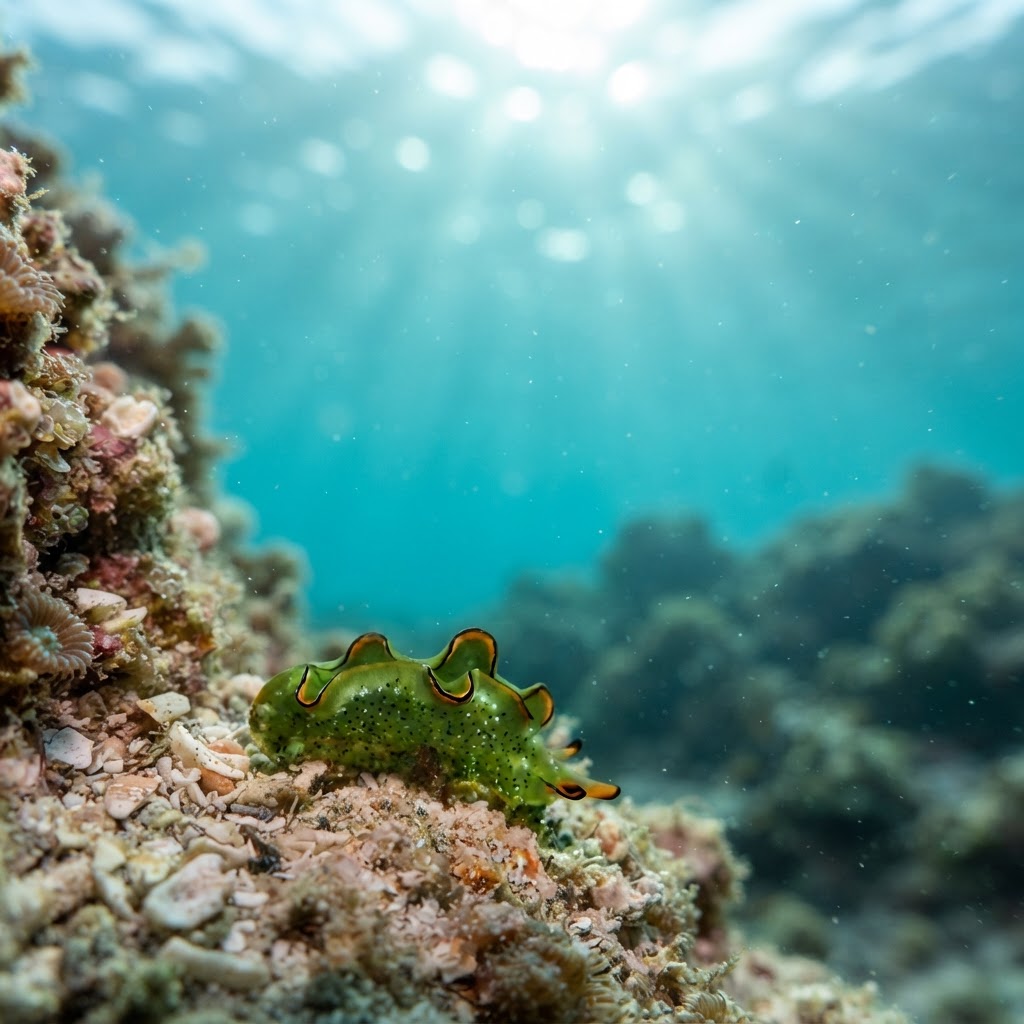
Small, dark-bodied sea slug with flattened, leaf-like lobes (cerata) covering its back, giving it a ruffled, almost lettuce-like silhouette. The overall tone reads nearly black to deep brown against the reef, which is the main giveaway against similarly shaped slugs. It moves slowly across rubble and algae mats, staying low and easy to overlook unless you're scanning close and slow.
Divers typically find it parked on rubble, algae or sponge-covered substrate, moving at the unhurried pace typical of these slugs rather than darting for cover. It's logged as uncommon at most sites, so seeing one usually comes down to a slow, close look during a muck dive rather than a chance encounter mid-water. It shows no particular reaction to divers beyond continuing its slow grazing.
Like other members of the Caliphyllidae family, the leaf-shaped cerata on its back likely aid in gas exchange and may help it blend into algae, a trick shared with its sap-sucking slug relatives.
Sightings don't show a clear seasonal pattern, and with water temperatures logged between 25.3 and 31.3 C, this fits a year-round tropical reef presence rather than a specific window. Any month diving Luzon or Milne Bay gives you a reasonable shot.
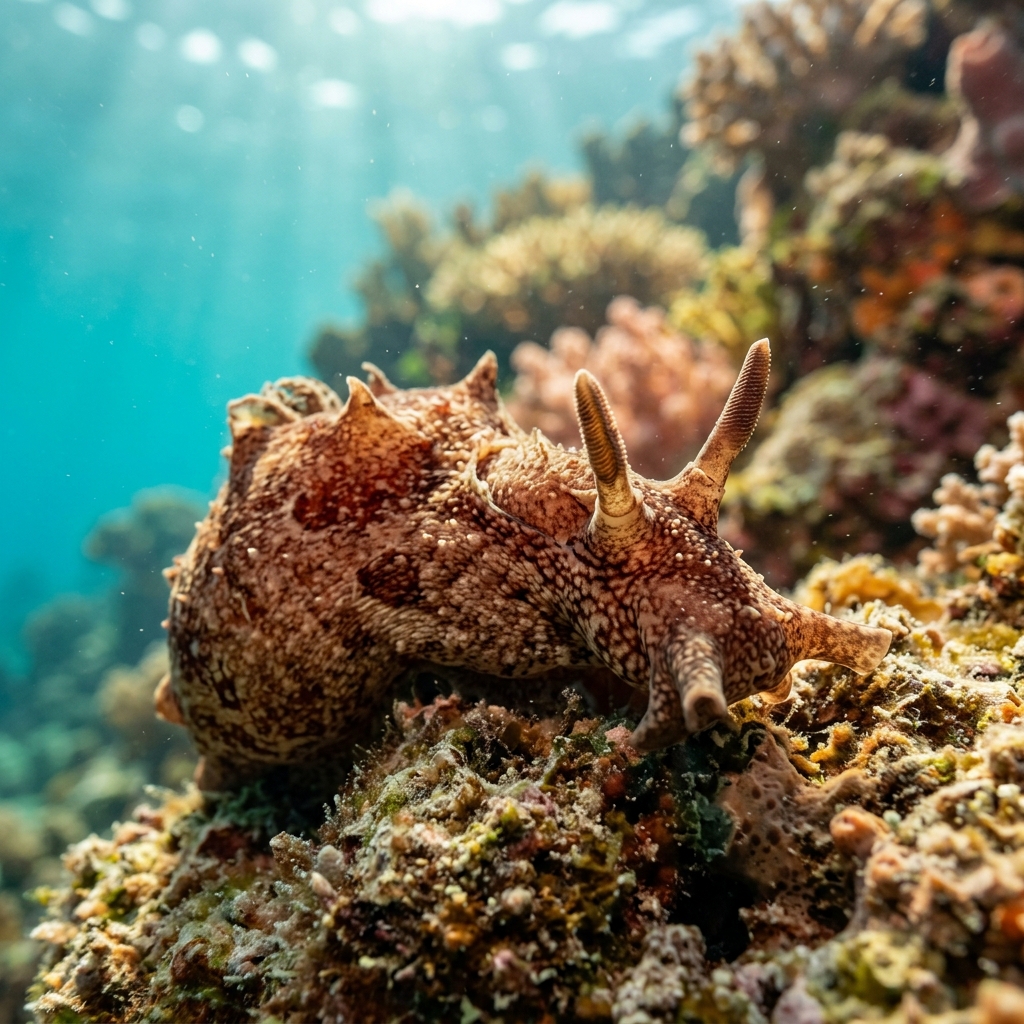
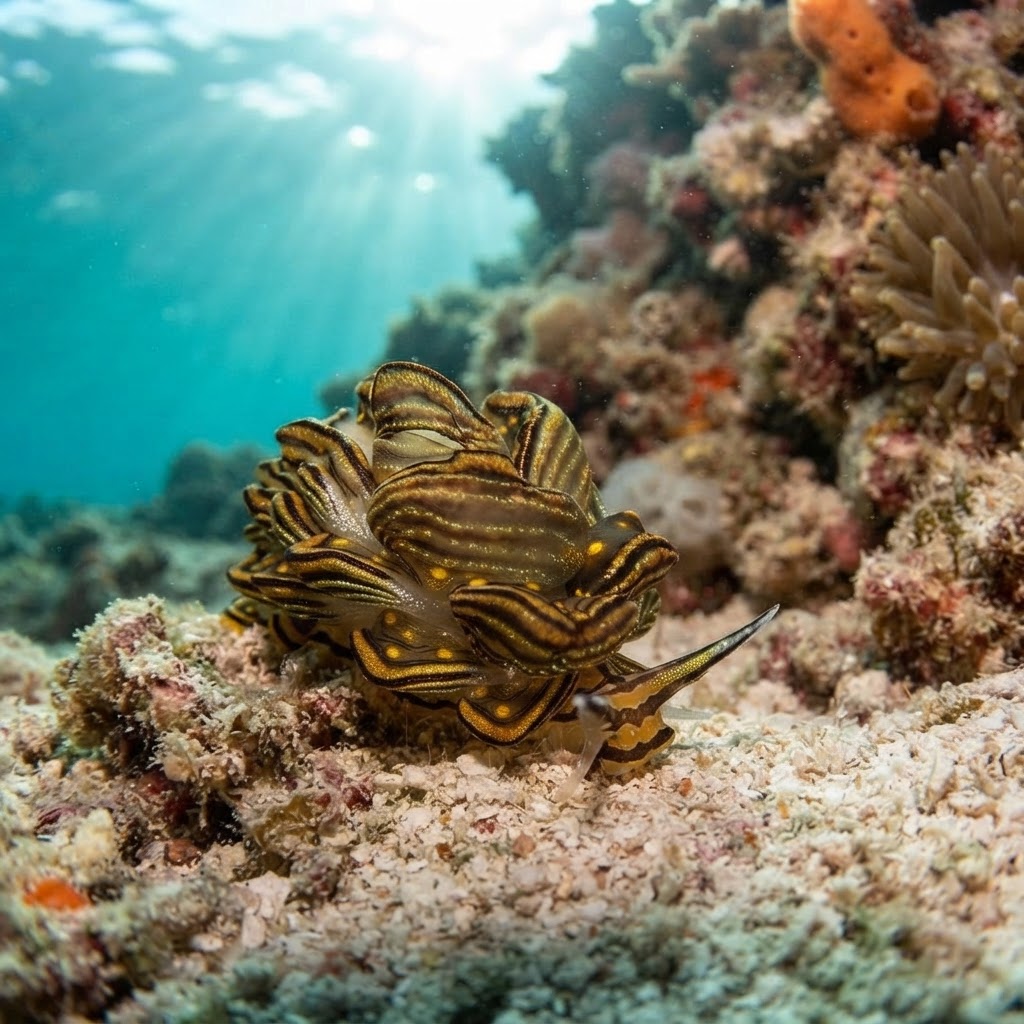
Reef neighbours a diver could mistake it for. Use the identification notes above to tell them apart.
This is very much a Philippines animal in the logs, with the strongest and most consistent sightings around Luzon. Smaller numbers turn up in Milne Bay in Papua New Guinea, with occasional reports from Sabah in Malaysia and Western Australia, so it's worth keeping an eye out on muck and rubble dives across the wider Indo-Pacific too.
Mapping where Black Cyerce is logged…
Luzon in the Philippines is by far the most reliable region, with additional sightings from Milne Bay in Papua New Guinea, Sabah in Malaysia, and Western Australia. It favours rubble and muck-diving type sites over open reef.
There's no strong seasonal pattern in the sightings, and it's found in water from about 25 to 31 C, so it's a year-round find on tropical Indo-Pacific reefs rather than a seasonal target.
Look for a small, dark to nearly black slug covered in flattened, leaf-shaped lobes along its back, moving slowly over rubble or algae. The dark colouring is the key detail separating it from paler, similarly shaped relatives.
No, it poses no danger to divers. It's a slow-moving, harmless sea slug best appreciated with a close, careful look rather than handling.
Exact size data isn't well documented for this species, but like other Caliphyllidae slugs it's small, typically only a few centimetres long, and easy to overlook on rubble or algae.
Site and sighting data is aggregated from diver logs, iNaturalist and GBIF. For taxonomy and conservation status:
Light-spotted Aegires
3,168 sites