Melibe colemani
A hooded nudibranch that traps prey with its head. Most reliably found on muck dives in Luzon, Philippines, in 23.5 to 29.5C water.
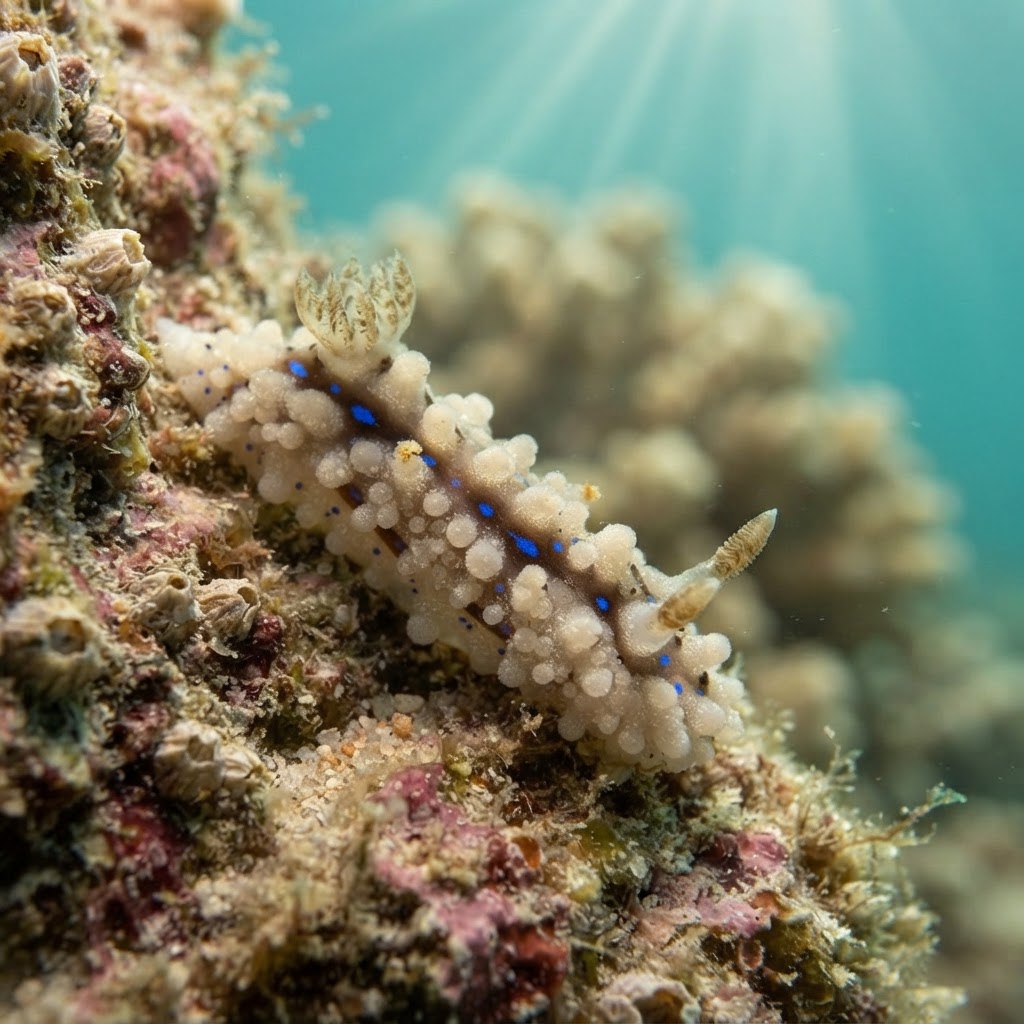
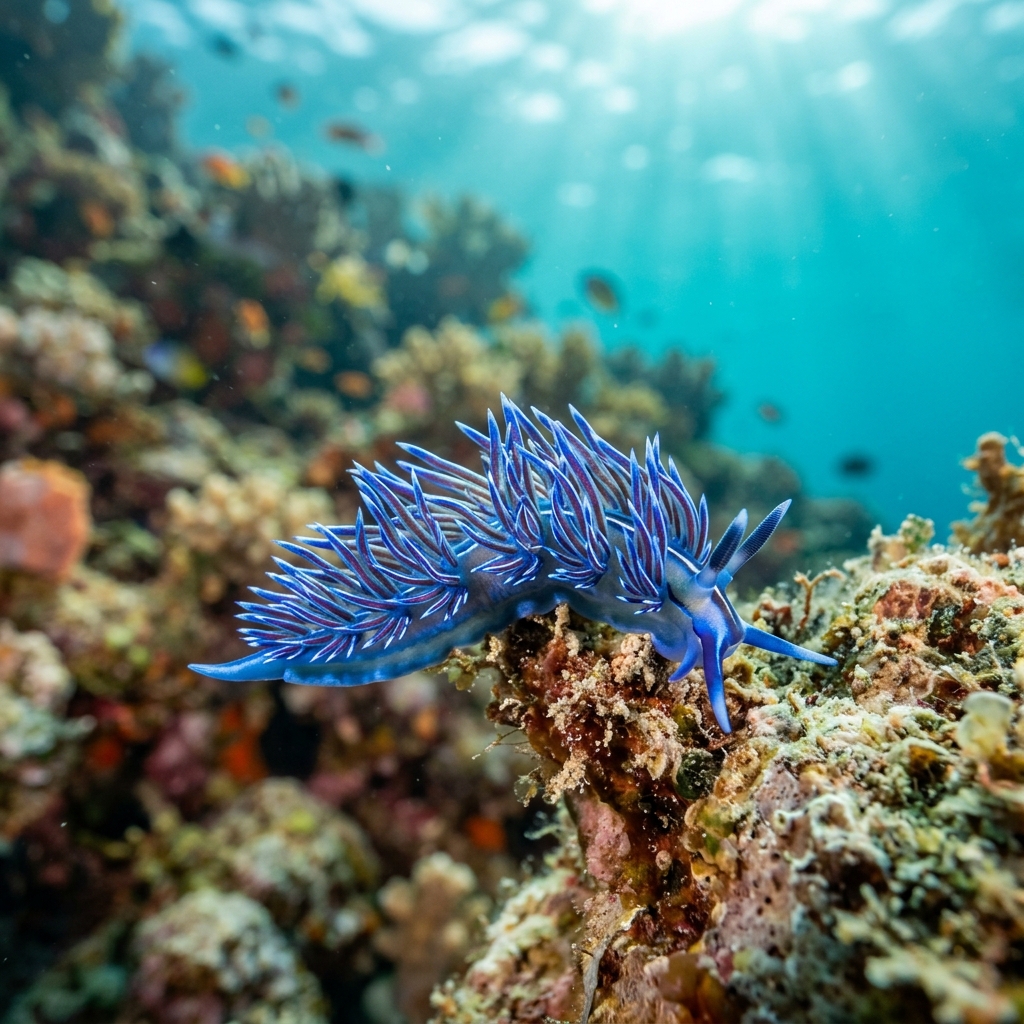
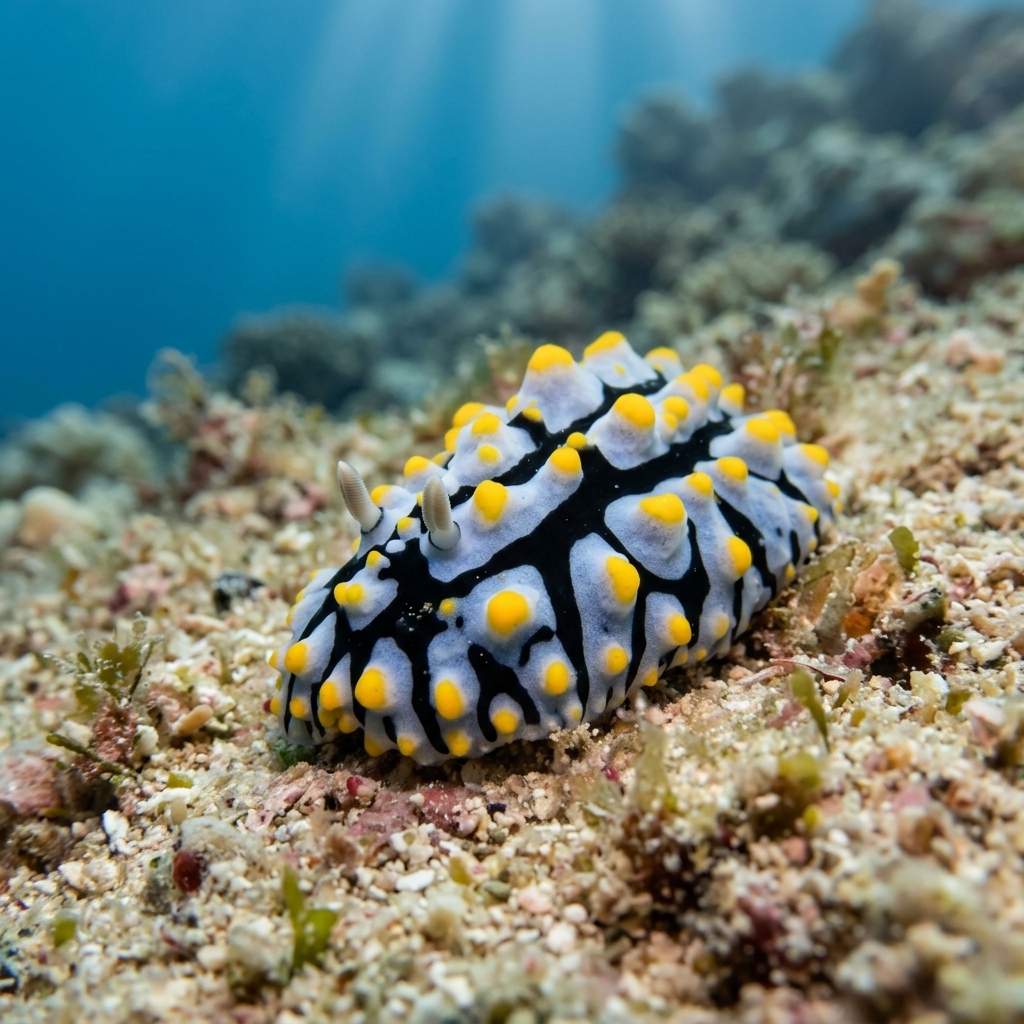
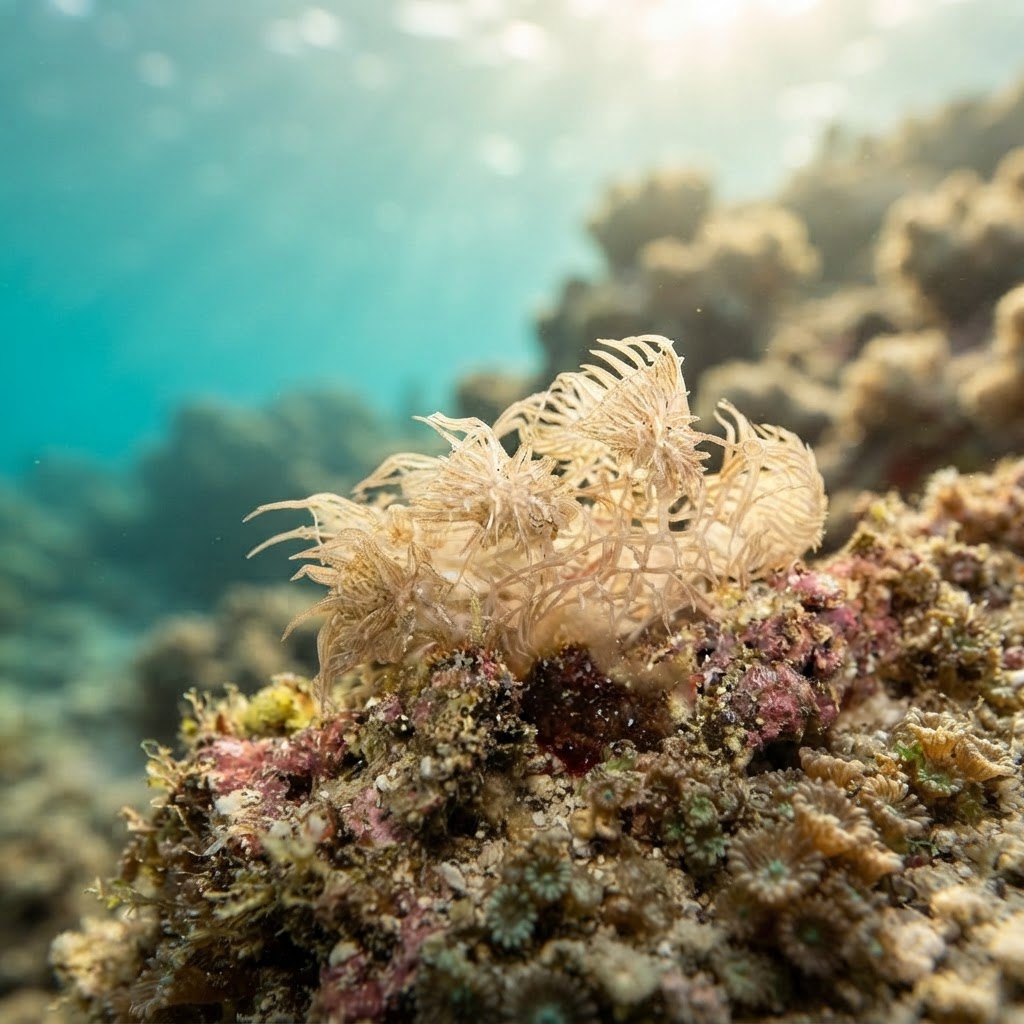
Look for a translucent, gelatinous body topped with a large expandable oral hood instead of a typical nudibranch head, used to scoop up small crustaceans. The cerata (the finger-like projections along its back) are branched and give it a slightly frilly, plant-like silhouette. Colouration tends toward pale, almost see-through tones, which makes it blend easily into sandy or algae-covered substrate. There is no confirmed size range in the data, so expect a small, easy-to-miss animal typical of the genus.
Divers usually find it moving slowly over sand, rubble, or low reef structure, often at night or on dedicated muck dives where guides know to look for it. Its main trick is flaring that oral hood open and snapping it shut to trap small crustaceans, which is worth watching for if you spot one settled and active. It does not react defensively to divers and simply carries on hunting if left undisturbed.
The hood-like head is the standout trait in the genus Melibe: instead of a radula for scraping algae, these nudibranchs actively hunt by expanding that hood like a net and closing it around small crustaceans, a feeding style closer to a Venus flytrap than a typical sea slug.
Sightings span the year with no detected seasonal pattern, and the observed water temperature range of 23.5 to 29.5C covers typical year-round tropical reef conditions in both the Philippines and the Red Sea. Plan around good muck-diving conditions rather than a particular month.
Most reliably logged in the Philippines, especially around Luzon, where it turns up at dozens of sites and counts as a common find rather than a lucky one. It also has a foothold in Egypt's South Sinai region on the Red Sea, though sightings there are less frequent than in the Philippines.
Mapping where Coleman's Melibe is logged…
The strongest sightings come from Luzon in the Philippines, where it is logged as a common find at many muck-diving sites. It also shows up in South Sinai, Egypt, though less often than in the Philippines.
There is no clear seasonal pattern in the sighting data, so it counts as a year-round find. Observed water temperatures range from 23.5 to 29.5C, which matches typical conditions on Philippine and Red Sea reefs throughout the year.
Look for a translucent body with an oversized oral hood in place of a normal head, plus branched cerata running along its back. The pale, see-through look and hood shape are the giveaways that separate it from typical dorid nudibranchs.
No. It poses no threat to divers and has no sting or bite worth worrying about; it simply feeds on tiny crustaceans using its hood.
Instead of grazing algae like most nudibranchs, it expands its oral hood into a net-like shape and snaps it closed over small crustaceans, actively hunting rather than scraping the reef.
No confirmed size range is documented for this species, but like other members of its genus it tends to be a small, easy-to-overlook animal best spotted with a careful eye or a guide's help.
Site and sighting data is aggregated from diver logs, iNaturalist and GBIF. For taxonomy and conservation status:
Light-spotted Aegires
3,168 sites