Amphioctopus marginatus
Spot the tool-using Coconut Octopus in Sulawesi and the Philippines. Here's where divers log it, when to go, and how to tell it apart underwater.
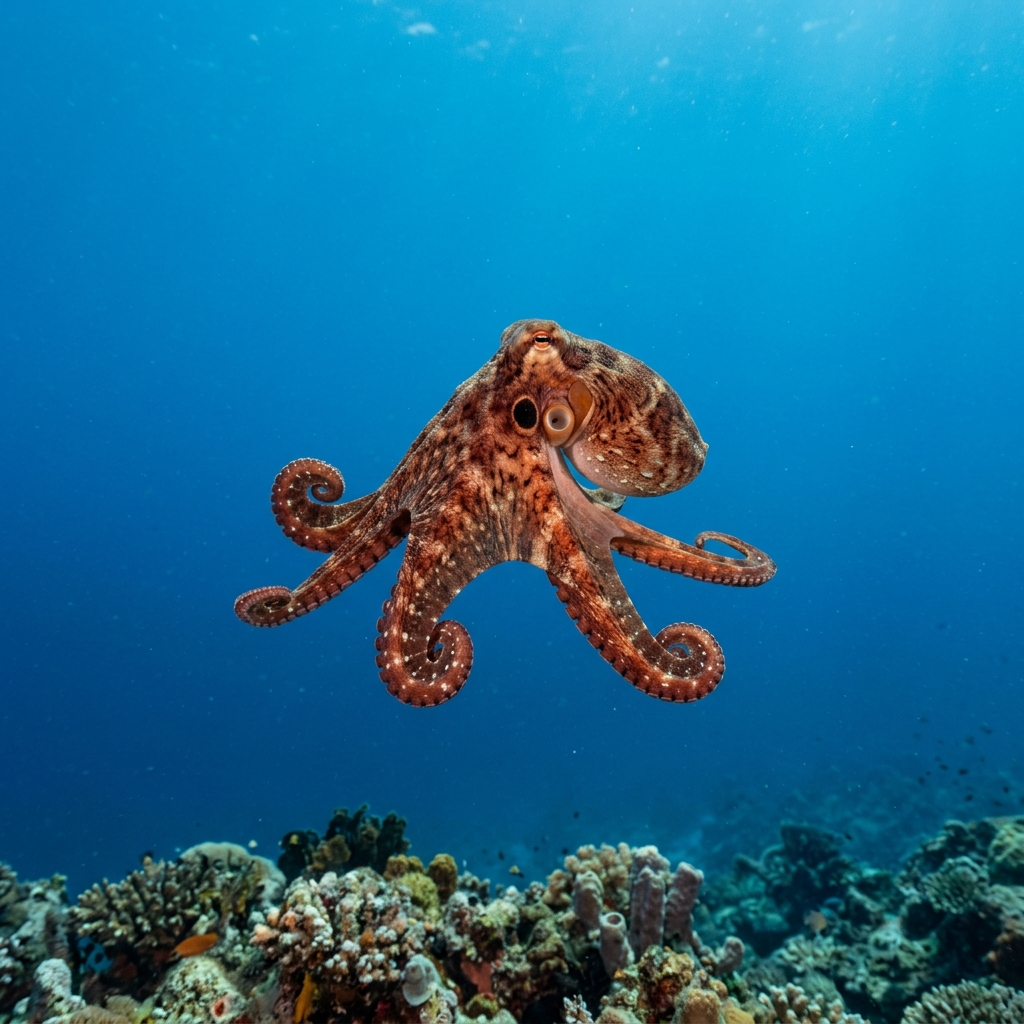
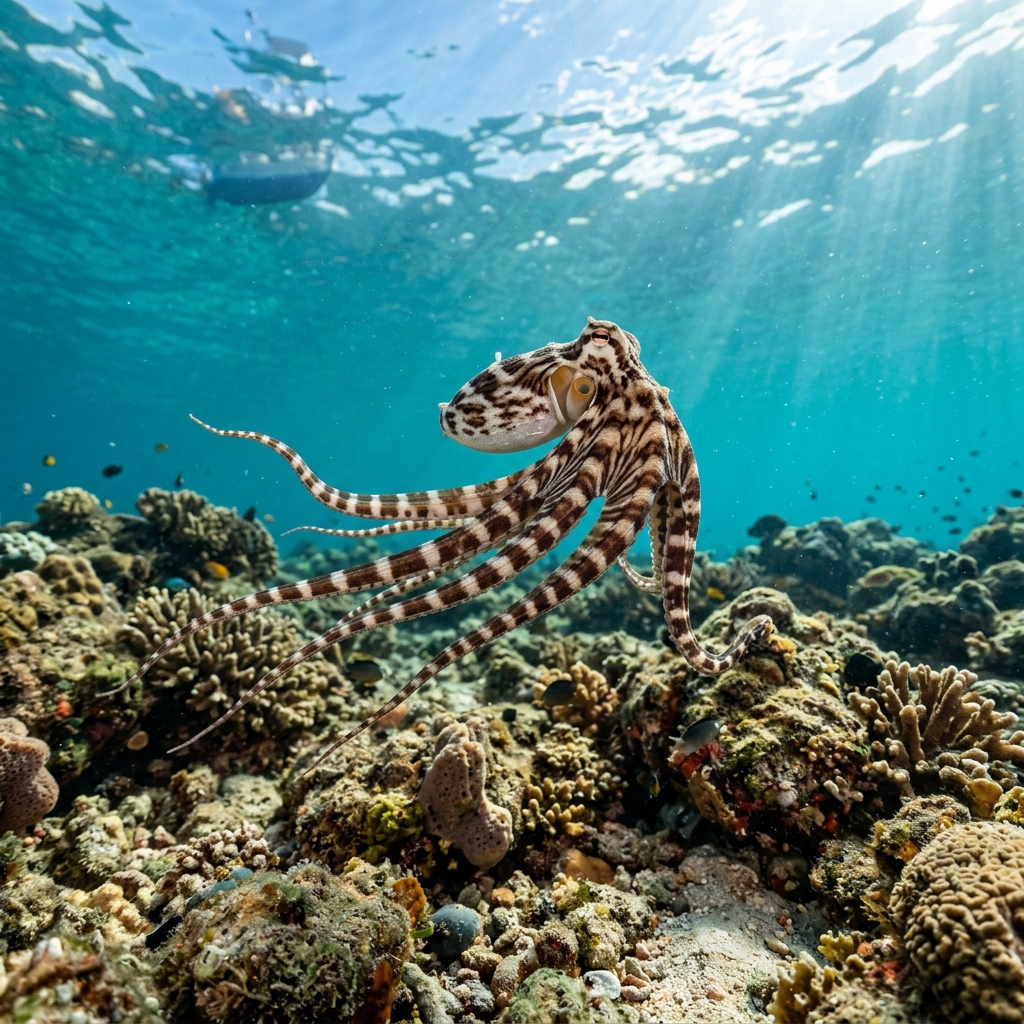
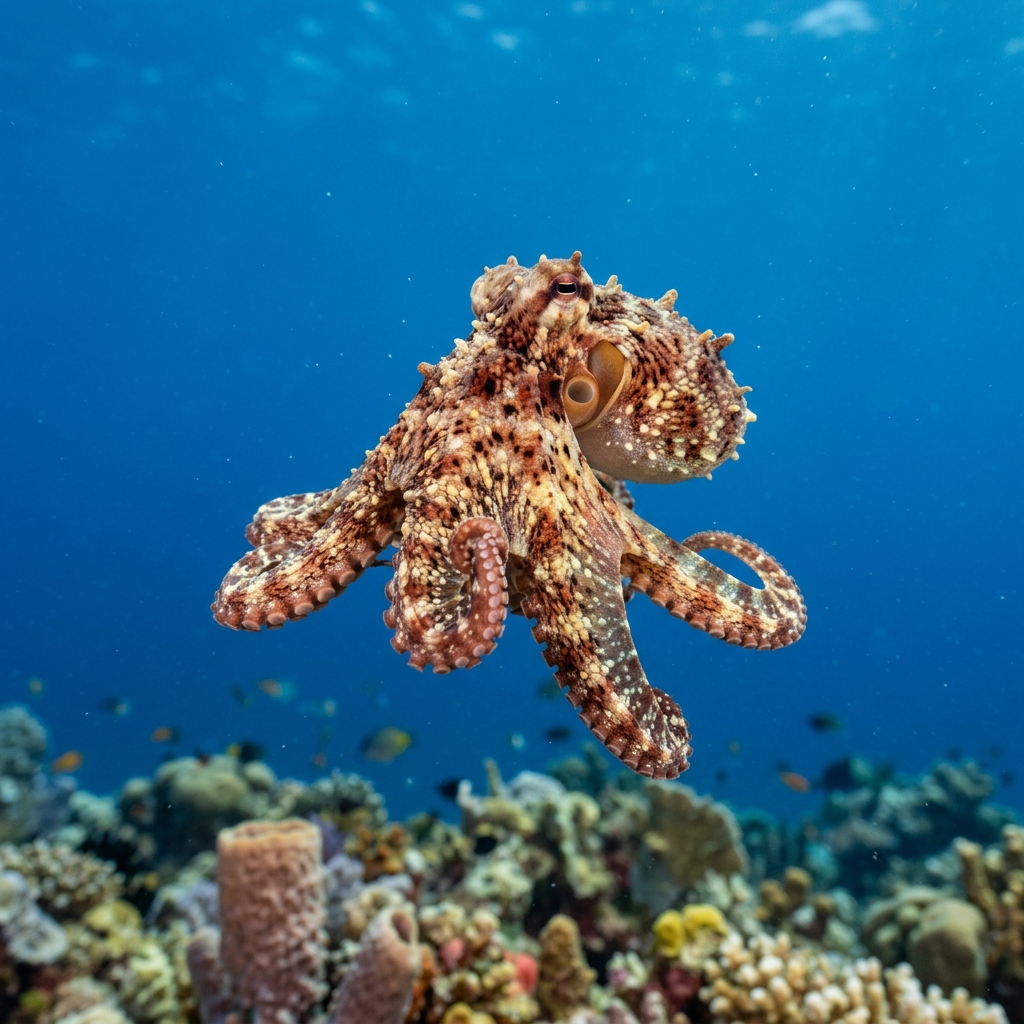
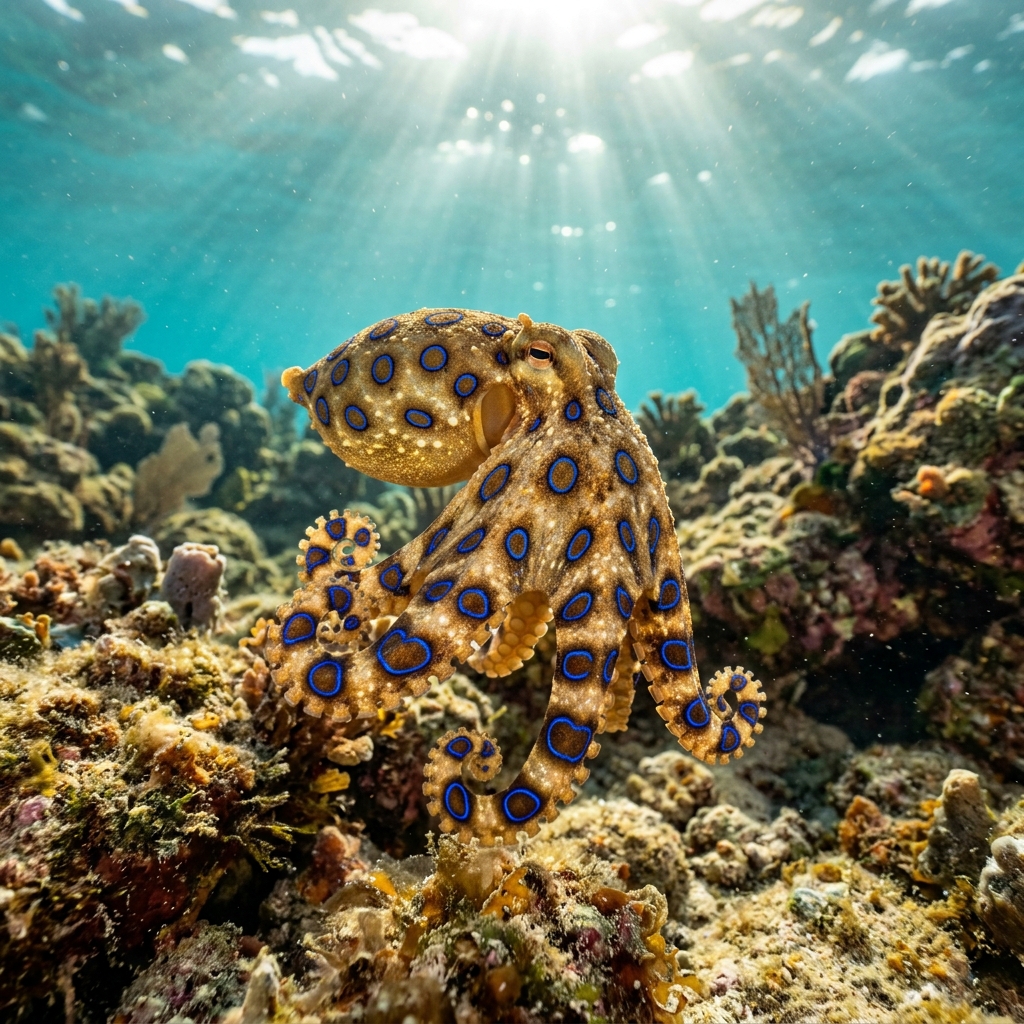
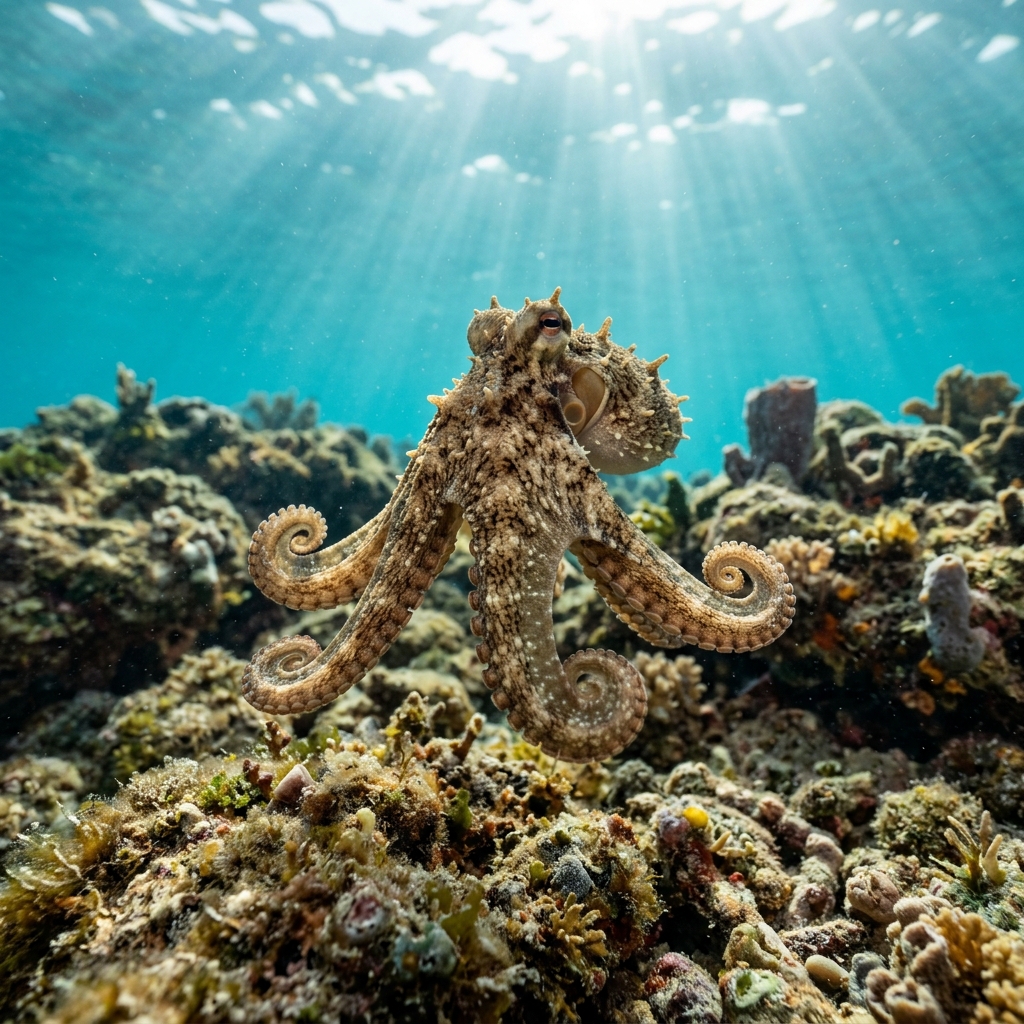
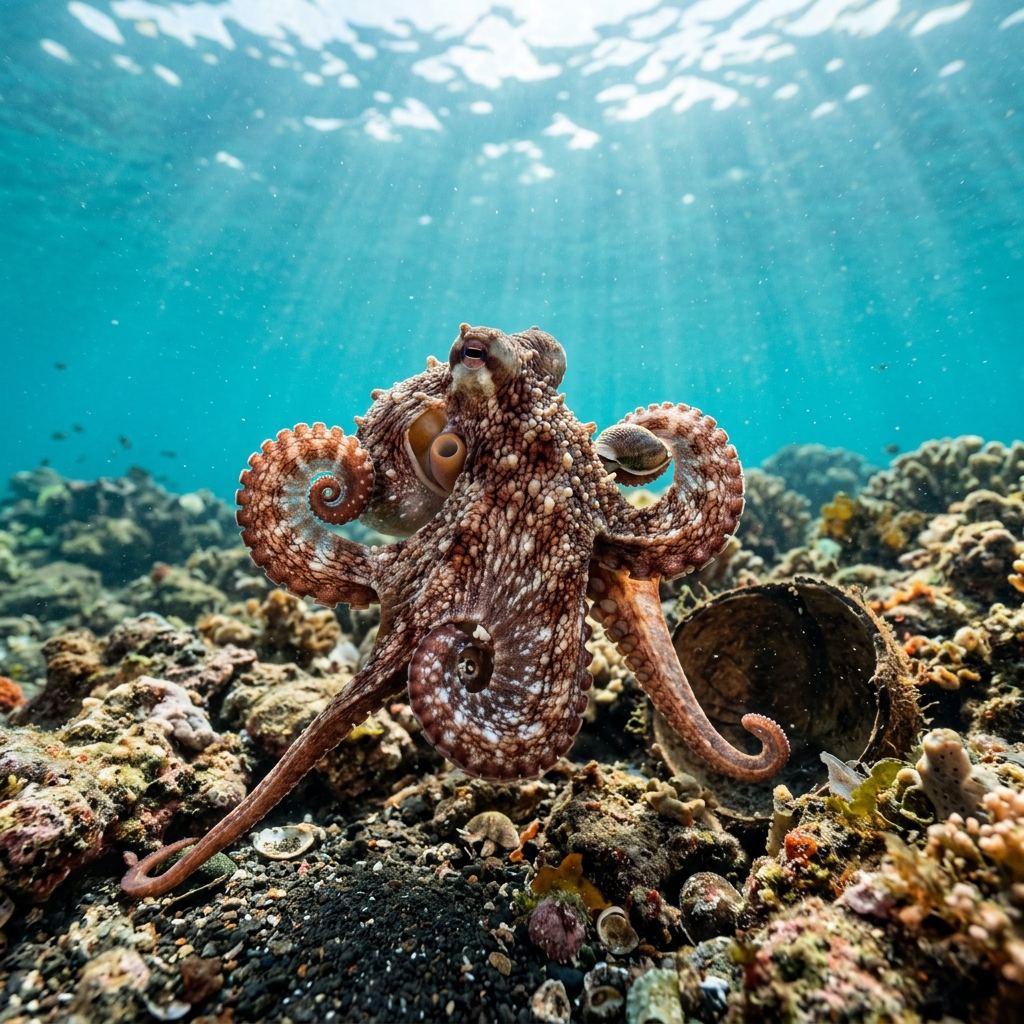
Look for a small octopus with a dark brown to blackish mantle and a pale, often white or yellowish underside, with strongly contrasting white-tipped suckers lining the arms. The arms are noticeably webbed near the base and the animal frequently walks on two arms in a distinctive bipedal strut across open sand. A dark stripe often runs across the eye, and the mantle surface is smoother than the bumpy texture you'd expect from many reef octopuses. The real giveaway is behaviour: if an octopus is carrying or sitting inside a coconut shell or a clamshell, it is almost certainly this species.
Divers typically encounter the coconut octopus on sandy or silty bottoms, often in muck-diving (shallow, low-visibility sandy or weedy habitat) sites rather than on coral reef proper. It is famous for collecting coconut shells or bivalve shells, stacking them and carrying them away as portable shelter, a behaviour considered one of the clearest examples of tool use in invertebrates. When approached it may freeze, ink, or retreat into its shell stack rather than bolting, which makes for unusually long sightings when divers move slowly.
This is one of the very few non-human animals documented to carry objects for later use as shelter, not just immediate use. Wild individuals have been filmed walking bipedally across open sand while holding shell halves beneath their body, returning to assemble them into a hiding place minutes later.
Northern Hemisphere seasonality data points to March through May as the peak window for sightings. The species is associated with warm tropical shallows in the 27 to 29 °C range that characterise Indonesian and Philippine waters.
Reef neighbours a diver could mistake it for. Use the identification notes above to tell them apart.
Almost all logged sightings come from two countries: the Philippines and Indonesia. In the Philippines, Western Visayas and Luzon and the North lead in site count, with strong numbers recorded across the Visayas. In Indonesia, Sulawesi is the standout region, followed by Bali, Lombok and Java, making those areas the most reliable destinations for a dedicated search.
Mapping where Coconut Octopus is logged…
The coconut octopus is logged almost exclusively in the Philippines and Indonesia. Sulawesi in Indonesia and Western Visayas in the Philippines have the highest concentration of recorded sites, followed by Luzon and the North in the Philippines and Bali, Lombok and Java in Indonesia. Muck-diving sites with sandy or silty bottoms are far more productive than coral reefs.
Based on diver observations, sightings concentrate in March through May in the northern hemisphere. The species favours waters in the 27 to 29 °C range, typical of Indonesian and Philippine dive seasons, so conditions are generally suitable across much of the year in those regions.
Key markers are a dark mantle with a pale underside, white-tipped suckers, and a dark stripe across the eye. The single most reliable ID clue is behaviour: if the octopus is carrying, sheltering inside, or assembling coconut or clam shells, it is almost certainly this species. The bipedal walking strut across open sand is also distinctive.
They are a small to medium octopus. The mantle (body, excluding arms) typically reaches around 8 cm, with total arm span in adults reaching roughly 15 cm. In the water they can look deceptively compact, especially when contracted inside a shell.
Yes. Wild coconut octopuses collect discarded coconut shell halves and bivalve shells, carry them across the seabed, and later assemble them into a shelter. Researchers class this as tool use because the animal bears a cost (awkward locomotion while carrying) for a later benefit. It is one of the most widely cited examples of tool use in any invertebrate.
Site and sighting data is aggregated from diver logs, iNaturalist and GBIF. For taxonomy and conservation status:
Brazilian Reef Octopus
1,142 sites