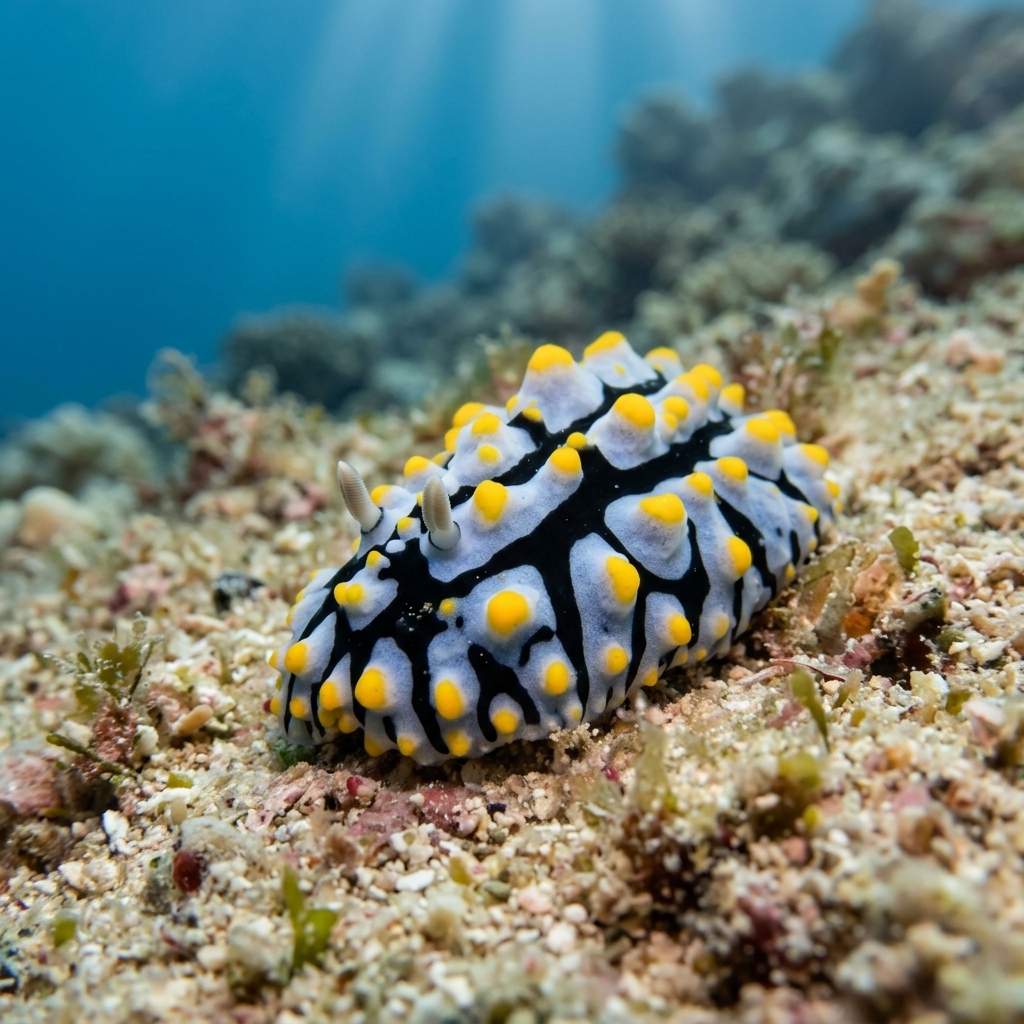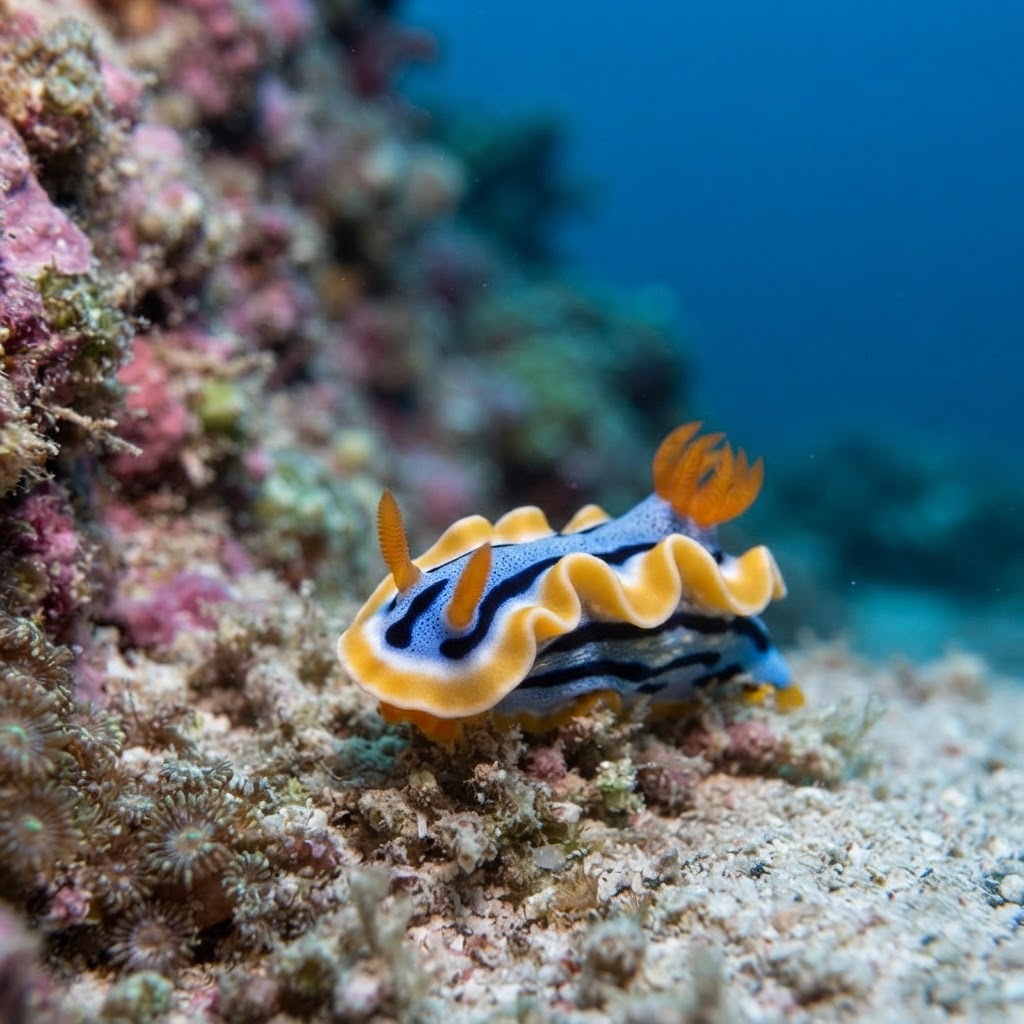
Chromodoris annae
A 1cm purple-and-orange nudibranch logged across the Visayas, Sulawesi and Sabah, thriving in warm 26-32C reef water year-round.
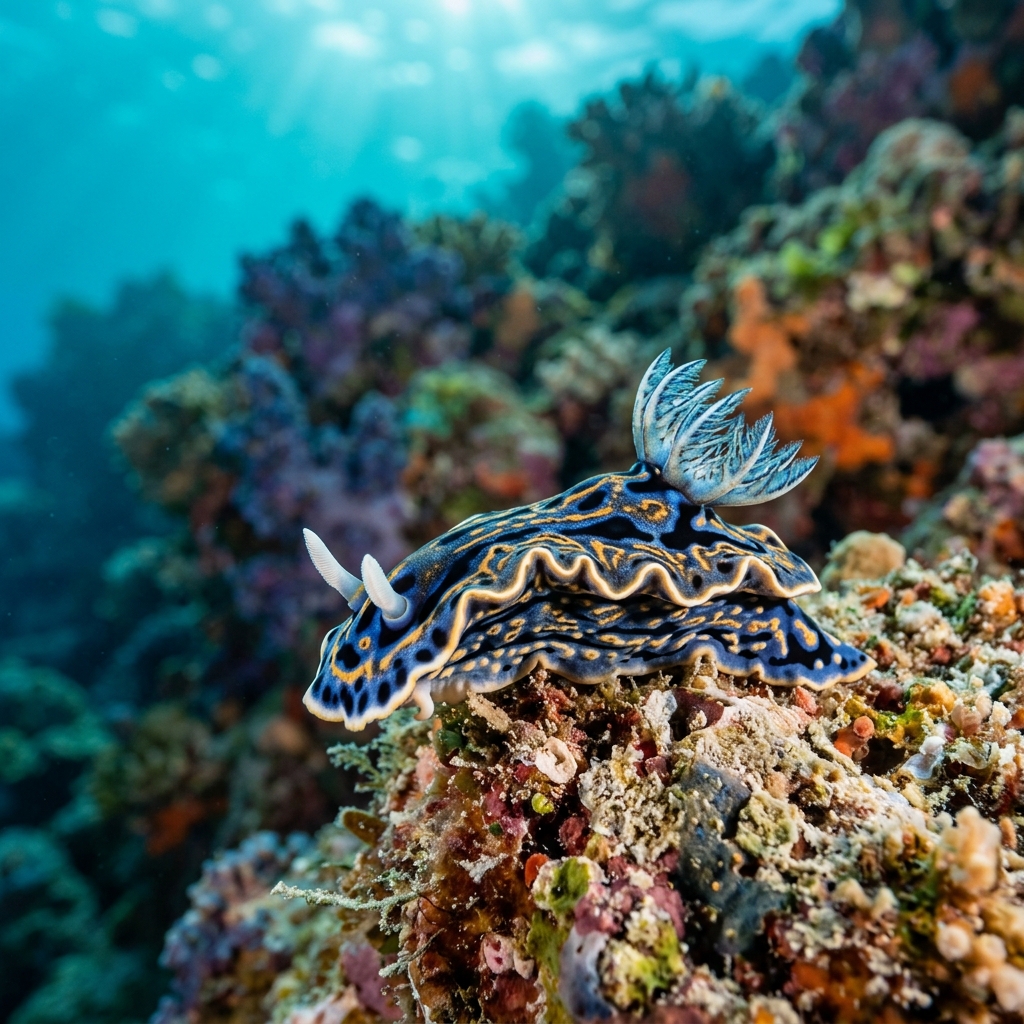
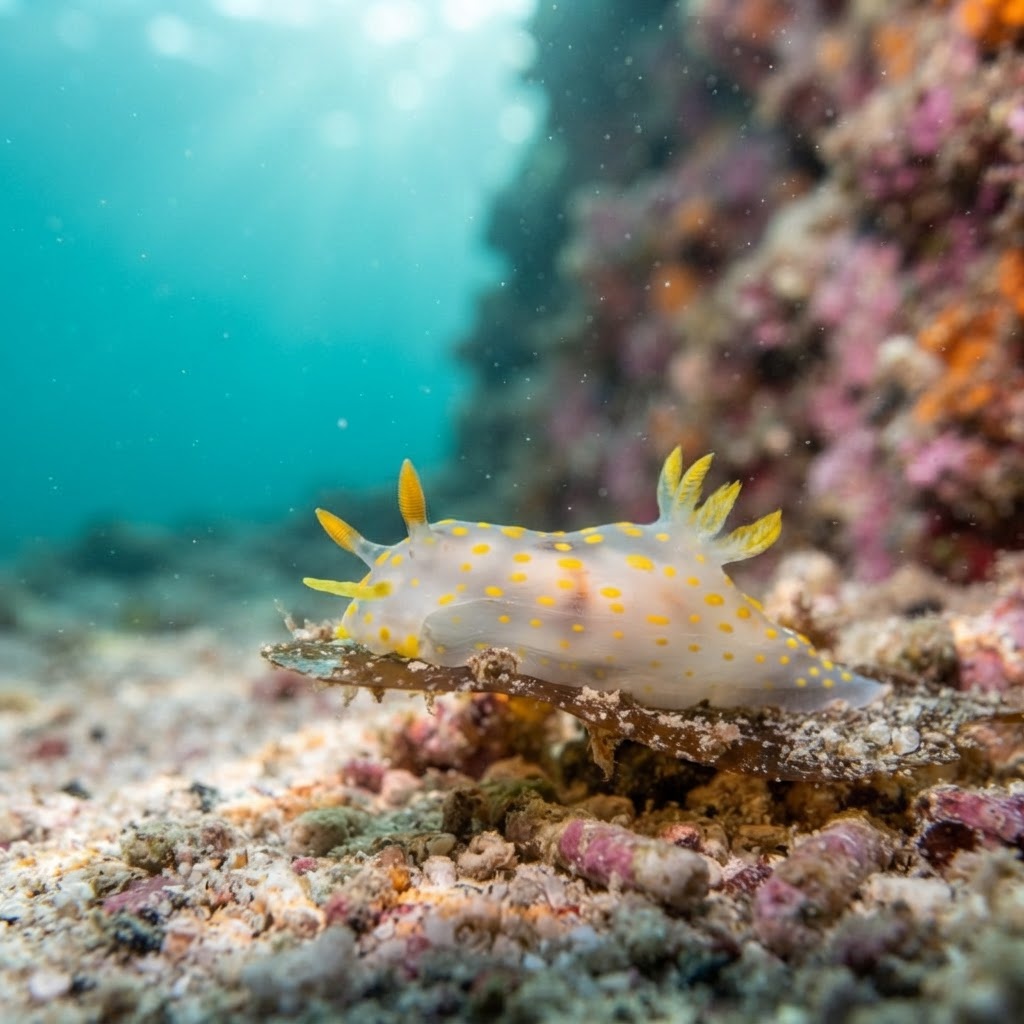
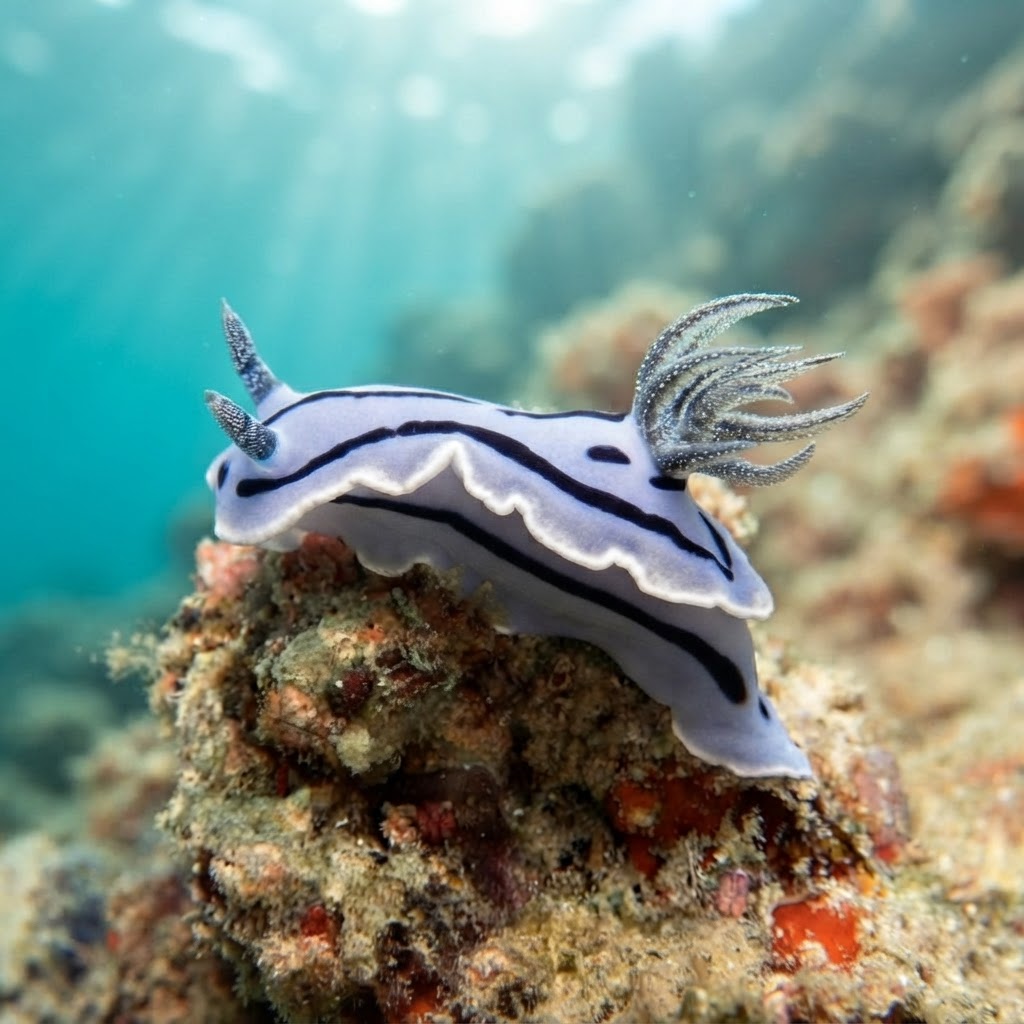
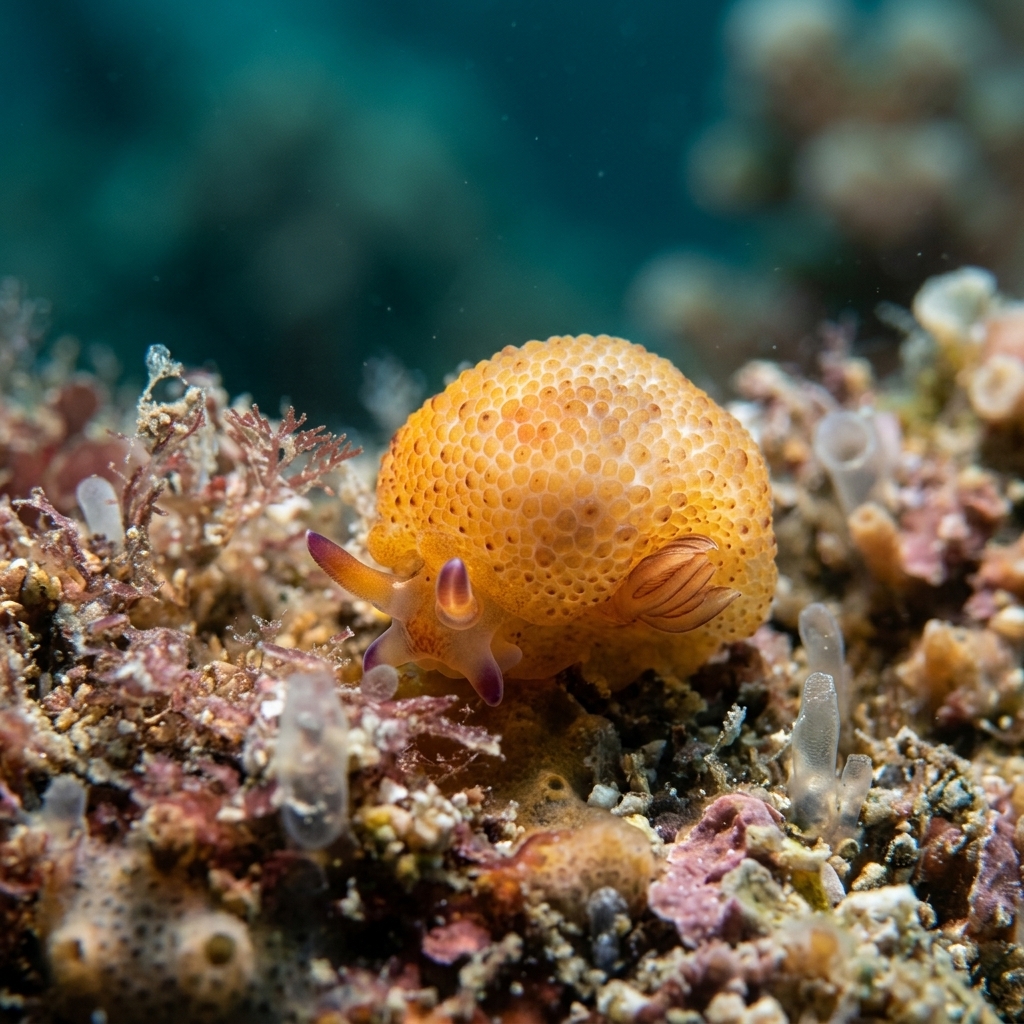
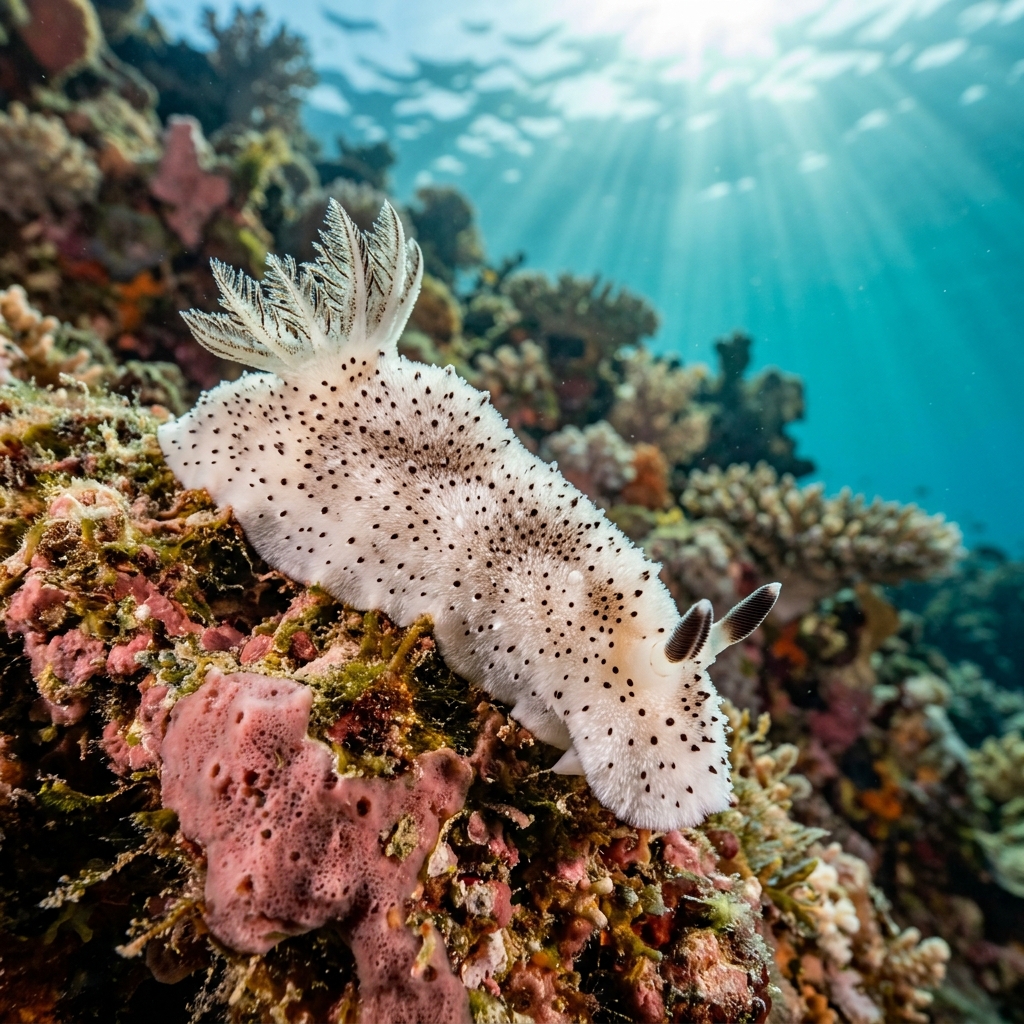
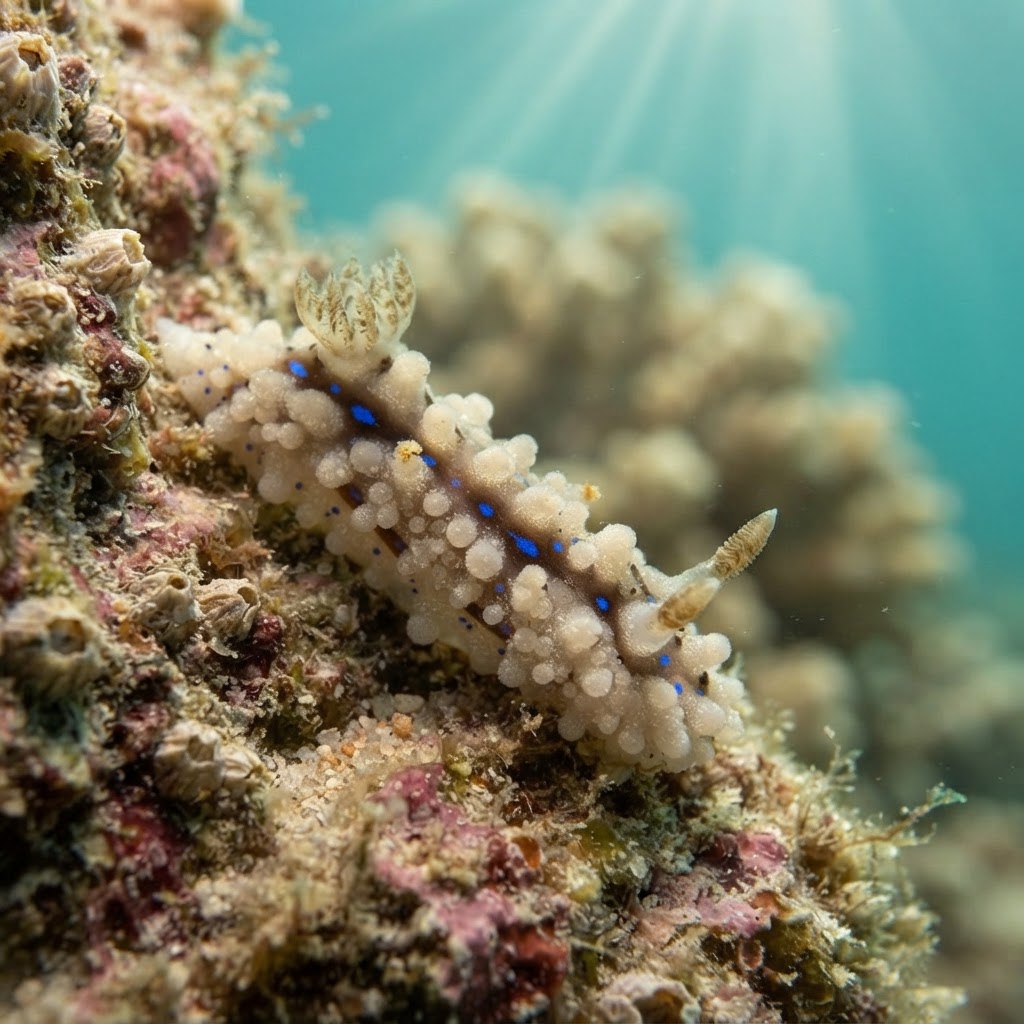
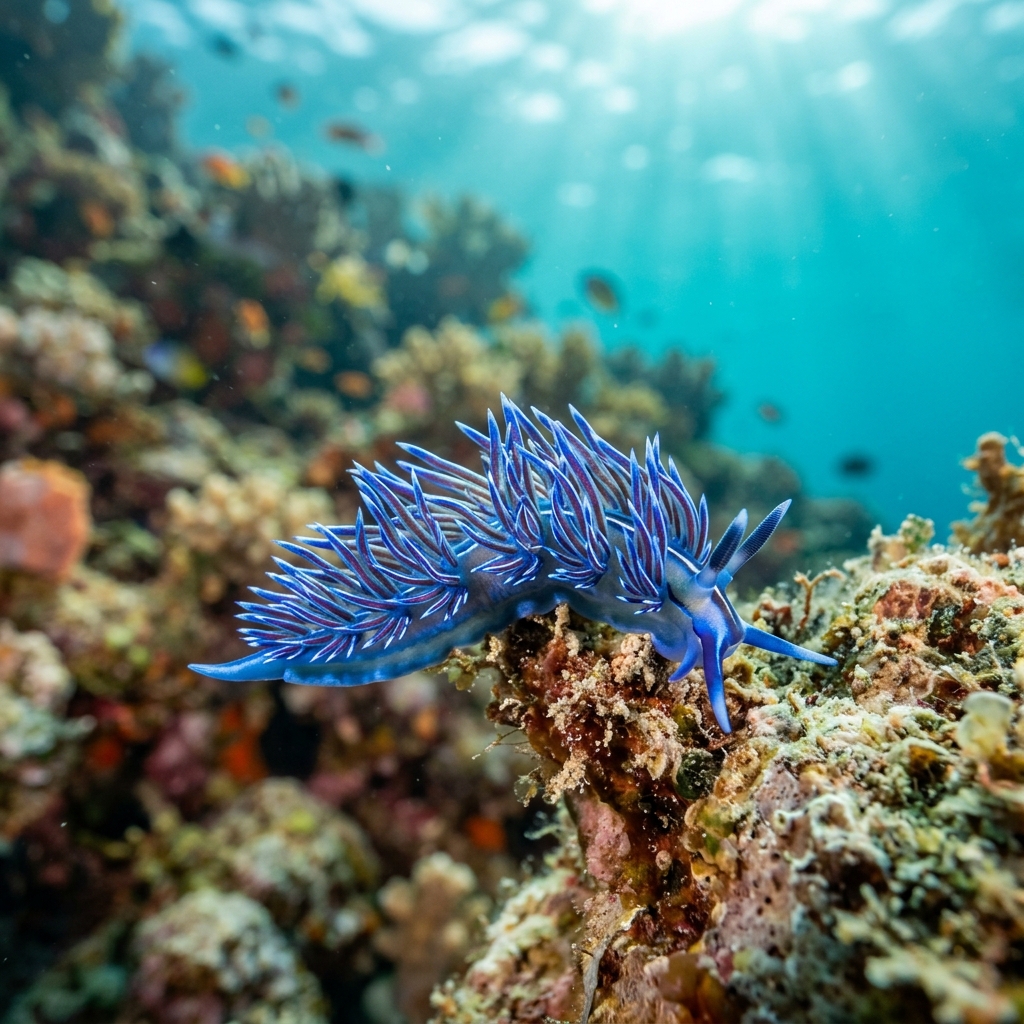
A tiny slug barely a centimetre long, with a violet-to-purple mantle edged in a fine white or yellow line running its full length. The gill cluster (feathery breathing organ) at the rear and the rhinophores (paired sensory tentacles) up front are both tipped in orange, giving it a two-toned accent against the solid purple body. It moves slowly enough that once you find one, it's easy to hold a steady macro shot.
Look for it parked on rubble, sponge or algae-covered substrate at 15 to 30 metres, grazing slowly across the surface rather than swimming. It pays divers no attention at all, so it's a forgiving macro subject as long as your buoyancy is dialled in near the bottom. Dive guides doing a slow reef scan or muck dive briefing often pick these out for exactly that reason.
Like other Chromodoris species, it feeds on sponges and stores the sponge's chemical compounds in its own tissue, which is thought to make it distasteful to predators, essentially borrowing its prey's chemical defences instead of building its own.
No clear seasonal pattern shows up in the sightings data, so treat it as a year-round find. It sits comfortably in warm water from about 25.6 to 31.6C, the kind of temperature range these reefs hold all year, which likely explains the lack of a seasonal spike.
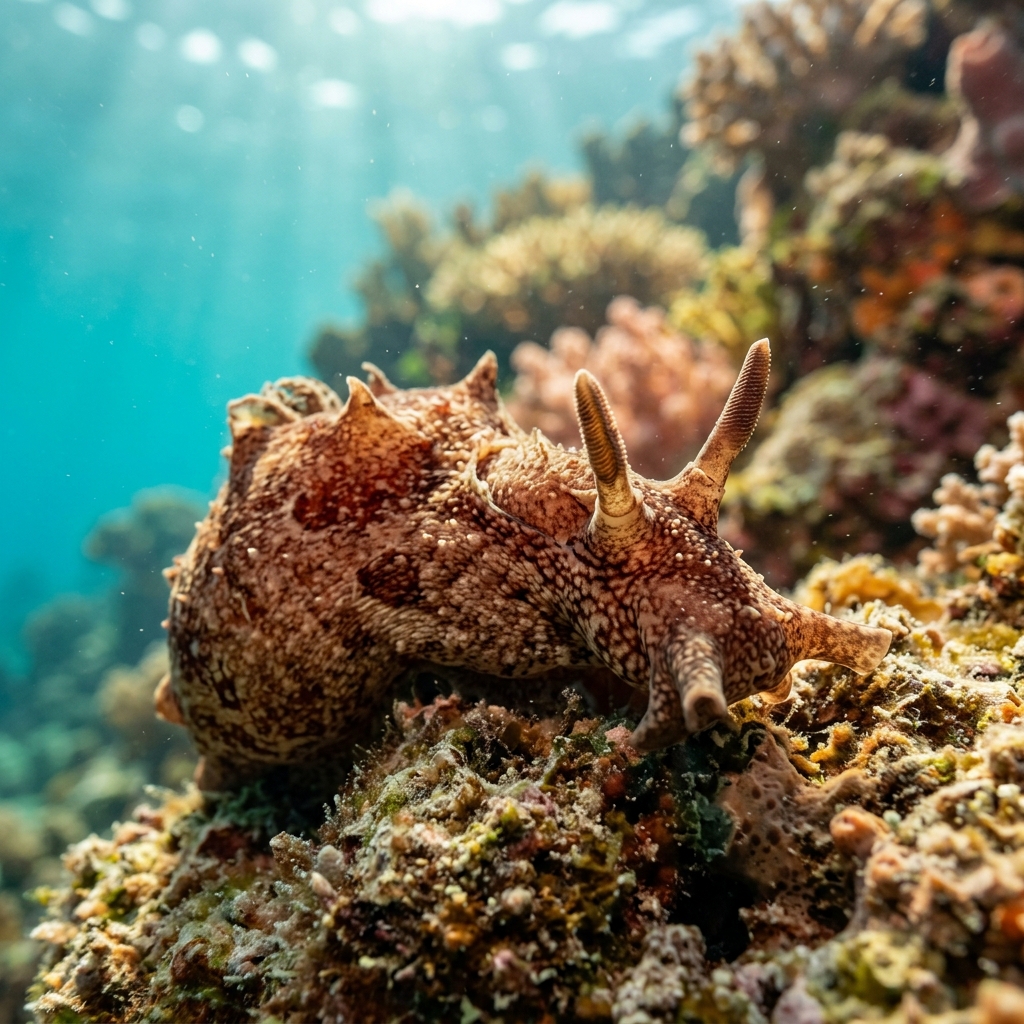
Reef neighbours a diver could mistake it for. Use the identification notes above to tell them apart.
Most reliably found across the Philippines, especially the Visayas and Luzon, with strong numbers also in Palawan. Indonesia is the other stronghold, particularly Sulawesi and Bali, and it's a steady find in Sabah, Malaysia, with smaller but consistent populations logged in Okinawa, Japan and Taiwan.
Mapping where Anna's Chromodoris is logged…
The Philippines is the strongest region, particularly the Visayas, Luzon and Palawan, followed by Indonesia's Sulawesi and Bali. It also turns up reliably in Sabah, Malaysia and less often in Okinawa, Japan and Taiwan.
There's no detected seasonal pattern, so it's considered a year-round sighting. Warm reef temperatures across its range stay within its comfort zone throughout the year.
Look for a tiny purple-mantled slug with a thin white or yellow edge line and orange tips on both the rhinophores and gill cluster. At just 1cm long, it's easiest to spot when it's moving slowly across rubble or sponge.
They stay tiny, typically around 1cm long as adults, so a macro lens and a slow reef scan are the best way to find one.
No, they pose no risk to divers. They're slow-moving, stationary grazers with no reason to interact with anyone hovering nearby.
It feeds on sponges and absorbs the sponge's chemical toxins into its own body, using borrowed chemistry as a defence against predators rather than producing its own toxins.
Site and sighting data is aggregated from diver logs, iNaturalist and GBIF. For taxonomy and conservation status:
Light-spotted Aegires
3,168 sites