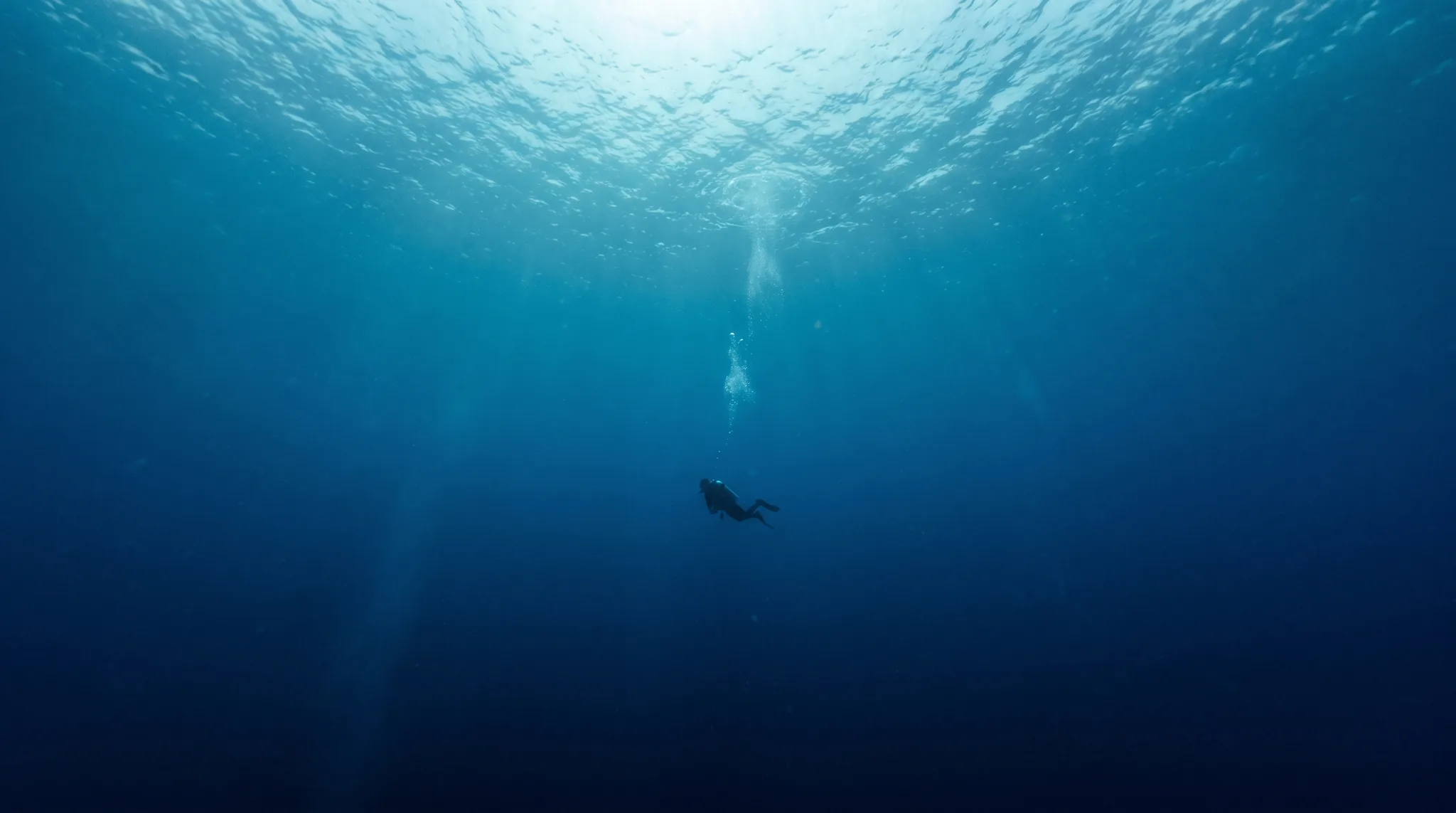
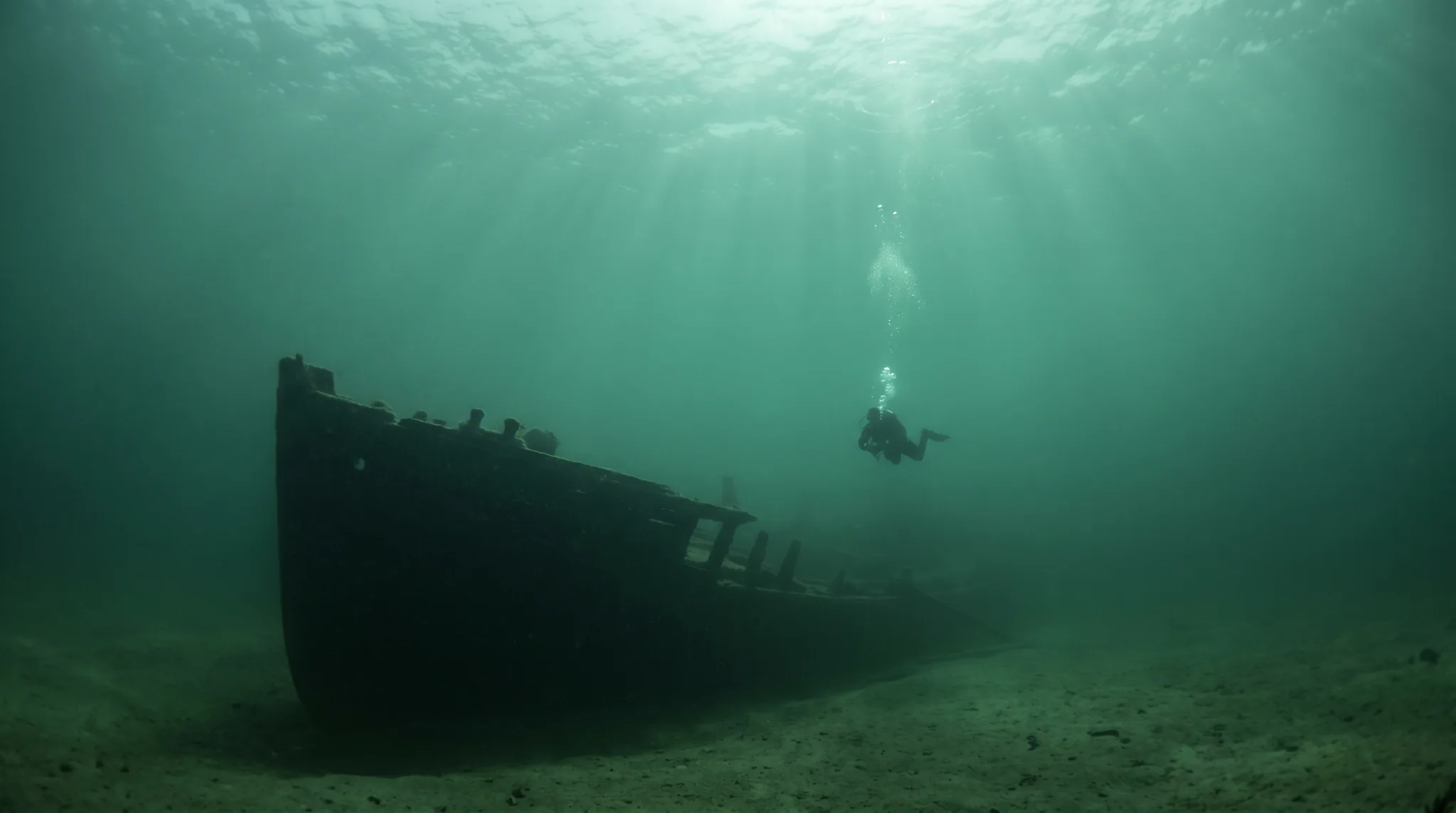
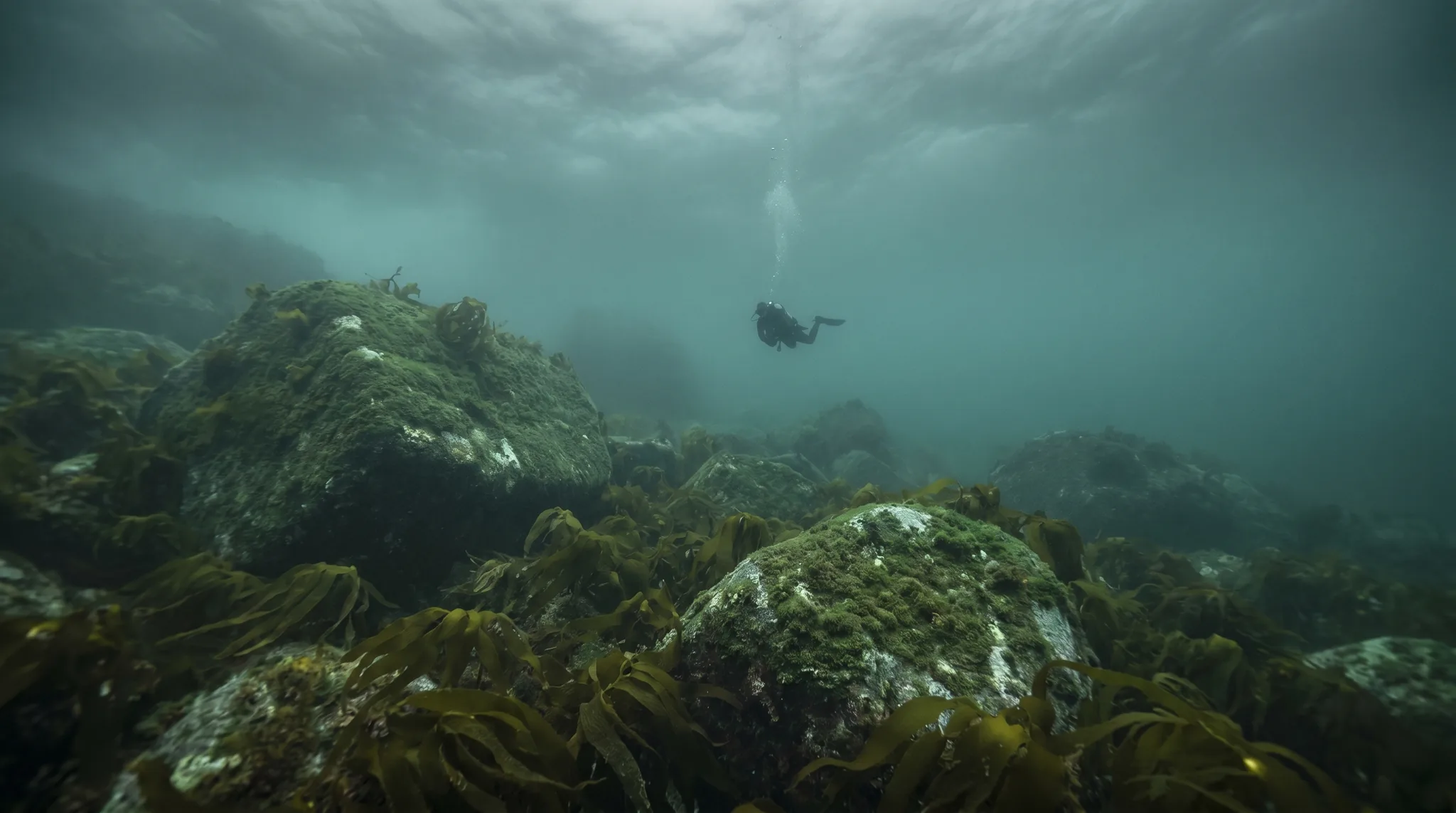
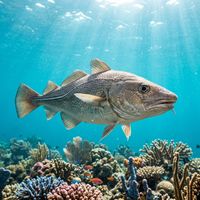
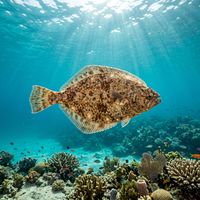
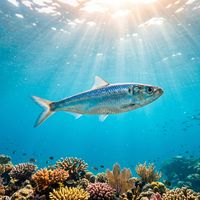
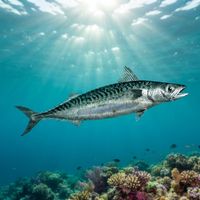
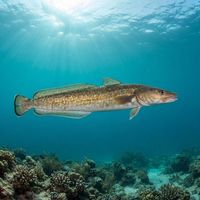
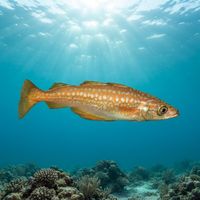
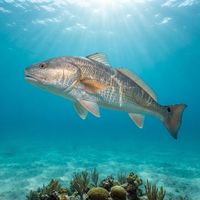
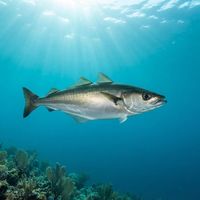
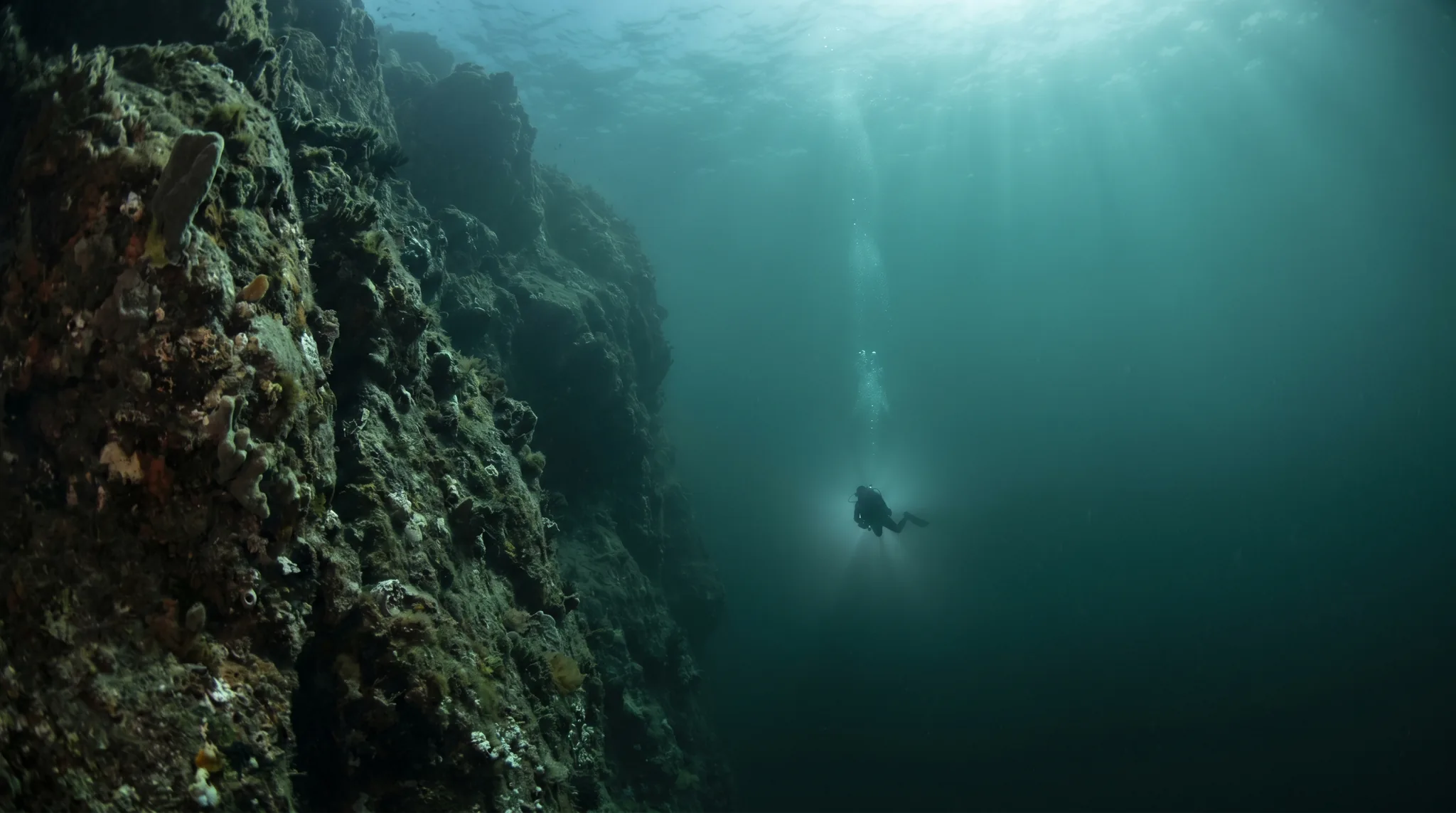
Lofoten and Vesterålen extend into the Norwegian Sea, and diving here is shaped by strong currents, cold water, and dramatic topography. The site list covers drift dives, kelp forests, walls, reefs, and wrecks including the MS Hamburg and MS Hadsel. Moskstraumen, above one of the most powerful tidal whirlpool systems in the world, is strictly for advanced divers, while calmer sites such as Helle and Nusfjord are accessible to beginners and intermediates. Visibility is often high, particularly in late winter and early spring when the water is clearest. Humpback whale and harbour seal are among the larger species recorded here alongside cod-family fish, skate, and monkfish.
Monthly water temperature across Lofoten & Vesterålen's sites, from satellite sea-surface data corrected for depth. The band shows the site-to-site spread.
Water stays cold throughout the year, with the lowest temperatures in late winter and the highest in late summer and early autumn. February and March are noted for particularly clear water, making that period attractive despite the cold. A drysuit is essential at all times of year.
2 operators
Gravdal, Norway
Norway
Water temperature around Lofoten & Vesterålen ranges from about 5°C in February to 10°C in August, based on satellite sea-temperature data for its dive sites.
With water around 5–10°C, a drysuit works in Lofoten & Vesterålen year-round.
Fin maps 8 sites in Lofoten & Vesterålen (8 scuba diving sites).