Sciaenops ocellatus
A copper-bronze fish with a black tail spot, mostly a rare find on dives around Florida in water from 15.5 to 27.3 C year-round.
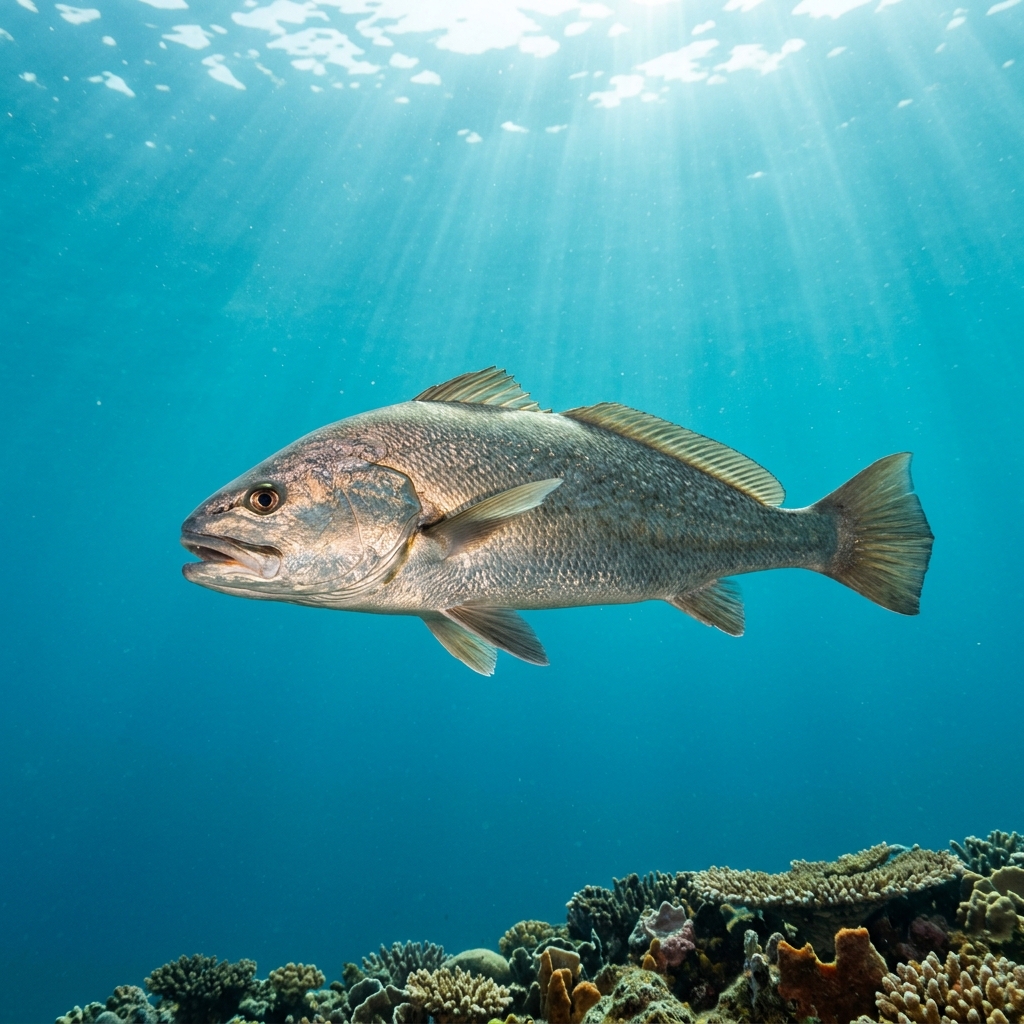
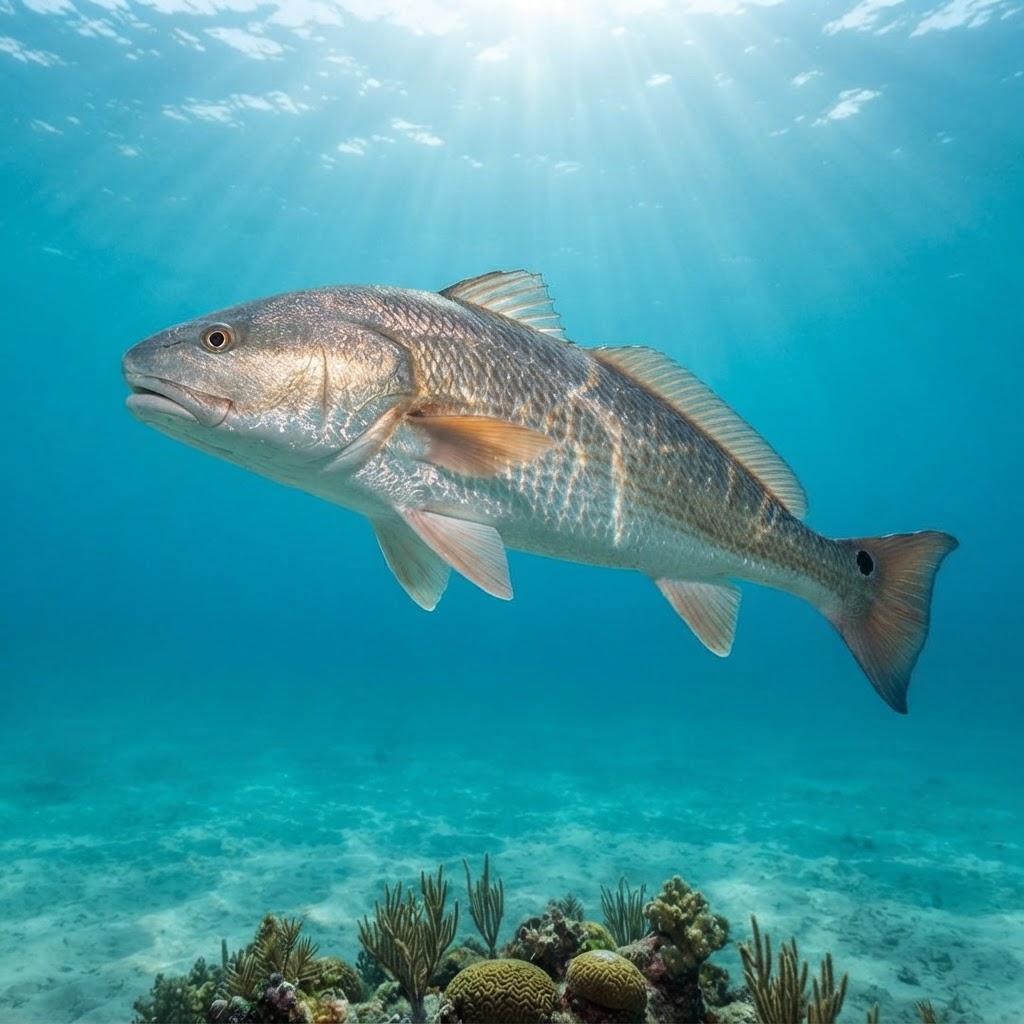
Look for a heavy-bodied fish up to a metre long with coppery bronze to reddish sides fading to a pale white belly. The giveaway is a single black spot (sometimes a few extra ones) sitting near the base of the tail fin. The mouth points downward, built for grubbing along the bottom, and the tail fin itself is slightly squared off rather than deeply forked.
Divers typically find redfish hovering or slowly cruising close to the bottom over sand, mud, or seagrass, often nose-down as they root around for food. They tend to be wary and will usually keep their distance or move off rather than approach, and most logs describe them as a rare encounter rather than a fish you can count on seeing every dive. Look for them near structure like docks, jetties, and grass edges rather than out in open water.
That black spot near the tail is thought to work as a decoy, drawing a predator's strike toward the tail instead of the head and giving the fish a split-second head start to escape.
Sightings show no clear seasonal pattern, so treat this as a year-round possibility rather than a specific-month target. Its comfort range of 15.5 to 27.3 C covers most of the year in Florida and Texas waters, which fits with divers logging it across seasons.
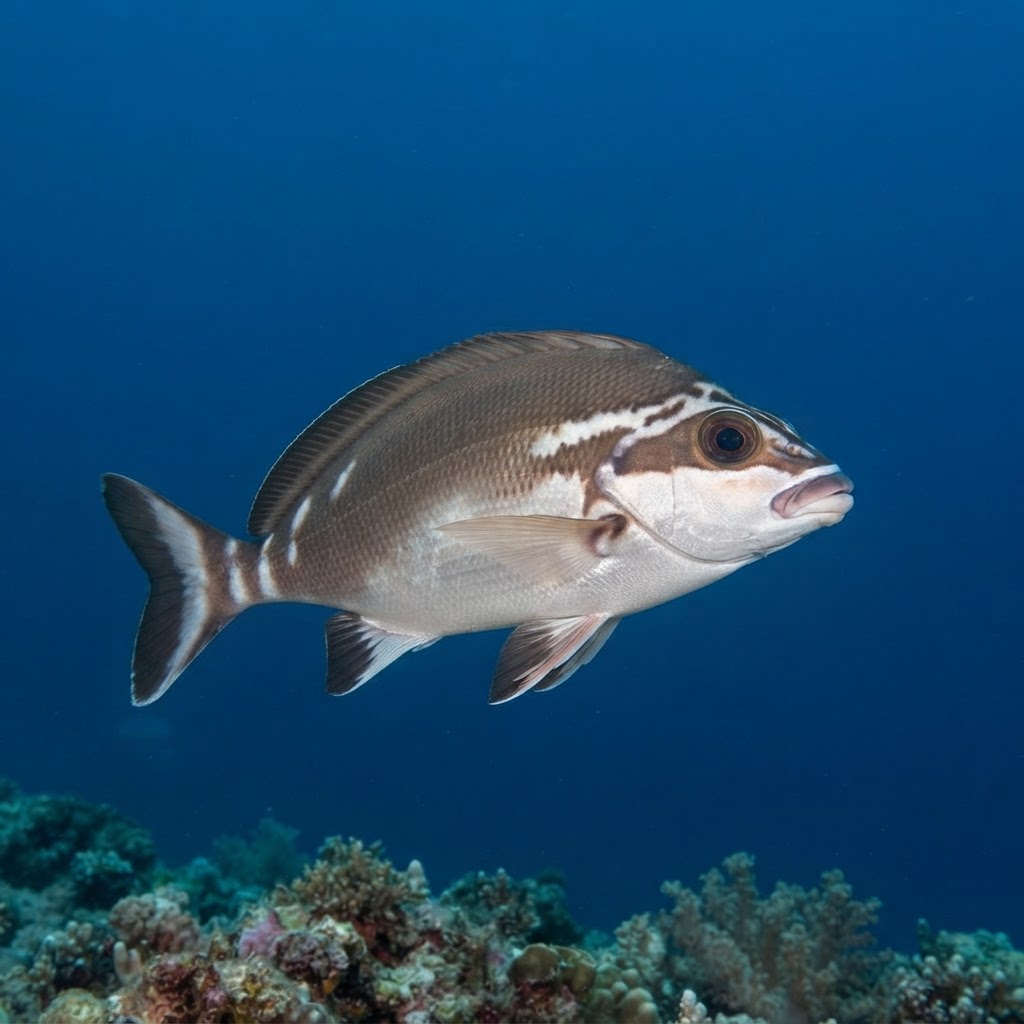
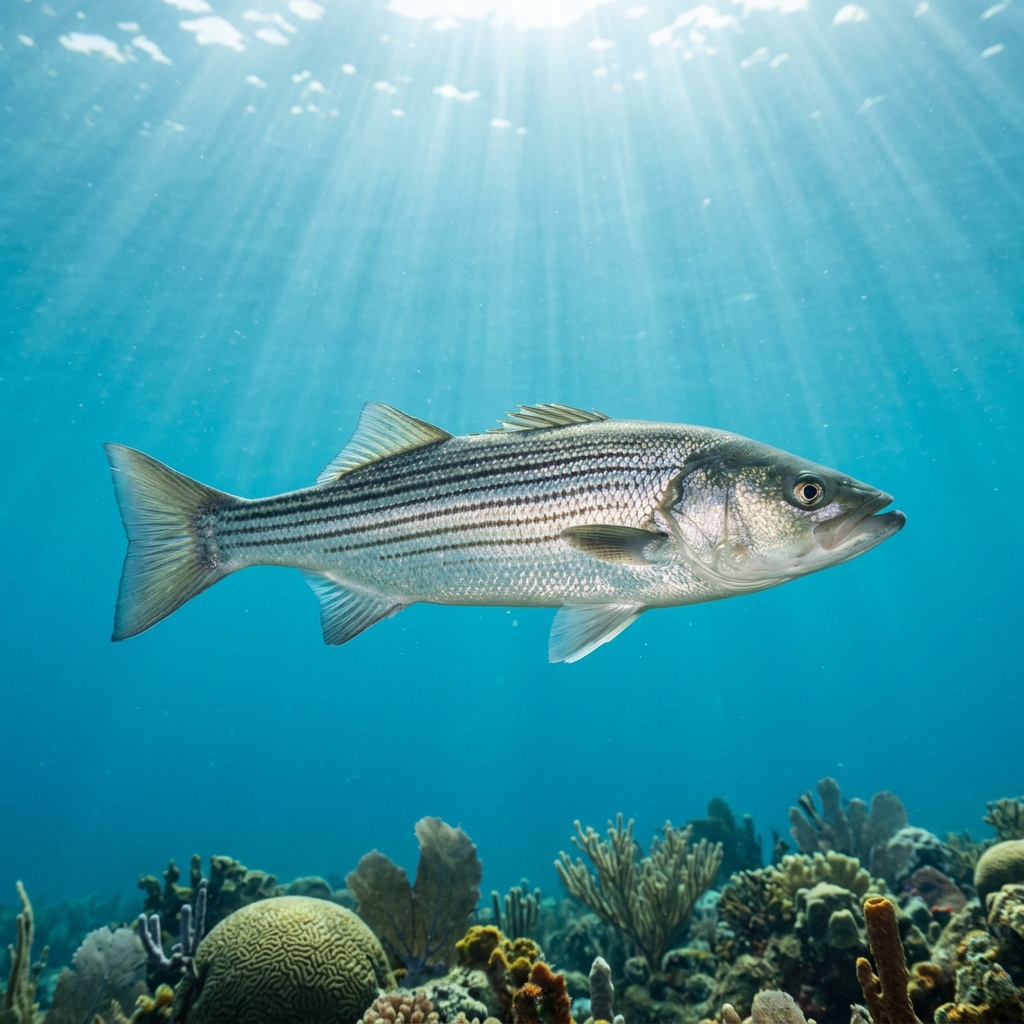
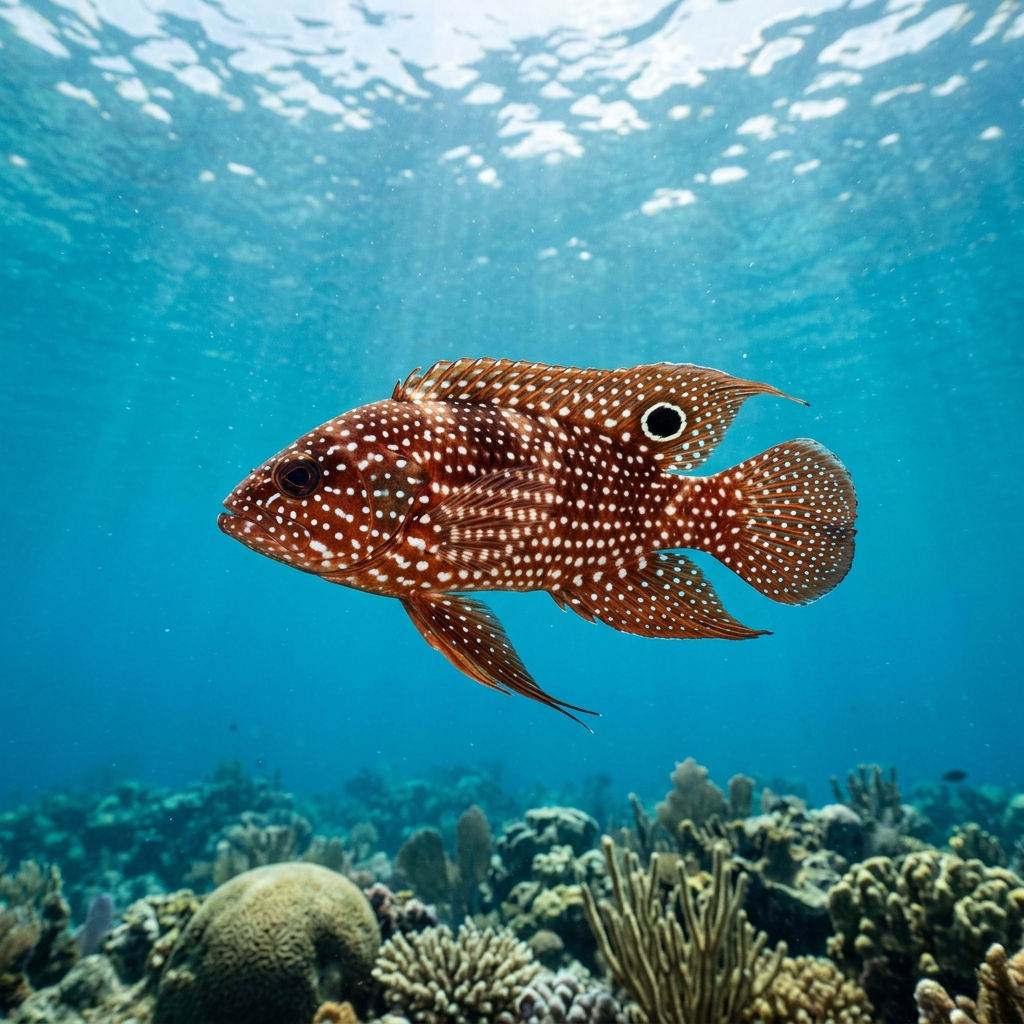
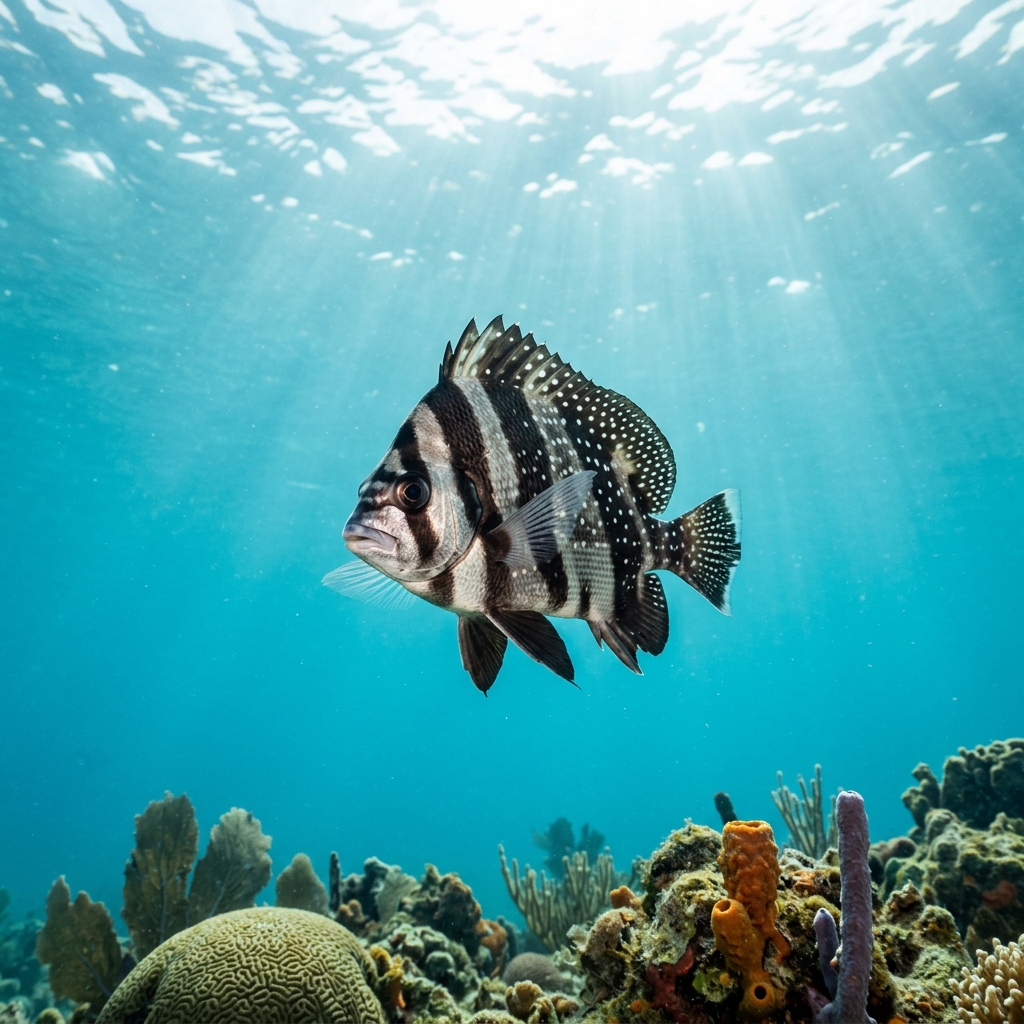
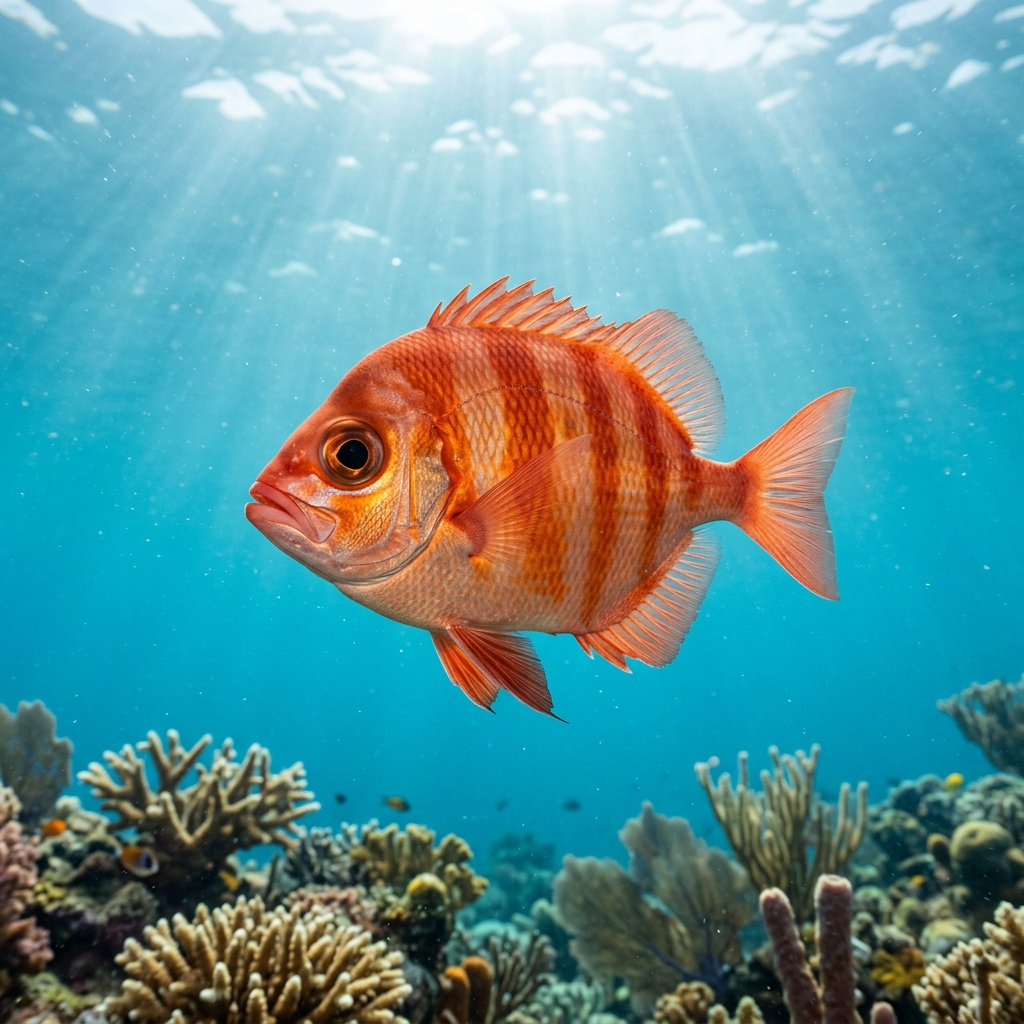
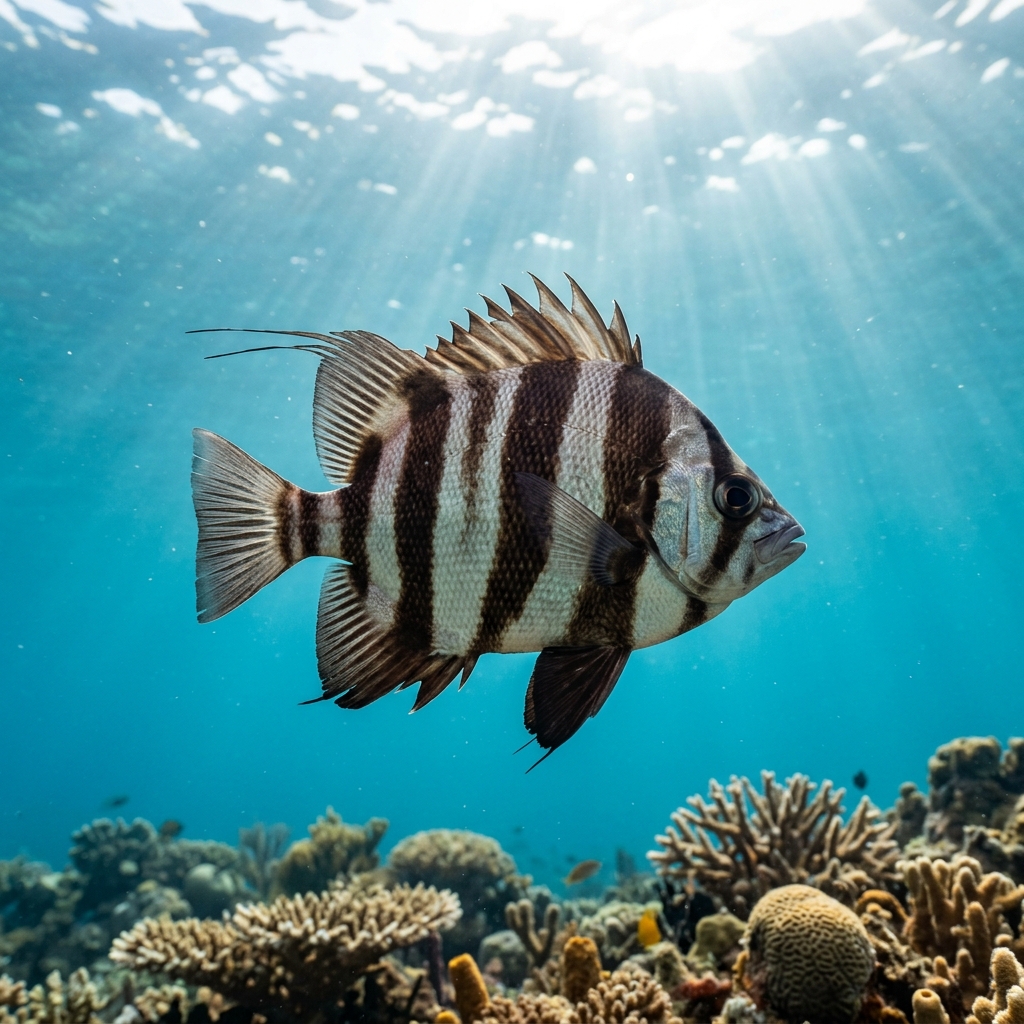
Reef neighbours a diver could mistake it for. Use the identification notes above to tell them apart.
Florida is by far the strongest region for logging redfish, with Texas turning up as a secondary spot. Sightings so far are concentrated in the United States, so if you are chasing this one, coastal Florida dive and snorkel sites are the place to start looking along sandy bottoms and grass flats.
Mapping where Redfish is logged…
Florida is the most reliable region, with additional sightings logged in Texas. Look for them on sandy bottoms and seagrass flats close to shore rather than deep offshore reef.
There is no strong seasonal pattern in the sighting data, so they are considered a year-round possibility in Florida and Texas waters where temperatures stay within their comfort range.
Watch for a heavy, copper-bronze body with a pale belly and a black spot at the base of the tail. The downturned mouth and squared tail fin also help separate it from similar bottom-feeding fish.
They can reach around 108 cm in length, making them a sizeable presence when you do spot one along the bottom.
Most dive logs describe them as a rare encounter, with only a handful of sites reporting them as uncommon. Patience around sandy flats and grass edges improves your odds.
Site and sighting data is aggregated from diver logs, iNaturalist and GBIF. For taxonomy and conservation status:
Meagre
1,159 sites