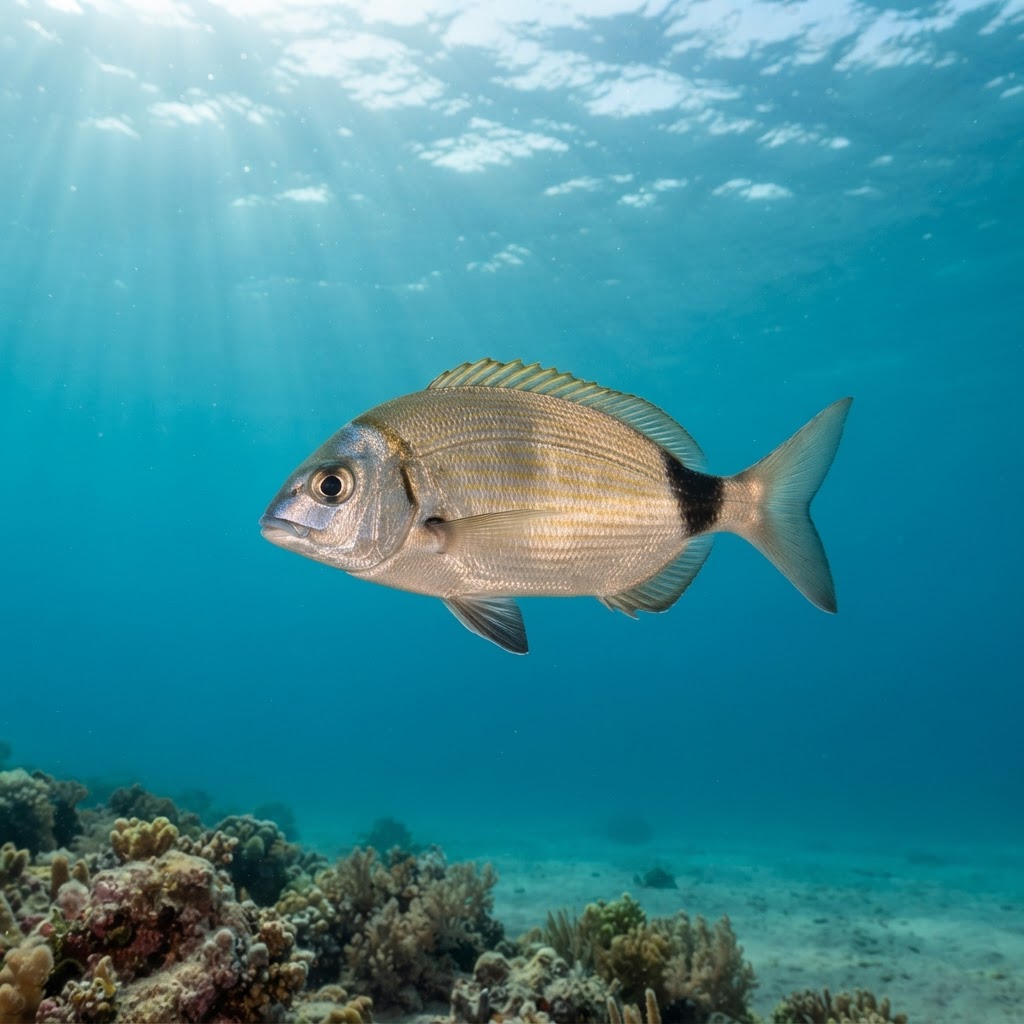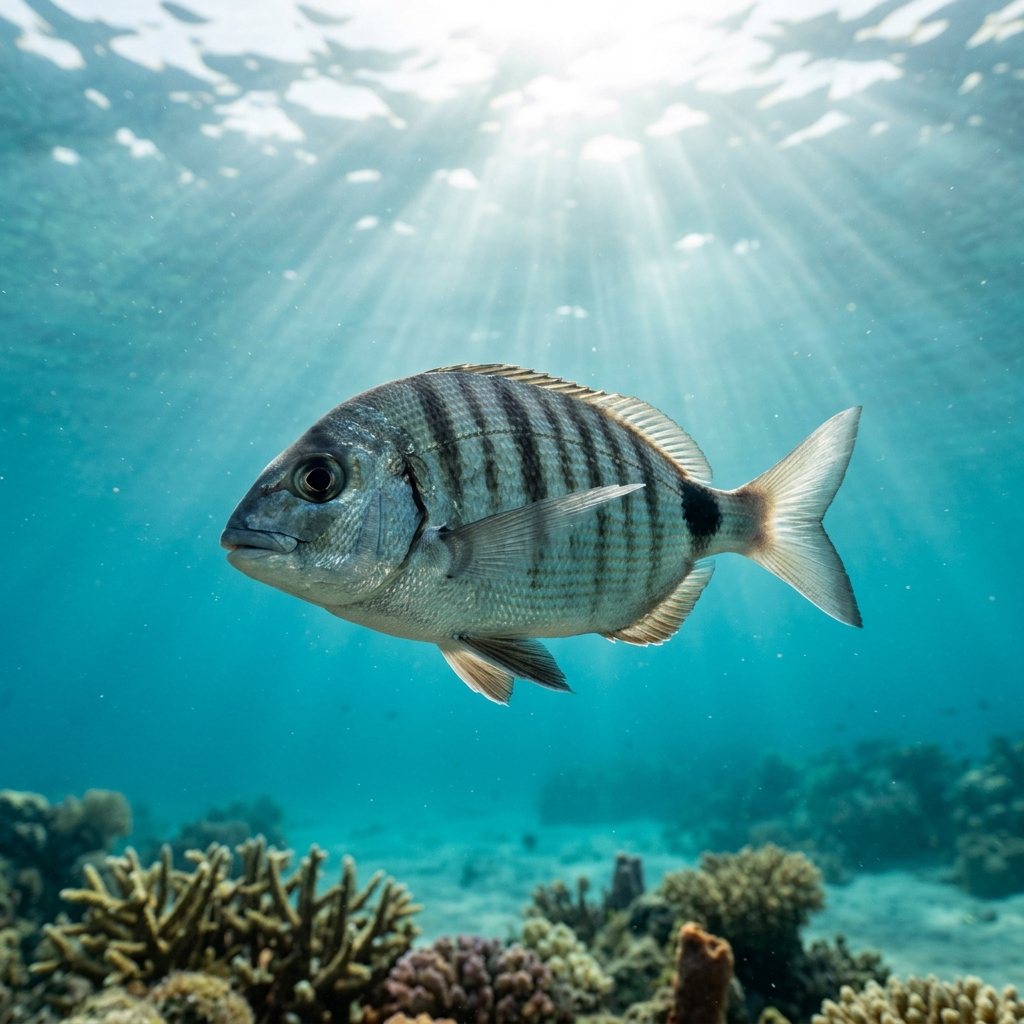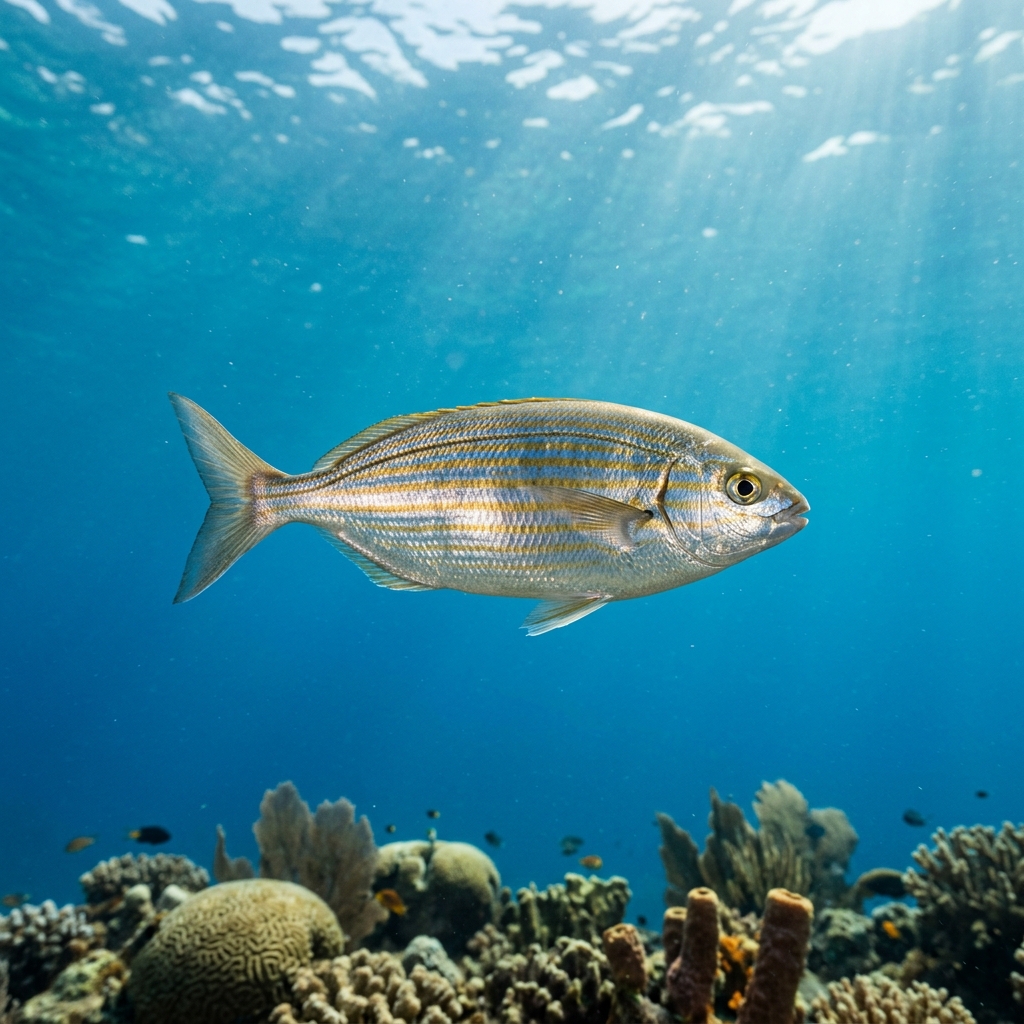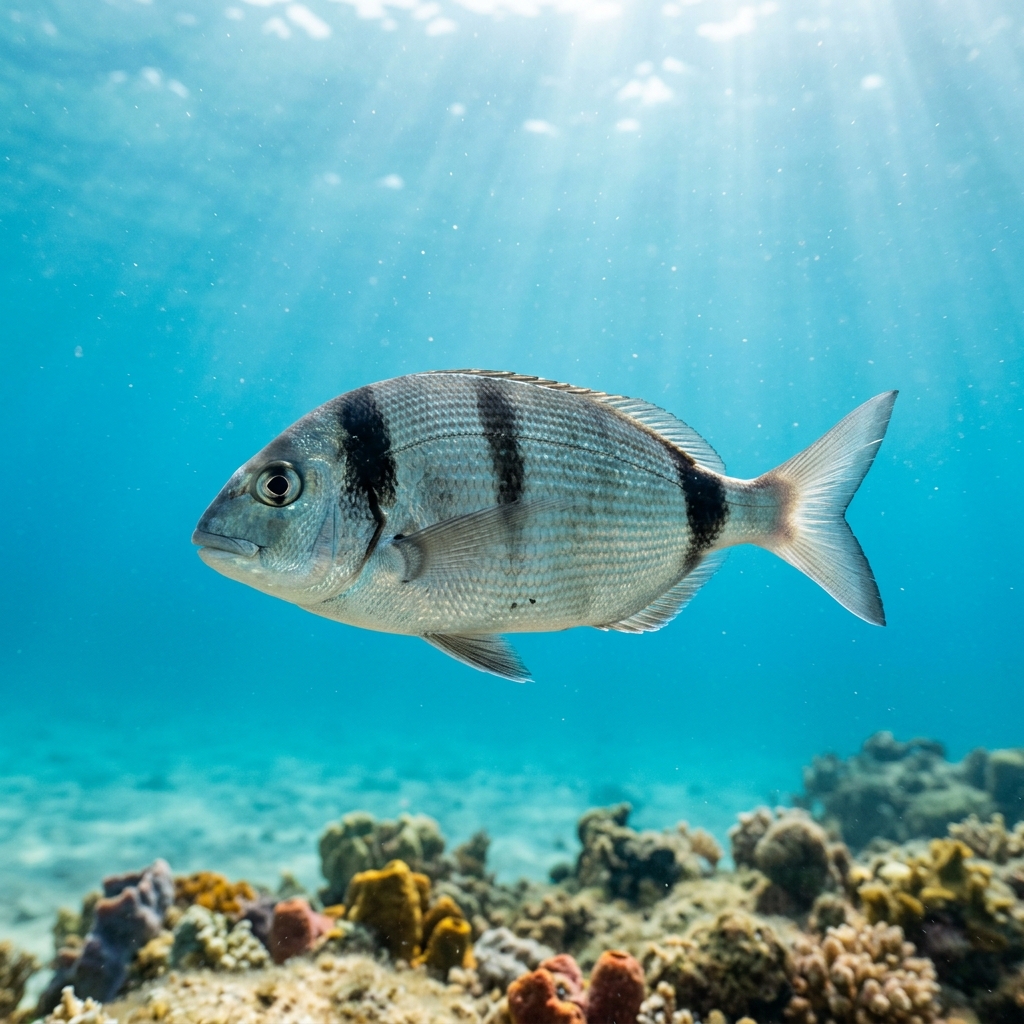
Sparidae spp.
Breams are logged year-round across the Mediterranean and beyond. Find them reliably along the French Riviera, Costa Brava, and Croatian reefs in 16-25 °C water.
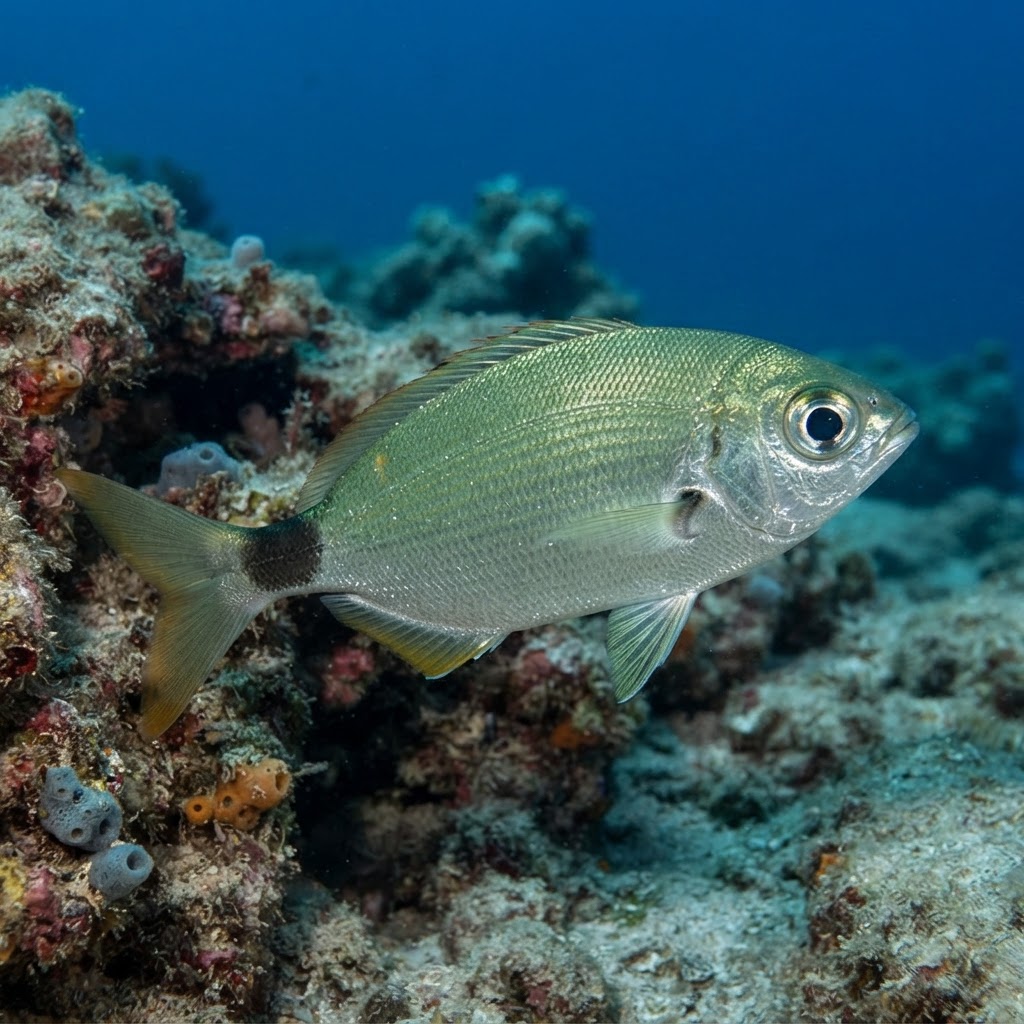
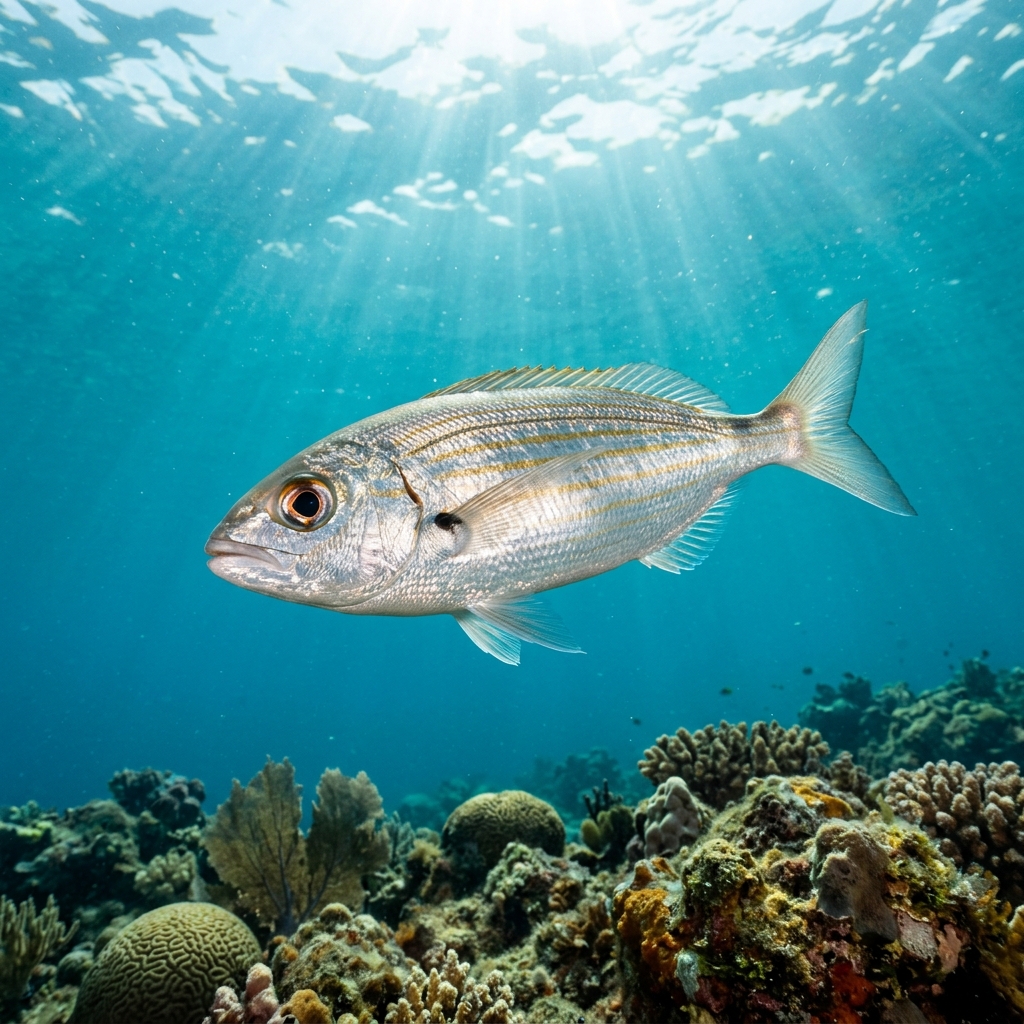
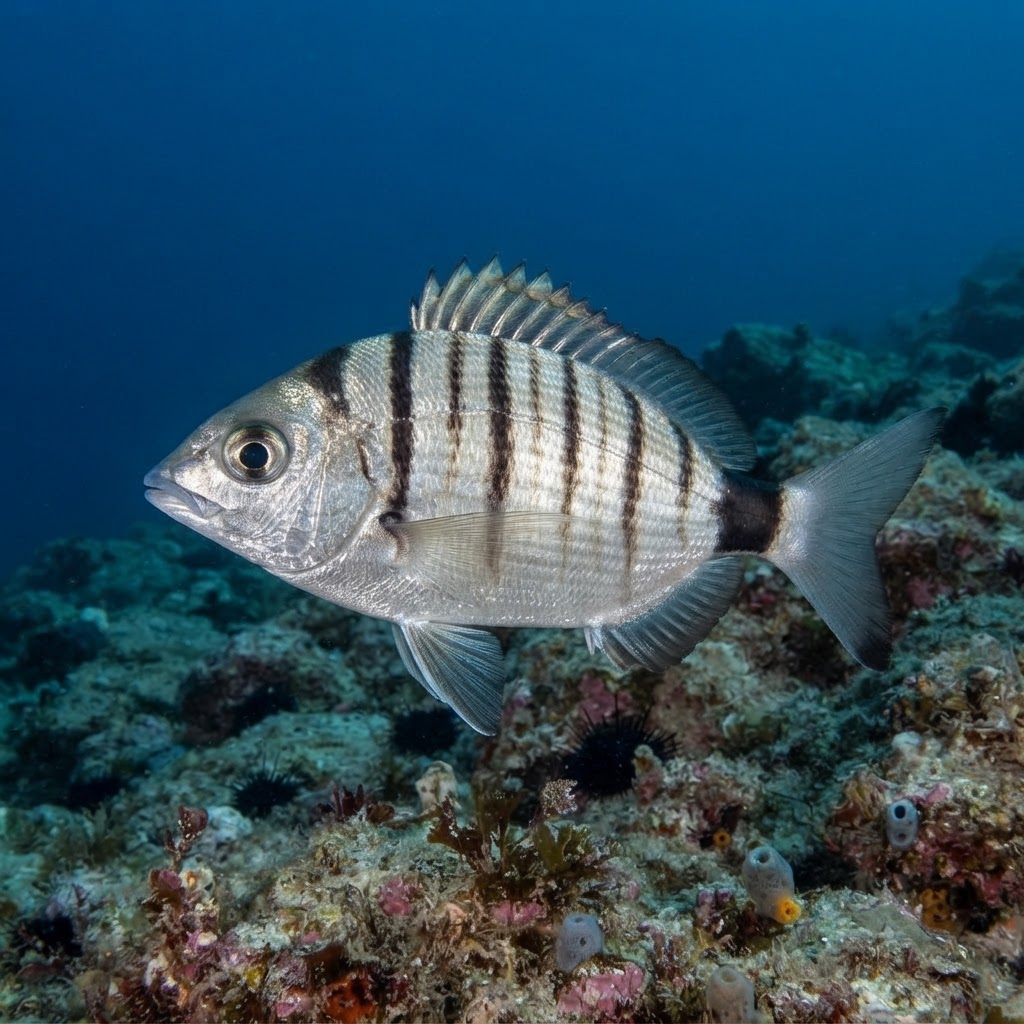
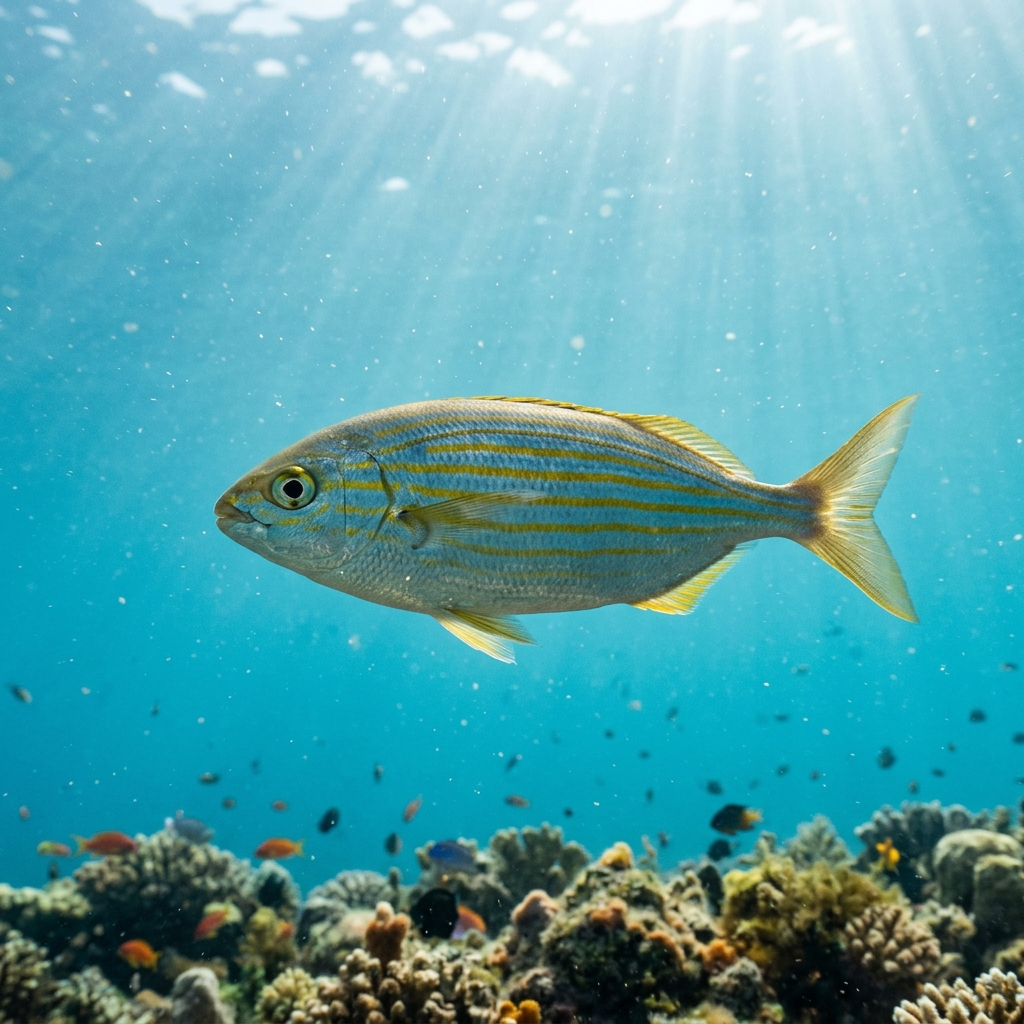
Sparidae share a compact, deep-bodied oval silhouette covered in large silvery scales, often with a pinkish, golden, or grey wash depending on species. The stout, continuous dorsal fin (single fin running along the back) and small, tough mouth designed for crushing shellfish are reliable group markers underwater. Many species carry a dark shoulder spot, bold vertical bars, or a prominent saddle marking near the tail, look for those patches first when sorting out which species you have. Sizes across the family vary enormously, from palm-sized juveniles to large individuals approaching half a metre.
You will most often encounter breams working close to rocky reef and mixed sand-rock habitat, picking invertebrates off the substrate or hovering in loose aggregations in the water column. They tend to be alert but not panicked by divers, approach slowly and they will often hold their ground or circle back. Younger individuals frequently form schools, while larger adults are more solitary and territorial around favoured feeding patches.
Many sparids are protandrous hermaphrodites, meaning individuals start life as males and can switch to female as they grow older and larger, so the biggest fish in a group is often female.
In the Northern Hemisphere, breams are present year-round with no concentrated season, reflecting the family's comfort in the 16-25 °C water typical of Mediterranean and warm-temperate reefs. In the Southern Hemisphere, sightings are most concentrated from November through July, covering the Austral summer and autumn.
Reef neighbours a diver could mistake it for. Use the identification notes above to tell them apart.
Breams are most commonly logged across the Mediterranean, with Spain, France, Italy, Croatia, and Greece all producing strong sighting records. The French Riviera and Provence, the Costa Brava, and Croatia's Kvarner Gulf are the standout regions for frequency and reliability. Outside Europe, Australia's New South Wales coast and the Canary Islands also hold healthy populations worth seeking out.
Mapping where Bream is logged…
Breams are logged across a wide range of warm-temperate and subtropical regions. The Mediterranean is the stronghold, with Spain, France, Italy, Croatia, and Greece all recording frequent sightings. The French Riviera, Costa Brava, and Kvarner Gulf in Croatia are particularly reliable. The Canary Islands and New South Wales in Australia round out the top destinations.
In the Northern Hemisphere they can be found year-round, with no single peak season. Southern Hemisphere divers, particularly in Australia, see the most sightings from November through July.
Look for a compact, deep-bodied oval fish with large silvery scales, a stout unbroken dorsal fin, and a small tough mouth. Many species carry a dark shoulder spot, bold bars, or a saddle near the tail. Sorting individual species takes practice, but the family shape is quite distinctive on the reef.
Size varies widely across the Sparidae family. Many of the species divers commonly encounter in the Mediterranean range from around 20 to 45 cm, though some larger members of the family can exceed 70 cm. Juveniles are much smaller and often school together near the reef.
Yes, many sparids are protandrous hermaphrodites, they begin life as males and can transition to female as they grow. This means the largest individuals in a group are typically female. It is one of the more fascinating aspects of the family's biology and has important implications for how populations recover from fishing pressure.
Site and sighting data is aggregated from diver logs, iNaturalist and GBIF. For taxonomy and conservation status:
Saddled Bream
3,846 sites