Molva molva
Long, mottled and eel-like, common ling turns up as an uncommon sighting on cold Scottish dive sites in water as chilly as 4.6 to 11.3C.
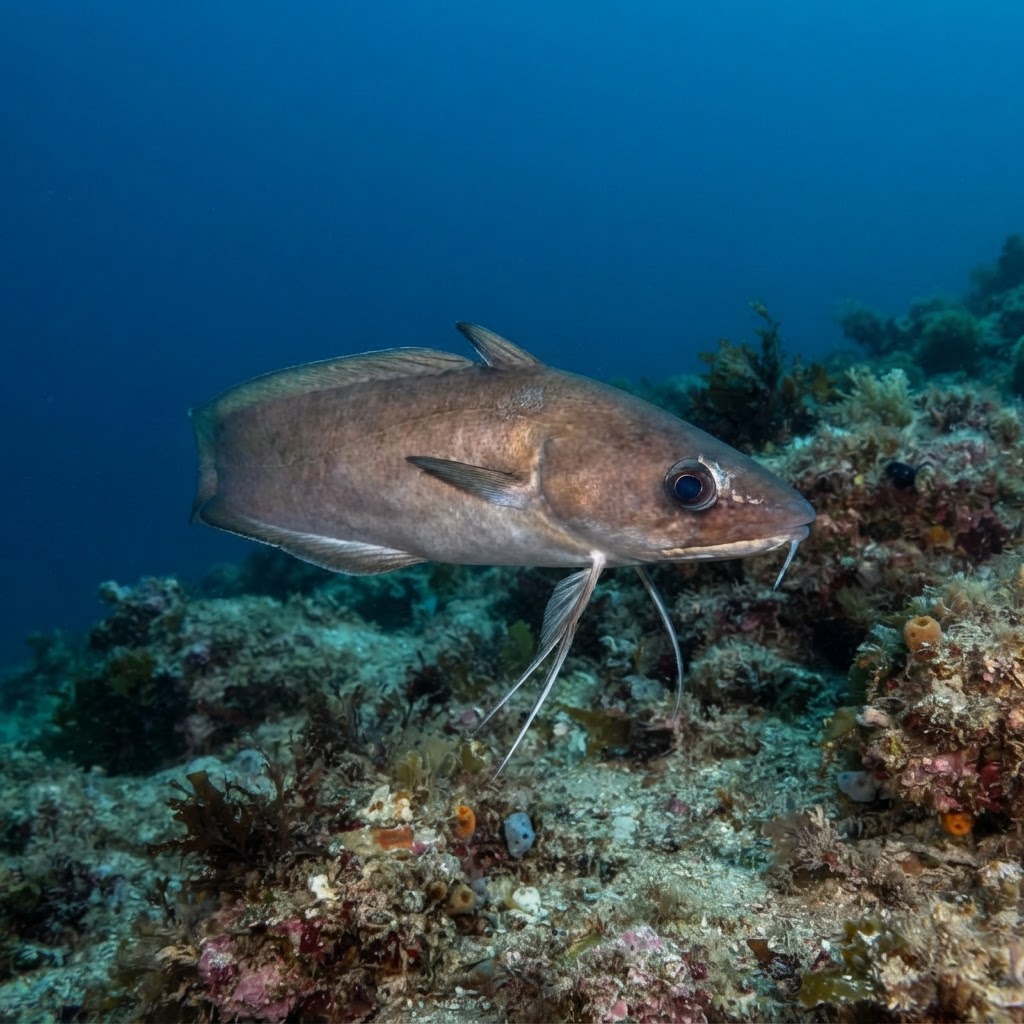
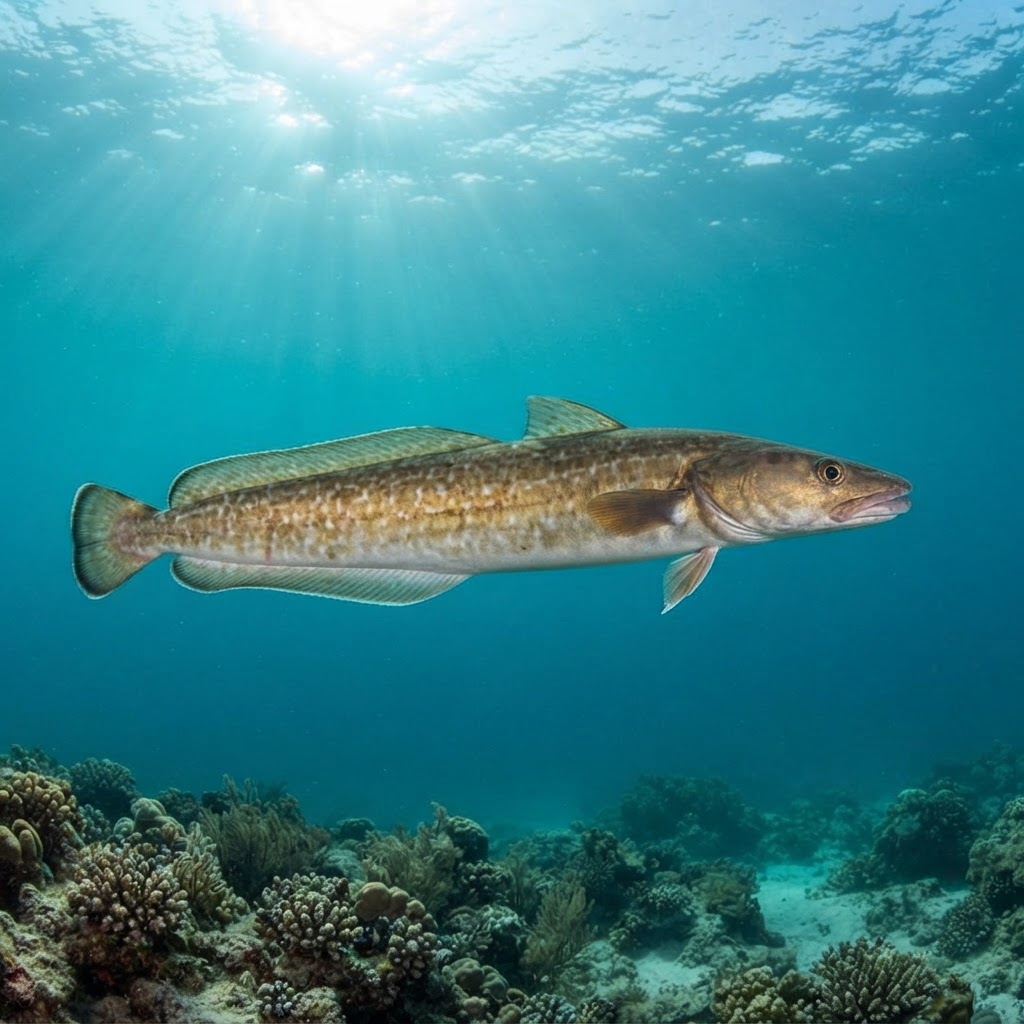
A long, slightly flattened body running up to around 140 cm, with mottled brown-to-olive colouring fading to a pale belly. Look for the extended dorsal fin running most of the body length, a single long barbel (whisker-like sensory organ) under the chin, and a rounded tail. It tends to lie close to rock or wreck structure rather than swim openly in mid-water, so the low-slung, elongated silhouette against the seabed is the giveaway.
Divers typically find it resting still against rock ledges, wreckage or the seabed rather than out swimming in open water. It's an uncommon sighting even at the sites where it's known, so patience and a slow look along structure pays off more than searching the water column. It tends to hold its position as divers approach rather than bolt, making it easier to observe closely once spotted.
That long single chin barbel is a sensory tool for finding prey on the seabed in low light, which fits its habit of hugging dark ledges and wreck interiors rather than cruising open water.
Sightings don't show a clear seasonal pattern, so treat it as a year-round possibility on the sites where it's known to occur. It's consistently found in cold water between roughly 4.6 and 11.3C, conditions Scottish sites hold for much of the year.
Reef neighbours a diver could mistake it for. Use the identification notes above to tell them apart.
Logged almost exclusively on dive sites in Scotland, particularly around Scottish wreck and reef sites, with all recorded sightings so far coming from the United Kingdom. It's currently not reported from any other country in the data, making Scotland the place to look if you want a real shot at one.
Mapping where Common Ling is logged…
The only confirmed sightings logged so far are from Scotland, in the United Kingdom, where it turns up on rocky reef and wreck sites in cold water.
There's no strong seasonal pattern in the data, so it's considered a year-round possibility at the sites where it's found, in water typically between 4.6 and 11.3C.
Look for a long, mottled brown body up to about 140 cm, a pale belly, an extended dorsal fin, and a single barbel under the chin. It's usually seen lying still against rock or wreck structure rather than swimming freely.
They typically reach around 140 cm in length, giving them a long, eel-like profile in the water that's easy to pick out once you know the shape.
No, they're not considered dangerous to divers and generally hold still on structure rather than react defensively when approached.
It uses a single long chin barbel to sense prey along the dark seabed and inside wreck structure, which is why it's usually found tucked against rock or wreckage rather than out in open water.
Site and sighting data is aggregated from diver logs, iNaturalist and GBIF. For taxonomy and conservation status:
Pollack
282 sites