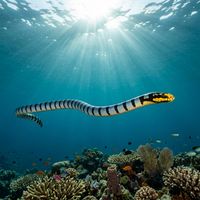
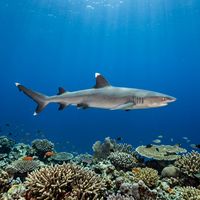
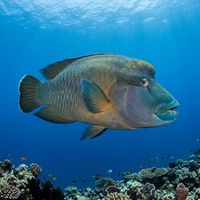
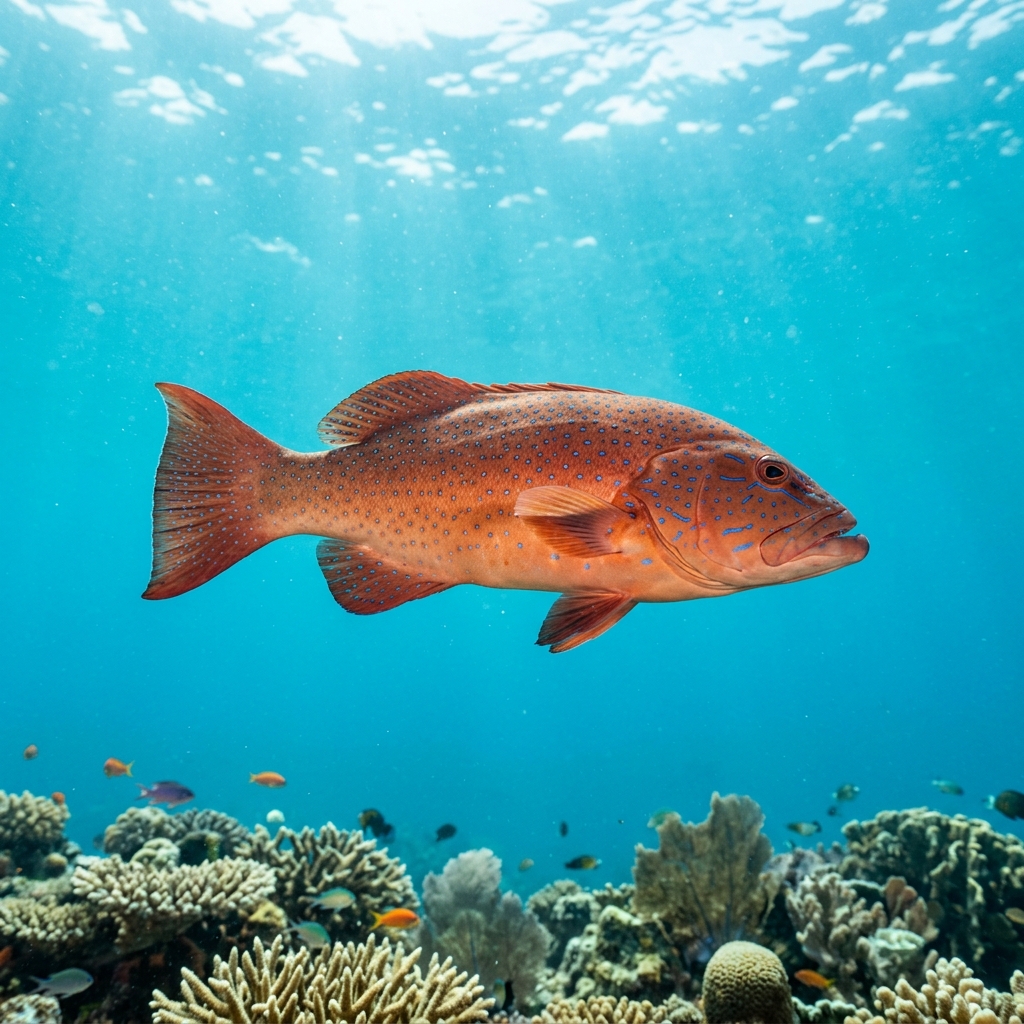
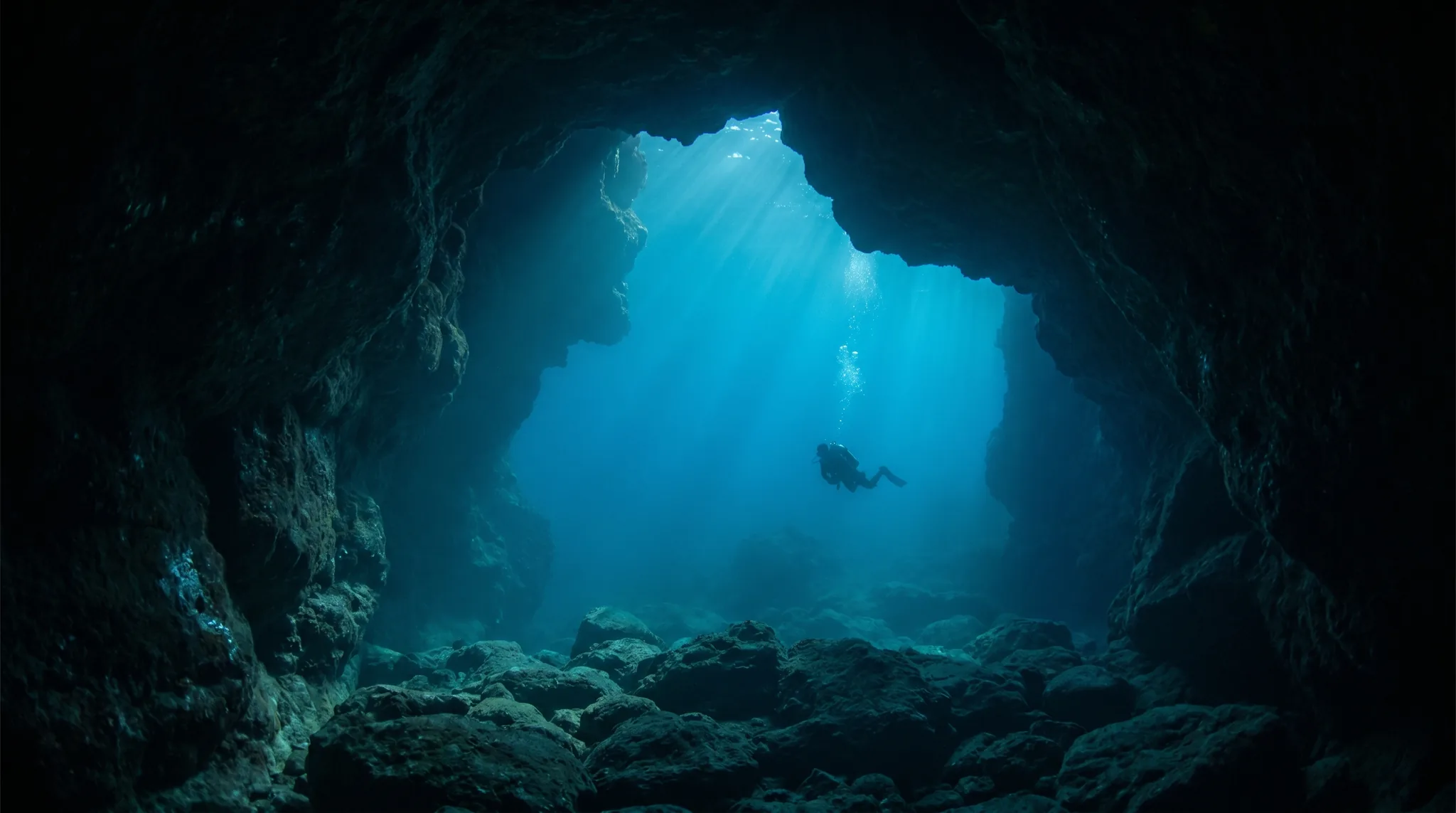
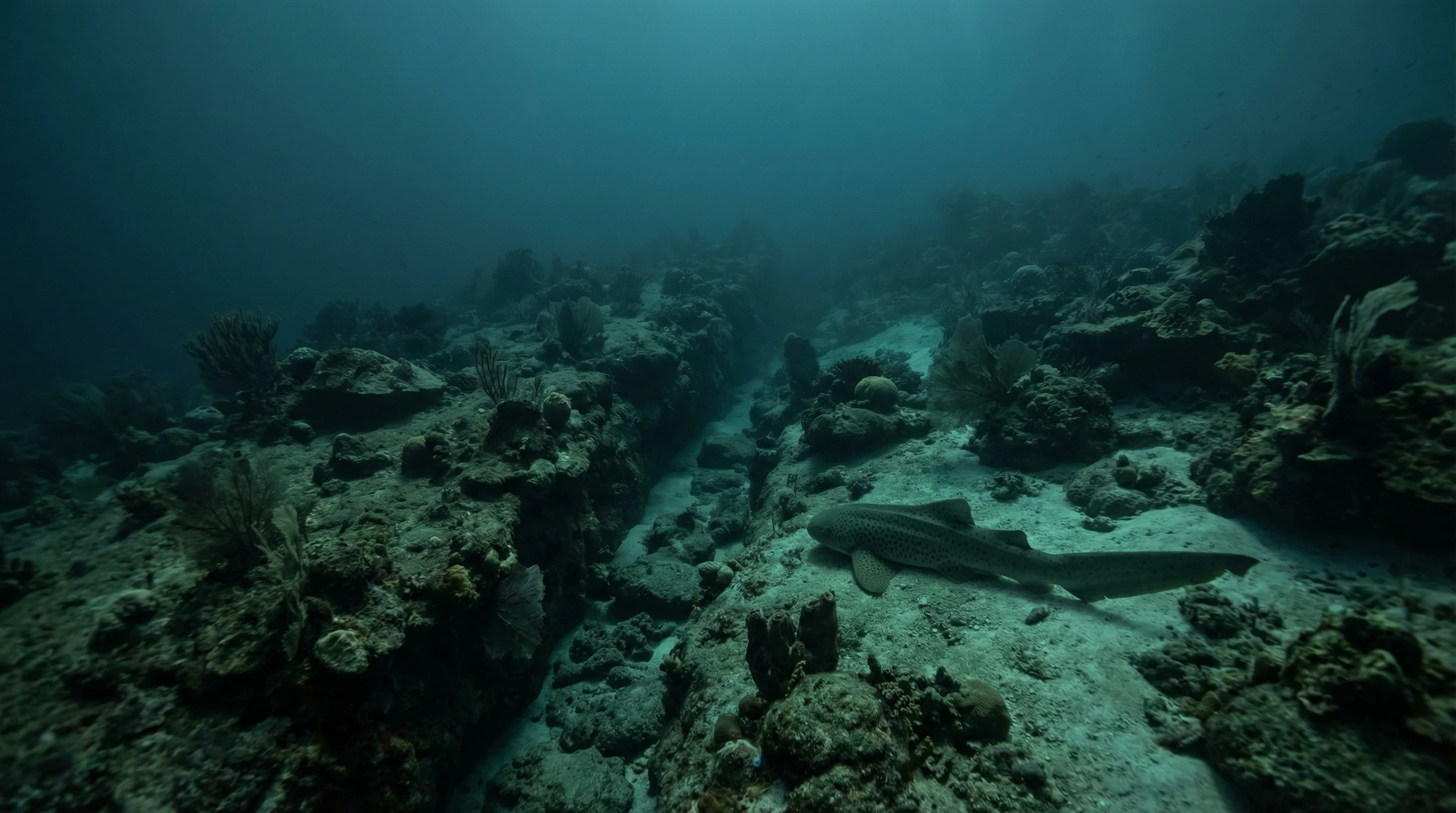
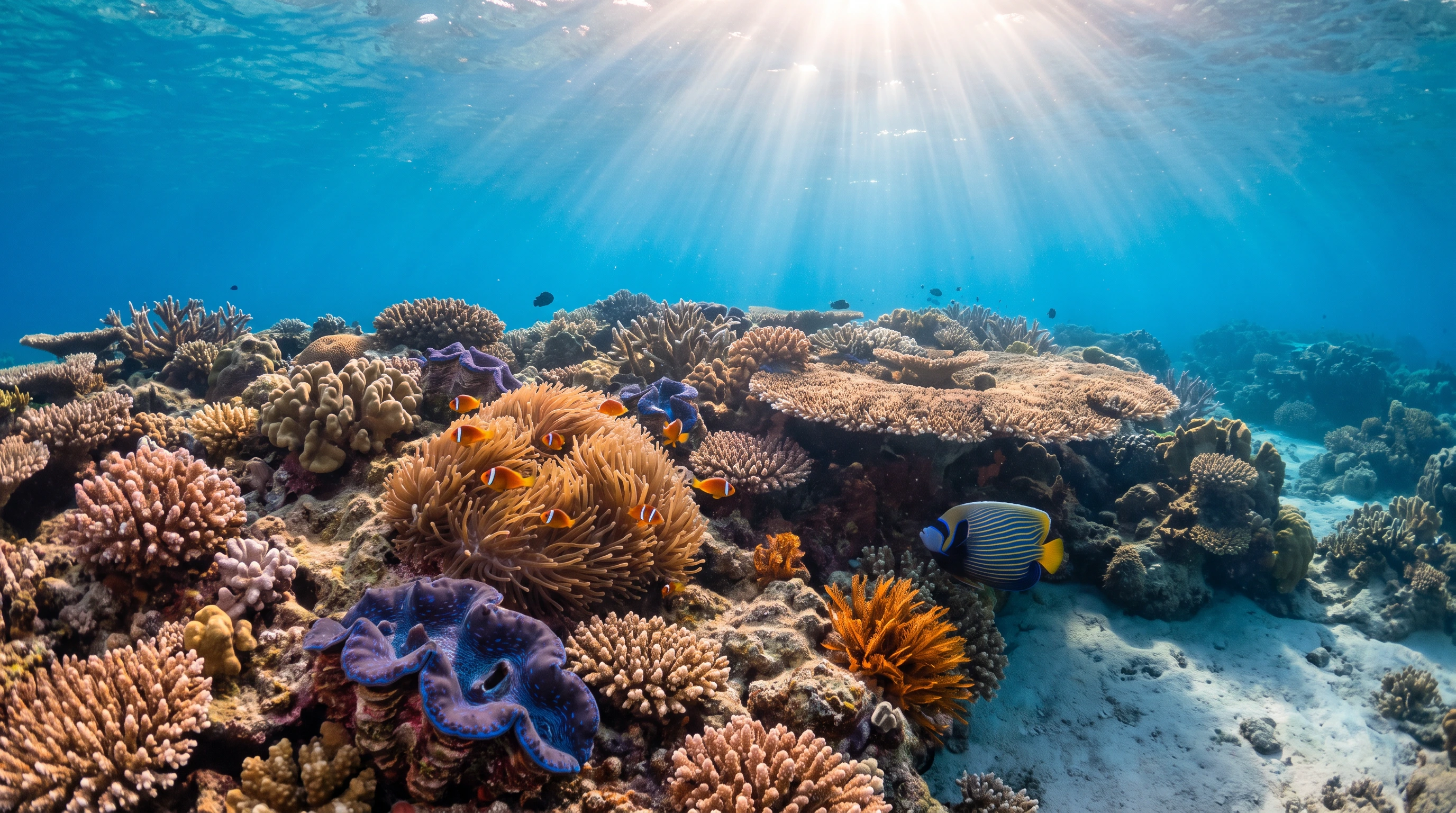
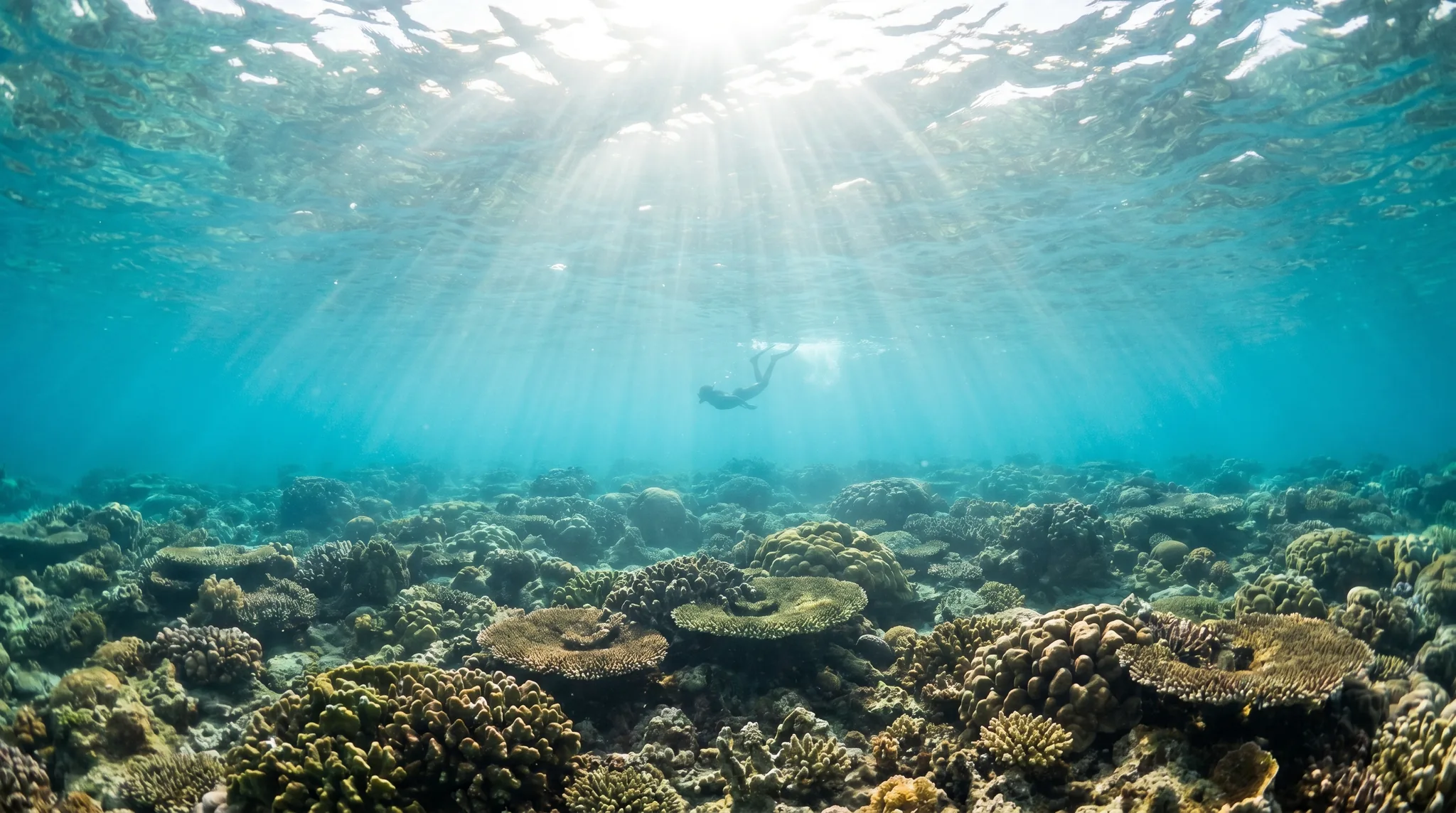
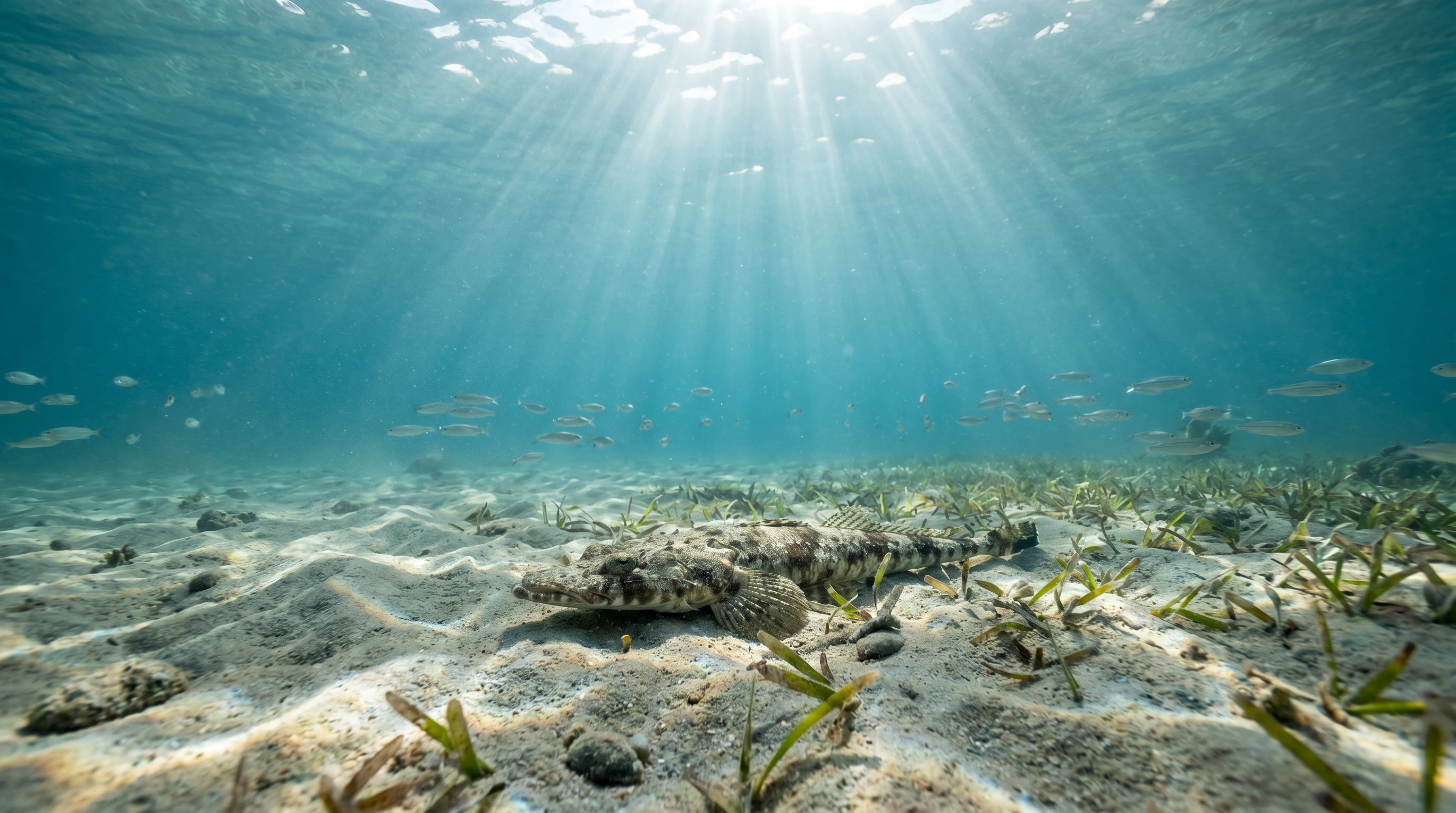
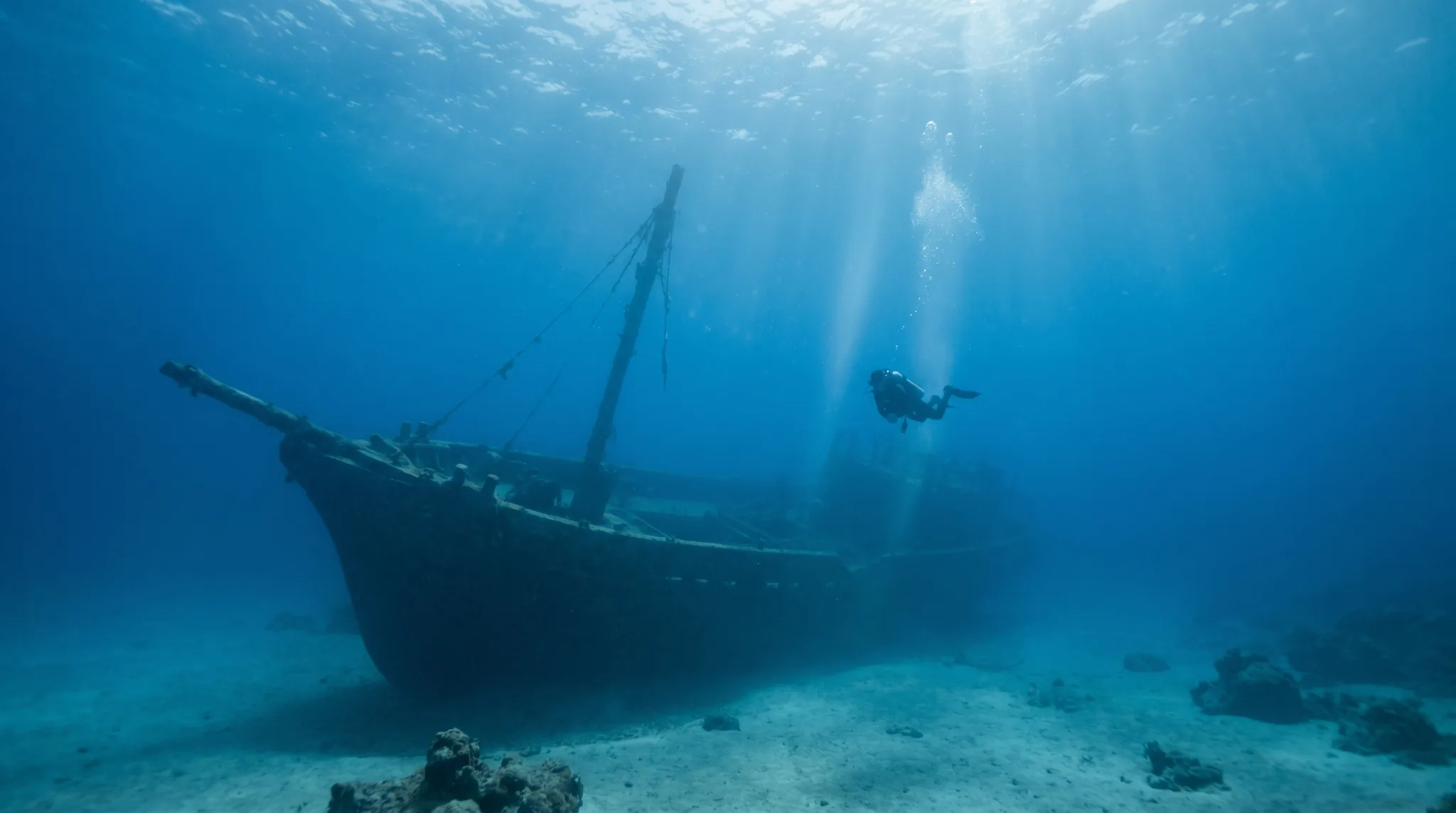
Nouméa offers a varied underwater landscape built around reef passages, wrecks, pinnacles, and seagrass beds. Drift dives through the passes dominate the diving scene, with sites ranging from shallow beginner reefs to deep advanced channels requiring boat access. The Sea Krait is encountered across most sites, while the Napoleon Wrasse, Whitetip Reef Shark, and Day Octopus are reliably observed. Snorkellers have accessible shore entries as well as boat trips to seagrass sites. Prony Bay forms a distinct sub-area with its own concentrated cluster of sites. Conditions are calmest and clearest through the cooler mid-year months.
1 areas
Monthly water temperature across Nouméa's sites, from satellite sea-surface data corrected for depth. The band shows the site-to-site spread.
Water temperatures peak in the warmer months from January through March, then cool gradually toward a mid-year trough that runs from July through September. The best-months data strongly favours this cooler period, when visibility tends to be at its finest and drift conditions in the passes are most productive. Divers planning liveaboard or multi-day trips should note that the deeper passage sites such as Passe de Uation and Passe de Dumbéa are boat-only and suit those comfortable with current.
40 operators
New Caledonia
Hienghene, New Caledonia
16 more sites to explore
Water temperature around Nouméa ranges from about 23°C in July to 27°C in January, based on satellite sea-temperature data for its dive sites.
In the warm season (about 27°C) a rash guard or 3mm shorty is comfortable in Nouméa; in the coldest months (about 23°C) step up to a 3mm full suit.
Fin maps 32 sites in Nouméa (19 scuba diving sites and 18 snorkelling spots, with some suited to both).
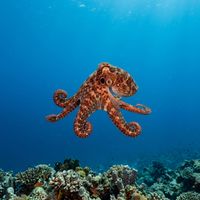
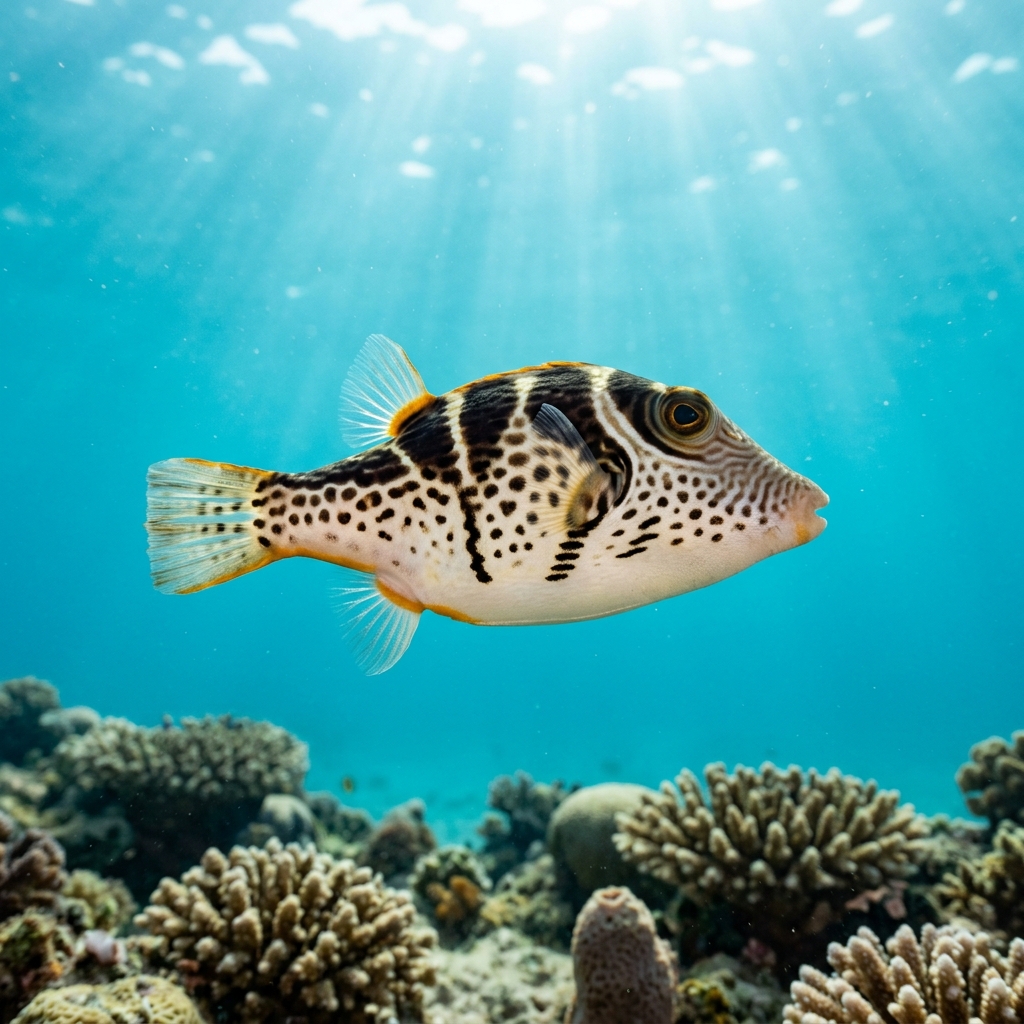
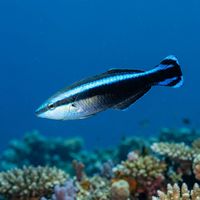
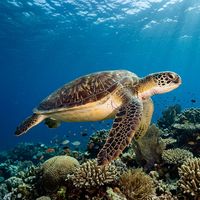
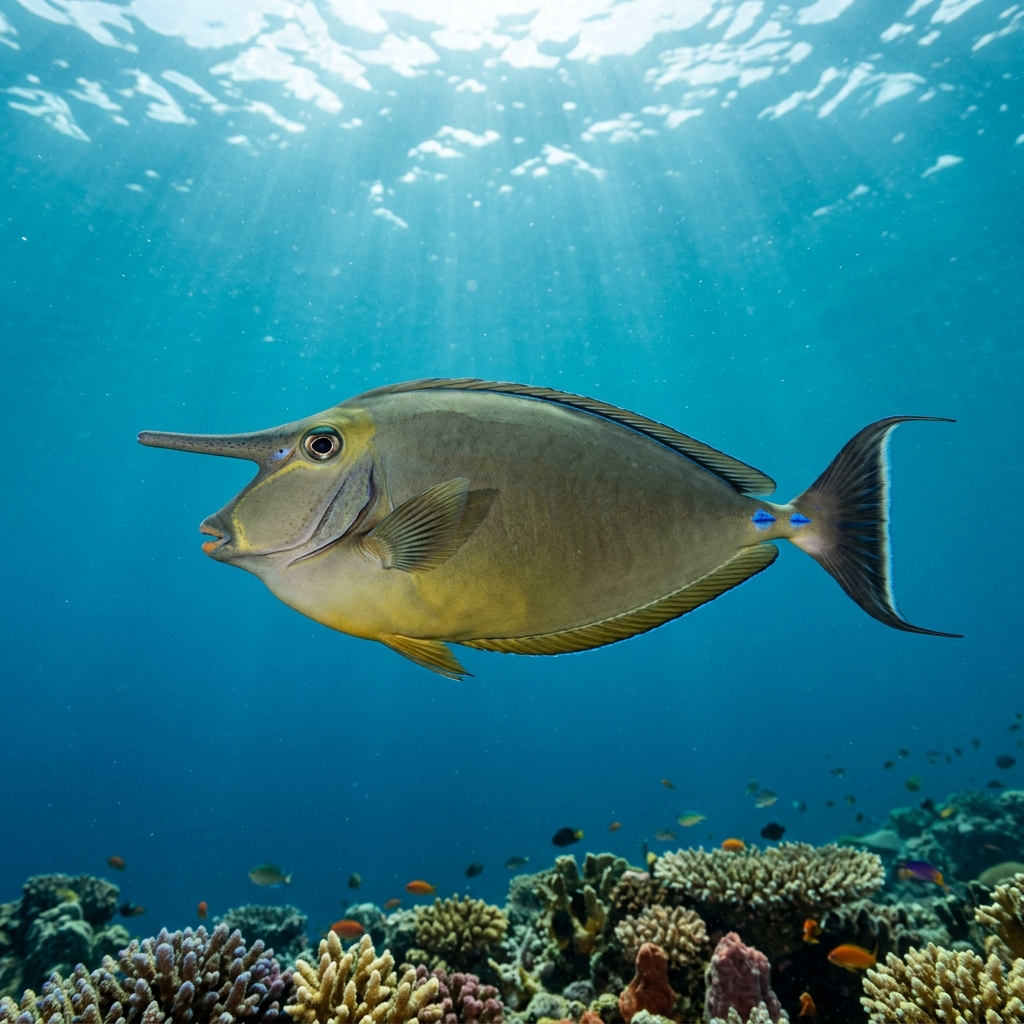
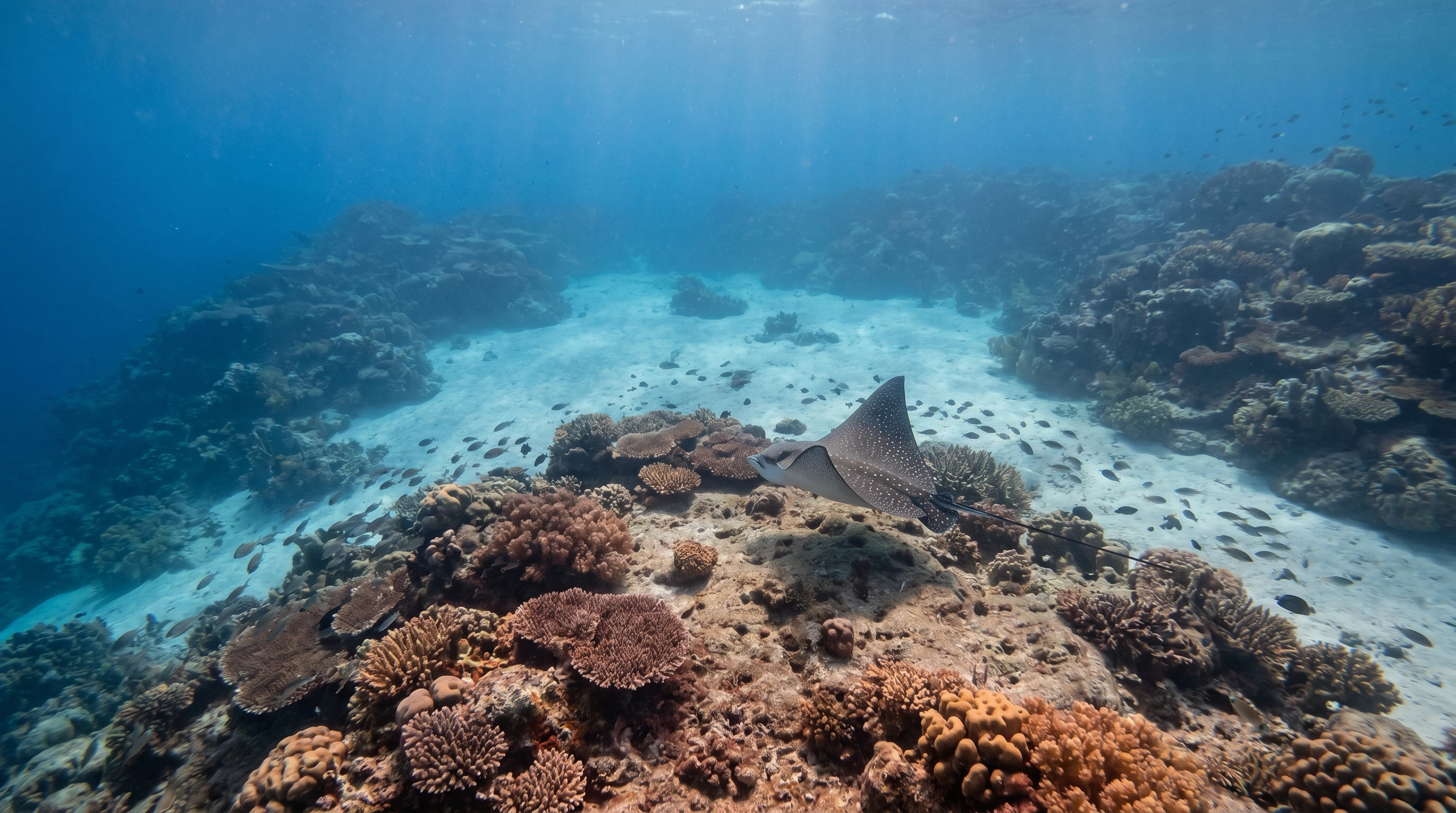
Observation-backed sightings across Nouméa's sites include the Sea Krait, Napoleon Wrasse, Whitetip Reef Shark, Day Octopus, and Common Coral Trout. The Spotted Eagle Ray and Green Sea Turtle appear occasionally, and the Dugong has been recorded at seagrass sites. Wrasse species in general are very commonly encountered across the reef system.
Nouméa has a solid mix of skill levels. Plage De Moara is a shallow shore-entry reef that suits beginners well. However, many of the region's signature sites, including the drift passes and the Aiguille de Prony pinnacle, are rated intermediate or advanced and involve boat access, depth, and current. Beginners will find good options but should not expect to access the full range of sites straight away.
The majority of Nouméa's dive sites require a boat, particularly the reef passes and wreck sites around Îlot Amédée and in Prony Bay. Shore access is available at sites such as Plage De Moara, which is a good entry point for those without a dive operator. Several operators including POP Club, Blue Caledonia Diving, ODYSSEY Diving, and Mobula Diving run boat trips to the more remote sites.
Prony Bay is Nouméa's main sub-area and contains a concentrated cluster of sites in its own right. It is home to the Aiguille de Prony, a dramatic pinnacle and drop-off that rises close to the surface from considerable depth and is rated for advanced divers. The bay setting offers a different character from the open-water passes near Îlot Amédée, and boat access is required for all sites in the area.