Ostracion cubicum
Spot yellow boxfish on reefs across the Maldives, Red Sea and Indo-Pacific. Year-round presence in warm 24-29°C waters. ID tips for all ages and sexes.
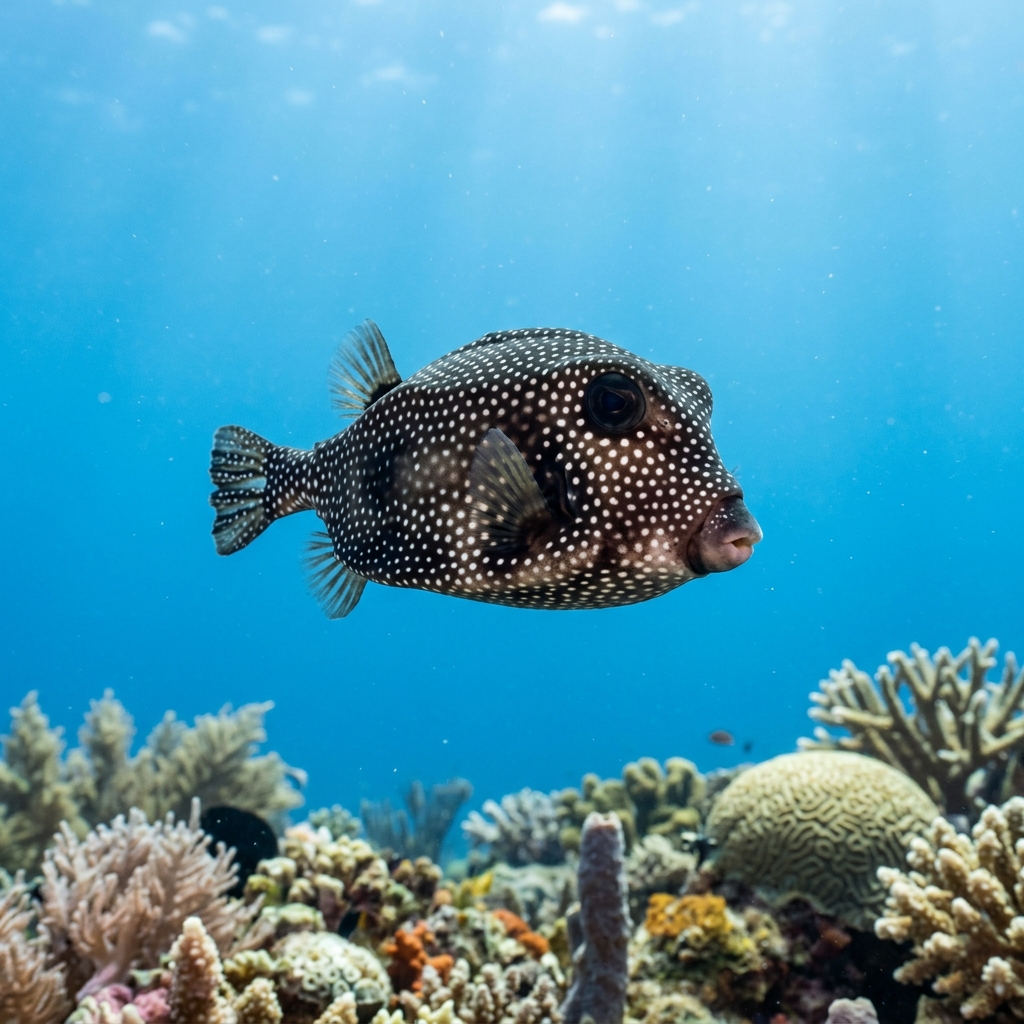
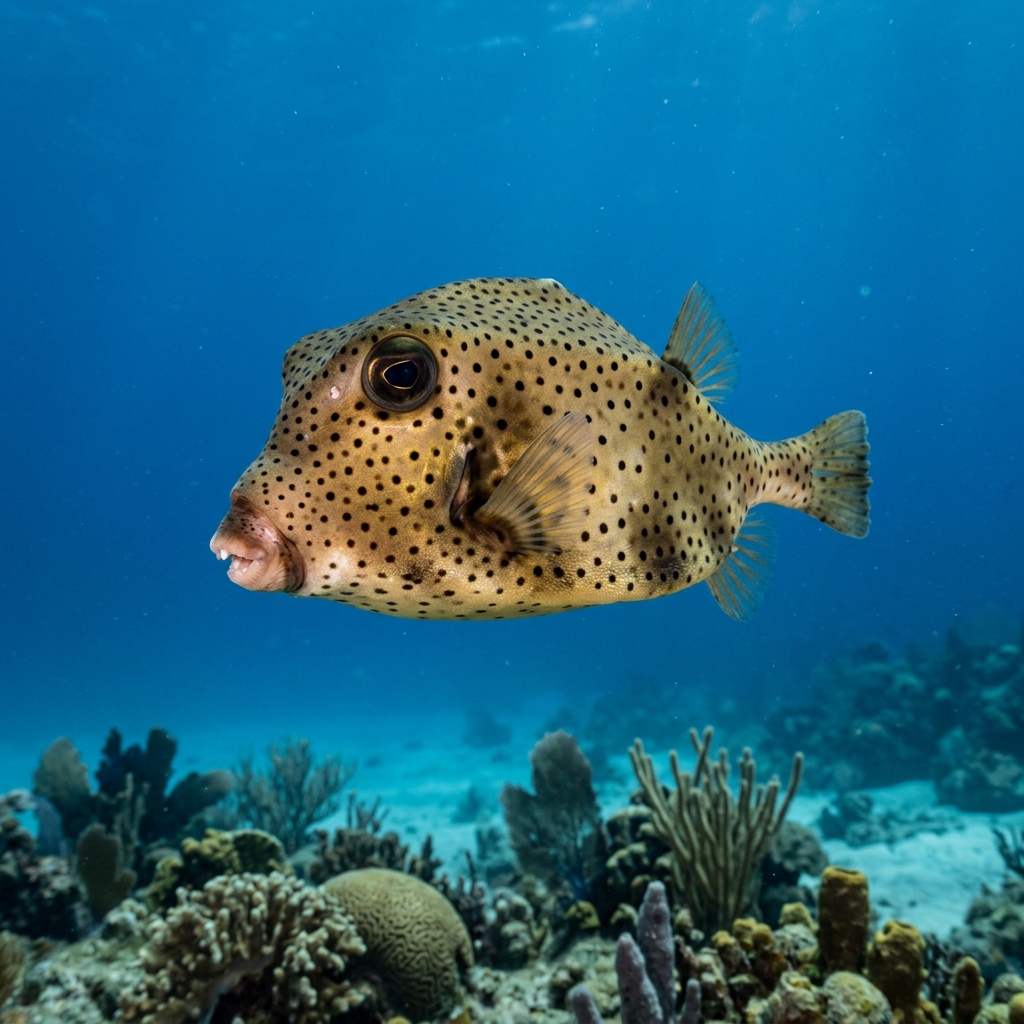
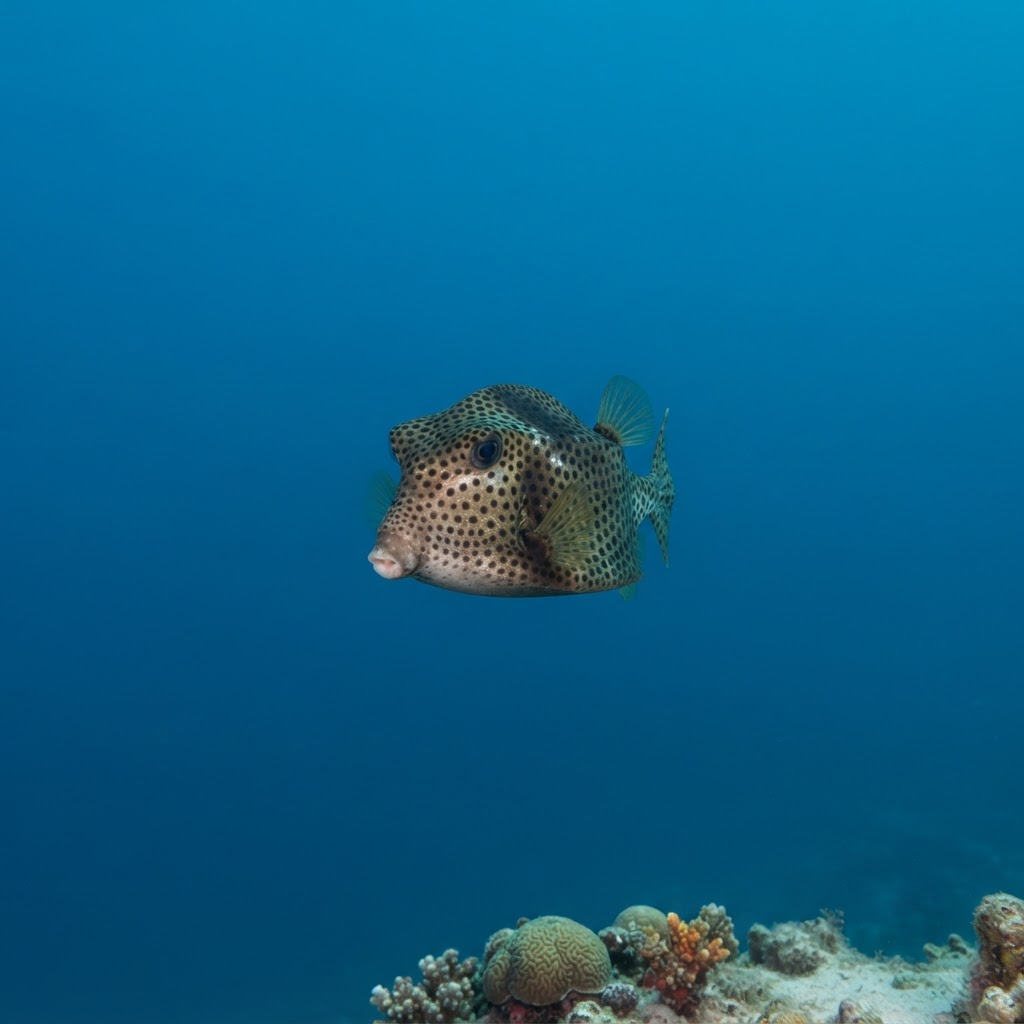
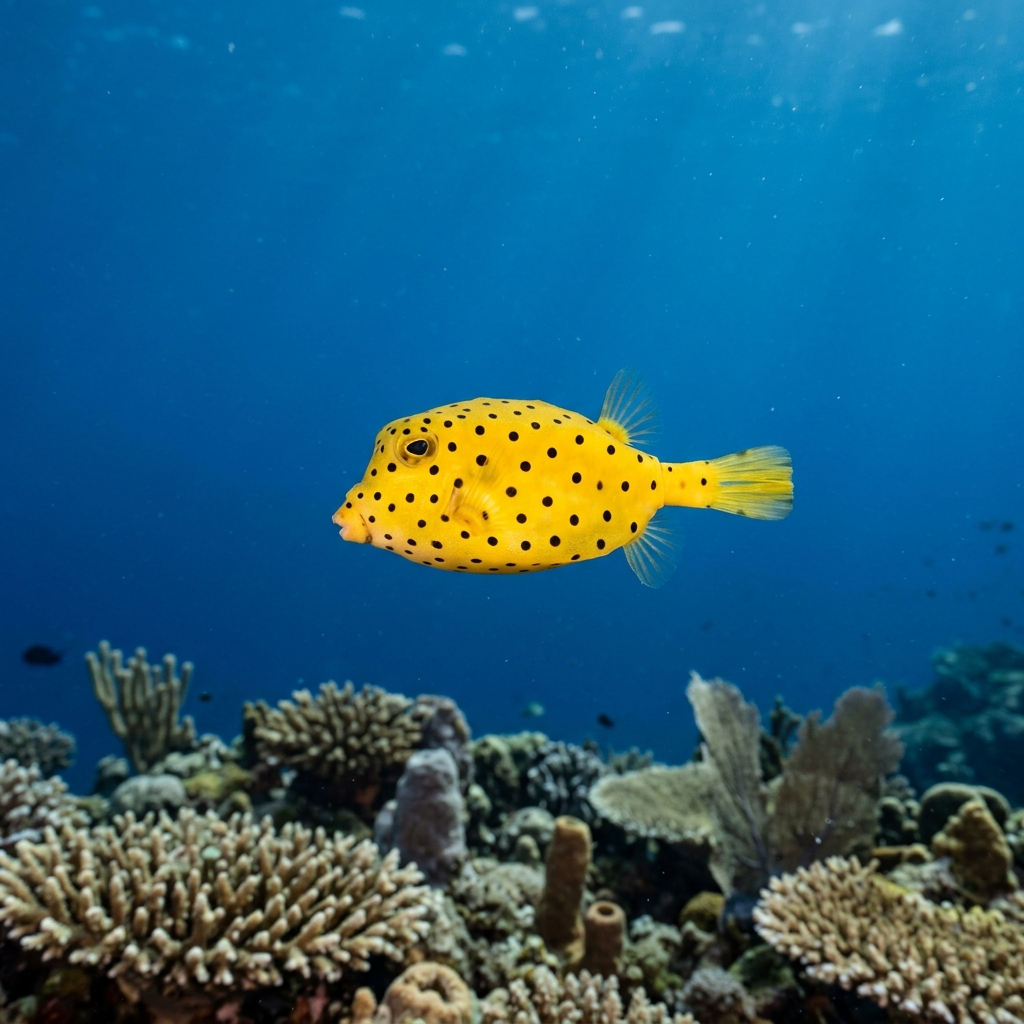
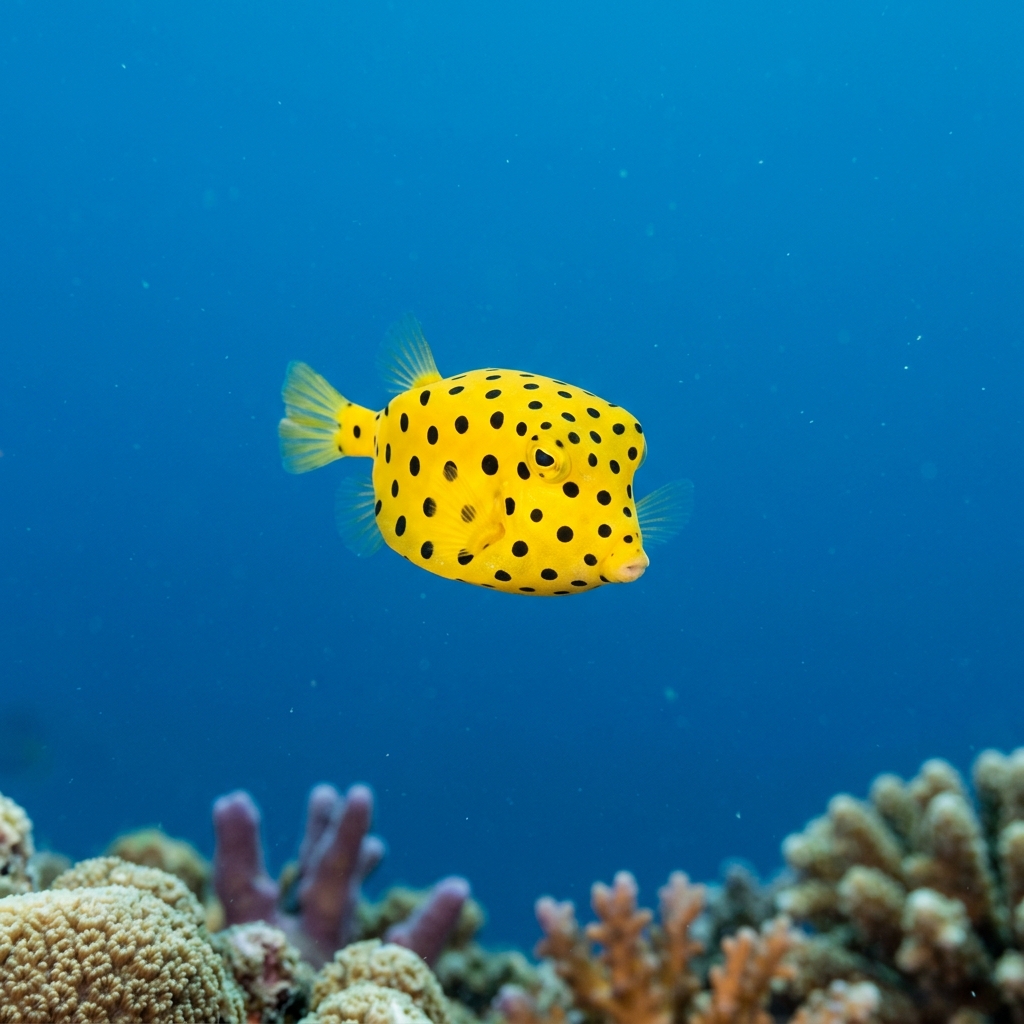
That rigid, box-shaped body makes yellow boxfish unmistakable underwater, they look almost square in cross-section, a result of the hard bony carapace (fused bony plates forming an external shell) beneath the skin. Adults reach around 30 cm and show an olive-yellow to yellow-brown base colour with pale-centred scales giving a subtle spotted effect. Juveniles look completely different: tiny, bright canary-yellow with bold black polka dots. Males shift towards blue-grey with yellow markings and blue-edged scales, while females keep the warmer, spotted yellow-brown colouring.
Look for them picking slowly over sandy patches and coral rubble during the day, pausing to blow precise jets of water at the substrate to flush out small invertebrates buried beneath. They tend to keep close to the reef and will often duck into a coral crevice if you approach too fast; slow down, stay low, and they may hold their ground and carry on feeding. Most sightings are solitary individuals going about their business rather than groups.
When seriously stressed, yellow boxfish can release ostracitoxin, a skin-secreted toxin that is harmful to other fish in a confined space. This is a defence mechanism, not an attack behaviour, and is not a risk to divers in open water.
Yellow boxfish are present year-round in both hemispheres, with no concentrated season anywhere in their range. Their 24-29°C temperature niche means they are a stable resident on tropical reefs throughout the year.
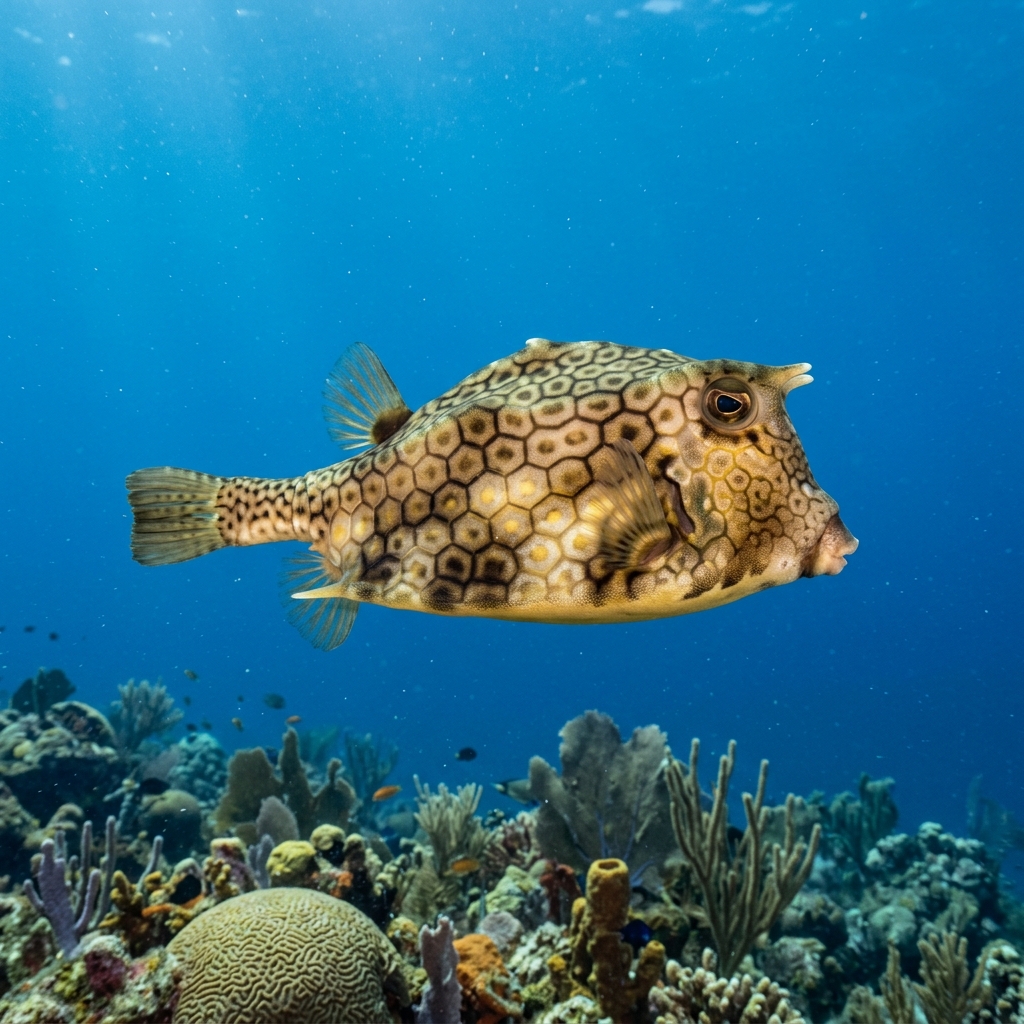
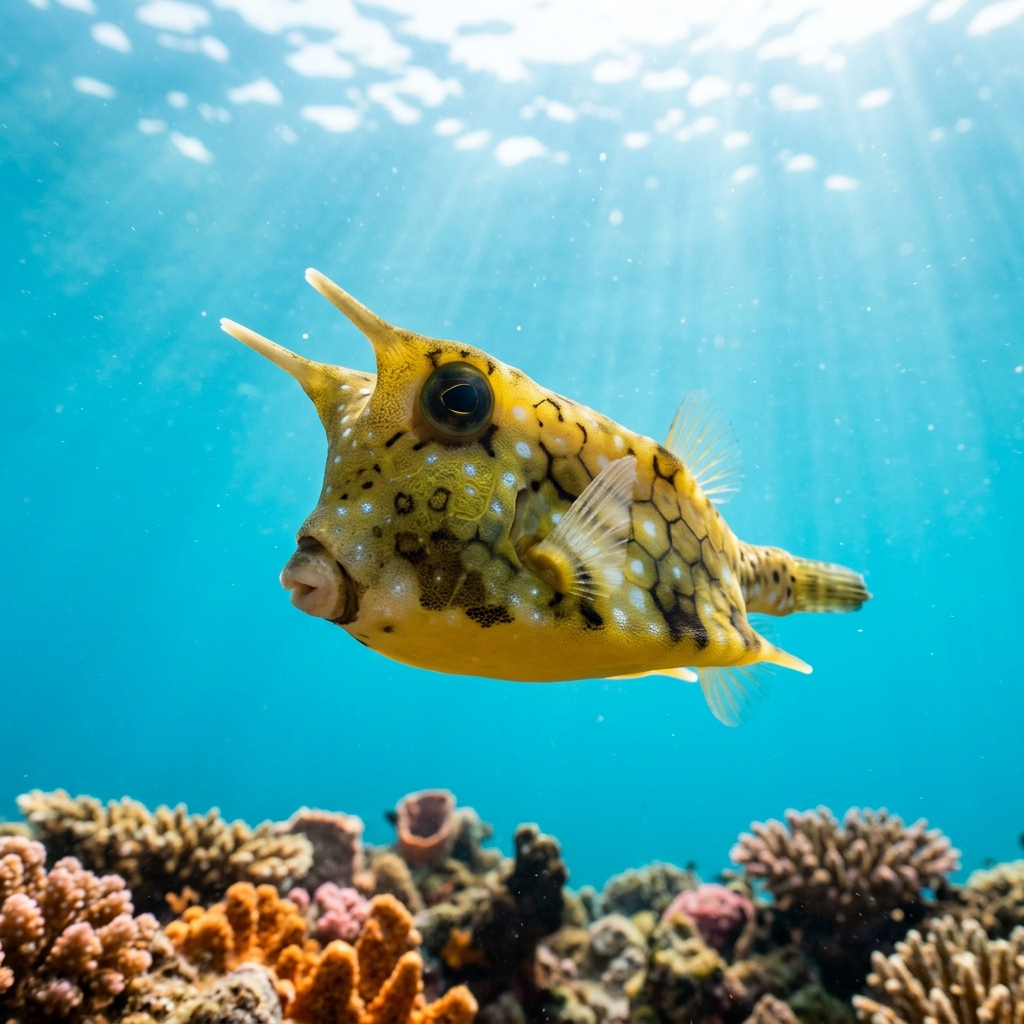
Reef neighbours a diver could mistake it for. Use the identification notes above to tell them apart.
Most commonly logged in the Maldives and Indonesia, with strong representation across the Philippines, the Egyptian Red Sea (especially Sharm el Sheikh), Malaysia, and Australia. Within those countries, Male and Ari Atolls in the Maldives, Sharm el Sheikh in Egypt, Queensland in Australia, and the Perhentian and Redang Islands in Malaysia consistently produce sightings.
Mapping where Yellow Boxfish is logged…
They are most reliably encountered across the Maldives, Indonesia, the Philippines, the Egyptian Red Sea, Malaysia, and Australia. Top regions include Male and Ari Atolls, Sharm el Sheikh, Bali, Queensland, and the Perhentian and Redang Islands. The species has a wide Indo-Pacific and Red Sea range, so it appears on dive logs from a large number of countries.
They are present year-round throughout their range in both the Northern and Southern hemispheres. Because they favour consistently warm tropical water between 24 and 29°C, there is no peak season, any visit to a top site gives roughly equal odds.
The boxy, almost square body shape is the key feature, no other common reef fish looks quite so geometric. Adults are olive-yellow to yellow-brown with subtly spotted scaling. Juveniles are bright yellow with bold black polka dots, and males turn blue-grey with yellow and blue-edged scale markings. Size at around 30 cm also helps narrow it down.
They reach around 31 cm, though most individuals you encounter on a reef are noticeably smaller. Juveniles are tiny, barely a centimetre or two, and their vivid yellow-and-black colouring makes them look like an entirely different species.
Not in any practical sense. They cannot bite or sting a diver. Yellow boxfish can secrete a toxin called ostracitoxin through their skin when severely stressed, which can harm other fish in an enclosed space, but this poses no risk to a diver in open water. The best approach is simply to move slowly and keep a respectful distance.
Site and sighting data is aggregated from diver logs, iNaturalist and GBIF. For taxonomy and conservation status:
Scrawled Cowfish
1,431 sites