Plectropomus leopardus
Spot Common Coral Trout across Queensland and the Visayas in 24-29 °C water. Here's how to recognise it and where divers see it most.
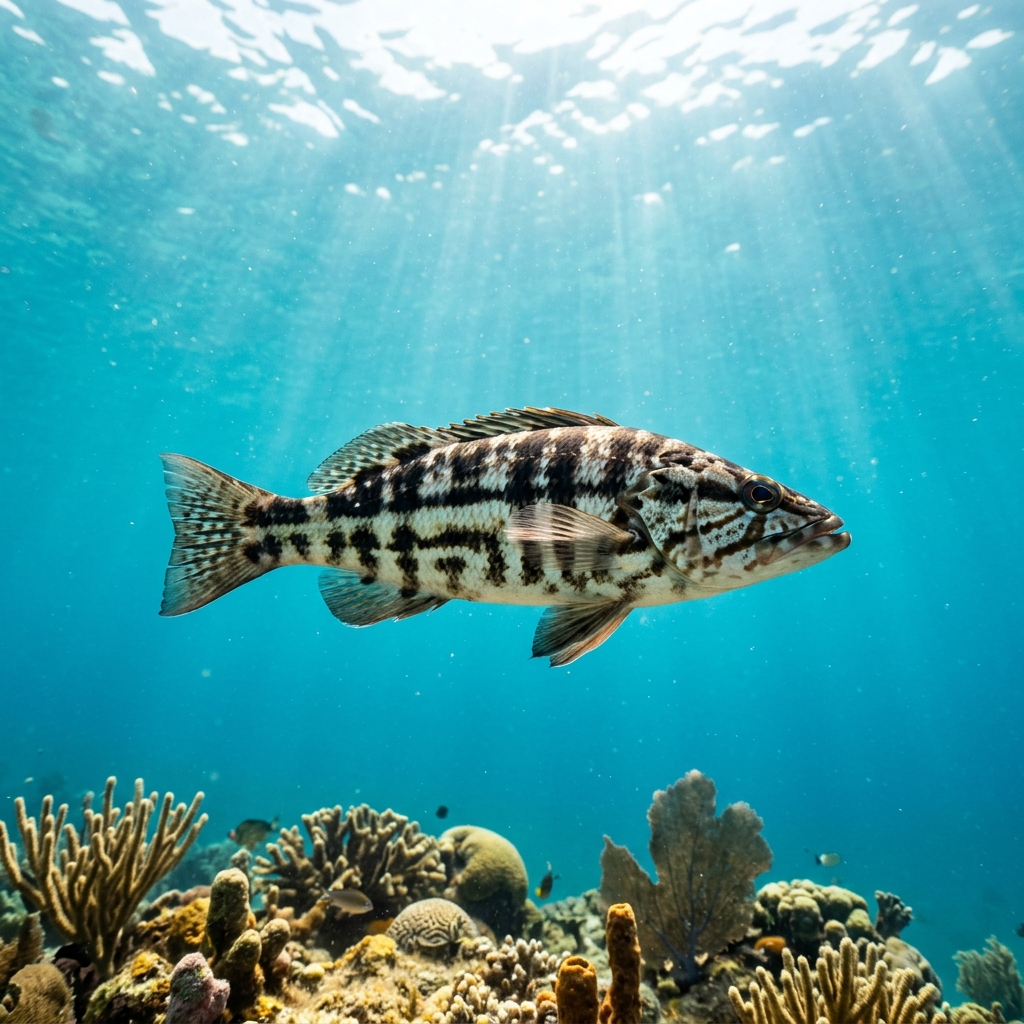
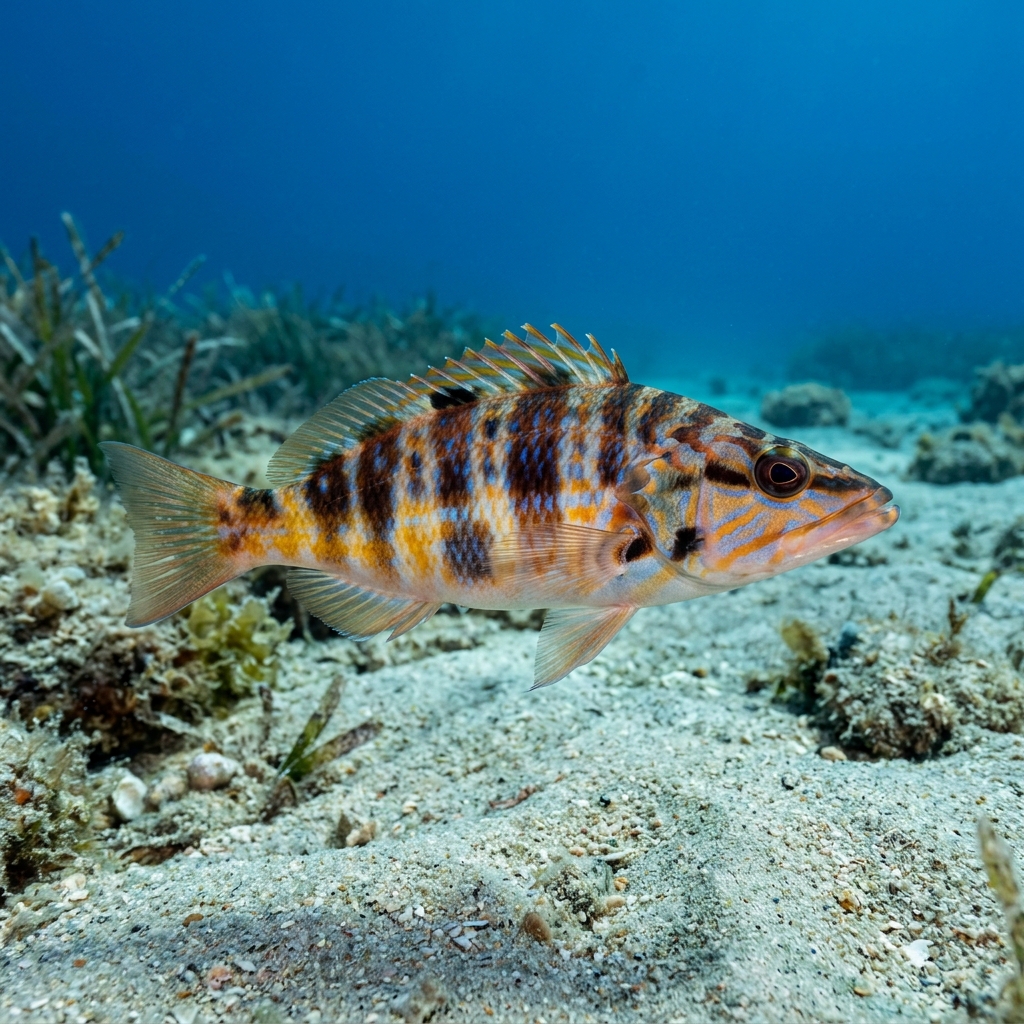
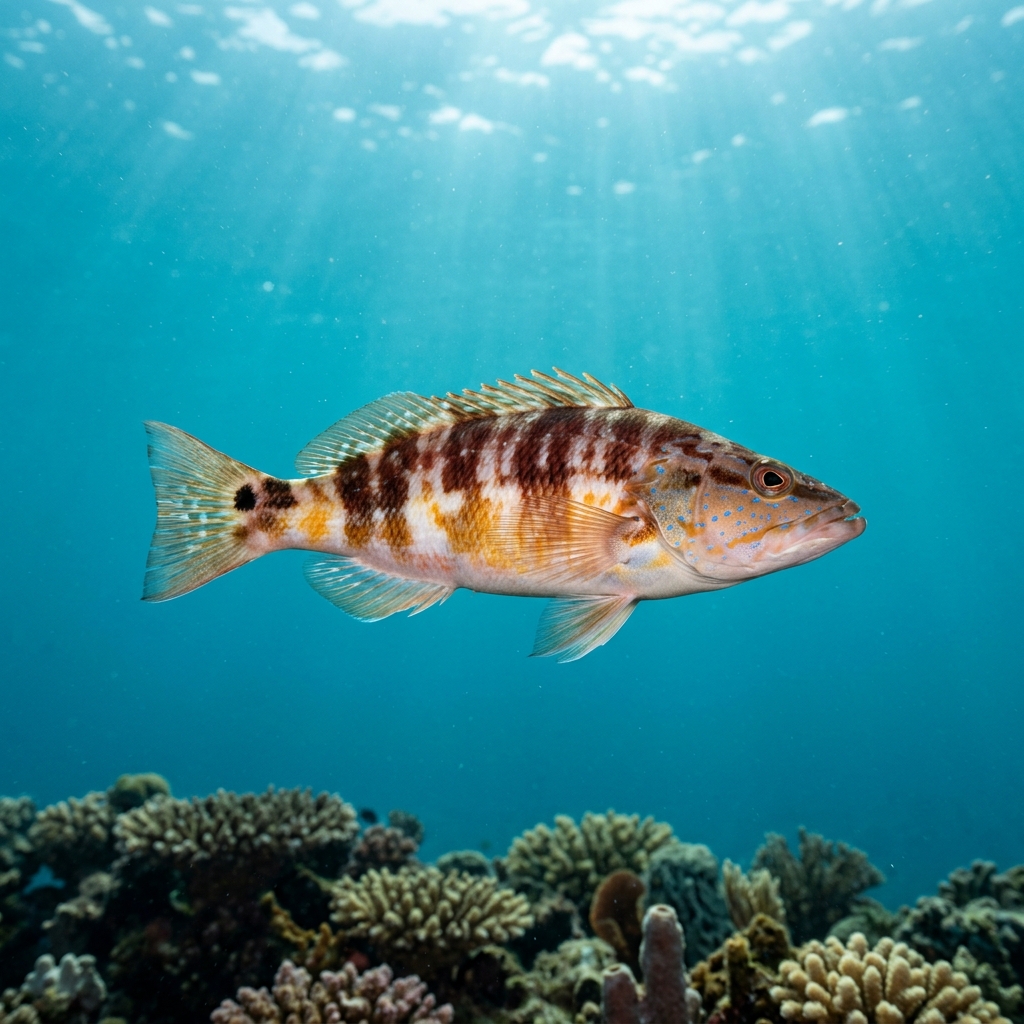
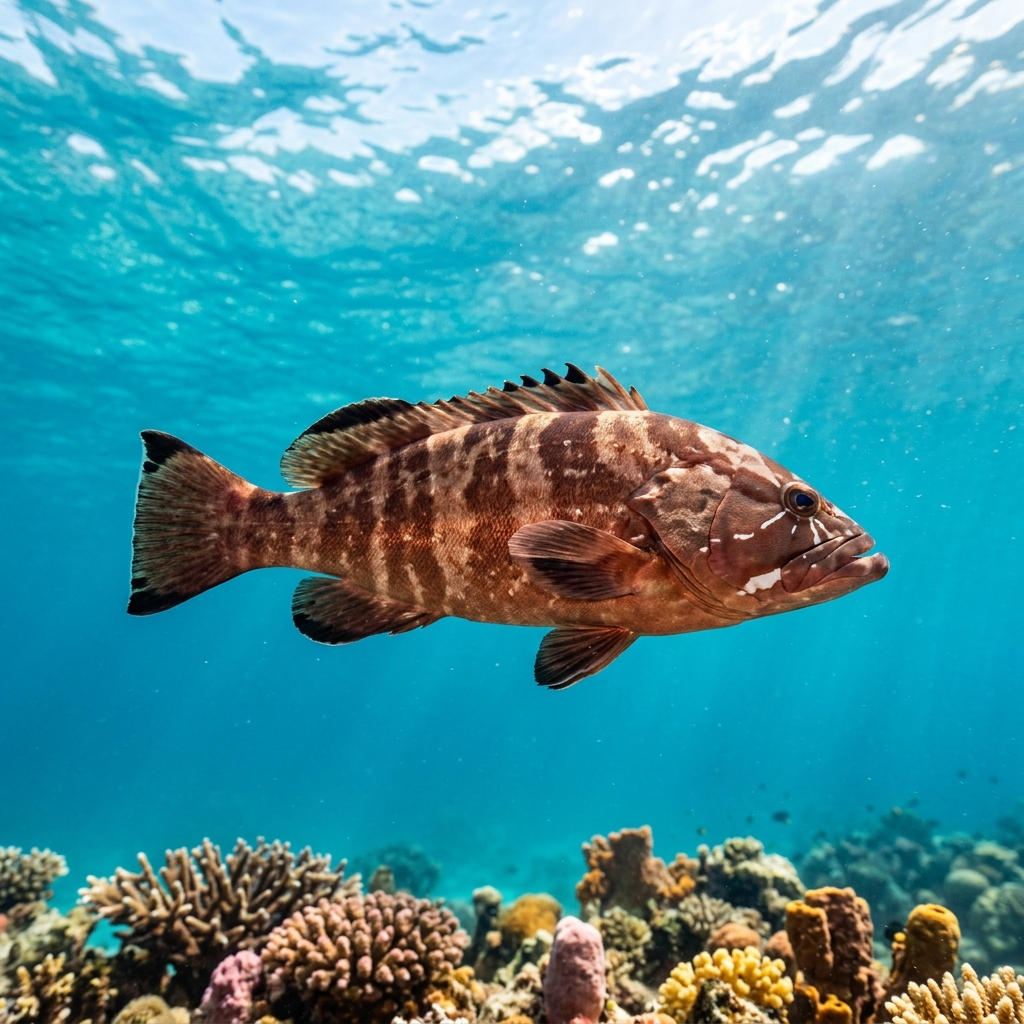
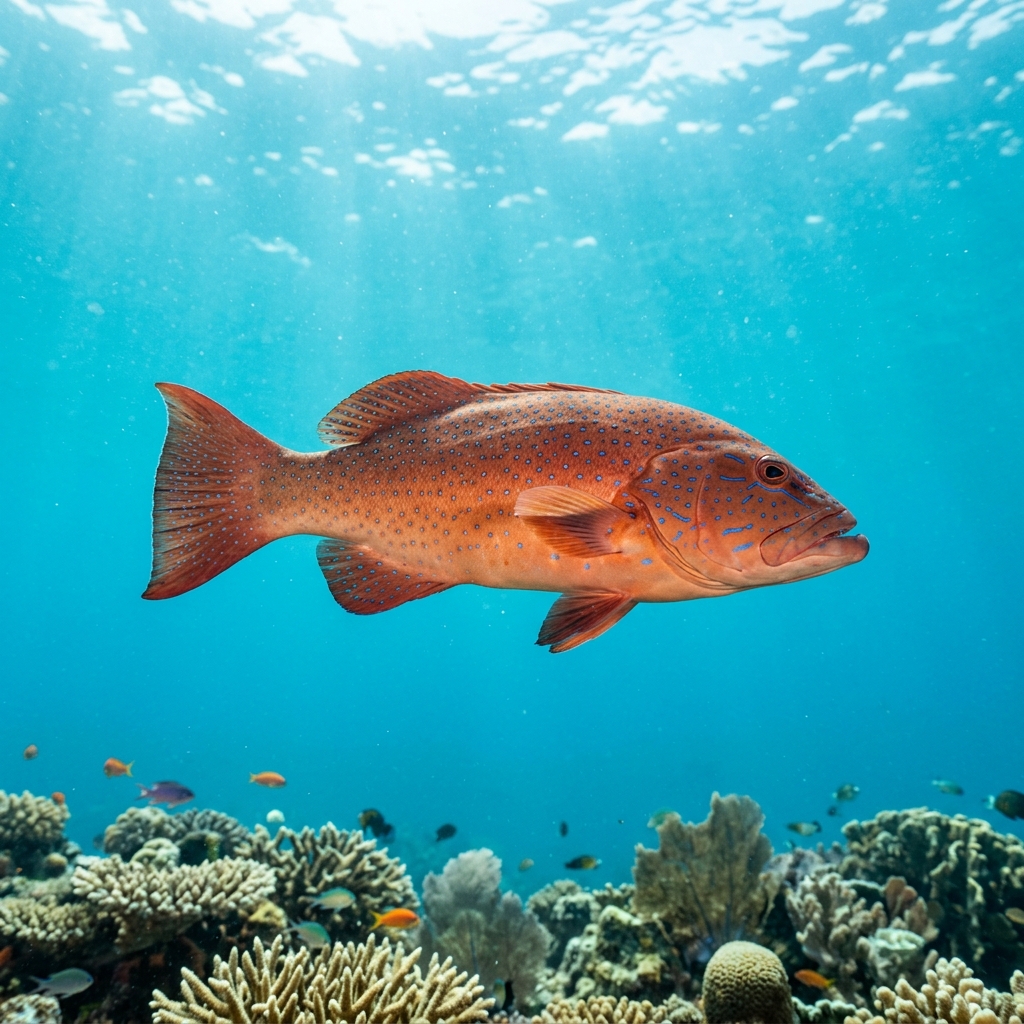
A vivid red to orange-red body blanketed in small, closely packed blue spots with dark edges is the key field mark. The head is large and pointed with a notably wide mouth lined with prominent canine teeth visible even when closed. Body shape is elongated and muscular, tapering sharply toward the tail, which helps separate it from chunkier groupers at a glance. Juveniles tend to show a paler, more washed-out colouration with the spots less vivid than in adults.
Common Coral Trout are solitary hunters, usually spotted hovering near coral structure or patrolling reef edges in a slow, deliberate cruise as they scan for smaller fish. They tend to hold their position when a diver approaches, watching with a calm, almost unconcerned air, but will slide back into the reef if pressed too closely. Look for them on coral slopes and bommie tops during the day; they are most active as hunters around dawn and dusk.
Common Coral Trout are protogynous hermaphrodites, meaning individuals begin life as females and some later transition to male. The largest, dominant individuals in a local group are typically male, so a particularly big, bold fish on the reef is likely a former female that has fully switched sex.
In the Southern Hemisphere, sightings concentrate between September and March, making the Austral spring and summer the most productive window for Queensland and New Caledonia. Across the tropical Indo-Pacific more broadly, the species is at home in water between 24 and 29 °C, so it is present year-round wherever those temperatures hold.
Most commonly logged in Australia, particularly across Queensland's Great Barrier Reef and Coral Sea sites, which account for the largest share of records by a wide margin. Strong populations are also documented across the Philippines, especially in the Visayas and around Palawan and Apo Reef, and across Indonesia, Malaysia's Pulau Tioman, and Thailand's Gulf of Thailand sites. New Caledonia, Japan, and Micronesia round out the range for divers exploring the wider Indo-Pacific.
Mapping where Common Coral Trout is logged…
Queensland, Australia leads all regions for logged sightings, with the Great Barrier Reef being the most reliable area. The Visayas and Palawan in the Philippines, Pulau Tioman in Malaysia, and sites across Indonesia and Thailand also hold good populations. The species ranges widely across the Indo-Pacific.
In the Southern Hemisphere, particularly around Queensland and New Caledonia, sightings are most concentrated from September through March. Across the broader tropical Indo-Pacific, they are present year-round in waters between 24 and 29 °C.
Look for a bright red to orange-red body covered top to bottom in small blue spots with dark rims. The large, pointed head with a wide, toothy mouth and the torpedo-shaped body are distinctive. No similar species in the same range combines that colouration with that spot pattern in quite the same way.
Common Coral Trout typically reach around 40 to 60 cm in length on the reef, though large males can approach 70 cm. Their muscular, elongated build makes them look substantial underwater even at average sizes.
No, Common Coral Trout pose no danger to divers. They are predatory fish but their prey is small reef fish, and they typically react to divers by holding position or retreating slowly into the reef rather than behaving aggressively.
Yes. They are protogynous hermaphrodites, starting life as females and with some individuals transitioning to male as they grow larger and older. This means the biggest fish on the reef are almost always male, having spent their earlier years as reproductive females.
Site and sighting data is aggregated from diver logs, iNaturalist and GBIF. For taxonomy and conservation status:
Blacktip Grouper
2,726 sites