Naso unicornis
Spot Bluespine Unicornfish year-round in Egypt, the Maldives and the Philippines. Learn the horn, tail spines and blue markings that set it apart underwater.
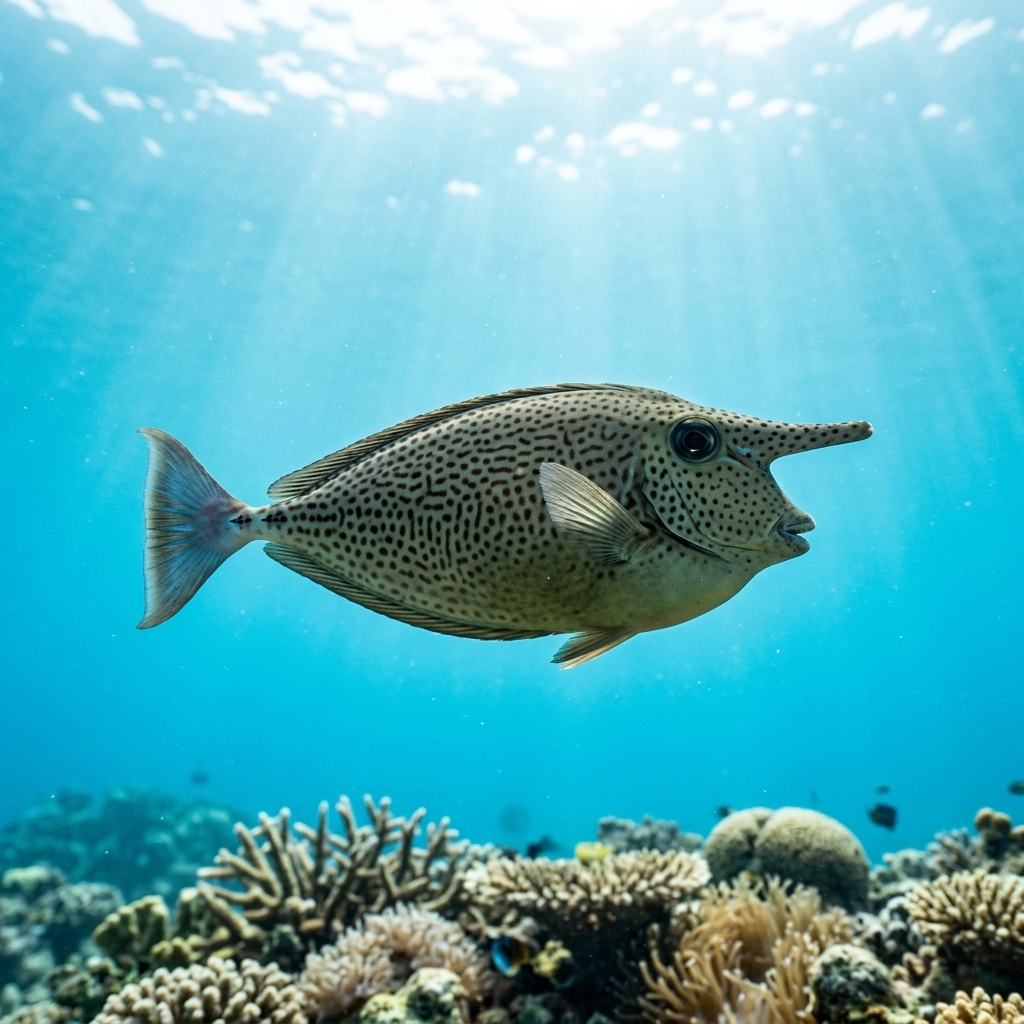
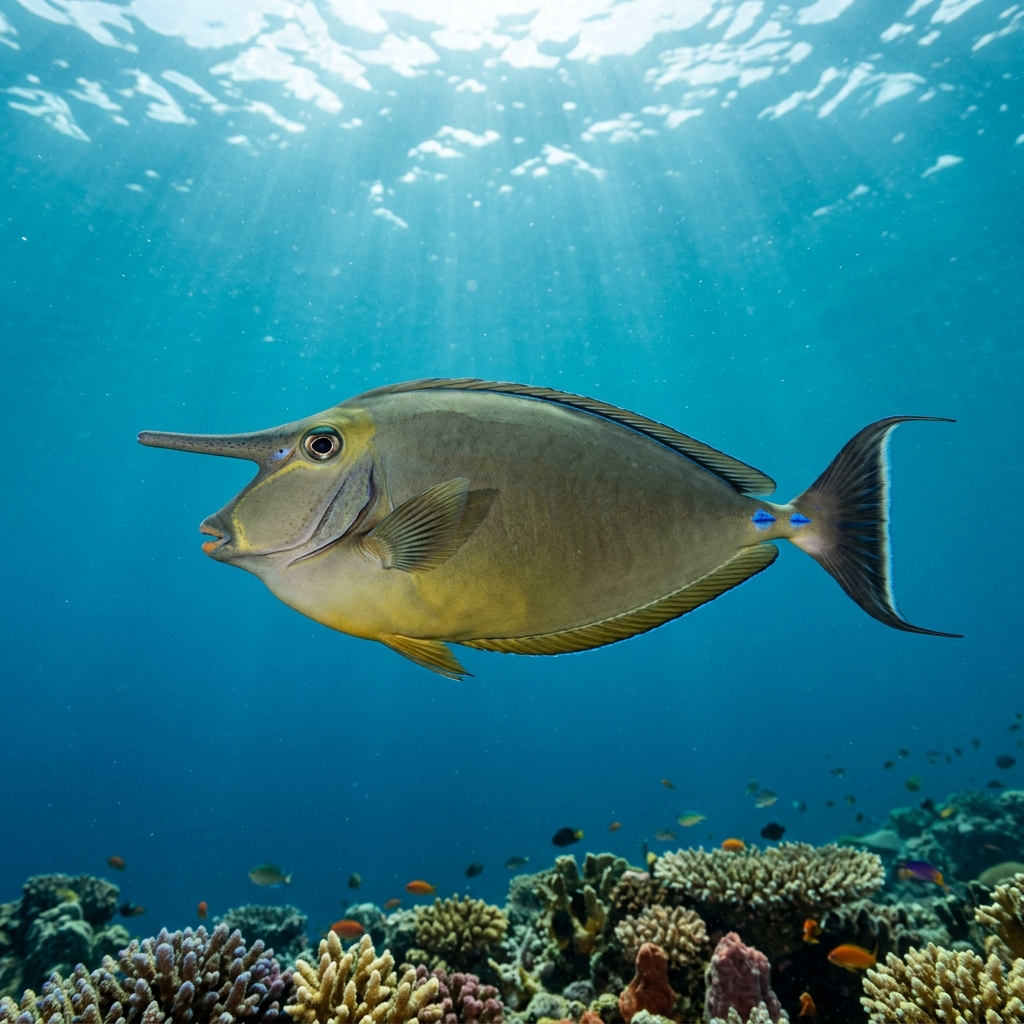
A large, stocky surgeonfish with a long bony horn projecting forward from the forehead, which is the single easiest field mark underwater. The body is grey-olive to brownish, and the two fixed spines at the base of the tail (caudal peduncle) are vivid electric blue, standing out sharply against the tail. The lips and area around the horn often show blue-green highlights. Adults can grow impressively long and are noticeably deeper-bodied than other reef fish of similar length.
You will most often see bluespine unicornfish grazing on brown algae across open reef flats and slopes, sometimes alone and sometimes in loose aggregations of a handful of individuals. They are generally unhurried around divers, continuing to feed and moving steadily along the reef rather than bolting, which gives you time to watch at close range. Look for them at mid-water reef edges and rubble zones as well as coral-rich walls.
The forward-projecting horn is not present at birth; it grows gradually through adolescence and continues elongating throughout adult life, so a very long horn is a reliable indicator of a mature, older fish.
Sightings are spread across all months in both hemispheres, with no concentrated season recorded. The species is comfortable in water between roughly 23 and 29 °C, which describes tropical reef conditions year-round across its range.
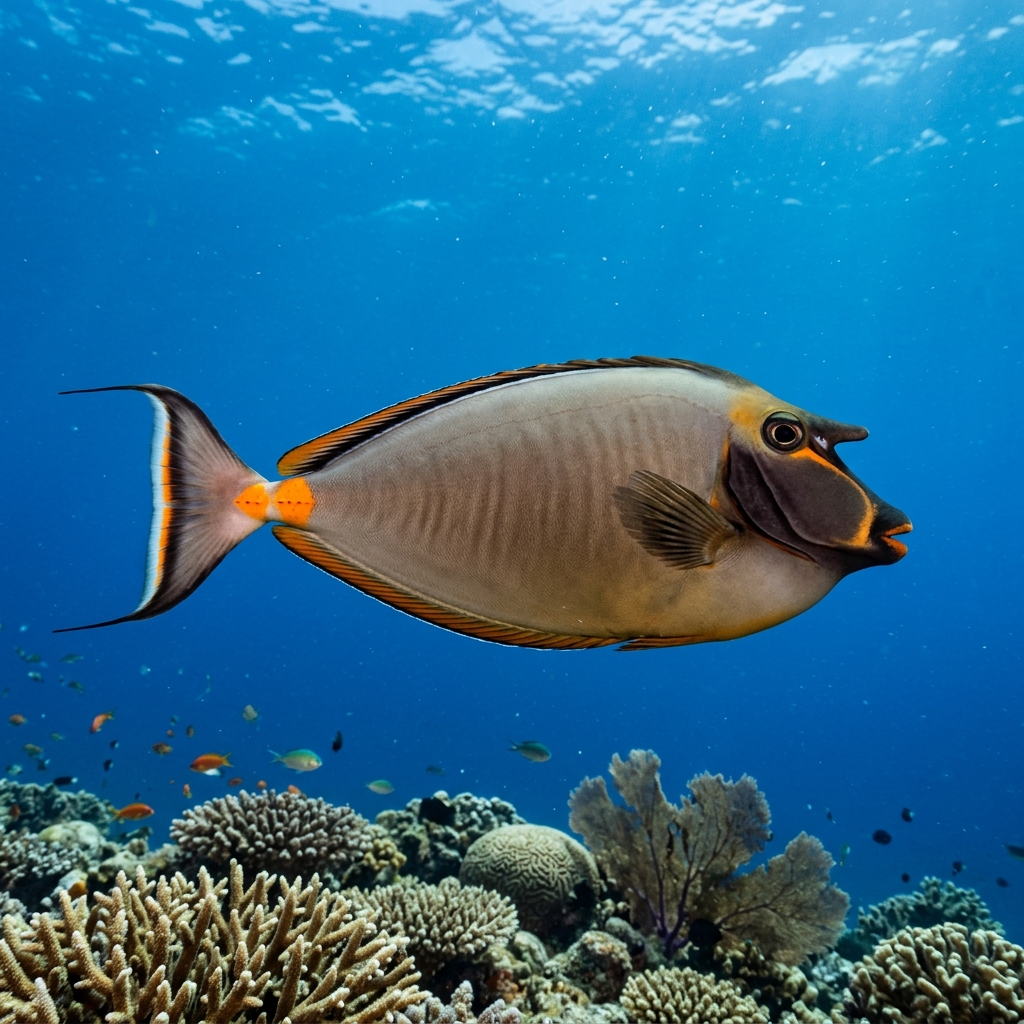
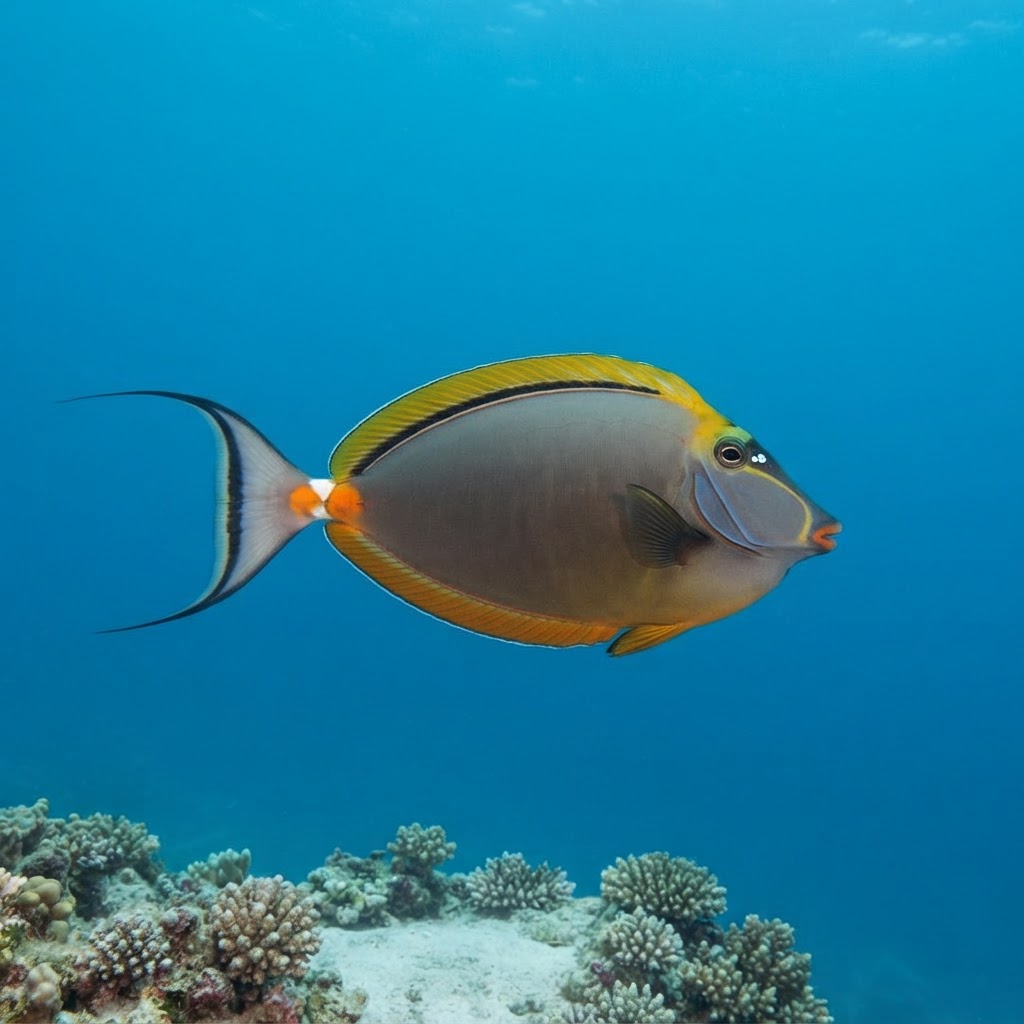
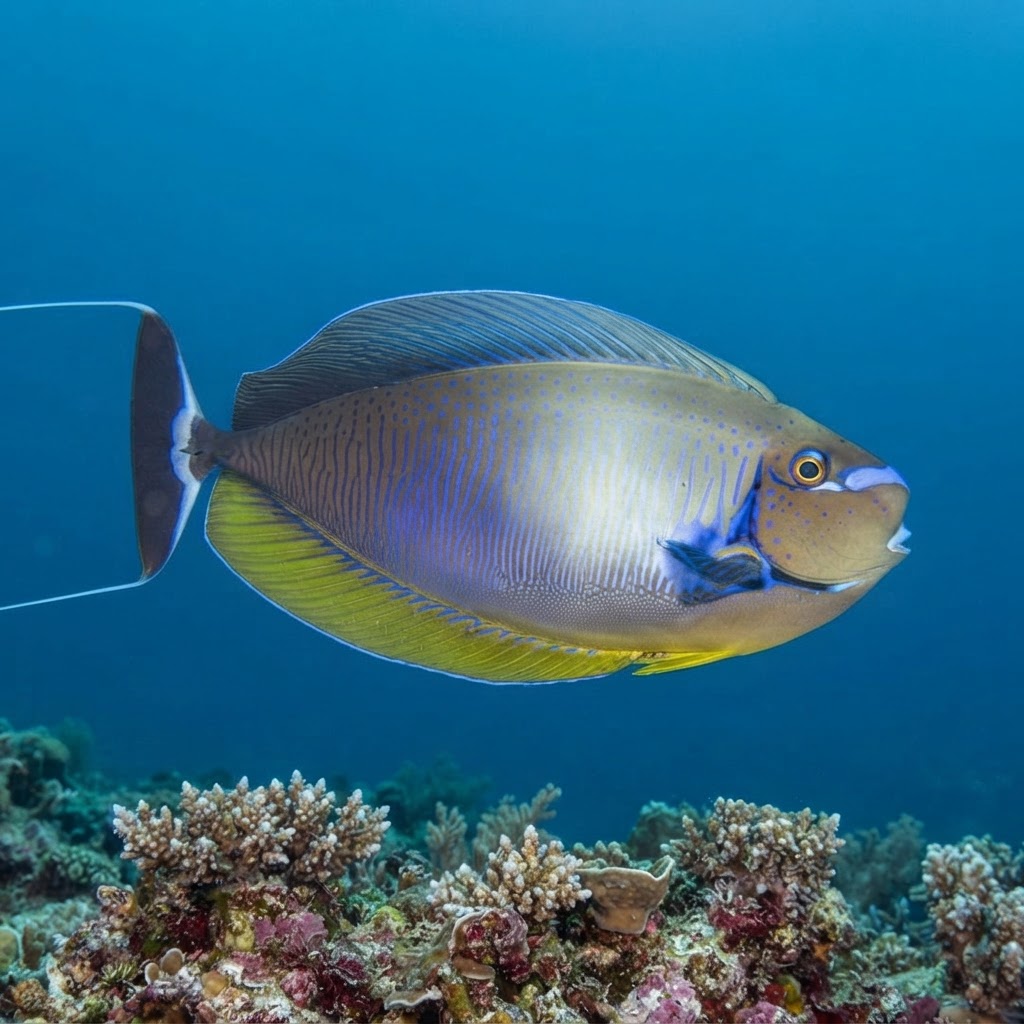
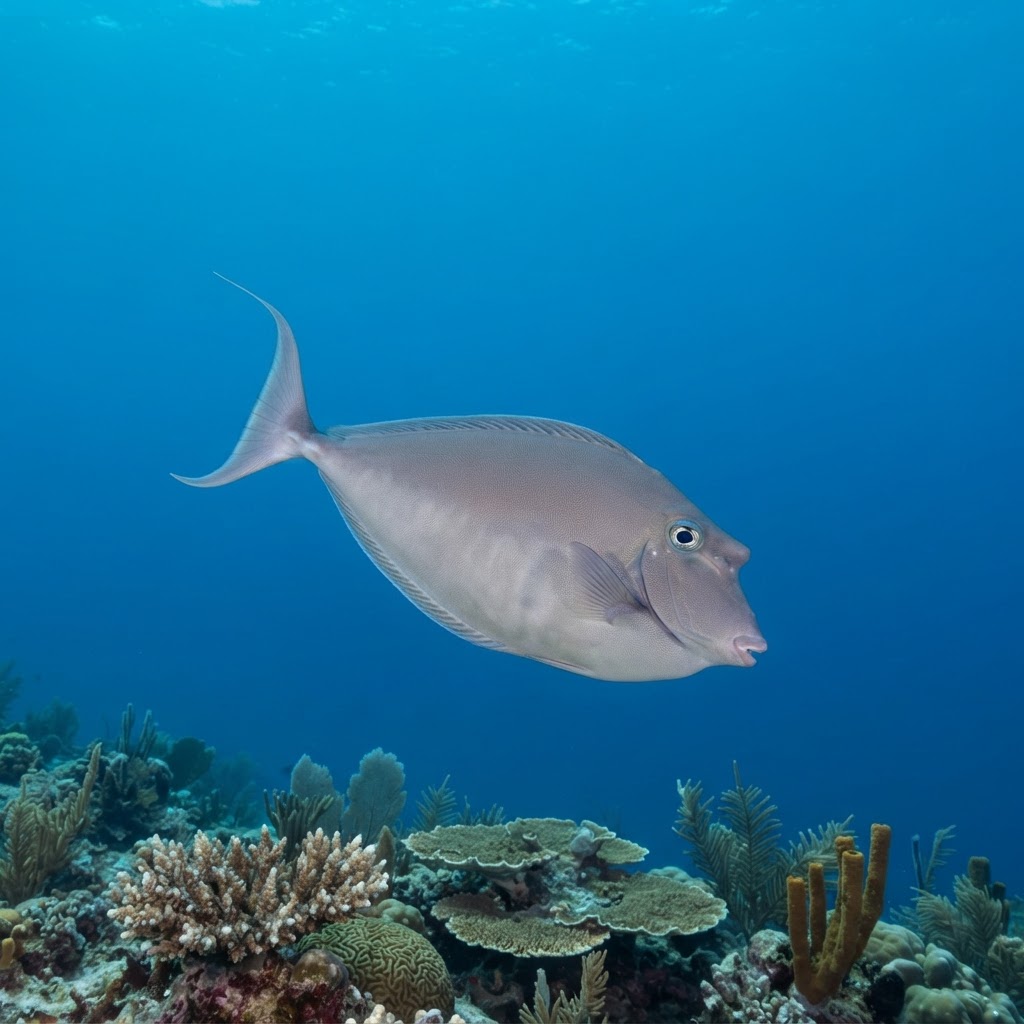
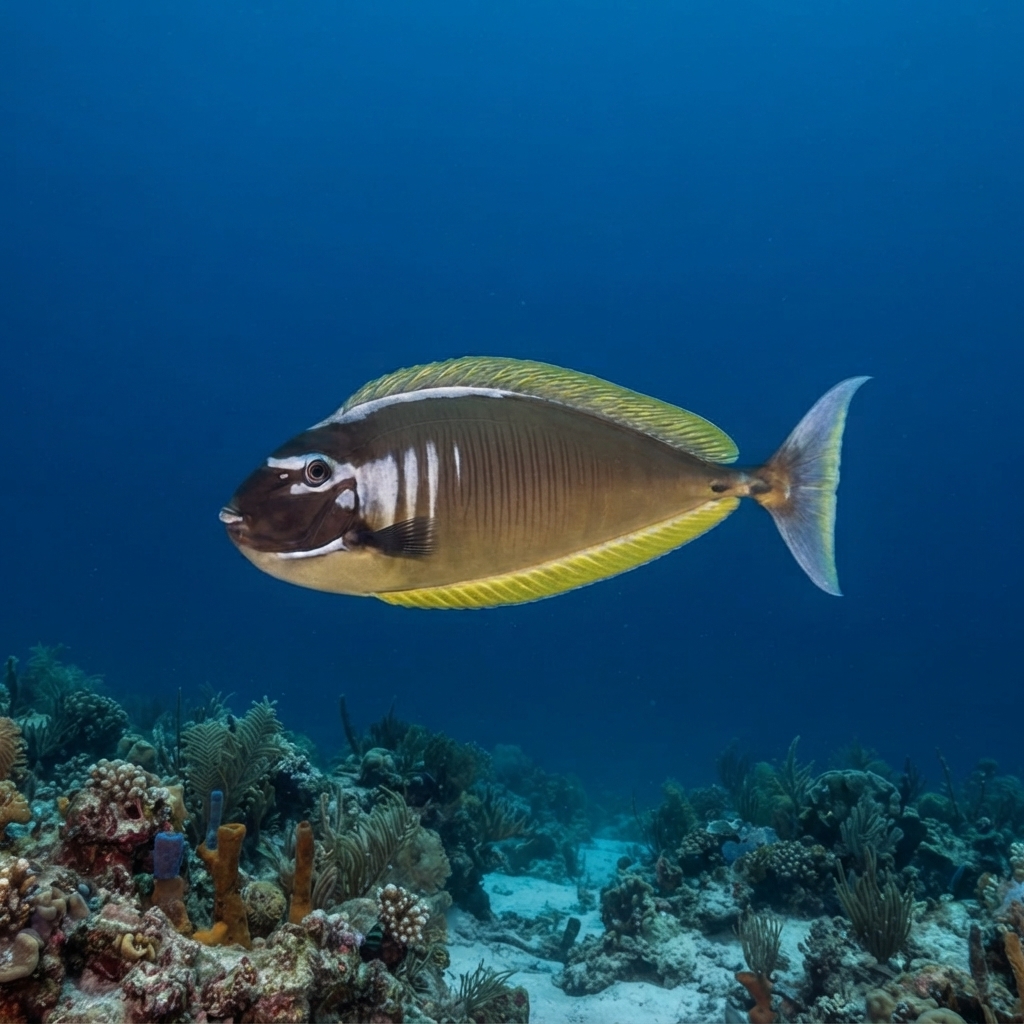
Reef neighbours a diver could mistake it for. Use the identification notes above to tell them apart.
Most commonly logged across the Red Sea, with Sharm el Sheikh and Marsa Alam in Egypt accounting for a large share of sightings, alongside strong records throughout the Maldives and the Philippines. Australia's Queensland reefs and Hawaii also show reliable populations, and the species turns up across a wide sweep of Indo-Pacific sites from Okinawa to Palawan and the Visayas.
Mapping where Bluespine Unicornfish is logged…
The species is most reliably logged in Egypt's Red Sea (especially Sharm el Sheikh and Marsa Alam), the Maldives, and the Philippines (Palawan, Apo Reef and the Visayas). Strong populations also appear in Queensland, Hawaii, Okinawa and across Indonesia and Thailand, making it one of the more widely distributed unicornfish in the Indo-Pacific.
Sightings are recorded in every month of the year in both the Northern and Southern Hemisphere, with no peak season. The species suits water temperatures of roughly 23 to 29 °C, which tropical reef sites sustain year-round, so any time you can dive its range you have a reasonable chance of an encounter.
Look for the long, rigid horn projecting forward from the forehead, the grey-olive body, and most importantly the pair of bright blue fixed spines on either side of the tail base. Those electric-blue caudal spines (fixed, not retractable, unlike a surgeonfish's scalpel) are the fastest field mark at a glance.
Adults are among the larger members of the surgeonfish family, commonly reaching around 60 to 70 cm in length. Their deep, robust body makes them appear especially bulky on the reef compared with slimmer surgeonfish species.
The horn's function is not fully understood, but it is thought to play a role in species recognition rather than defence or feeding. Crucially, it is absent in juveniles and grows progressively longer with age, so horn length is a practical way to gauge how old an individual is.
Site and sighting data is aggregated from diver logs, iNaturalist and GBIF. For taxonomy and conservation status:
Bignose Unicornfish
727 sites