Canthigaster valentini
Spot Valentini Pufferfish across the Philippines, Maldives and Indonesia in warm 24-29°C waters. Learn the bold saddle markings that set it apart underwater.
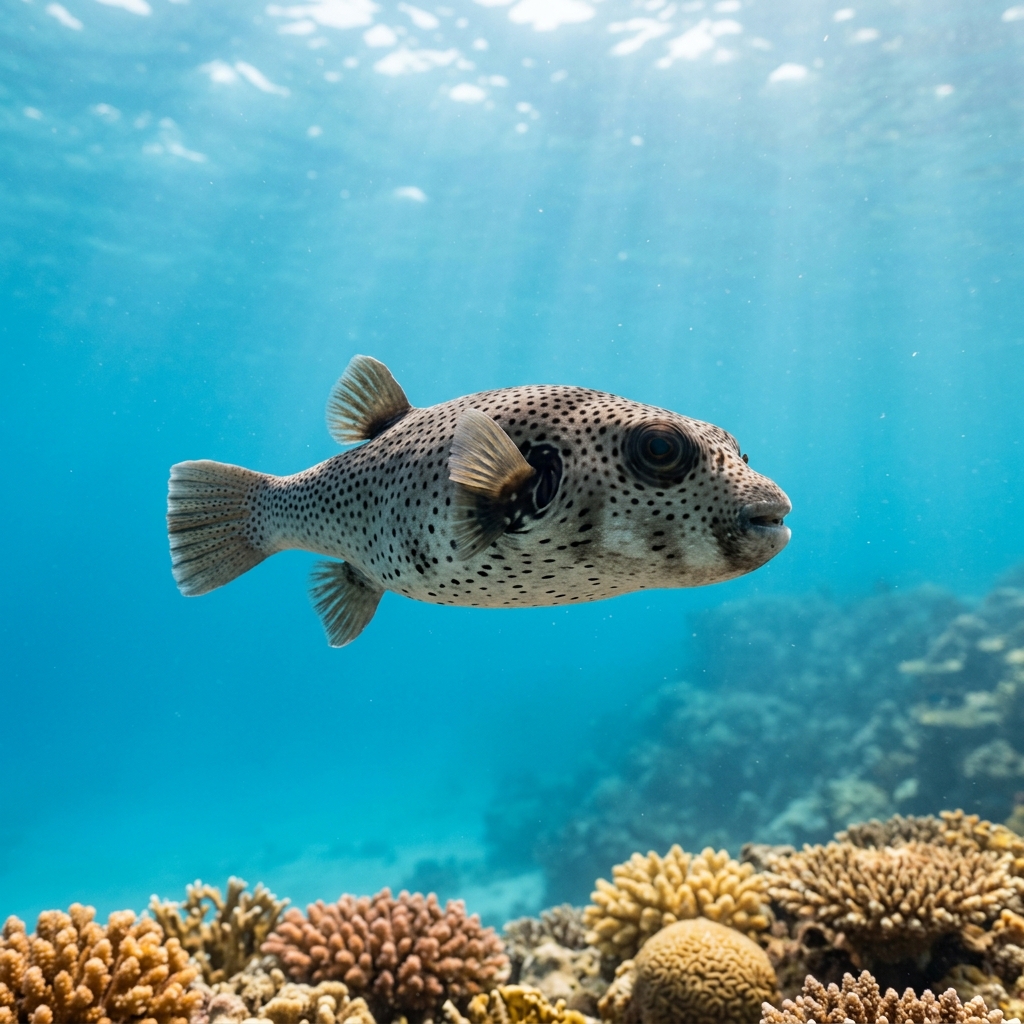
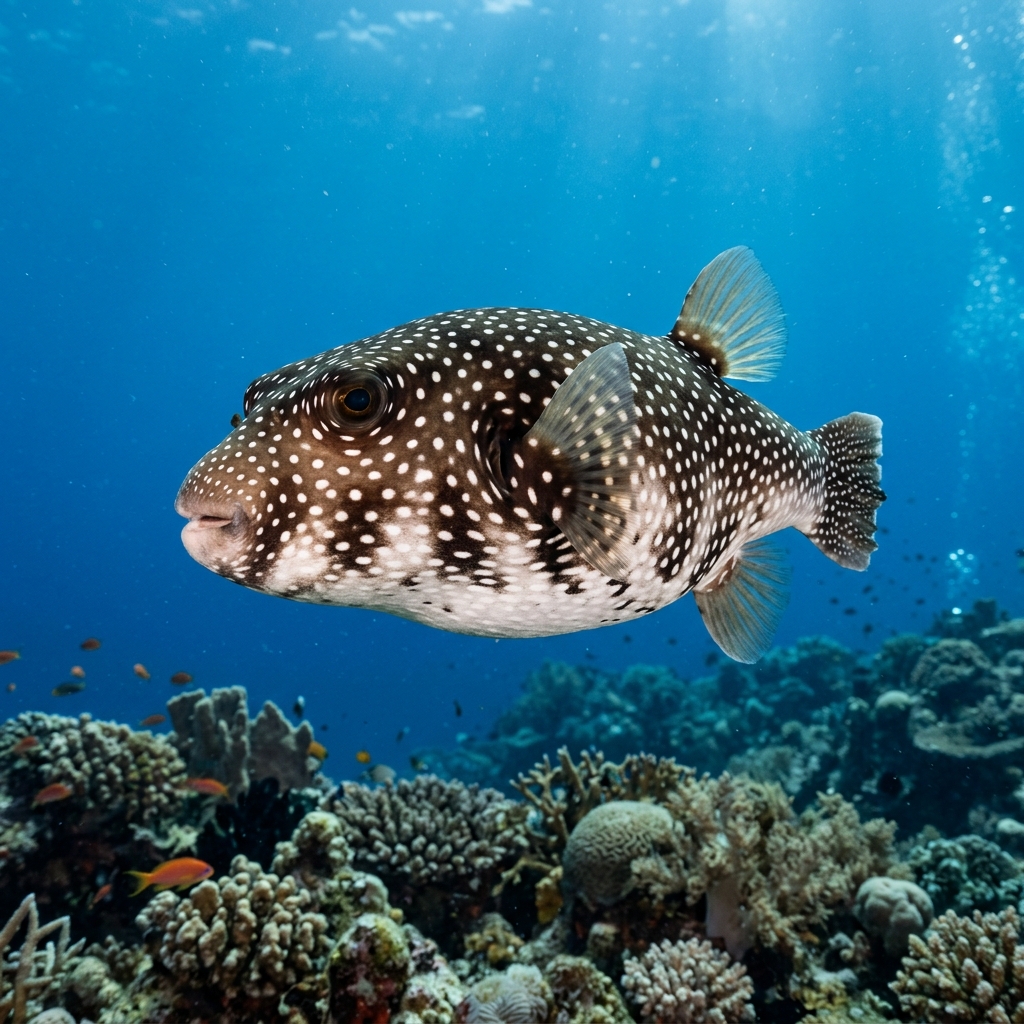
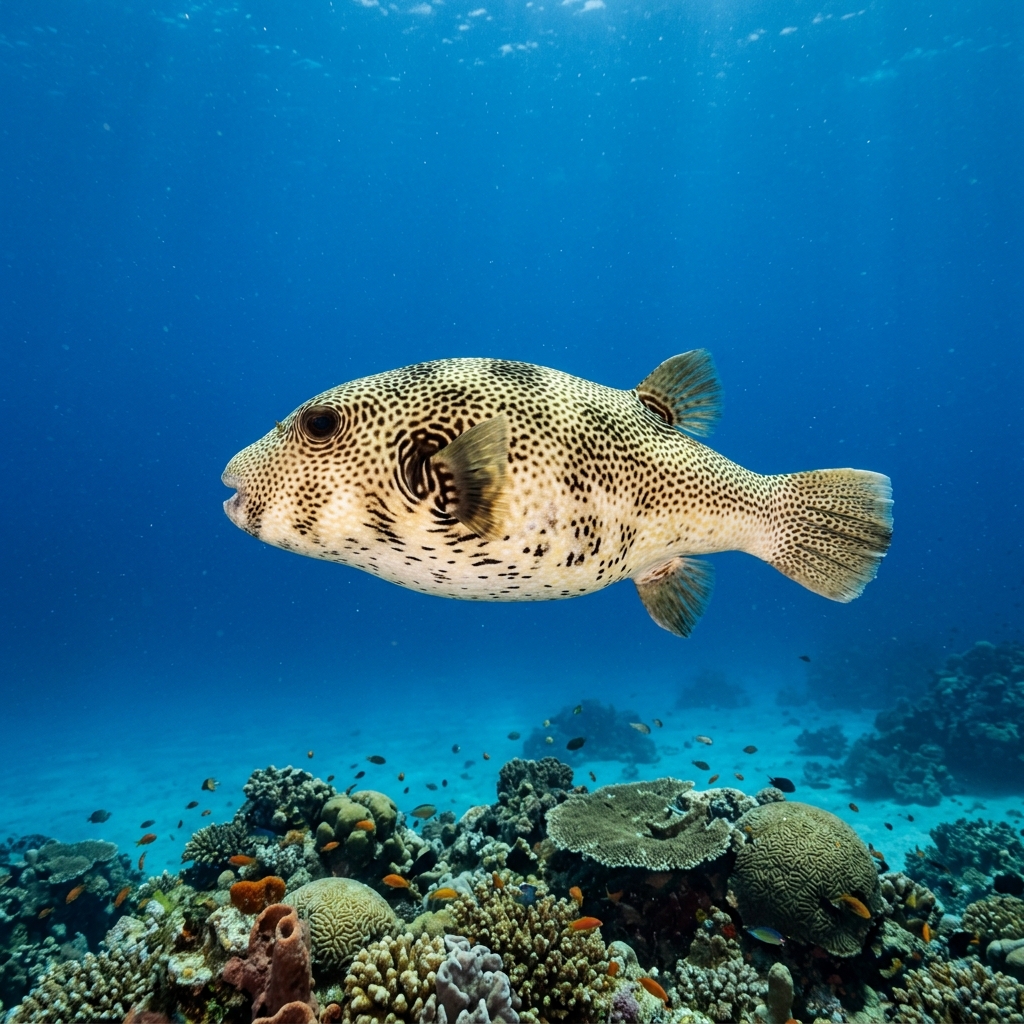
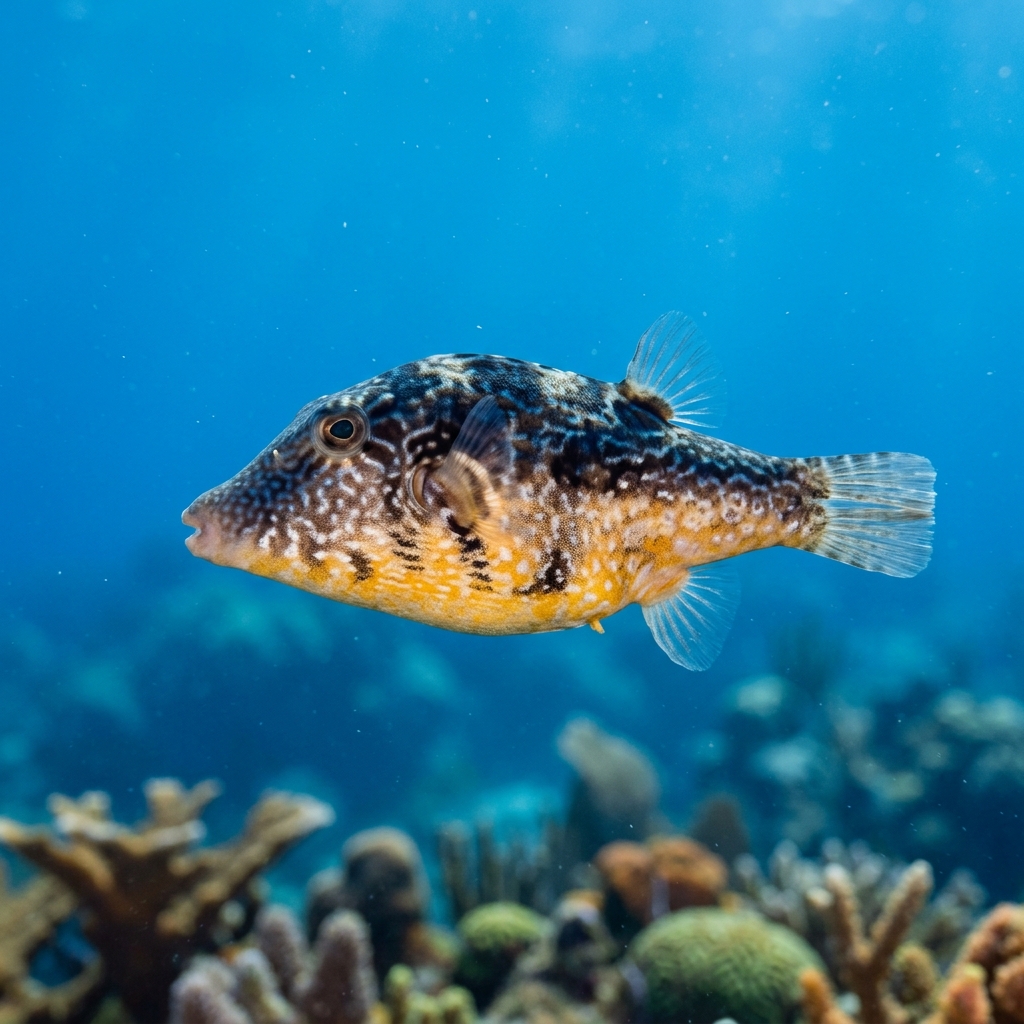
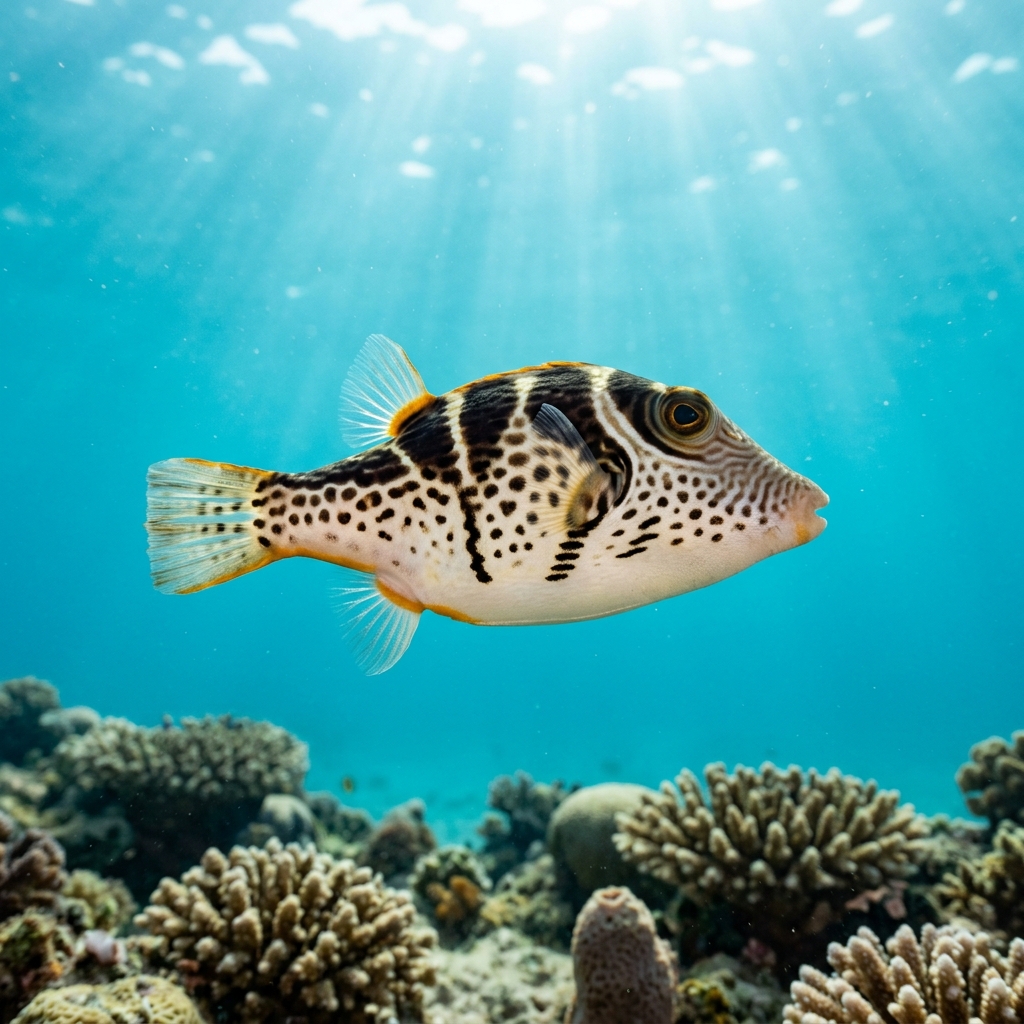
Four dark brown saddle patches draped over a pale body, liberally scattered with small black spots on the flanks, make this one of the more distinctively patterned small pufferfish on the reef. The belly is white and the face carries a striking pattern of blue-grey lines radiating from the eyes. It sits roughly palm-sized in the water, compact and blunt-nosed with the characteristic boxy pufferfish silhouette. Males develop a dark crest along the back that females lack, which can help separate the sexes when you get a close look.
You will typically find it pottering slowly over coral rubble and mixed reef, picking at invertebrates and algae rather than actively swimming open water. It is generally unconcerned by divers at distance but will drift unhurriedly away if approached too closely, rarely resorting to inflating. Males are territorial and can often be spotted chasing rivals across the reef, which makes them easier to track as they cover more ground than the resting females.
Valentini Pufferfish are mimicked by the filefish Paraluteres prionurus, which copies their colouration and saddle pattern almost perfectly to deter predators, despite being completely harmless itself. It is one of the better-documented mimicry relationships on Indo-Pacific reefs.
In the Northern Hemisphere, sightings concentrate from May through to March, making only April a quieter month. Southern Hemisphere divers see them most reliably from July through April, with the warmest months of the year (sitting within a comfortable 24-29°C range) being the most productive.
Reef neighbours a diver could mistake it for. Use the identification notes above to tell them apart.
Most logged in the Philippines, Maldives, and Indonesia, which together account for the overwhelming majority of recorded sightings worldwide. Within those countries, the Visayas in the Philippines, the Male and Ari Atolls of the Maldives, and Bali with the surrounding islands of Indonesia are the standout regions. Australia's Queensland coast, Malaysia, Japan, and the Seychelles also show strong populations worth targeting.
Mapping where Valentini Pufferfish is logged…
They are most reliably encountered across the Philippines, Maldives, and Indonesia. Top spots include the Visayas, the Male and Ari Atolls, and Bali. Queensland in Australia, the Seychelles, Malaysia, and Japan also offer solid sighting opportunities across a wide spread of sites.
Northern Hemisphere divers get the longest window, with sightings concentrated from May through March. In the Southern Hemisphere the peak runs from July to April. Because they favour warm tropical reefs in the 24-29°C range, they are present for most of the year at established sites.
Look for four dark brown saddle patches over a pale, black-spotted body and blue-grey lines radiating from the eyes on the face. The body is compact and blunt, roughly palm-sized. Males also carry a dark crest along the back. No other common reef pufferfish combines all three of these features.
No, they pose no direct threat to divers. Like all pufferfish they contain tetrodotoxin in their organs, but this is only relevant if ingested. In the water they are shy rather than aggressive and will move away rather than confront a diver.
The filefish Paraluteres prionurus mimics the Valentini Pufferfish's distinctive saddle-and-spot colouration almost exactly. Predators that have learned to avoid the toxic pufferfish give the harmless filefish a wide berth too, making it a textbook example of Batesian mimicry on Indo-Pacific reefs.
Site and sighting data is aggregated from diver logs, iNaturalist and GBIF. For taxonomy and conservation status:
Caribbean Sharpnose Puffer
2,190 sites