Laticauda spp.
Sea kraits hunt reef crevices in the Visayas, Phuket and Bali in water around 25-28°C. Find out when and where to spot them.
Safety warning
This animal carries a powerful venom delivered by a bite or a harpoon-like sting, and it can be fatal. Never handle it or pick up its shell, even one that looks empty.
If you're bitten
Venomous biteGeneral first-aid guidance, not a substitute for professional medical care. In an emergency, call your local emergency number.
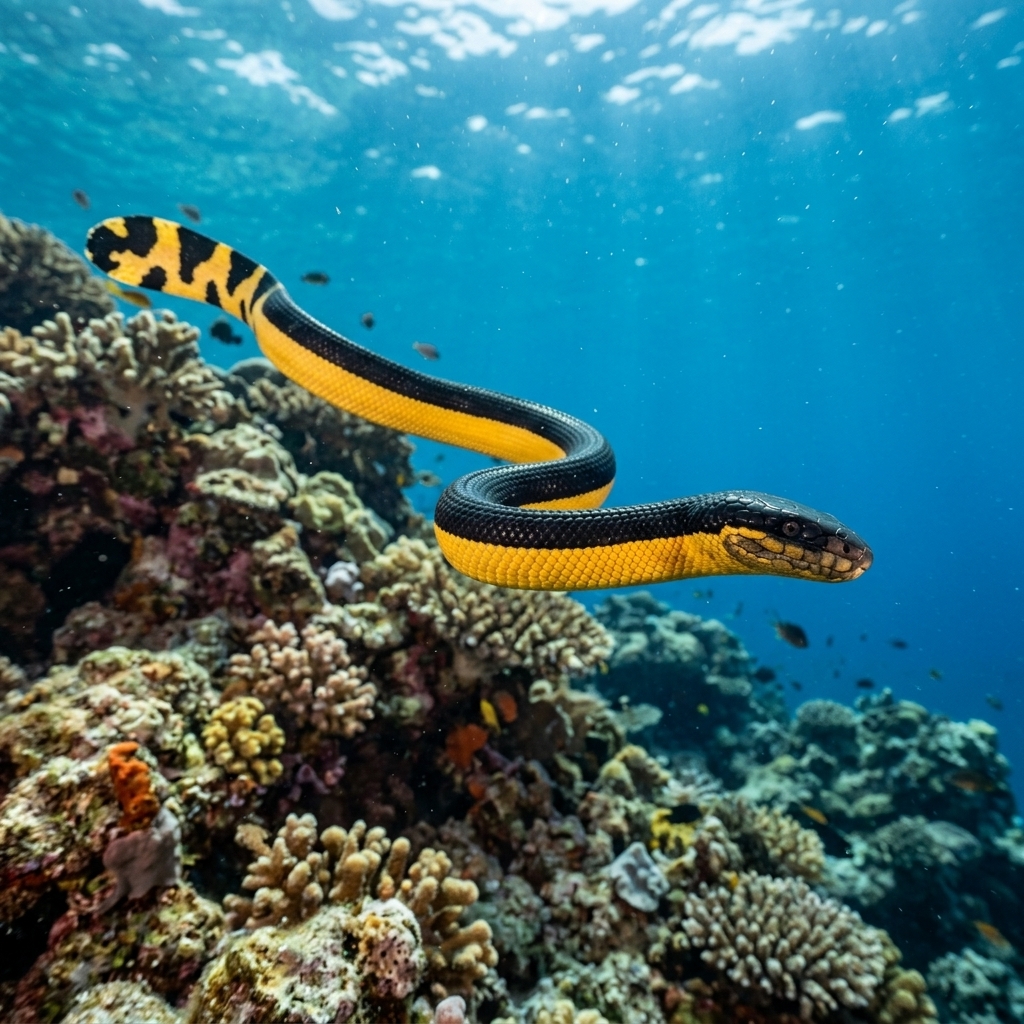
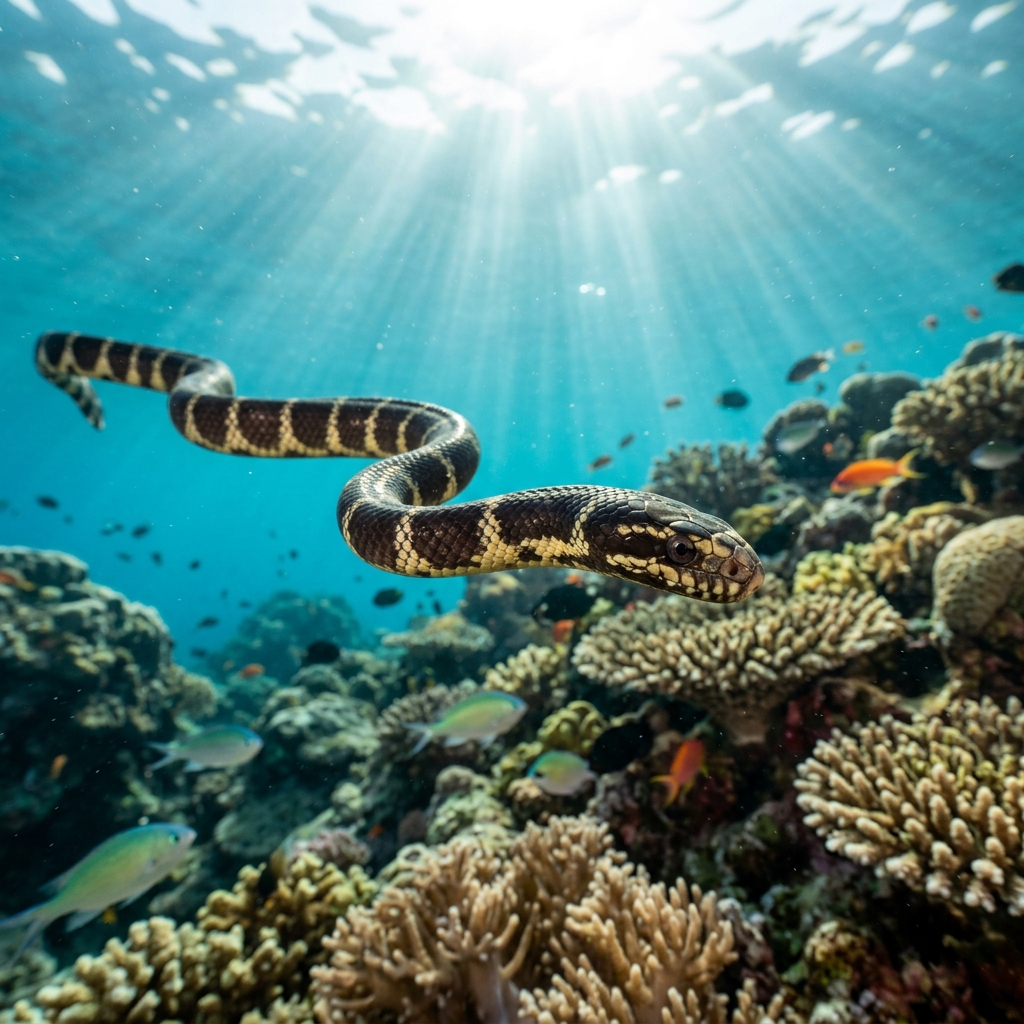
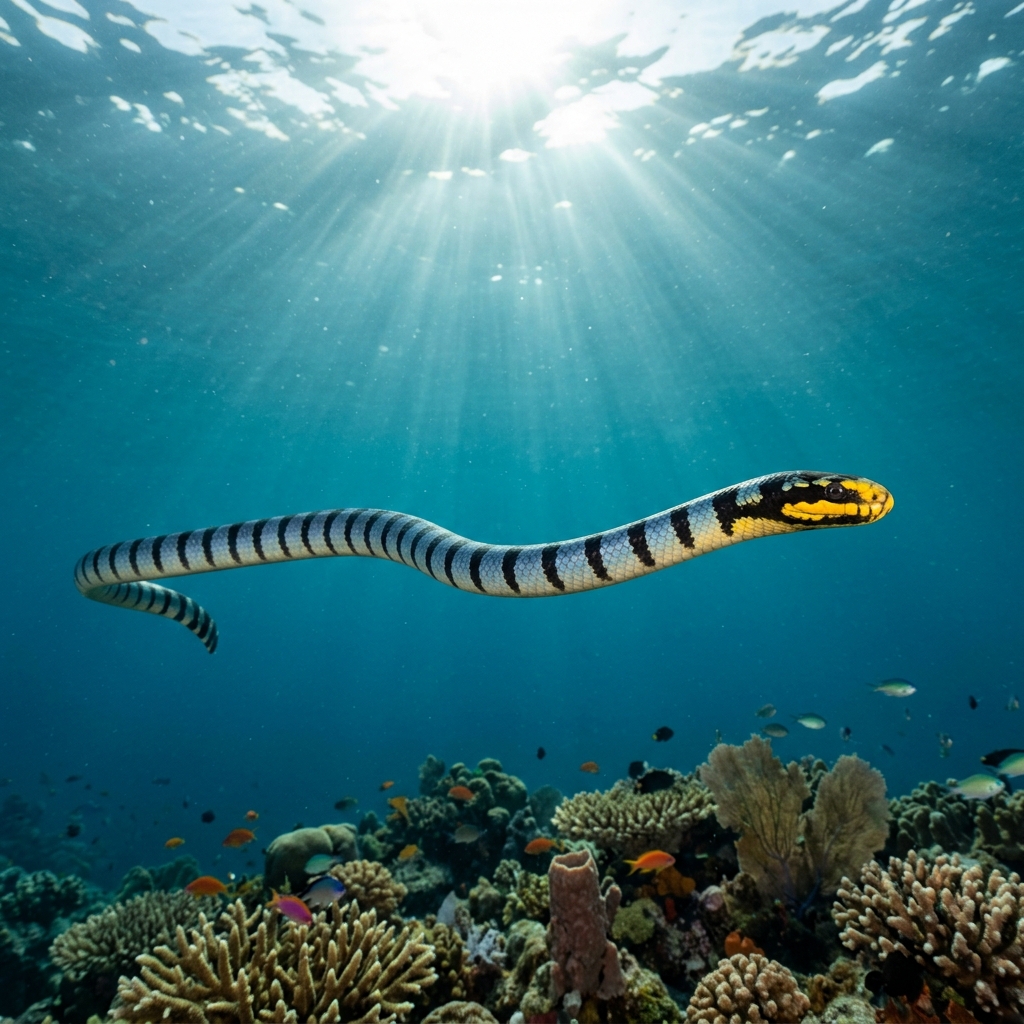
Bold alternating bands of black and pale blue-grey run the full length of the body, making sea kraits look strikingly ringed even in murky shallows. The head is notably small and slightly flattened, with a yellow or yellowish upper lip that is the quickest field mark at close range. The tail is paddle-shaped (laterally compressed), distinguishing the group from land snakes that may have fallen into the water. Females grow noticeably larger and heavier-bodied than males, though the banding and yellow-lip colouring are identical in both sexes.
Most encounters happen in the shallows, typically above 10 metres, where kraits methodically probe crevices, overhangs, and coral rubble for small eels and fish. They are focused hunters and largely indifferent to divers, but if approached too closely they will turn away and slip into the reef rather than stand their ground. Dawn and dusk are the most productive times to watch them actively working the reef, though they can surface repeatedly throughout the day to breathe.
Unlike fully aquatic sea snakes, sea kraits are amphibious: they regularly haul out onto rocky shores and beaches to digest food, shed skin, and lay eggs, meaning you may spot one on the rocks just as often as underwater.
In Northern Hemisphere destinations such as the Philippines, Thailand, and Japan, sightings concentrate between November and March. In Southern Hemisphere locations including New Caledonia and Fiji, the peak runs from July through January.
Reef neighbours a diver could mistake it for. Use the identification notes above to tell them apart.
The Philippines dominates the sighting record, particularly the Central Visayas, East and North Visayas, and Luzon regions, making it the single best destination for reliable encounters. Strong populations are also logged across Phuket and the Phi Phi islands in Thailand, Bali and Lombok in Indonesia, and Pulau Tioman in Malaysia. Japan's Izu Peninsula and Hachijojima add a more temperate northern outpost, while New Caledonia and Fiji round out the Pacific range.
Mapping where Sea Krait is logged…
The Central and Eastern Visayas in the Philippines are the most commonly logged areas worldwide. Phuket and Phi Phi in Thailand, Bali and Lombok in Indonesia, Pulau Tioman in Malaysia, and the Izu Peninsula in Japan are all reliable alternatives across the Indo-Pacific range.
In Northern Hemisphere destinations like the Philippines and Thailand, peak sightings run from November to March. If you are diving in the Southern Hemisphere, such as New Caledonia or Fiji, aim for July through January. The species favours water temperatures around 25 to 28°C.
Sea kraits are venomous but consistently non-aggressive toward divers. They are focused on hunting rather than confrontation and will typically retreat if approached. Keep a respectful distance, avoid sudden movements, and never corner or handle one, and encounters are entirely safe.
Look for bold black and pale blue-grey banding along the whole body, a distinctly small head with a yellow upper lip, and a flattened paddle tail. The yellow snout is the quickest single field mark. The pelagic sea snake and olive-brown sea snake lack the vivid yellow lip and tend to be found in open water rather than working reef crevices.
Most individuals reach around 105 cm in total length. Females are noticeably heavier-bodied and longer than males, though both stay within a similar size range across the genus.
Yes, and this sets them apart from most other sea snakes. Sea kraits are amphibious, regularly coming ashore on rocky coastlines and beaches to rest, digest meals, shed skin, and lay eggs. You can sometimes spot them basking near the waterline, which is unusual behaviour among marine reptiles.
Site and sighting data is aggregated from diver logs, iNaturalist and GBIF. For taxonomy and conservation status:
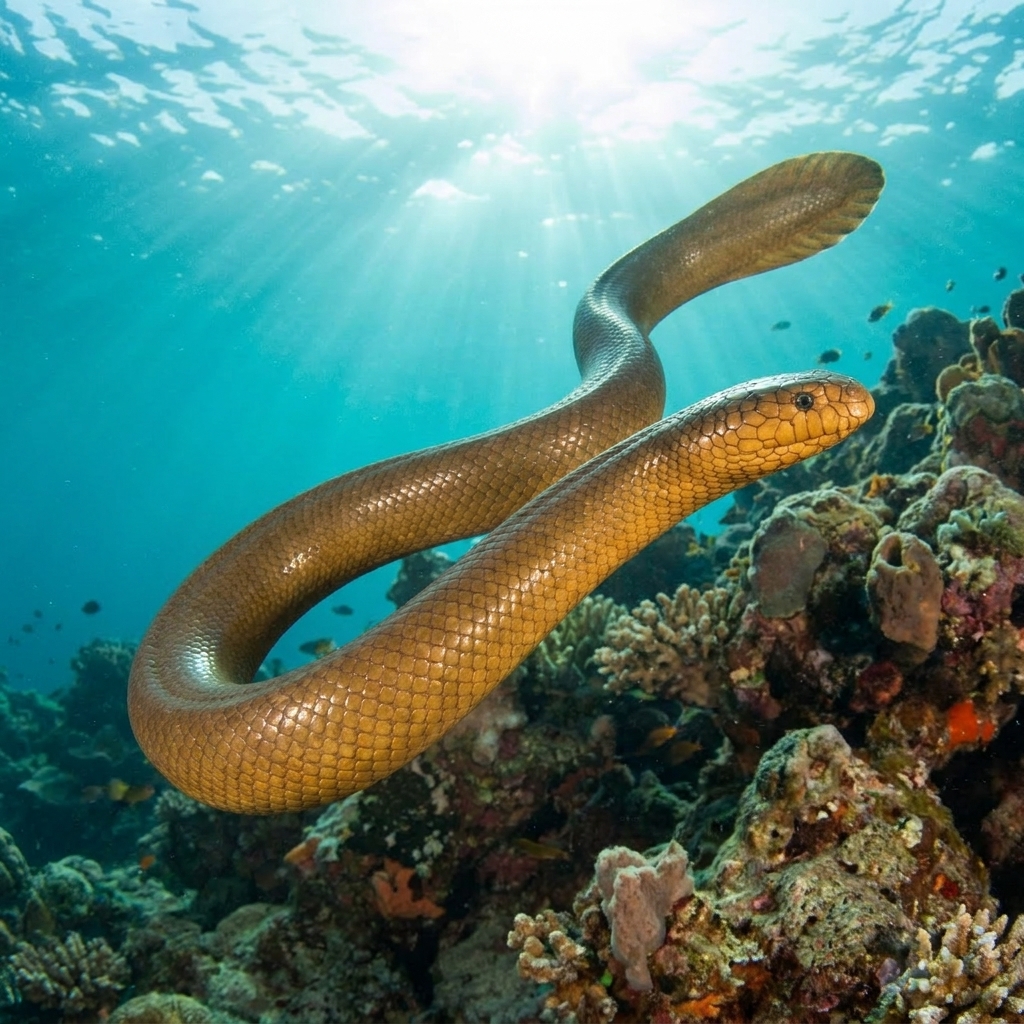
Olive-brown Seasnake
40 sites