Dugong dugon
Spot dugongs grazing on seagrass beds across Queensland and Western Australia. Year-round sightings in warm Indo-Pacific waters from 21-29 °C.
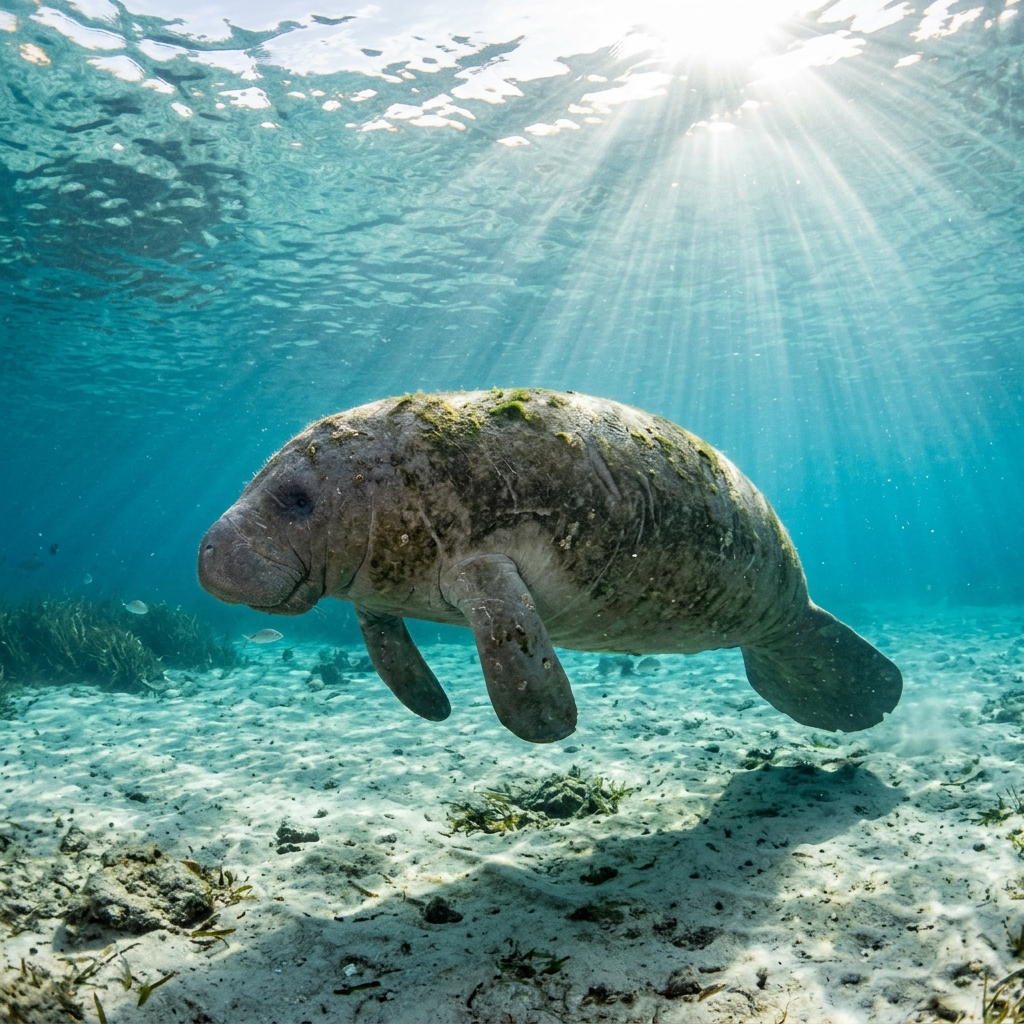
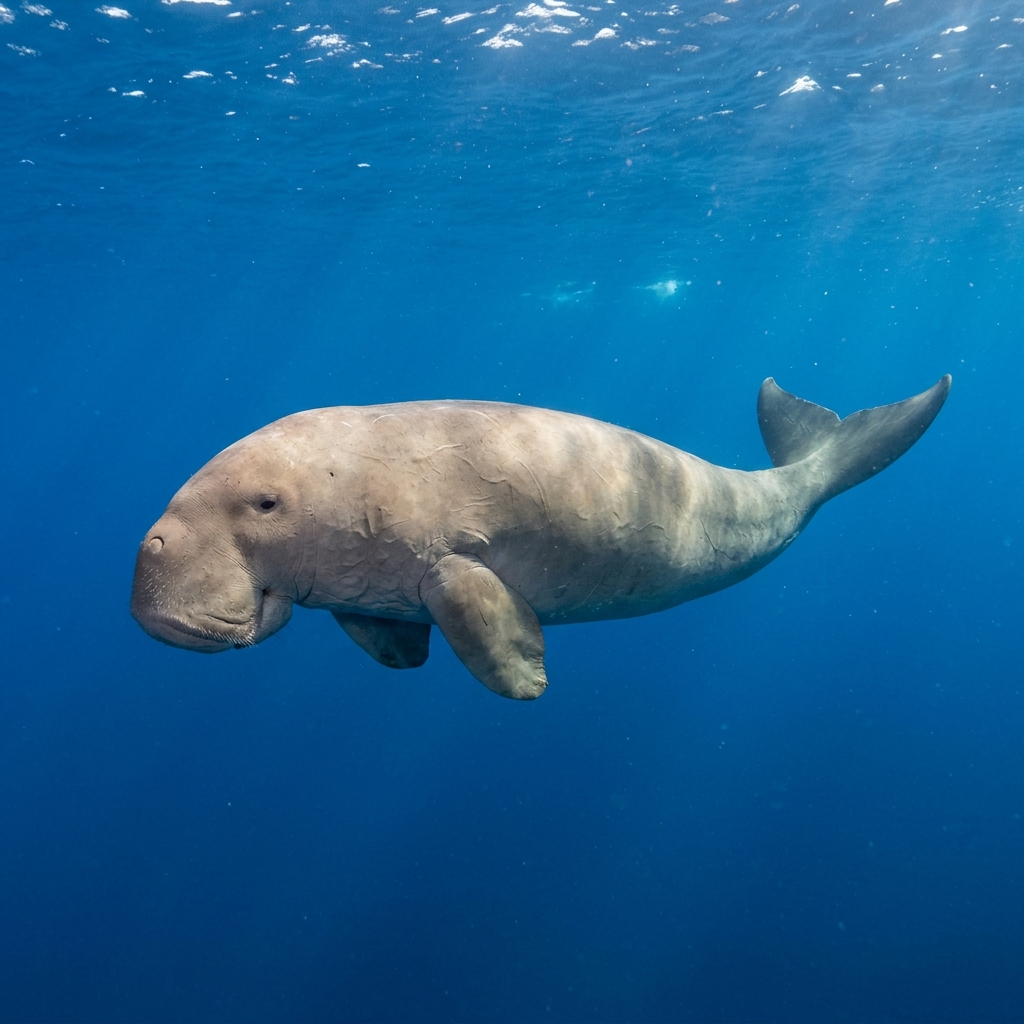
A large, pale grey to brownish-grey animal shaped like a torpedo, typically around 2.8 metres long, with a distinctive whale-like fluked tail that immediately separates it from any fish. The broad, downward-angled snout is the standout feature, it is blunt, wide, and purpose-built for grazing along the seafloor. Adult males develop small protruding tusks from the upper jaw, visible when you get a clear look at the snout; females and juveniles lack these entirely.
Most encounters happen in shallow, sunlit seagrass beds where dugongs move slowly along the bottom, uprooting grass with their muscular snout and leaving distinctive feeding trails of disturbed sediment behind them. Reactions to divers vary considerably by individual, some are curious and will circle back for a closer look, others simply continue feeding and drift away if approached too quickly. Slow, unhurried movement and avoiding a direct face-on approach tends to keep them calm; hovering to the side and letting them dictate the pace of any interaction works far better than chasing.
Dugongs are the only strictly marine mammal that is entirely herbivorous, and a single adult can consume several kilograms of seagrass per day, making the health of coastal seagrass meadows a direct proxy for dugong population health.
There is no confirmed seasonal peak in the data, so dugongs are treated as year-round residents across their range. Their warm-water niche of roughly 21 to 30 °C aligns with tropical and subtropical Indo-Pacific conditions throughout the year.
Reef neighbours a diver could mistake it for. Use the identification notes above to tell them apart.
The overwhelming majority of logged sites are in Australia, with Queensland leading, followed by strong coverage across Western Australia and the Northern Territory. Beyond Australia, Fiji, particularly around Viti Levu, and New Caledonia around Bourail and Nouméa represent the next best concentrations in the Pacific.
Mapping where Dugong is logged…
Australia is by far the strongest destination, with Queensland and Western Australia offering the most sites, followed by the Northern Territory. Fiji, particularly around Viti Levu, and New Caledonia around Bourail and Nouméa are the next best options in the Pacific.
Sightings are recorded year-round with no clear seasonal spike in the data. Dugongs favour warm coastal waters between roughly 21 and 30 °C, which describes most of their Indo-Pacific range across all seasons.
Look for the fluked, whale-like tail, no other large marine animal grazing on a seagrass bed has one. The broad, downward-angled snout and pale grey torpedo body complete the picture. Adult males also show small protruding tusks at the snout.
Adults typically reach around 2.8 metres in length and can weigh up to 400 kg. In the water they look impressively bulky but move with surprising ease, using gentle undulations of the fluked tail.
Dugongs are currently listed as Vulnerable on the IUCN Red List. Key threats include coastal development that destroys seagrass habitat, boat strikes, and incidental entanglement in fishing gear. Several local populations are under more severe pressure than the global status suggests.
The Dugong is listed as vulnerable by the IUCN. Observe from a distance, avoid touching or feeding it, and report sightings to local marine research organisations.
Dugongs are listed as Vulnerable on the IUCN Red List, with populations under pressure from habitat loss, boat strikes, and entanglement. Divers should maintain a respectful distance, never attempt to ride or touch them, and follow local marine-park guidelines wherever they apply.
Site and sighting data is aggregated from diver logs, iNaturalist and GBIF. For taxonomy and conservation status: