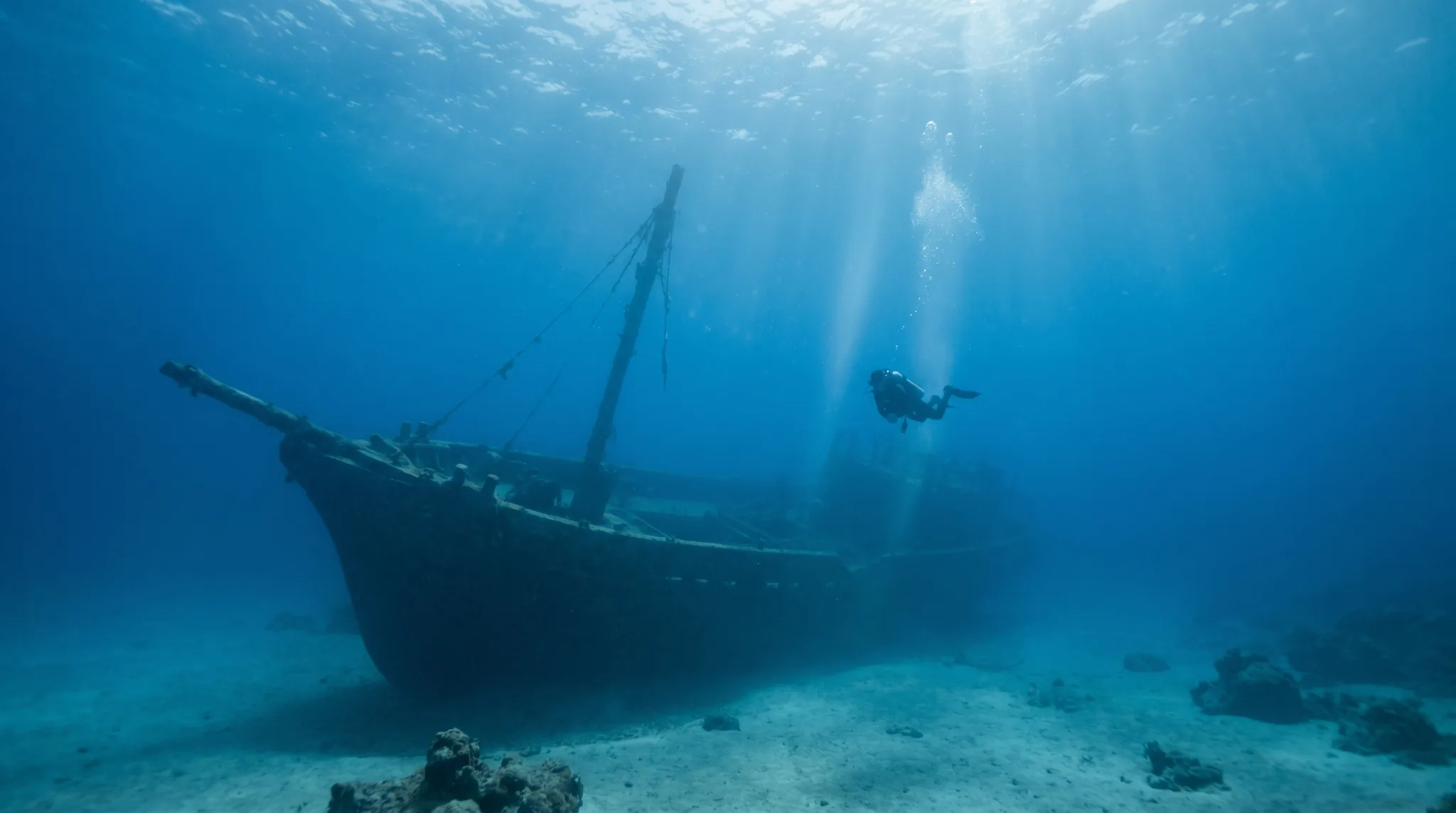
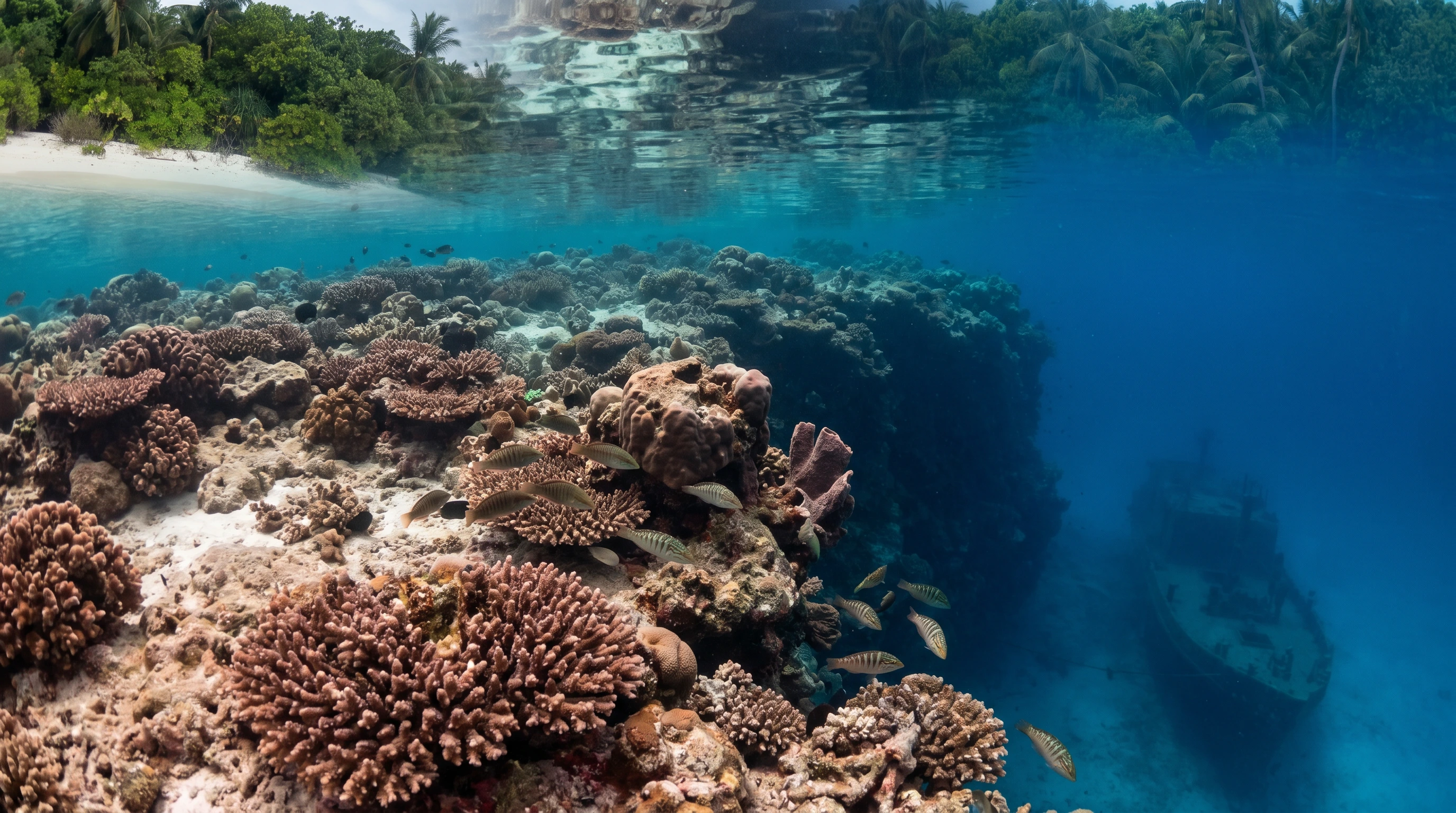
Ari Atoll divides into two distinct sub-areas: South Ari carries the larger share of sites and hosts the atoll's most celebrated encounters, while North Ari offers a quieter concentration of reefs and drift dives. Boat access dominates, with channel dives, submerged pinnacles, walls and drop-offs forming the core site mix. The Whitetip Reef Shark and Giant Moray are recorded across the vast majority of sites, and the Whale Shark draws snorkellers to the southern tip. Conditions favour divers of all levels, from shore-entry beginner reefs to demanding drift dives for advanced divers.
2 areas

Monthly water temperature across Ari Atoll's sites, from satellite sea-surface data corrected for depth. The band shows the site-to-site spread.
Water temperature stays warm and consistent throughout the year, with only the slightest lift in the warmest months. The best-months data points to a peak season running from late winter through early spring, when conditions are most favoured by visiting divers. The mid-year period sees a quieter trough, likely tied to the regional monsoon pattern, though diving continues year-round across both North Ari and South Ari.
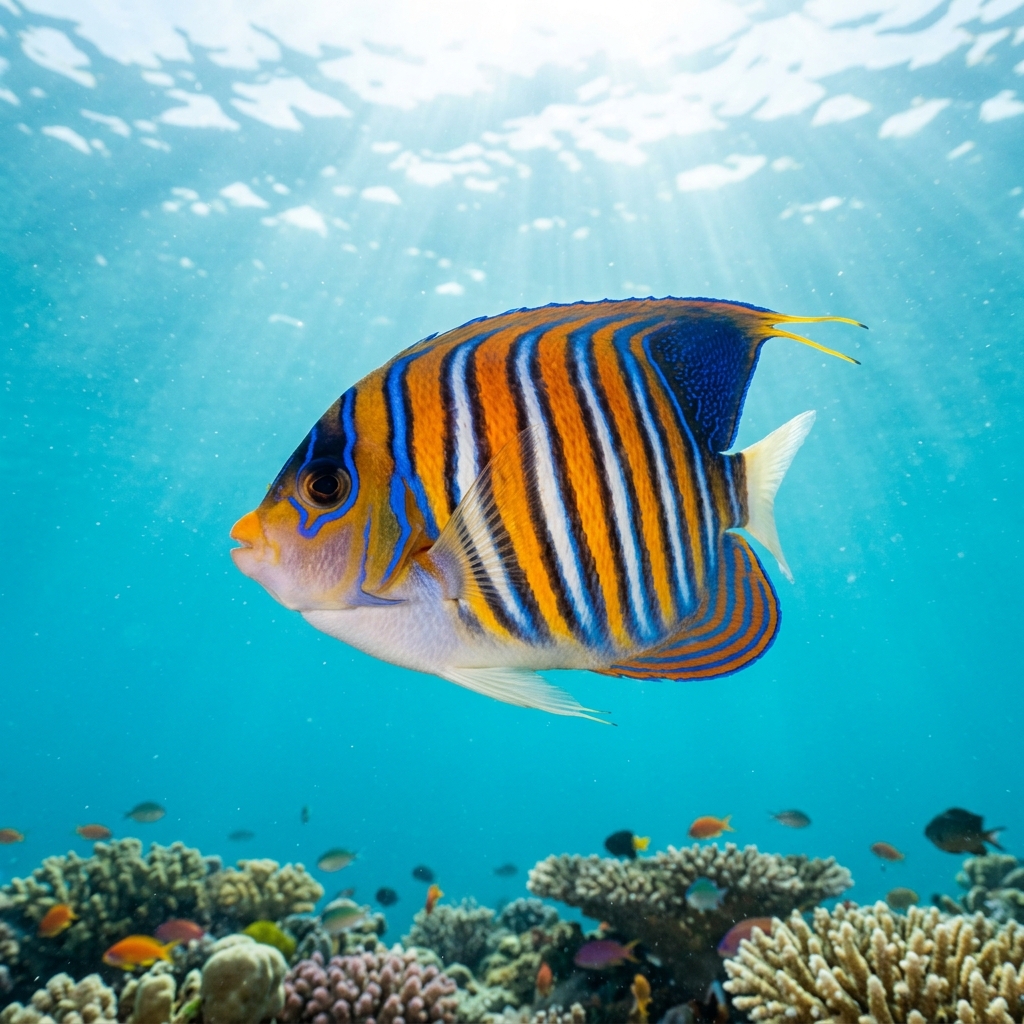
93 operators

124 more sites to explore
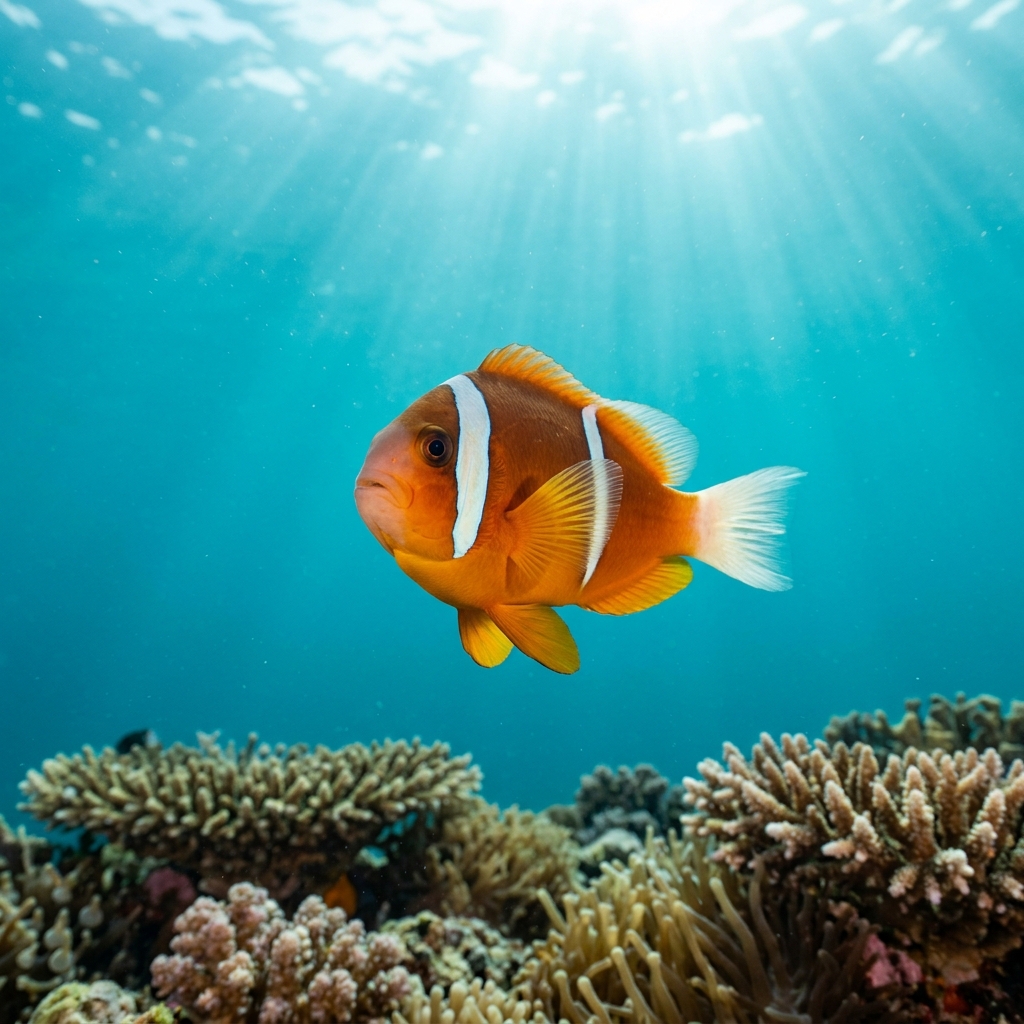
Whale Shark encounters paired with reef sharks, eagle rays and a dense network of thilas, walls and drift channels.
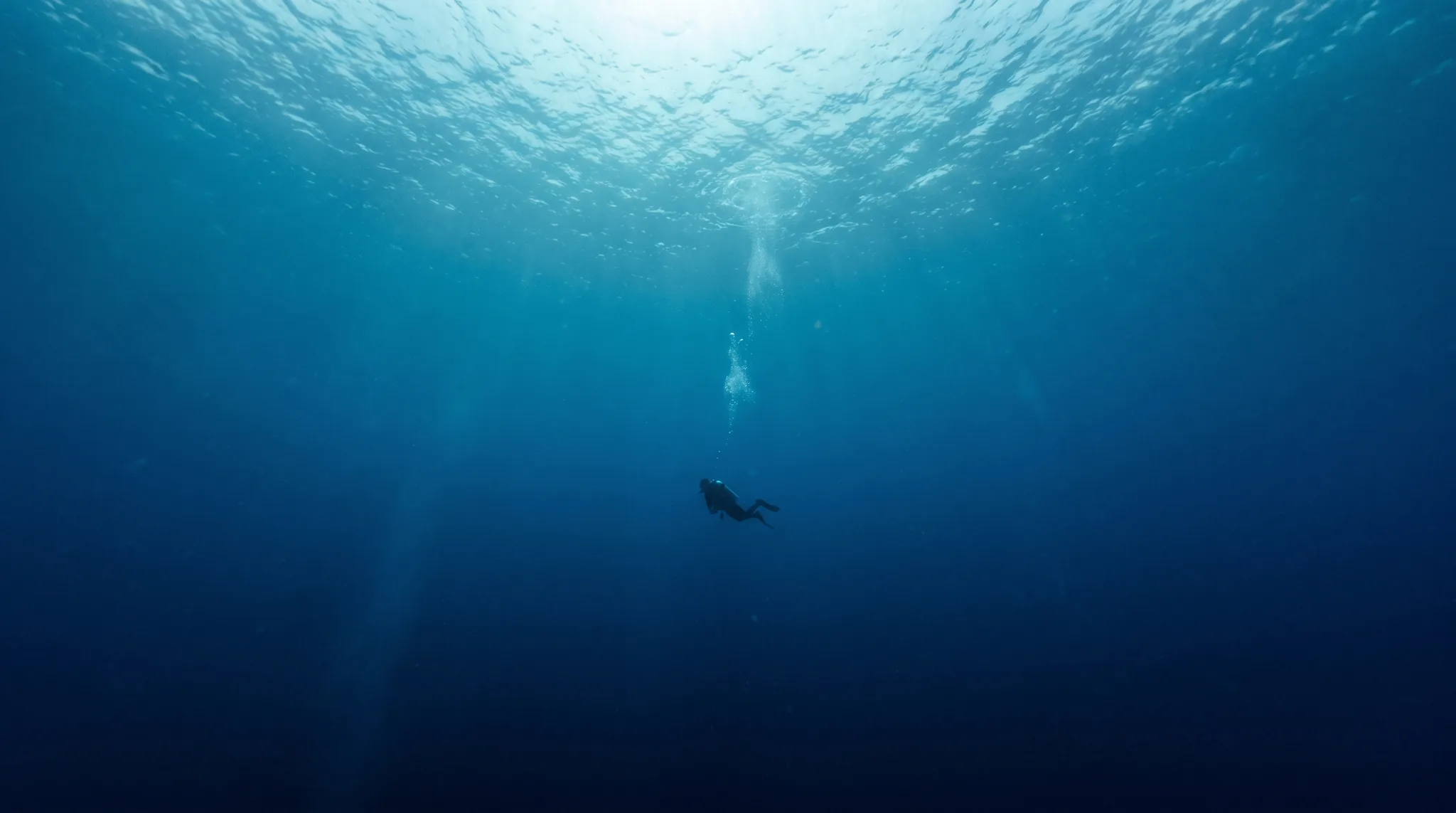
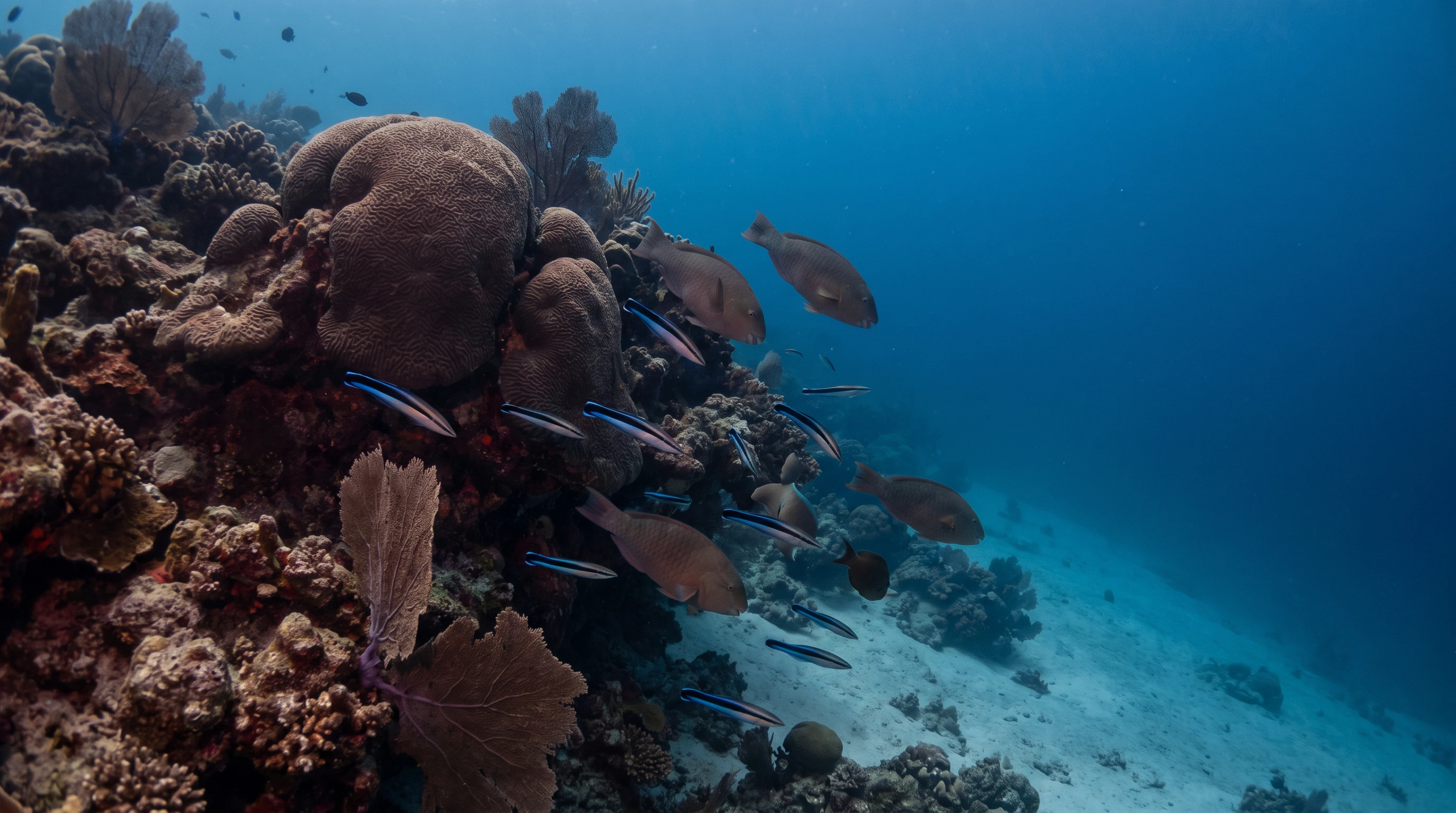
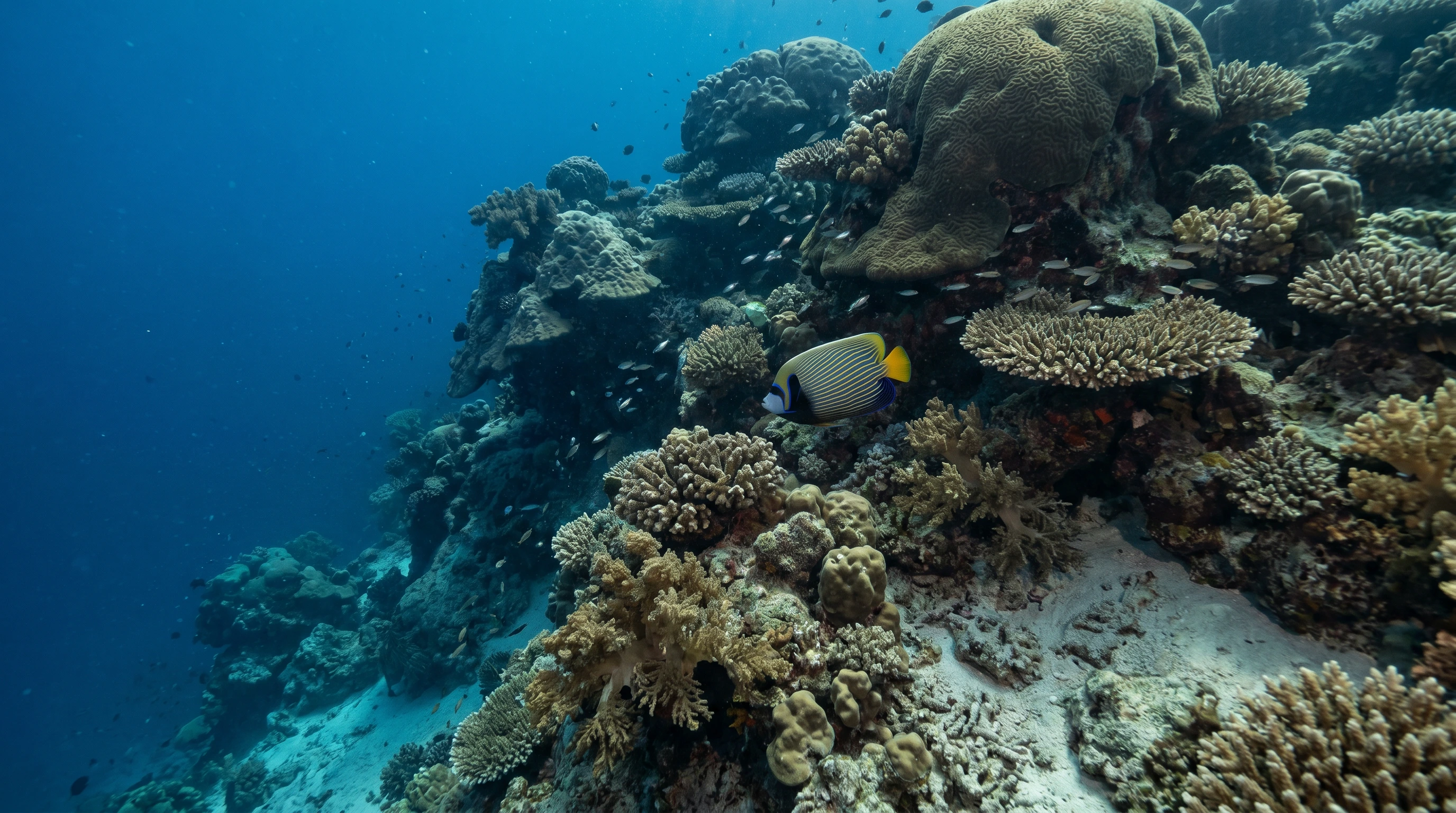
Water around Ari Atoll stays near 30°C all year, based on satellite sea-temperature data for its dive sites.
With water around 29–30°C, a rash guard or 3mm shorty works in Ari Atoll year-round.
Fin maps 136 sites in Ari Atoll (132 scuba diving sites and 19 snorkelling spots, with some suited to both), organised into 2 areas.
Across Ari Atoll's dive sites, January, February, March, April, May and December are most often reported as the best months to visit.
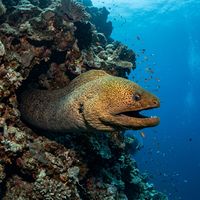
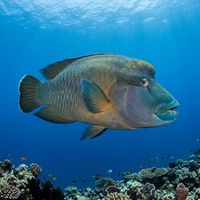
The Whitetip Reef Shark is recorded across nearly the entire site list, making it the most consistently encountered large species. The Spotted Eagle Ray and Napoleon Wrasse appear regularly across a wide range of sites, and the Giant Moray is similarly ubiquitous. The Whale Shark is a signature species of the atoll, particularly associated with sites around the southern tip.
A solid proportion of Ari Atoll's sites are rated for beginners, including shore-entry options such as Vilamendhoo and Kandolhu House Reef, both of which offer shallow reef and drop-off terrain. Intermediate sites form the largest group, covering drift dives along walls and pinnacles. Advanced divers are catered for at deeper drift sites such as Bobana Thila and Kandholhudhoo Thila, so the atoll works well for mixed-ability groups.
South Ari holds roughly twice as many sites as North Ari and contains several of the atoll's most prominent drift and pinnacle dives, including Aiyabe Thila, Broken Rock and Dhiffushi Beru. North Ari is less crowded and offers its own set of reefs and channel dives. Both sub-areas share the same warm, stable water conditions, so the choice between them often comes down to which resort or liveaboard base you are diving from.
The majority of sites across Ari Atoll are boat-access only, which is typical for atoll diving where the best reef structures sit away from shore. However, shore-entry options do exist: Vilamendhoo and Kandolhu House Reef can both be entered directly from land. Operators including South Ari Dive Center, Euro-Divers Vilamendhoo and Fathu Dives are among those organising boat trips across the atoll.