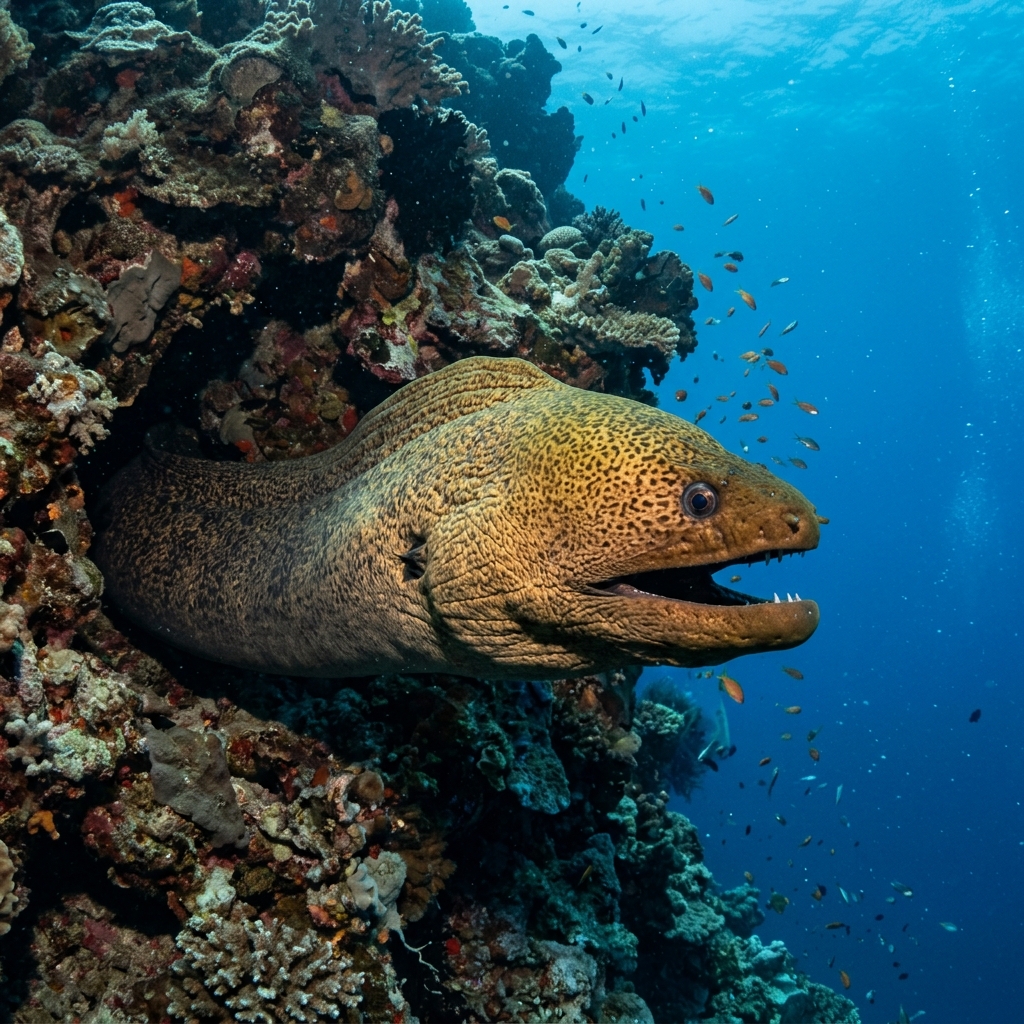
Gymnothorax javanicus
Spot giant moray in the Maldives, Red Sea and across Indo-Pacific reefs. Learn the ID marks, best seasons, and how to behave around one underwater.
Safety warning
The giant moray is not aggressive toward divers under normal circumstances, but its jaws carry backward-pointing teeth that make a defensive bite serious and difficult to disengage from. Never put hands into reef crevices, and keep fingers away from its head. Feeding morays by hand is strongly discouraged: they have poor eyesight and can mistake fingers for food, and hand-feeding conditions them to approach divers in ways that increase bite risk for everyone who dives the site afterwards.
If you're bitten
BiteGeneral first-aid guidance, not a substitute for professional medical care. In an emergency, call your local emergency number.
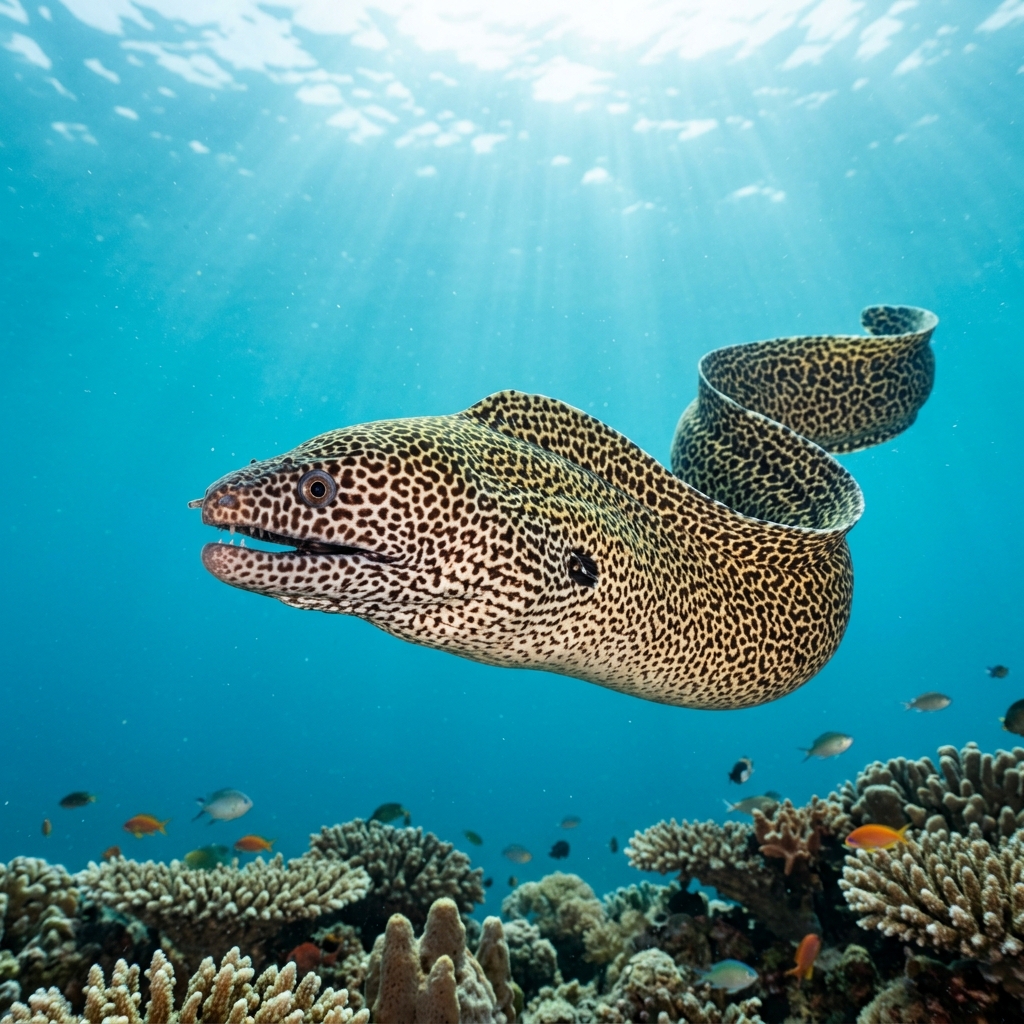
Size alone does most of the work: at up to 210 cm this is the largest moray on Indo-Pacific reefs, and even a partially exposed animal looks unmistakably massive. The body is a warm yellowish-brown or tan, densely covered in irregular dark brown spots that give it a leopard-like pattern. The inside of the mouth and gill region is typically dark, which shows up well when the animal is breathing with its jaws open. Unlike the ribbon eel or snowflake moray, there are no bold white patches, bands, or contrasting colour blocks.
During the day you will nearly always find one with its head poking from a reef crevice, mouth slowly opening and closing as it pumps water over its gills. It is a nocturnal hunter and much more active after dark, but daylight dives do sometimes catch individuals moving across open reef, particularly if fish activity disturbs the area. Approached steadily and without sudden movement, it will hold its position and allow a calm observation; rush it, and it retreats immediately into the reef.
Giant morays sometimes hunt cooperatively with roving coral grouper: the grouper signals a prey fish hidden in a crevice, and the moray's slender body flushes it out into open water where the grouper can catch it. It is one of the few documented cases of active cross-species cooperative hunting on coral reefs.
In Southern Hemisphere sites the giant moray is present year-round with no concentrated season. For Northern Hemisphere sites, sightings concentrate from June through April, with a noticeable dip in May; the species' preference for water in the 25.5 to 29 °C range keeps it active on tropical reefs through most of the year.
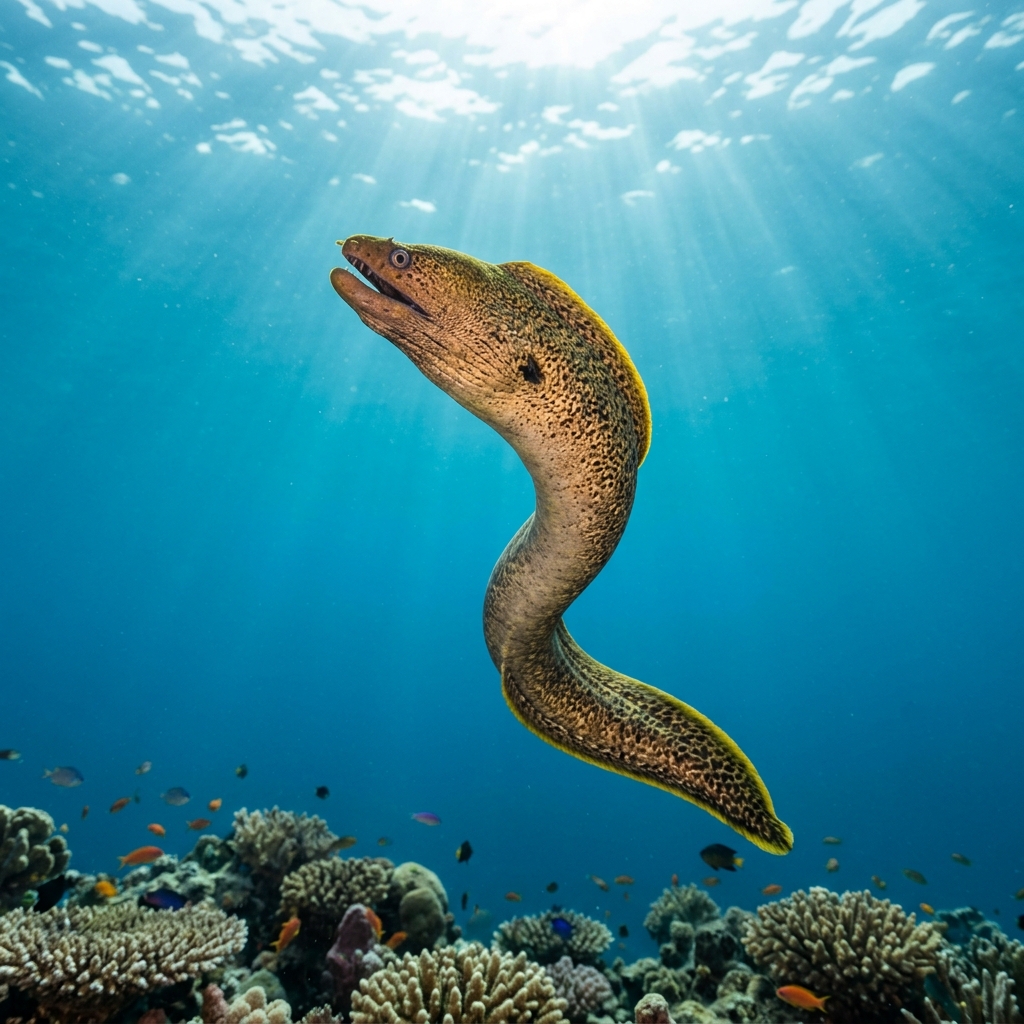
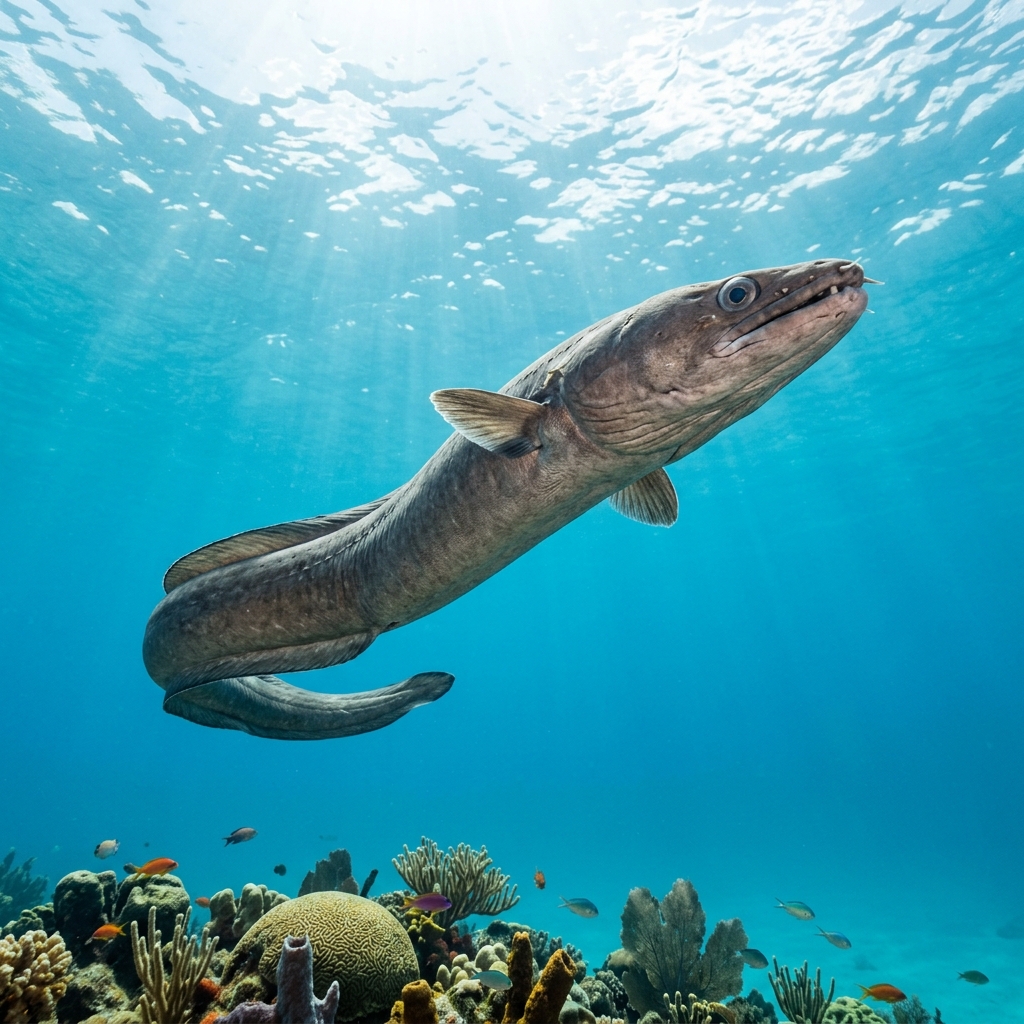
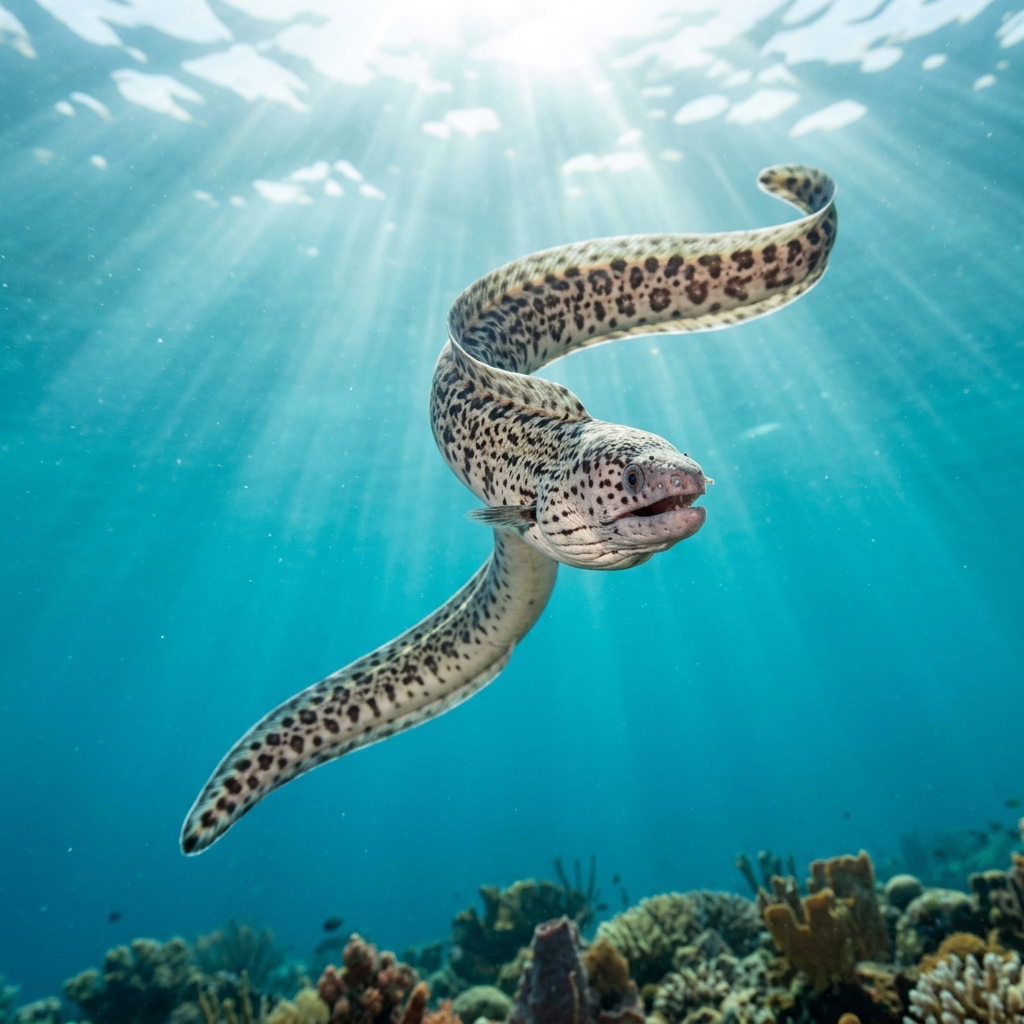
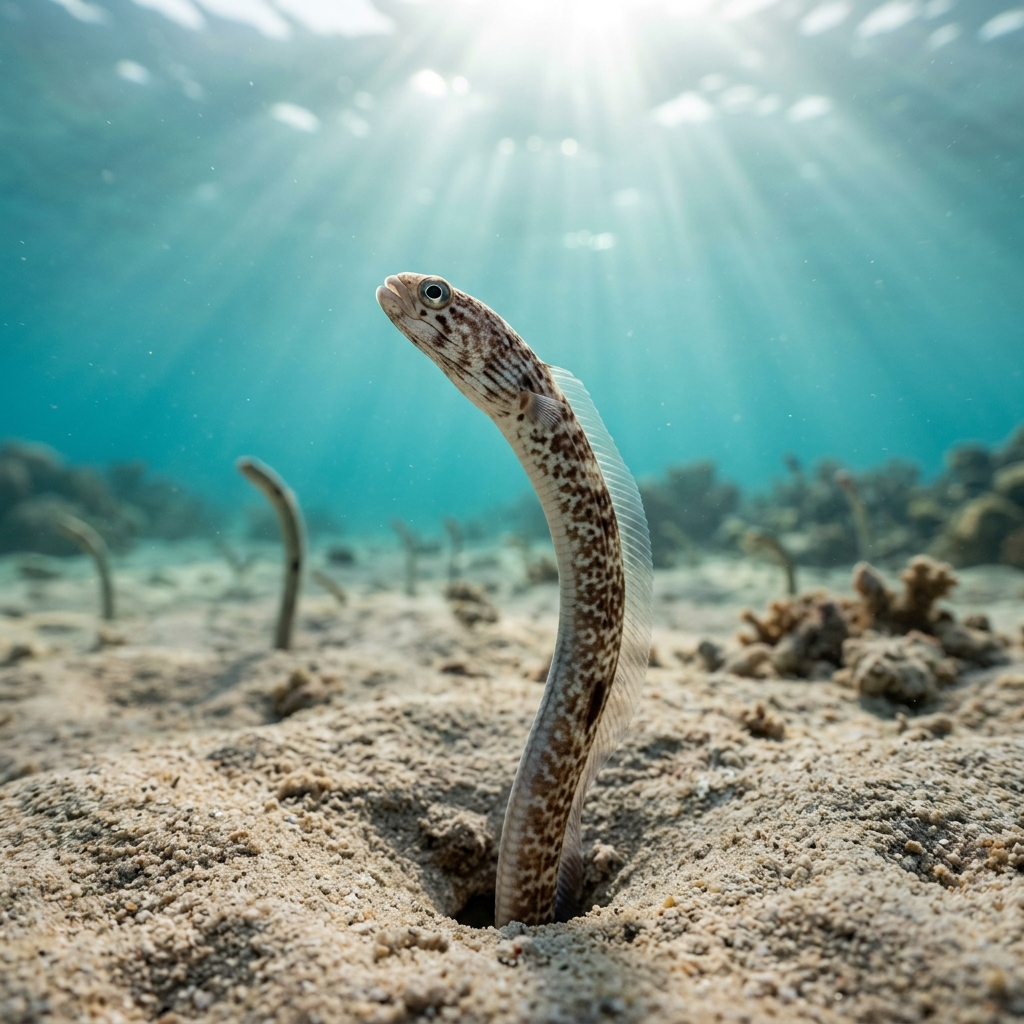
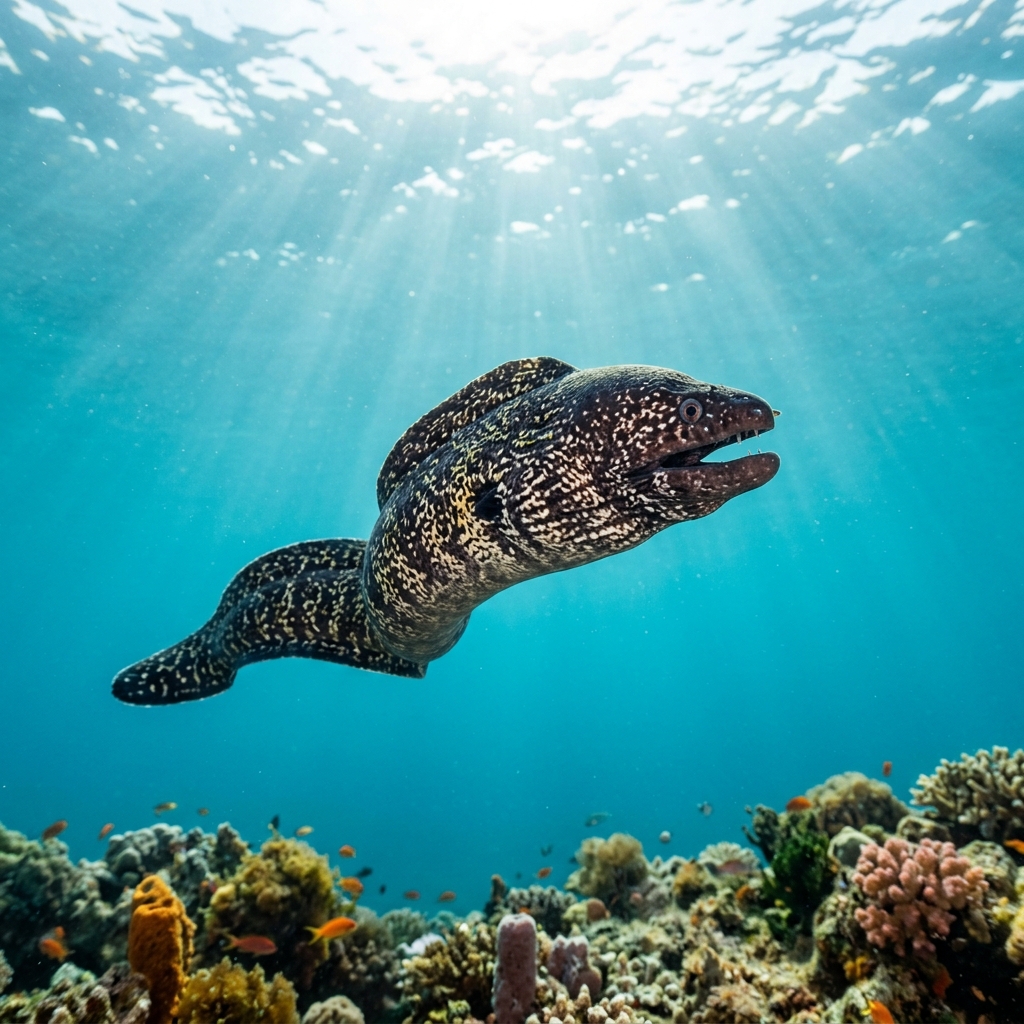
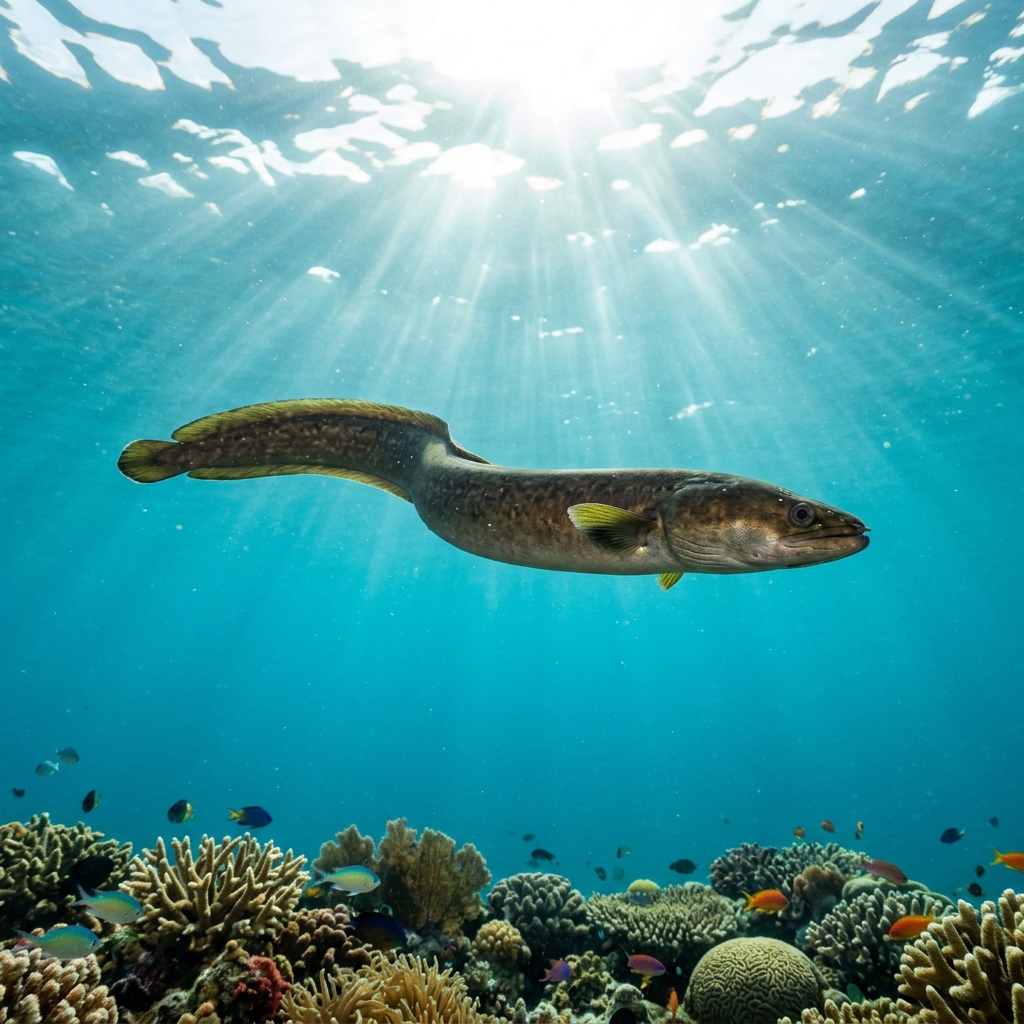
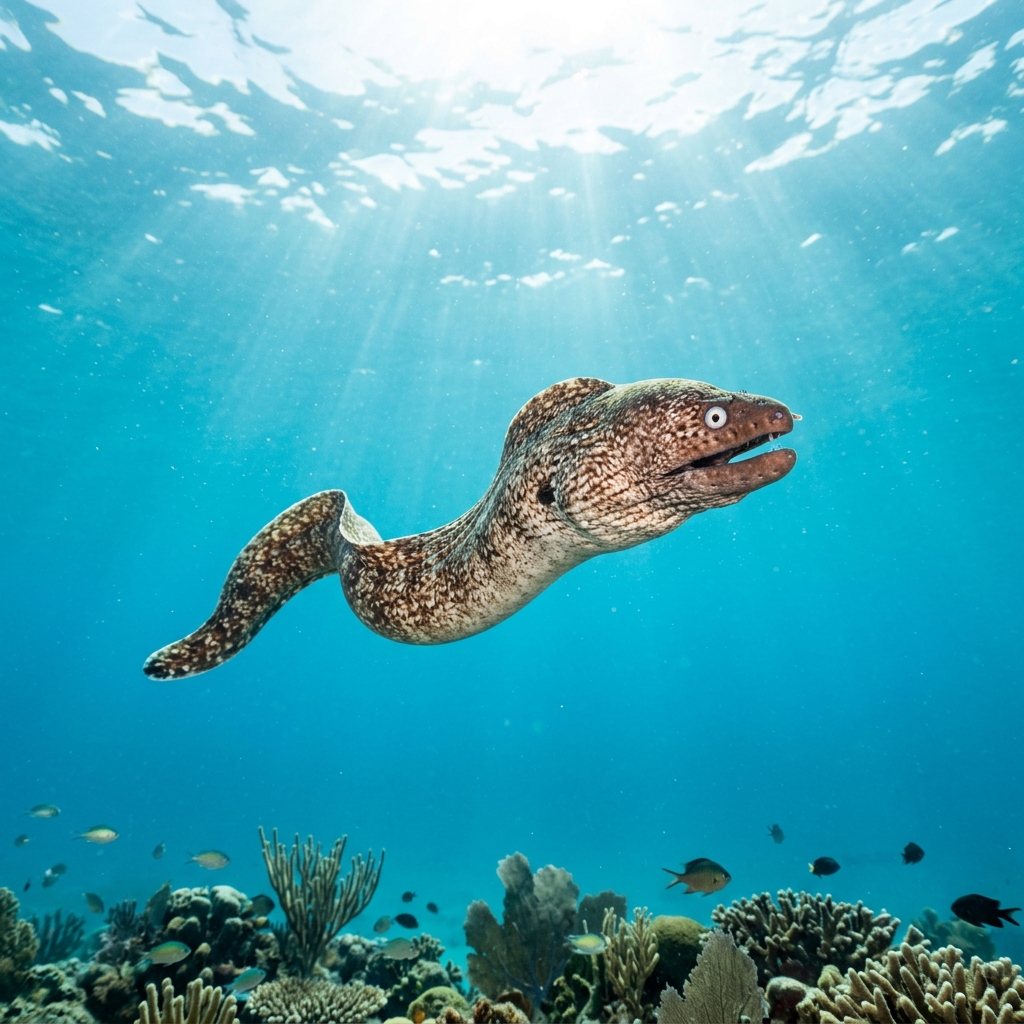
Reef neighbours a diver could mistake it for. Use the identification notes above to tell them apart.
Most commonly logged in the Maldives, where both the Male & Ari Atolls and the North & Central Atolls stand out as reliable areas, and across the Egyptian Red Sea around Sharm el Sheikh and Marsa Alam. Strong populations also bring regular sightings in Indonesia, Malaysia (especially the Perhentian and Redang area), and Thailand around Phuket and Phi Phi.
Mapping where Giant Moray is logged…
The Maldives records more giant moray sightings than anywhere else, particularly around the Male and Ari Atolls. The Egyptian Red Sea around Sharm el Sheikh and Marsa Alam is another strong bet, and they are regularly seen across Indonesia, Malaysia, Thailand, and the Philippines.
At Southern Hemisphere sites such as Queensland, Australia, they can be found year-round. At Northern Hemisphere sites, sightings are reported most consistently from June through to April. Their preference for warm tropical water means they are rarely absent from good reef sites within their range.
They are not aggressive predators of divers, but they can deliver a serious bite if provoked or if a hand strays into their crevice. Their teeth angle backward, making a wound hard to pull free from. Stay calm, keep your distance from their heads, and never attempt to hand-feed one.
The combination of sheer size (up to 210 cm), a warm tan-to-yellowish body covered in irregular dark brown spots, and a dark mouth interior makes it distinctive. The yellow-edged moray and laced moray can look similar at a glance, but neither approaches the giant moray's bulk. If the animal you are looking at barely fits its crevice, it is almost certainly this species.
They are the largest moray in the Indo-Pacific, reaching up to around 210 cm in length. Even mid-sized individuals are noticeably bulky compared to other morays on the same reef, with a body girth that can exceed a diver's thigh.
Yes. Giant morays have been observed actively teaming up with roving coral grouper to hunt prey. The grouper headstands near a crevice to signal where a small fish is hiding, and the moray enters the crack to flush it out. It is a rare example of coordinated hunting between two completely different reef predators.
Site and sighting data is aggregated from diver logs, iNaturalist and GBIF. For taxonomy and conservation status:
Mediterranean Moray
2,020 sites