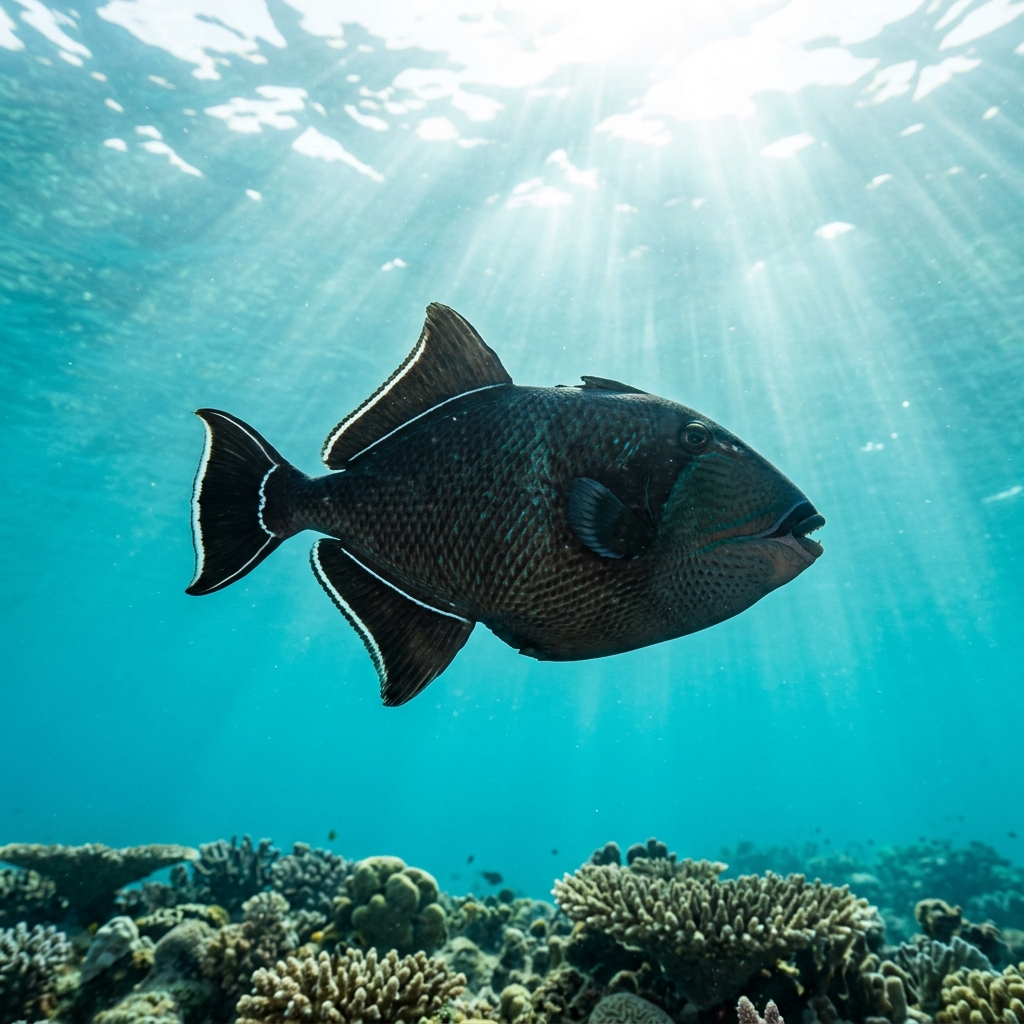
Odonus niger
Spot schools of Redtooth Triggerfish in the Maldives and Indonesia. Deep blue with red teeth, active in currents between 25-29 °C.
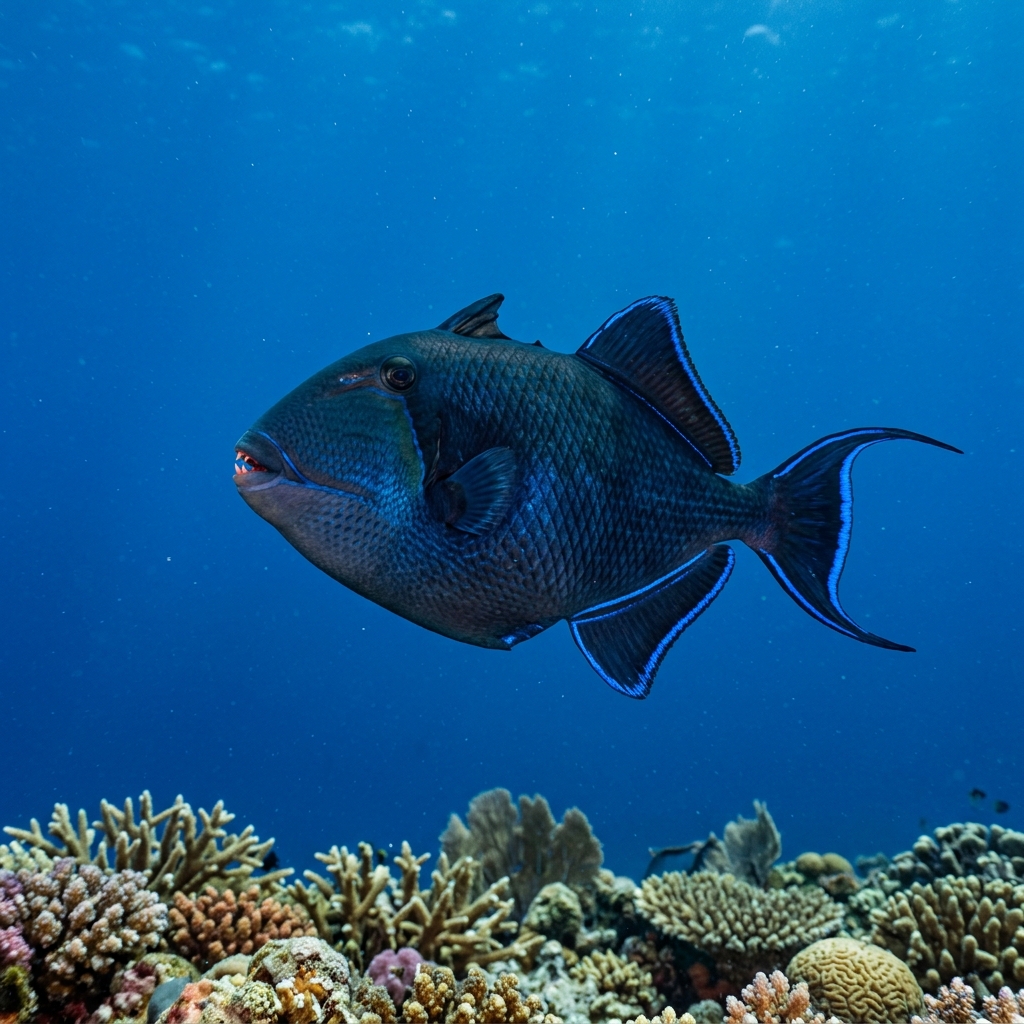
At around 35 cm, this is a deep navy-to-blue-black triggerfish with a distinctly forked tail, unusual for the family and a reliable field mark. Look closely and you may catch a flash of the vivid red teeth that give it its name, visible when the fish feeds. The body is oval and laterally compressed, and the blue colouration often takes on a slight iridescent sheen in strong light.
You will most often encounter redtooth triggerfish in mid-water schools above current-exposed reef slopes and drop-offs, where they hover and pick at zooplankton carried in by the flow. Groups can range from a handful of individuals to impressive aggregations that move in loose synchrony. They are not shy, individuals frequently approach curious divers, and unlike some of their more territorial relatives, they rarely show aggression outside of breeding periods.
Despite their common name, the red teeth are not just cosmetic: they are thought to help the fish bite through tough sponges and hard coral, and the colour comes from a pigment rather than staining from diet.
In the Southern Hemisphere, covering Indonesia, Australia, and much of the coral triangle, this species is present year-round, consistent with its warm-water preference of 25 to 29 °C on tropical reefs. Northern Hemisphere sites such as the Maldives and Philippines show sightings concentrating from August through May.
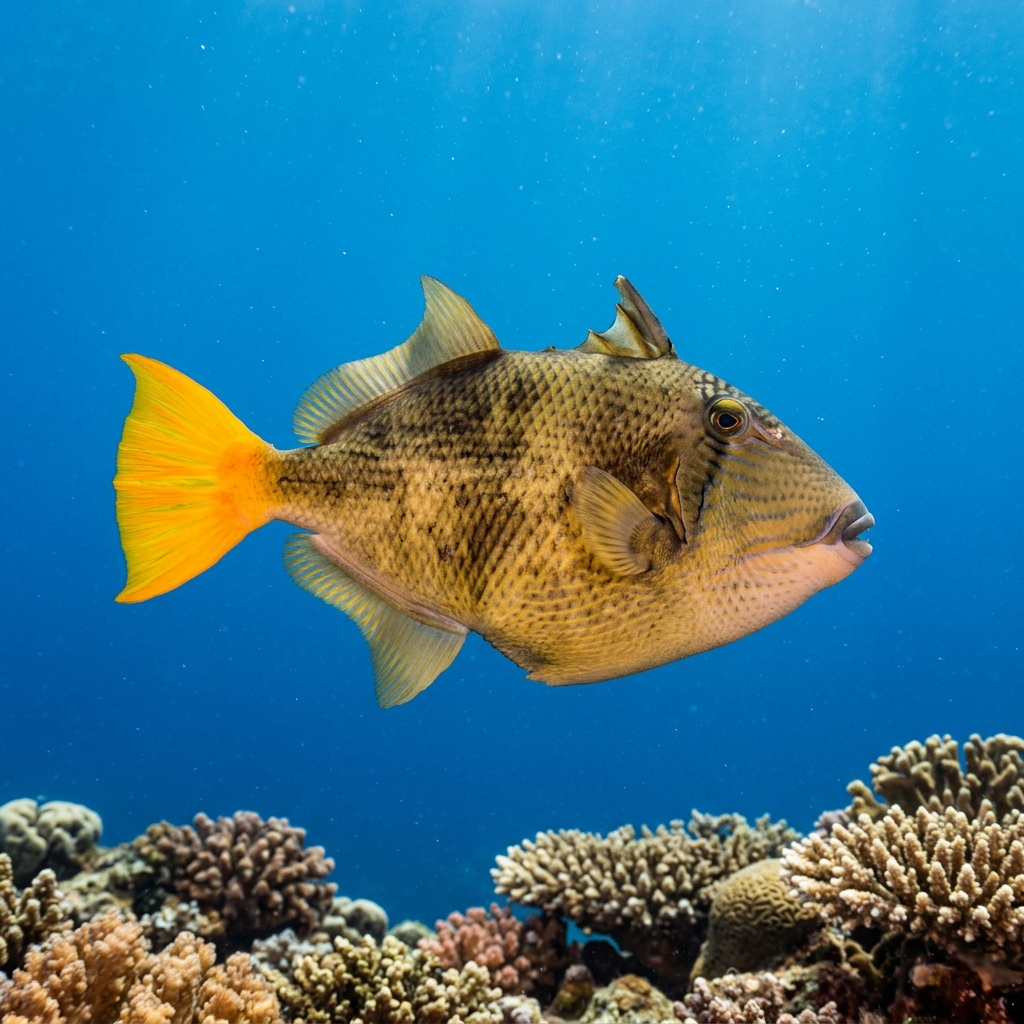
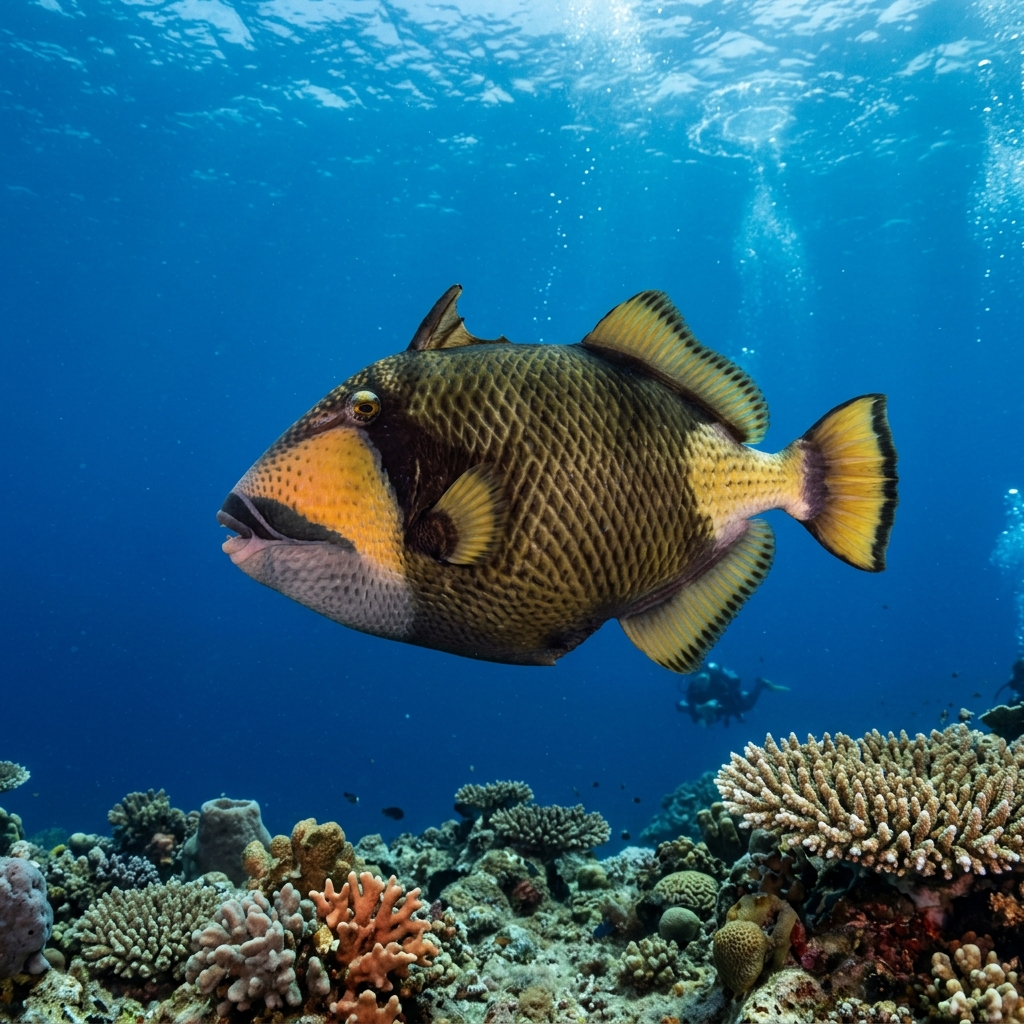
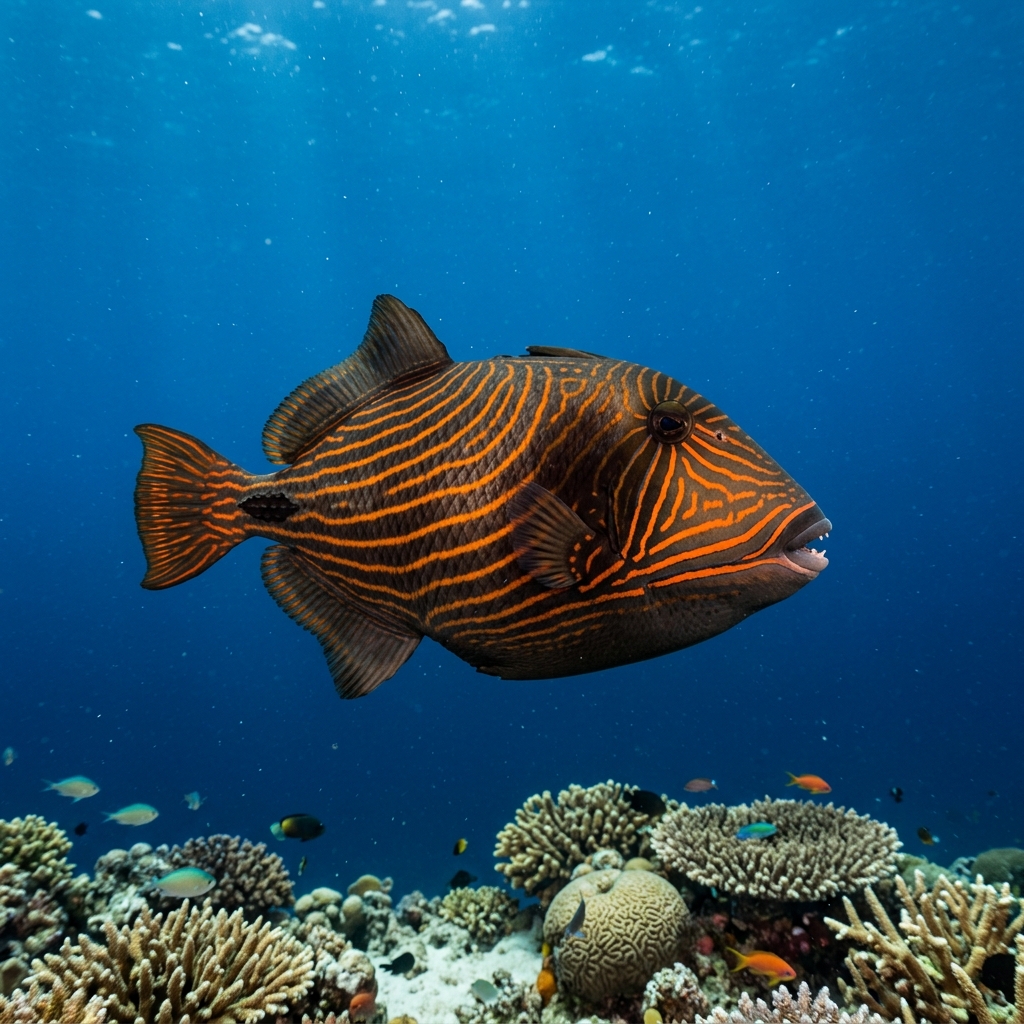
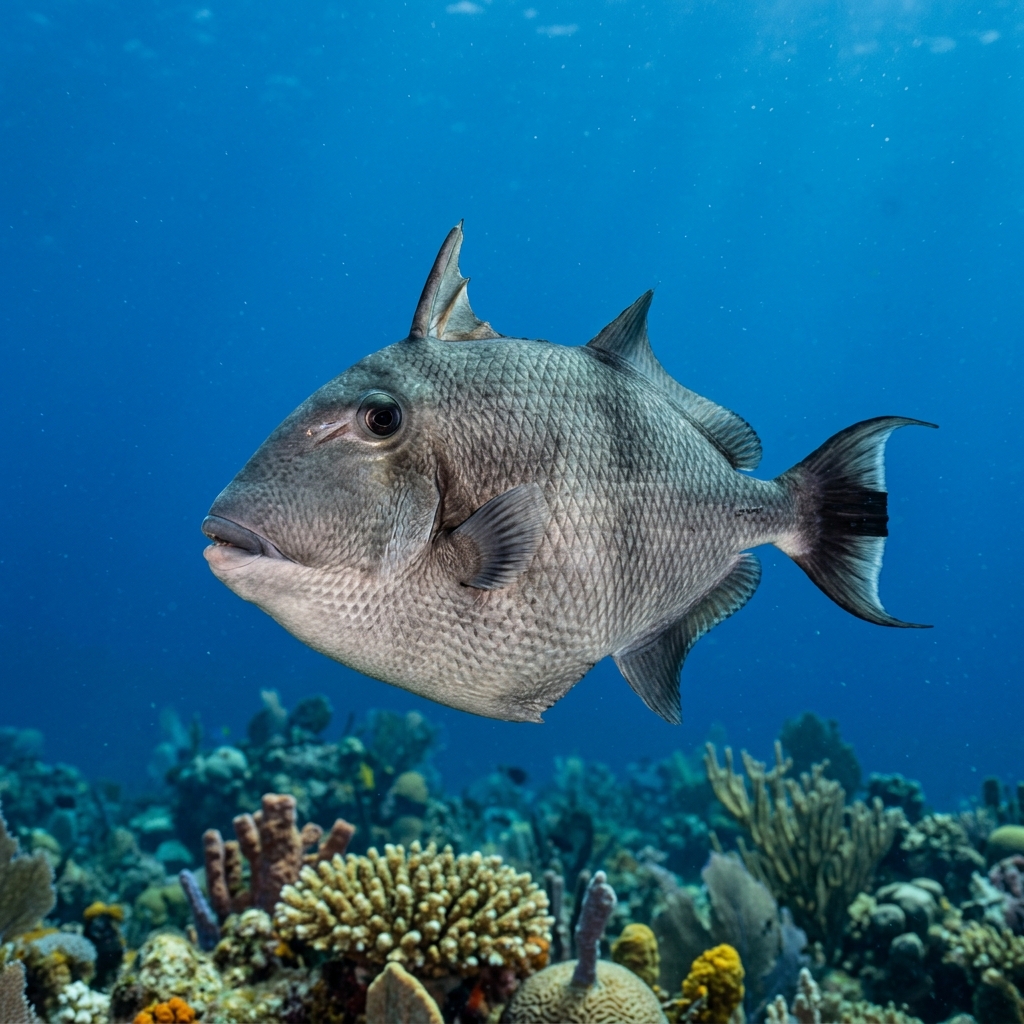
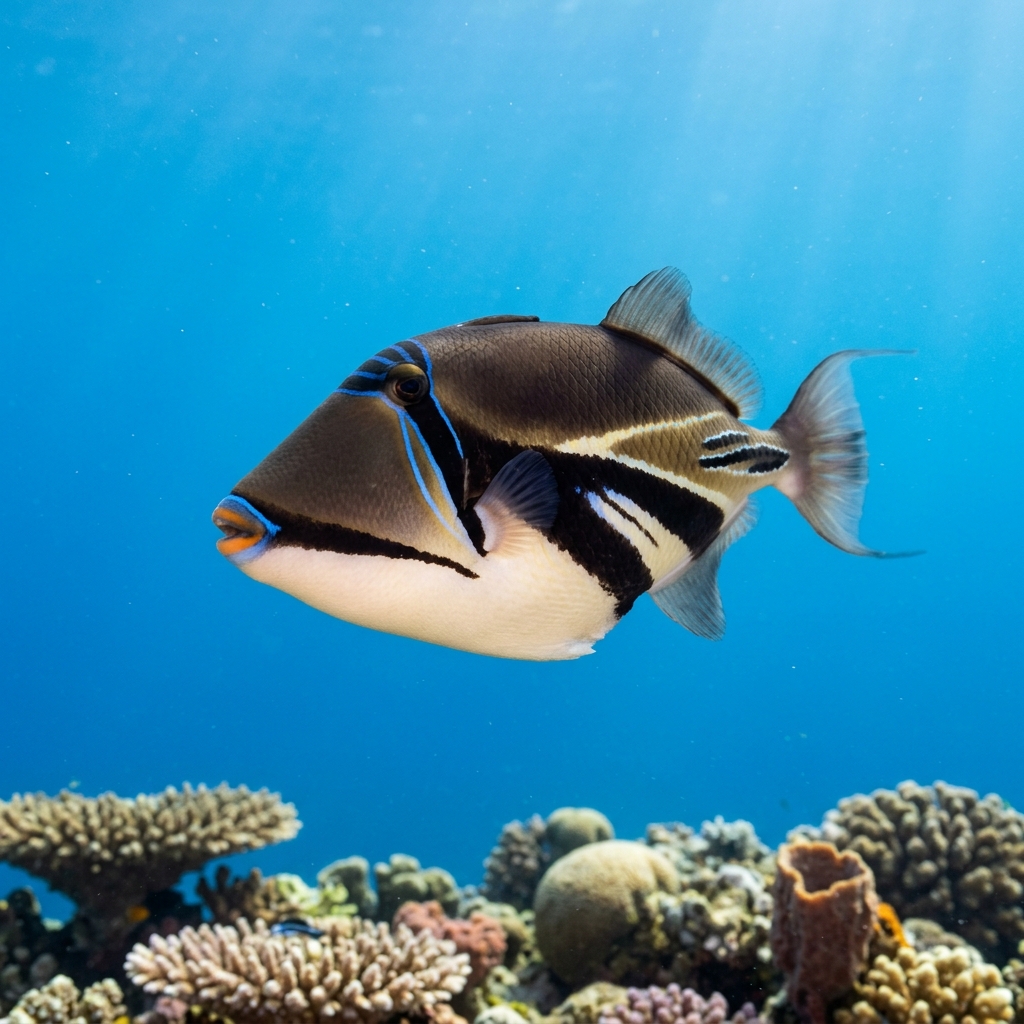
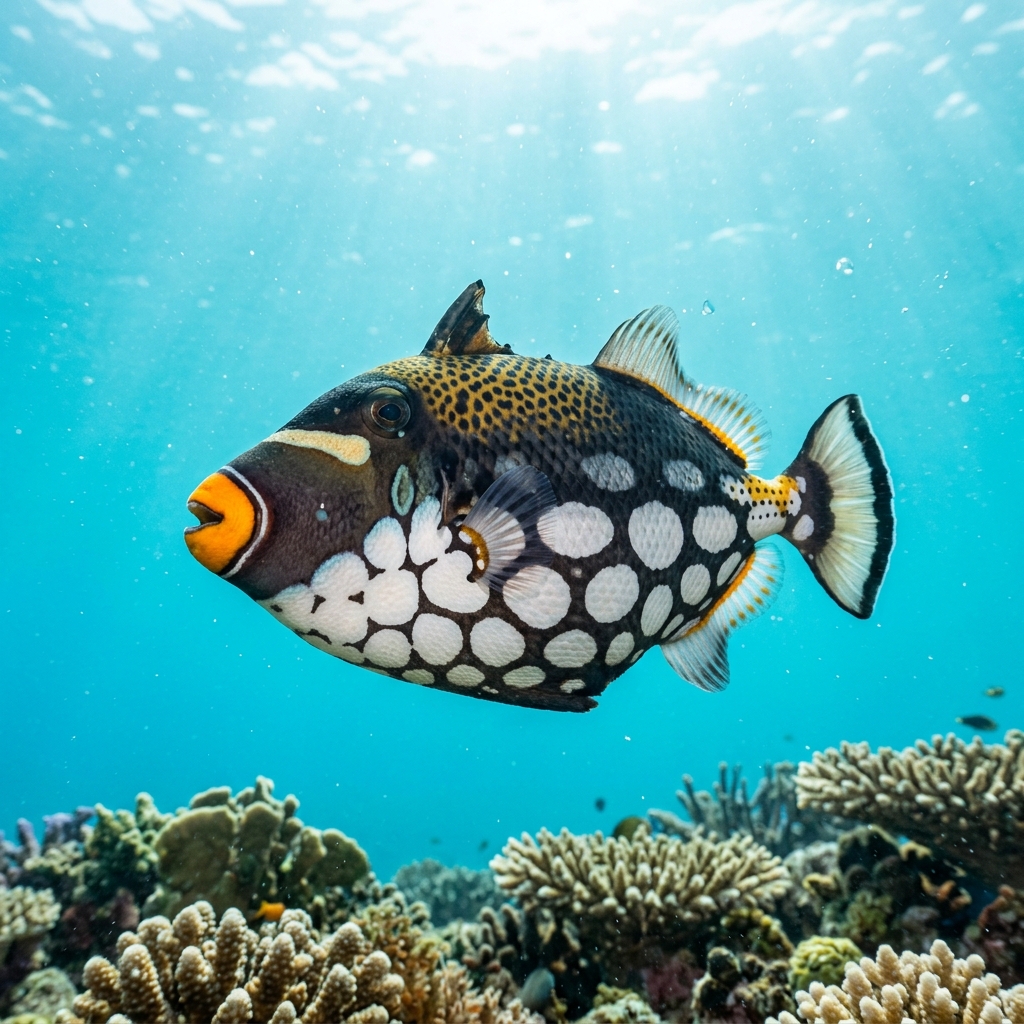
Reef neighbours a diver could mistake it for. Use the identification notes above to tell them apart.
Most commonly logged in the Maldives, where sightings span the Male and Ari Atolls as well as the North and Central Atolls, making it by far the strongest destination for this species. Indonesia runs a close second, with strong populations across Sulawesi, Maluku, Bali, and the Banda Sea. The Philippines and Malaysia, particularly around Sipadan and East Sabah, round out the core Indo-Pacific range.
Mapping where Redtooth Triggerfish is logged…
The Maldives has by far the strongest sighting record, particularly around the Male, Ari, and North and Central Atolls. Indonesia, especially Sulawesi, Maluku, and Bali, is the next best bet, followed by the Philippines, Malaysia's Sipadan area, and French Polynesia.
Southern Hemisphere dive destinations such as Indonesia and Australia offer year-round encounters, as the species is comfortable in tropical water temperatures that stay warm all year. At Maldivian and Philippine sites, sightings concentrate between August and May.
Look for a deep blue-black triggerfish with a distinctly forked tail, most triggerfish have a rounded tail, so the fork is a quick giveaway. Up close, the small but vivid red teeth are unmistakable. Schools hovering in mid-water on current-swept reef edges are almost certainly this species.
They typically reach around 35 cm in length. In the water they appear slender and oval-bodied, and schools of them can look deceptively small until one swims close.
No. They are considered one of the more diver-friendly triggerfish, often approaching divers out of curiosity. They can become more defensive during breeding season, but reports of aggression toward divers are rare and they are not regarded as a hazard.
The striking red teeth come from a natural pigment in the tooth tissue, not from diet. The teeth are strong enough to bite through hard corals and sponges, which forms part of this carnivore's feeding repertoire alongside zooplankton.
Site and sighting data is aggregated from diver logs, iNaturalist and GBIF. For taxonomy and conservation status:
Lagoon Triggerfish
2,435 sites