Amphiprion nigripes
Spot the Maldive Anemonefish across Male & Ari Atolls in 28-30 °C water. Best sightings run Dec, Apr. ID tips and top dive sites inside.
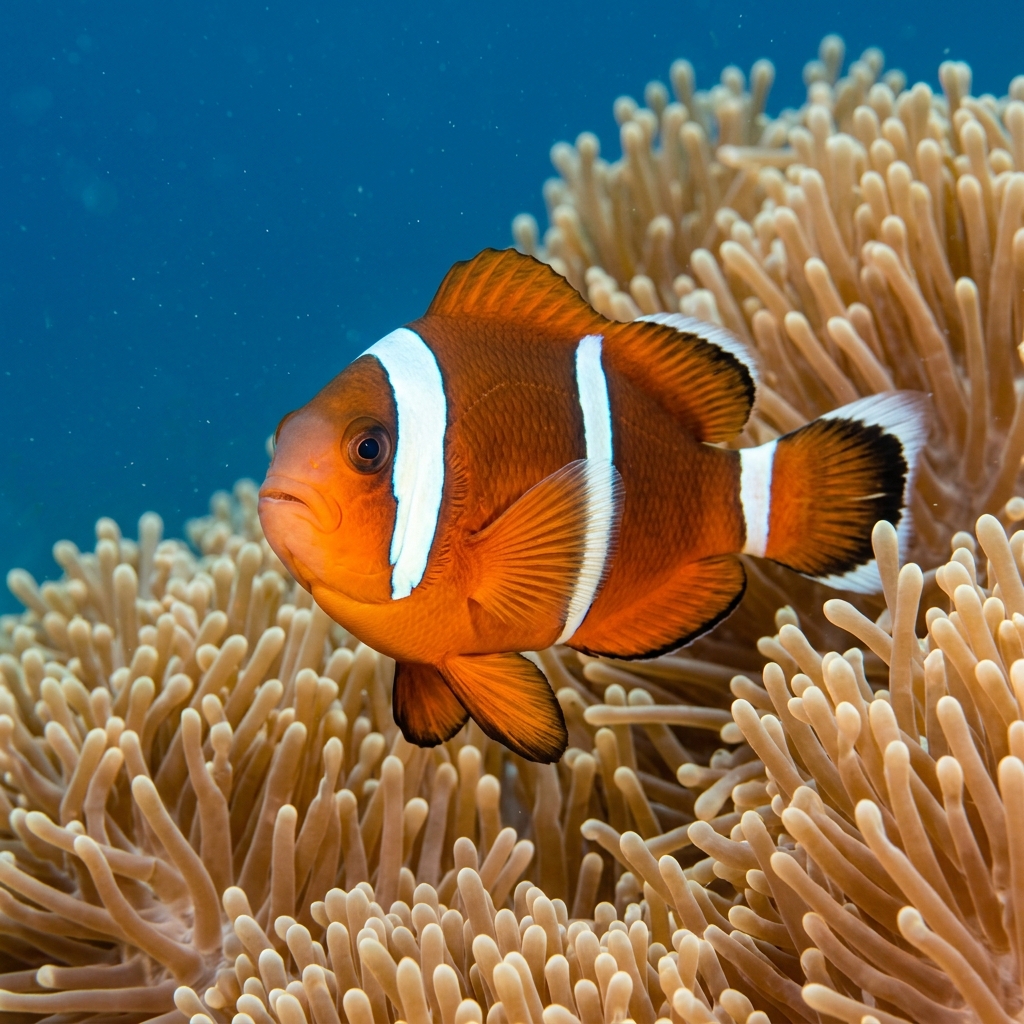
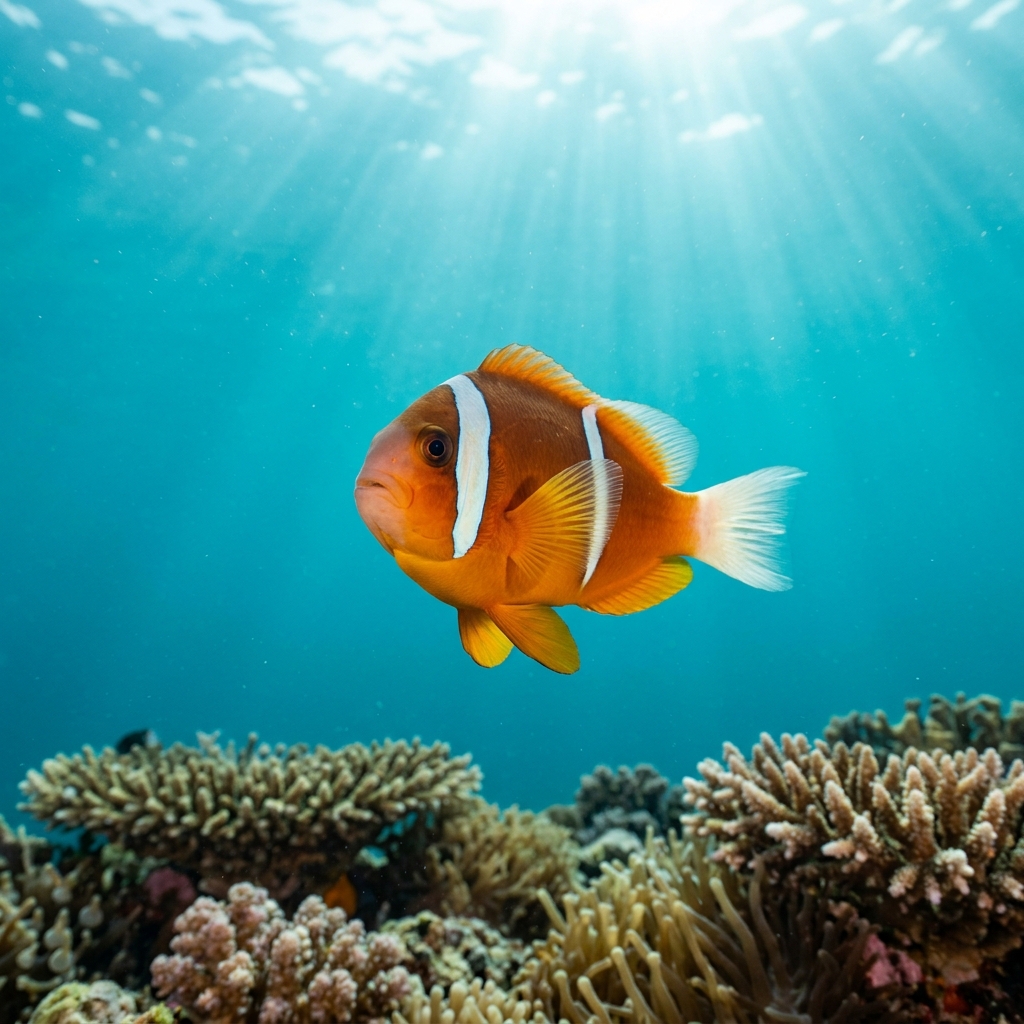
A compact clownfish with a blackish-brown to dark olive body that immediately separates it from most of its orange-bodied relatives. The single white bar sits just behind the head, and the fin edges are narrowly trimmed in white or pale blue. In the warm, clear water of Indian Ocean reefs it reads as a very dark fish with one crisp white stripe, an unusual look in a family dominated by orange-and-white patterns.
You will find Maldive Anemonefish doing exactly what all clownfish do, patrolling within touching distance of their host anemone, darting back into the tentacles the moment something spooks them. They are territorial enough to face up to an approaching diver with short, fussy charges, but they never stray far from home. Look for the anemone on sheltered reef slopes and lagoon bommies (isolated coral heads) in the 28-30 °C water typical of Maldivian reefs.
Like all clownfish, Maldive Anemonefish are sequential hermaphrodites: every individual is born male, and the dominant fish in any group can transition to female if the breeding female disappears, a handy bit of biology to recall when you are watching what looks like a straightforward pair.
Sightings in the northern Indian Ocean concentrate between December and April, aligning with the dry north-east monsoon season when conditions across the Maldives are typically calmer and visibility improves.
By a wide margin this is a Maldives fish, virtually all logged sightings come from the atolls, with Male & Ari Atolls far ahead of anywhere else, followed by North & Central Atolls and Felidhoo & Mulaku. A small but consistent population exists in India's Lakshadweep Islands, and a handful of sightings have been recorded along Sri Lanka's east coast.
Mapping where Maldive Clownfish is logged…
The overwhelming majority of sightings come from the Maldives, particularly Male & Ari Atolls. Smaller but reliable populations exist in India's Lakshadweep Islands and along Sri Lanka's east coast. Outside the Indian Ocean this species simply does not occur.
Logged sightings peak between December and April across the northern Indian Ocean, corresponding to the north-east monsoon season in the Maldives when calmer seas and better visibility make reef diving easier. Outside that window sightings are possible but less frequent.
Look for the dark body, blackish-brown rather than the bright orange most people associate with clownfish, paired with a single white bar immediately behind the head. That combination of one stripe and a very dark base colour is distinctive in its Indian Ocean range. It lives exclusively within a host anemone, so scan any anemone you find on Maldivian reefs.
Exact size data for this species is limited, but like most Amphiprion clownfish they are small reef fish, typically in the range of 8 to 11 cm for adults. Females are the largest individuals at any given anemone.
Yes. They are protandrous hermaphrodites, meaning all individuals start life as males. If the dominant female of a group dies, the largest male will transition to female and take her place. It is one of the more remarkable life-history tricks on a coral reef.
Site and sighting data is aggregated from diver logs, iNaturalist and GBIF. For taxonomy and conservation status:
Dascyllus
3,697 sites