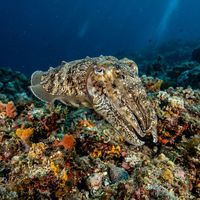
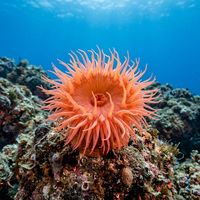
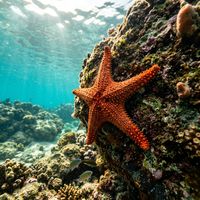
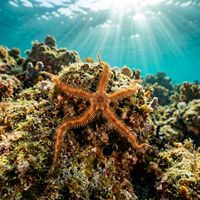
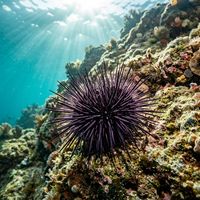
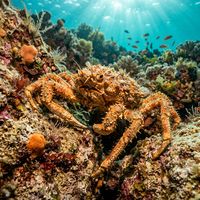
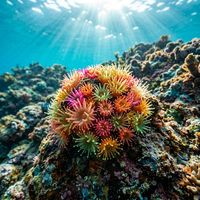
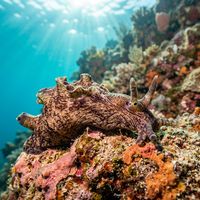
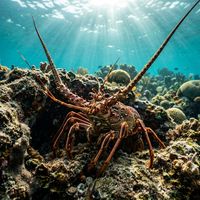
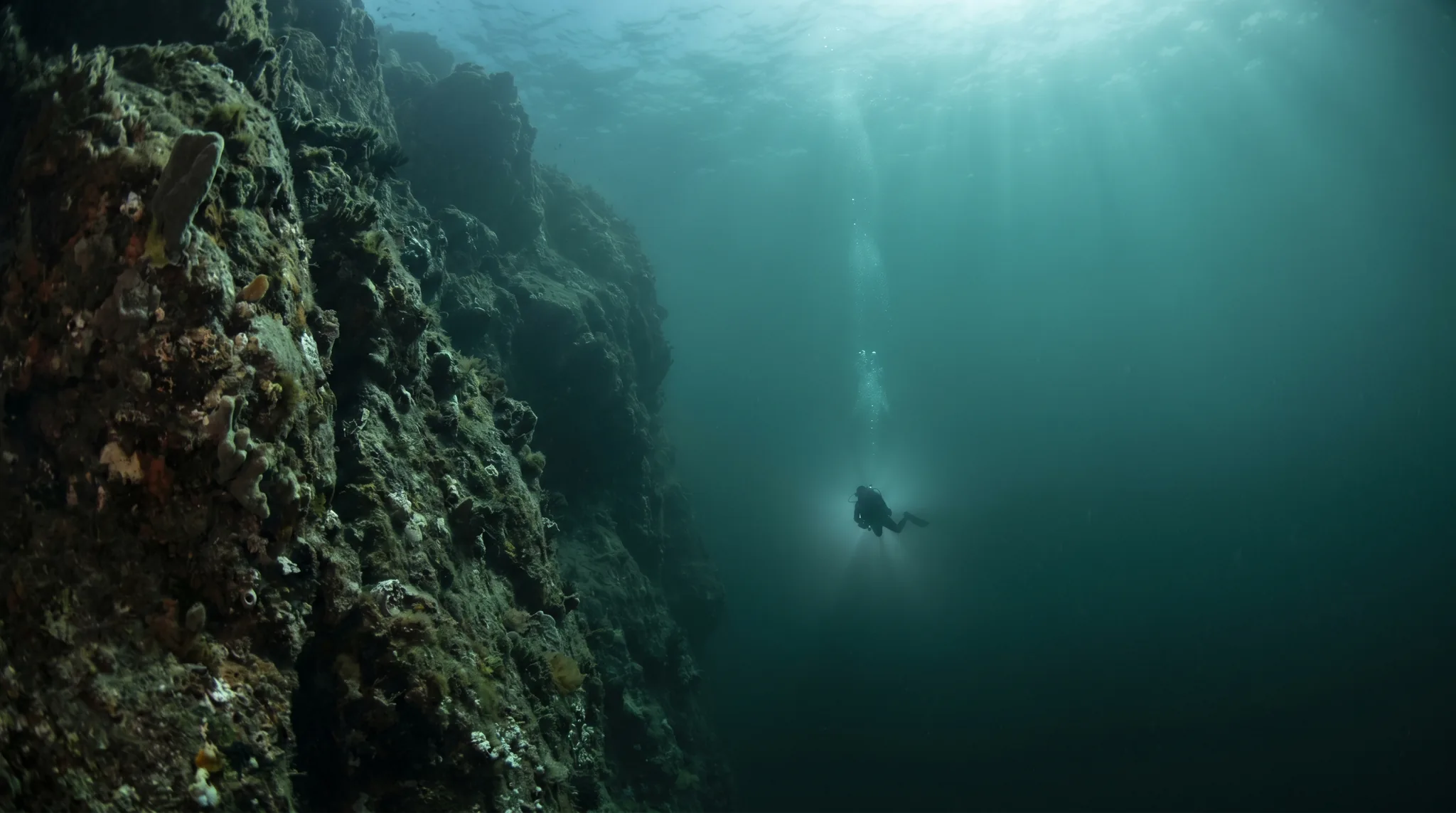
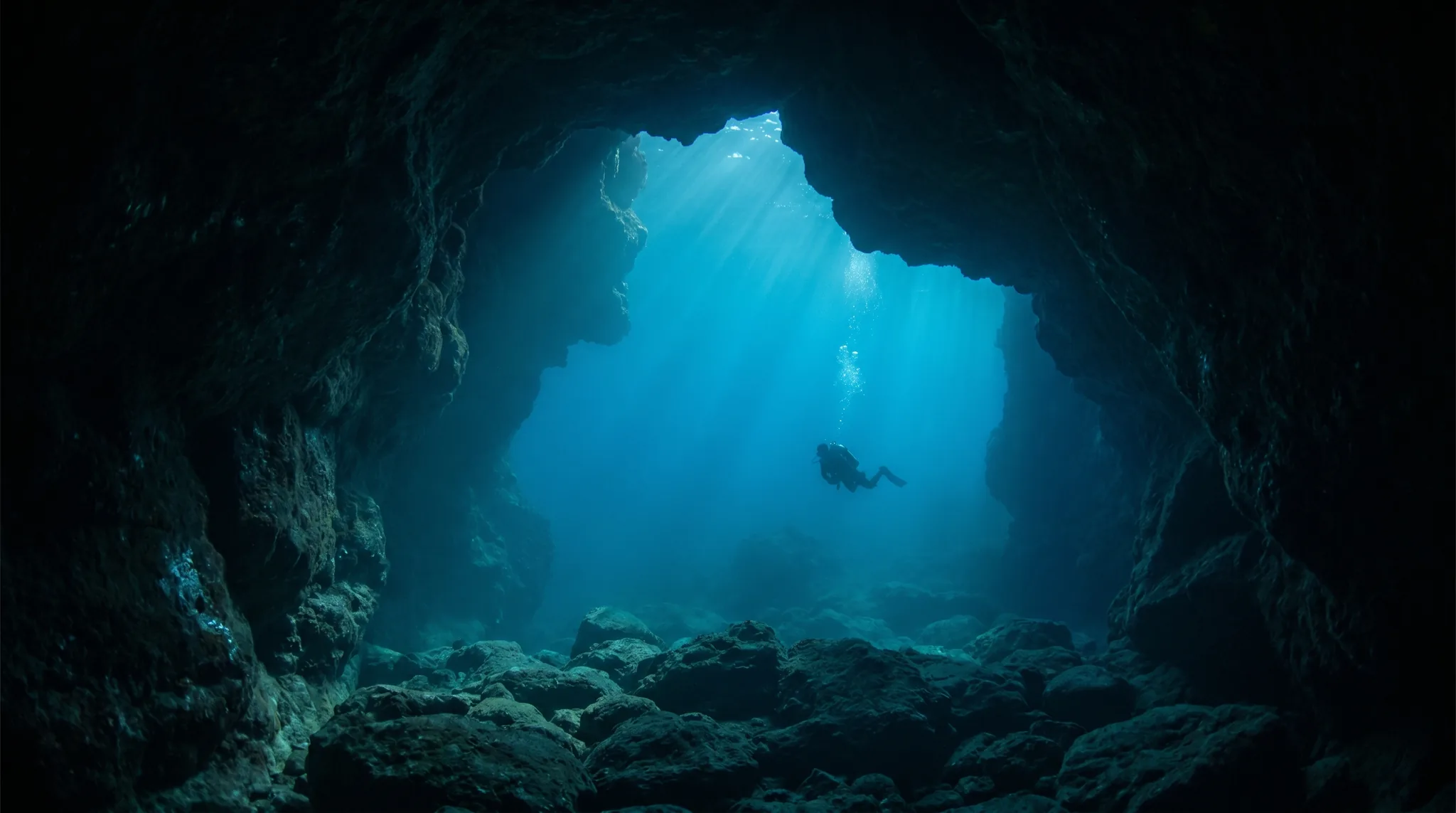
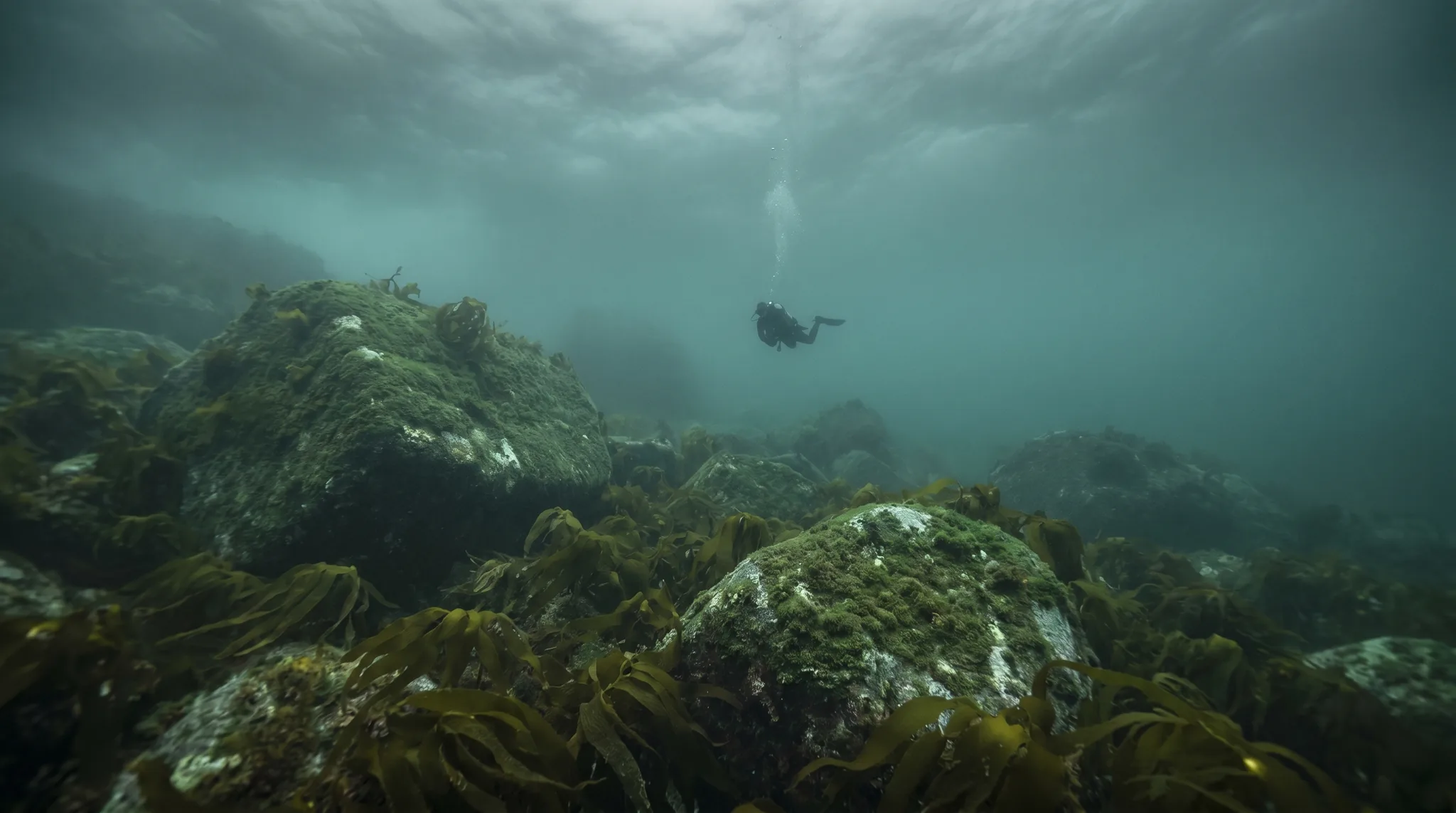
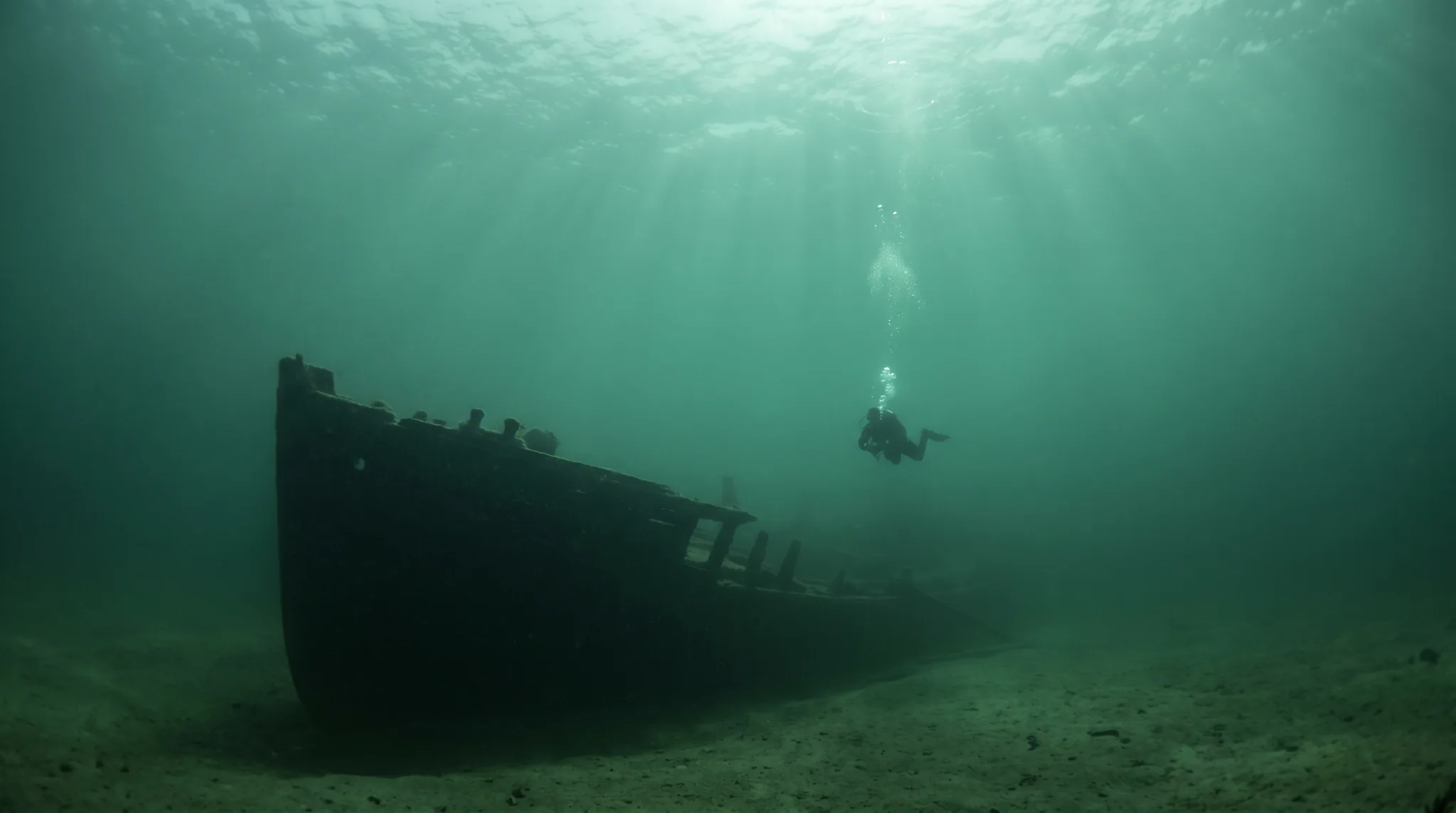
The Molène Archipelago is defined by wrecks and rocky reefs swept by strong tidal currents. Sites range from shallow, beginner-friendly wrecks like Canons Santa Rosa to deep technical dives such as Le Colombian and the Peter Sif. Kelp forest formations appear at sites including Balise le Chien and L Eildon, adding texture to the reef diving. The resident marine life leans heavily on invertebrates: Jewel Anemone, Spiny Spider Crab, Brittle Star and Sea Urchin are near-ubiquitous, while the European Common Cuttlefish and occasional Gray Seal reward attentive divers.
Monthly water temperature across Molène Archipelago's sites, from satellite sea-surface data corrected for depth. The band shows the site-to-site spread.
Water temperature stays cool throughout the year, rising only modestly from late spring into autumn and dipping back in winter. The warmer, calmer months from late spring through early autumn offer the most comfortable diving and the best visibility the sites tend to provide. Winter diving is possible for the committed, but expect cold water and the need for substantial exposure protection.
11 operators

Landeda, France
24 more sites to explore
Water temperature around Molène Archipelago ranges from about 11°C in January to 14°C in October, based on satellite sea-temperature data for its dive sites.
In the warm season (about 14°C) a 7mm or semi-dry suit is comfortable in Molène Archipelago; in the coldest months (about 11°C) step up to a drysuit.
Fin maps 36 sites in Molène Archipelago (30 scuba diving sites and 7 snorkelling spots, with some suited to both).
Across Molène Archipelago's dive sites, April, May, June, July, August and September are most often reported as the best months to visit.
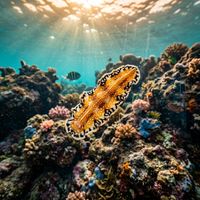
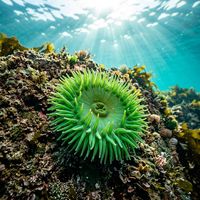
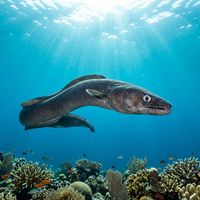
Invertebrates dominate here. Giant Green Anemone, Jewel Anemone, Sea Star, Brittle Star and Spiny Spider Crab turn up at almost every site. Look more carefully and you may find Fourline Nudibranch, Orange-clubbed Nudibranch or Cadlina Pellucida on the reef. European Common Cuttlefish and Conger Eel are reliably common, and the Gray Seal makes occasional appearances.
Yes, though only at selected sites. Canons Santa Rosa is rated for beginners and sits at shallow depth, while Canons du Rhone is accessible to newly certified divers and can be reached by both boat and shore. Many other sites, including Kleber, Le Colombian and the Peter Sif, demand advanced certification and deep diving experience due to significant depth and strong currents.
The vast majority of sites require boat access, reflecting the offshore nature of the archipelago. Canons du Rhone is the notable exception, accessible by both boat and shore. Several operators including Korejou Plongée, Ouessant-Subaqua, Madeo Plongée and Iroise Explorer run trips throughout the region.
Wrecks are a standout feature, with named vessels ranging from the shallow Canons Santa Rosa to the deep and technically demanding Okawongo and Peter Sif. Rocky reef and kelp forest sites such as Balise le Chien and L Eildon complement the wreck diving. Several sites combine both, and depth ranges across the region cater to everyone from newly certified divers to technical divers.