Corallimorphidae
Jewel anemones light up cold Atlantic walls from Brittany to Scotland. Here's where to find them, how to ID them, and what water temps to expect.
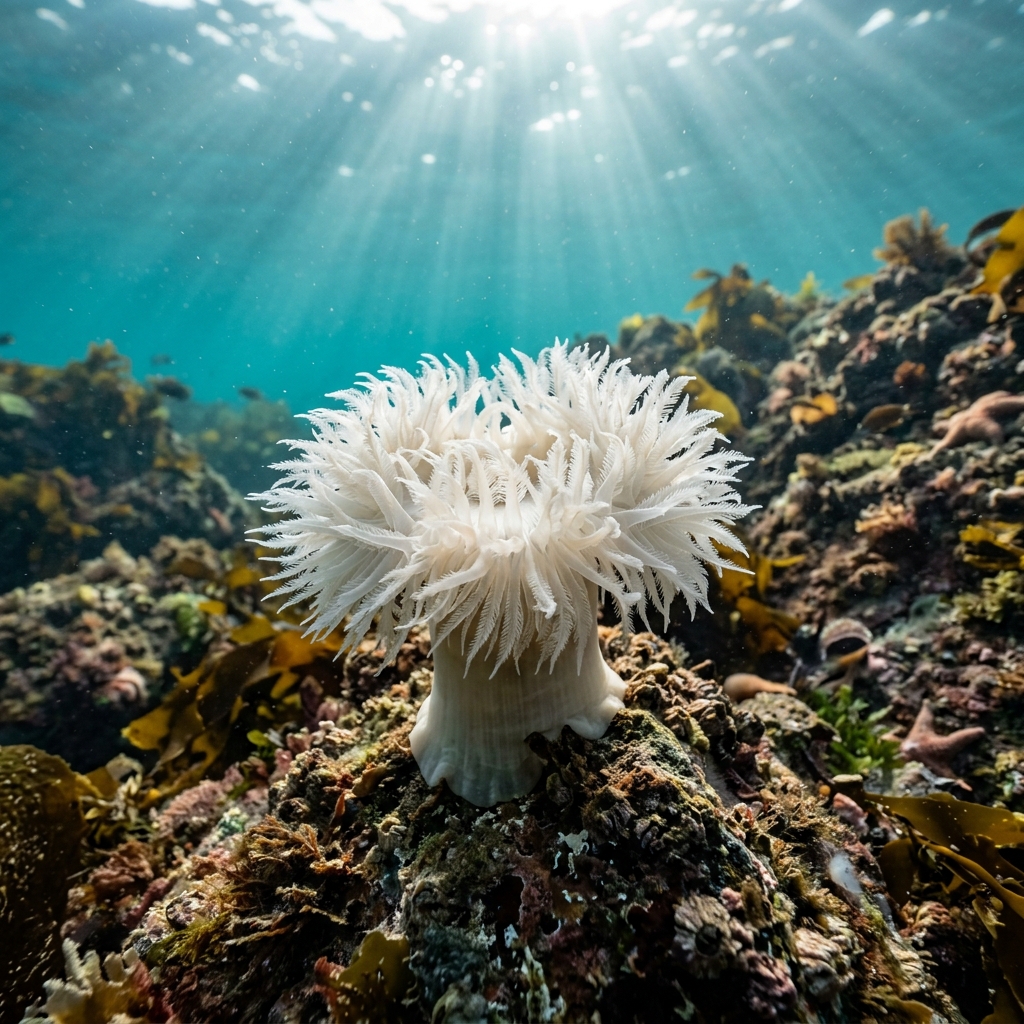
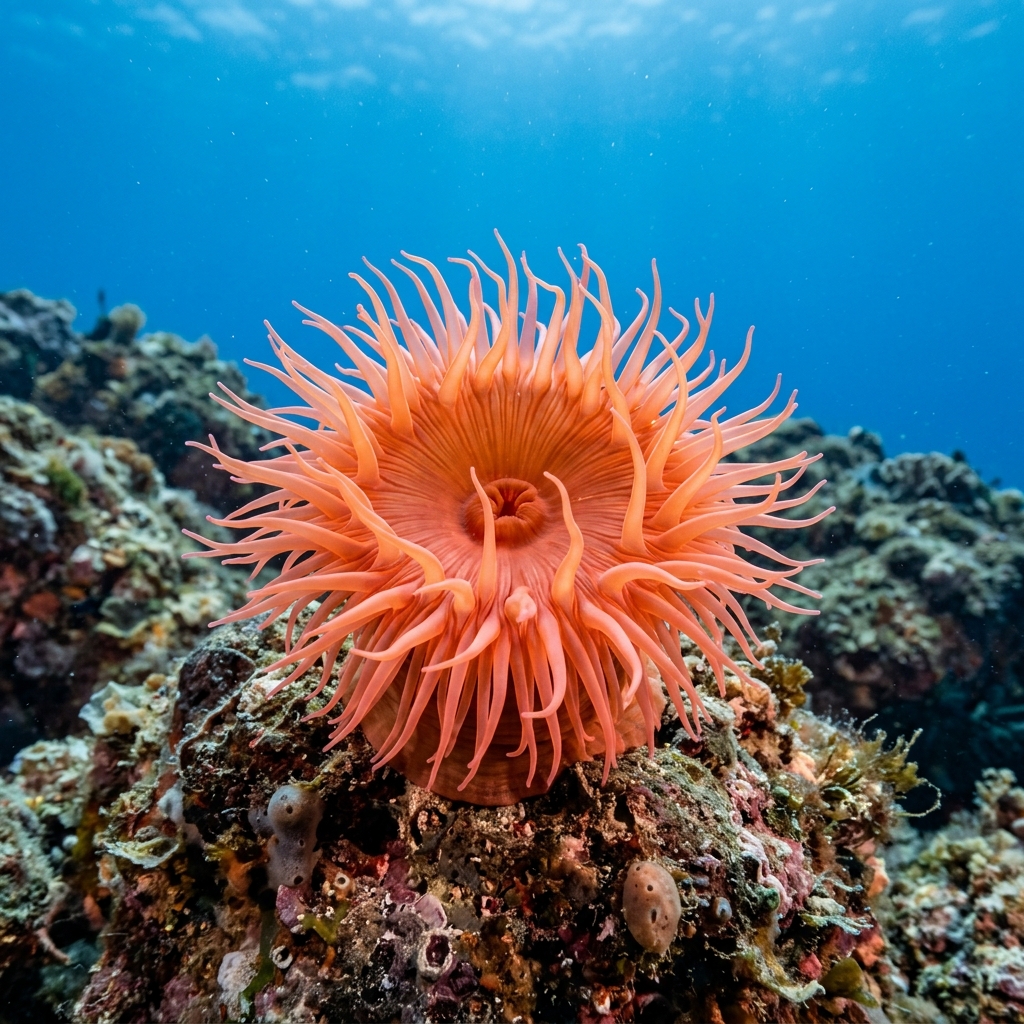
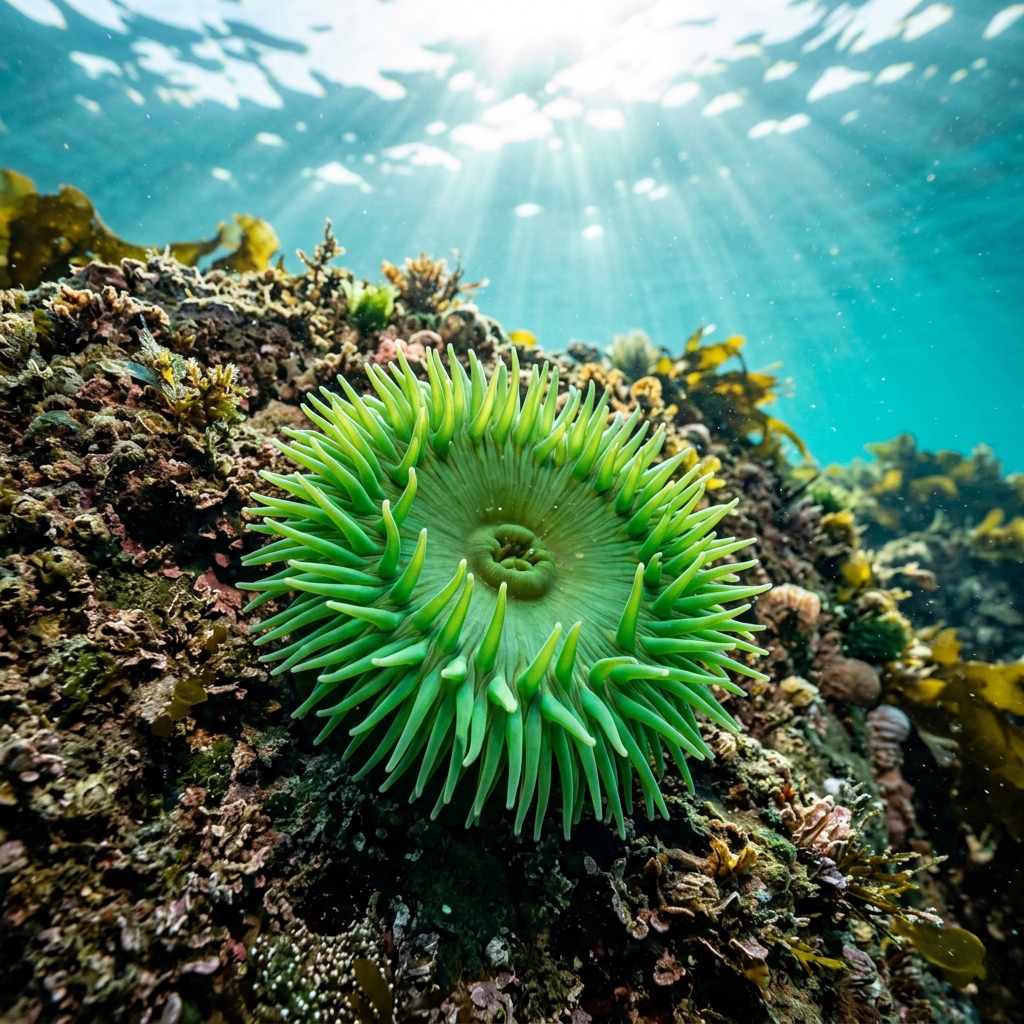
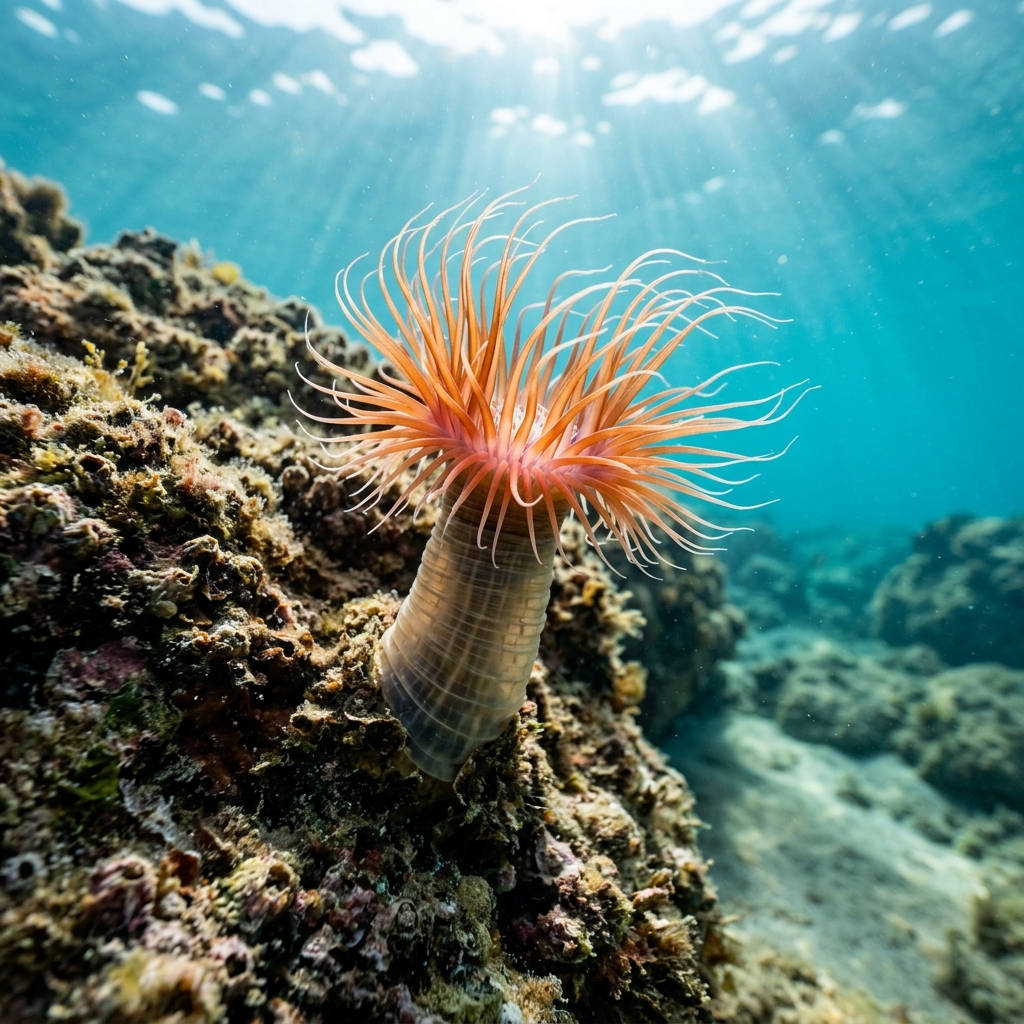
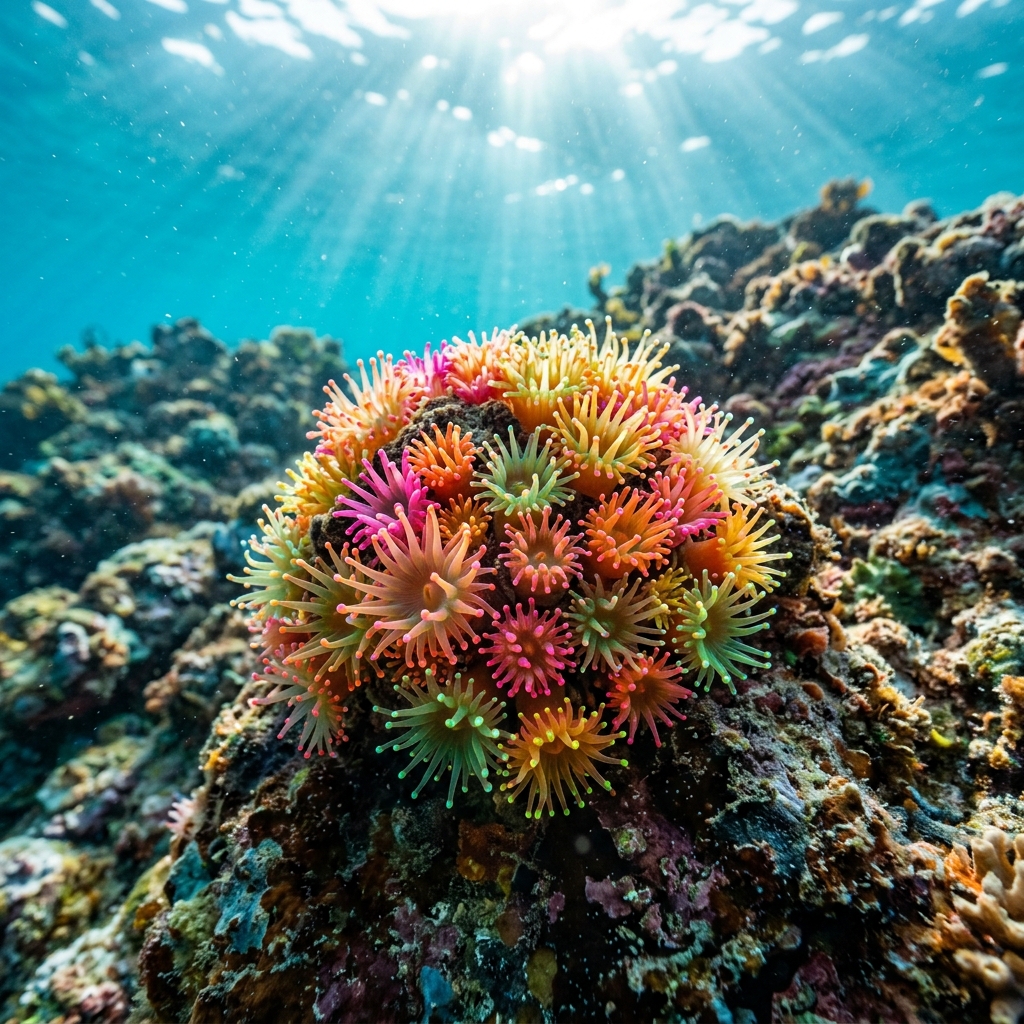
Jewel anemones (family Corallimorphidae) grow as dense colonies of small, flattened disc-like polyps, each fringed with short, rounded tentacles tipped in a contrasting colour. Colonies commonly appear in vivid patches of pink, orange, white, red, or purple, often with neighbouring colonies in different colours side by side. The tentacle tips catch light and give the colony a glittering, bead-like texture that distinguishes it from true anemones at a glance. Look for them plastered across shaded vertical rock faces and overhangs rather than sitting proud on open reef.
Jewel anemones are sessile (fixed in place) filter feeders, extending their polyps to capture passing particles and tiny prey from the current. You will typically find them in shaded spots where surge or tidal flow delivers food, particularly on the undersides of boulders, cave walls, and steep drop-offs. They show no reaction to divers beyond being easily damaged by accidental contact, so the main job is to avoid touching the rock around them.
Unlike true anemones, jewel anemones are corallimorpharians, sitting taxonomically between stony corals and anemones. They can reproduce by splitting (clonal division), which is why you often see perfectly uniform colour patches side by side, each patch is effectively a single clone.
Available data does not point to a concentrated season, so jewel anemones can reasonably be treated as year-round targets wherever they occur. Their observed water-temperature range of roughly 9 to 17 °C matches the cool temperate Atlantic conditions found in these regions throughout the year.
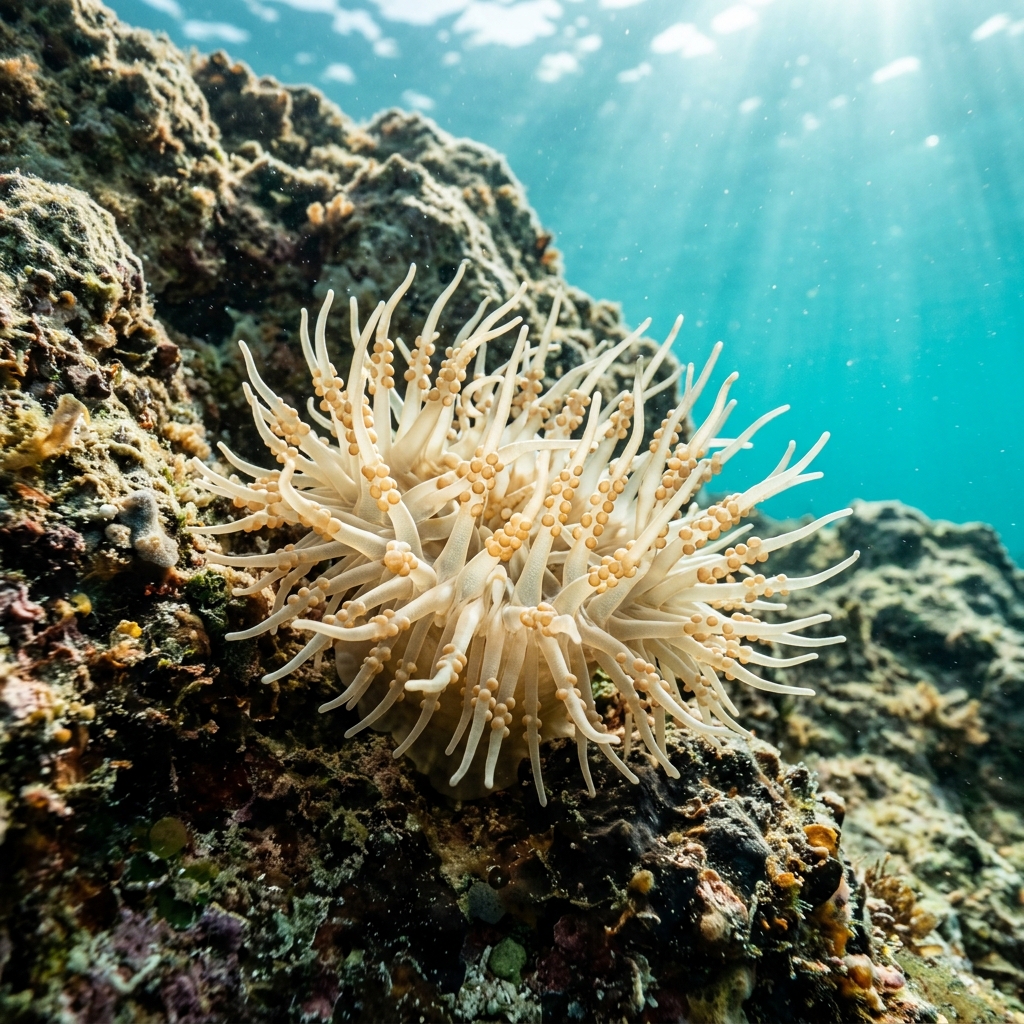
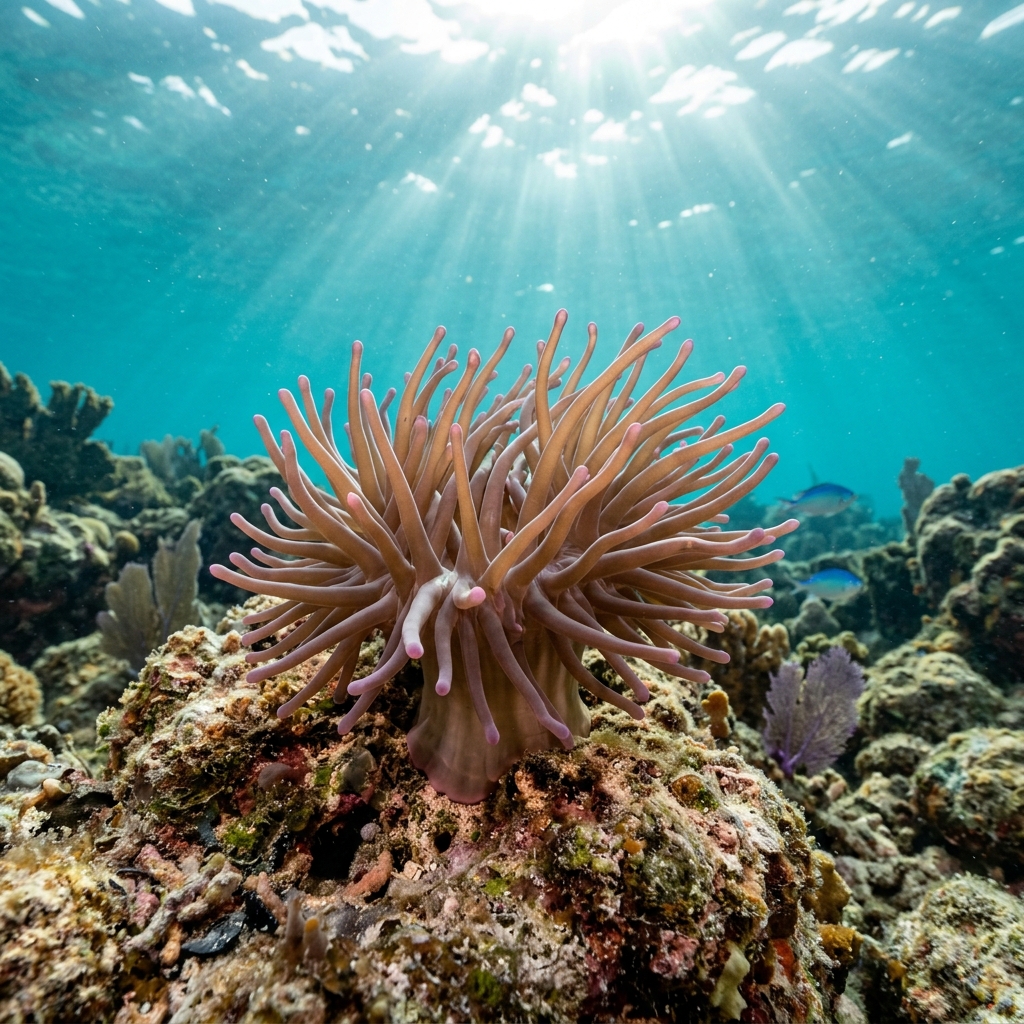
Reef neighbours a diver could mistake it for. Use the identification notes above to tell them apart.
Jewel anemones are most consistently logged across the northeastern Atlantic, with the strongest site coverage in the United Kingdom, France, Ireland, and Norway. Brittany and Normandy in France and the South Coast and West of Scotland in the UK stand out as particularly well-represented regions. Ireland's southwest coast and Southern Norway are also reliable areas, and the species turns up across Northern European sites into the North Sea.
Mapping where Jewel Anemone is logged…
The best-covered diving regions are along the northeastern Atlantic coast: Brittany and Normandy in France, the South Coast of England, Ireland's southwest coast, Scotland's west coast, and Southern Norway. They are also logged across Northern Germany and into the North Sea region.
No strong seasonal pattern shows up in the sighting data, so they can be targeted year-round. Their preferred water temperatures of around 9 to 17 °C are typical of the cool northeastern Atlantic throughout the year, meaning conditions for finding them stay fairly stable across seasons.
Look for low-profile colonies of small, disc-shaped polyps with short tentacles tipped in a contrasting colour, packed tightly across shaded rock. The bead-like texture and vivid, often mixed colour patches, pink, orange, white, red, purple, are distinctive. Plumose anemones grow taller and individually, while true sea anemones typically appear as solitary animals with longer, more uniform tentacles.
Individual jewel anemone polyps are small, typically just a centimetre or two across. Their impact underwater comes from the colony as a whole, which can carpet large sections of rock in vivid colour rather than from any single large specimen.
Jewel anemones are not true anemones but corallimorpharians, a group that sits between stony corals and anemones in evolutionary terms. They reproduce by clonal splitting, so adjacent colour patches on a rock are often genetically identical individuals that have divided from a common ancestor. This accounts for the sharp colour boundaries you sometimes see between neighbouring colonies.
Site and sighting data is aggregated from diver logs, iNaturalist and GBIF. For taxonomy and conservation status:
Cerianthus
1,879 sites