Maja spp.
Spot Spiny Spider Crab across Brittany, the English South Coast and Ireland from April to November in cool Atlantic waters. Here's what to look for.
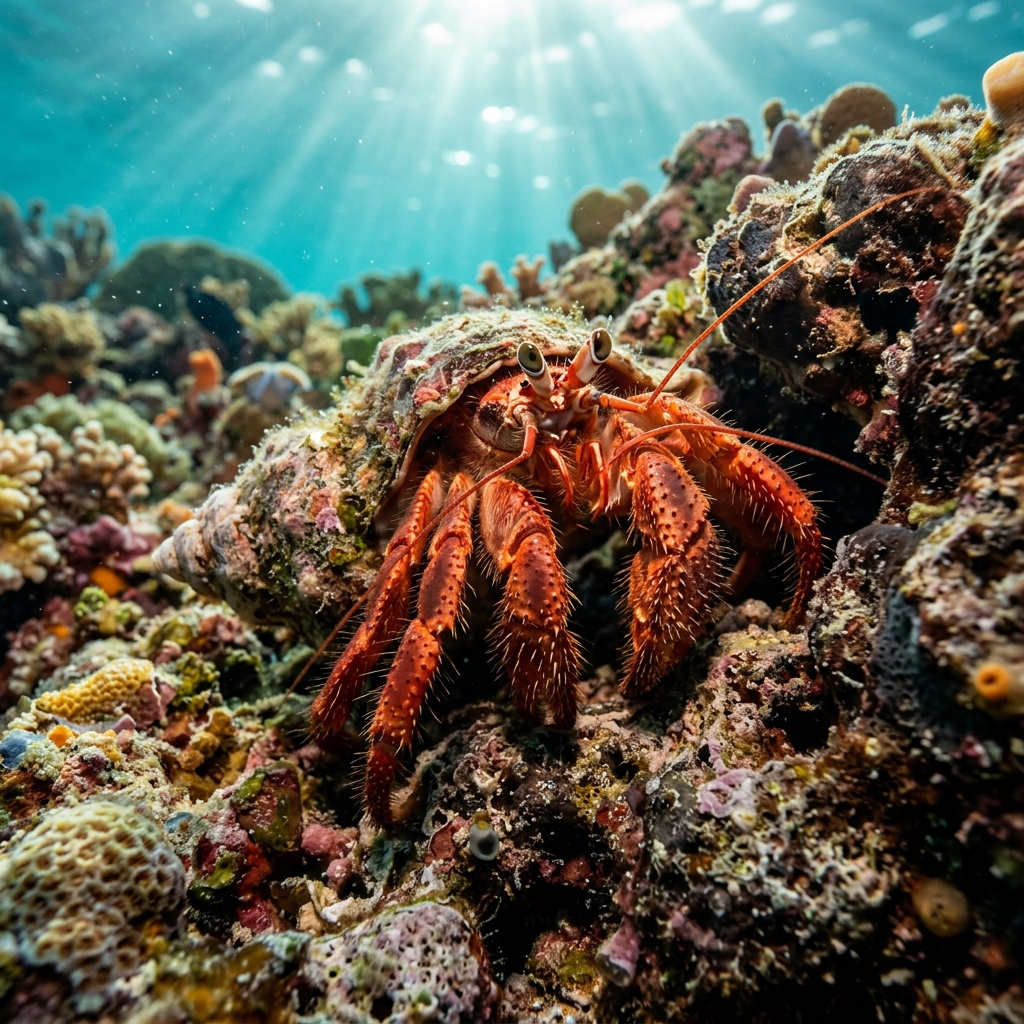
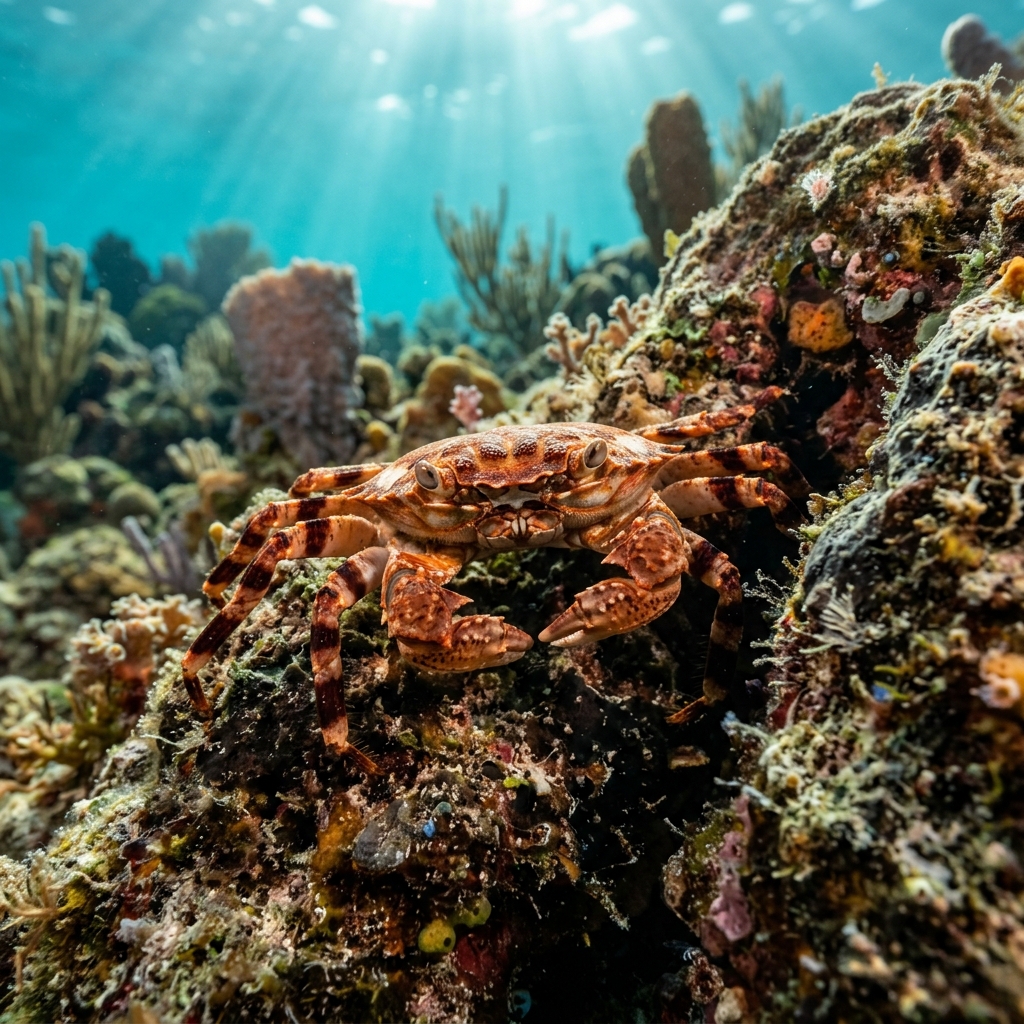
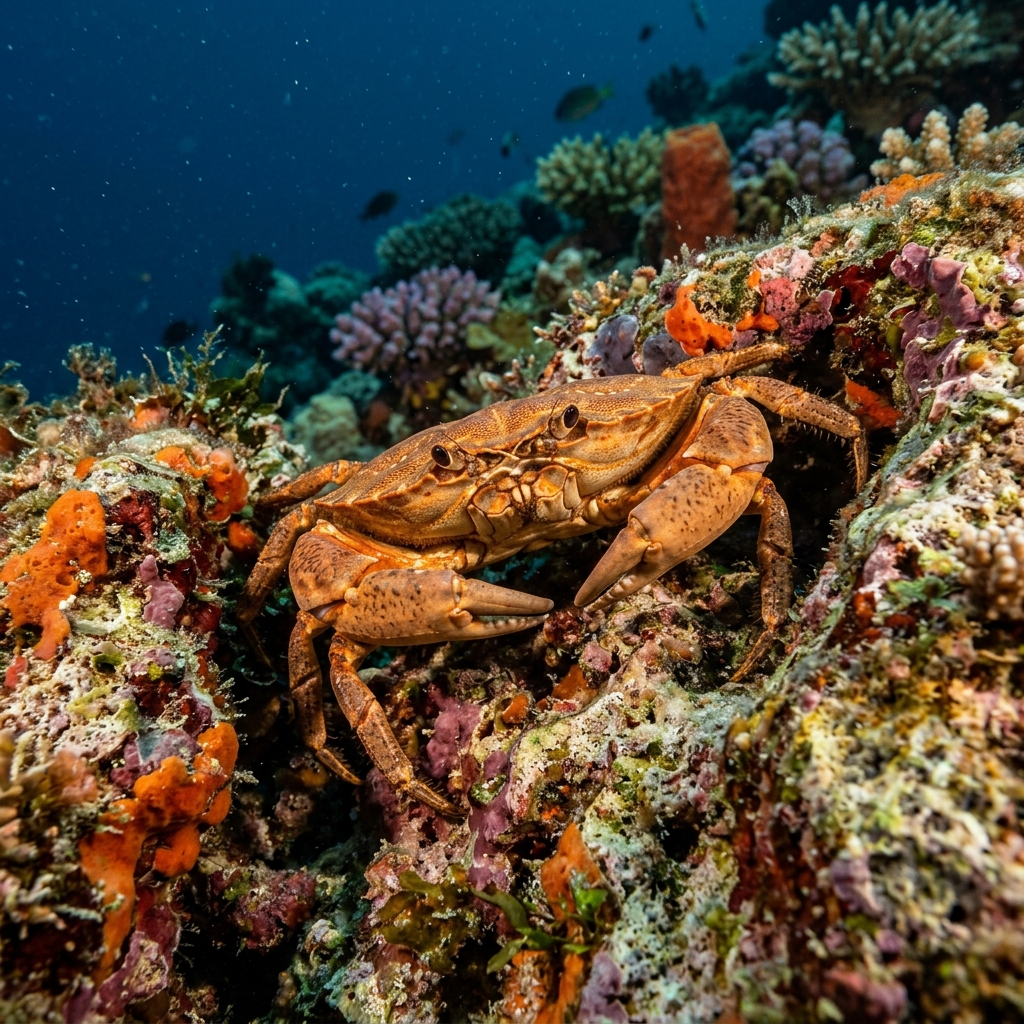
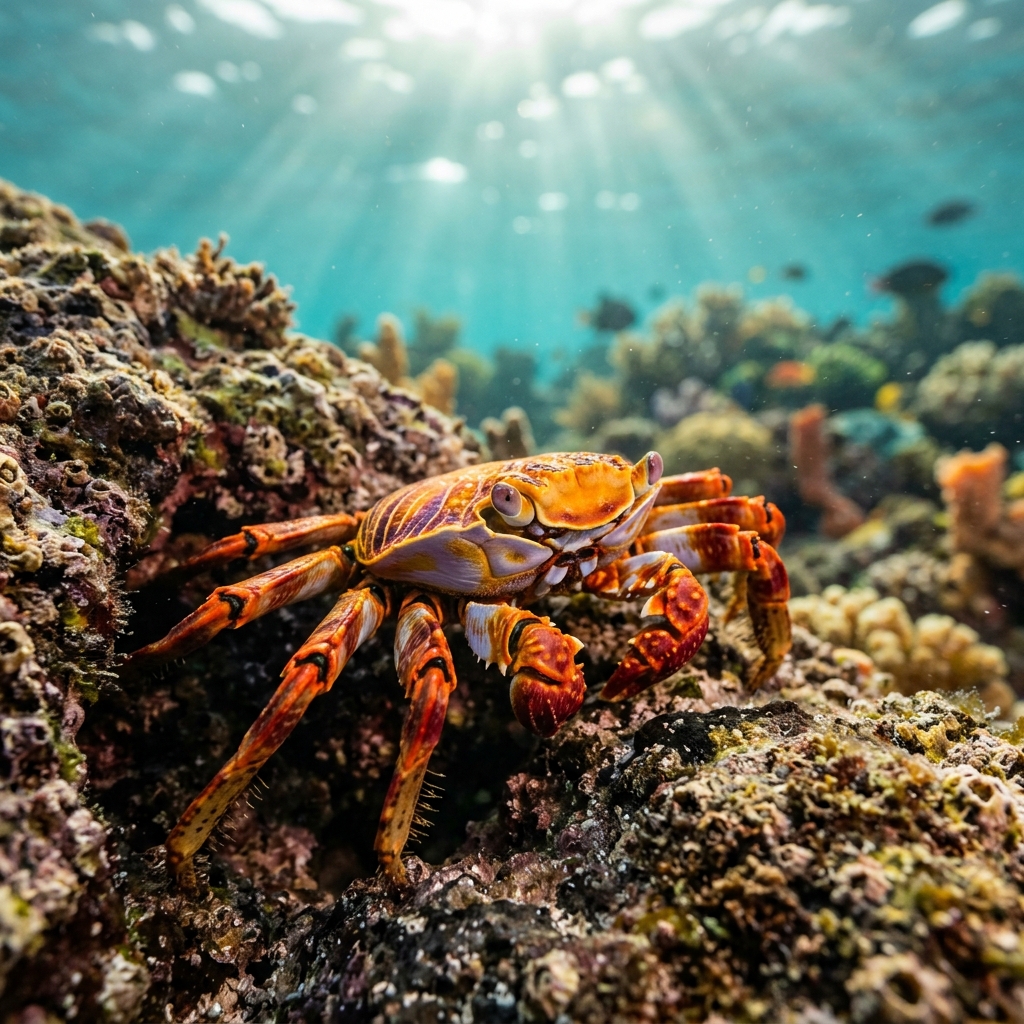
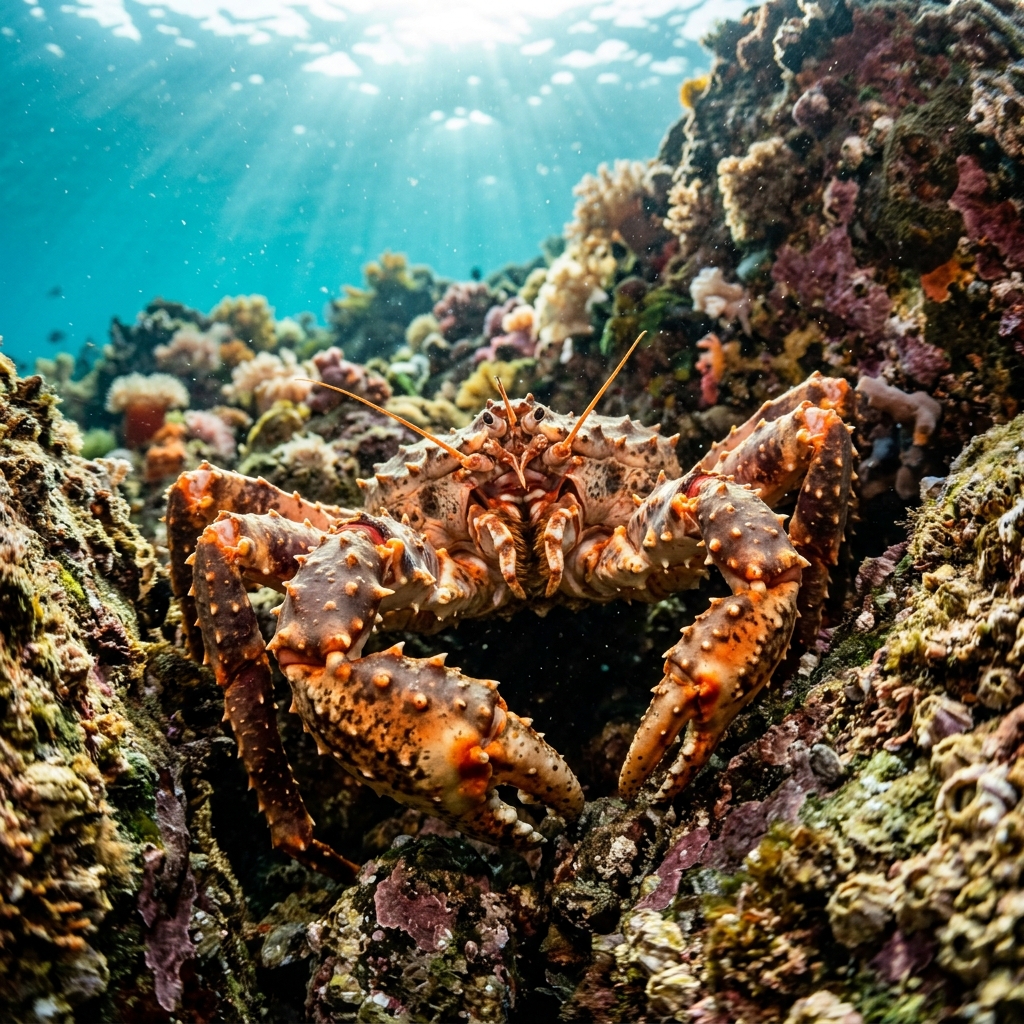
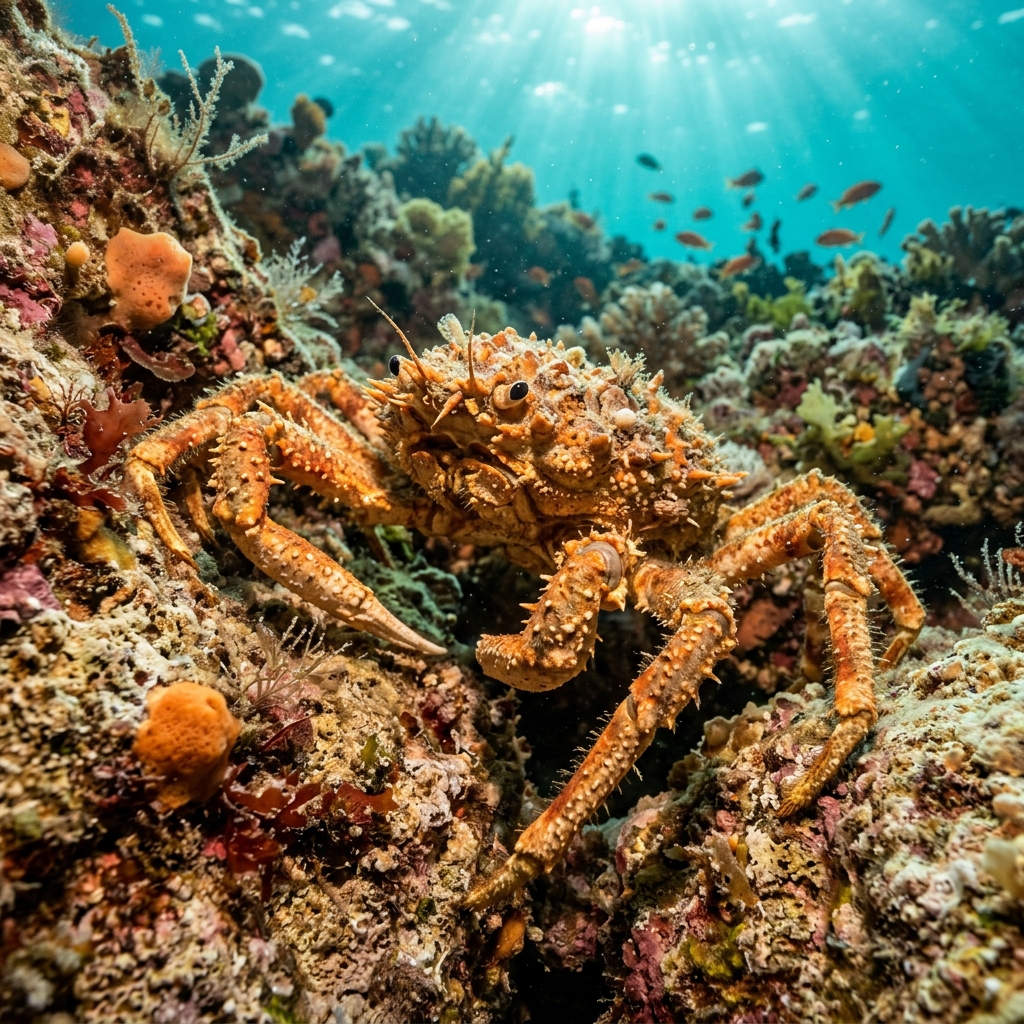
A large, roughly pear-shaped carapace covered in sharp spines and coarse bristles gives this crab an unmistakable silhouette underwater. Colouring runs from brick-red to orange-brown, and adults typically reach around 15 cm across the shell, making them one of the heftier crabs you will encounter on Atlantic reefs. The very long, spindly legs relative to the body size are the quickest field mark. Males carry a narrow, elongated abdomen tucked beneath the shell, while females show a broader, rounder abdomen used to brood eggs.
On most dives you will find spiny spider crabs moving slowly across rocky or mixed-sediment bottoms, often in the open where their spiny armour does the work of camouflage rather than hiding. They are largely unbothered by divers and will typically continue foraging or sit still rather than flee. During late spring and early summer, large aggregations (gatherings of dozens to hundreds of individuals) sometimes form in shallow water, likely linked to moulting and mating, and these are the easiest encounters to plan for.
Spiny spider crabs are known for forming remarkable mass aggregations in shallow bays and around rocky headlands during the moulting season. Individuals pile on top of one another, apparently for protection while their new shells harden, and a diver can stumble upon hundreds of crabs in one spot where none were visible the week before.
Sightings concentrate from April through November in the Northern Hemisphere, which aligns with warming inshore waters across the Atlantic European coast. Outside those months encounters become very sparse, so plan accordingly if you are targeting this species.
Most commonly logged along the Atlantic coasts of Europe, with Brittany and Normandy in France and the South Coast of England accounting for the strongest concentrations of sightings. Ireland's Southwest Coast, the Algarve and Lisbon Coast in Portugal, and South West England and Wales are also reliable areas. Sightings stretch as far as Germany, the Netherlands and Denmark, reflecting how widely this crab ranges across cool-temperate neritic (shallow coastal) waters.
Mapping where Spiny Spider Crabs is logged…
The strongest sighting records come from Brittany and Normandy in France, the South Coast of England, and Ireland's Southwest Coast. Portugal's Algarve and Lisbon Coast are also productive, and the species appears across the Netherlands, Denmark and Germany. All these sites share cool, shallow Atlantic conditions that suit the crab well.
April through November gives you the best window across Northern Europe. Late spring and early summer are particularly rewarding if you want to catch the mass moulting aggregations in shallow water, when large numbers gather in one place and sightings shift from rare to hard to miss.
Look for a pear-shaped, bristly carapace covered in short spines, brick-red to orange-brown colouring, and disproportionately long, slender legs. At around 15 cm across the shell it is noticeably large compared to most other crabs on Atlantic reefs, and no common European crab shares that combination of size, spine-covered shell and spindly legs.
A typical adult measures around 15 cm across the carapace. The legs extend well beyond that, making the crab look considerably larger in the water than the shell measurement suggests.
During the moulting season, large numbers congregate in shallow water and physically stack on top of each other. The likely reason is mutual protection: a crab that has just shed its old shell is soft and vulnerable until the new one hardens, and clustering with others, including those in hard shell, reduces predation risk. These aggregations can involve hundreds of individuals and last for days.
Site and sighting data is aggregated from diver logs, iNaturalist and GBIF. For taxonomy and conservation status:
European Green Crab
2,469 sites