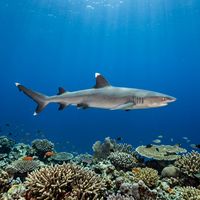
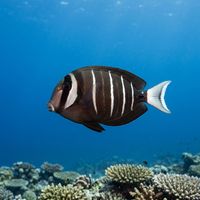
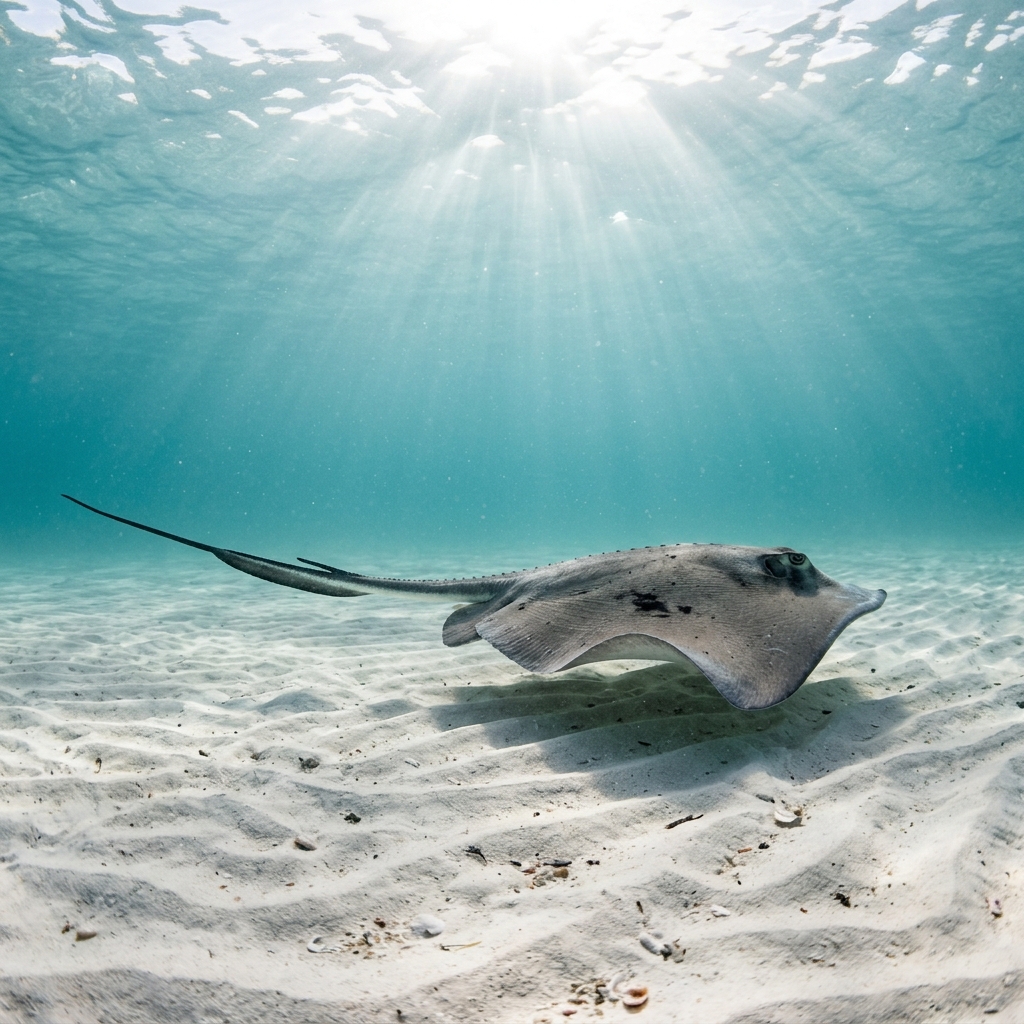
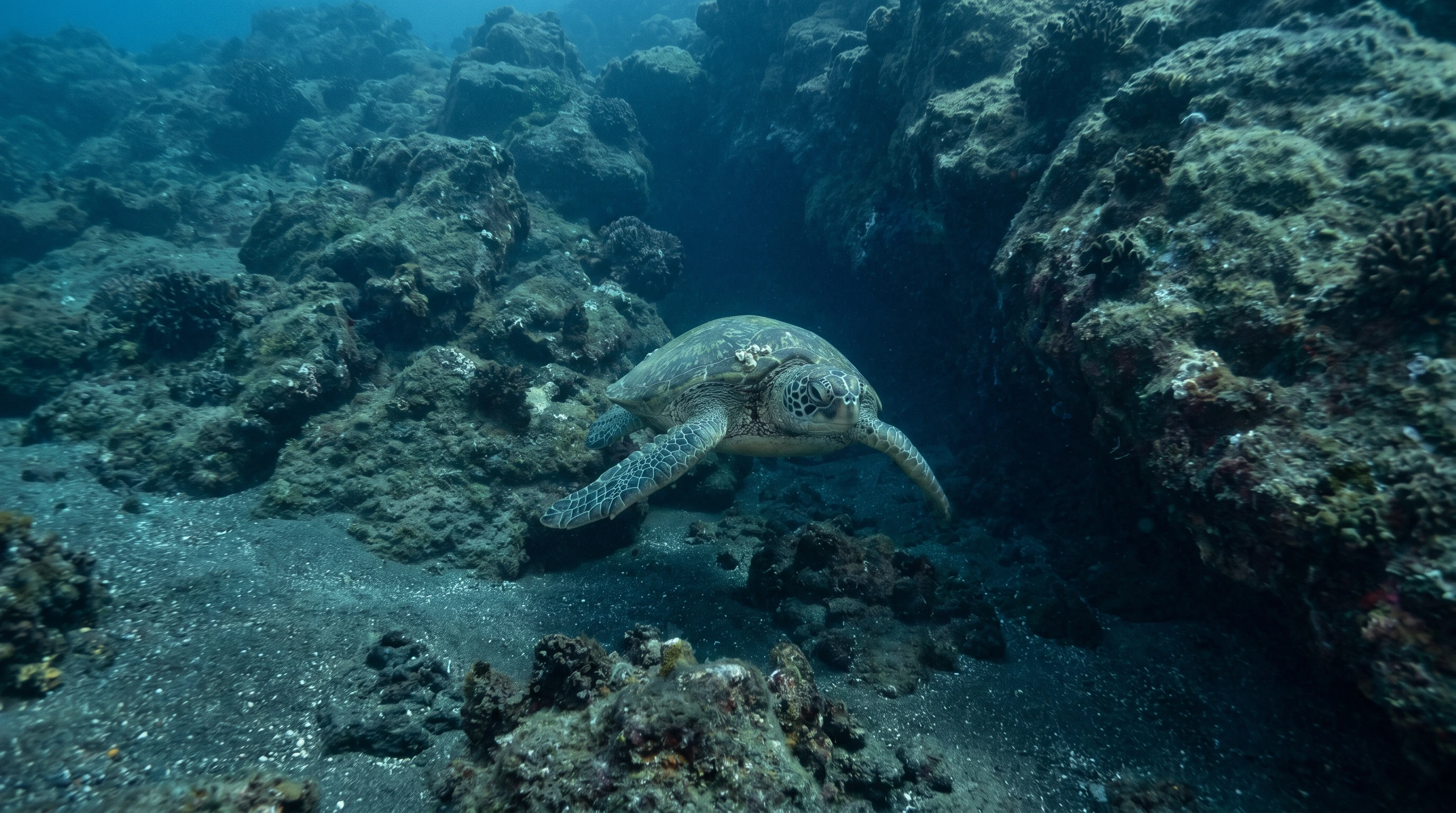
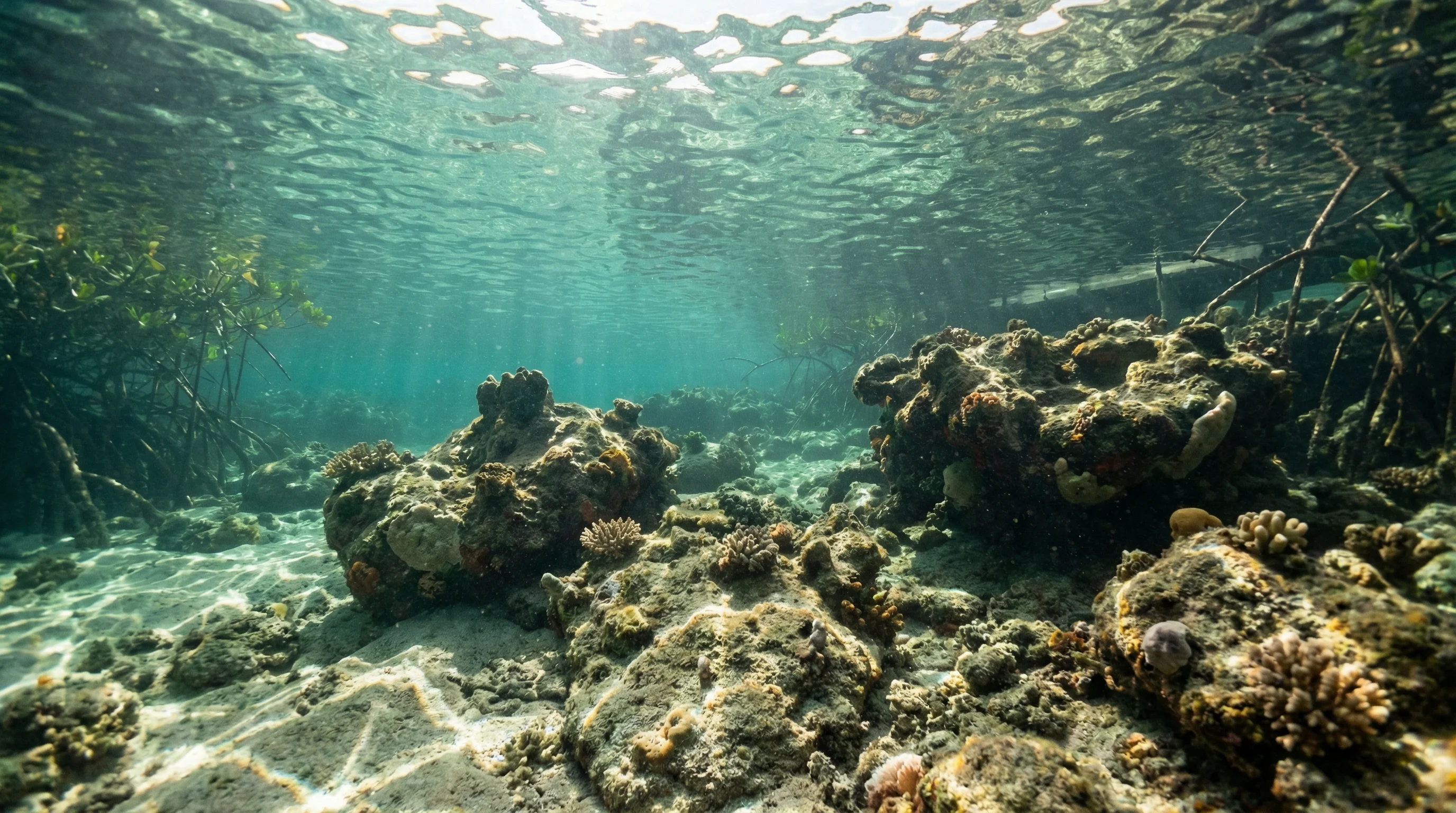
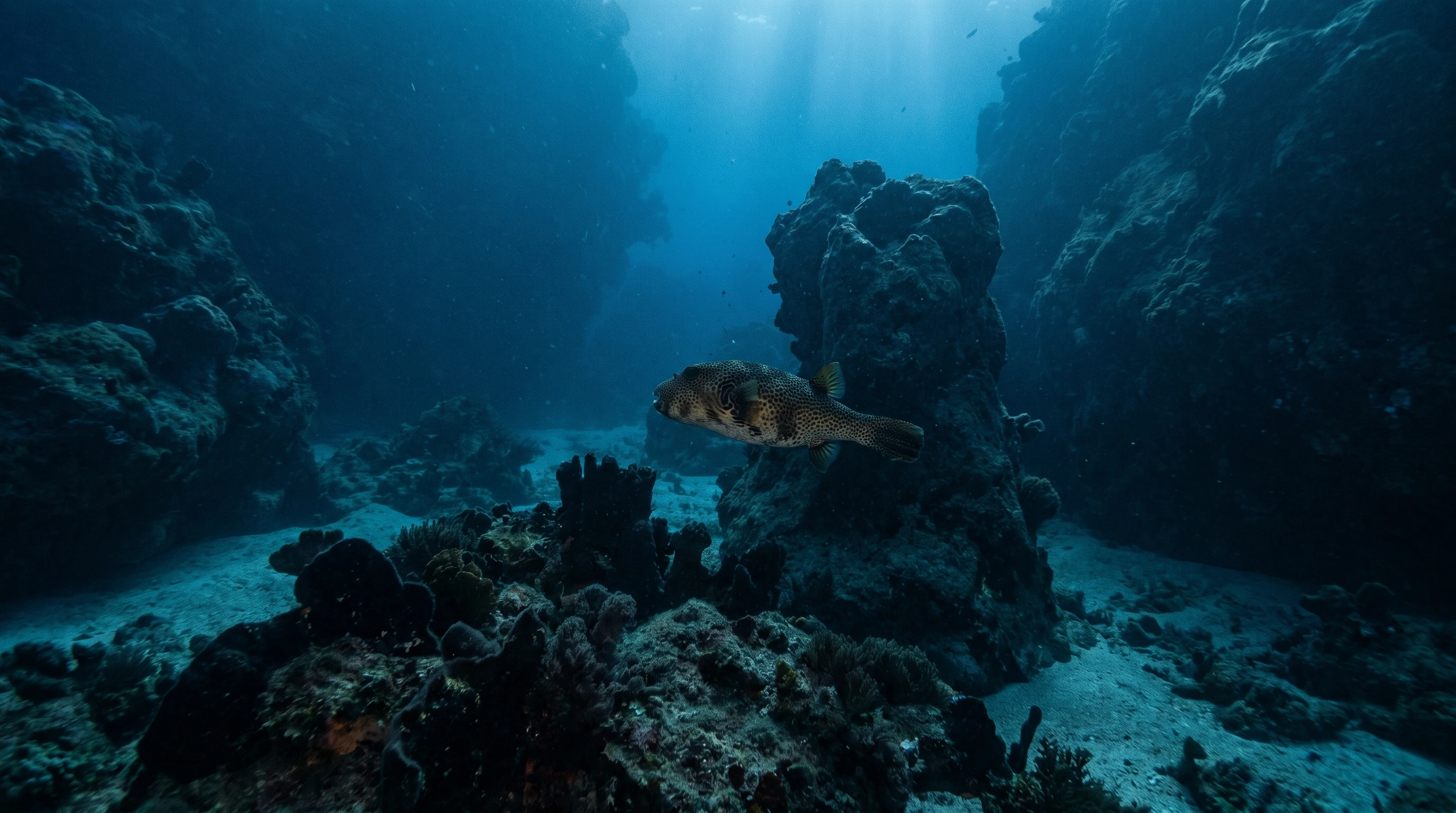
Santa Cruz sits at the heart of the Galápagos archipelago and offers a wide range of site types, from shallow seagrass bays and platform reefs to walls, pinnacles, and serious drift dives. Sub-areas vary markedly: Puerto Ayora provides accessible shore entries, while Gordon Rocks and North Seymour deliver strong current dives for experienced intermediates. The California Sea Lion, Spotted Eagle Ray, and Whitetip Reef Shark are consistently encountered across sites, giving every dive real wildlife character.
4 areas
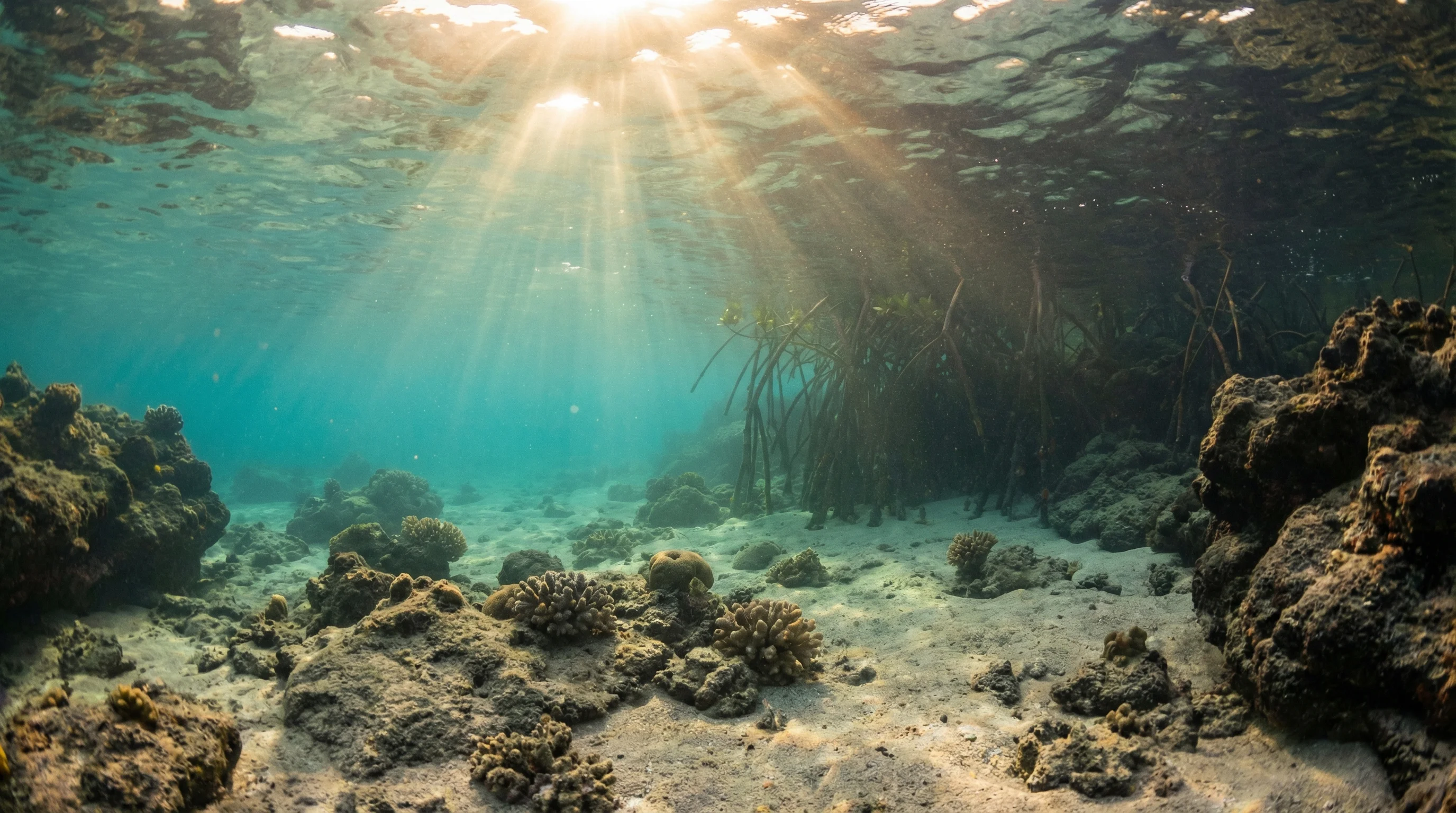
Monthly water temperature across Santa Cruz's sites, from satellite sea-surface data corrected for depth. The band shows the site-to-site spread.
Water is warmest from January through April, making this the most comfortable period for longer dives without heavy exposure protection. From mid-year into December, cooler upwellings bring a noticeable drop in temperature and can vary visibility significantly, though productive nutrient-rich water draws larger pelagic encounters. Most sites require boat access and suit intermediate divers, with strong currents at Gordon Rocks and North Seymour demanding good buoyancy and drift experience.
31 operators

Puerto Ayora, Ecuador

22 more sites to explore
Shore and boat sites around Santa Cruz with California Sea Lion, Spotted Eagle Ray, and Whitetip Reef Shark observed across the area.
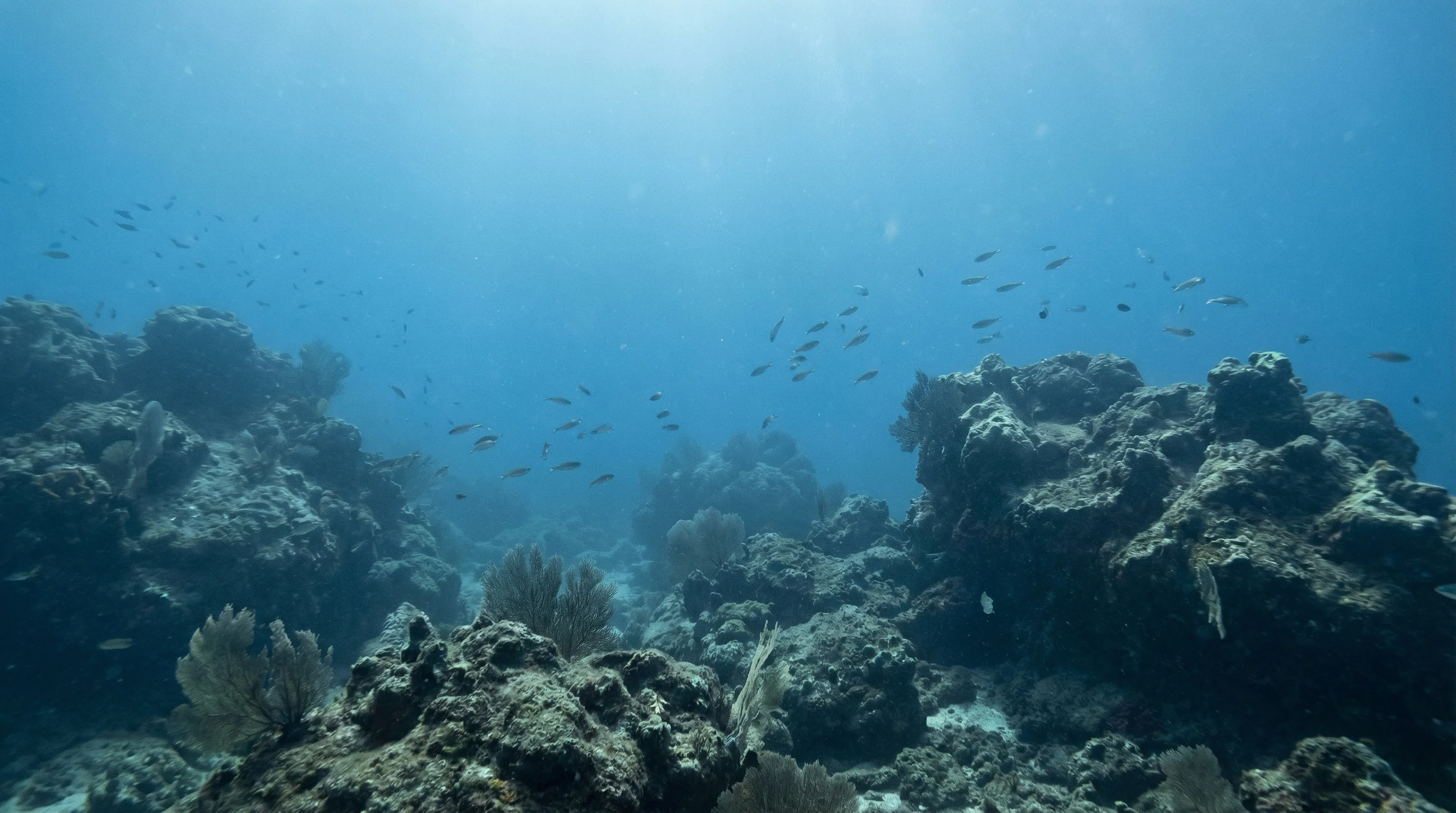
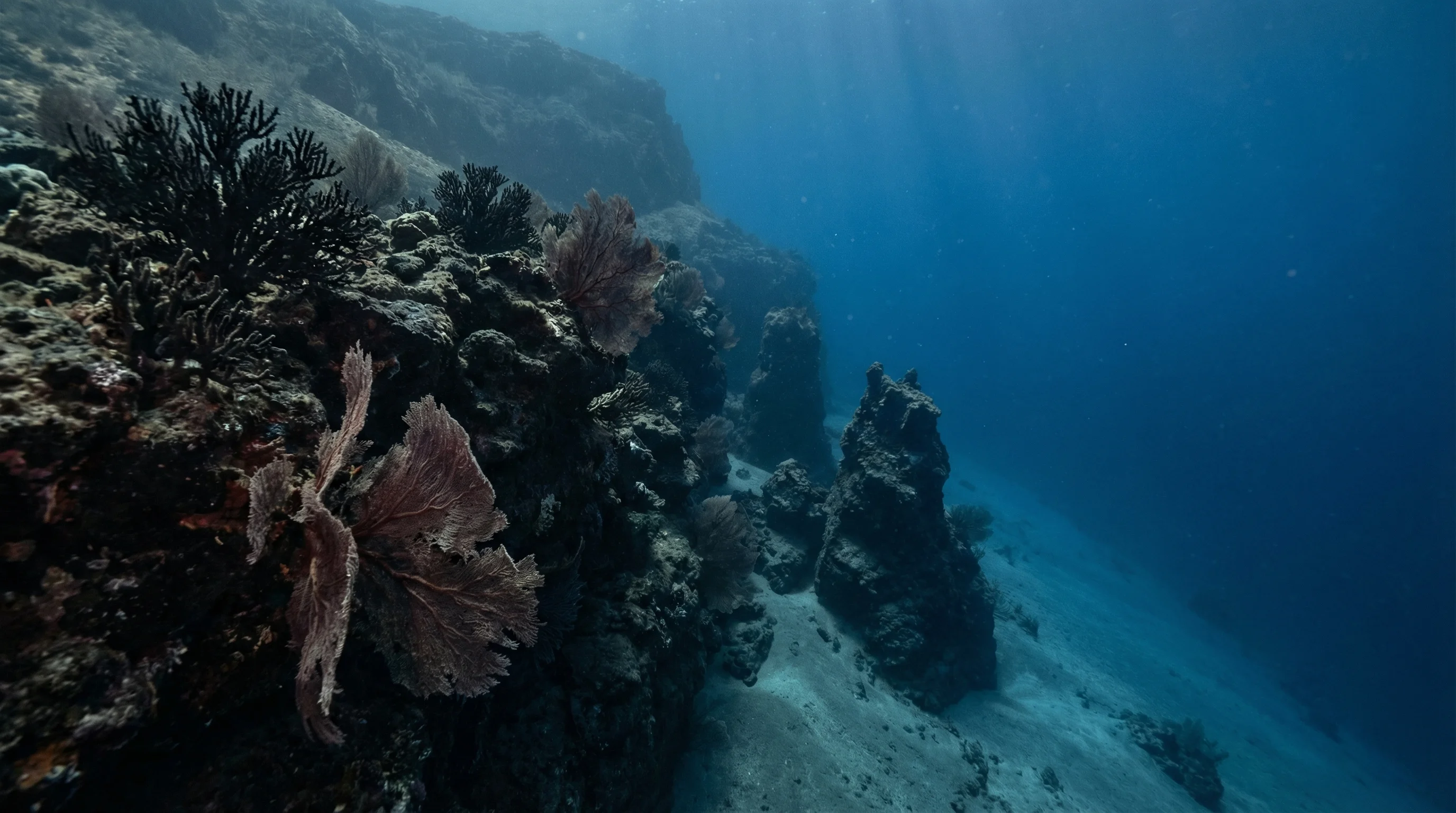
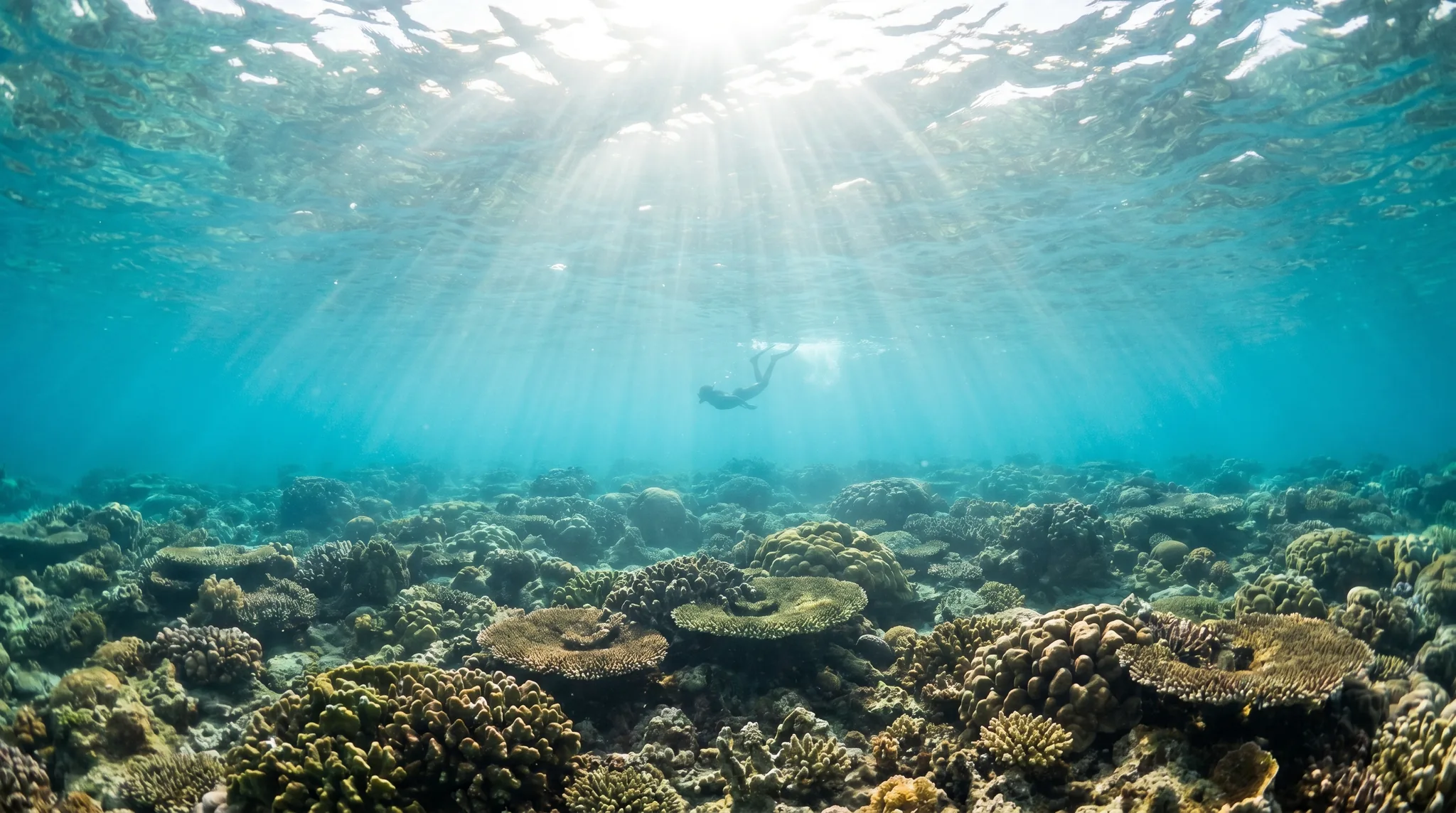
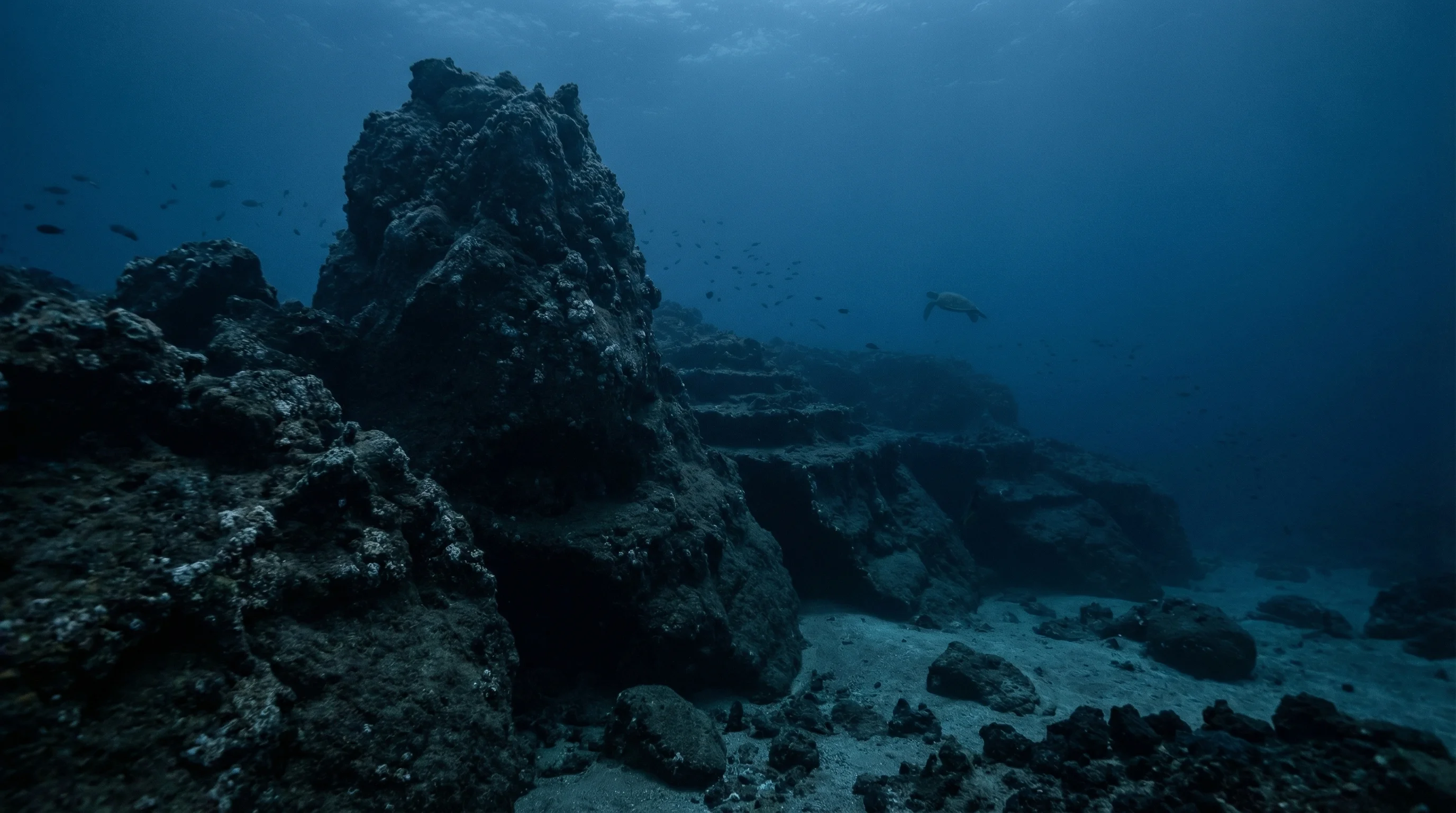
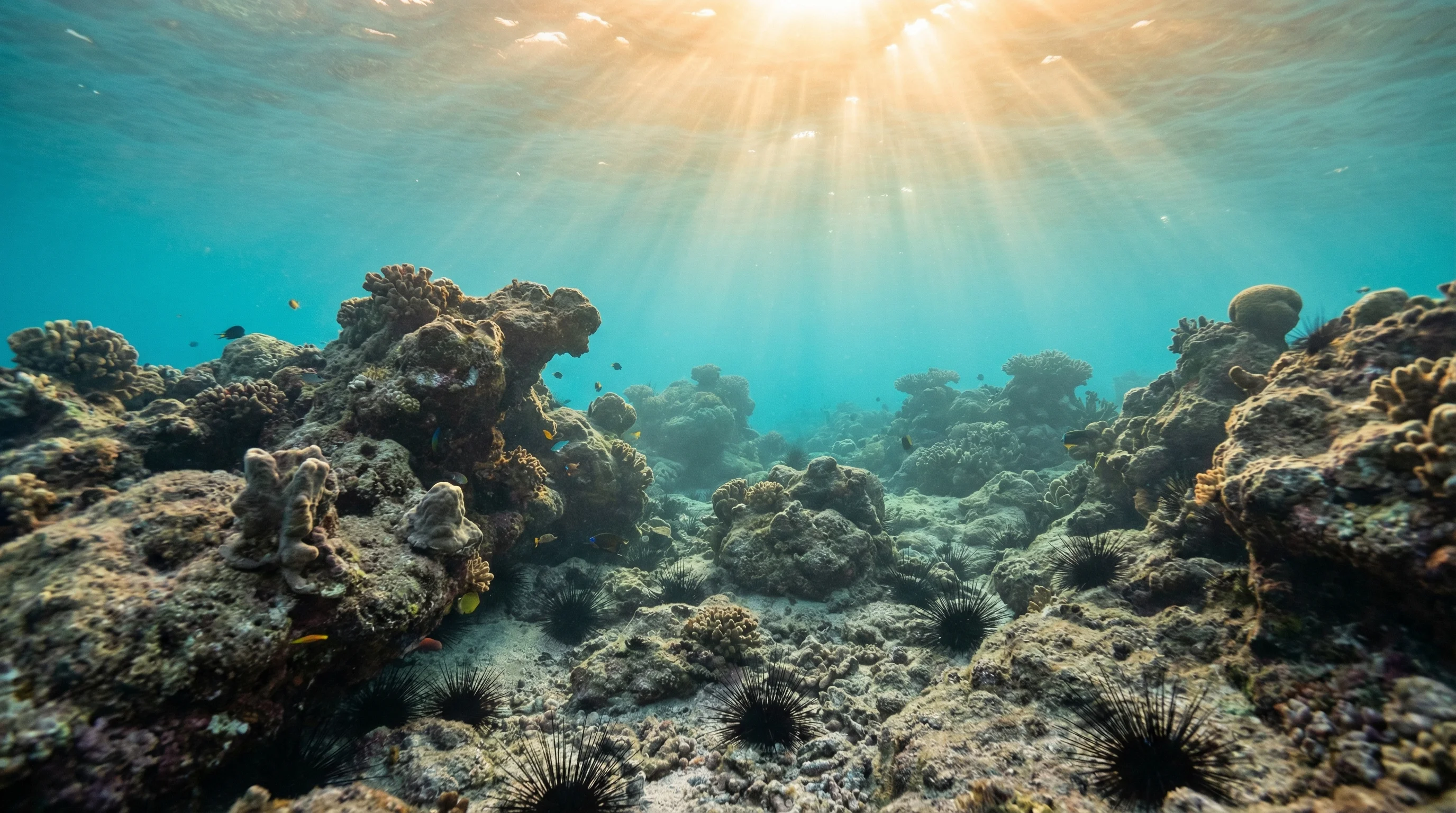
Water temperature around Santa Cruz ranges from about 20°C in August to 24°C in February, based on satellite sea-temperature data for its dive sites.
In the warm season (about 24°C) a 3mm full suit is comfortable in Santa Cruz; in the coldest months (about 20°C) step up to a 5mm suit.
Fin maps 34 sites in Santa Cruz (30 scuba diving sites and 13 snorkelling spots, with some suited to both), organised into 4 areas.
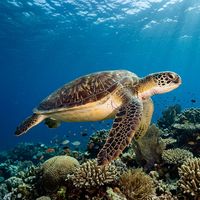
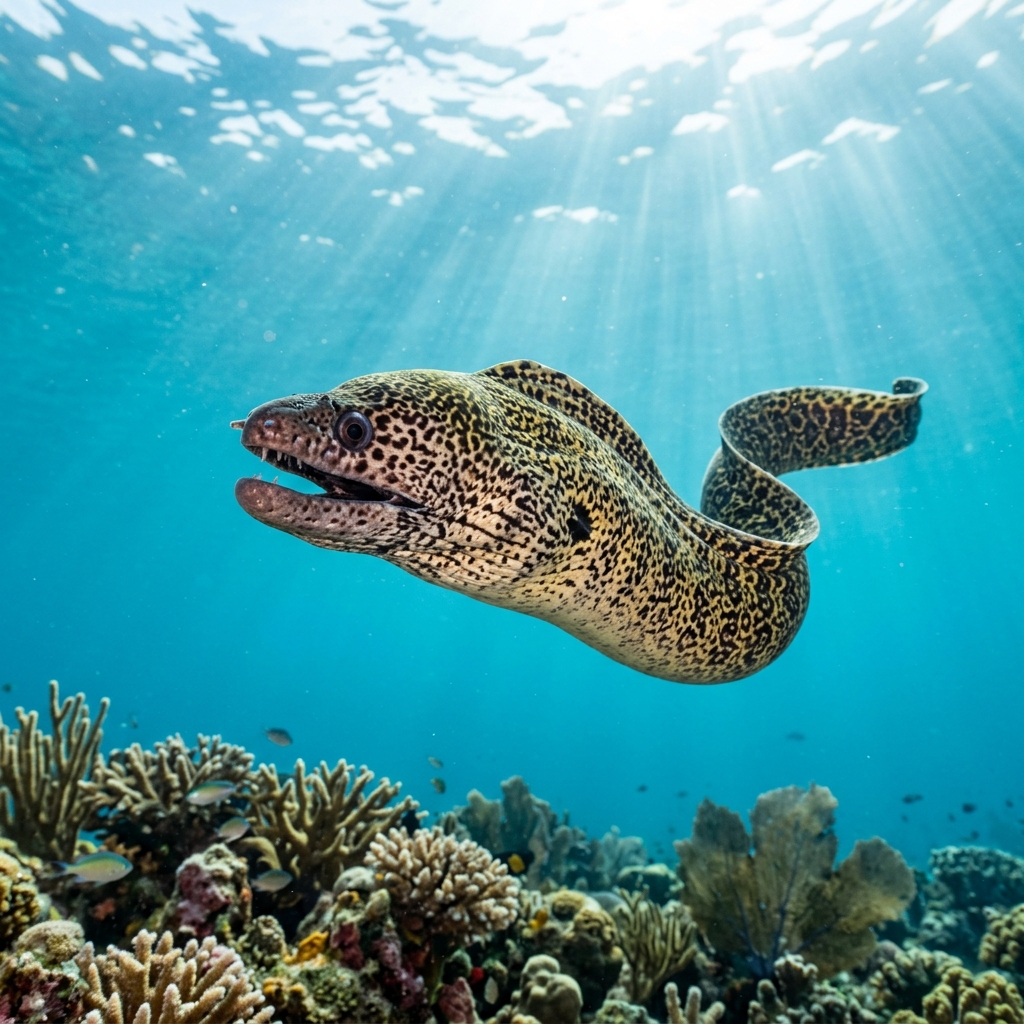
Sightings are observation-backed across the region. The California Sea Lion and Spotted Eagle Ray are seen at the vast majority of sites, while the Whitetip Reef Shark is consistently encountered on reef and drift dives. Common Blacktip Shark and Green Sea Turtle appear occasionally, and the Jewel Moray and Whiptail Stingray are frequently spotted along reef structures.
The region is weighted towards intermediate skill levels, particularly at sites like Gordon Rocks, North Seymour, and Bartolomé Island where currents and surge are factors. That said, beginner-rated sites do exist, including Seymour Channel, Rabida Island, and Caamaño Islet, which offer calmer conditions and shallower reefs. A confident open-water qualification and some drift experience will open up the majority of what Santa Cruz offers.
Puerto Ayora is the most accessible area, with shore entries available at sites like Playa de la Estación and a broad range of operators based nearby. North Seymour specialises in reef and drift diving with strong currents and reliable wildlife encounters. Bartolomé combines walls, pinnacles, and drop-offs for divers who want varied topography. Gordon Rocks is the most demanding sub-area, known for surge and current-driven drift diving.
Most sites across Santa Cruz require boat access, and the majority of operators listed in the region run day trips to offshore sites. Shore entry is available at a small number of sites, notably Playa de la Estación and Rabida Island, which are well suited to snorkellers and beginner divers. Operators including Scuba Iguana, Galapagos Dive Academy, and Eagleray Galapagos Diving are among those organising boat departures from the area.