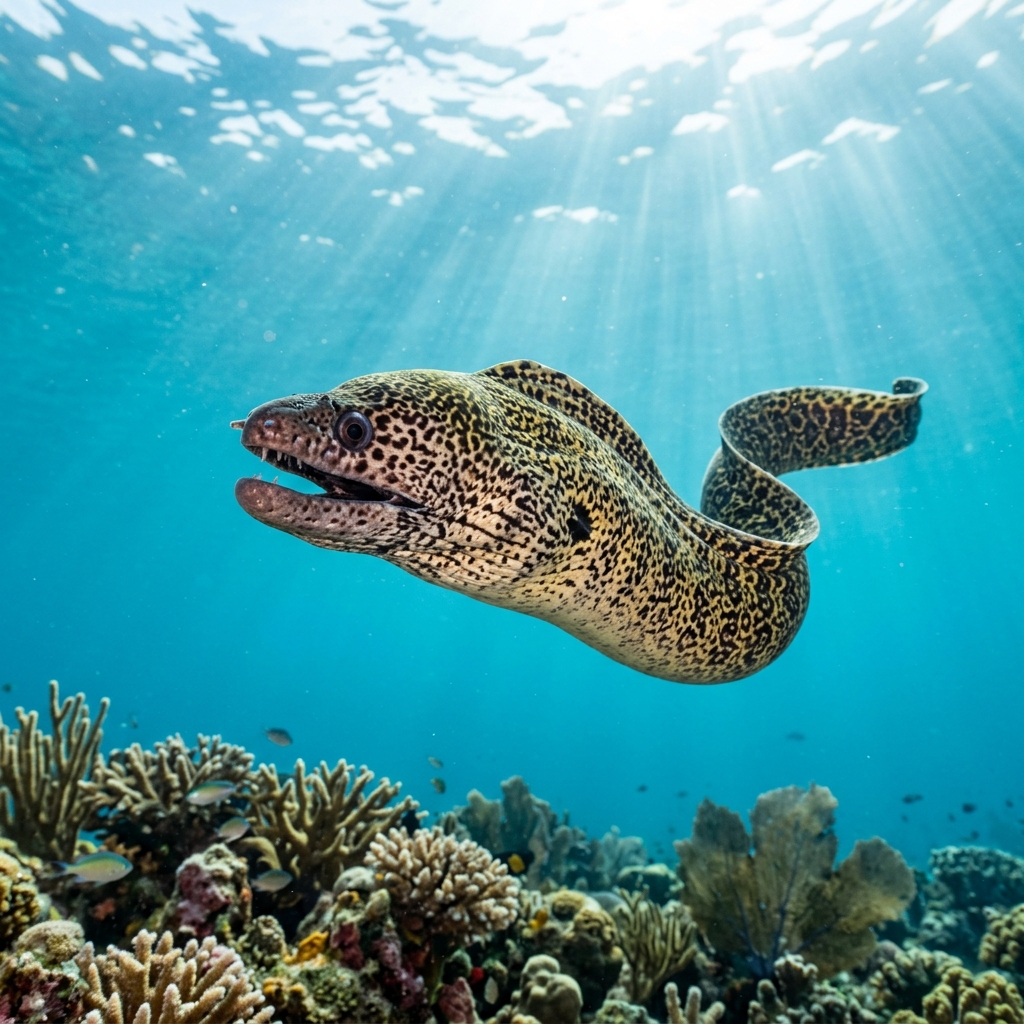
Muraena lentiginosa
Spot the Jewel Moray's distinctive white-spotted brown body in the Papagayo Gulf or Galápagos. Present year-round in 22-29 °C Pacific waters.
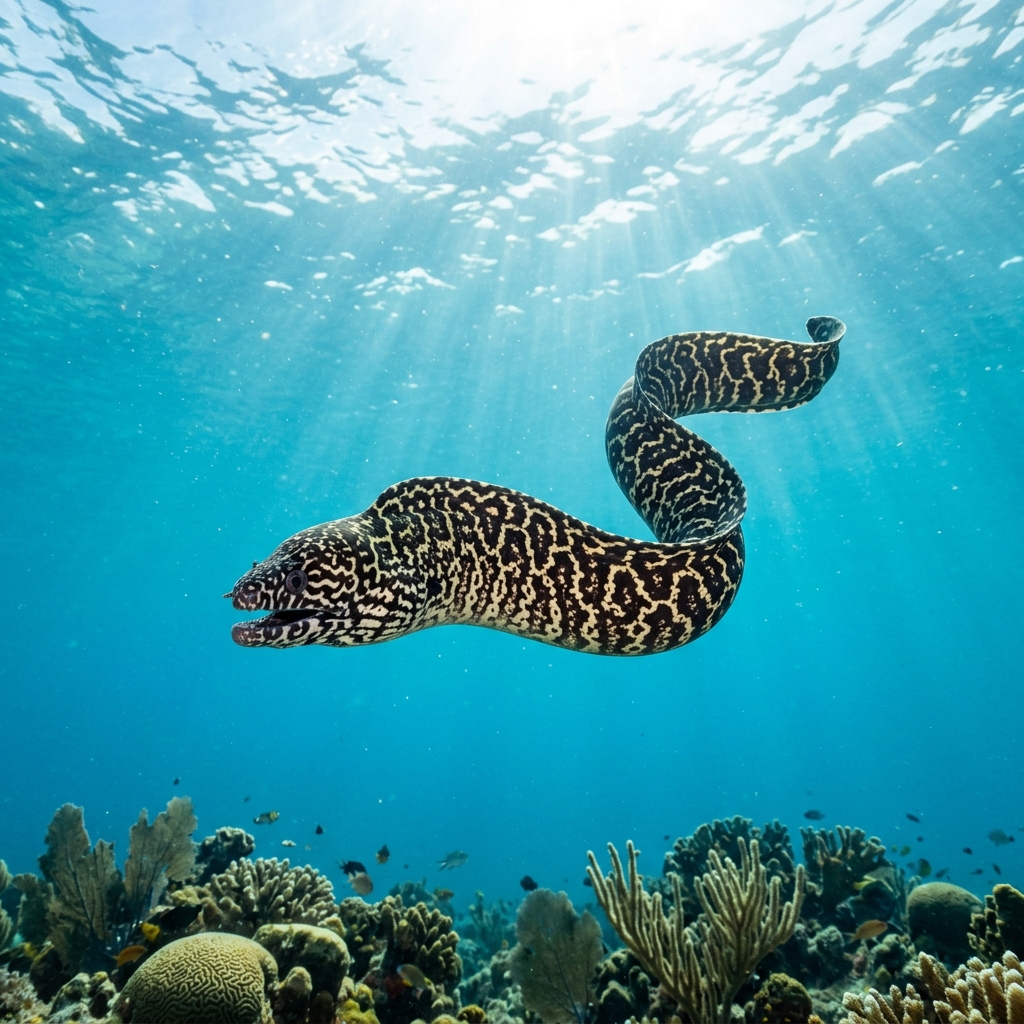
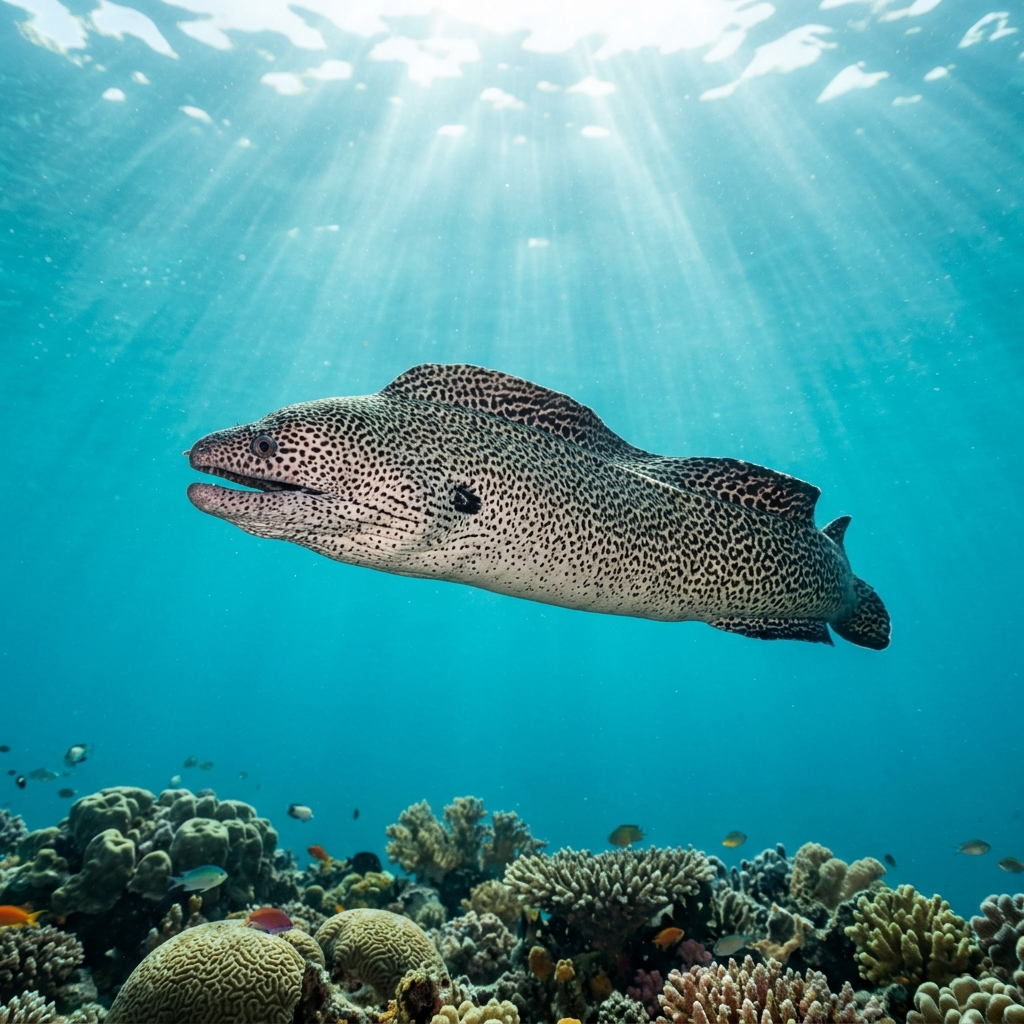
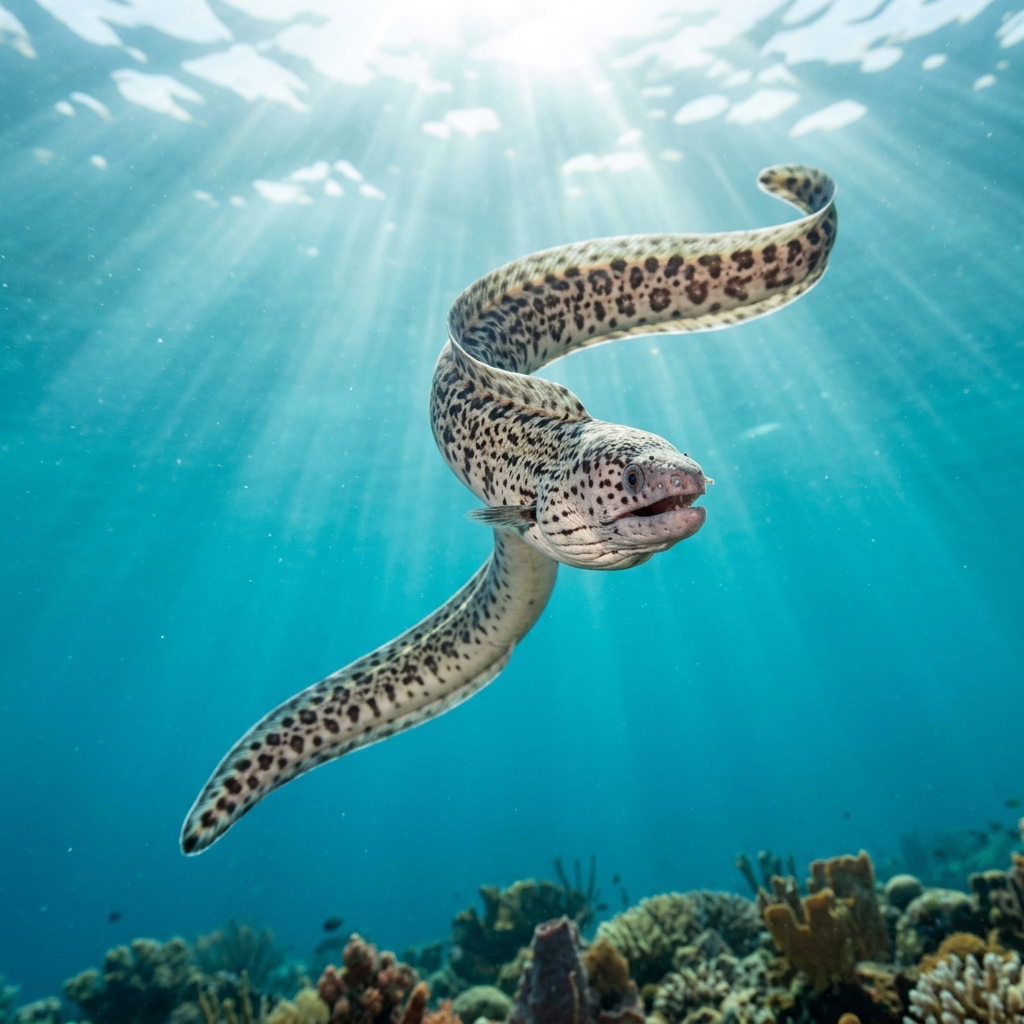
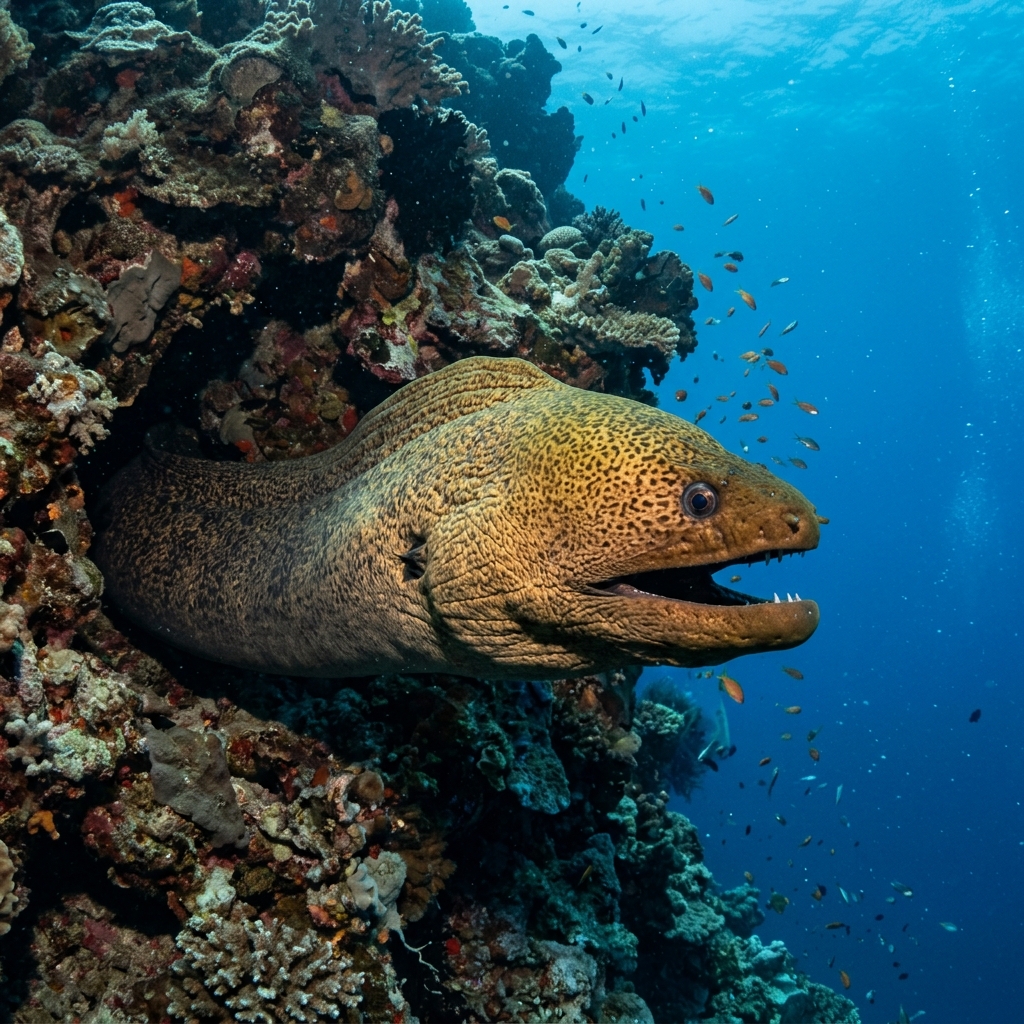
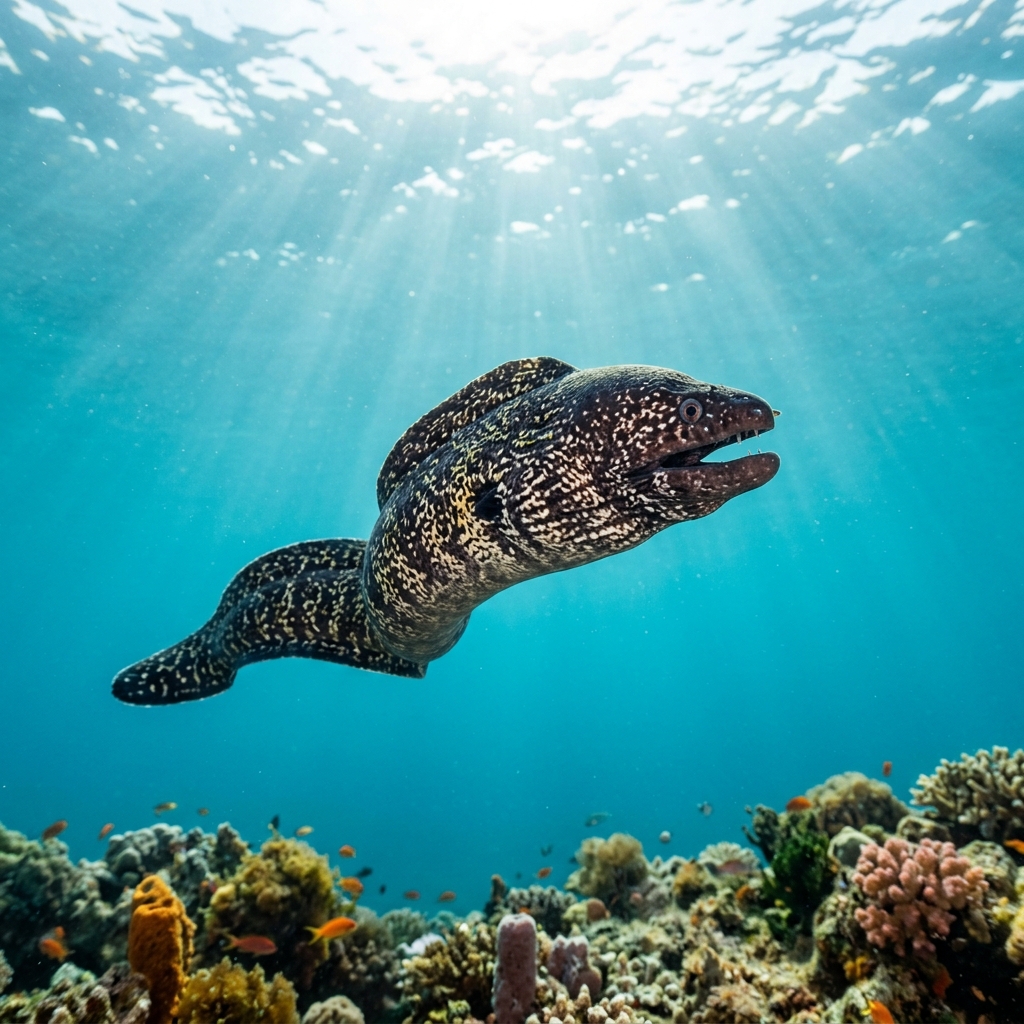
A compact moray covered in dense, evenly scattered white or pale yellowish spots on a dark brown to reddish-brown background, the spotted pattern is the key feature to lock onto underwater. The spots continue onto the head and cover the gill region, giving the face a freckled appearance that distinguishes it from most Pacific morays at a glance. Body shape is fairly slender compared with bulkier species such as the Green Moray, and the inside of the mouth often shows pale spotting too.
Like most morays, it spends the day wedged into reef crevices or tucked beneath rock overhangs with its head poking out, rhythmically opening and closing its mouth to pump water over its gills. When you approach slowly it typically holds its position and watches; if pressured it retreats deeper into the crack rather than moving away across open reef. It is most active after dark, when it moves more freely over the reef to hunt small fish and crustaceans.
Morays lack pectoral fins and propel themselves with a sinuous wave of the body, a useful reminder that what looks like a long body is nearly all locomotive muscle, which means even a small individual can push hard against a hand that blocks its exit route.
In Northern Hemisphere sites, Mexico, Costa Rica, and Panama, it is present year-round, which makes sense given its comfortable temperature niche of roughly 22 to 29 °C across these consistently warm tropical reefs. Divers visiting the Galápagos (Southern Hemisphere data) report sightings concentrated in March and April.
Reef neighbours a diver could mistake it for. Use the identification notes above to tell them apart.
Most commonly logged along the Eastern Tropical Pacific, with the strongest records from Mexico's Pacific Coast and Baja California, and from the Papagayo Gulf in Costa Rica. The Galápagos Islands of Ecuador also hold a solid population, and Coiba National Park in Panama rounds out the range for divers working their way down the coast.
Mapping where Jewel Moray is logged…
The Jewel Moray is an Eastern Tropical Pacific species. Most sightings come from Mexico's Pacific Coast and Baja California, the Papagayo Gulf in Costa Rica, and the Galápagos Islands in Ecuador. Coiba National Park, Panama also has reliable records.
In Mexico, Costa Rica, and Panama, sightings are spread across all months with no concentrated season, so any time of year works. Divers targeting the Galápagos tend to log them most often in March and April.
Look for a slender moray with a dark brown body densely covered in small white or pale yellow spots, including all over the head and face. The heavily freckled head is the quickest field mark. Up close, pale spotting inside the mouth reinforces the ID.
No. Jewel Morays pose no meaningful risk to divers who behave sensibly. They may bite defensively if a hand is thrust into a crevice they occupy, but they are not aggressive and will retreat rather than confront a diver.
Most dive sites where it is recorded describe it as uncommon, though a smaller number of sites, particularly in the Papagayo Gulf and Galápagos, rate it as common or very common. Going in with the expectation that it takes a bit of searching is realistic; it is not an animal you can guarantee on a single dive.
Site and sighting data is aggregated from diver logs, iNaturalist and GBIF. For taxonomy and conservation status:
Garden Eel
2,448 sites