Zalophus wollebaeki
Playful and curious, these sea lions are a near-guaranteed sighting across the Galápagos Islands year-round in 22-26°C water.
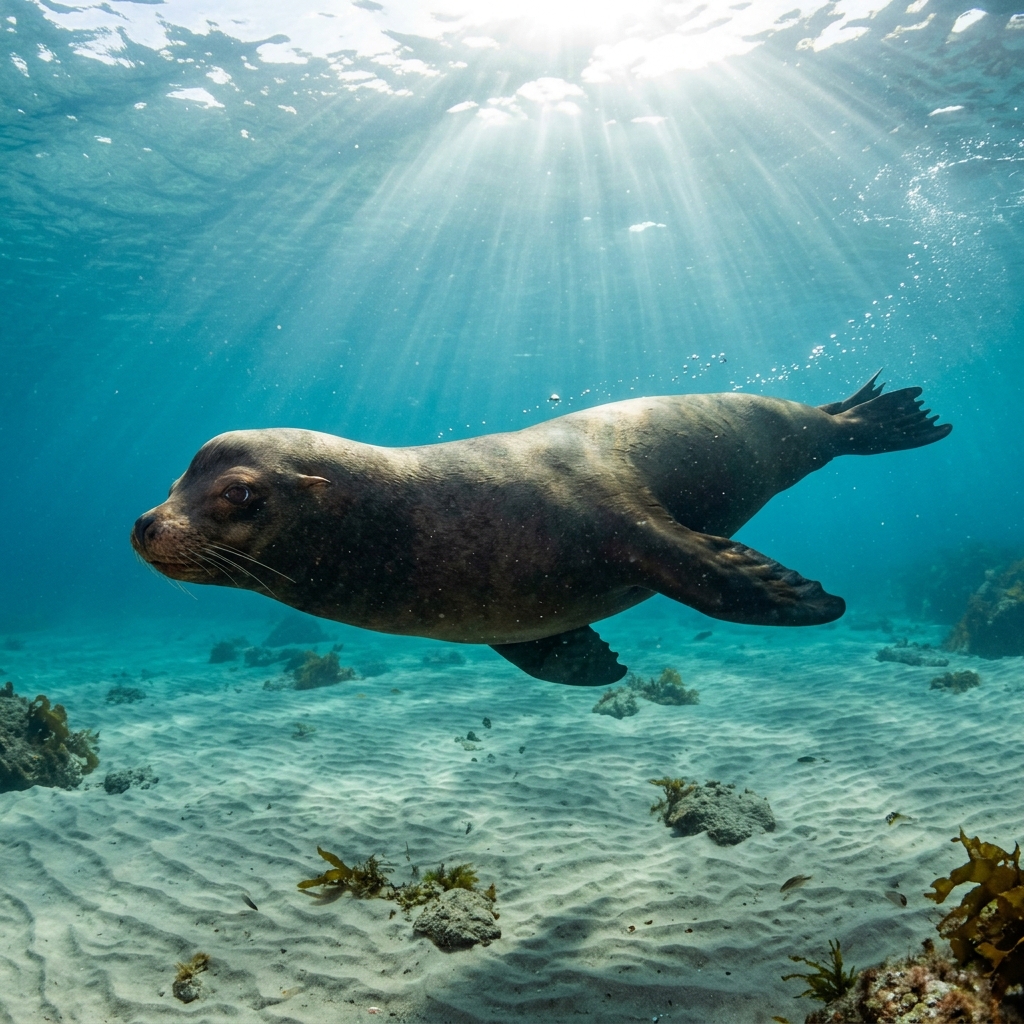
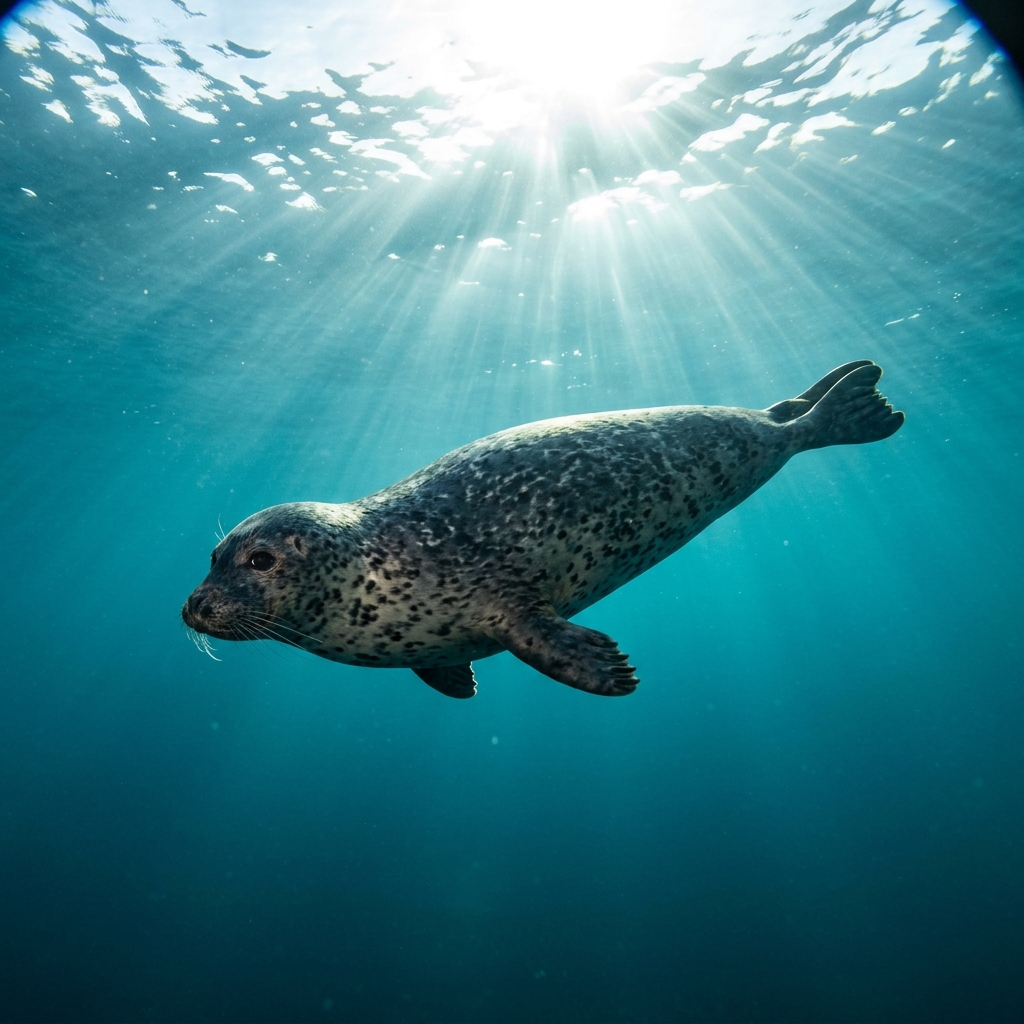
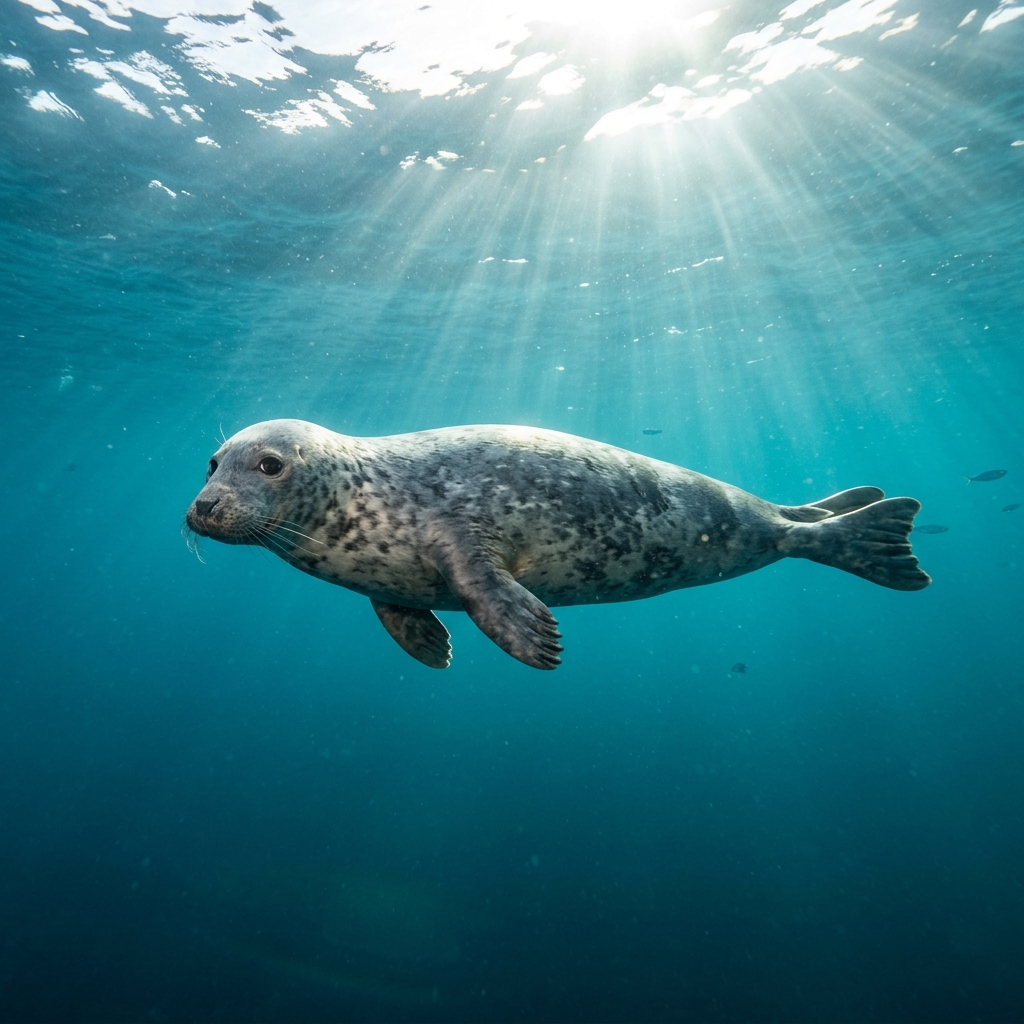
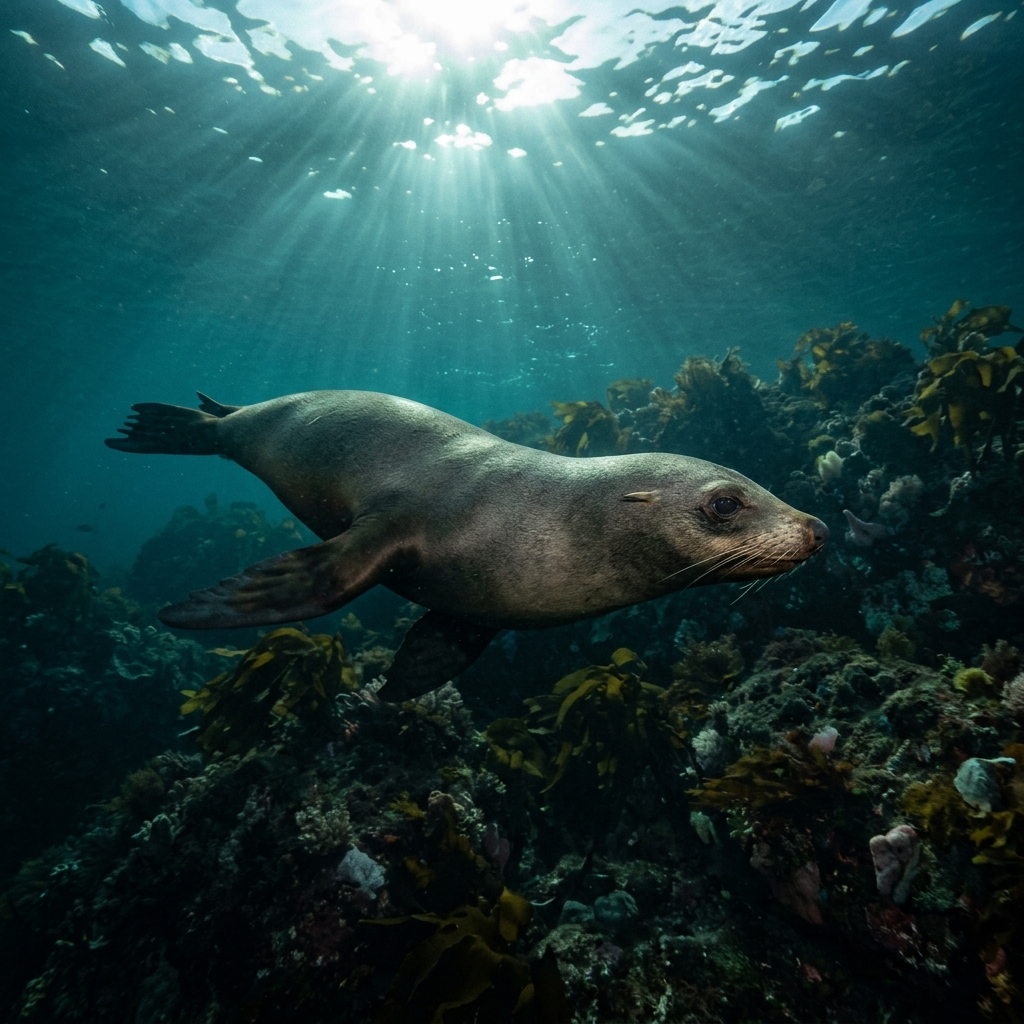
Sleek, torpedo-shaped body with short brown to tan fur that darkens to almost black when wet, and small external ear flaps that set it apart from true seals. Males grow noticeably larger with a thickened, bulging forehead (a raised bony crest called a sagittal crest) that gives adult bulls a bigger-headed profile. Underwater they move with sudden bursts of speed and tight barrel rolls, often approaching divers head-on before veering off at the last second.
Expect close, curious interactions rather than a shy retreat: colonies haul out on rocky shorelines and sandy beaches, and the younger animals in particular will swim right up to divers and snorkellers, mimicking movements and blowing bubbles in play. They hunt in loose groups over rocky reefs and sandy bottoms, often working schools of small fish, and are most active and social around midday when the water is warmest.
Pups stay dependent on their mothers for a year or more, and nursing females will leave youngsters hauled out on the rocks while they forage, sometimes travelling well offshore before returning to the same beach to feed them.
Sightings are logged year-round with no strong seasonal gap, which lines up with the stable, comfortable 21.6 to 26.3 C water they favour in the Galápagos. Plan around weather and crossing conditions rather than chasing a season for the sea lions themselves.
Reef neighbours a diver could mistake it for. Use the identification notes above to tell them apart.
This is very much a Galápagos animal: the Galápagos Islands region of Ecuador accounts for the overwhelming majority of logged sightings, and it's rated very common to common at most of those sites. Smaller, reliable populations turn up around Revillagigedo in Mexico and Máncora in Peru, plus a few other spots along Ecuador's Pacific coast.
Mapping where Galapagos Sea Lion is logged…
The Galápagos Islands in Ecuador are by far the most reliable place, with sea lions logged as very common or common at most sites there. Smaller populations are also dived around Revillagigedo in Mexico and Máncora in Peru.
There's no strong season for sightings, they're logged year-round in water between roughly 21.6 and 26.3 C. Diving conditions and crossing logistics in the Galápagos matter more than timing it for the sea lions.
Look for a sleek brown body, small ear flaps, and quick, playful barrel rolls close to divers. Adult males have a noticeably bulging forehead from a raised bony crest, while pups and juveniles look darker and slimmer without it.
No, they're not considered dangerous and interactions are typically playful rather than aggressive. Large territorial bulls can occasionally act defensively near their harem or pups, so it's best to give adult males some space and let curious juveniles approach on their own terms.
Nursing mothers will leave their pups hauled out on the same beach for extended foraging trips, sometimes swimming well offshore before returning to feed them, a routine pups depend on for a year or more before becoming fully independent.
Site and sighting data is aggregated from diver logs, iNaturalist and GBIF. For taxonomy and conservation status:
Long-nosed Fur Seal
347 sites