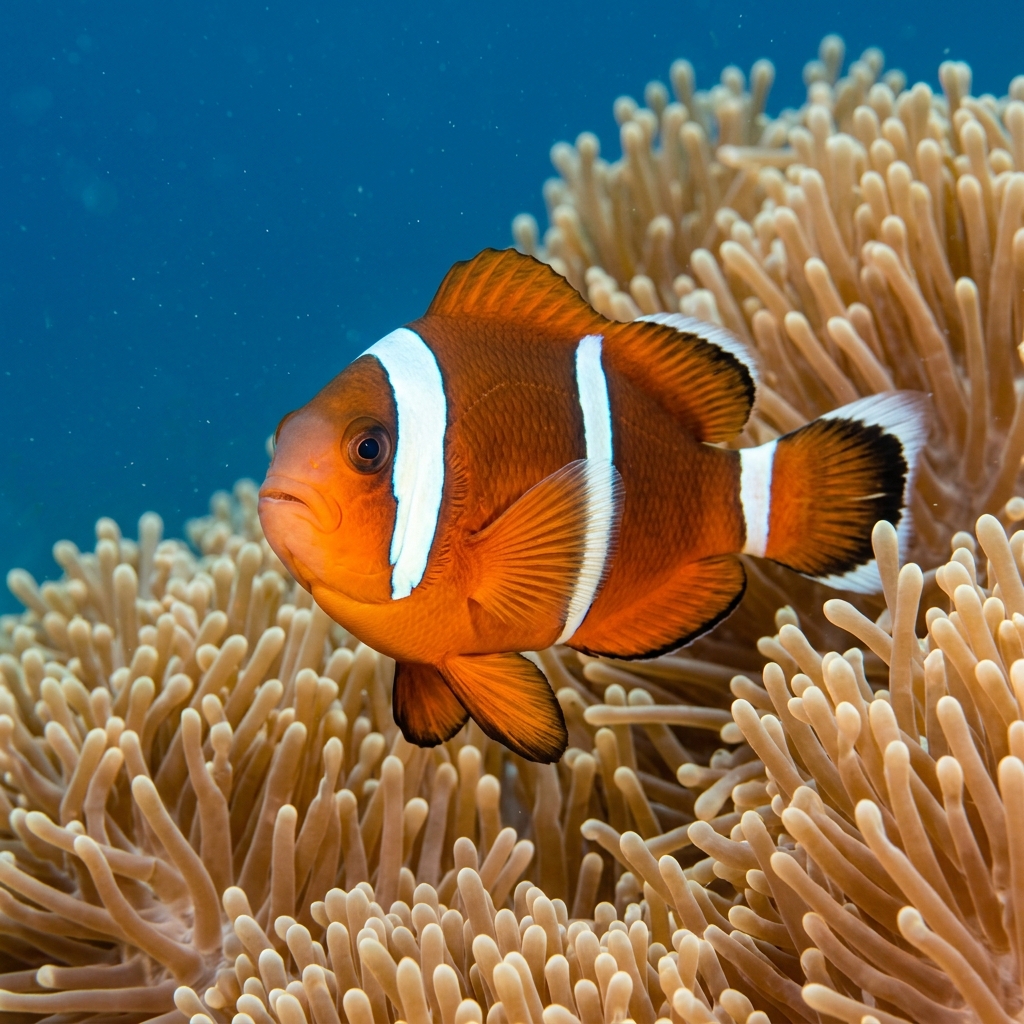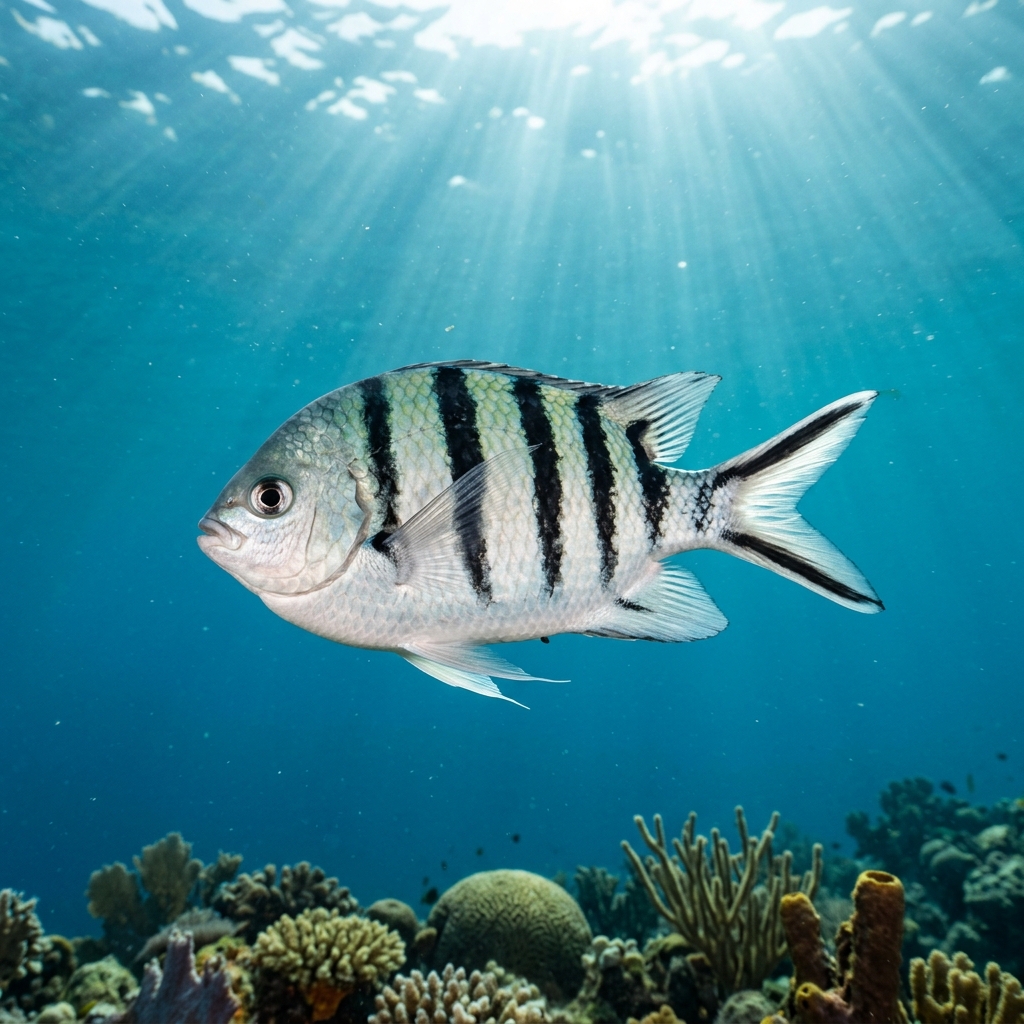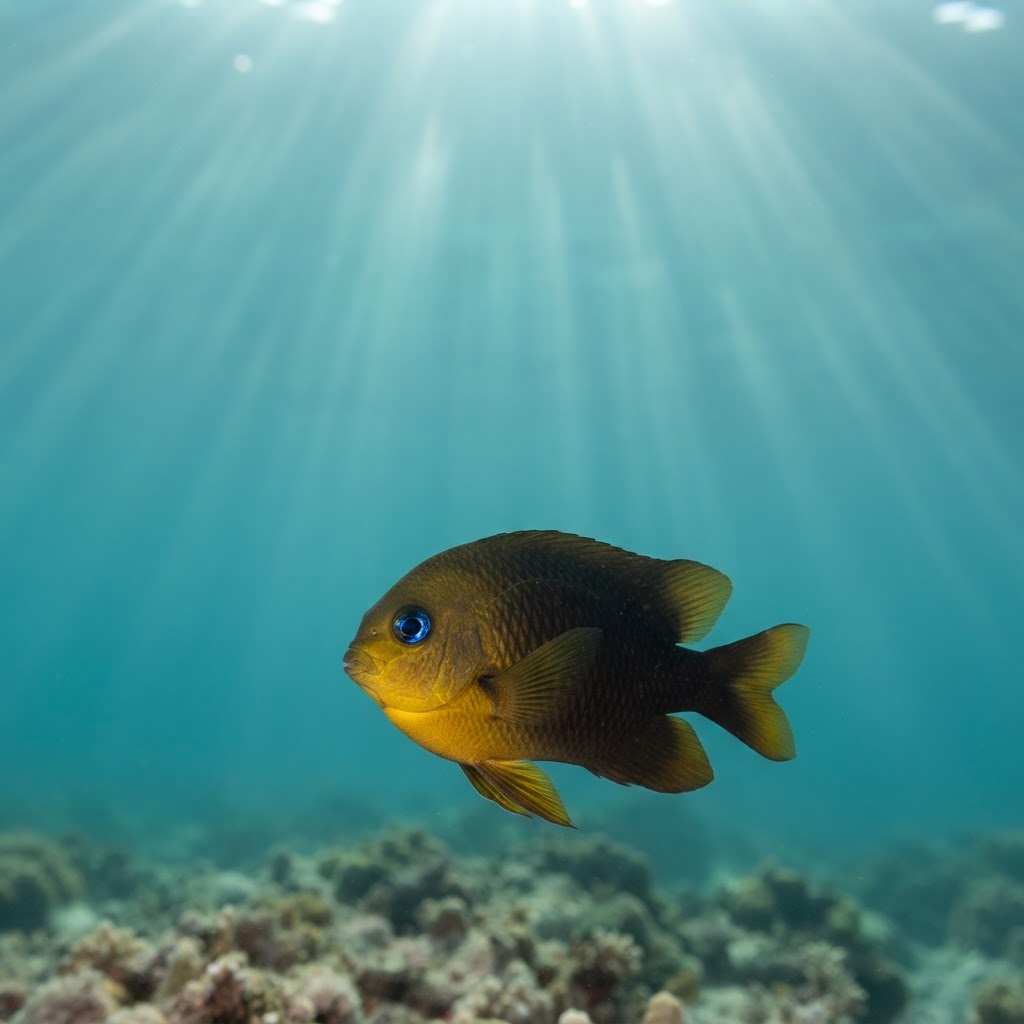
Stegastes arcifrons
Bold blue-flecked damselfish endemic to the Galápagos and Cocos Island, found on reefs from 1 to 20m in warm equatorial water.
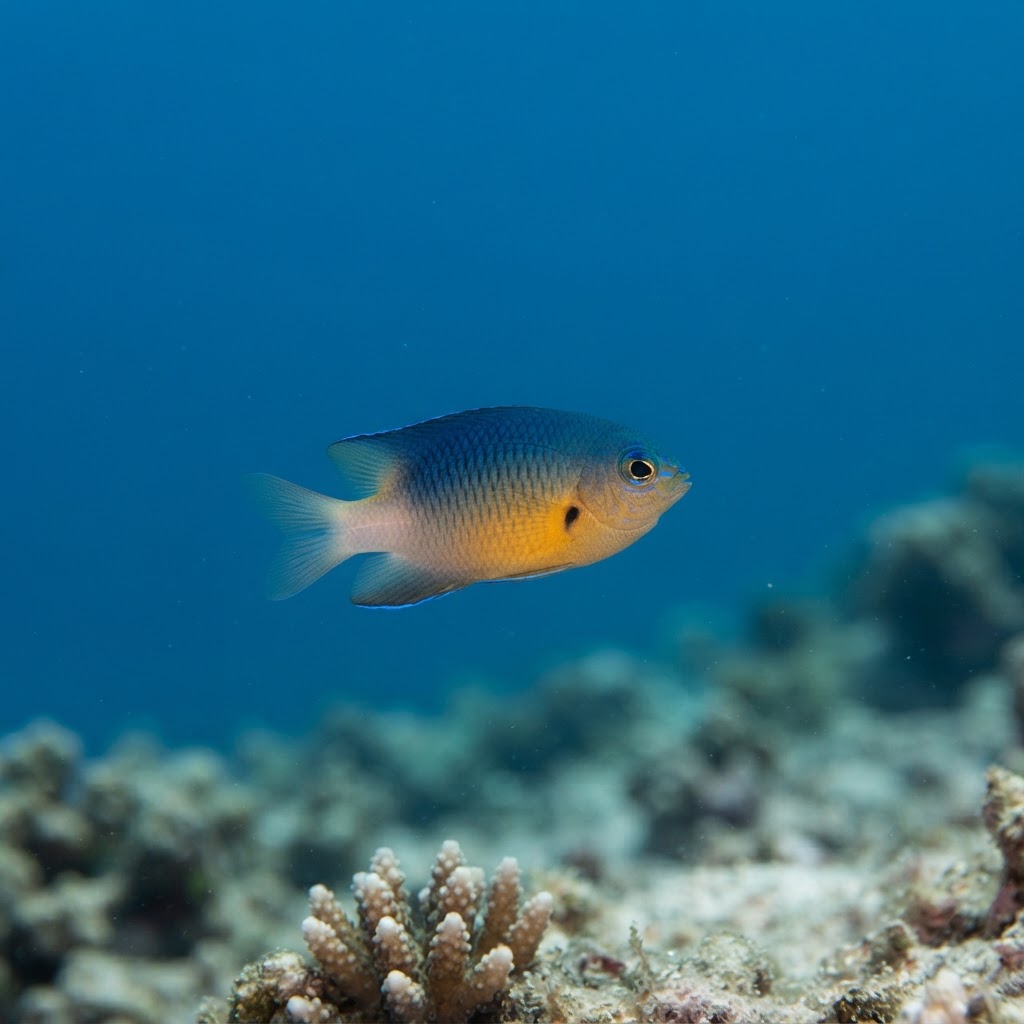
Compact, deep-bodied damselfish around 9 cm, dusky brown to grey overall with a scattering of small pale blue spots and flecks across the head and upper body. The tail and rear fins are plain and unmarked, which helps separate it from busier-looking reef damsels. Look for a stocky, slightly hunched profile as it hovers close to a patch of rock or rubble it seems reluctant to leave.
Expect to find it holding a small patch of reef or rocky rubble and defending it with quick, jerky darts at anything that strays too close, divers included. It feeds on algae and small invertebrates picked from the rock surface rather than schooling in open water, so most sightings are of a single fish tucked low against structure. Most sites log it as uncommon to common rather than schooling in numbers, so a close look at a likely rock ledge is often needed to spot one.
Like many damselfish, individuals cultivate and guard a personal algae patch on the reef, chasing off grazers and even much larger fish that wander into their territory.
Sightings show no real seasonal pattern, and with a comfortable range of 23.5 to 28.1 C year-round in both the Galápagos and Cocos, it is a fish you can plan around any time you are diving those regions.
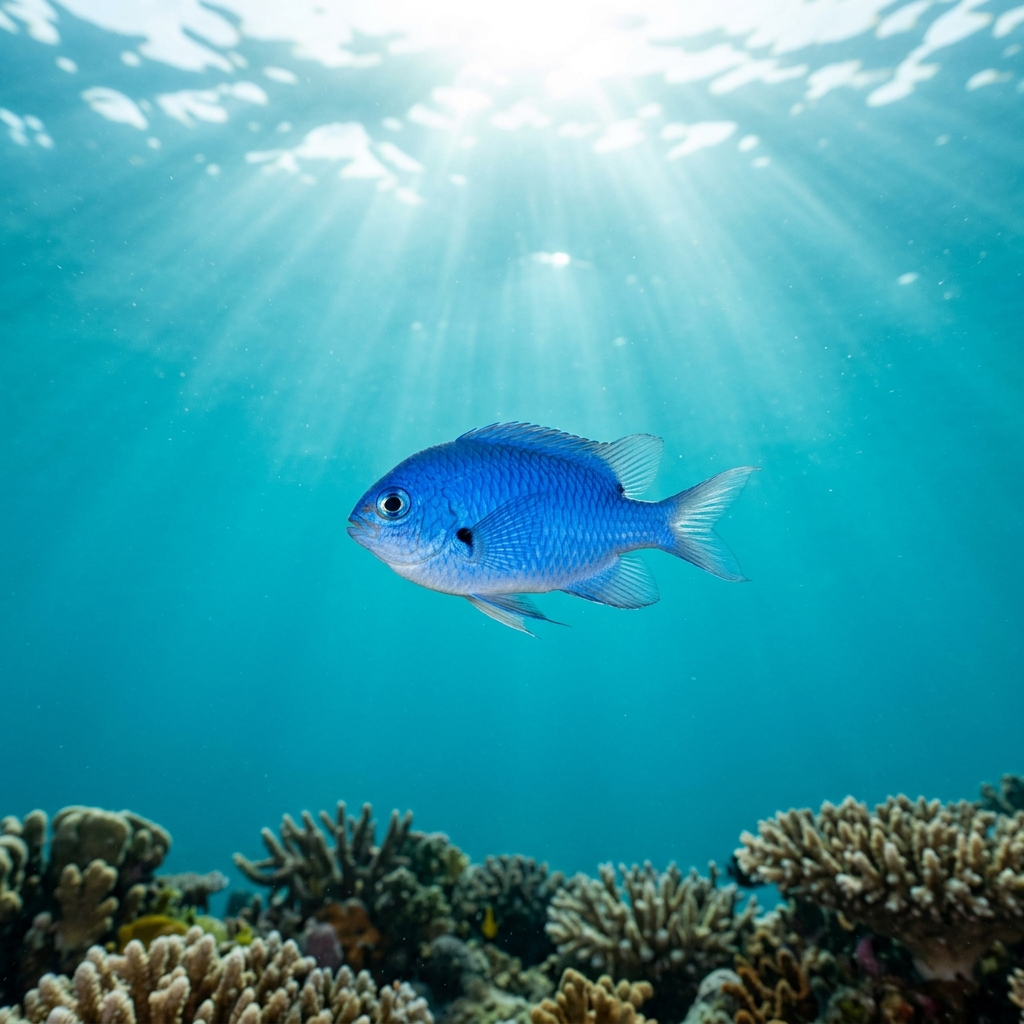
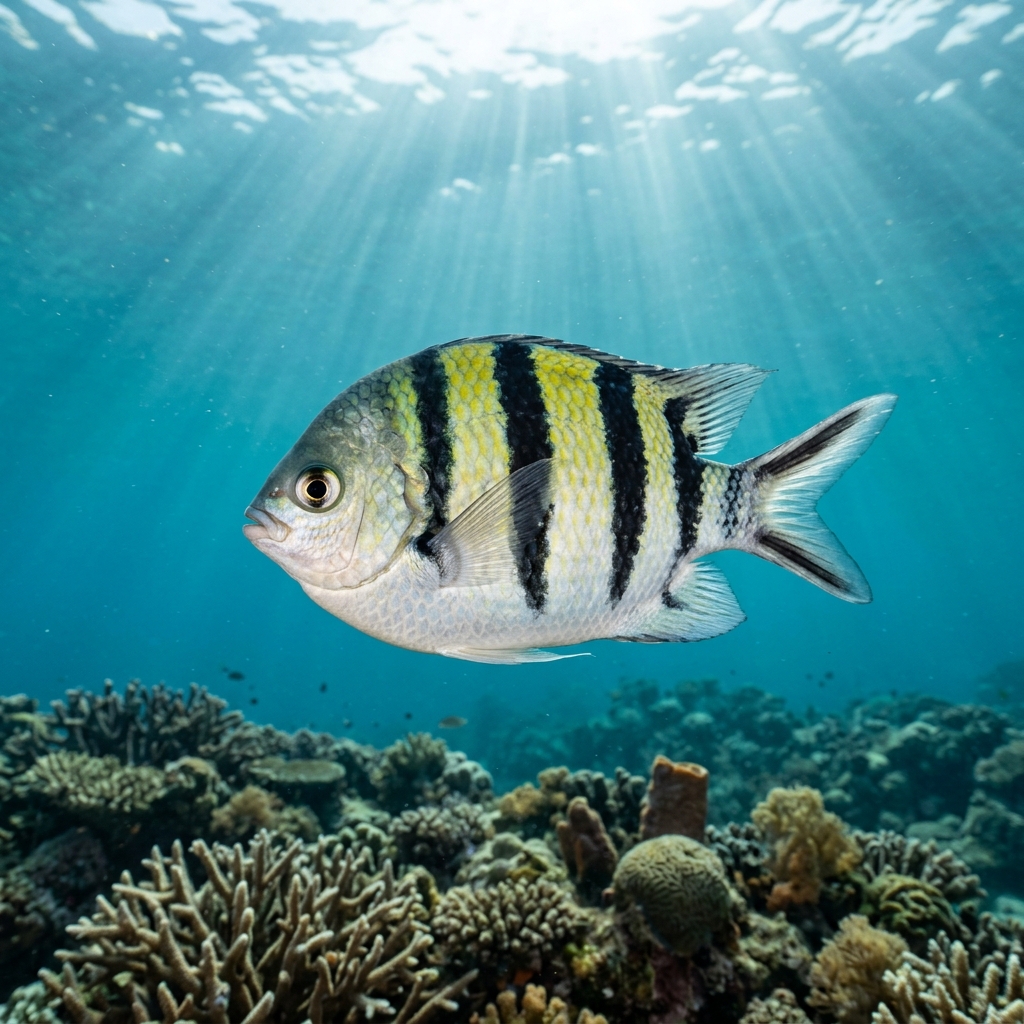
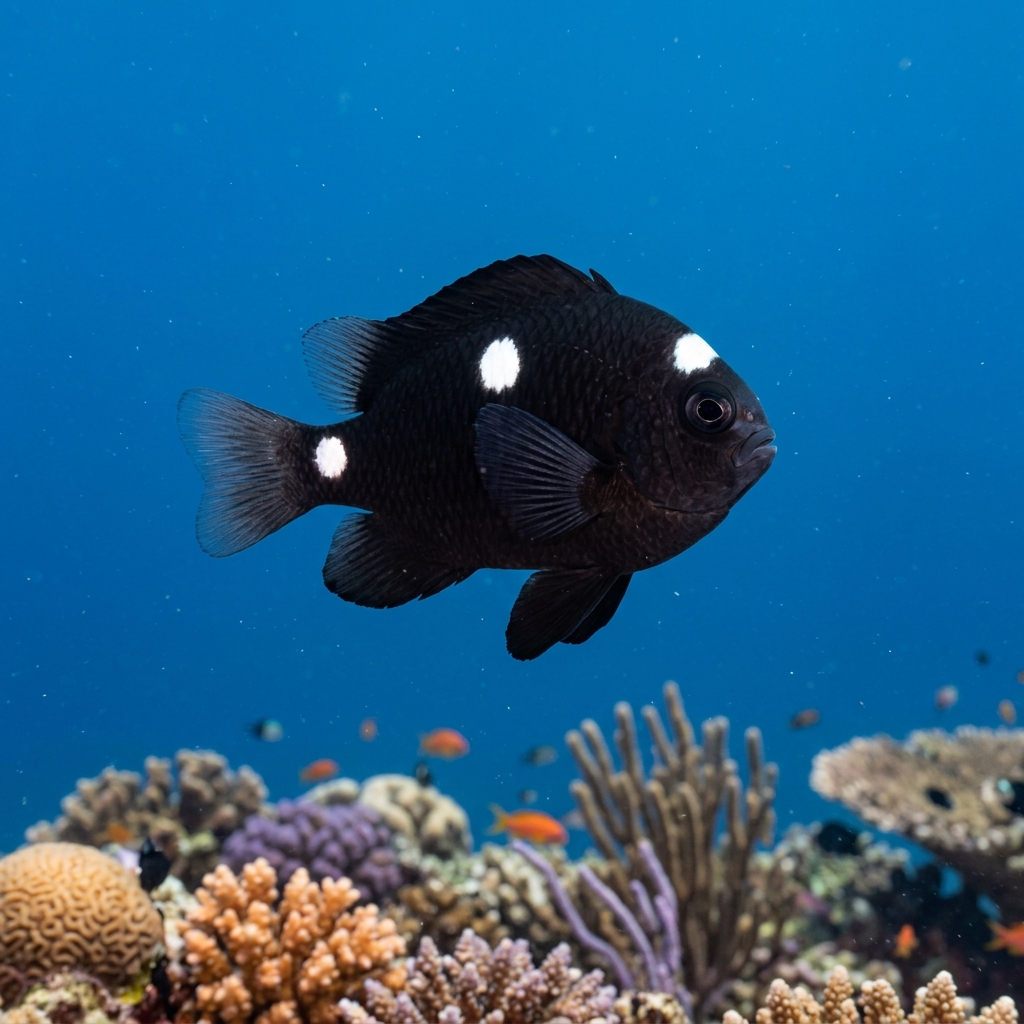
Reef neighbours a diver could mistake it for. Use the identification notes above to tell them apart.
This is a Galápagos speciality, most commonly logged around the Galápagos Islands in Ecuador, with a smaller but reliable population at Cocos Island in Costa Rica. Outside these two archipelagos it barely features in diver logs, making it one of the more geographically confined damselfish divers will encounter.
Mapping where Galapagos Gregory is logged…
It is essentially a Galápagos Islands fish, with the strongest and most frequent sightings logged there. A smaller, reliable population also turns up around Cocos Island in Costa Rica.
There is no clear seasonal peak in sightings. It sits comfortably in 23.5 to 28.1 C water, so it is present on Galápagos and Cocos reefs throughout the year.
Look for a stocky, dark brown to grey damselfish about 9 cm long with pale blue speckles scattered over the head and back. It typically holds a low position near rock or rubble rather than swimming in open water.
They grow to around 9 cm, a small, sturdy reef damselfish rather than a large or conspicuous fish.
No. They are harmless to divers, though they will dart aggressively at anything, including a diver's hand or camera, that gets too close to their patch of reef.
It actively tends and defends a small algae patch on the reef, chasing off intruders far bigger than itself to protect its food source.
Site and sighting data is aggregated from diver logs, iNaturalist and GBIF. For taxonomy and conservation status:
Dascyllus
3,697 sites