Sphoeroides annulatus
Sandy-bodied puffer with a dark ringed spot, most reliably found around the Galápagos Islands in waters from 19 to 29 C.
Safety warning
Not aggressive towards divers, but its skin and internal tissues contain tetrodotoxin, a toxin dangerous if ingested, so the only real risk is handling it or letting curious hands get near its mouth. Look without touching and there's no issue.
Handle with care
Toxic if eatenGeneral first-aid guidance, not a substitute for professional medical care. In an emergency, call your local emergency number.
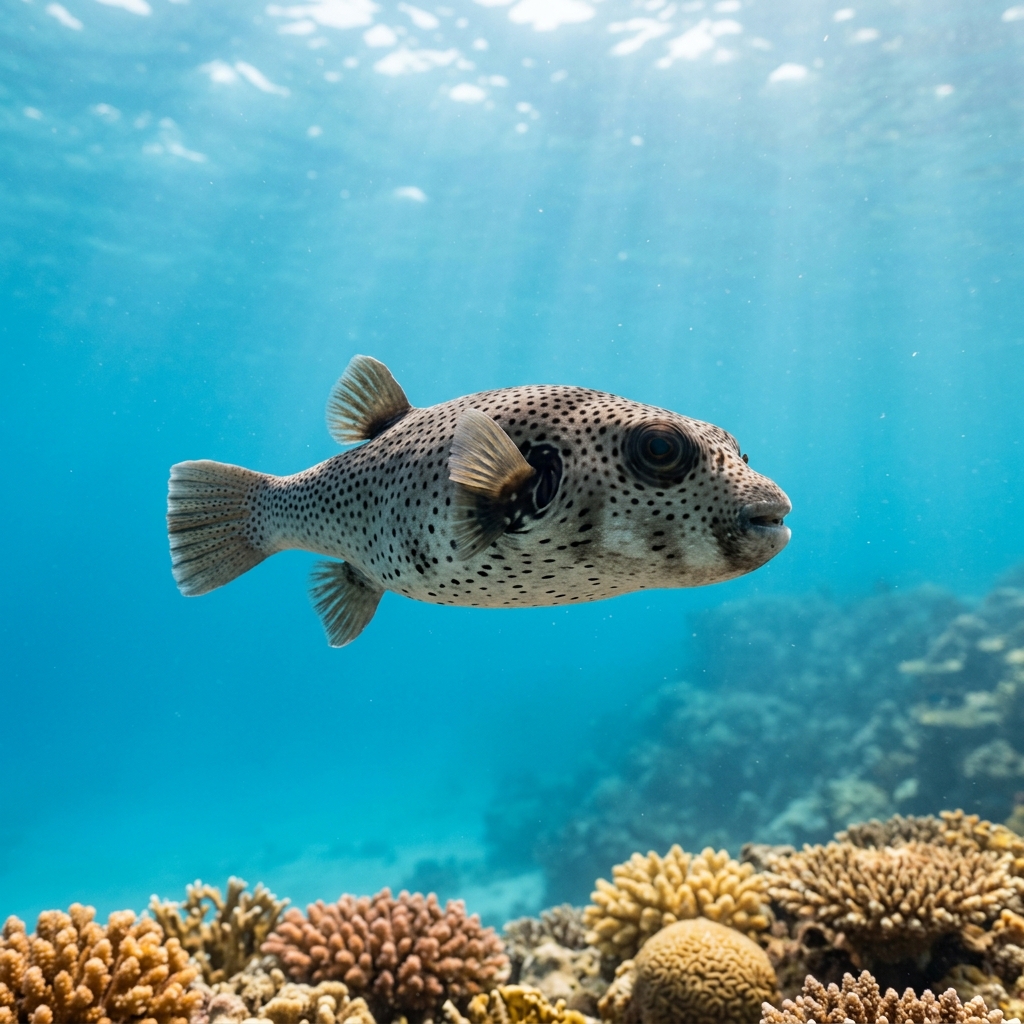
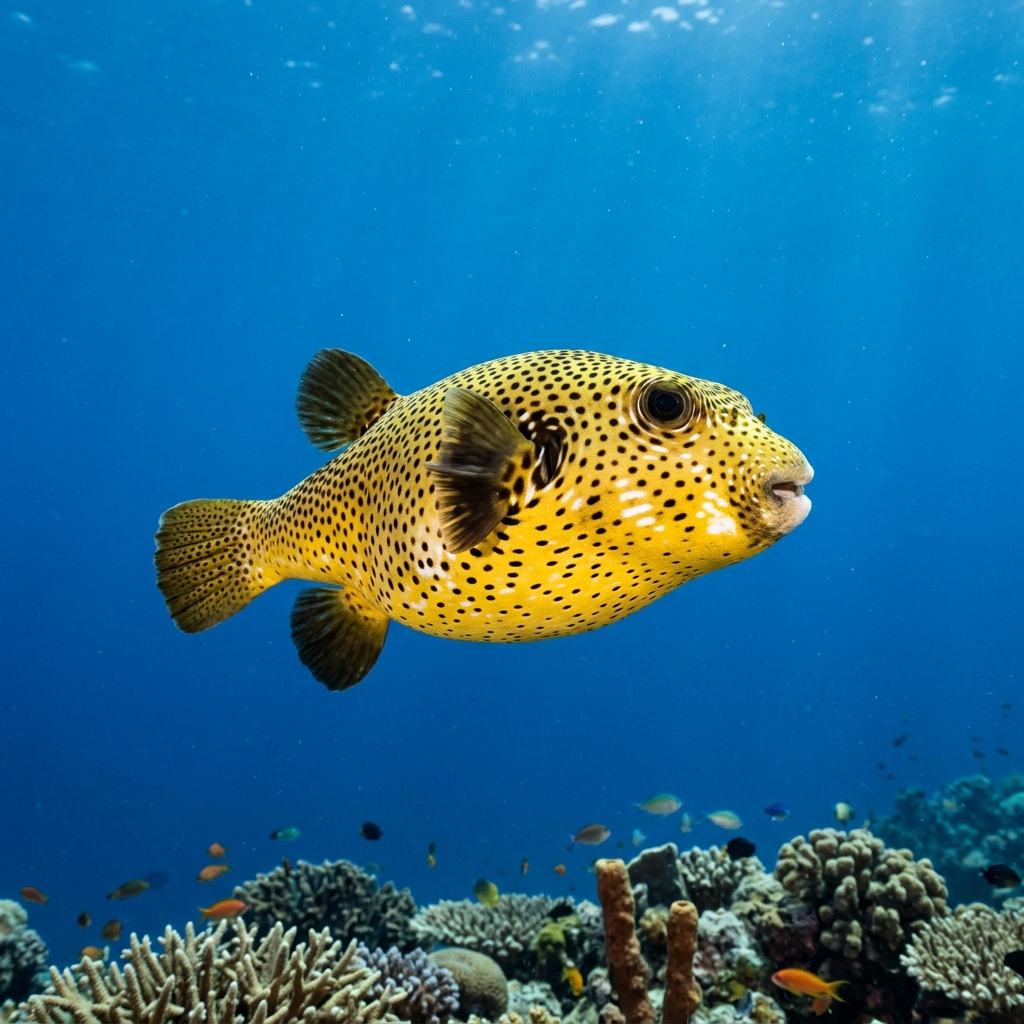
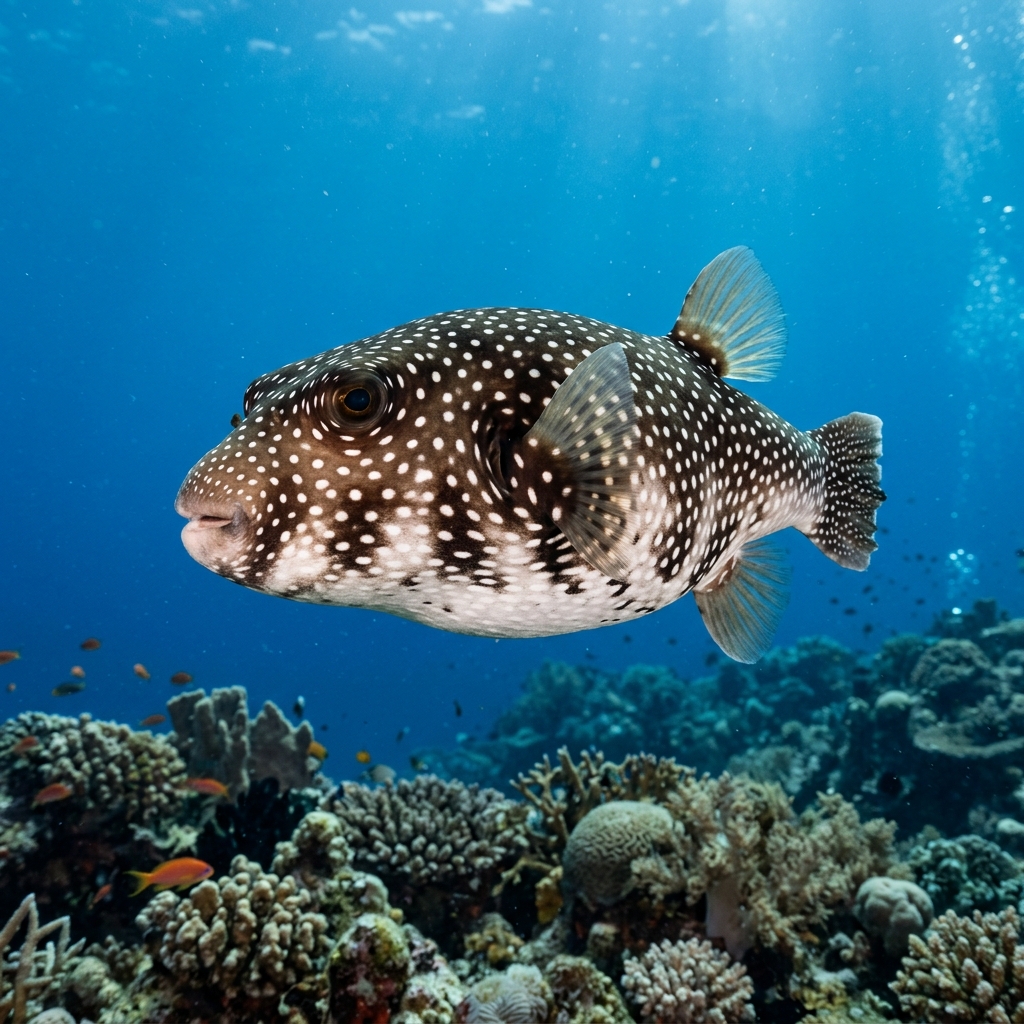
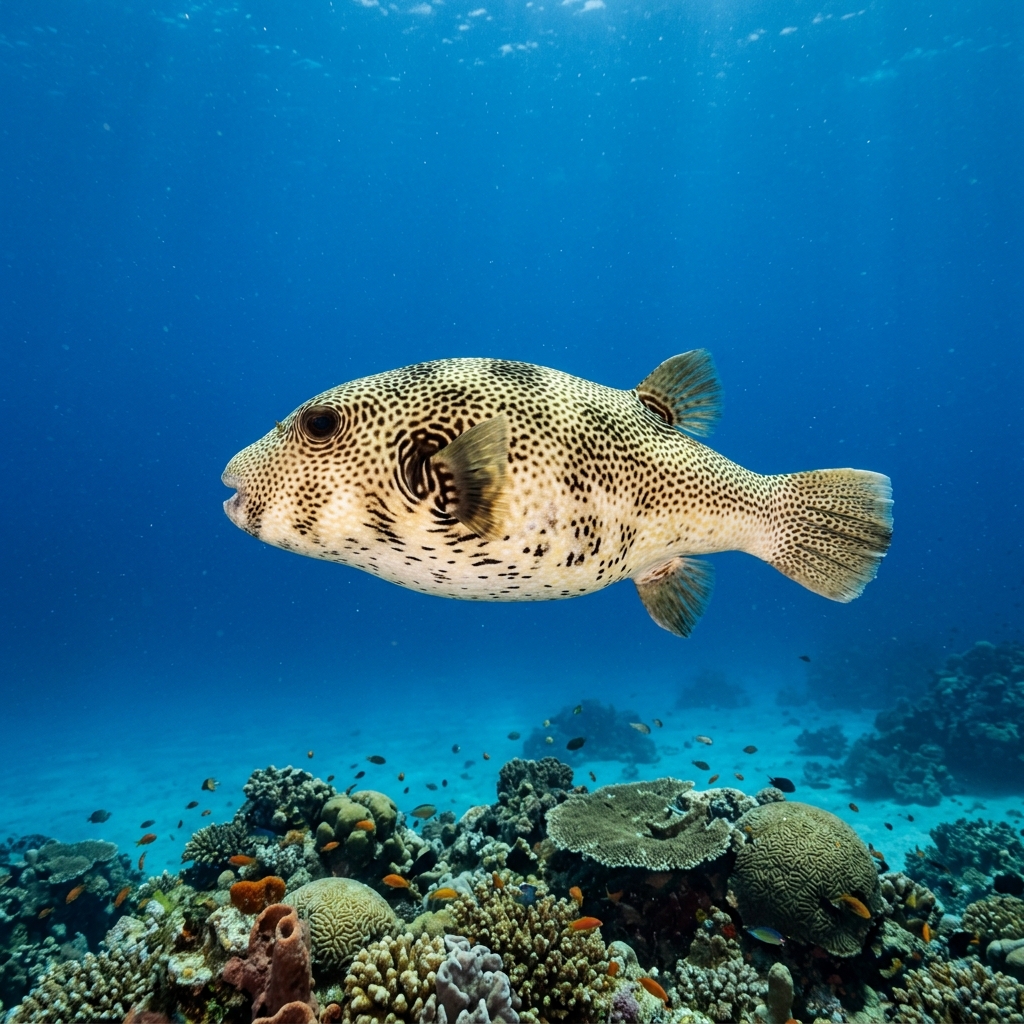
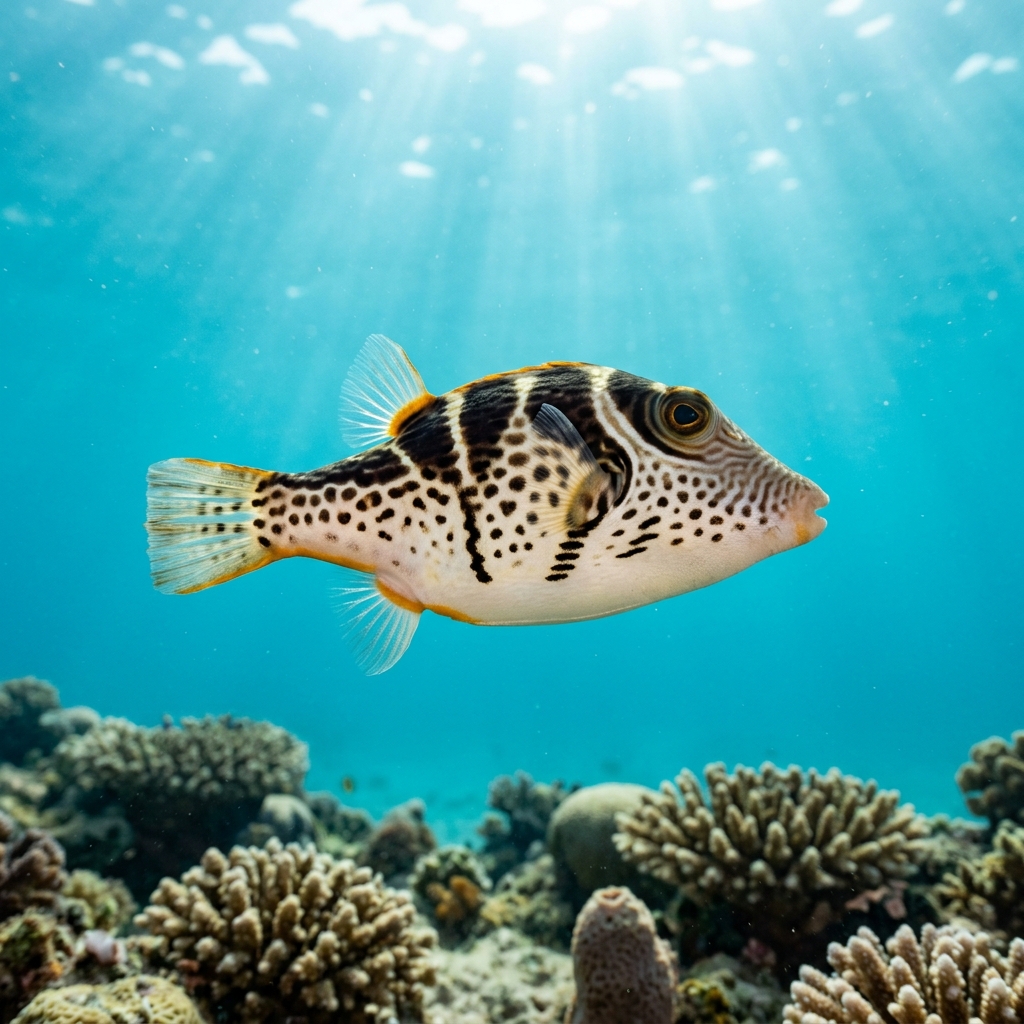
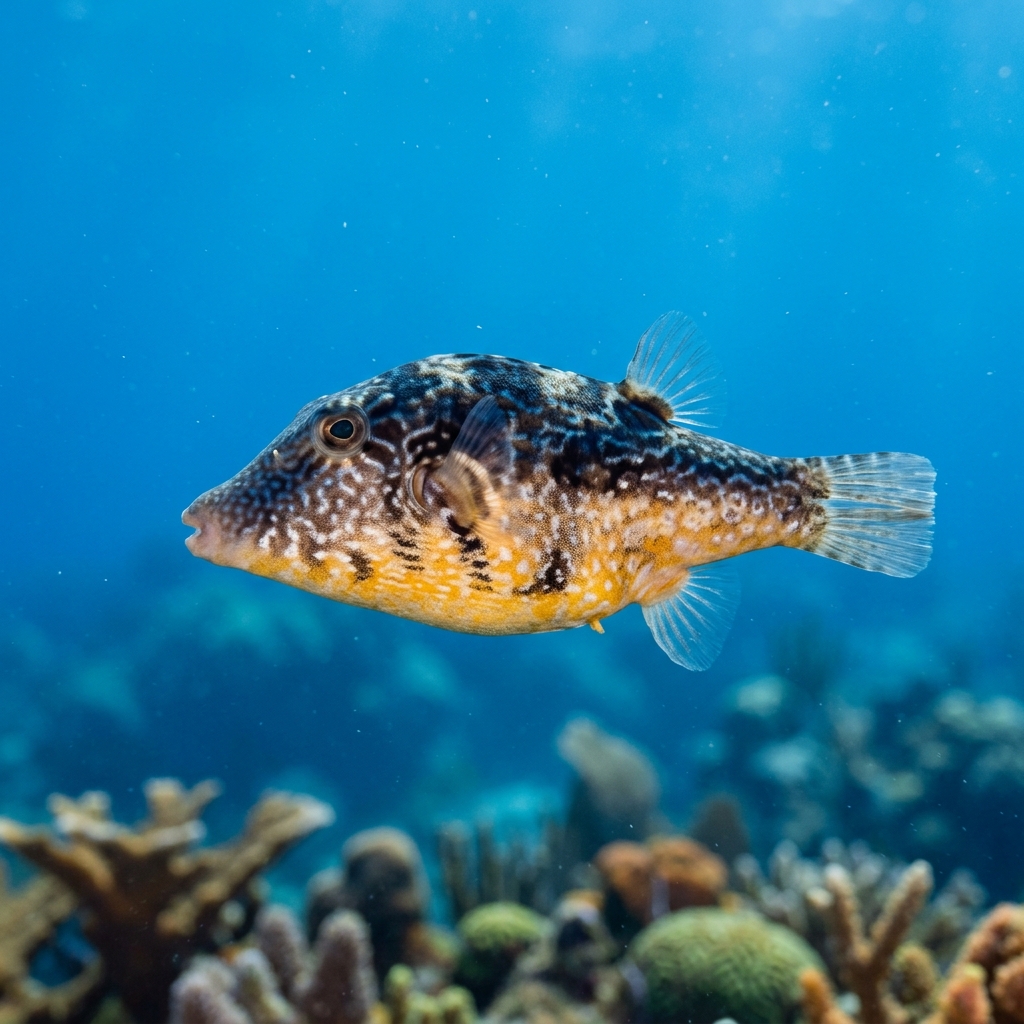
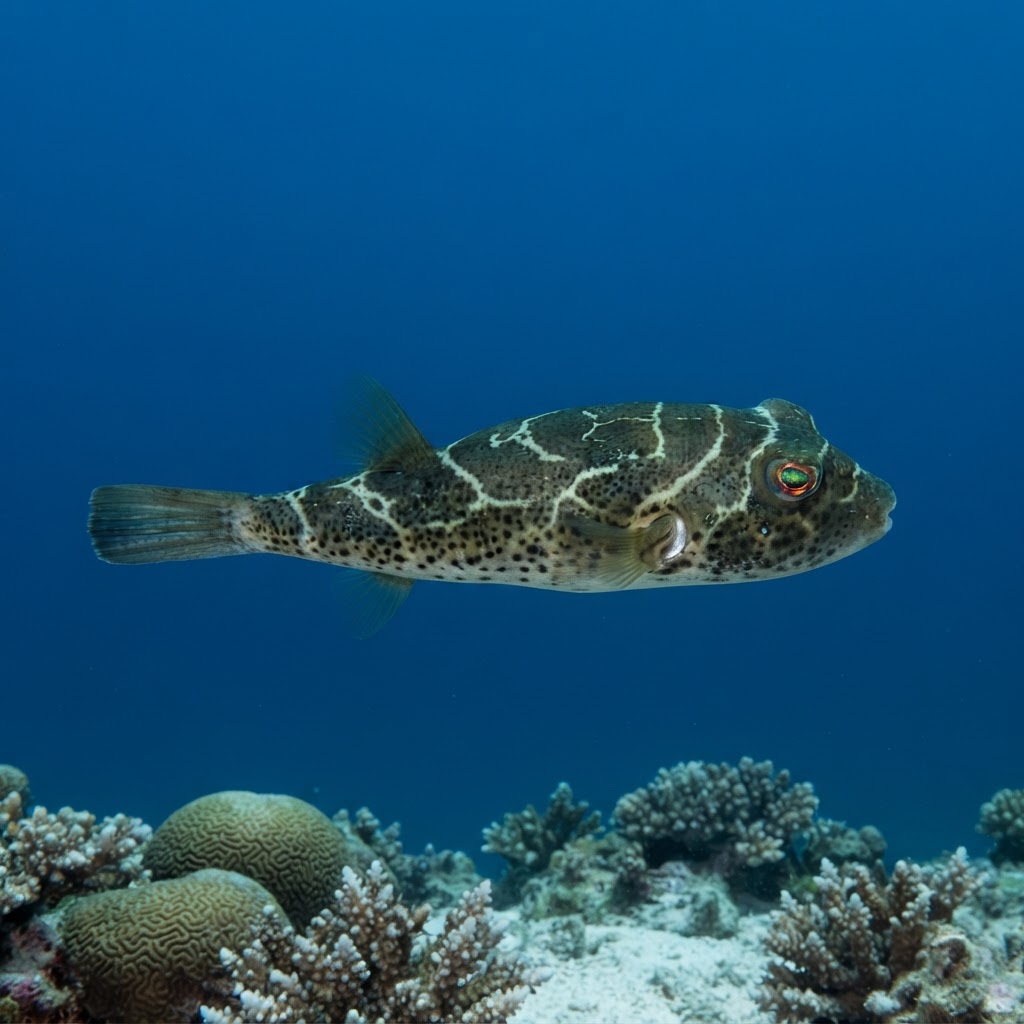
Grows to around 30 cm, with a stocky, inflatable body in mottled sandy brown to olive tones that helps it blend into rock and rubble bottoms. The giveaway mark is a dark, ring-edged spot (the 'bullseye') sitting high on the side near the base of the pectoral fin. Small dark speckles scatter across the back and sides, and the belly is pale, almost white.
Usually spotted resting or slowly cruising low over sand, rubble, or rocky reef bottoms rather than out in open water. It tends to hold its ground when divers approach, relying on camouflage and its ability to inflate rather than fleeing, so a slow, low approach usually gets you a good look. Most sightings come during daytime reef dives rather than night dives.
Like other pufferfish, it can inflate its body with water when threatened, and its tissues carry tetrodotoxin, a potent natural toxin that makes it unpalatable to almost anything that tries to bite it.
No clear seasonal pattern shows up in the sighting data, so it's considered a year-round encounter. It's logged across a wide temperature range from 18.7 to 28.9 C, which covers both the cooler upwelling months around the Galápagos and warmer periods along mainland Mexico.
Reef neighbours a diver could mistake it for. Use the identification notes above to tell them apart.
Most reliably logged around the Galápagos Islands in Ecuador, with a strong secondary presence along Mexico's Pacific Coast and in Baja California. Sightings are typically uncommon to rare rather than guaranteed, so treat it as a bonus find on reef and rocky-bottom dives in these regions rather than a target species.
Mapping where Bullseye Puffer is logged…
The most consistent sightings come from the Galápagos Islands in Ecuador, with additional records along Mexico's Pacific Coast and Baja California. Even in these regions it's usually an uncommon to rare find rather than a sure thing.
There's no strong seasonal pattern in the sighting data, so it's considered a year-round species. It has been observed across a wide range of water temperatures, from about 18.7 to 28.9 C.
They aren't aggressive and won't chase or bite divers, but their tissues contain tetrodotoxin, a toxin that's dangerous if ingested. As long as you avoid handling or provoking one, there's no real danger.
Look for a stocky, sandy brown to olive body around 30 cm long with fine dark speckling and a distinctive dark, ring-edged spot near the base of the pectoral fin. It's usually seen resting or moving slowly over sand or rocky bottoms rather than swimming in open water.
They typically reach around 30 cm in length, a fairly stocky, medium-sized puffer.
Like other pufferfish, they can gulp water to swell their bodies into a ball shape when threatened, making themselves harder for predators to swallow. Combined with toxic tissues, this makes them an unappealing target for most reef predators.
Site and sighting data is aggregated from diver logs, iNaturalist and GBIF. For taxonomy and conservation status:
Valentini Pufferfish
2,830 sites