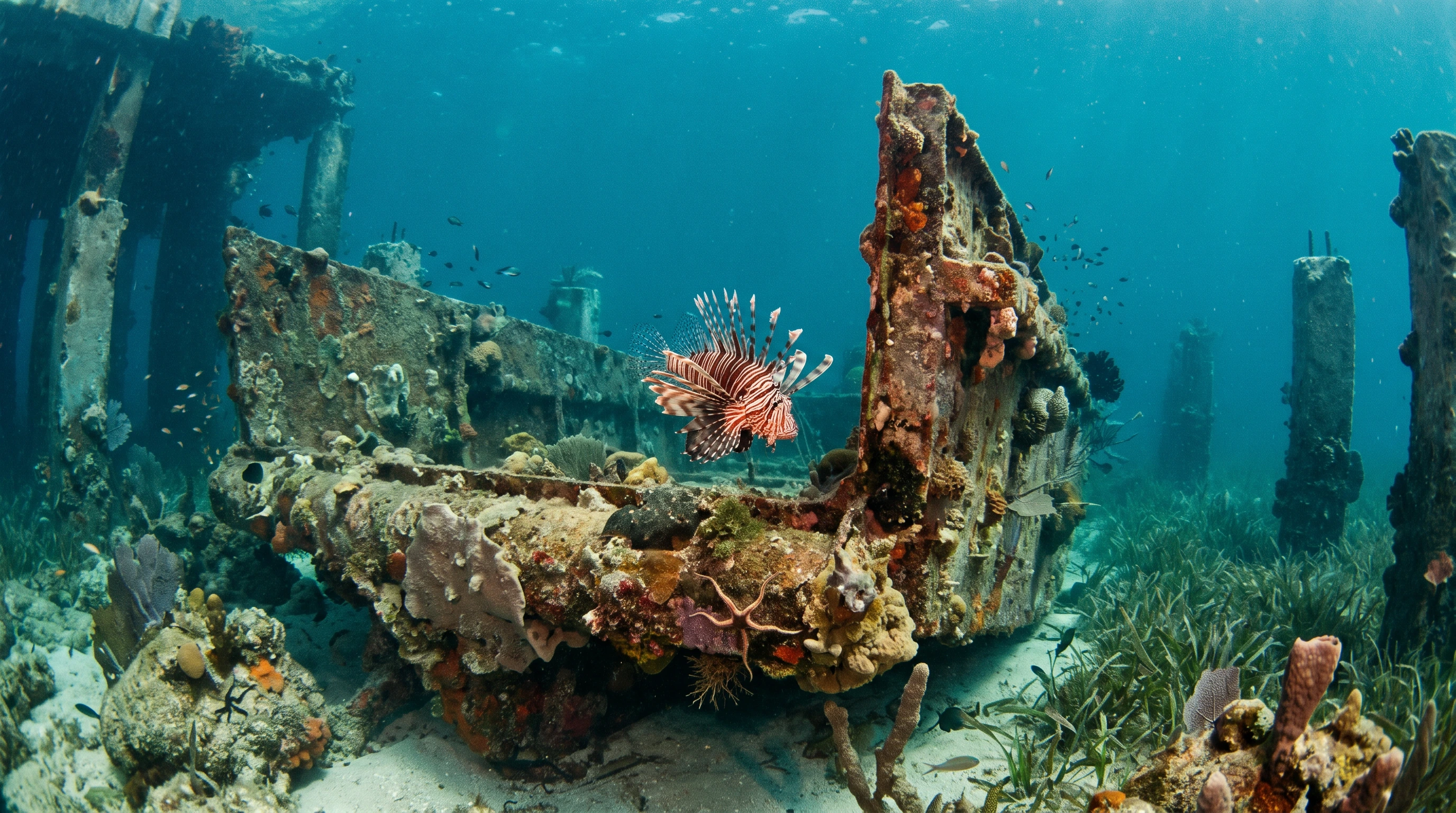
Santiago de Cuba sits at the southeastern tip of the island on the Caribbean Sea and is the primary destination in Cuba for wreck diving, with historic Spanish warships from the Hispanic-American War among the notable draws. The database lists five sites covering artificial reefs, natural reefs, walls, caves, and wrecks, with depths ranging from shallow beginner-friendly terrain to deeper walls at forty metres. Shore and boat entries are both available. Water temperatures remain warm throughout the year, with the coolest readings in late winter and the warmest from July through October. One operator serves the area.
Monthly water temperature across Santiago de Cuba's sites, from satellite sea-surface data corrected for depth. The band shows the site-to-site spread.
Water stays warm across all months, with peak temperatures from July through October and a mild dip in February and March. Conditions at sites like Bucanero can include currents that strengthen unexpectedly, so some sites are better suited to intermediate divers despite the generally warm and accessible water.
1 operator
Water temperature around Santiago de Cuba ranges from about 27°C in February to 30°C in July, based on satellite sea-temperature data for its dive sites.
With water around 27–30°C, a rash guard or 3mm shorty works in Santiago de Cuba year-round.
Fin maps 5 sites in Santiago de Cuba (5 scuba diving sites).
2 more sites to explore