Spirobranchus giganteus
Spot Christmas Tree Worms year-round across Florida, Roatán and Bonaire reefs. Learn how to recognise their vivid double-spiral crowns before they vanish.
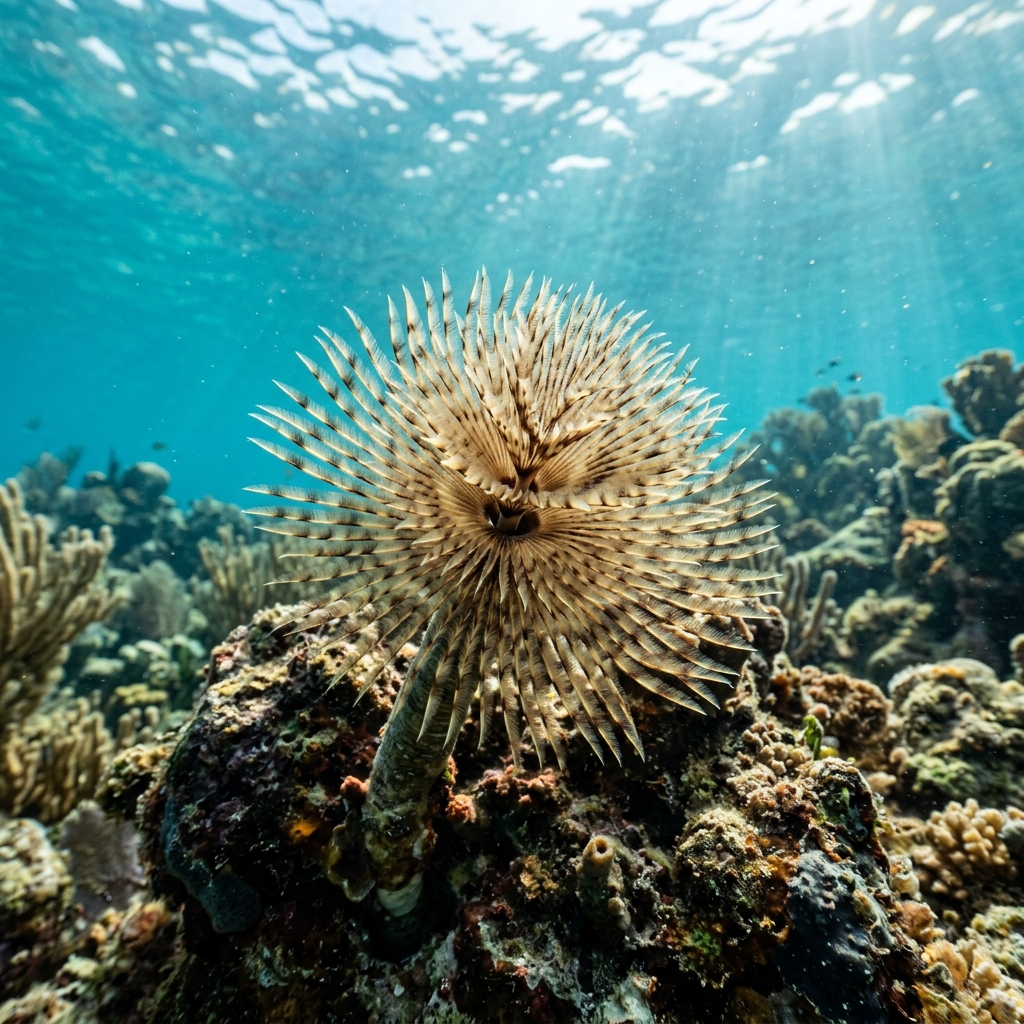
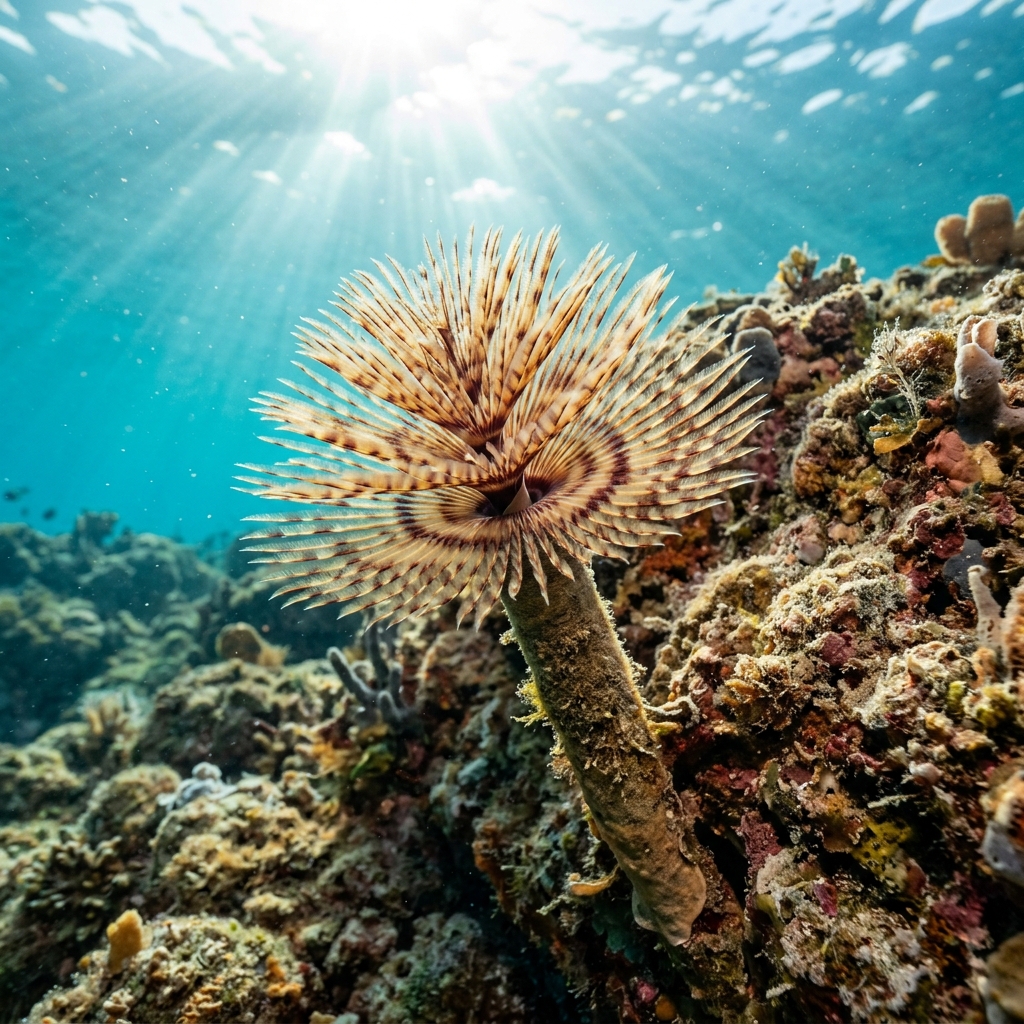
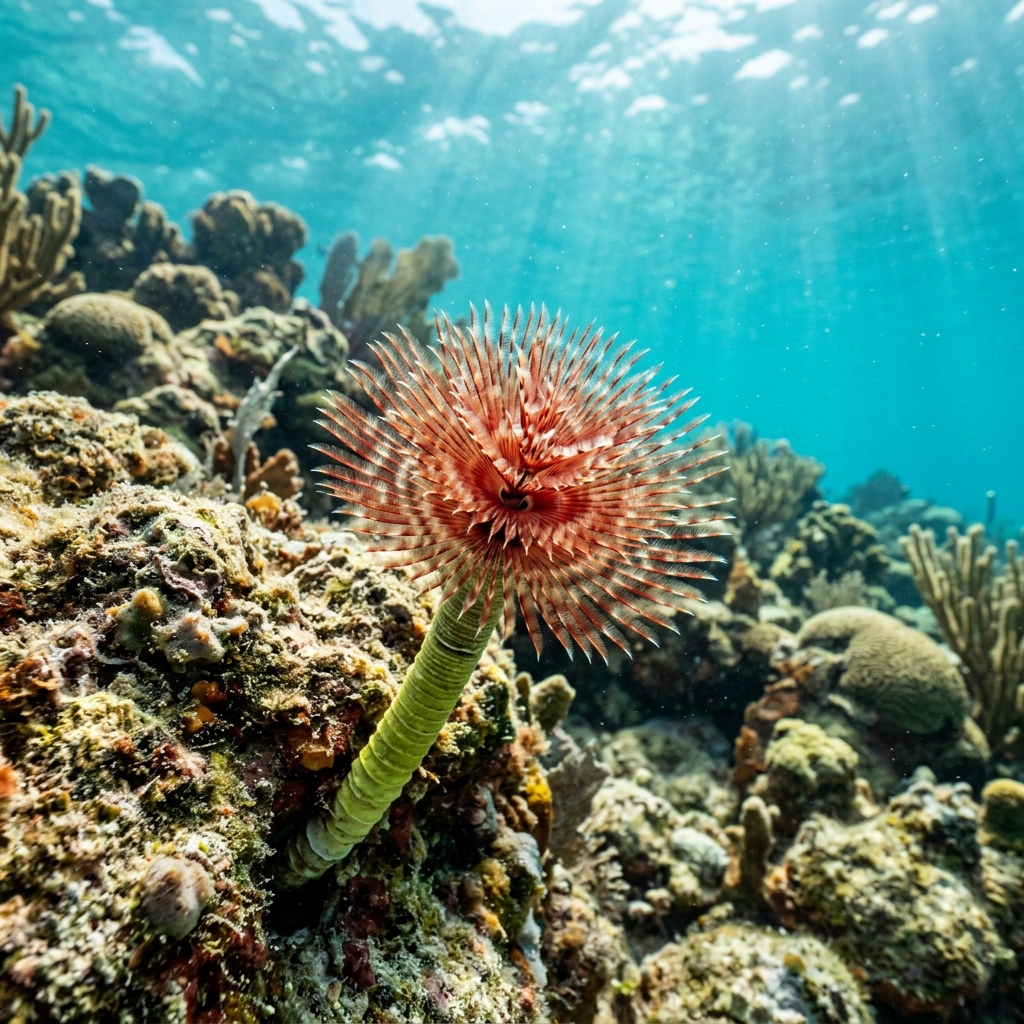
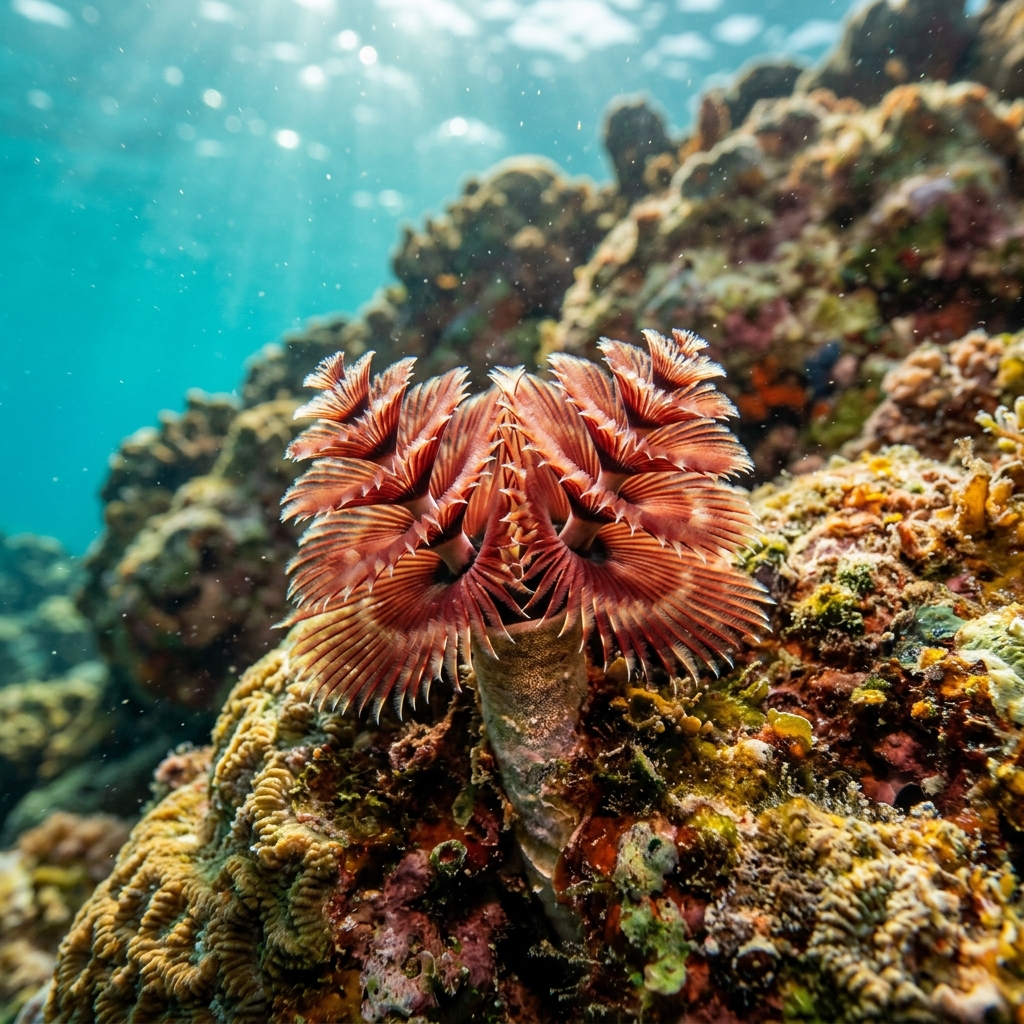
Two tight, cone-shaped spiral plumes (radioles) is the give-away, arranged like a double Christmas tree rising from a tube cemented into living coral. Colours range wildly from bright yellow and orange to blue, white, and bi-colour combinations, making each worm look distinct. The body itself is rarely visible; what you see is the feathery crown, roughly 3 to 4 cm across, and the moment you get too close it retracts instantly into its tube. Look for the calcified tube opening flush with the coral surface, often surrounded by a slight raised rim.
Almost always seen embedded in a coral head with just the plume crown exposed, slowly beating its radioles to filter plankton from the water column. Approach too quickly or cast a shadow and the crown snaps shut in a fraction of a second, leaving only a bare patch of coral to stare at. Patience pays off: hold still a metre or so away and the crown re-emerges within a minute or two.
Each worm bores directly into a living coral head and spends its entire adult life inside that single spot, so the coral and the worm grow together over years. The calcified tube becomes a permanent part of the reef structure.
Present year-round on tropical and subtropical reefs, consistent with their observed temperature range of roughly 22 to 29 °C. No seasonal peak has been recorded across Northern Hemisphere sites, so any trip to a warm-water reef destination is as good as the next.
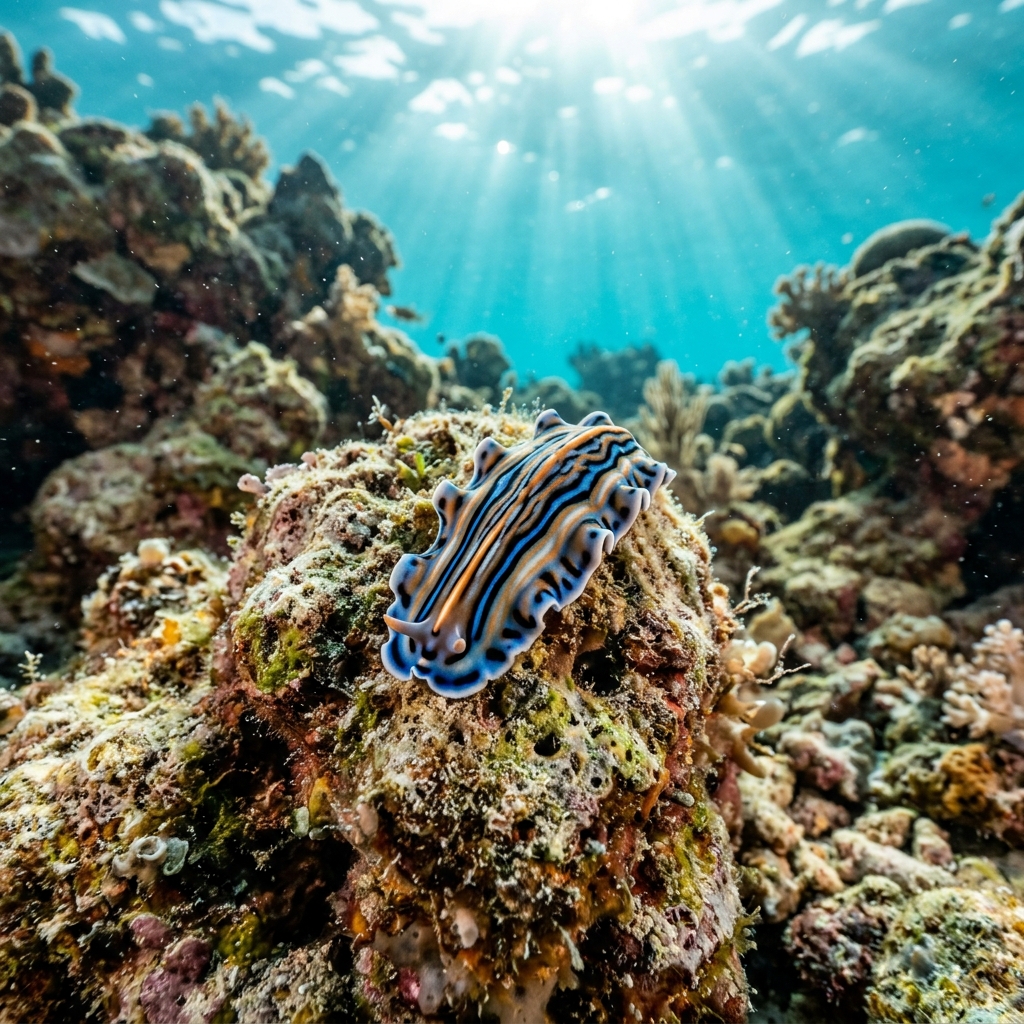
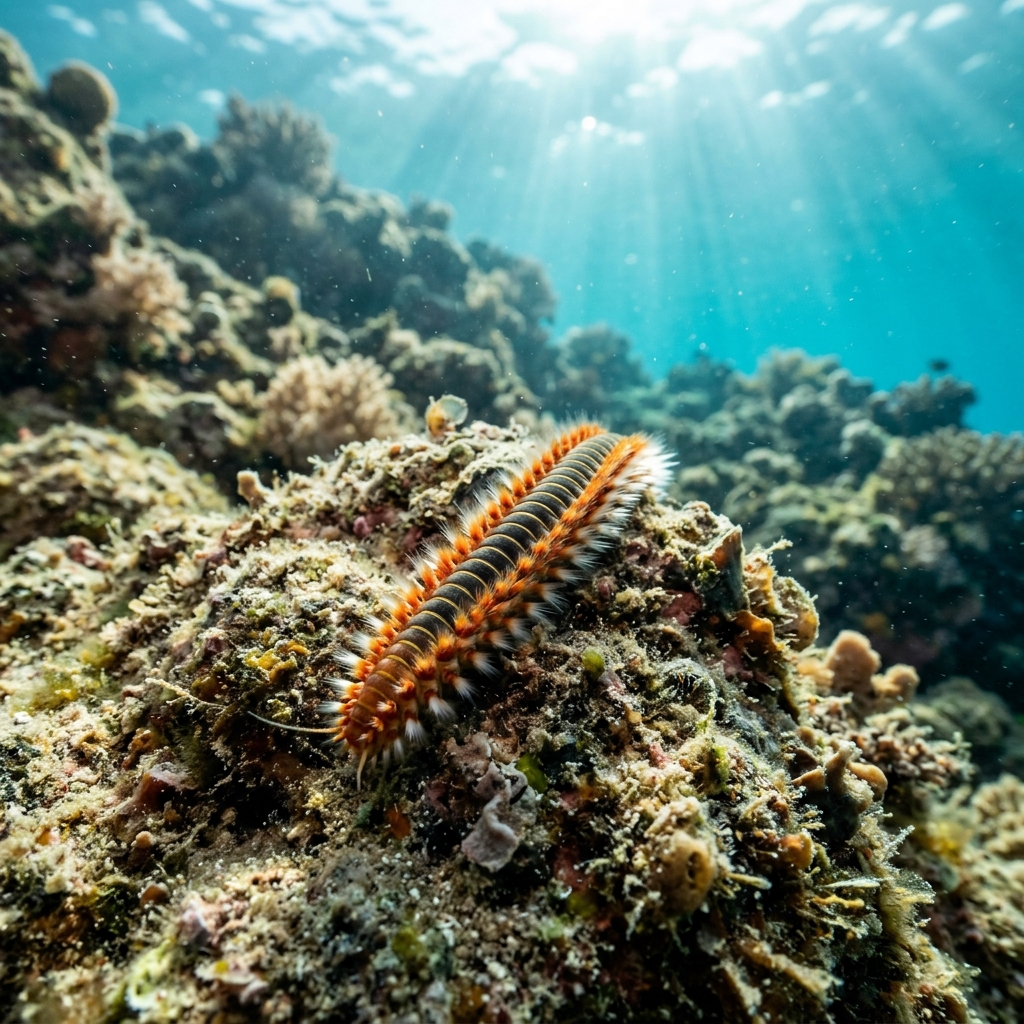
Reef neighbours a diver could mistake it for. Use the identification notes above to tell them apart.
Most commonly logged across the Caribbean basin, with the strongest showing in Florida and the US Southeast, the Yucatán Peninsula in Mexico, and Roatán in Honduras. Bonaire, Grand Cayman, and Colombia's Caribbean Coast are also reliable destinations, and sightings extend into the South Atlantic as far as Brazil.
Mapping where Christmas Tree Worm is logged…
They turn up across a wide sweep of tropical reef destinations. The strongest concentrations logged by divers are in Florida, the Yucatán Peninsula, Roatán in Honduras, Grand Cayman, Bonaire, and Colombia's Caribbean Coast. Brazil and the Bahamas also have solid records.
No concentrated season exists. Sighting data from Northern Hemisphere sites shows them present throughout the year, which makes sense given they live on tropical reefs that stay within roughly 22 to 29 °C year-round. Any warm-water dive trip is a fair bet.
Look for a pair of tightly coiled spiral plumes, like two miniature pine trees, rising from a coral head. Colours vary enormously from blue and orange to yellow and white. If the crown snaps shut as you approach, that reflex alone confirms it. The tube opening is flush with the coral surface.
The worm's body can reach around 14 cm in length, but the actual animal is hidden inside its tube. What you see above the coral is only the plume crown, which typically spans about 3 to 4 cm across.
They have light-sensitive cells and pressure receptors that trigger an almost instant retraction reflex when they detect a shadow or water movement. This is a defence against predators. Moving slowly and avoiding sudden movements gives you the best chance of watching the crown stay open.
Site and sighting data is aggregated from diver logs, iNaturalist and GBIF. For taxonomy and conservation status:
Spirograph
2,752 sites