Panulirus argus
Spot Caribbean Spiny Lobster on night dives across the Yucatán Peninsula, Roatán and Grand Cayman in warm 25-29 °C waters year-round.
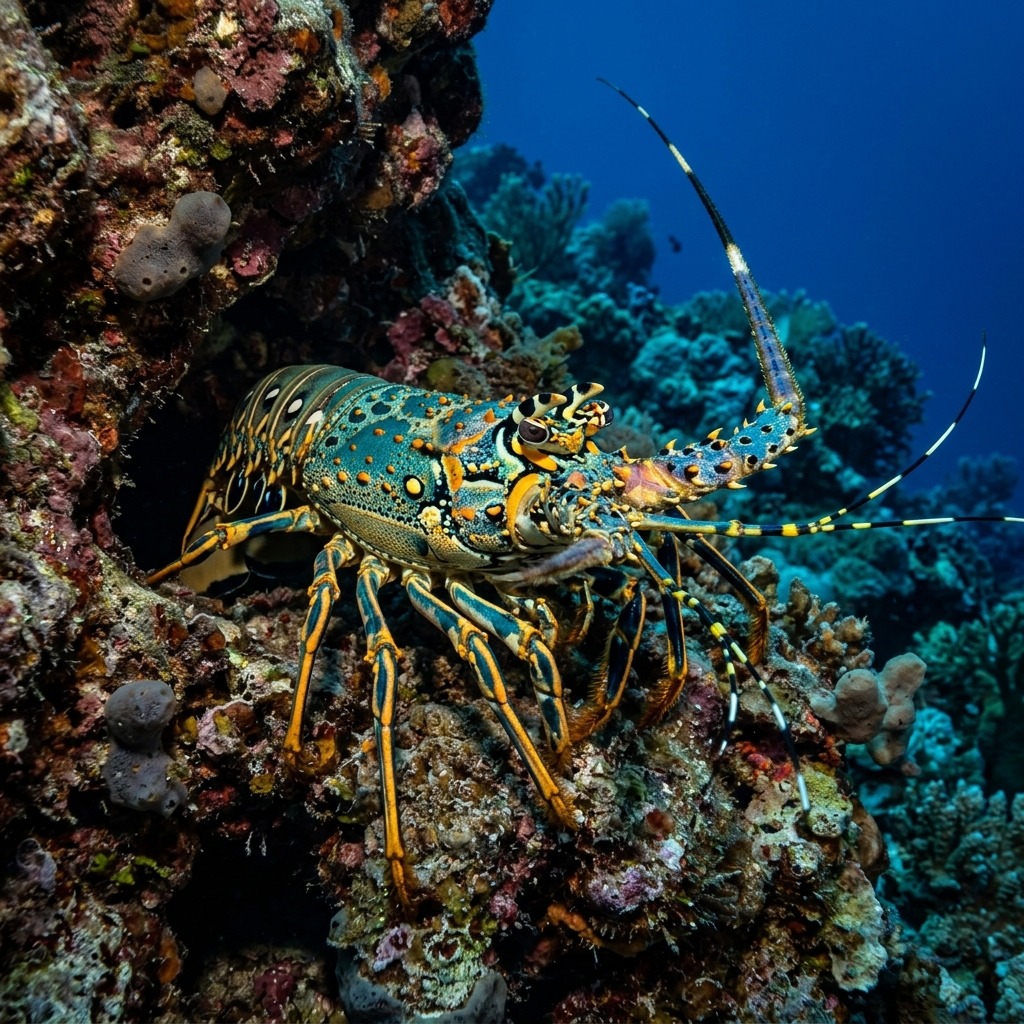
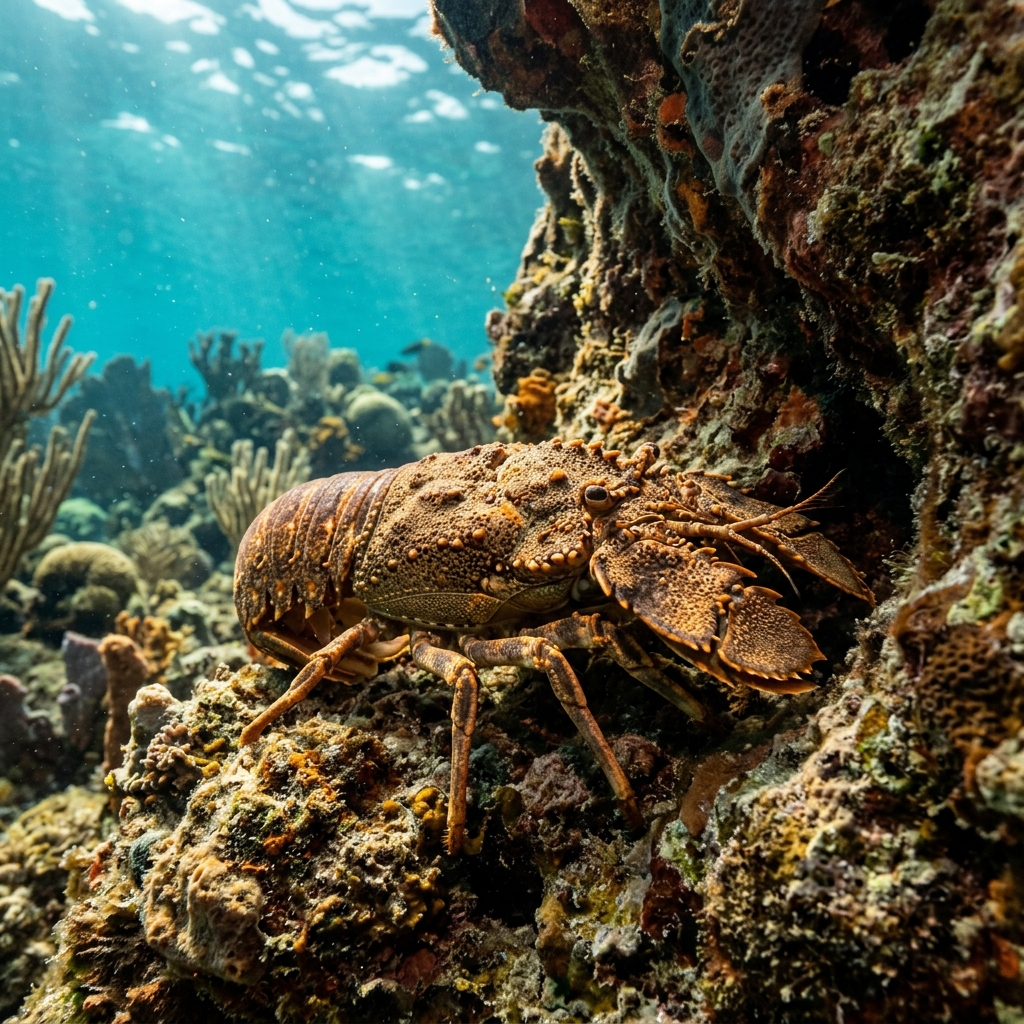
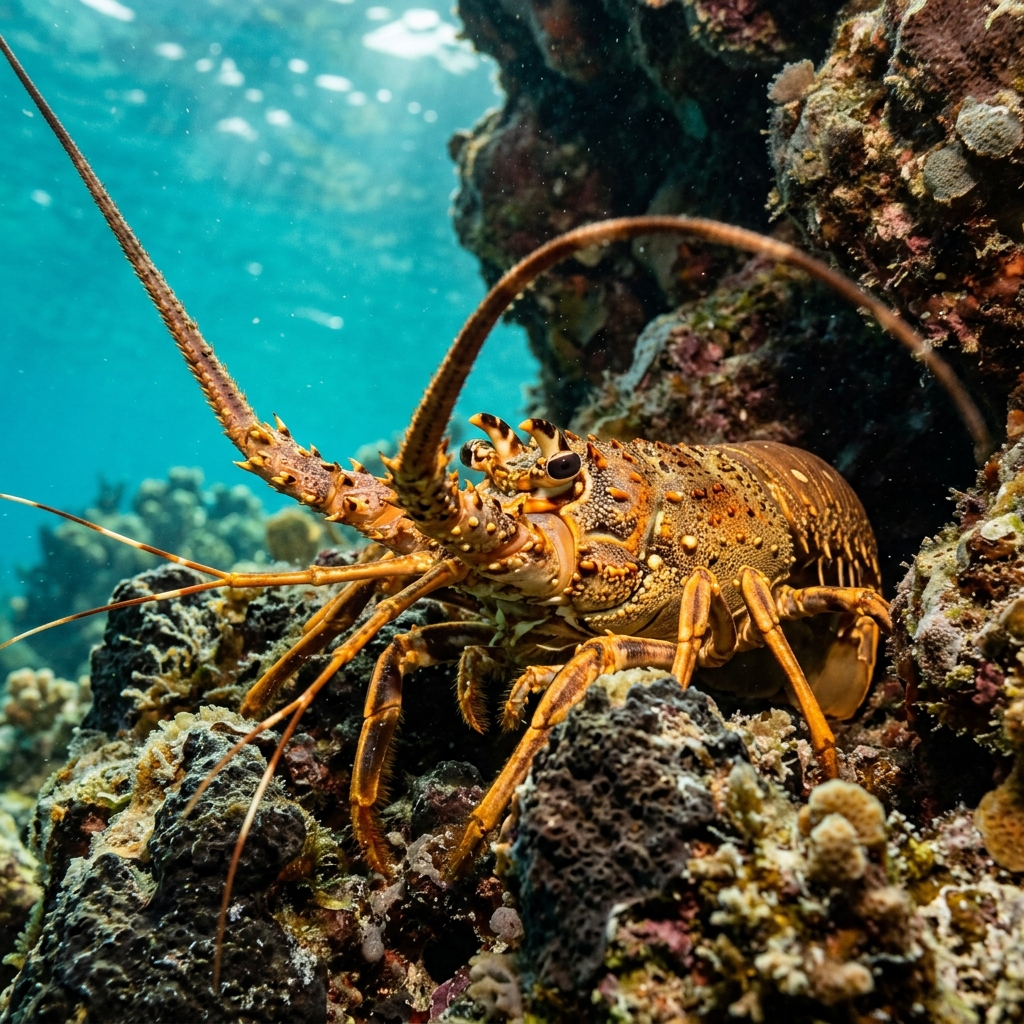
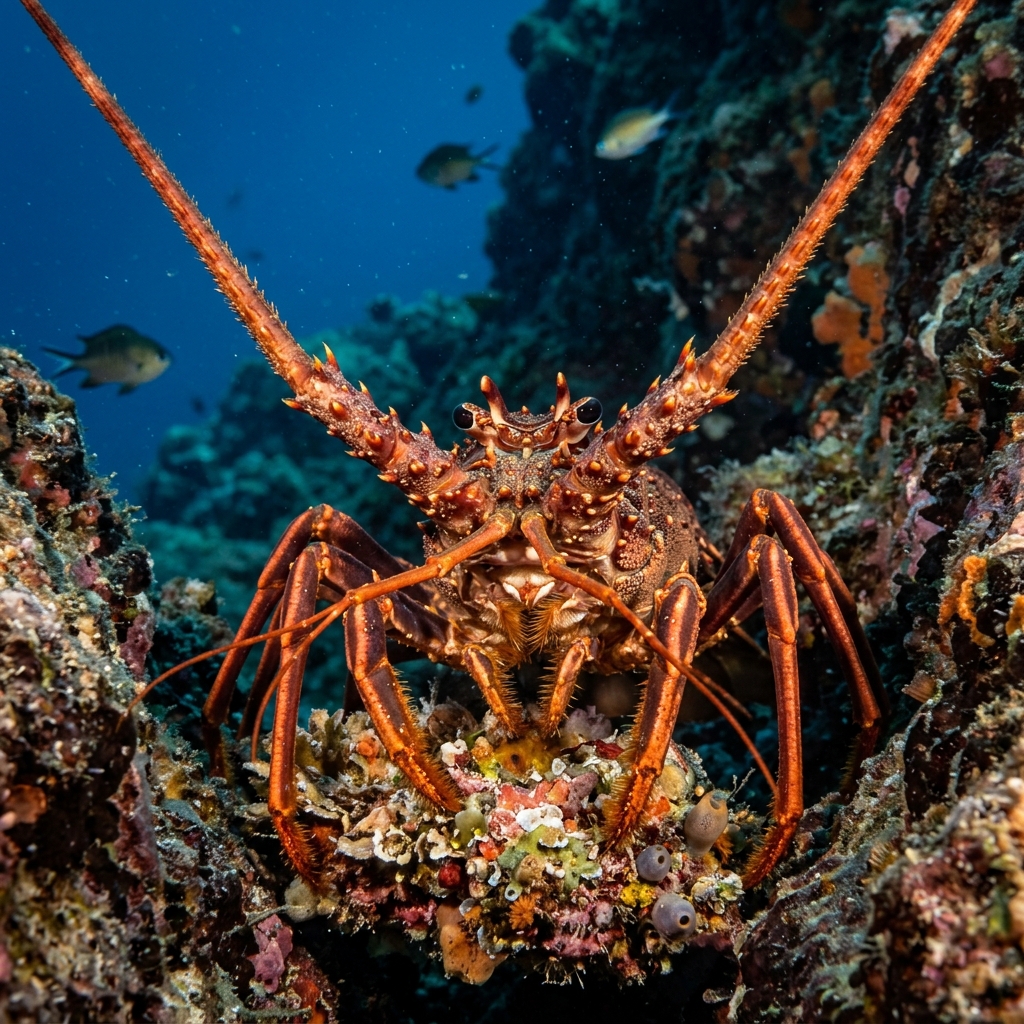
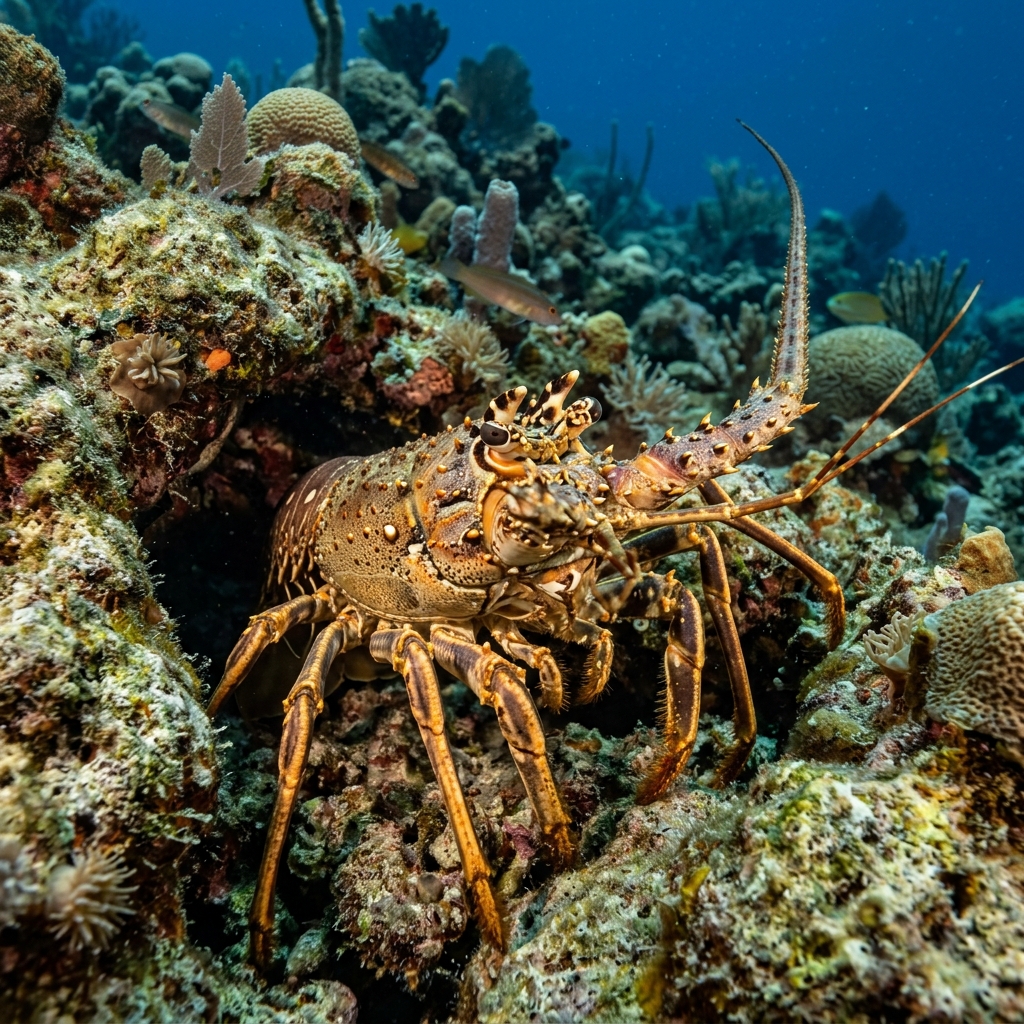
Long, boldly spiny antennae, often longer than the body itself, are the quickest giveaway underwater. The body is brown to reddish-orange with pale cream spots scattered across the abdomen and a heavily spined carapace (the hard shell covering the head and thorax). Unlike the clawed lobsters of the North Atlantic, this species has no large front claws, giving it a sleeker, almost cylindrical profile. At around 30 cm it is a substantial animal, but it tends to back into crevices so you usually see just the antennae and front legs poking out.
During the day, spiny lobsters retreat under ledges, into reef crevices, or beneath coral heads, leaving only their distinctive antennae visible, they will wave those antennae firmly at a diver who pushes too close, which is about as aggressive as they get. After dark they venture out to forage across the reef floor, making night dives by far the best opportunity to watch them moving freely. They are social animals and it is not unusual to find several individuals sheltering in the same overhang, particularly during their mass seasonal migrations when large aggregations move together across the seabed.
Each autumn, Caribbean spiny lobsters undertake one of the animal kingdom's more remarkable journeys: thousands of individuals form single-file queues called 'lobster marches' and walk nose-to-tail across open sandy bottoms, sometimes covering many kilometres in a few days, apparently triggered by the first cold fronts of the season.
Present year-round throughout its range, which makes sense given its preference for warm tropical water sitting between roughly 25 and 29 °C, conditions that persist on Caribbean reefs in every season. Night dives consistently produce better encounters regardless of time of year.
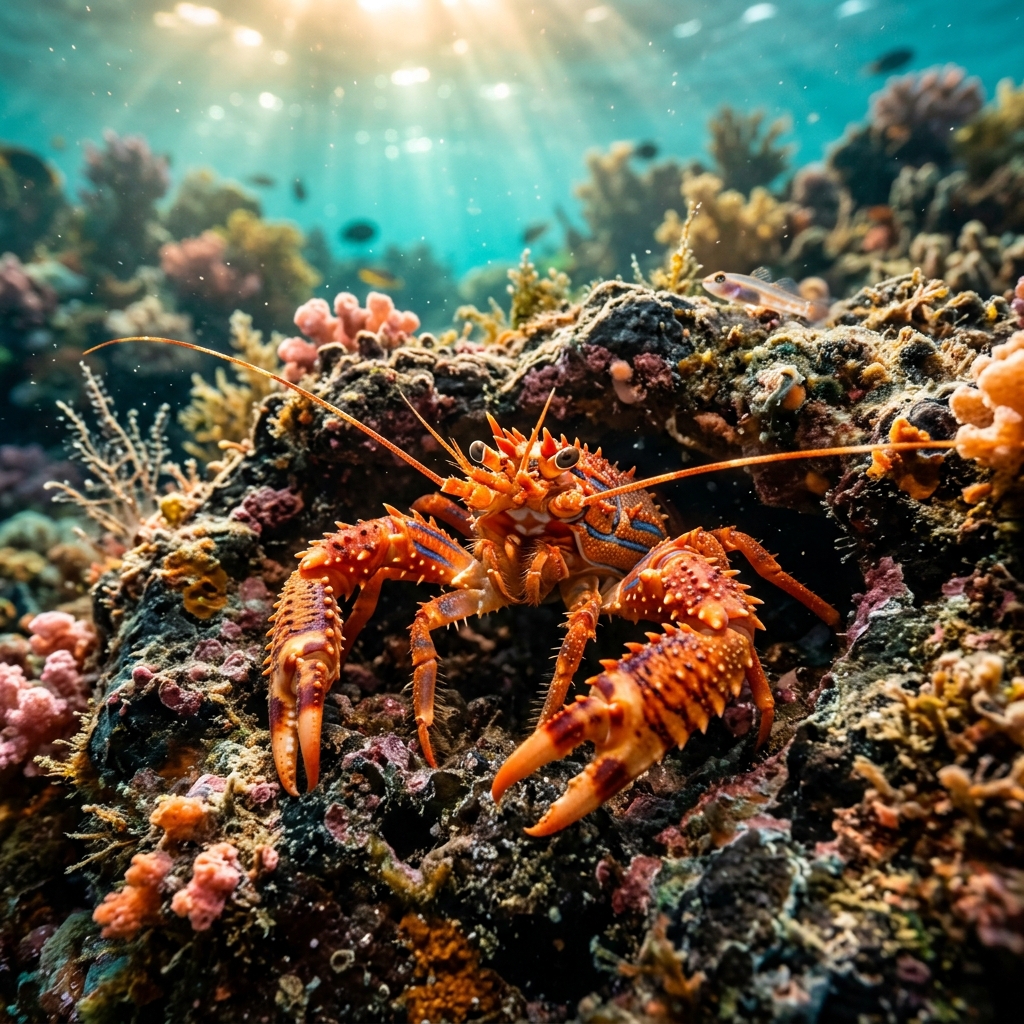
Reef neighbours a diver could mistake it for. Use the identification notes above to tell them apart.
Most consistently logged across the wider Caribbean, with the strongest presence in the Yucatán Peninsula and the Florida and Southeast US coast. Roatán in Honduras, Grand Cayman, the Bahamas, and Colombia's Caribbean Coast are all reliable spots, and sightings extend as far south as northeast Brazil. Cuba and Grenada also show solid records across many sites.
Mapping where Caribbean Spiny Lobster is logged…
They are logged across a wide stretch of the western Atlantic and Caribbean. The most sightings come from the Yucatán Peninsula in Mexico, the Florida and Southeast US coast, Roatán in Honduras, Grand Cayman, the Bahamas, and Colombia's Caribbean Coast. Grenada, Cuba, and the British Virgin Islands also have strong records.
They are present year-round on Caribbean reefs, which stay within their preferred temperature range of around 25-29 °C in every season. The single biggest improvement you can make is diving at night, that is when they leave their daytime shelters and forage openly across the reef.
Look for very long, spiny antennae projecting from beneath a reef ledge, that alone is usually enough. The body is brown-orange with pale spots, heavily spined, and notably lacks the large front claws you would see on European or North American clawed lobsters. The antennae are frequently the only part visible during daylight hours.
A typical adult measures around 30 cm in body length, though the antennae can add considerably to the overall impression of size. Large individuals in protected areas can grow noticeably bigger, but 25-35 cm is the range most divers encounter.
Yes. In autumn, usually after the first cold fronts, large numbers form single-file queues and walk nose-to-tail across open sandy seabed in what divers and researchers call a lobster march. The queues can contain dozens of individuals and appear to help reduce drag and deter predators. It is one of the more striking invertebrate behaviours documented in the Caribbean.
Site and sighting data is aggregated from diver logs, iNaturalist and GBIF. For taxonomy and conservation status:
European Spiny Lobster
1,951 sites