Cephalopholis cruentata
Small reef grouper logged year-round from Florida to Bonaire, usually spotted resting on coral at 22.7-28C, uncommon but widespread.
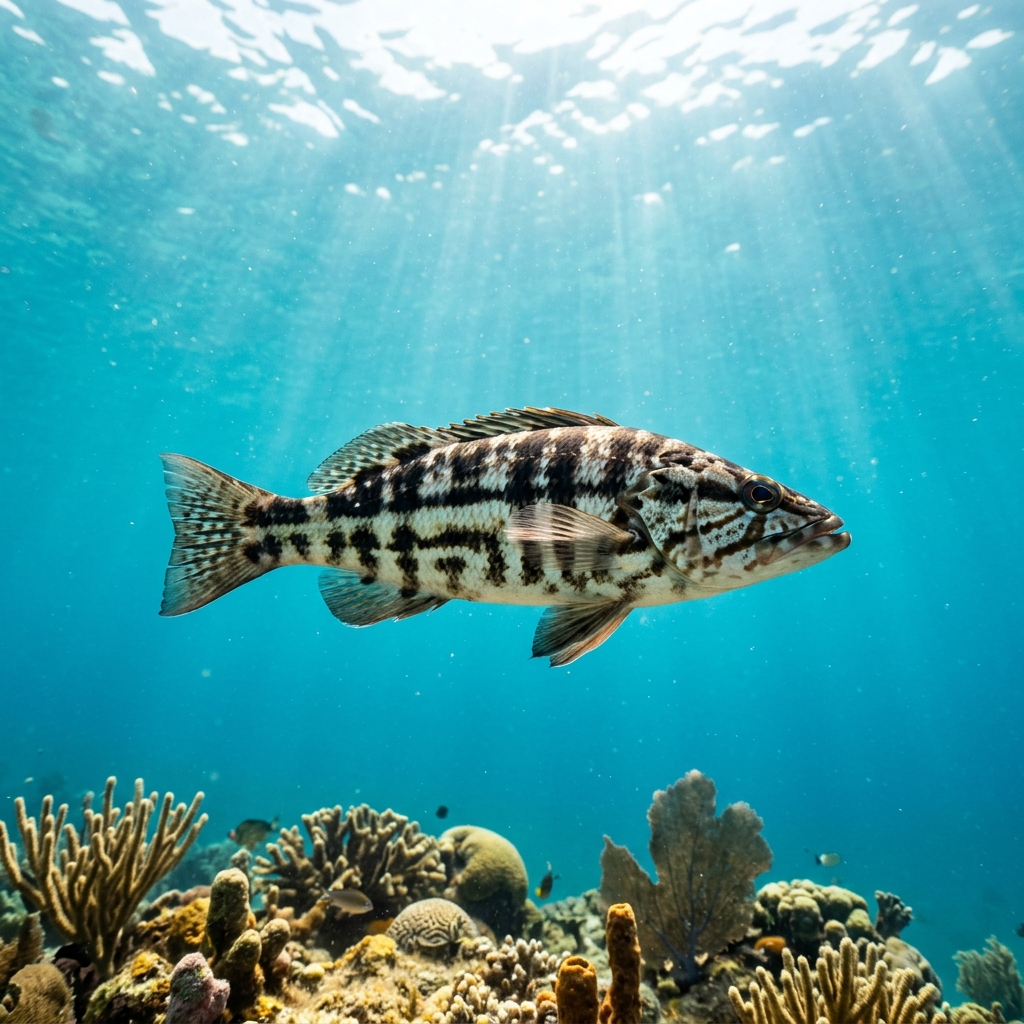
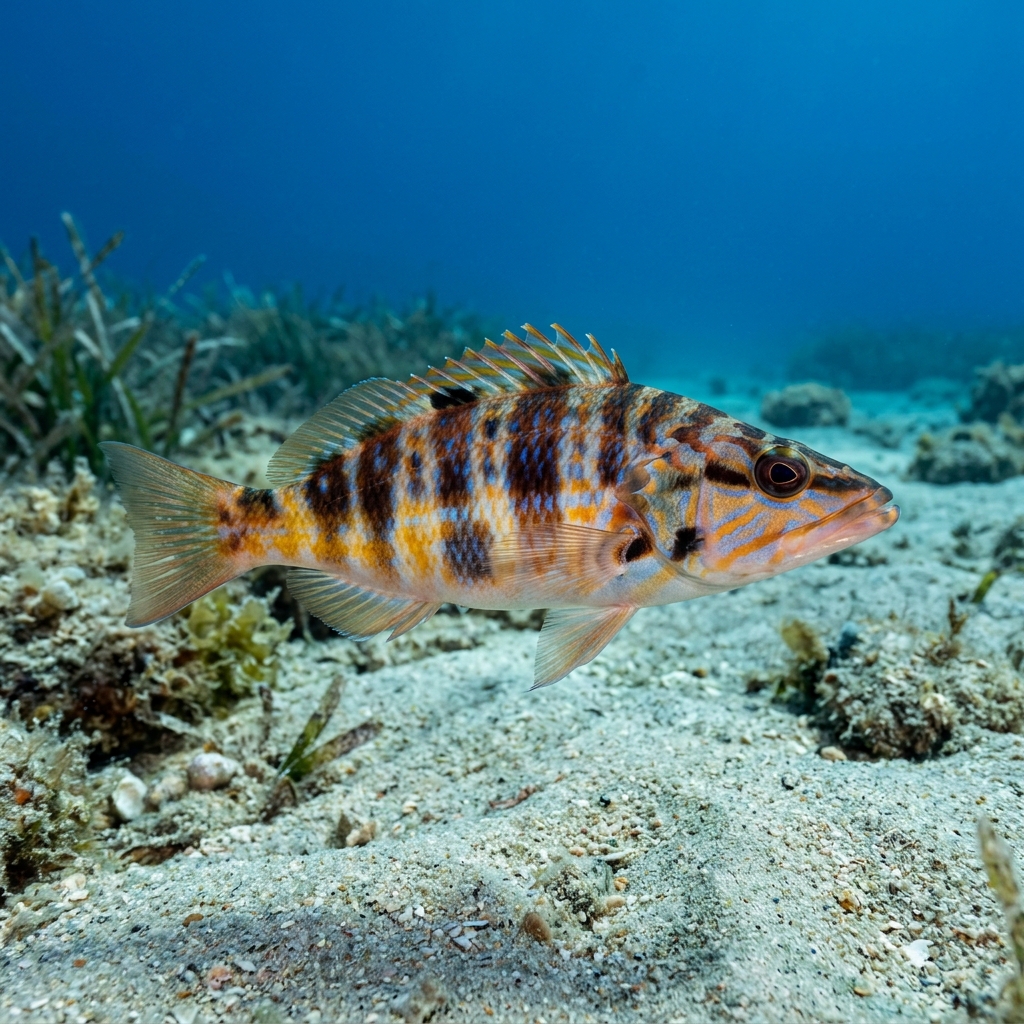
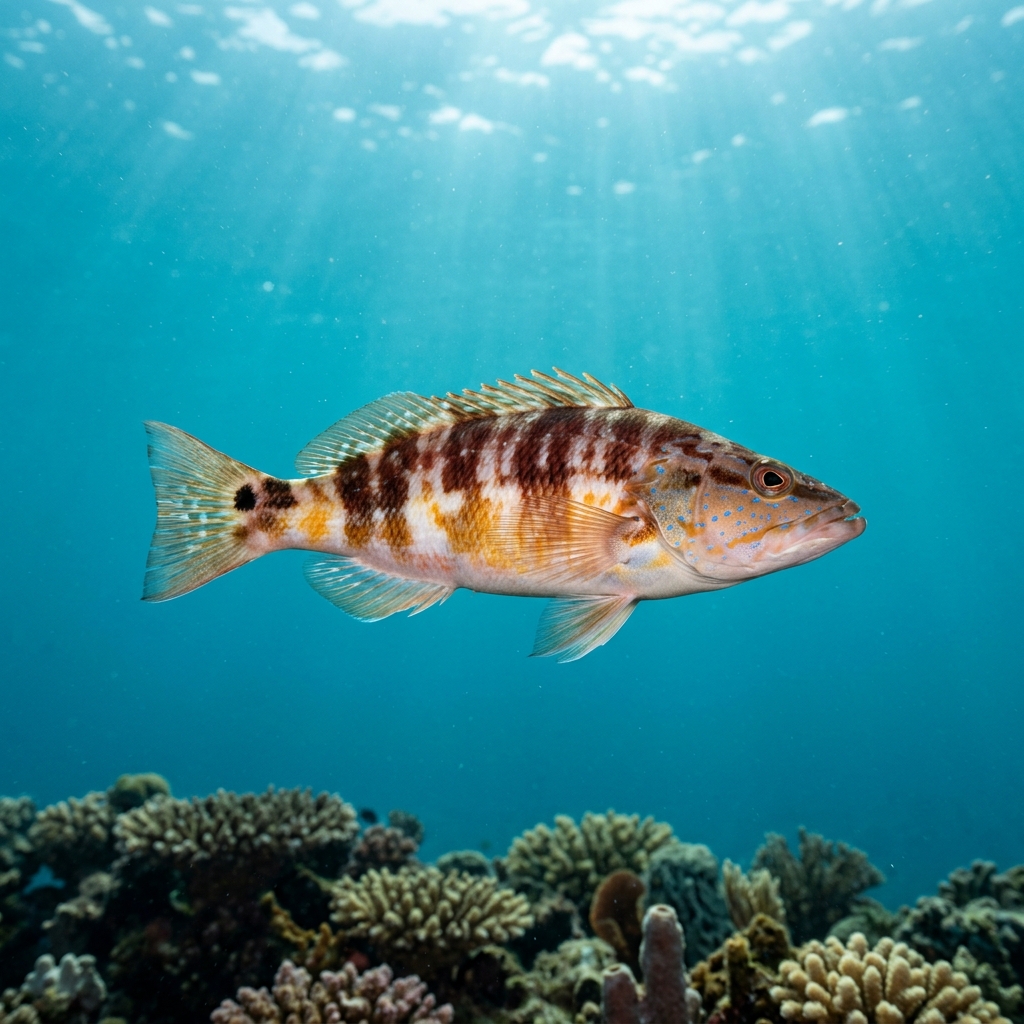
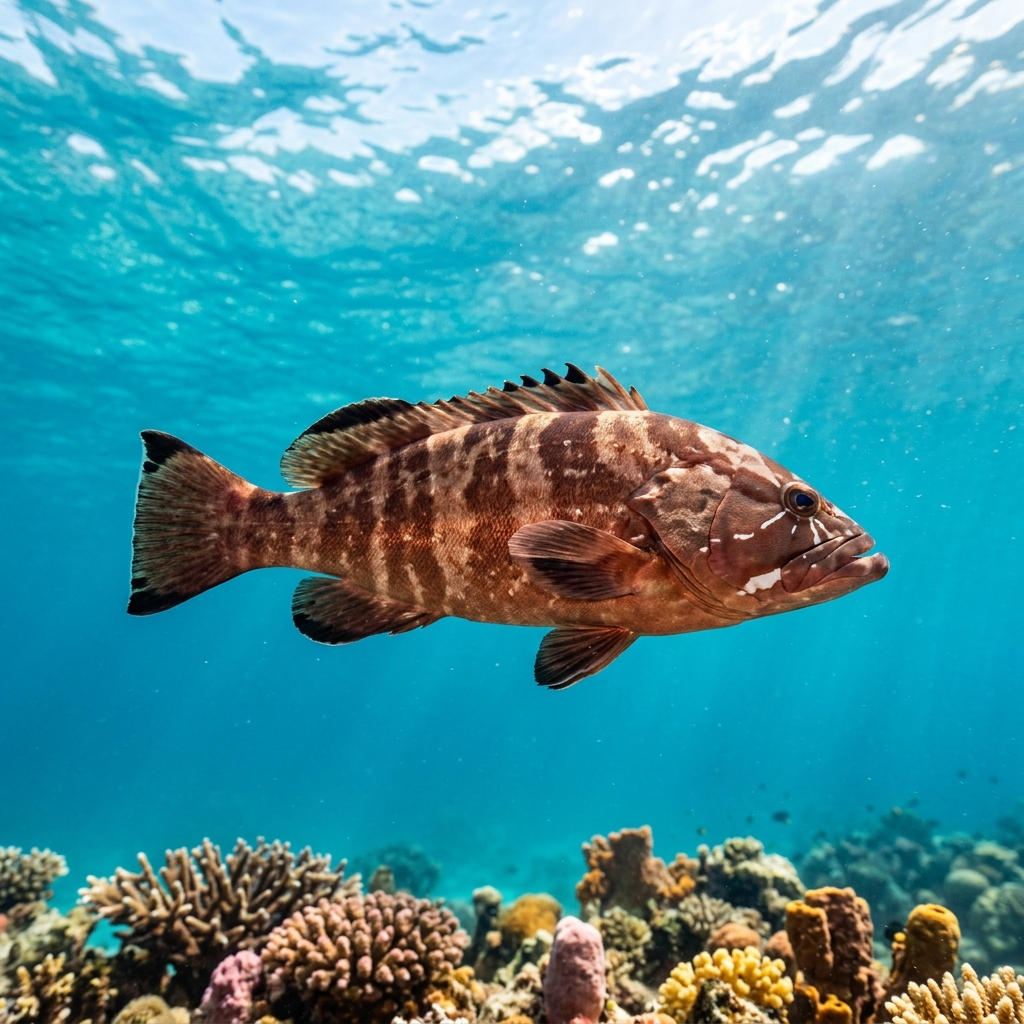
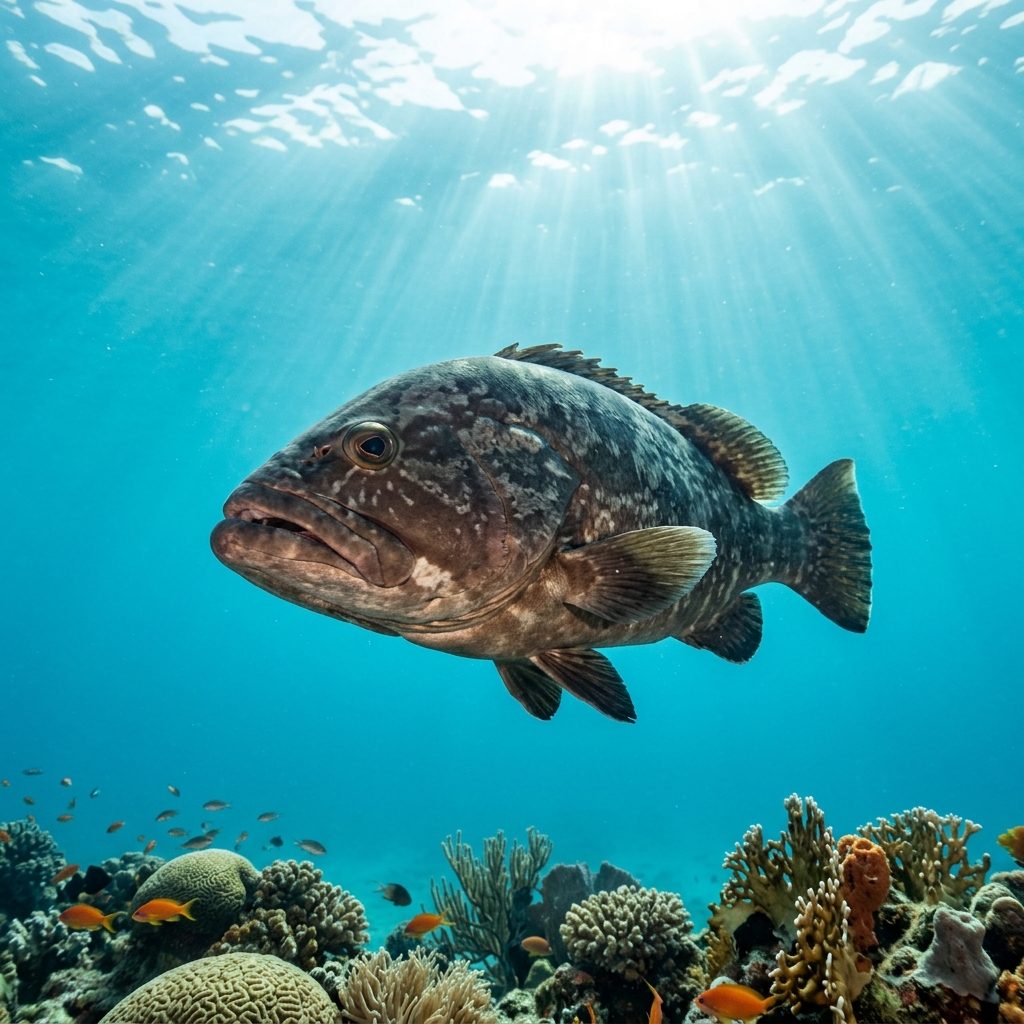
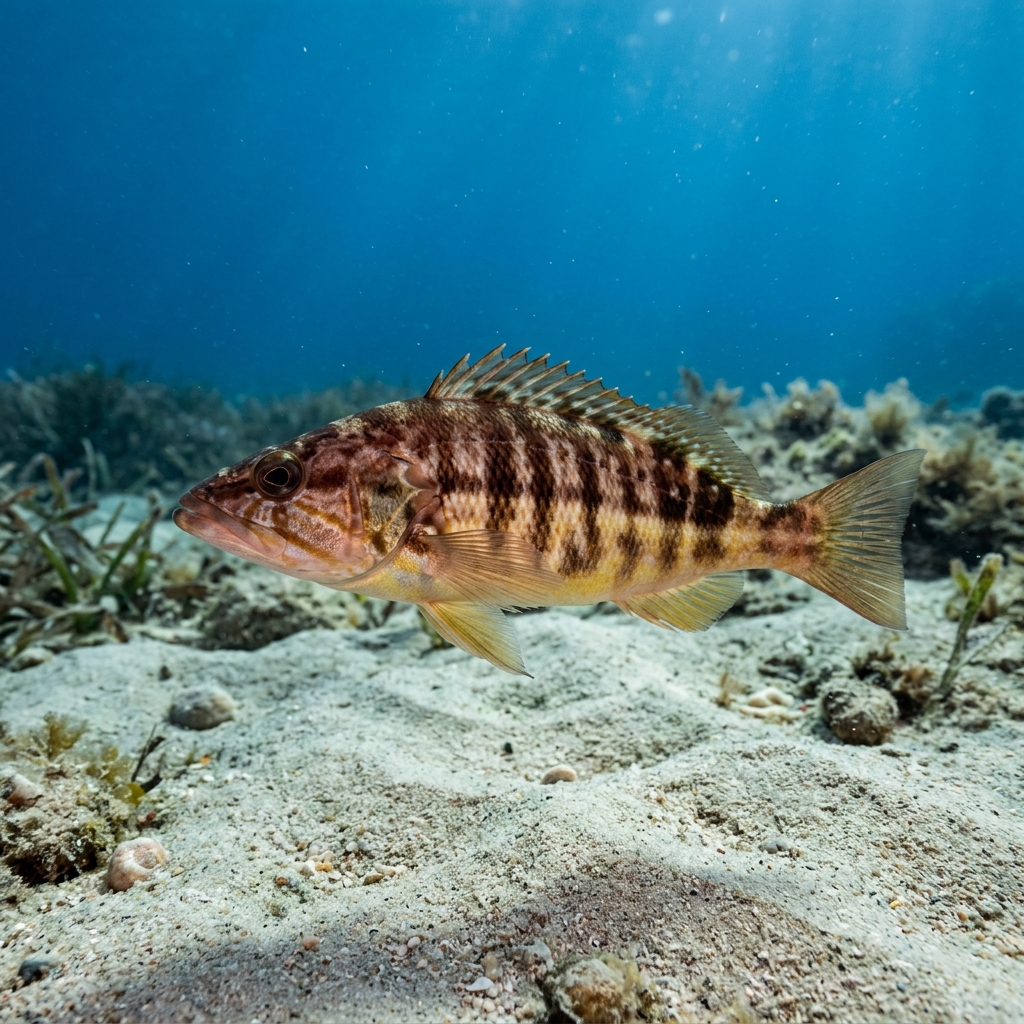
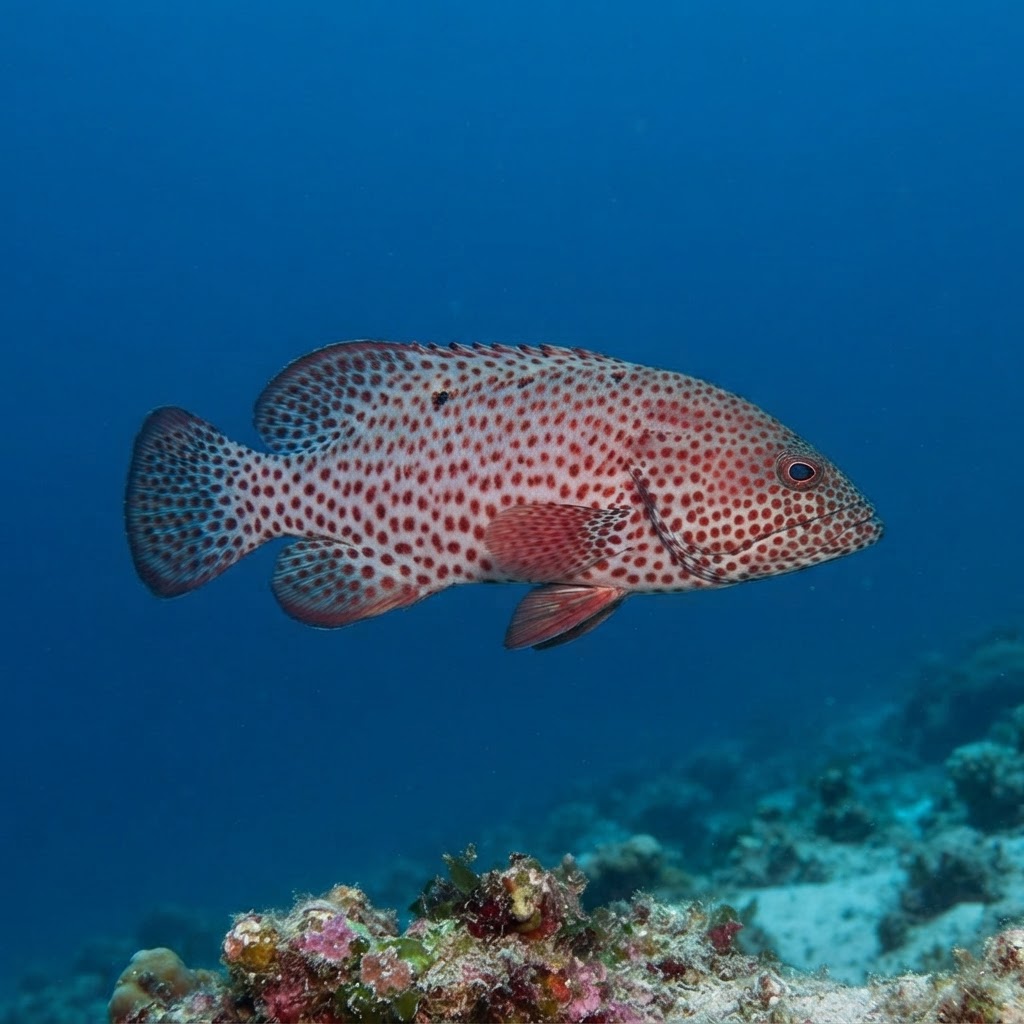
Small, chunky grouper reaching about 29 cm, with a mottled reddish-brown to olive body covered in dark brown or reddish spots over a paler background. Look for a rounded tail and the way it perches motionless on coral heads or ledges rather than swimming in open water. Colour can shift slightly with mood and background, but the dense spotting pattern across the whole body is the giveaway.
Divers most often find it parked on a coral ledge or wedged into a crevice, watching the reef rather than patrolling it. It tends to hold its ground as divers pass, only darting for cover if approached too closely, and is frequently seen during daytime reef dives rather than at night. Its stillness and camouflage mean it is easy to swim right past without noticing.
Like many groupers in this family, graysby are protogynous hermaphrodites, meaning individuals start life as females and some later change into males as they grow.
Sightings show no clear seasonal pattern, and with a comfortable range of 22.7 to 28C it stays active on Caribbean reefs all year, so any month works for a dive trip.
Most reliably logged in the United States (especially Florida), Honduras' Bay Islands, Grand Cayman, and Bonaire's Leeward Coast, with solid numbers also from the US Virgin Islands, Mexico's Yucatan Peninsula, and the British Virgin Islands. It shows up across most Caribbean reef destinations, including Curacao and Grenada, making it one of the more dependable small groupers to tick off on a Caribbean reef dive.
Mapping where Graysby is logged…
Florida, the Bay Islands of Honduras, Grand Cayman, and Bonaire's Leeward Coast are among the most reliable spots, with regular sightings also across the US Virgin Islands, Mexico's Yucatan Peninsula, and the British Virgin Islands.
There is no strong season for this species. It stays on the reef year-round in water between roughly 22.7 and 28C, so any month is fine for a Caribbean dive trip.
Look for a small, spotted grouper around 29 cm long, reddish-brown to olive with dense dark spots, usually resting still on coral or tucked into a ledge rather than swimming.
They typically reach about 29 cm, making them one of the smaller groupers you will encounter on a Caribbean reef.
No, graysby pose no danger to divers. They are small, reef-bound predators that hold still or retreat into cover rather than showing any interest in divers.
Yes, they are protogynous hermaphrodites, starting life as females with some individuals later transitioning to males as they mature, a trait shared with several related grouper species.
Site and sighting data is aggregated from diver logs, iNaturalist and GBIF. For taxonomy and conservation status:
Blacktip Grouper
2,726 sites