Cyphoma gibbosum
Spot the flamingo tongue's vivid orange-spotted mantle on Caribbean reefs. Most commonly logged in the Yucatán Peninsula, Roatán and Grand Cayman year-round.
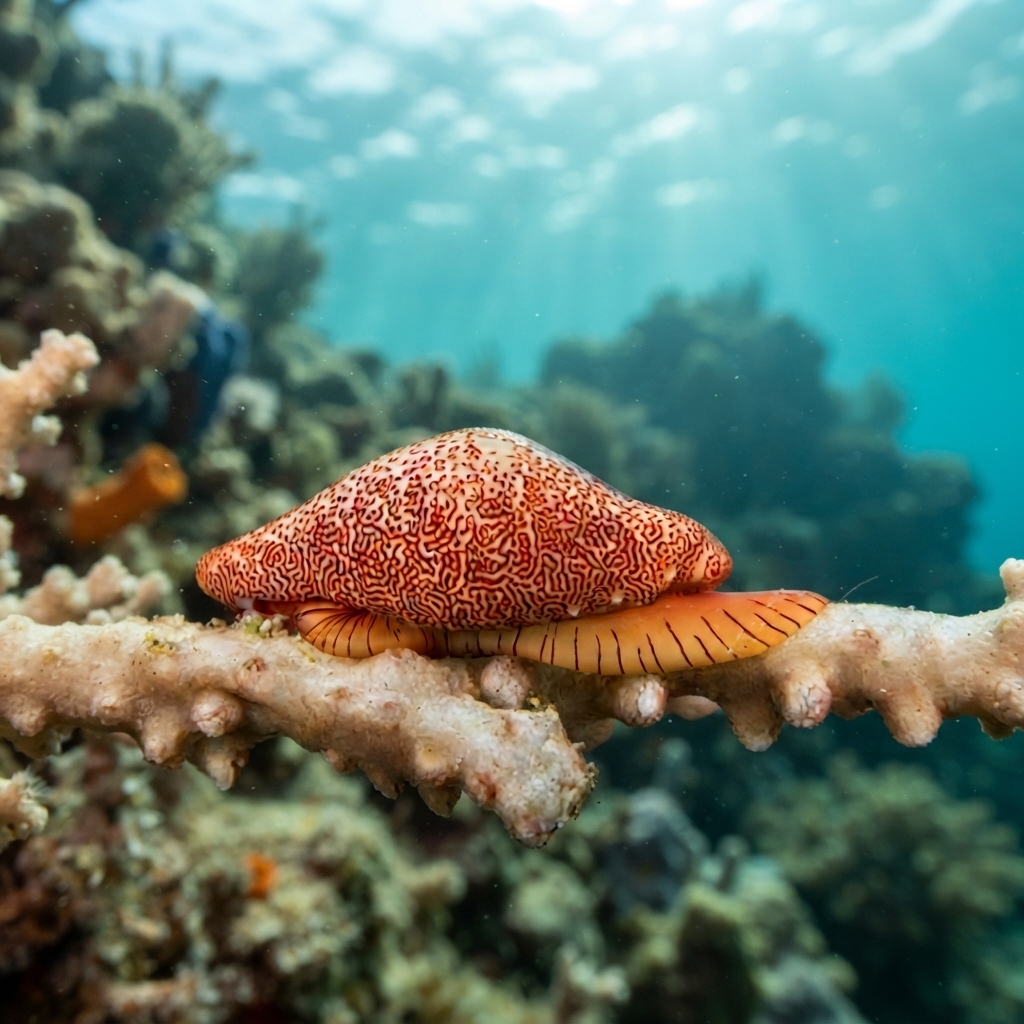
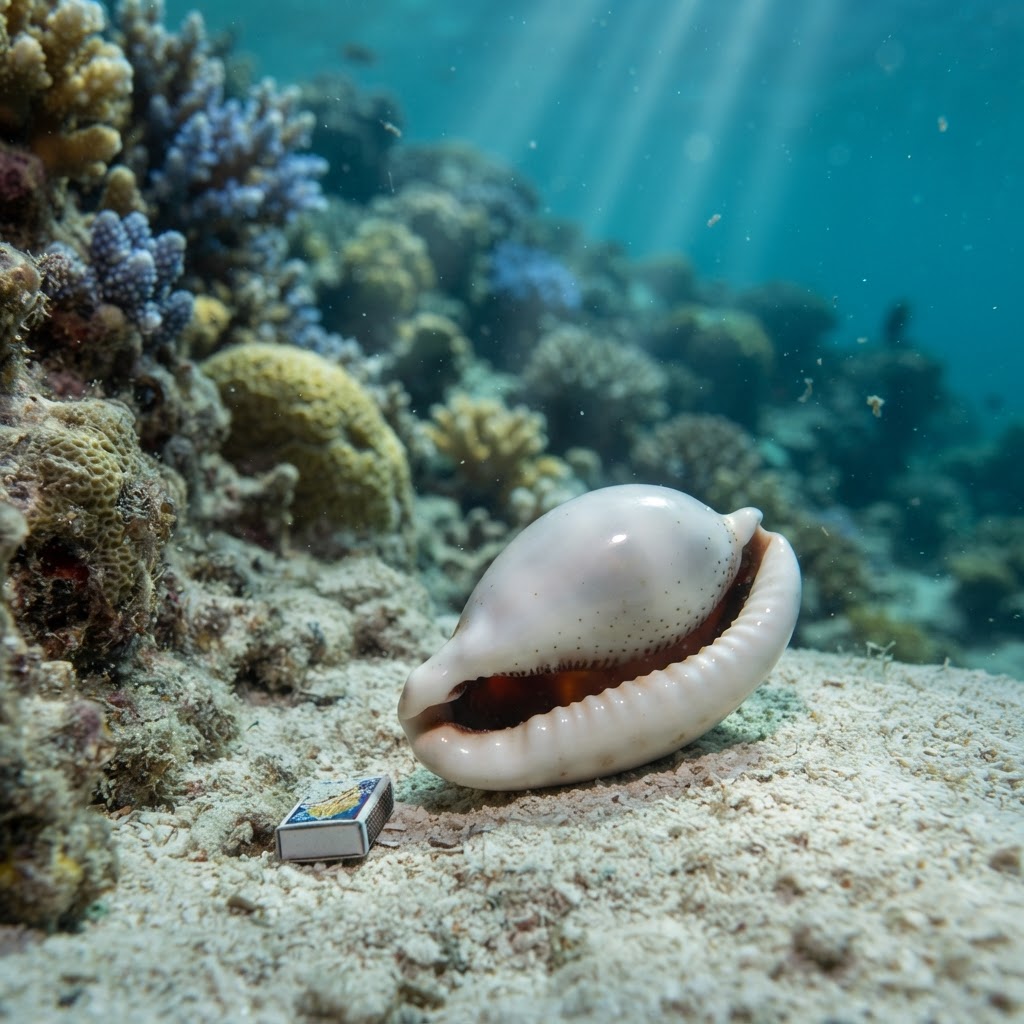
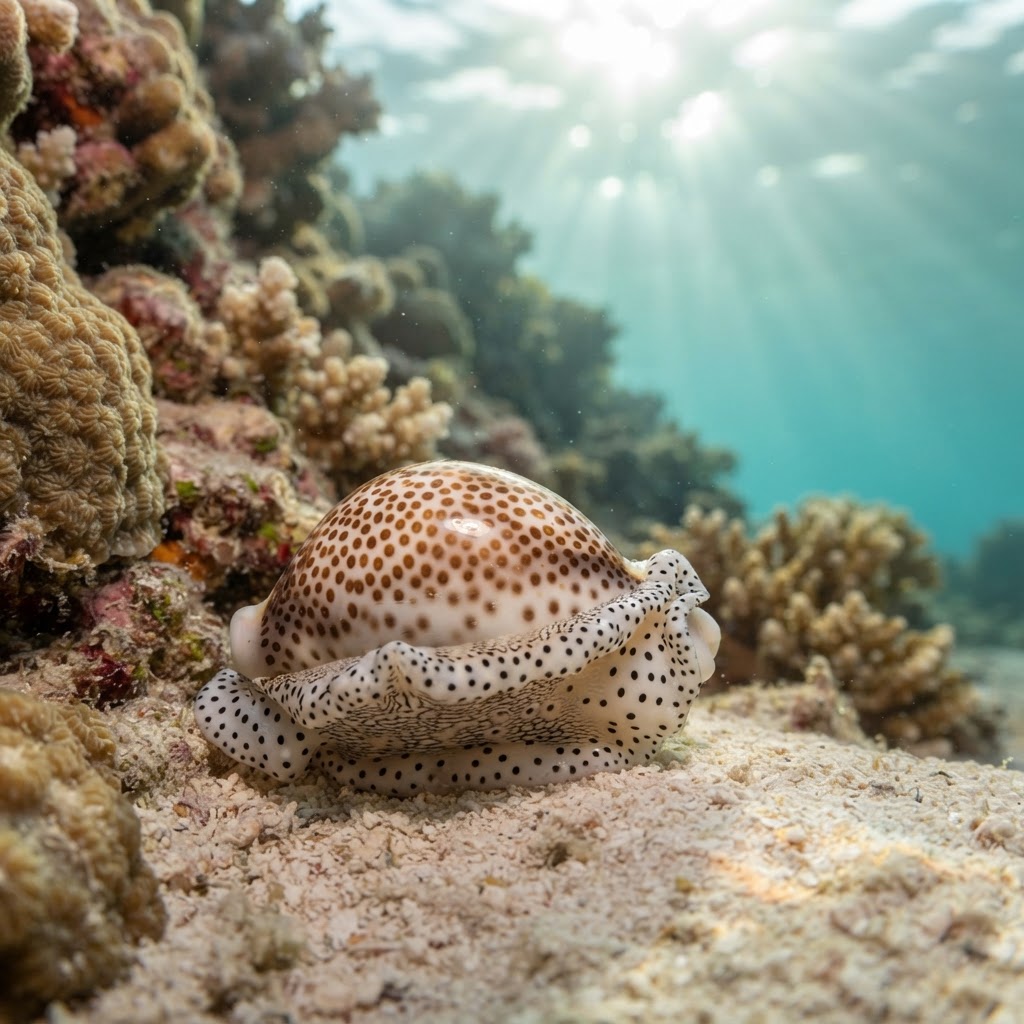
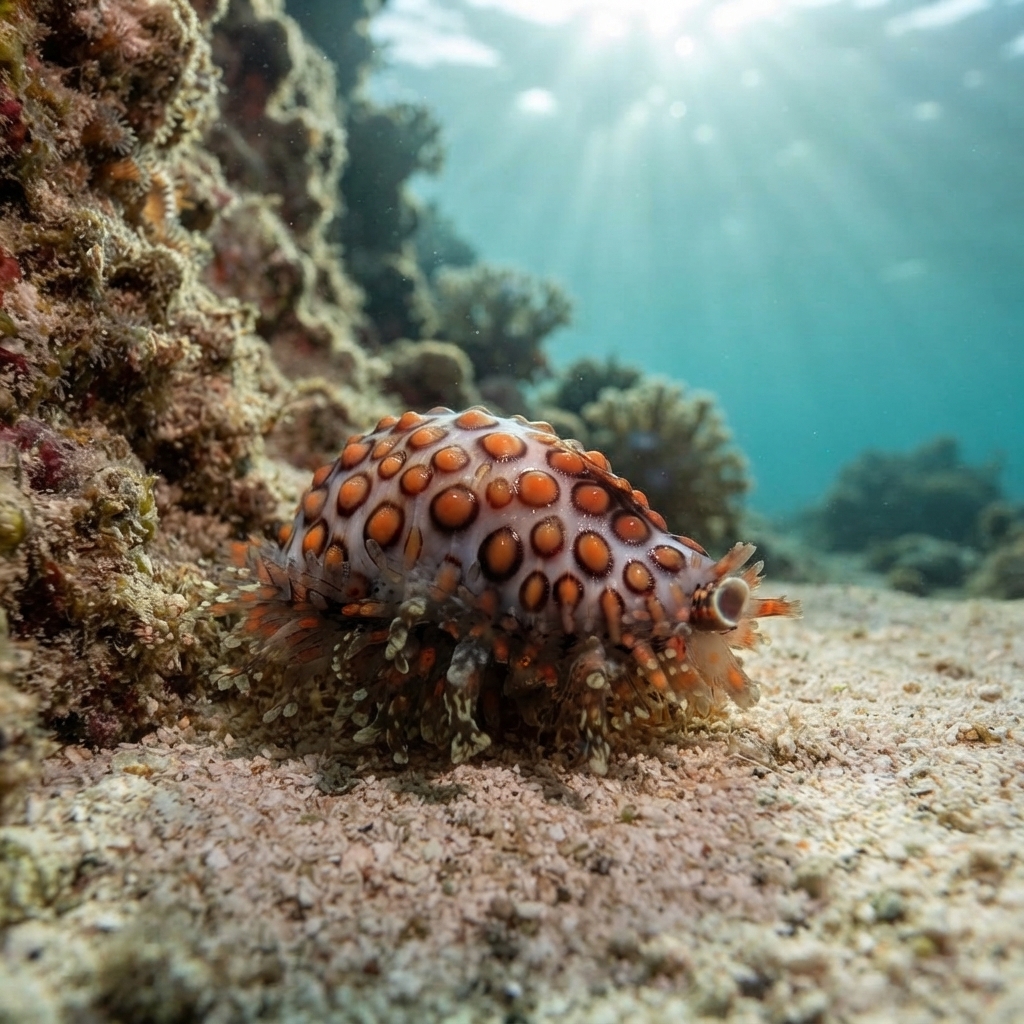
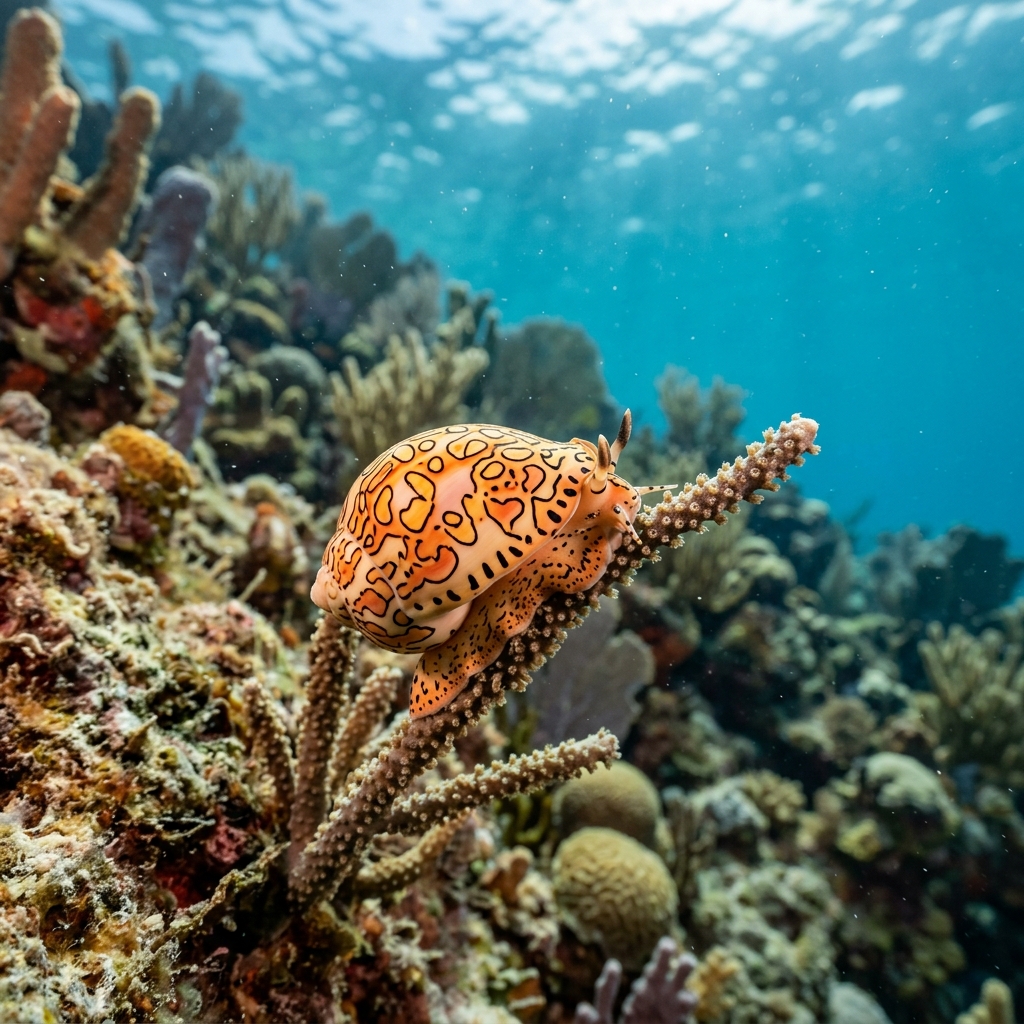
Look for a small, elongated snail, roughly 2 to 3 cm long, whose smooth cream-to-yellow shell is almost completely hidden beneath a fleshy mantle covered in vivid orange-yellow spots ringed in black. That bold spotted pattern is the animal's living tissue, not its shell; the shell underneath is plain white. When the snail retracts its mantle under stress, you are left looking at a featureless glossy white oval, which can cause momentary confusion. The combination of spotted mantle on a sea fan or soft coral is the reliable field cue.
You will almost always find it moving slowly along the branches of sea fans (gorgonian corals), where it grazes directly on the coral tissue, look closely at any purple or orange sea fan and you may notice small, perfectly cleaned patches where the snail has been feeding. It is not especially shy, but if you touch it or cast a sharp shadow over it, it will retract its mantle within seconds. Sightings tend to be solitary, though multiple individuals can sometimes be found on a single large sea fan.
The spectacular spotted pattern belongs entirely to the mantle, the soft outer tissue that wraps over the shell. The bare shell collected by beachcombers and souvenir sellers is completely plain, which is exactly why over-collection of live animals for their 'pretty shells' has reduced populations on heavily dived reefs. What looks like a patterned shell in a market stall is really the skeleton of an animal stripped of everything that made it interesting.
In the Northern Hemisphere it is present year-round with no concentrated season, consistent with its preference for warm tropical water in the 24 to 27 °C range. In the Southern Hemisphere the data show sightings concentrated roughly August through June, with a quieter period around July.
Most commonly logged across the wider Caribbean: the Yucatán Peninsula (including Cozumel and Playa del Carmen) tops the sighting records, followed closely by Roatán in Honduras, Grand Cayman, and the Bahamas. Strong populations also turn up in Grenada and along the Florida and Southeast US coast, making it a species you can reasonably target throughout the Caribbean basin.
Mapping where Flamingo Tongue is logged…
The flamingo tongue is a Caribbean and tropical Atlantic specialist. It is most commonly logged in the Yucatán Peninsula, Roatán, Grand Cayman, and the Bahamas, with reliable sightings also in Grenada and along the Florida coast. Outside the Caribbean the data show scattered records, largely from the range model rather than frequent diver observations.
In the Caribbean and Northern Hemisphere it can be found year-round, with no single peak season recorded across the data. Water temperatures in the 24 to 27 °C range suit it well, which describes most Caribbean reef conditions throughout the year.
The key is the mantle: a cream to pale-yellow surface covered in bright orange-yellow spots each outlined in black or dark brown. The animal is small, a couple of centimetres, and is almost always found on a sea fan or soft coral. If disturbed it retracts the mantle to reveal a plain white shell, which can look like a completely different object.
Adults typically reach around 2 to 3 cm in length. They are small enough that many divers swim straight past them on a sea fan without noticing; slowing down and scanning gorgonians carefully is the reliable way to find one.
The bold spotted pattern is not on the shell but on the living mantle, soft tissue the snail extends over the outside of its shell. The colouration is thought to advertise that the snail is distasteful to predators, as it acquires toxic compounds from the gorgonian corals it feeds on. Retract the mantle and the shell itself is a plain, unremarkable white.
Site and sighting data is aggregated from diver logs, iNaturalist and GBIF. For taxonomy and conservation status:
Warty Egg Cowrie
87 sites